Wow. Disney+ changed the ending of Raiders of the Lost Ark… pic.twitter.com/JWWLTs9CYt
— Jesse McLaren (@McJesse) June 9, 2023

Wow. Disney+ changed the ending of Raiders of the Lost Ark… pic.twitter.com/JWWLTs9CYt
— Jesse McLaren (@McJesse) June 9, 2023
Glenn Kenny tweet (5.7, 7:53 pm) responding to those who’ve been trashing Criterion for passing along Disney’s censored French Connection stream without warning or comment: “You [guys] really have no idea what’s going on. I’m reporting this story, and will have [it] finished next week. You’re way off base here, as will be demonstrated.”
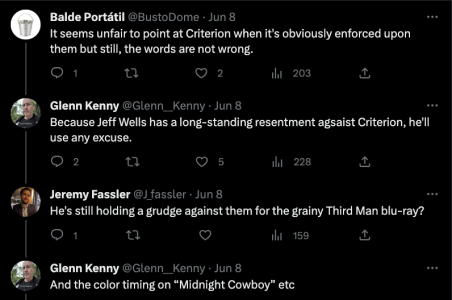
HE to Kenny: Criterion vandalized Adam Holender‘s original Midnight Cowboy color scheme with a vulgar teal saturation, and I’m an asshole for pointing out the obvious?

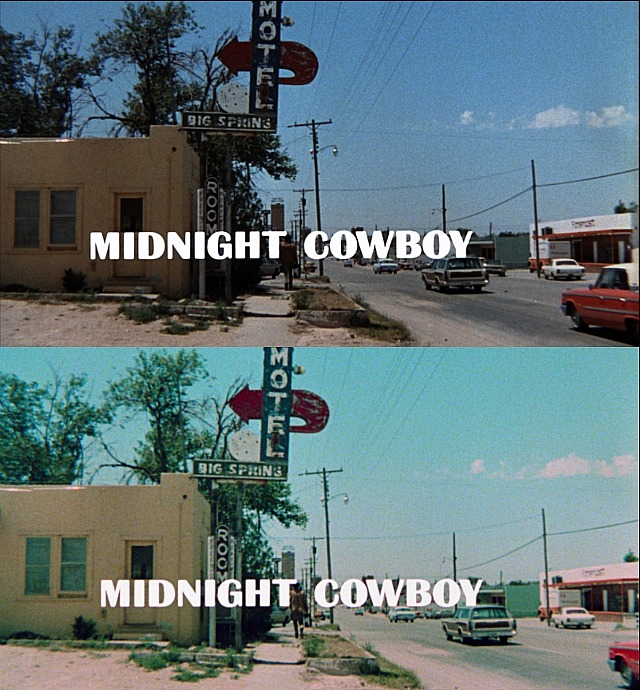
Are you reading what Tooze is saying? He found the color-tint desecration of Midnight Cowboy to be somewhat off-putting and what-the-fucky, but then he “got used to it.” He decided to succumb to the greenish teal re-imagining because Criterion served it up and they know best, right?
Look at the main title image comparisons above — the browner, dustier, desert-tan version from the 2012 MGM Bluray is obviously more natural than the greenish Criterion version beneath it…c’mon! Look at the color of Jon Voight‘s shirt below this — blue in the older shot, blue-green in the Criterion. Look at the kitchen dishwasher — more or less natural looking in the MGM Bluray version, soaked in muddy green in the Criterion.
A little more than three years ago Criterion screwed up in a similar way when they horizontally compressed Brian De Palma’s Dressed To Kill while adding a greenish-yellow tint to the color. A public outcry led to a correction. Will fans of this legendary Best Picture winner go along with Criterion’s greenish-teal re-do, or will they grab their pitchforks and torches and march down to Criterion’s Manhattan headquarters?
“Westerners Cannot Kidnap Other Moviegoers on ‘Mermaid,'” Global Times article, 5.26: “Some American leftists are imposing their own politically correct values on Chinese audiences, expecting them to embrace the film the same way as Western audiences have.
“This expectation is unreasonable since Chinese don’t have such political correctness, as the country’s modern history is more about being invaded by Westerners rather than colonizing or oppressing black people.
“Instead, China has always maintained [status quo] relations with Africa and has never needed an ‘atonement’ mentality prevalent in Hollywood.”
Hence it became apparent a couple of days ago that The Little Mermaid is more or less a dead fish in China and South Korea, primarily because of “racist” pushback among journalists, social-media users and Average Joes and Janes.
As far as those two territories are concerned, Mermaid has become Disney’s very own Bud Light misfire.
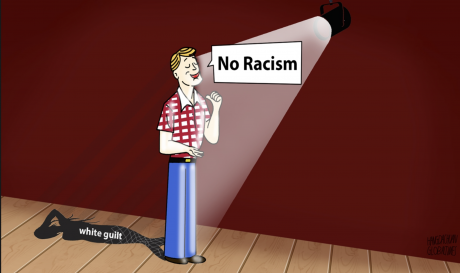
CNN’s China desk reported that the woked-up Disney reboot has “bombed with moviegoers in China and South Korea amid racist critiques in some quarters over the casting of Black actress Halle Bailey as main character Ariel.”
Everything is cool in the U.S., however, with Mermaid pulling down $118 million domestic over the four-day Memorial Day weekend.
But Chinese fans have rejected Bailey’s casting over her non-traditional appearance. Pic had scored 5.1 out of 10 on Douban, a longstanding Chinese movie review website. On Maoyan, a Chinese movie review and box-office tracking site, one user lamented that “the fairy tale that I grew up with has changed beyond recognition!” An instagram user in South Korea reportedly complained that the movie had been “ruined” for them, adding “#NotMyAriel.”
In Japan, where the film will open on 6.9, an online forum user reportedly wrote “don’t trample on my cherished childhood memories and the image of Ariel.”forum user wrote.
In an editorial published on 5.25, the Global Times said it had “caused a debate about representation in entertainment and highlighted the challenges of adapting beloved, traditional tales.” It added that Disney’s casting of Bailey was part of an overall “politically correct” effort to “force inclusion” of minorities represents “a lazy and irresponsible storytelling strategy.”
Having recently been given a legit email address for French Connection director William Friedkin, I’ve just sent him the following:
“Greetings & salutations from Jeffrey Wells of Hollywood Elsewhere. I hope you’re feeling hale and hearty and doing well.
“Cutting to the chase, herewith are two very important questions about the recently discovered removal offer a brief Act One sequence in streaming versions of The French Connection (Criterion Channel, iTunes, etc) as well as in a DCP shown at Santa Monica’s Aero theatre on 5.12.23.
“The deletion of this sequence was apparently the doing of The Walt Disney Company, although it may not have been. It was apparently motivated by the speaking of a racially ugly and vulgar term by Gene Hackman’s Popeye Doyle character
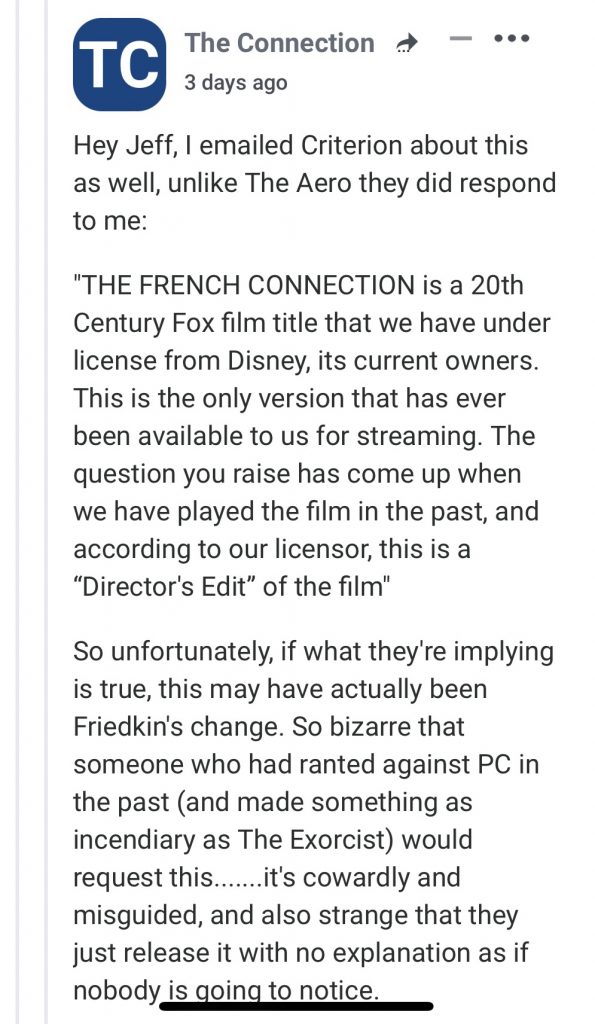
“One, did you sign off on this deletion? According to an HE comment-threader, Criterion has issued a statement that the currently censored cut of your 1971 film, provided to them by Disney, represents a “Director’s Edit” and was therefore apparently (or at least may have been) approved by you, the auteur behind this Oscar-winning film.
“Is this true? Did you, William Freidkin, request and/or convey approval of this deletion to Disney, the rights holder? Was this your call?
“Or was this censoring decided upon by Disney with your approval or disapproval being a moot point?
“Two, if you DID convey your approval of this edit to the powers-that-be at Disney, could you please explain to me and the tens of millions of fans of this film why you would approve such a thing, nearly 52 years after TFC’s theatrical release?
“And if you DID NOT approve of the censoring of The French Connection, could you please convey your reaction to Disney’s apparent decision to remove the sequence in question?
“Thank you and cheers to you and your wife.”
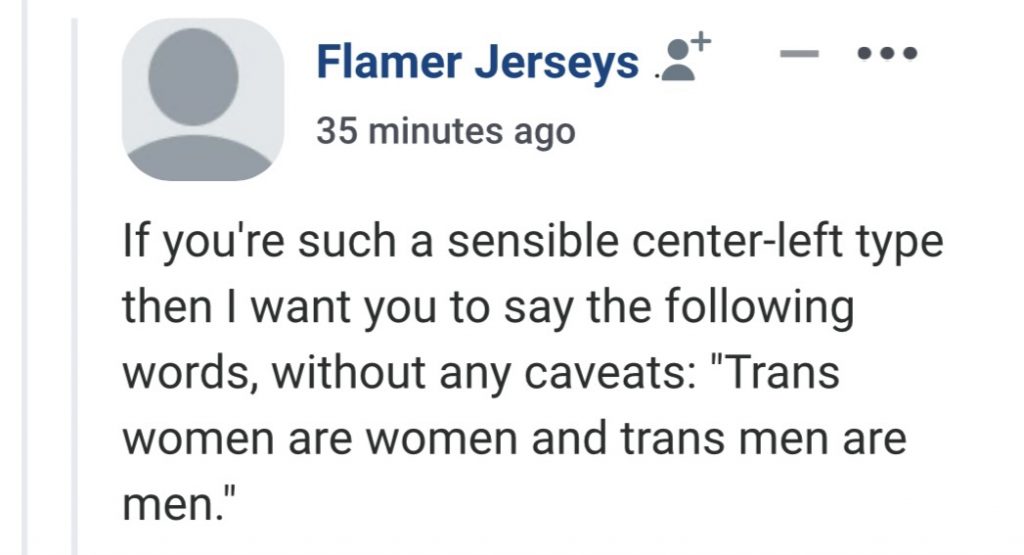
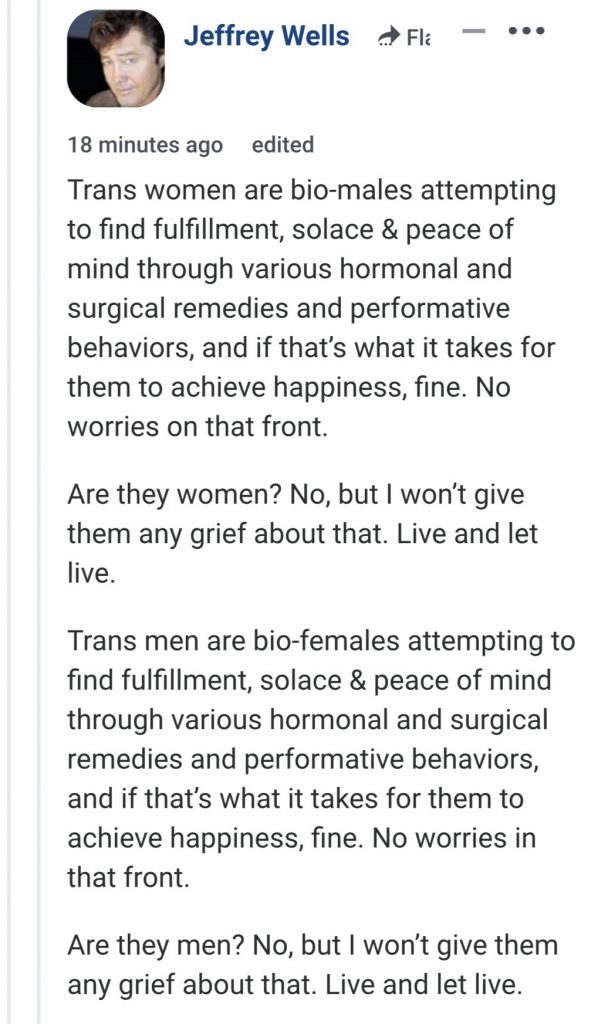
HE reader responses to yesterday’s “Odious Hit Piece” indicate that my side (i.e., sensible centrists with a leftward tilt) has really lost the culture war, at least among the elite/urban/media-wise hipster types who comment on HE.
To take in the comments, you’d think that the sensible HE view of the world (a.k.a. Bill Maher, Sasha Stone, Bari Weiss…liberal-centrist, in staunch favor of debate, skeptical of dogged presentism in entertainment and the trans issue, not in terms of tolerance but in terms of whether 12-year-olds should be making these kinds of life decisions)…you’d think that sensible types are a totally marginalized minority.
That’s not true, of course. If anything, most voters in a presidential election — even those who wind up voting for the Democrat — skew to the right of myself and others in my camp. By this yardstick HE is staunchly liberal.
The idea that some poll that says that people under 40 are approving of woke values, and that’s that…Jesus fucking Christ, all that poll measures is the idea of wokeness when it’s presented as “having progressive values about fairness and tolerance.” By that definition, I’m as woke as any Millennial or Zoomer out there.
But that’s not what wokeness means. And it’s why the Republicans are going to be making bales of hay out of this in ’24. Many decent people hate the progressive left.
Stephen Kijak‘s Rock Hudson: All That Heaven Allowed will debut this weekend at the Tribeca Film Festival — three screenings altogether, the first being on Sunday, 6.11. It begins streaming on Max on 6.28.
I ask again — what is there to say about Hudson that hasn’t already been said many times, over under sideways down?
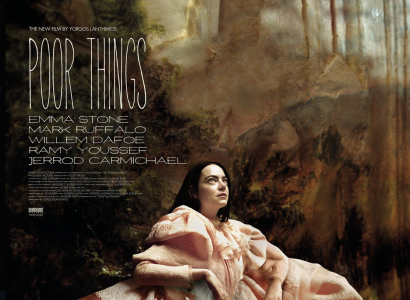
Yorgos Lanthimos‘ Poor Things (Searchlight, 9.8) is a kind of Bride of Frankenstein story.
Boilerplate: A young woman, Bella Baxter (Emma Stone), is a corpse brought back to life by scientist Dr. Godwin Baxter (Willem Dafoe). Baxter had her brain swapped with that of an unborn fetus, resulting in her having an infant’s mind. While designed to be Baxter’s companion, her sexual appetite causes her to pursue other men, including Max McCandless (Ramy Youssef) and a foppish lawyer named Duncan Wedderburn (Mark Ruffalo), with whom she elopes and embarks on a hedonistic odyssey around Europe, Northern Africa and Central Asia. Freed from the prejudices of her times, Bella demands equality and liberation.
Poor Things costars Christopher Abbott, Margaret Qualley, Kathryn Hunter and Suzy Bemba.
Filming began in Hungary in August 2021.
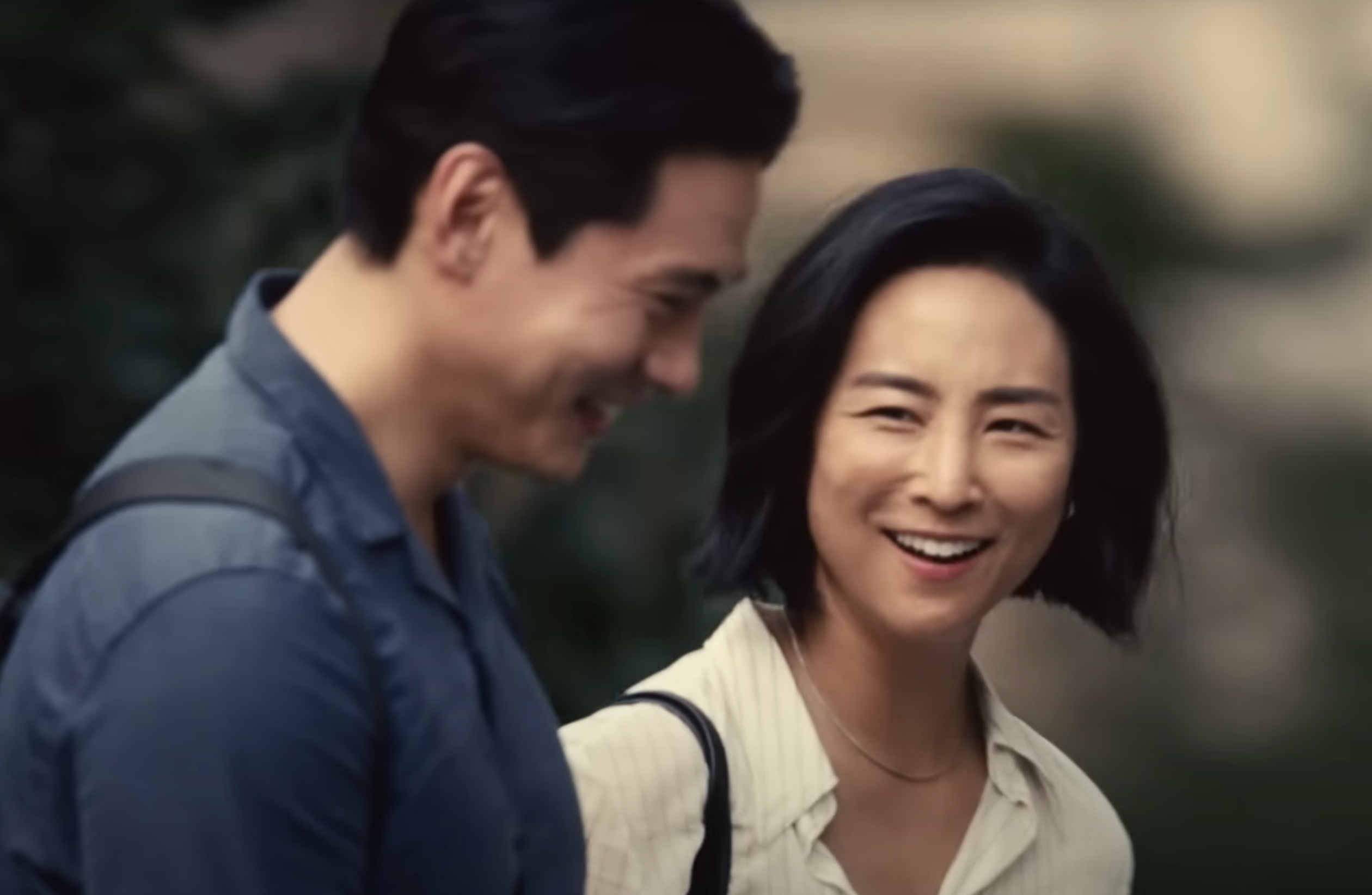
SPOILERS WITHIN: Celine Song‘s Past Lives (A24) is a very subtle, oh-so-very-gently expressed love story — a story about things unsaid and certainly not acted upon.
The action between the lovers, Nora and Hae Sung (played as adults by Greta Lee and Teo Yoo), happens in three stages.
One, a primal and very nourishing attraction they feel as 10-year-old children in Seoul, only to be separated when Nora’s parents move the family to Toronto. Two, aspiring playwright Nora and aspiring engineer Hae Sung Skype-chatting at age 20 but never arranging to meet. And three, both still wanting to see each other after a separation of 20 years and with Hae Sung having flown to New York to visit the now-married Nora, both conveying volumes of feeling with their eyes but doing zip to try to make this long-simmering romance finally kick into gear.
You can feel the “In Yun” every step of the way, but Nora and Hae Sung are so polite and constrained and well-behaved, and are certainly mindful of the feelings of poor Arthur (John Magaro), Nora’s bearded husband with the rag-mop haircut and obviously the odd man out in this situation.
All through the second and third acts you want the lovers to somehow break through and say something and risk emotional exposure or even erupt in some messy way, but they don’t, they won’t and they never will.
You’re silently pleading with both to “please risk it….please don’t allow yourselves to become Anthony Hopkins at the end of The Remains of the Day…even if it’s just a big hug and a long kiss at the airport as Hae Sung is about to fly back to Seoul…a little catharsis, please!”
Catharsis finally happens at the very last minute, but more in the way of Anthony Quinn’s Zampano character at the very end of La Strada.
Past Lives, in short, is all about subtext, impossible distances, zero physical contact, impossible social constraints and quietly pleading, gently leaking expressions.
A couple of hours after seeing Song’s film I told a friend that it’s “a woman’s version of a Wong Kar Wai film about soul-crossed lovers who never get aroused much less climax, and without the Chris Doyle lensing.”
I understand why people might admire or even adore Past Lives. I certainly understand why almost every critic (except for Alison Wilmore) has done handstands, and why the Sundance crowd flipped for it last January.
I respect it, but it doesn’t quite do the thing.
The late Sydney Pollack used to say that the most affecting love stories are ones that don’t end happily. Example #1 is the final scene in Pollack’s The Way We Were. There’s no denying that it works — you can’t help but feel it.
The ending of Past Lives is poignant and affecting, but it leaves you hungry and somewhat disappointed. I know, that’s the point but still. It certainly doesn’t envelop and hold you the way Pollack’s closing scene did. It just doesn’t.
Is it a Best Picture contender? It’s a very respectable little film, but it doesn’t really ring the bell. It’s too disciplined, too schematic, too committed to not letting anyone even flirt with the possibility of emotional release (except for the Zampano moment at the very end). It’s a movie about sad, bittersweet denial…no, no, no, no, can’t, can’t, can’t, can’t, shouldn’t, shouldn’t, shouldn’t, shouldn’t.
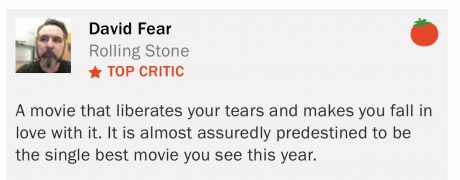
An actively insane opinion:
I’ve been lucky a few times, and each time I felt I’d either dodged a bullet or had been gifted for no reason at all.