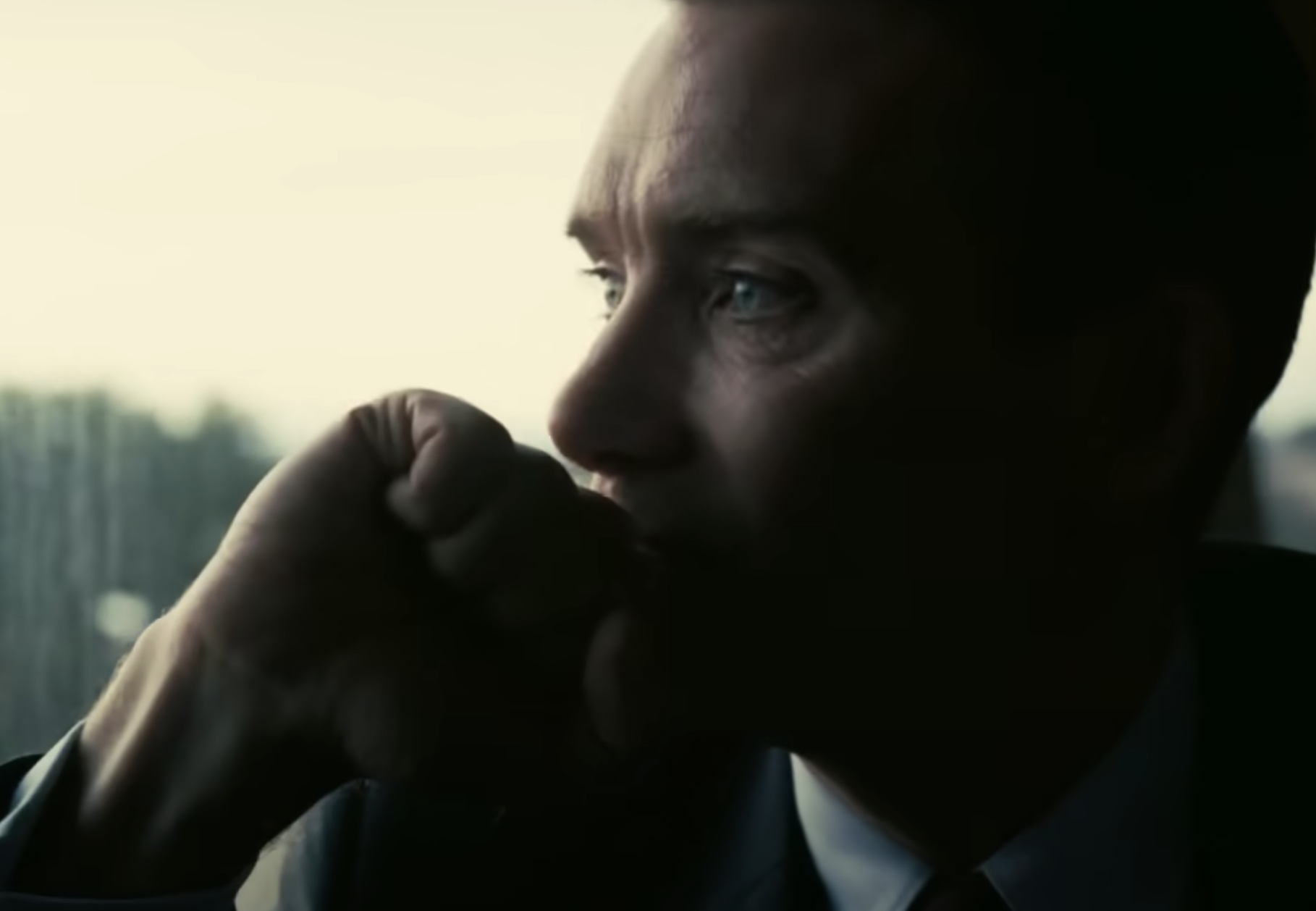
Yesterday afternoon Jeff and Saha discussed the Barbenheimer Bait & Switch — the two films having been sold as one thing only to reveal their true colors during actual screenings.
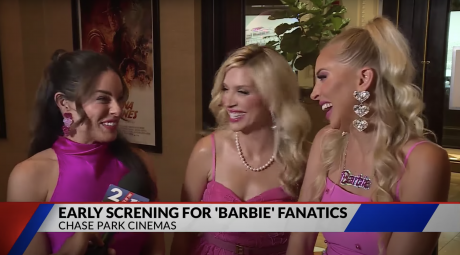
Hey, maybe it’s me. I mean, maybe I’m a little fucked up or something. But yesterday’s HE comment thread consensus seems to be (a) yes, no film in Hollywood history has conveyed such a high degree of misandrist contempt for straight white dudes (men of color and mixed ethnicity being, of course, not only blameless but glorious), and yet (b) none of this matters because Barbie is a huge hit so all those grumpy misogynist dissers are the problem, not the film itself.
Do I have this right? Toxic gender-hate cinema is totally fine as long as it’s popular?
…that while Roland Joffe‘s Fat Man and Little Boy (’89) is a far lesser film than Chris Nolan‘s Oppenheimer in several ways, this Trinity explosion scene is decently shot…it looks and feels classically cinematic.
Except for two bonehead errors. One is the ridiculous notion of J. Robert Oppenheimer lighting a cigarette at the exact instant of detonation; second is an absurd suggestion that just as the golden explosion is seen and felt and heard, Oppie would behave like a euphoric Wolf of Wall Street broker who’s just closed a huge sale.
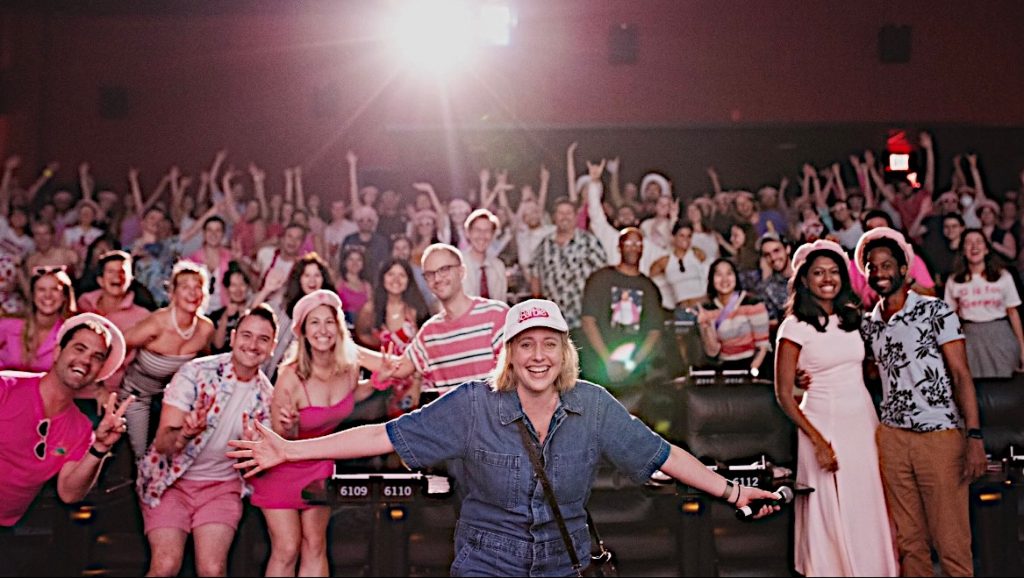
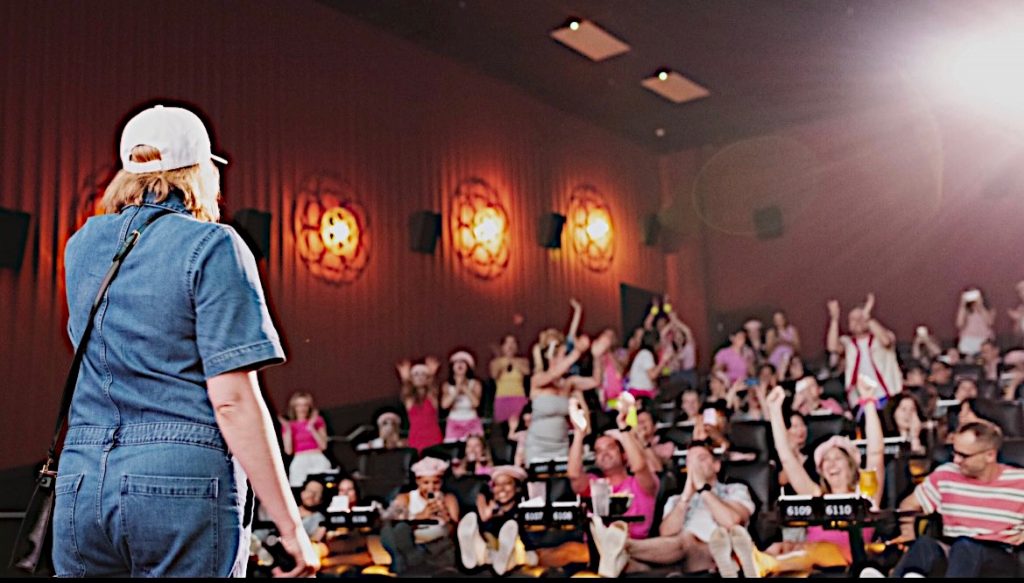
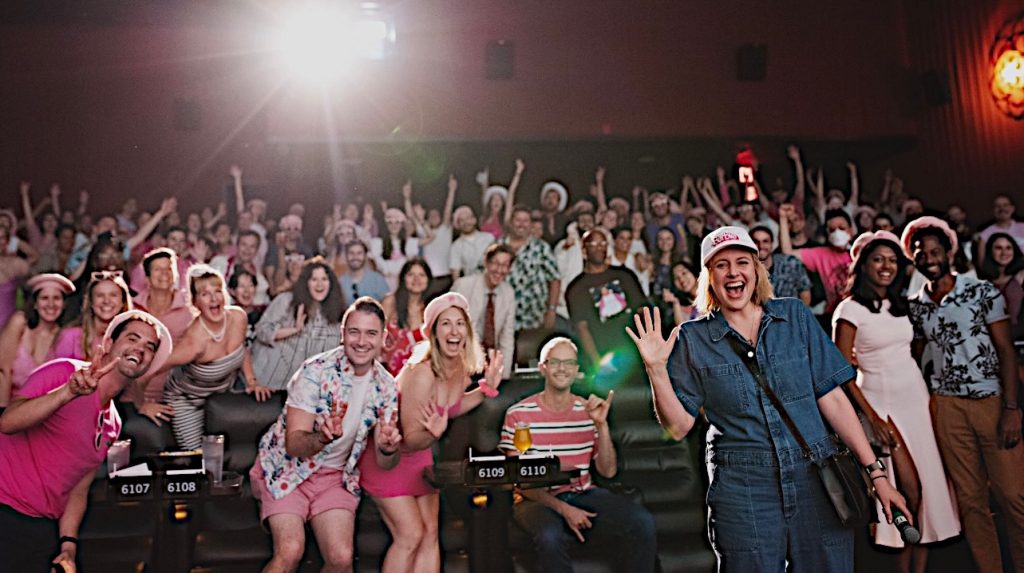
In my southern corner of the world, the audience did NOT vibe with #Barbie. It so clearly wasn’t what they were expecting. I liked it quite a bit, but it’s a bit of a bummer to sit through a funny, inventive film with a packed, dead audience who doesn’t laugh a single time. pic.twitter.com/wlTGpDMf09
“Barbie is like the deformed mutated rage child of Captain Marvel, the 2016 Ghostbusters and She-Hulk.
“Watching this film was one of the most miserable, demoralizing, unpleasant experiences I’ve ever had as a movie critic [as it] genuinely made me question where [western] society is heading.
“It is pure brain cancer in movie form, and I was genuinely shocked by the sheer, undisguised contempt that film has for 50% of the human population.
“Barbie real]y is a wolf in sheep’s clothing…a lot of parents who have been duped into taking their daughters to watch this, probably expecting the kind of breezy, colorful, family-friendly movie that was advertised, only to find themselves confronted with this spiteful, bitter, mean-spirited pile of misandrist dogshit instead…
“Think of the man-hating psychopaths who are going to be created because of this film.
“If you’re a parent and you’re thinking of taking your kids to see Barbie, the Drinker recommends that you skip this one and literally do anything else with them. Believe me — you’ll thank me later.”
“Undisciplined Barbie Gush“, posted on 7.20: “Never has a major studio film ever conveyed such utter contempt for straight guys…in its peppy and good natured way Barbieconstantly belittles men and regards them as delusional little boys with selfish and thoughtless agendas.
“Red-staters will have problems with the basic Barbie attitude. This movie definitely tries to nudge the little girls and boys that will see it into the man-hating, male-pitying side of the discussion.
“If you want to start your little girl (or your little boy) on a path to despising foolish and idiotic straight men, this is the film to take them to — trust me.
“In a very good-natured and heavily ironic and often comedic way Greta Gerwig‘s movie absolutely DESPISES men. It really does — it’s total propaganda to this effect.”
As HE commenter Kristi Coulter noted a few hours ago, Chris Nolan’s Oppenheimer has been, in fact, dishonestly sold and promoted. Because it’s basically a bait-and-switcher.
It’s not some kind of awesome, slam-bam-whammo atomic bomb film. It’s not a tale of acute scientific obsession or about a fine, fevered, steadily building madness. And it’s not a WWII horror film about the becoming of death and the destroying of worlds or even cities (Hiroshima and Nagasaki).
Instead it’s a dialogue-driven saga of a blindingly brilliant but conflicted and finally self-crippling Jewish physicist who oversaw and guided the building of the world’s first atomic bombs (FatMan and LittleBoy) but was mainly out to punish Nazi Germany…his European kin will have vengeance!
But when that quest ended and Japan became the target the physicist didn’t feel the fire as much, and then, in the wake of the deaths of tens of thousands, he turned into a “crybaby” (Harry Truman’s term) and a kind of squishy, under-motivated turncoat in the matter of the H-bomb’s development, and as a result he wound up being persecuted and devoured by Robert Downey, Jr. and the D.C. wolves in 1954 and thereby lost his “security clearance.”
That’s it — that’s what the movie is. The saga of a slender, pipe-smoking, genius-level candy-ass with cold blue eyes. A guy who built the bomb but didn’t want to know or even think about it after the task was completed. Treated unfairly and with cruelty, for sure, but who would argue he didn’t make his own bed?
And who believes that Cillian Murphy’s Oppie was able to feel sexual desire, or was even capable of attaining stiffie-hood? I didn’t buy it for a second, especially in the company of the stocky, short-statured, moon-faced and rather morose Florence Pugh.
On top of which my trapped legs were killing me in that third-row-center seat.
The Warning‘s Steve Schmidt has known Lindsey Graham, the shamelessly Trump-fellating Senator from South Carolina, personally for many years. Schmidt has been completely disgusted by Graham since he became a Trump toady seven years ago. He speaks here about Graham’s slimy, slithering behavior — almost entertaining from a certain perspective.
Yesterday afternoon (7.20) Variety‘s Matt Donnellyreported that under the cloud of a possibly enduring SAG/AFTRA strike, Warner Bros. is “strongly considering” bumping Dune: Part Two out of its 11.3.23 release date and opening it sometime in ’24.
The apparent concern is that Joe and Jane Popcorn will either be unaware of these films or wont be motivated to see them unless the actors promote them via the usual media outlets.
Forgive me for sounding ignorant or for living on my own cloud or desert island, but if I want to see a film it’s NEVER because this or that actor has visited the Jimmy Kimmel Show or done the usual round of junket interviews. It’s because of good reviews or advance screenings or general online buzz.
I realize there’s a whole community of none-too-brights out there who will never see a given film UNLESS the star has appeared on Jimmy Kimmel or done junket interviews, but it seems strange nonetheless.
Before last night’s AMC Lincoln Square Oppenheimer screening the Dune: Part Two trailer played on the big IMAX screen, and it was obvious that the crowd is excited about seeing it. Timothee Chalamet interviews won’t matter one way or the other.
An “industry player” has told Donnelly that the success of The Color Purple “would hinge on a robust awards campaign.” Those who want to see The Color Purple because of its own merits are already convinced, just as I’m convinced that The Color Purple will never ring my bell and that I would’t see it with a gun jammed against my rib cage,
I just don’t want to see Ridley Scott‘s Napoleon (Sony, 11.22) bumped into ’24…please.
During her 7.18 Oppenheimer screening in Burbank Sasha Stone was hugely bothered by a pair of 20something women who took out their phones around the half-hour mark and were pretty much texting all through it. They didn’t even turn down the brightness levels on their screens.
The first thing I texted Sasha when my Oppie screening ended last night at 10:20 pm was “as much as I condemn phone-surfing during a film and especially during a major blue-chip immersion like Oppenheimer, I understand why those women were texting.”
An unmistakably grade–Aexperience, Oppenheimer could be re-titled Oppenheimer: Interiors as it’s almost all super-smart dialogue, super-smart dialogue and more super-smart dialogue inside rooms (university classrooms, Los Alamos conference rooms, hallways, hotel rooms, dining rooms, the Oval Office).
Okay, the historic New Mexico test explosion of the first atom bomb (7.16.45. 5:29am) happens under an open-air nightscape and there are several other moments that happen outdoors, but still…
The likely truth is that if you’re not at least half in love with the Oppie legend going in — if you haven’t done your homework by having seen TheDayAfterTrinity (free on YouTube) and if you haven’t read “AmericanPrometheus” — your Oppenheimer experience may (emphasis on this word) feel like a big fat Alaskan grizzly bear sitting in your lap, or certainly right next to you.
It feels (and is) long and demanding, and at three hours is certainly a proverbial tough sit. And yet it’s undeniablyafirst–rate, grand–vision, smart–personmovie that absolutely surges with the spirit of semi-tortured genius (I was reminded of similar-toned portions of ABeautifulMind) and is highlychargedineveryrespect and is evenemotionallyengrossing during the persecution-of-Oppie finale (kudos to the “junior Senator from Massachusetts” for voting against the venal Robert Downey Jr.!!).
And I adored viewing this ChristopherNolan film on that tall-as-an-apartment-building, super-sized IMAX screen (I was sitting third-row center), but I’m afraid I’ll need to re-watch it at home with subtitles as I fully understood roughly half of the dialogue, certainly no more than two-thirds. That or I’m simply too fucking dumb to keep up with all the density and complexity.
Not to mention the fact that my poor right knee was aching and moaning in pain as I had no place to shift or maneuver within that tight IMAX seating area, and my knee massages began around the 45-minute mark and never stopped…one of the most challenging IMAX screenings I’ve ever endured.
At the one-hour mark I looked at my watch and said to myself, “oh, dear Lord, this is sobrilliant and dense and tightlywoven and sharplyfocused to a fare-thee-well, and God help me but there’s another two hours to go!”
And man, the Ludwig Goransson score is reallyloud in portions, and certainly during the final act. It throttles and hammers you into submission.
HEtofriendo: “You didn’t feel a tiny little ‘yay!’ surge when it’s mentioned that JFK voted against Downey? I did.”
FriendotoHE: “Naah, that was just a little fun grace note of JFK nostalgia.”