Brett Morgan‘s David Bowie doc seems innately exciting (and how could it not be?); Park Chan-Wook‘s Decision to Leave looks and sounds exactly like a PCW film. Those actors generating those oppressive actorish expressions…God!
“The President’s Pimp”

So far the 2022 Cannes Film Festival has felt weak. Okay, pretty good but not good enough. A pair of triples (R.M.N., the first half of Triangle of Sadness) but in terms of terms of excellence or ambition or primal goading madness, no homers or grand slams.
You know what probably would have been regarded as an exercise in primal madness if it had been screened at this festival? Andrew Dominik‘s Blonde.
Cannes topper Thierry Fremaux saw it and wanted it, but the longstanding Cannes-Netflix contretemps was insurmountable.
Pedro Almodovar, quoted by Jordan Ruimy on 5.10:
“I must be one of the few to have seen Blonde, Andrew Dominik’s great film, where Ana de Armas plays Marilyn Monroe in a chillingly real way.
“There is a sequence (if it does not disappear from the final cut) of the harassment she suffered in the hands of President Kennedy. The sequence is explicit enough to make you feel Marilyn’s revulsion and pain.

“The film is a novel by great writer Joyce Carol Oates, it tackles Norma Jean Baker more so than [the]’Hollywood creation ‘Marilyn Monroe‘. Norma Jean fought all her life for men around the world to understand that Marilyn was the result of her extraordinary work as an actress.
“Shortly after, when Norma Jean, already a zombie, was invited to famously whisper-sing ‘Happy Birthday, Mr. President.’ I can only imagine how poor Norma must have felt, in the face of patriotic duty, to sing ‘happy birthday’ to the same man who abused her (as seen in the film) dressed in a skintight dress that became iconic.”
Wait a minute…JFK is shown “abusing” Monroe? What’s that supposed to mean? That he muscled or mauled or raped her or something? He was a thoughtless, rambunctious user as far as women were concerned, but the energy required to abuse a famous movie star wasn’t required of the President of the United States at that time. All he had to do was wink and raise an eyebrow. I don’t believe Almodovar.
A passage from the Oates novel, from a chapter titled “The President’s Pimp”:
“Sure, [Peter Lawford] was a pimp.
“But not just any pimp. Not him!
“He was a pimp par excellence. A pimp nonpareil. A pimp sui generis. A pimp with a wardrobe, and a pimp with style. A pimp with a classy Brit accent. Posterity would honor him as the President’s Pimp.
“A man of pride and stature: the President’s Pimp.
“At Rancho Mirage in Palm Springs in March 1962 there was the President poking him in the ribs with a low whistle. ‘That blonde. That’s Marilyn Monroe?”
“Lawford told the President yes, it was Monroe, a friend of his. Luscious, eh? But a little crazy.
“Thoughtfully, the President asked, ‘Have I dated her yet?'”
Three Hotties
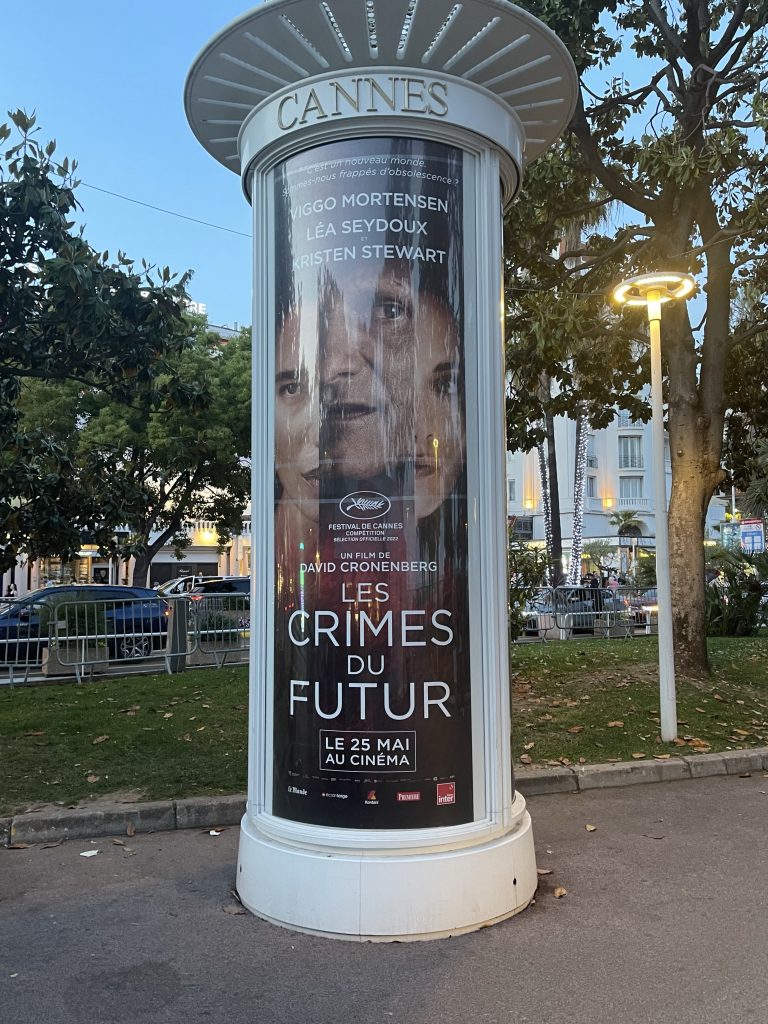
Come hell or high water, Hollywood Elsewhere intends to see the following films today (Monday, 5.23): (a) Park Chan- Wook‘s Decision to Leave (Salle Debussy, 4:30 pm); (b) David Cronenberg‘s Crimes of the Future (Salle Debussy, 9:45 pm), and (c) Brett Morgen‘s Moonage Daydream (David Bowie doc, 12 midnight, Grand Lumiere).
Don’t kid yourself — Park Chan-Wook has always been a high-style genre wallower. I was willing to play along with Oldboy and Lady Vengeance, but Stoker is where I drew the line and said “all right, that’s it!…no more!” By the time The Handmaiden came along I was too alienated to respond.
For years I’ve been hoping that PCW would stop playing to the gallery (i.e., sensation-mongers, fans of visual-for-visual’s-sake) and cut the shit and calm down and use his considerable skills to make a real, serious-minded adult film. But year in and year out, he’s refused. He’s now 58 years old — what’s he gonna do, change?
No Sunday Downshift
From Scott Feinberg…
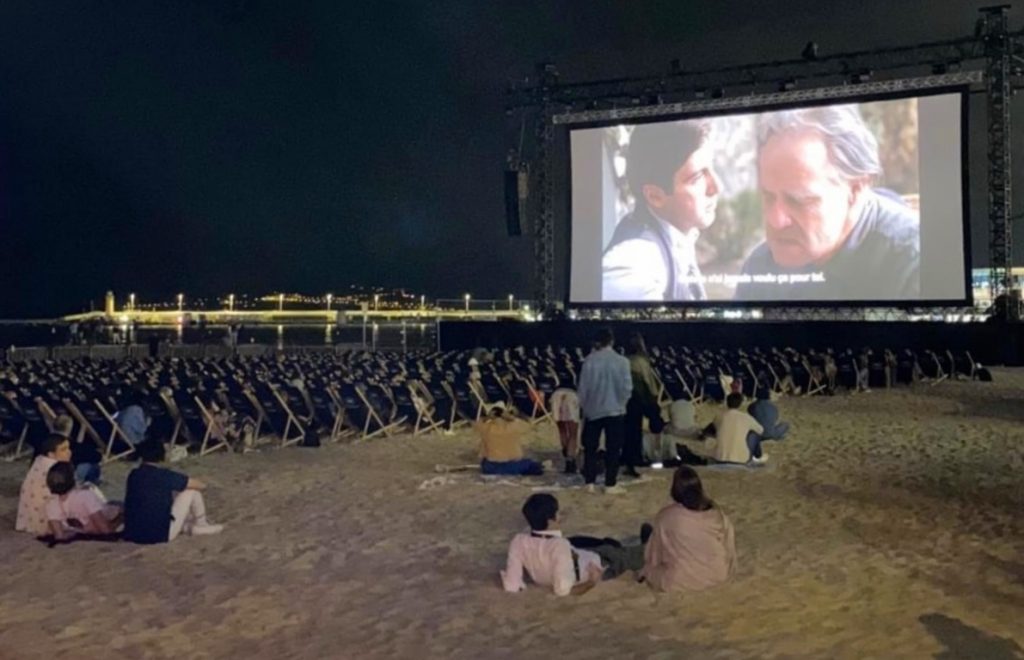
Local Hero
Set 21 years ago in Masshad, Iran, Ali Abassi’s Holy Spider is a disturbing (to put it mildly), fact-based drama about Saeed Hanaei (Mehdi Bajestani), a serial killer of prostitutes.
The murders are ghastly enough, but a double-down comes when, post-capture, Hanaei is bizarrely supported by fanatical zealots who believe he has done Allah’s bidding.
The first half is pretty much a straightforward crime drama. After graphically depicting two of Hanaei’s grisly killings, it follows an intrepid female reporter (Zar Amir-Ebrahimi) who risks life and limb to bring about his arrest.
I can’t call this section any more than decent — efficient and good enough, but not exactly brimming with style or suspense or cinematic flair.
The diseased social reaction among his fans in the second half is what grabs you. You’re left thinking “really?…a sizable contingent of Mashhad citizens cheered a serial killer because he was helping to rid the streets of streetcorner hookers? Who thinks like that? What kind of diseased culture?,” etc.
But then of course, this is Iran and the Masshad faithful were the country’s chief bumblefucks.

Do Bears Shit In The Woods?
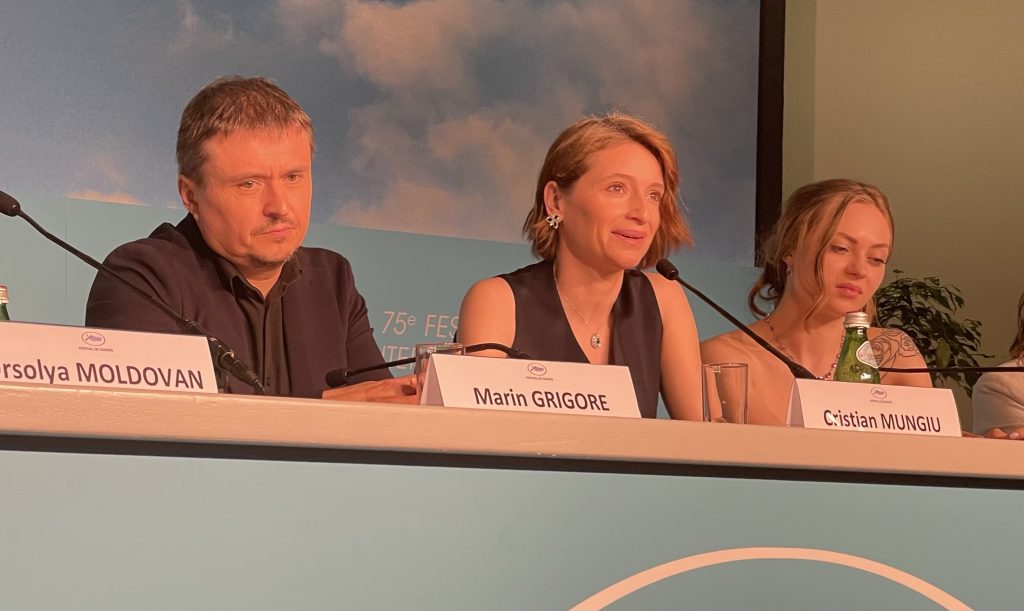
The meaning of the title of R.M.N., the latest film by the great Romanian auteur Cristian Mungiu, is never revealed, or it wasn’t to me during last night’s Salle Debussy screening.
The Wiki page says that Mungiu “named the film after an acronym for rezonanța magnetica nucleara ** (‘nuclear magnetic resonance’) as the film is ‘an investigation of the brain, a brain scan trying to detect things below the surface.'”
So the film is basically about scanning the small-town minds of the residents of Recia***, a commune located in Transylvania, which most of us still associate with Dracula.
But the underlying focus isn’t vampires but racist xenophobes who fear Middle Eastern immigrants and more specifically two gentle fellows from Sri Lanka who’ve been hired to work at a local bakery.
It takes a while for the racism to emerge front and center, but a metaphorical representation is the nub of it — a phantom that lurks in the surrounding woods and more particularly within.
It manifests three times — (a) in the opening scene in which the small son of Matthias (Marin Grigore), an unemployed slaughterhouse worker, is spooked by its off-screen presence while walking in the woods, (b) in the third act when a significant characters hangs himself (also in the woods), and (c) at the very end when four or five bears are spotted by Matthias after nightfall (ditto).
R.M.N. is a meditative slow-burn parable that you’ll either get or you won’t, but there’s no missing the brilliance of a one-shot town hall meeting in which the locals are demanding that the Sri Lankans be expelled from the community.
The shot lasts for roughly 17 minutes, and it’s all fast, bickering dialogue, simultaneously burrowing into the ignorance of the townies while building and deepening and man-oh-man…it’s so fucking great that I said to myself “this is it…this is what my Cristian Mungiu fixes are all about, and thank the Lords of Cannes for allowing me, a traveller from the states, to absorb this in my well-cushioned theatre seat.
The build-up narrative is about Matthias and his mute son Rudi (Mark Blenyesi), his resentful ex-wife Ana (Macrina Bârlădeanu) and Csilla, a passionate, kind-hearted bakery manager and cello player (Judith State) whom Matthias has an undefined sexual relationship with. He never says he actually “loves” her although he keeps returning to her home for solace and whatnot.
Secondary characters include the bakery owner, Mrs. Denes (Orsolya Moldován), and the local priest, Papa Otto (Andrei Finți), and a sizable gathering of anxious, agitated citizens who are basically the local reps of the Mississippi Burning club.
I was going to throw a little snark by alluding to Gene Wilder’s description of the townspeople of Blazing Saddles — “Simple people, people of the land, common clay…you know, morons.”
Except they’re representative of millions of native Europeans right now who are clearly unsettled by Middle Eastern immigrants who’ve been taking root and are changing the traditional character of what they’ve always regarded as “their” culture and homeland.
Xenophobic nationalism reps an un-Christian way of thinking and behaving, to put it mildly, but…I don’t know what to conclude except that it’s fundamentally cruel. Nonetheless this kind of rightwing pushback is manifesting all over. Make of it what you will.
That’s all I need to say. R.M.N. and particularly that town-hall scene are going to reside in my head for a long time to come.
** The English language term is MRI.
*** The film was mostly shot in Rimetea.
Press Conference of “Sadness”
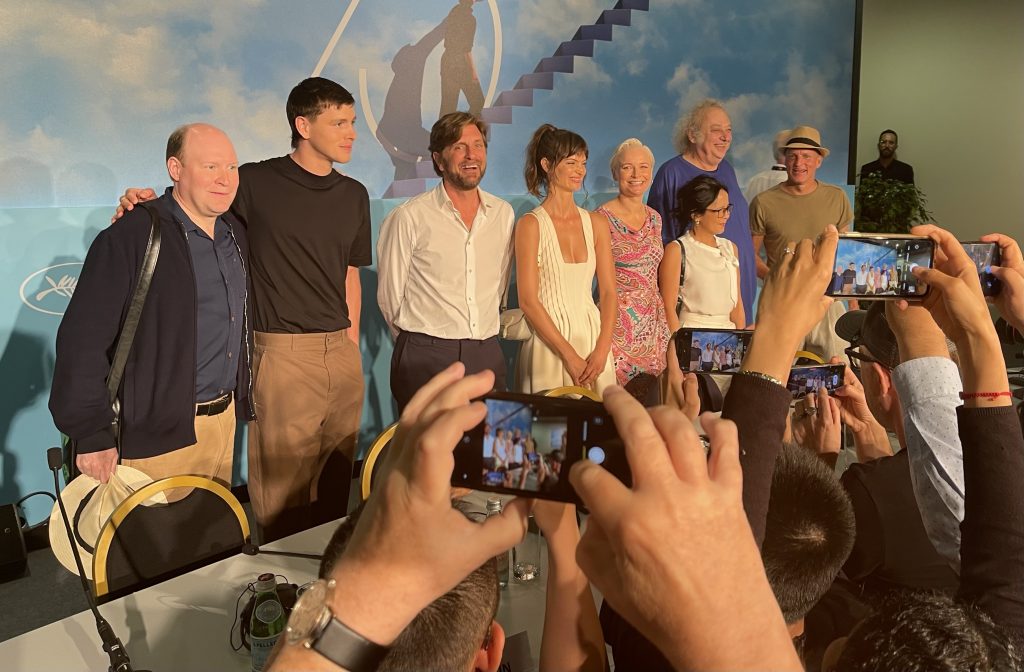
During this morning’s Triangle of Sadness presser, director Ruben Ostlund and costar Woody Harrelson announced they’ll reunite for a film called The Entertainment System Is Down. Great news, but there’s a better title to be discovered.
Unasked Ostlund questions: (a) what is your sense of the woke-terror climate at this time? Is it thriving, gaining, receding?; (b) out of all the thousands of splendorful super-yachts in the world, how did you happen to rent the Christina O, which Aristotle Onassis owned in the ‘60s and ‘70s?; (c) to what extent (if any) was Swept Away in the writing of Triangle of Sadness?
Watching Paint Dry
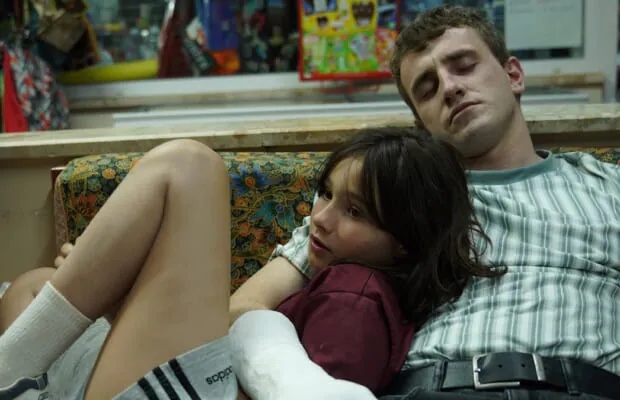
Cannes critics have lost their minds over Charlotte Wells’ Aftersun, a laid-back, edge-of-boredom, fly-on-the-wall father-daughter vacation flick, set in Turkey sometime in the late ‘90s. I didn’t mind it and it’s not a painful endurance test, but it’s certainly lethargic as fuck.
Where’s the pulse? Where’s the intrigue or story tension or the proverbial second-act pivot or any of that stuff? Sorry, Jose.
11 year old Sophie (Frankie Corio) and her young-looking, divorced dad (Paul Mescal) are staying (bonding) at a midrange coastal hotel. Swimming pool, video games, camcorder footage, puppy love, golden sunlight, distant hazy forests, dad grinning like an idiot. etc.
A dozen or so little things “happen” (including a curious weeping scene and a mystifying moment when Sophie succumbs to the romantic advances of an overweight gamer) or are more precisely observed. but the whole time you’re thinking “Guy Lodge and Carlos Aguilar did backwards somersaults over this?“

Half of “Sadness” Scores Perfectly
Ruben Ostlund‘s Triangle of Sadness is often wickedly funny — there’s no denying that. Now and then the press crowd at the Salle Debussy was chortling, guffawing and even howling. Even I, a confirmed LQTM-er, laughed out loud five or six times.
The 140-minute Triangle turns broad after the first hour or so, and that’s when it starts to lose the satiric mojo. (But not entirely.) But until that tonal shift it struck me as the funniest, scalpel-like social comedy I’ve seen since…well, now that I think of it, Ostlund’s The Square (’17), which sliced and diced your elite, politically terrified, museum-culture wokesters.
When the capsule synopsis for Sadness appeared online a couple of years everyone immediately recognized the similarity to Lina Wertmuller‘s Swept Away (’74), a Marxist comedy about a luxury yacht sinking and leaving a rich bitch (Mariangela Melato) and a common crewman (Giancarlo Giannini) stranded on a desert island.
Once their class-based loathing of each other fades away, Melato and Giannini fall in love and the social dynamic reverses itself — Melato swooning with desire for the primitive Giannini and vice versa. But when they’re finally rescued Melato reverts to haughty form, leaving Giannini heartbroken.
But strictly speaking the resemblance applies only to Triangle of Sadness‘s third act, titled “The Island.” And it’s different from the Wertmuller (a two-hander) in that Ostlund’s is an ensemble piece.
The first act, focusing on a young, beautiful, somewhat conflicted couple living on modelling and social-influencer income (Harris Dickinson, Charlbi Dean), is titled “Carl and Yaya”.
The film’s best scene occurs early on. It involves a dispute Carl and Yaya have about who will pay for dinner in a pricey restaurant. Yeah, I know — what kind of dude is Carl if he’s expecting Yaya to play the traditional man’s role? But Yaya, who makes a good deal more money than Carl, pledged the night before that she’d cover it, only to blithely ignore the check when the waiter places it on their table. Carl wants them to be equals, he complains, and not submit to standard gender roles. Yaya replies that it’s “unsexy” to talk about money. Manipulation translation: She wants him to get the check anyway.
The second best scene is the opener — a cattle call for a group of shirtless male models (Carl among them) who are asked at one point to show their Balenciaga face (cold, indifferent) and their H&M “happy” face.
In the second act, “The Yacht”, Carl and Yaya are guests on a swanky, first-class vessel (actually Aristotle Onassis and Jackie Kennedy‘s Christina O), and about halfway through this section Triangle of Sadness tips over into coarse slapstick with a healthy serving of gross-out humor a la Monty Python’s The Meaning of Life.
The vomit scene is when the movie changes its game, and while the remainder of the film is amusing in fits and starts, it never qui recovers.
But half of a brilliant comedy (complemented by a reasonably decent one in the second half) is enough for me.
The abundantly wealthy passengers on the cruise (Vicki Berlin, Henrik Dorsin, Jean-Christophe Folly, Iris Berben, Dolly De Leon, Sunnyi Melles) are all vulgar exploiters of one stripe or another. The most amusing tuns are from Woody Harrelson as the ship’s captain — a droll, Marxist-slogan-spouting alcoholic — and Zlatko Burić, a fat Russian fertilizer tycoon (“I sell shit”).
Who Were You?
“Find out the movies a man saw between the age of ten and fifteen…which ones he liked, disliked… and you would have a pretty good idea of what sort of mind and temperament he has [as an adult].” — Gore Vidal, Paris Review interview, 1974, as excerpted in David Thomson’s “The Whole Equation.”
It goes without saying that Vidal’s remark applies to women also.
Your mission, should you choose to accept it, is to list a dozen or so films you saw and loved between 10 and 15, and then answer whether Vidal was on to something or not. No biggie. Take your time.
For what it’s worth, some of the films I loved during my late-tweener-to-mid-teen period were seen on TV — The Public Enemy, Gunga Din, The Best Years of Our Lives, King Kong, etc. I could go on and on about theatrical favorites of my miserable youth but I have a screening to catch.
4K “Marty” w/ Dual Aspect Ratios
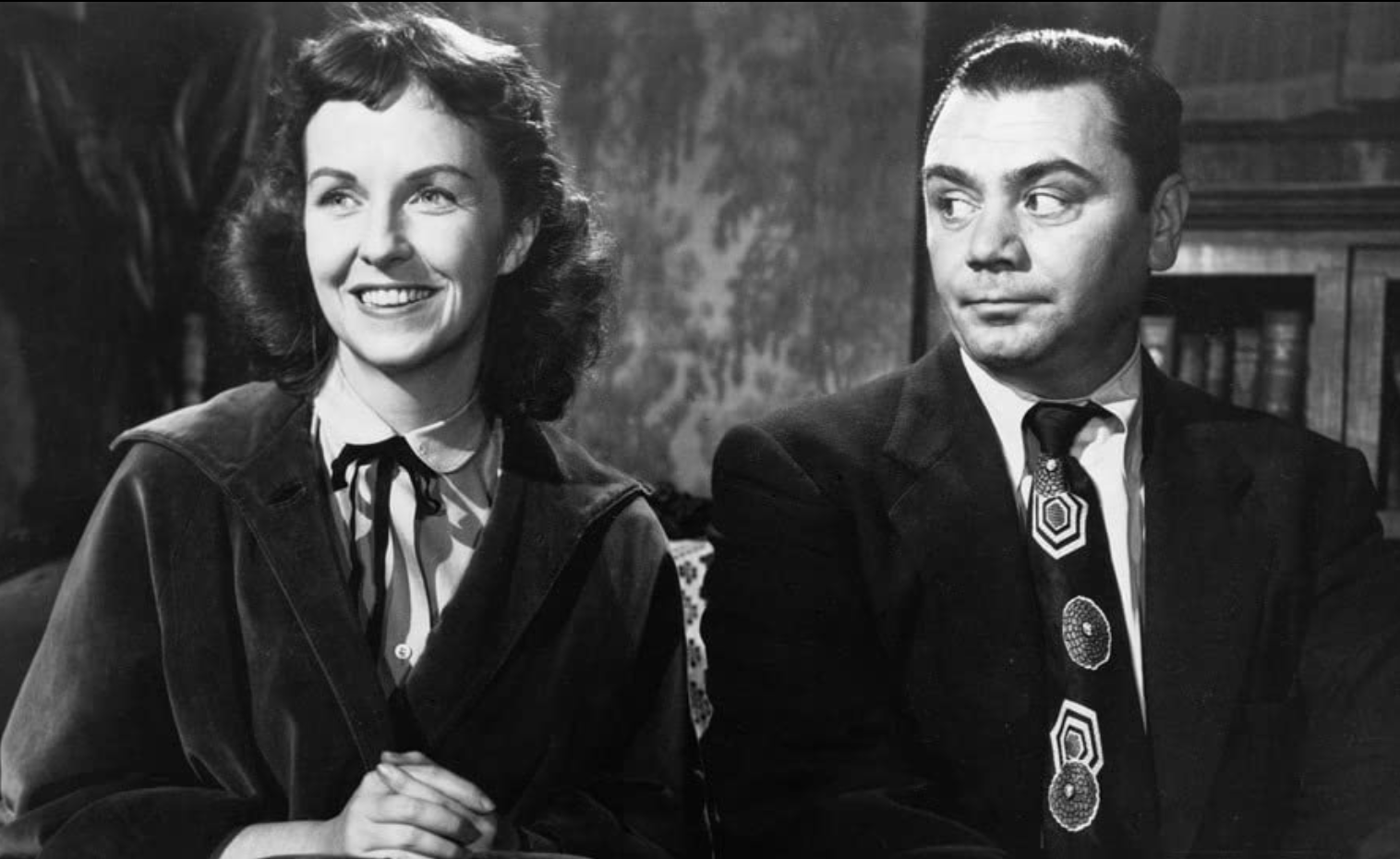
On 7.19 Kino Lorber will issue a 4K “special edition” Bluray of Delbert Mann‘s Marty (’55). It will include the correctly framed 1.37 version, which Kino issued in 2014, along with an 1.85 version — a political concession to the 1.85 fascists who screamed bloody murder over the boxy.
In a 7.28.14 HE post titled “Marty Is Boxy After All…Glorious!,” I included an explanation from Kino Lorber vp acquisitions and business affairs Frank Tarzi:
“We looked at [Bob Furmanek]’s research and then screened Marty at 1.85, and didn’t like what we saw,” he said. “If I cropped some of the close-up scenes down to 1.85 I would be cropping half of their face off. I could see [going with] 1.66 but I still think 1.33 is better. We got attacked on Home Theatre Forum and Facebook. I couldn’t believe the tone of [some of the posts]. For a two-week period we were being crucified.”
Tarzi says he’s “very happy” with the boxy Marty. “1.85 just would have been too severe, he believes. “We did several tests. There’s one closeup scene in which Marty’s is on the phone, asking the girl for a date…by the time the camera stops getting in tight, the face covers the whole frame. Cutting that down to 1.85 would have been incorrect.”

Saturday’s Agenda
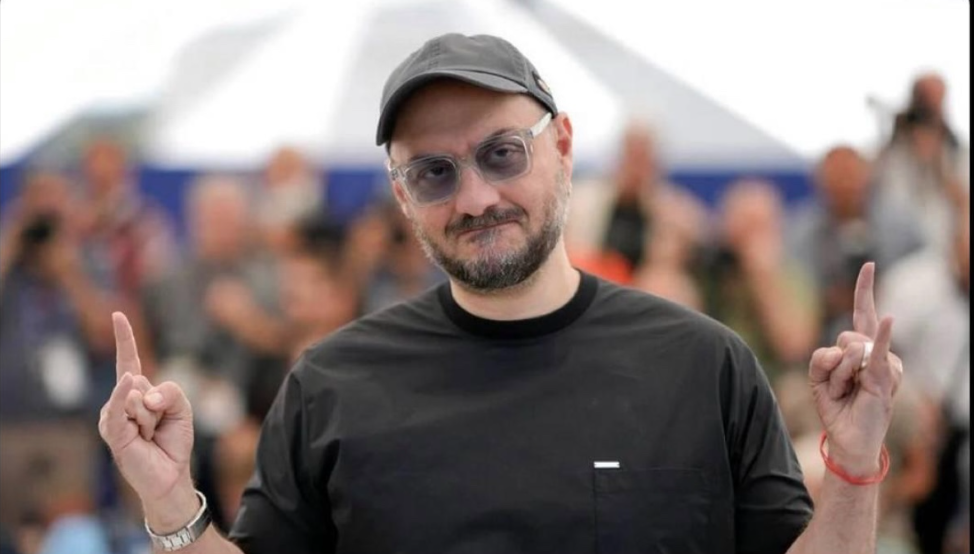
Today’s trio: Riley Keough’s War Pony (2:15 pm), Ruben Ostlund’s Triangle of Sadness (4:30 pm) and Cristian Mungiu’s keenly anticipated R.M.N. (10 pm).
Didn’t like and therefore haven’t mentioned — Arnaud Desplechin’s Frere et Soeur, Jerzy Skolimowski’s EO.
Can’t wait for Sunday afternoon’s screening of Ali Abbasi ‘s Holy Spider.

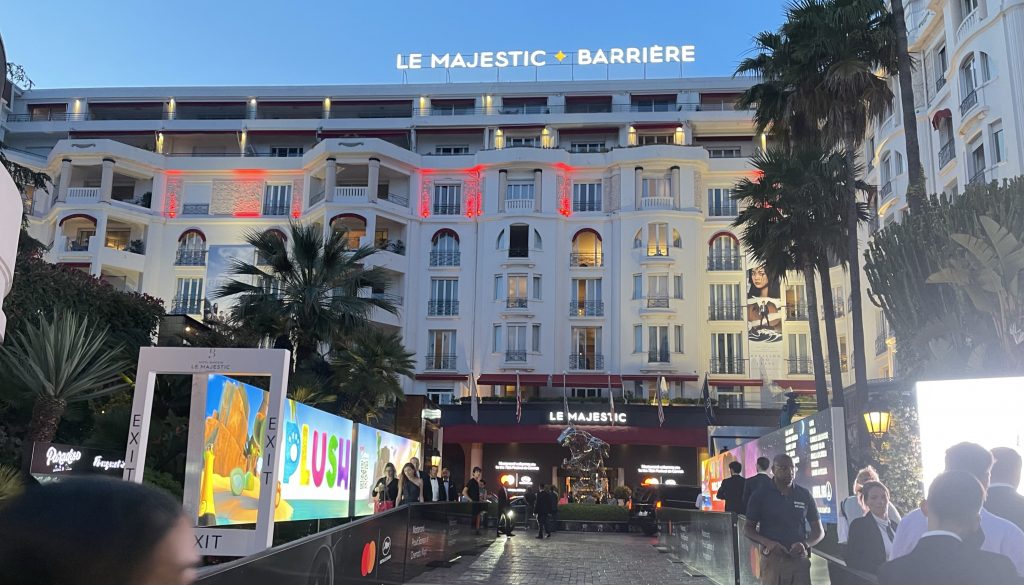
On the Cannes red carpet for George Miller’s new movie, the woman in front of me stripped off all her clothes (covered in body paint) and fell to her knees screaming in front of photographers. Cannes authorities rushed over, covered her in a coat, & blocked my camera from filming pic.twitter.com/JFdWlwVMEw
— Kyle Buchanan (@kylebuchanan) May 20, 2022