I think I can. Probably. No, I’m going to tough it out! Okay, maybe it’s not in me.
Viggo Mortensen. Kristen Stewart. David Cronenberg.
CRIMES OF THE FUTURE.
Exclusively in theaters June 3. pic.twitter.com/9wj4UH2ZzP— NEON (@neonrated) May 19, 2022

I think I can. Probably. No, I’m going to tough it out! Okay, maybe it’s not in me.
Viggo Mortensen. Kristen Stewart. David Cronenberg.
CRIMES OF THE FUTURE.
Exclusively in theaters June 3. pic.twitter.com/9wj4UH2ZzP— NEON (@neonrated) May 19, 2022
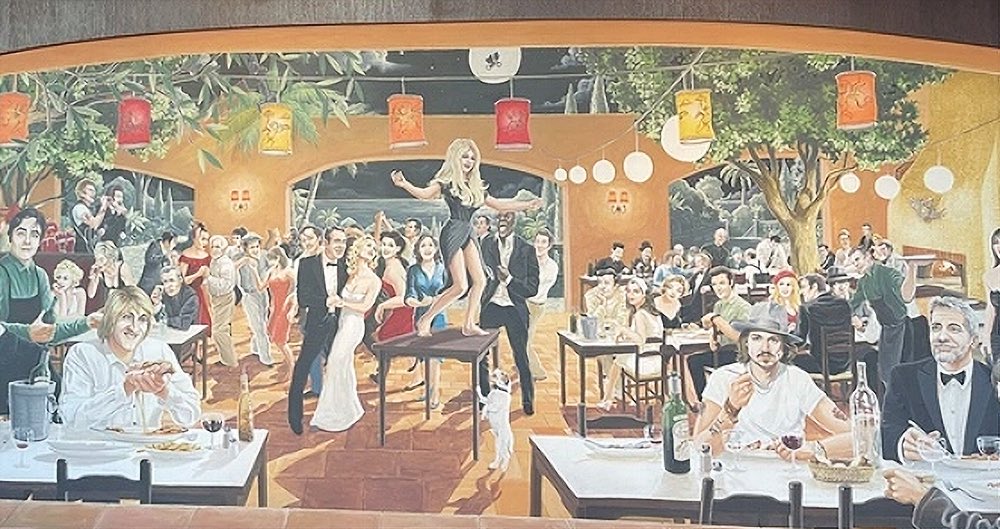
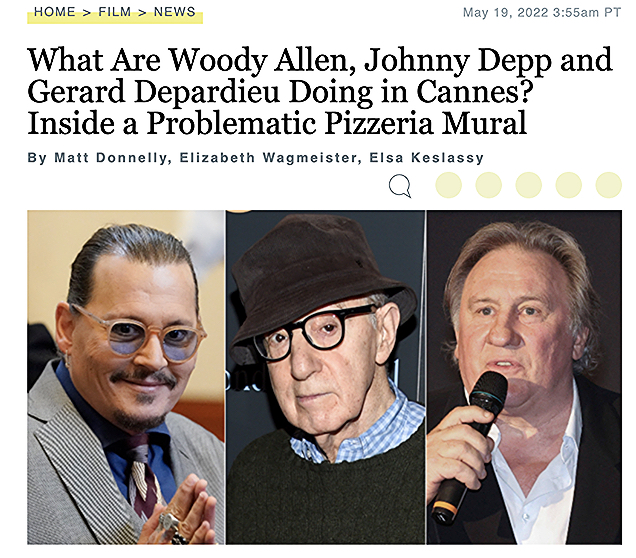
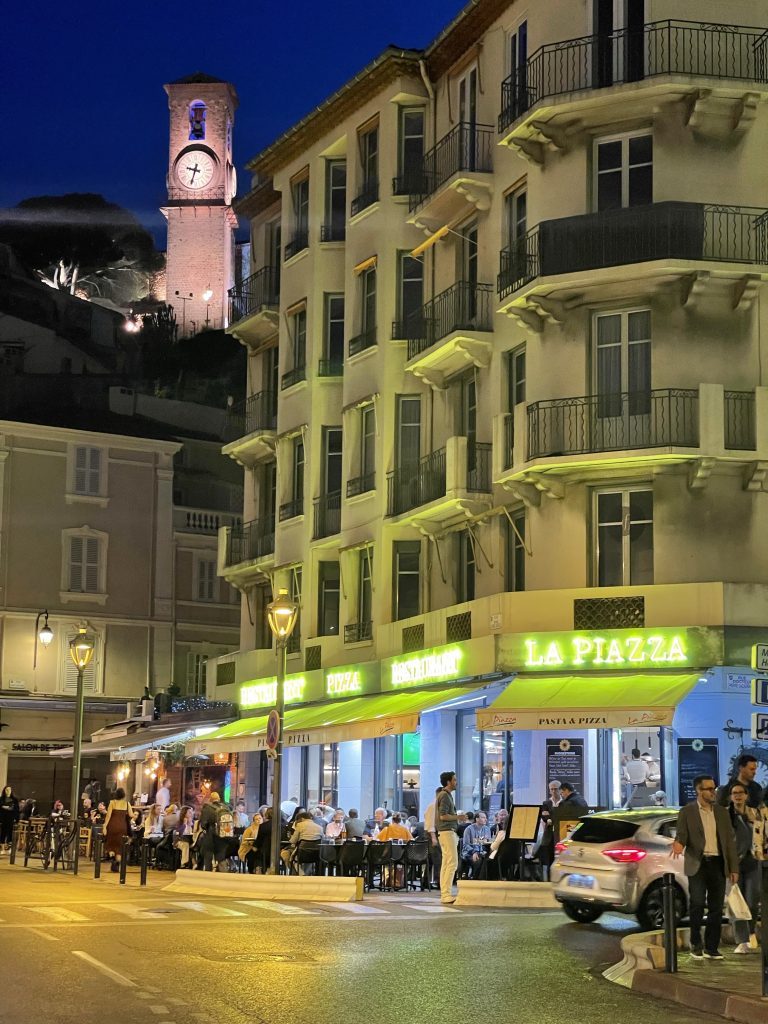
Variety‘s Elizabeth Wagmeister, Matt Donnelly and Elsa Keslassy are shocked, shocked to discover that Woody Allen, Gerard Depardieu and Johnny Depp are featured in a celebrity mural on the 2nd floor of La Pizza, a popular eatery adjacent to the Cannes marina.
They’ve co-authored a 5.19 article that basically says “gasp!…why hasn’t La Pizza eliminated these three from the mural, particularly since we — crusading trade-paper wokesters casting a vigilant eye — don’t approve?”
Here’s something that I don’t approve of: Waggy, Donnelly and Keslassy falsely stating that Allen “was accused of rape by his then 7-year-old adoptive daughter, Dylan [Farrow], in 1992.” From the get-go the accusation has been about sexual molestation, not rape, and for three decades there’s been a mountain of evidence and testimony casting doubt upon the validity of Farrow’s claim.
“The La Pizza mural stands in conflict with recent changes trying to be implemented at the Cannes Film Festival,” the trio asserts, “[given that the festival] has attempted to become more inclusive to women and people of color (although progress has been slow). Festival organizers are making efforts to catch up to the industry at large, which has attempted to implement sweeping changes in the era of #MeToo.”

It's always been strange to me that the unofficial "first stop" in Cannes – dinner and Chianti at eatery La Pizza – features a mural of several cancelled men. @EWagmeister @ElsaKeslassy and I investigate. https://t.co/smYcgXhwqr
— Matt Donnelly (@MattDonnelly) May 19, 2022
Though technically exacting and historically authoritative from a visual, atmospheric, production-design perspective, Kirill Serebrennikov‘s Tchaikovsky’s Wife is a perfectly miserable film to sit through.
It’s the story of Antonina Miliukova, a mentally unstable obsessive who persuaded the closeted Pyotr Ilyich Tchaikovsky to marry her (he needed a beard) in 1877 Russia.
For 16 years or until the composer’s death from cholera in 1893, Antonina refused to understand or accommodate herself to the fact that Pyotr was gay. Tchaikovsky realized very quickly that he’d made a terrible mistake. The marriage was almost nothing but misery for the poor guy.
Born in 1848, the headstrong Antonina married Tchaikovsky at age 28 — well past the appropriate age in late 19th Century Russia. She was 45 when he passed, and spent her last 20 years in an insane asylum. She died in 1917.
In short, the narrative of Tchaikovsky’s Wife has nowhere to go but down, and boy, does it ever! The viewer is condemned to endure Antonina’s delusion and denial for two hours. It feels airless and repetitive and de-oxygenated and terminal.
The muddy, murky, candle-kit cinematography made me feel like I was slowly going blind. I certainly felt as if I was dying of boredom, and it left me feeling afflicted with a form of spiritual typhoid fever.
I began to hate Tchaikovsky’s Wife almost immediately. Russians lived in a dungeon in the 1870s and 1880s…what a hellish environment. I couldn’t stand it, and was especially appalled by Serebrennikov’s refusal to let a little light into the situation by allowing us to revel in Tchaikovsky’s music. Ken Russell‘s The Music Lovers (’70) is not without issues, but it’s a much more arresting film than Tchaikovsky’s Wife.
For what it’s worth, Alyona Mikhailova, 26, delivers a sad, believable performance as Miliukova. As Tchaikovsky, Odi Biron is also fine or, you know, as good as the script permits.
HE agrees 110% with Owen Gleiberman‘s Variety pan.
I took this video inside the Cannes press conference salon on 5.17.15. Call it a period of relative calm before the storm. The #MeToo movement would launch two years and five months later, and over the following year the first stirrings of the woke Robespierre plague began to be felt. Peak terror was felt during ’19,’20 and ’21. All in all the plague has been with us for four and a half years now, going on five. It’s just about run its course, but the real death throes won’t be felt until the November ’22 midterms.
From “The Moment I Realized Carol Was Toast With Older Viewers (i.e., Academy Voters)“, posted on 2.2016: Todd Haynes‘ Carol may have been, for me, the most emotionally affecting relationship film of 2015. I’m not going to rehash all the praise-worthy elements (Cate Blanchett and Rooney Mara‘s fully felt performances, Ed Lachman‘s 16mm cinematography, the early ’50s vibe of repression and propriety). It so perfectly captured, for me, what it feels like to be in love (“I know how it feels to have wings on your heels”). I particularly remember what a high it was to see it in Cannes…everyone was levitating, it seemed.
“Then I saw it again six months later — in late October, or a month before it opened commercially on 11.20 — at the Middleburg Film Festival. Middleburg is a more conservative town than Los Angeles, of course, but it’s similar to the Academy in that it’s full of wealthy over-50 white people. And the instant Carol finished playing in the main conference room of Middleburg’s Salamander Resort and the lights came up, you could feel the vibe. They ‘liked’ and respected it, but they didn’t love it. The atmosphere was approving and appreciative, but a bit cool. And I said to myself, ‘Okay, that’s it…not even Christine Vachon dreamed that Carol could win Best Picture Oscar but after Cannes I thought it would probably be Best Picture-nominated because it’s so affecting and classy and poised….now I don’t think that’ll happen.’
“It went on to win big with critics and industry groups, but older whites never embraced it. They somehow didn’t see themselves in it.”
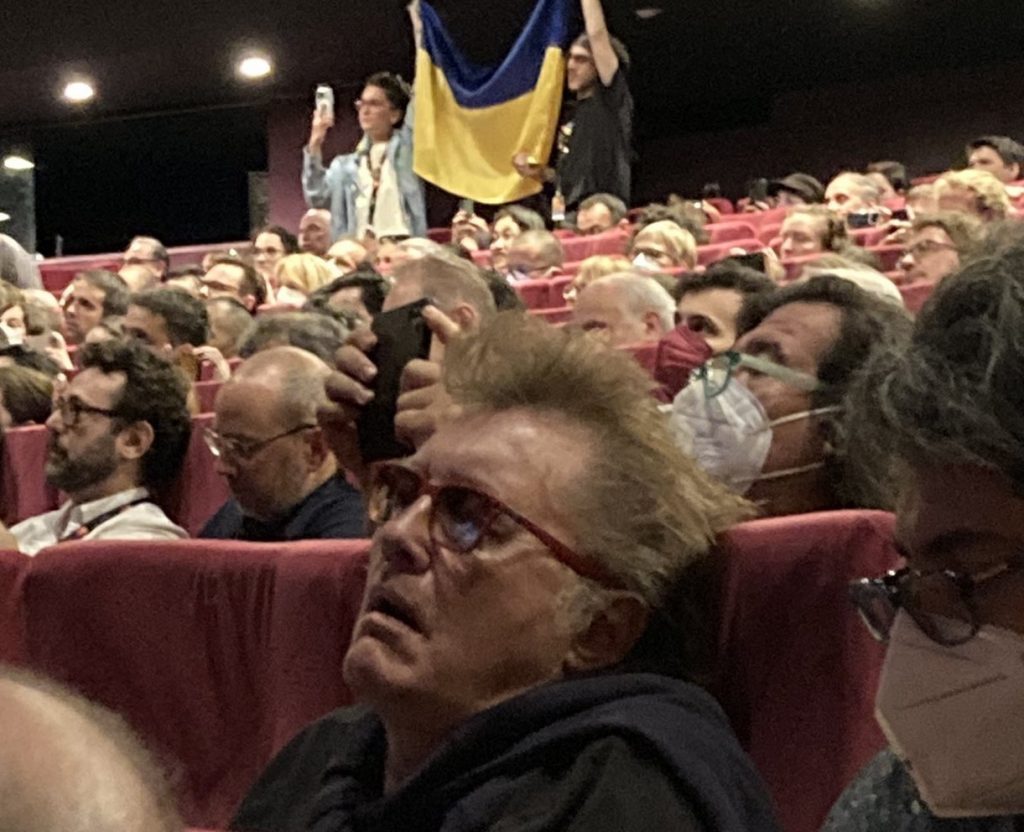
A hideous creep journalist-critic, Charles Bramesco, posted this photo on Twitter, but what the hell. I don’t look like I’m napping in my seat — I look like I’ve just succumbed to a massive heart attack. But it’s just my natural, blessed ability to nap anywhere at any time. I close my eyes and I’m gone. In this instance I was merely escaping from the usual opening-night, pre-screening ceremonies.
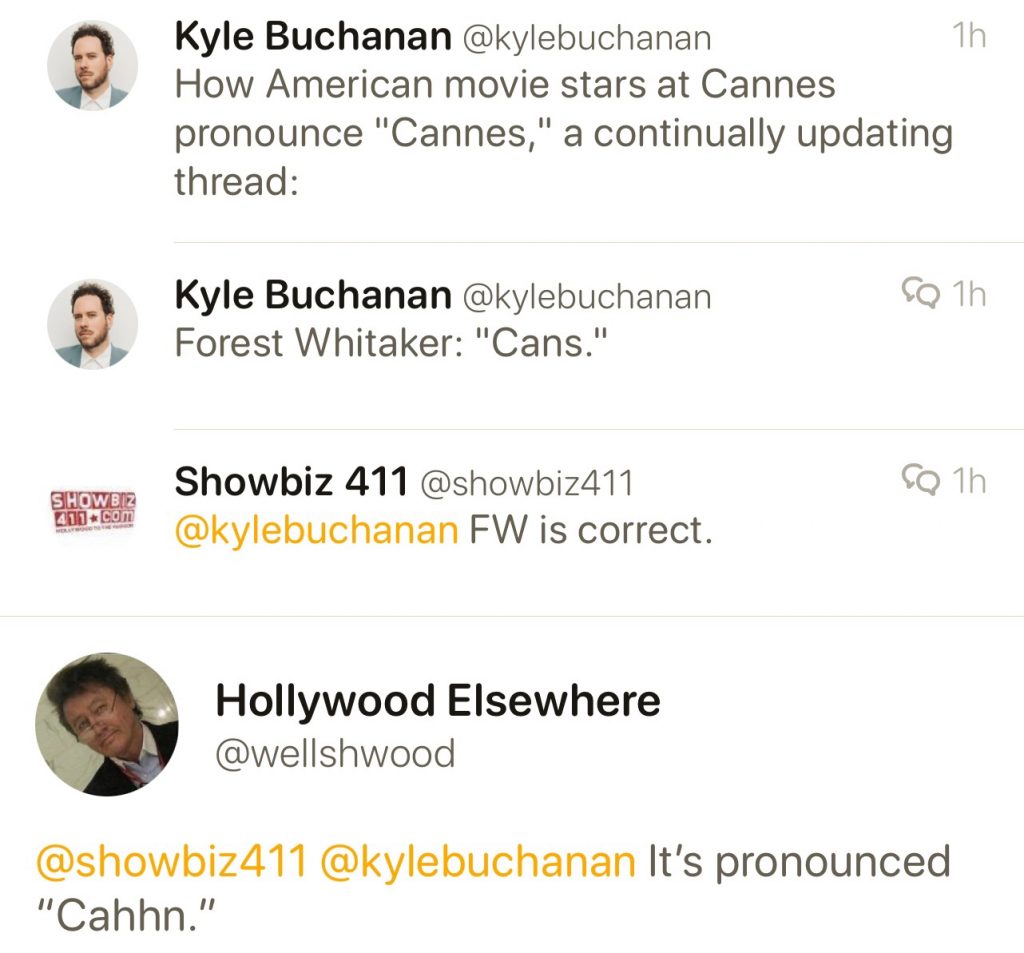
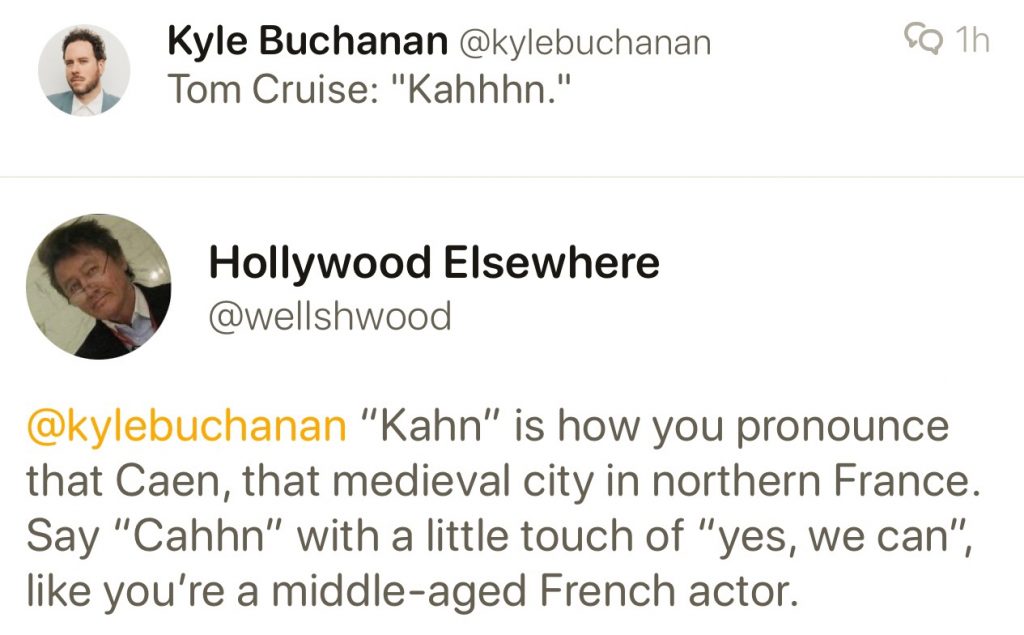
There’s a certain middle-aged Frenchman’s way of pronouncing “Anne” — it sounds a bit subdued and abbreviated with a slightly prolonged “nnn” sound. This is how you need to pronounce “Cannes.” Note to Forrest Whitaker: the “s” is silent.
…to heighten the excitement factor for Top Gun: Maverick, which is having its big-ass, Grand Lumiere Cannes premiere as we speak…formally dressed Tom Cruise, Jennifer Connelly As it turned out Miles “don’t be a pervert, man” Teller was in Canners, but not during the red-carpet photo call.
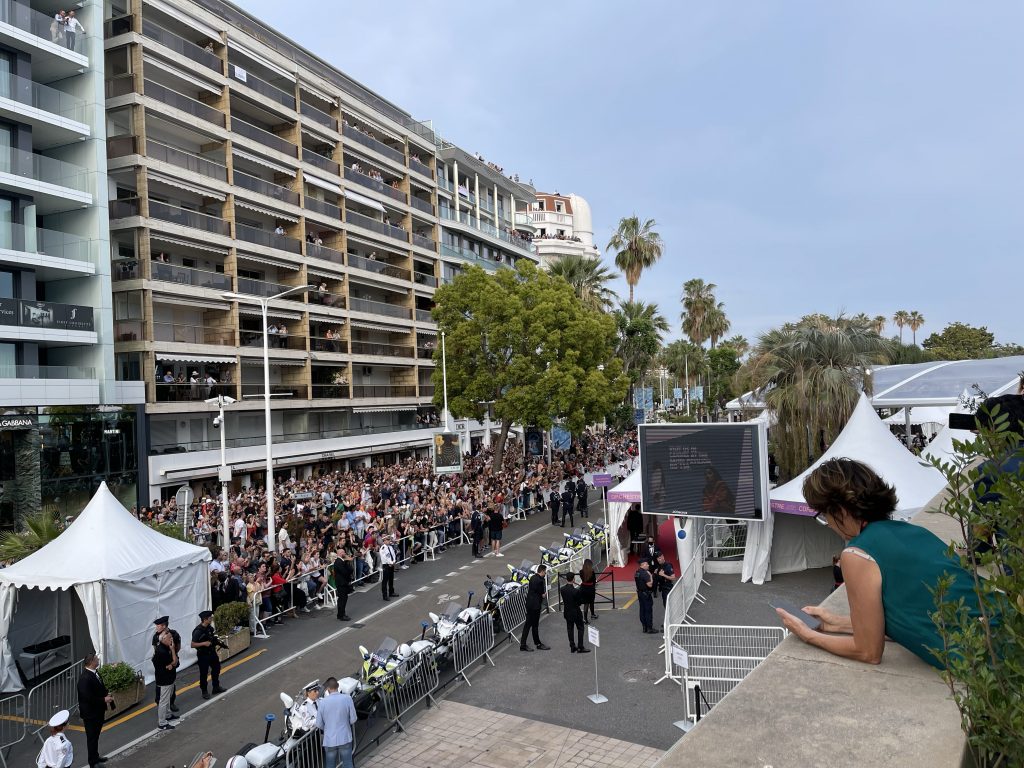
Tom Cruise rolled into the #Cannes2022 Film Festival – jet planes in tow – cranking up festivities with action, star power and autograph signings on the red carpet https://t.co/wEb1evSyec pic.twitter.com/cRO7ZHEaJm
— Reuters (@Reuters) May 19, 2022
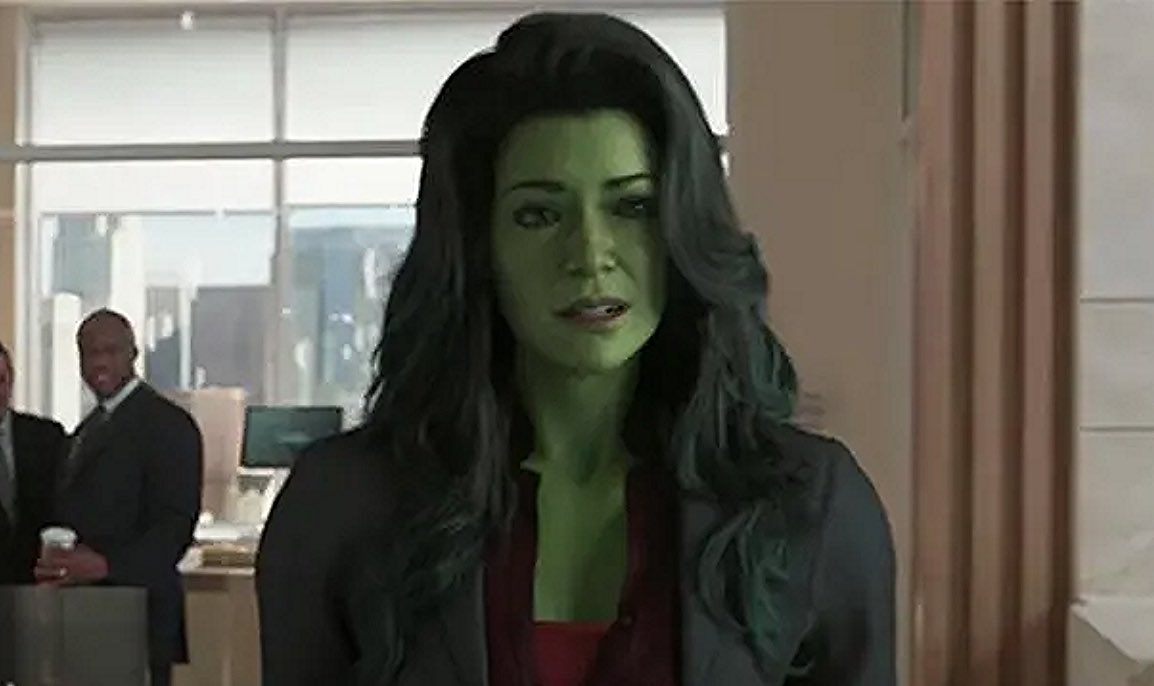
I avoided watching this Marvel trailer yesterday; today I gave in. I’d rather watch a self-referencing Marvel comedy than a movie that that deals with this central figure (Tatiana Maslany as a female Hulk lawyer) more or less straight. A nine-episode Disney series, She-Hulk: Attorney-At-Law pops on 8.17.22.
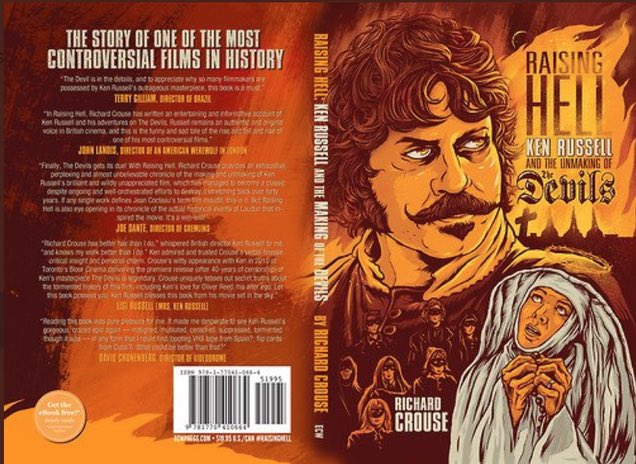
It’s taken me nine and 1/2 years to finally get around to buying Richard Crouse‘s “Raising Hell: Ken Russell and the Unmaking of The Devils,” which was published on 1.1.12. It’s now in my Kindle archive. I’ve seen this 1971 film six or seven times. I own a British DVD of the restored 117-minute version, but where’s the Bluray version? Why hasn’t Criterion released one?
From Josh Stillman’s 10.1.12 EW review: “The story of 1971’s The Devils‘ is an unpleasant one. Based on Aldous Huxley’s book The Devils of Loudun’ and a play by John Whiting, the film details an episode of alleged demonic possessions and exorcisms — and the innocent priest who was executed for heresy — in 17th-century France. And that’s just the plot line.
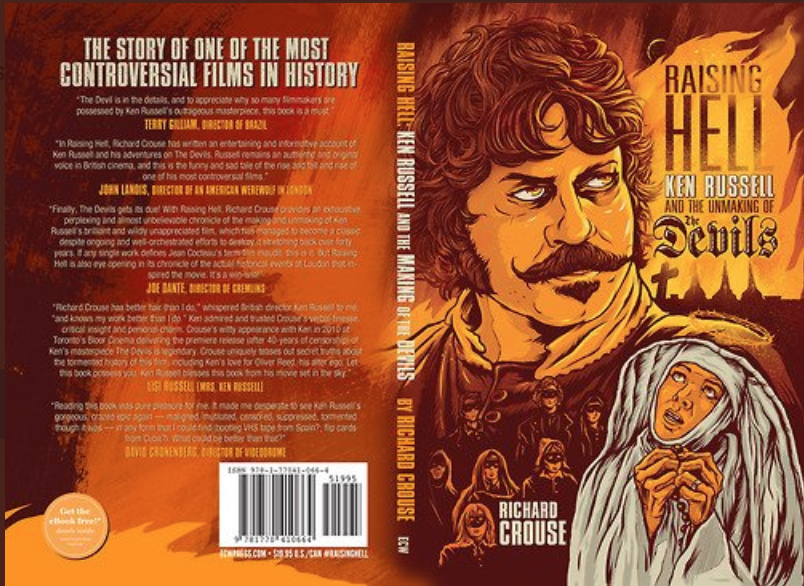
“The real story of The Devils took place behind the camera, in the movie’s production process and its reception among censors, critics, and audiences. The intensity of the shoot cost director Ken Russell his marriage and tested the nerves of its stars, British screen legends Oliver Reed and Vanessa Redgrave.
“Later, after facing numerous cuts from the British Board of Film Censors for material deemed inappropriate (or, according to the Catholic Church, blasphemous), The Devils received an abysmal response from critics, was banned in several countries, and basically vanished for three decades.
“In recent years, though, the movie’s seen a bit of a resurgence. Fan sites are popping up and bootleg copies with fewer cuts have surfaced (Russell lamented that a fully uncensored version simply doesn’t exist); critics, for their part, have begun to see the film in a different light, hailing it as a provocative masterpiece in league with A Clockwork Orange.”
Most kinescopes of live TV look awful. The first 35 seconds of this 1963 Candid Camera segment, in which a 27 or 28 year-old Woody Allen introduces a boss-and-secretary dictation gag, is from videotape, and the clarity is astounding. The bit itself is…well, not bad.
You Tube commenter: “I love this lady. She’s got good style. Reminds me a little of Amy Winehouse.”
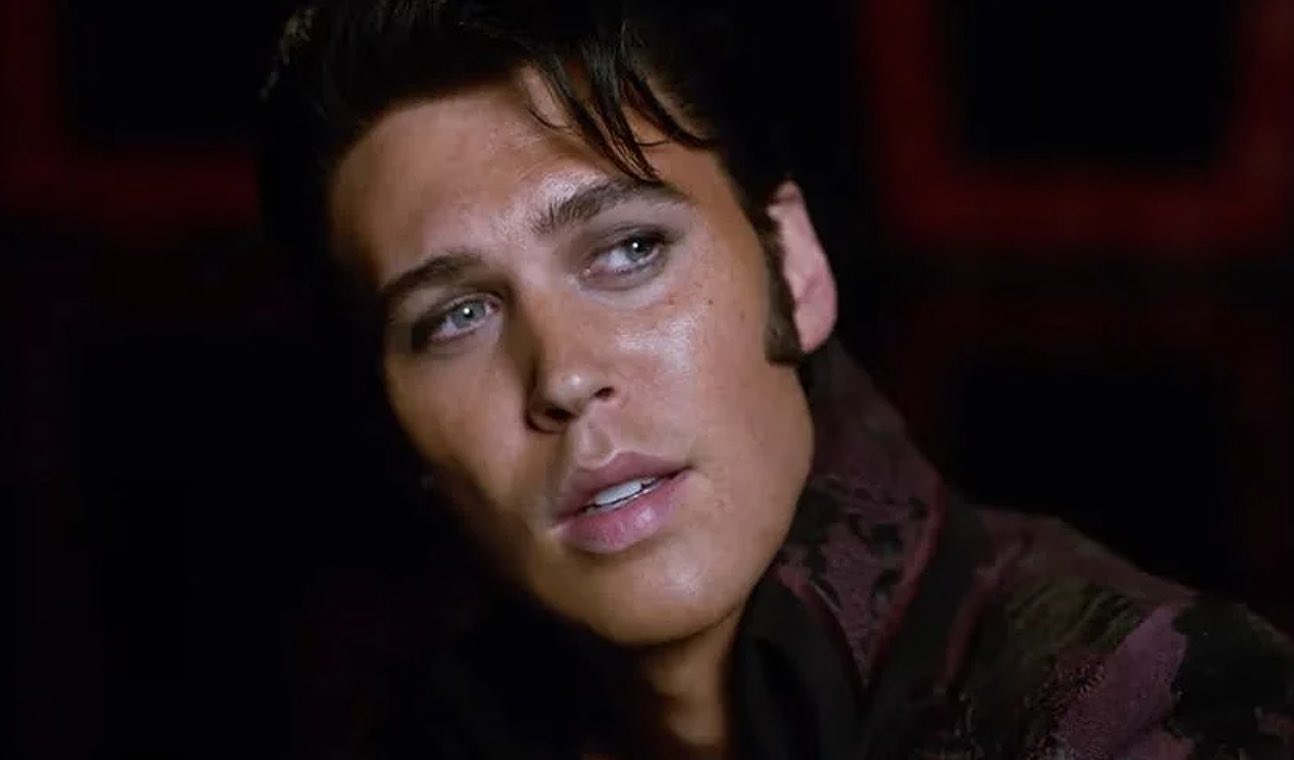
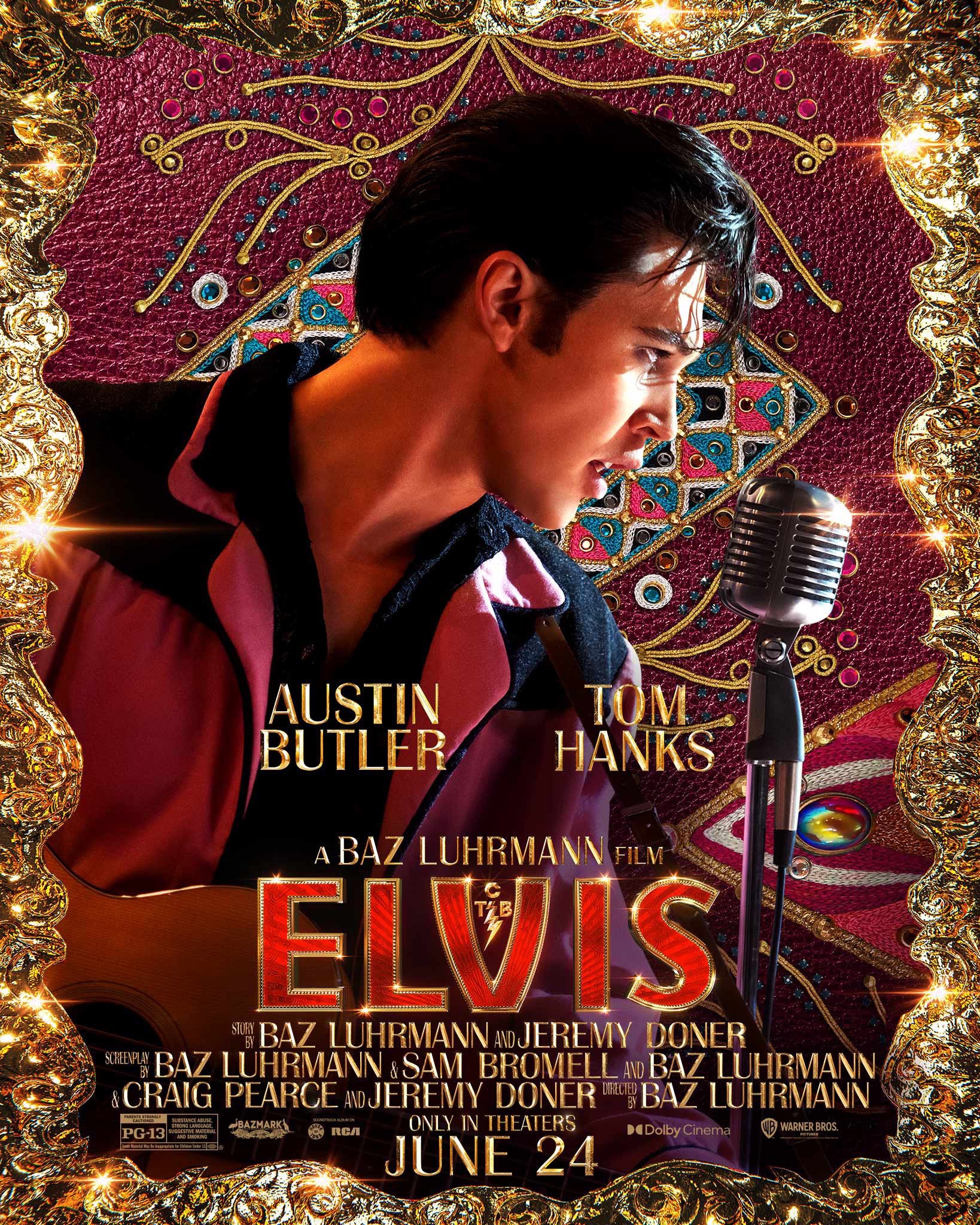
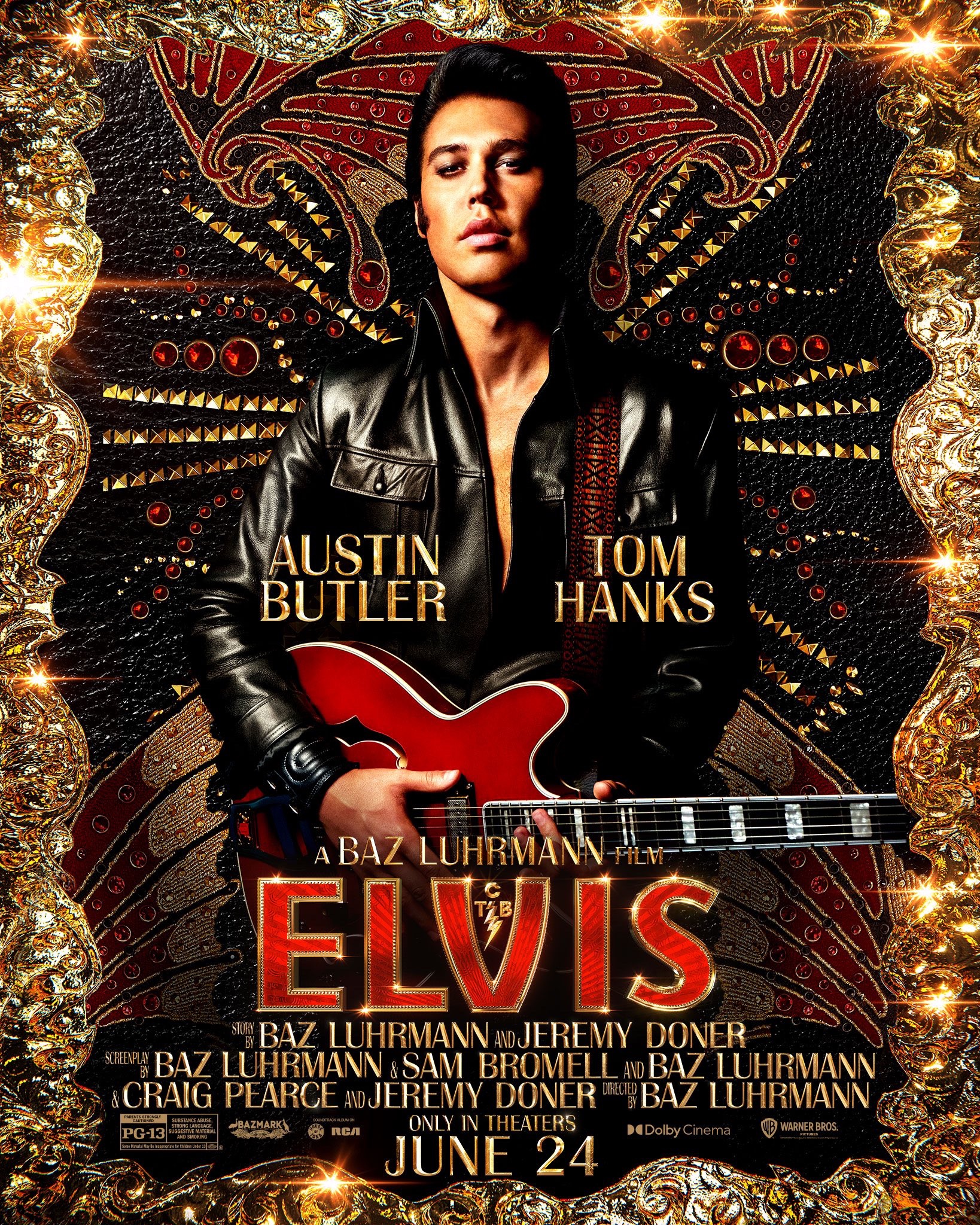
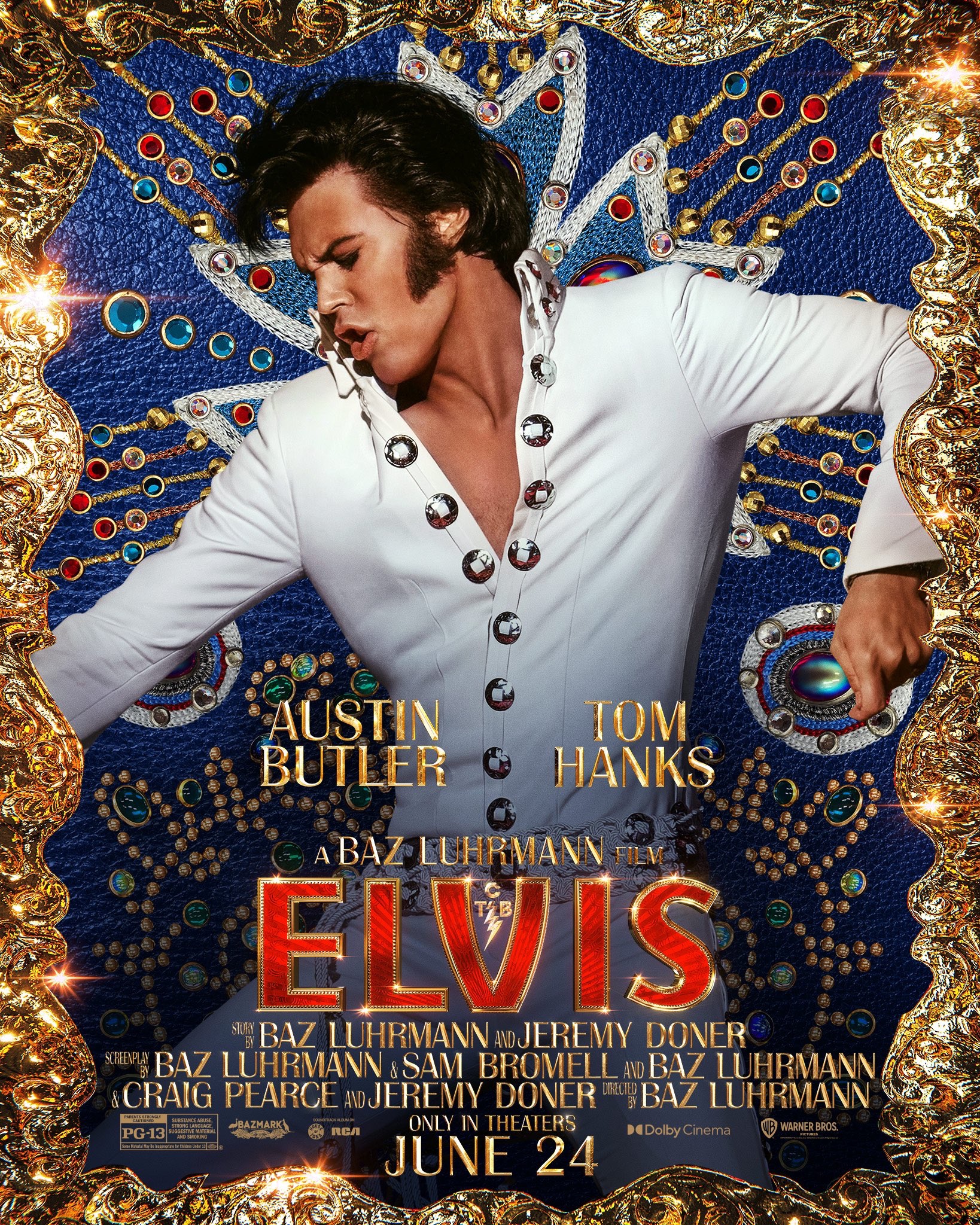
On 5.16 I noted with some alarm that Austin Butler is doing his own singing in Baz Luhrmann‘s Elvis. I based this reaction on the posting of a musical preview of Butler singing “If I Can Dream”, which had been posted that same day.
“Butler doesn’t sound like the Real McCoy,” I wrote. “Lacking that unique vocal signature (smooth tones, purry phrasing, Memphis inflections), Butler is just another Elvis imitator.”
A journalist friendo has written to explain that “Butler’s singing is only for the younger Elvis. Baz explained all that at the CinemaCon presentation with Butler on stage and it is evident in the film.”
HE reply: “If you say so, okay. But of course, the younger Elvis (mid ‘50s) sounded like Elvis of the ‘60s and ‘70s, being the same person with the same larynx and vocal chords and whatnot. So it’s mystifying.”
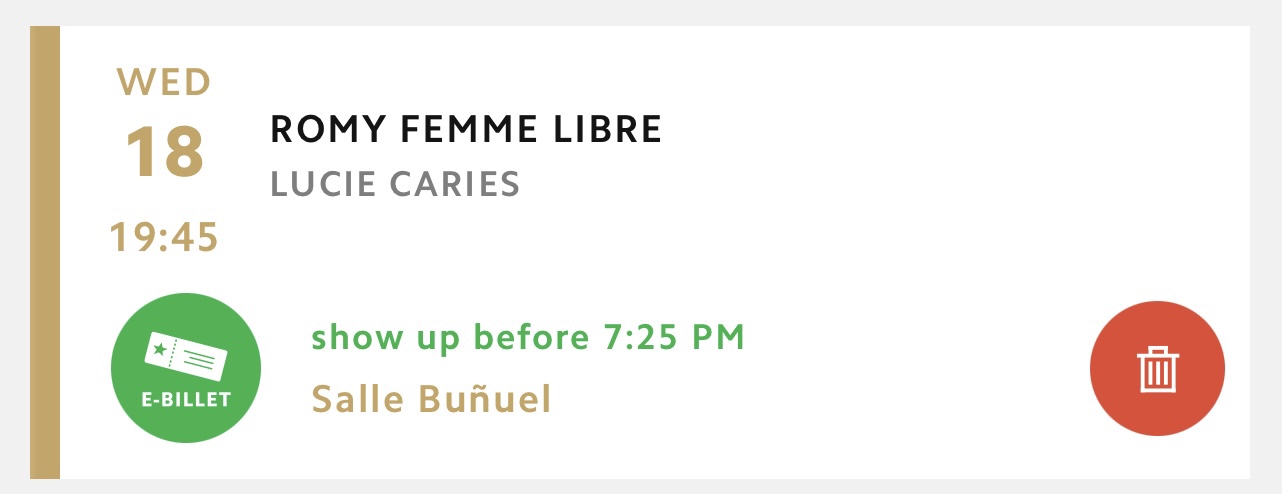
Except for a Romy Schneider doc early this evening, HE is seeing almost nothing today. Entirely due to the horrors of the system, which is responding better now but was partly impossible on Monday and Tuesday and completely uncooperative early this morning.
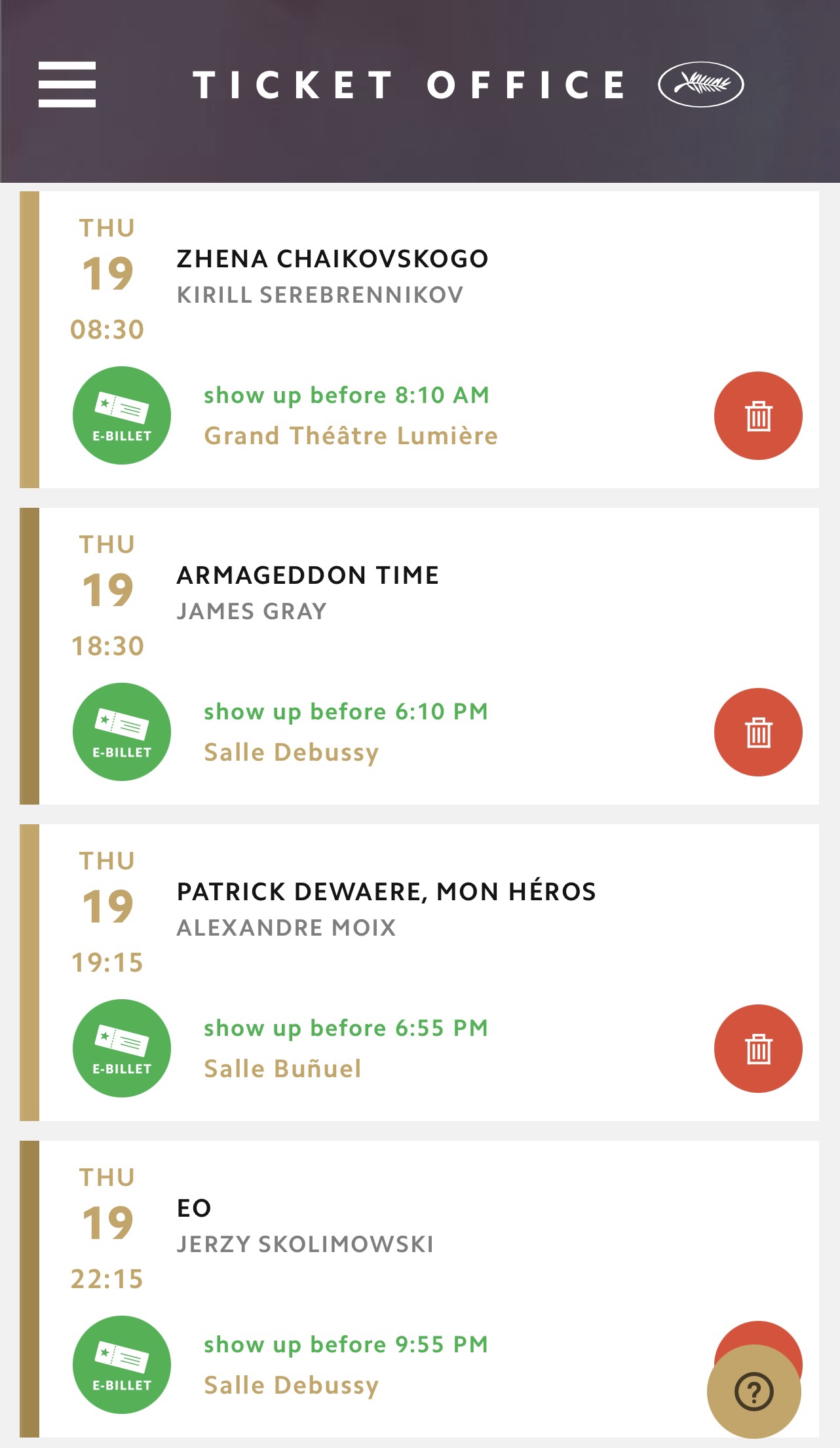
But Thursday will be a serious day — Kyrill Serebrennikov‘s Zhena Chaikovskogo at 8:30 am, James Gray‘s Armageddon Time at 6:30 pm, and Jerzy Skolimowski‘s EO at 10:15 pm.
As I’m not a member of the infamous “”James Gray cabal” and because I’ve spoken to a friend who caught a research screening of Armageddon Time, I’m considering a re-think by attending Alexandre Moix‘s Patrick Dewaere, Mon Heros at 7:15 pm.