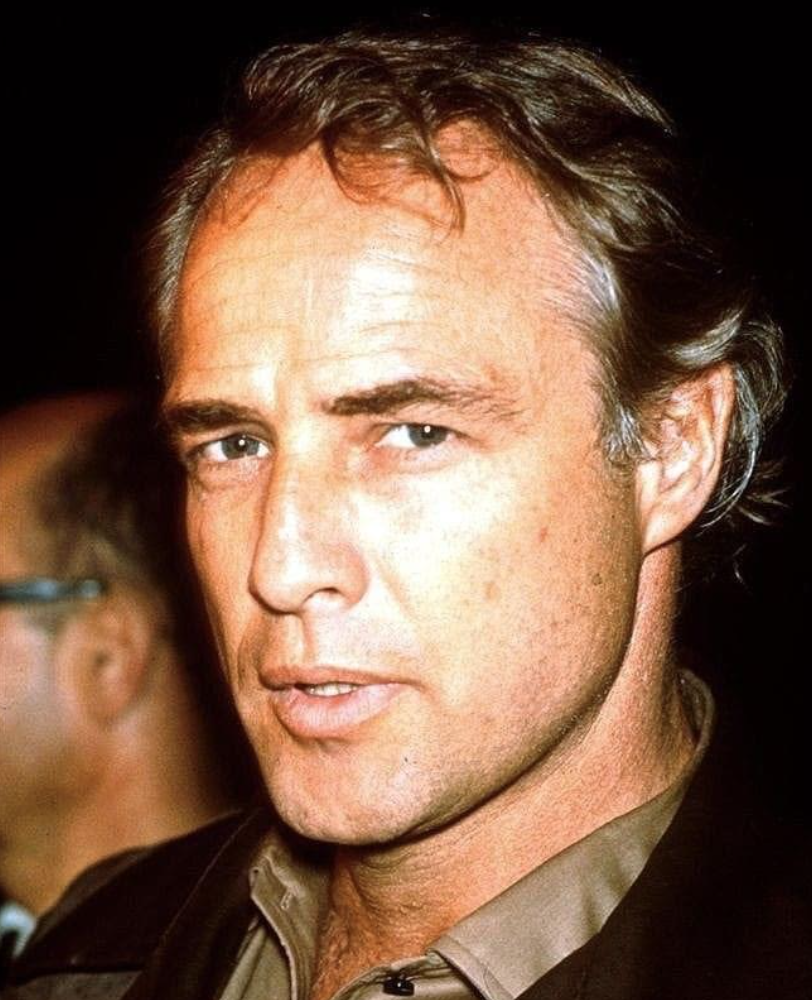
Very Sorry About Ezra Miller

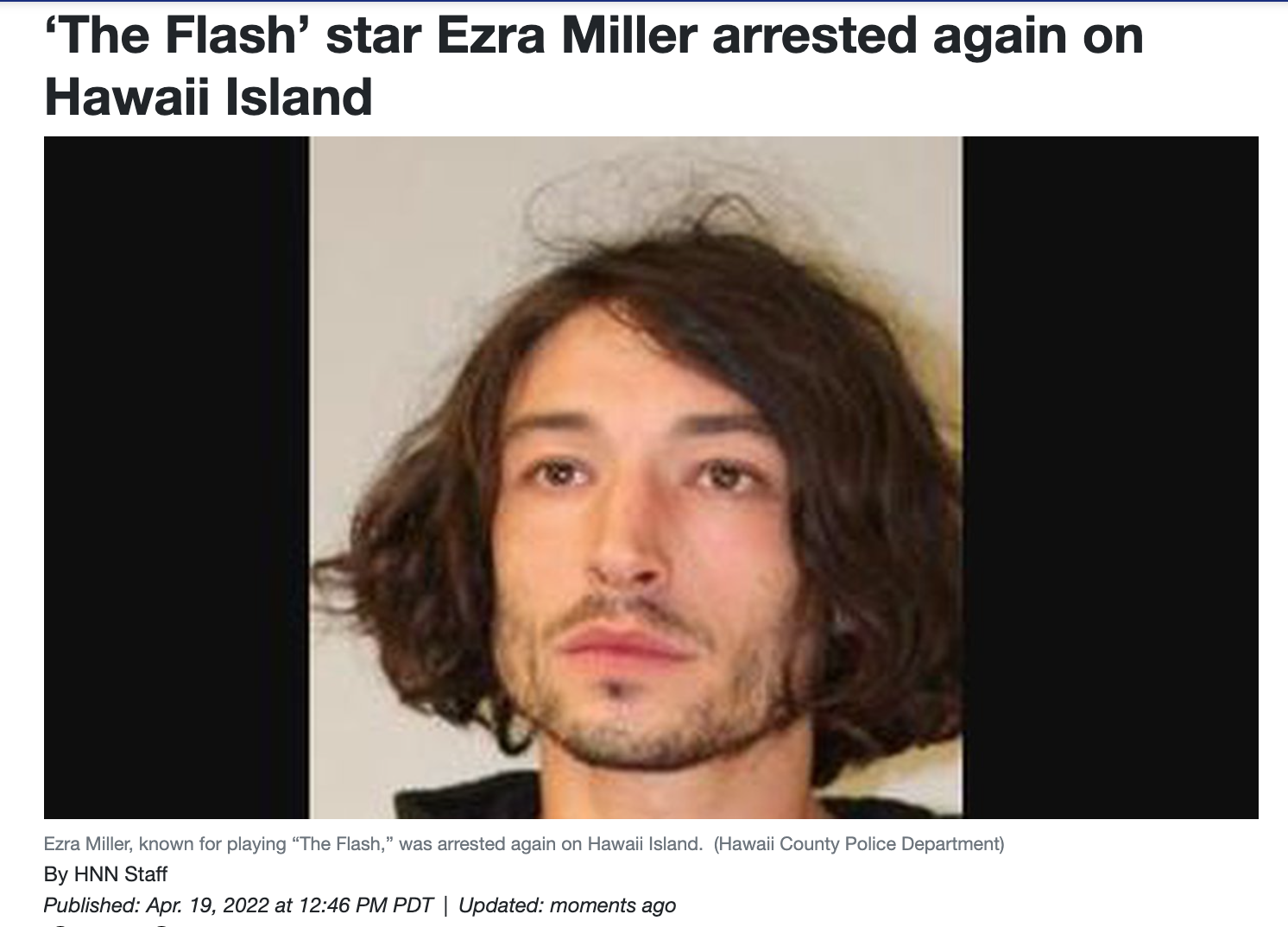
I’m very sorry about Ezra Miller having been arrested for second-degree assault last night. Miller reportedly threw a chair at a woman inside of a Pahoa home, according to Hawaii News Now. Last month Miller was arrested in a Hilo karaoke bar after allegedly ripping a microphone out of a woman’s hands and lunging at a man playing darts.

It would appear that Miller is having trouble controlling himself, and now he’s blowing his career to pieces. After the karaoke bar incident he obviously needed to calm down and not be violent again, but now he’s branded himself as Mr. Wacko. Look at the HNN photo of him [below] — he could be Charles Manson’s grand-nephew.

I’ve always sensed something fierce and immoderate inside Miller…I’ve felt this tendency all along. This is what gives him power as an actor, of course. The trick is not to let inner feral tendencies overwhelm your judgment as an artist.

11 years ago I saw Miller in Lynne Ramsay‘s We Need To Talk About Kevin. Miller’s titular character, the neglected son of Tilda Swinton, was driven by anger issues. I described his character as “a steely-brained, black-eyed Belezebub…[the audience is persuaded early on that] the only humane and compassionate response to this kid would have been to put him in a burlap bag, fill it with rocks and toss it off a pier.”

Two years later Miller, a standout in Perks of Being a Wallflower, took part in a Virtuosos Award Ceremony at the 2013 Santa Barbara Film Festival. He was joined by Ginger & Rosa‘s Elle Fanning, Compliance co-star Ann Dowd, The IntouchablesOmar Sy, Beasts of the Southern Wild‘s Quvenzhane Wallis and Les MiserablesEddie Redmayne.

Here’s how I described Miller’s on-stage demeanor: “The eternally weird Miller, 20, leaned forward in the interview seat, hunched forward like a cat about to chase a mouse. I half-expected him to leave the stage on all fours. Miller has Haight-Ashbury hippie hair now, and was wearing a pair of almost shapeless brown serf shoes. And he smiled a lot.”

We all go through difficult passages. I hope Miller can somehow get hold of himself and stop behaving this way. He’s only 29 — he has his whole life ahead of him.
2009 “Bull” Bluray Is Good Enough

MGM’s Raging Bull Bluray has been in my library for a dozen years, give or take.

Having seen Martin Scorsese‘s raw and turbulent classic two or three times during the original run in late 1980, I can say without hesitation that the 2009 Bluray looks much sharper and cleaner. The texture and detail have always looked magnificent, and the sound is far superior to what I heard in theatres in the final days of the Carter administration — the levels were so low at times you could barely hear the dialogue.

And of course, you can stream it on Amazon, Apple +, Vudu, etc. If there’s a difference in quality between the 2009 Bluray and the streaming version, my eyes can’t see it.

I’m therefore having trouble feeling excited about Criterion’s forthcoming 4K/Bluray version (7.12). It’ll look first-rate, of course, and I’m guessing that a certain extra-vivid quality will be apparent in the 4K version, but Michael Chapman‘s Raging Bull compositions have always had a rudimentary, right-down-the-middle 35mm look. Raging Bull was never meant to be pretty. It can never look as dazzling as Pawel Pawlikowski‘s Cold War or Ida.

It would be one thing if it had been shot in black-and-white VistaVision (like The Desperate Hours and Fear Strikes Out were in the mid ’50s), but it wasn’t. So I can’t imagine a significant “bump” effect.

We All Live In A Geodesic Dome

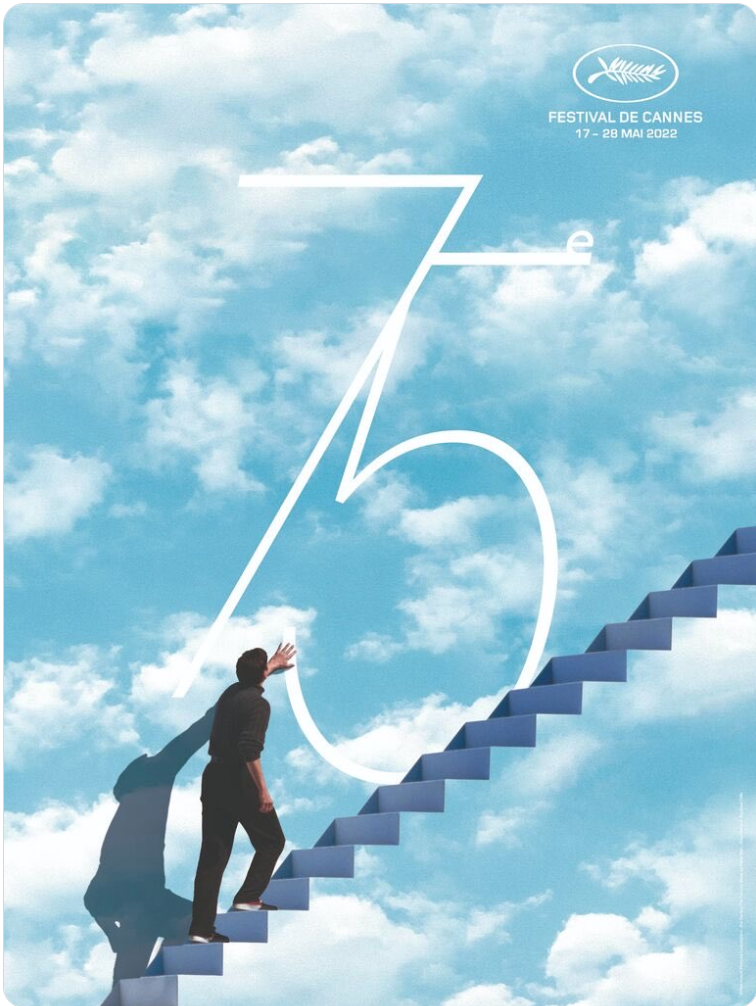
This is a nice Cannes Film Festival poster, but Peter Weir‘s The Truman Show (’98) is no masterpiece. I disliked it from the get-go. Jim Carrey‘s “Truman Burbank” is unaware that he’s living inside a corporate-funded, hermetically-sealed reality TV dome. This is what modern life feels like to tens of millions of actual Americans, of course, so we all get the metaphor. But I found the premise impossible. Complete disengagement.

I’ve posted the following two or three times over the last decade, but here goes again: Despite the impossible-to-swallow premise, The Truman Show could have saved itself if it had gone with a darkly ironic ending.

Weir’s film ends with Truman escaping from the dome and finally about to experience the blessings and pitfalls of real life…hallelujah! A far more satisfying ending would have been for Truman to escape into the real world and then, after a few difficult weeks or months, returning to the dome because he can’t hack the difficulty of real life — too much anxiety, trauma and heartbreak.

The final scene would show Truman embracing Ed Harris‘s “Cristof” and Laura Linney‘s “Hannah Gill” and shedding tears of joy at being able to return to the shelter of Fake World — a realm that tens of millions of actual Americans live in today.

Handwriting Analysis

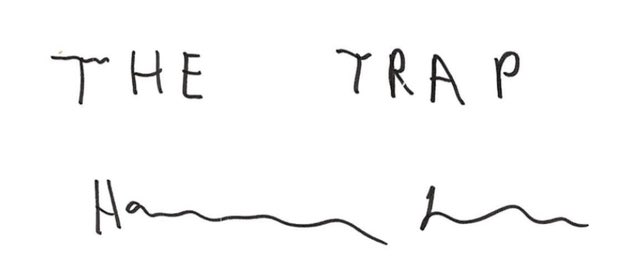
An eight-year-old draft of The Trap, a never-shot movie written by Harmony Korine, appeared in my inbox. Just one of those things on gossamer wings. Korine’s most recent film was The Beach Bum (‘19), a meandering Florida keys stoner mood-trip with Matthew McConaughey. What impresses me here is Korine’s almost completely undisciplined signature. He manages a traditional H and a small a before dissolving into a kind of overdose scrawl. Not into structure. Fascinating.

Postscript: I decided to delete the erotic photo over fear of copyright lawsuits. There are too many velociraptor attorneys out there who are ready to pounce at a moment’s notice.

Malcolm Nance’s Ukrainian Allegiance

How can anyone not respect 61-year-old Malcolm Nance donning battle gear in order to help Ukrainians repel Russian invaders?

Starting last month Nance became part of the International Legion of Territorial Defense of Ukraine, a foreign-legion force created last February at the request of Ukrainian president Volodymyr Zelenskyy.

We all remember Nance’s lively CRT argument with Ben Shapiro on Real Time with Bill Maher last August.

Joy Reid’s MSNBC interview with Nance begins around the 6:50 mark.

I Miss Fat Thor

Many, many people are delighted by the prospect of another tongue-in-cheek Thor film. I am not one of them. Thor: Love and Thunder (Disney, 7.8) costars Chris Hemworth, Tessa Thompson (as the bisexual Valkyrie), Natalie Portman, Christian Bale, Chris Pratt, Dave Bautista, etc. Plus I am not a fan of director Taika Waititi. I probably never will be. Post-Jojo Rabbit (which Jeff Sneider had a great time with, chuckling and guffawing) my Waititi attitude became caveat emptor. I know mine is a minority opinion. I hope everyone has a great time with it.

A San Francisco Earthquake Oscar Morning

On 1.23.07, or 15 and 1/4 years ago, the 2006 Oscar nominations hit like an impact grenade. Many blogaroos went into shock; almost everyone in the award-season loop was speechless. For on that darkly historic morning, Bill Condon‘s Dreamgirls — one of the most heavily hyped Best Picture contenders of all time — failed to be Best Picture-nominated, and it was like “Casey at the Bat” times ten. It gathered eight Oscar nominations but not for Best Picture.

And So A Question: That was then, this is now. Sometimes time and fresh perspectives can shed new light upon a film’s reputation. Who in the HE community has recently re-watched Dreamgirls…okay, within the last five years, say — and how does it play?

Here’s how I put it minutes after the announcement: “Dreamgirls, the musical that many, many people (David Poland included) had predicted would win the Oscar for Best Picture, hasn’t even been nominated for Best Picture….double, no, triple-strength shocker!…an omission that will live in the annals of Oscar nomination history.”

“The clouds hanging over the Dreamgirls camp right now are extremely dark and Cecil B. DeMille-y. For what it’s worth, my sincere condolences to Bill Condon, Larry Mark, Terry Press, Nancy Kirkpatrick, David Geffen and the gang. I never hated Dreamgirls or rooted for its demise. While we all knew it couldn’t win the Best Picture Oscar, I honestly thought it would at least be nominated.”

I was in Park City that morning, staying at Carol Rixey‘s Star Hotel (this was two years before the infamous cowboy-hat incident).

If anyone in the community was thrown for a loop it was Poland, one of Dreamgirls‘ most impassioned and tireless allies for months on end: “For those of you desperate for me to say ‘I was wrong’, I was wrong,” Poland wrote. “If you think [this is] a big deal for me, you have missed my reality completely.”

I was also deeply disturbed that Alfonso Cuaron‘s Children of Men, my personal hands-down choice for the year’s finest film, was also blown off in terms of a Best Picture nomination. Easily one of greatest films of the 21st Century (and featuring three of the most innovative action sequences in movie history), and not even nominated.

Condon didn’t get nominated for a Best Director Oscar, and yet United 93, arguably the most gripping and skillfully made disaster film ever, resulted in Paul Greengrass snagging a nom in that category.

There were only five Best Picture nominees that year — The Departed (brilliant), Babel (sad, meditative, cosmic, heartbreaking), Letters from Iwo Jima (hasn’t aged well), The Queen (ditto) and Little Miss Sunshiner (a near-perfect family comedy).

Posted on 2.20.07: “The defeat of Dreamgirls was a thunderclap moment along the lines of Roman Polanski winning the Best Director Oscar for The Pianist.

It was the Academy members saying en masse, “You guys can hype Dreamgirls all you want but we don’t really like it that much. It was diverting and energetic, of course, but not good enough for the Oscar big-time…the third act was weak, Beyonce‘s character amounted to almost nothing, that moment with Jamie Foxx looking at Jennifer Hudson‘s kid at the very end — throw it all together and the ticker tape read, ‘Not bad, pretty good but no cigar.'”

HE’s top seven 2006 films, in this order: Children of Men, United 93, The Departed, The Lives of Others, Volver, Little Miss Sunshine, Babel.

“Zodiac” Again

Before last night I had watched David Fincher‘s Zodiac seven or eight times, give or take. Two press screenings of the shorter theatrical version (157 minutes), and the Bluray director’s cut (162 minutes) five or six times.

But last night’s viewing was different. For the first time I watched it with subtitles start to finish, and it seemed to make a profound difference. It felt more granular, more “police blotter” on some level. I know each and every scene of the 162-minute version backwards and forwards, and yet I found it spellbinding, especially the last 45 minutes or so.

The Zodiac Wiki page says “an early version of Zodiac ran three hours and eight minutes.” 26 minutes longer than the directors cut! It breaks my heart that the Director’s Cut Bluray didn’t present this version as an option.

HE to Fincher: Given that Zodiac‘s rep has grown exponentially since it opened 15 years ago, I would think that you might want to offer the 188-minute version (if in fact it exists) as a streamer. Have you ever considered this?

I’m still annoyed that research-screening audiences said they didn’t like (a) the two-minute news + music blackout montage that suggests the passage of four years, and (b) especially the scene in which three cops — Mark Ruffalo‘s Dave Toschi, Anthony Edwards‘ Bill Armstrong and Dermot Mulroney‘s Captain Marty Lee — report their findings about Arthur Leigh Allen (John Carroll Lynch) over a speaker phone in order to obtain a search warrant.

Temple’s “Offer” Performance Praised

Yesterday I heard from a journo pally who’s seen all ten episodes of The Offer, the making-of-The Godfather miniseries that begins streaming on 4.28.

The Offer obviously has a huge ensemble cast,” I said, “but who, if anyone, delivers the stand-put performance?”

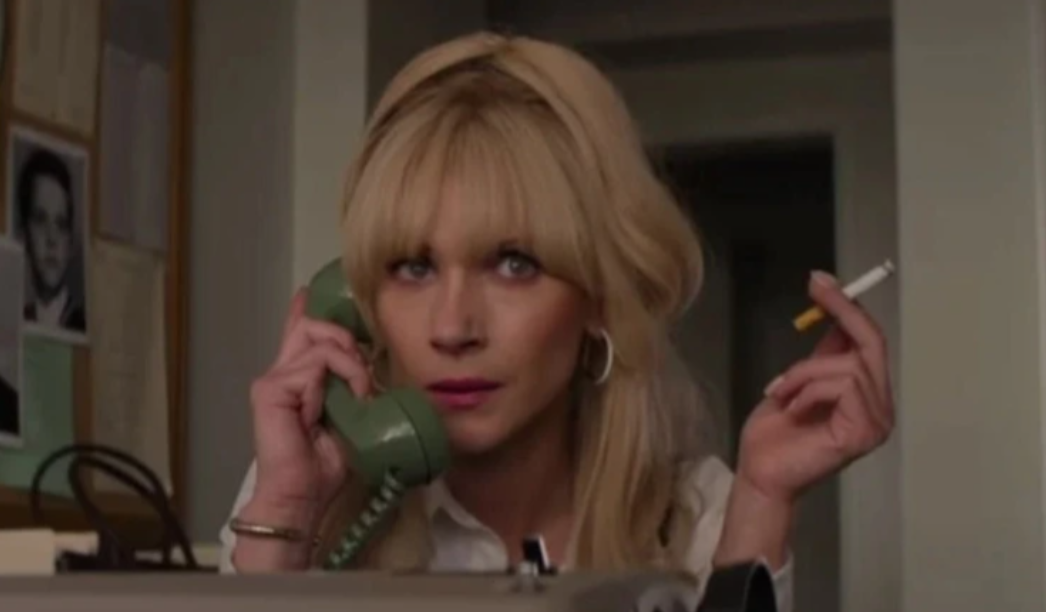
Journo pally was unequivocal — the performance that you’ll remember is Juno Temple‘s as the real-life agent and manager Bettye McCartt, who worked as an assistant to producer Albert Ruddy (Miles Teller).

McCartt, he said, is the touchstone figure — the neutral observer who supplies sensible commentary about the various egoistic goings-on.

An Oklahoma native who moved to Los Angeles in the early 60s, McCartt began as a publicist for 20th Century Fox. She was in her early 40s during the period of The Godfather and The Longest Yard (’74), which Ruddy also produced.

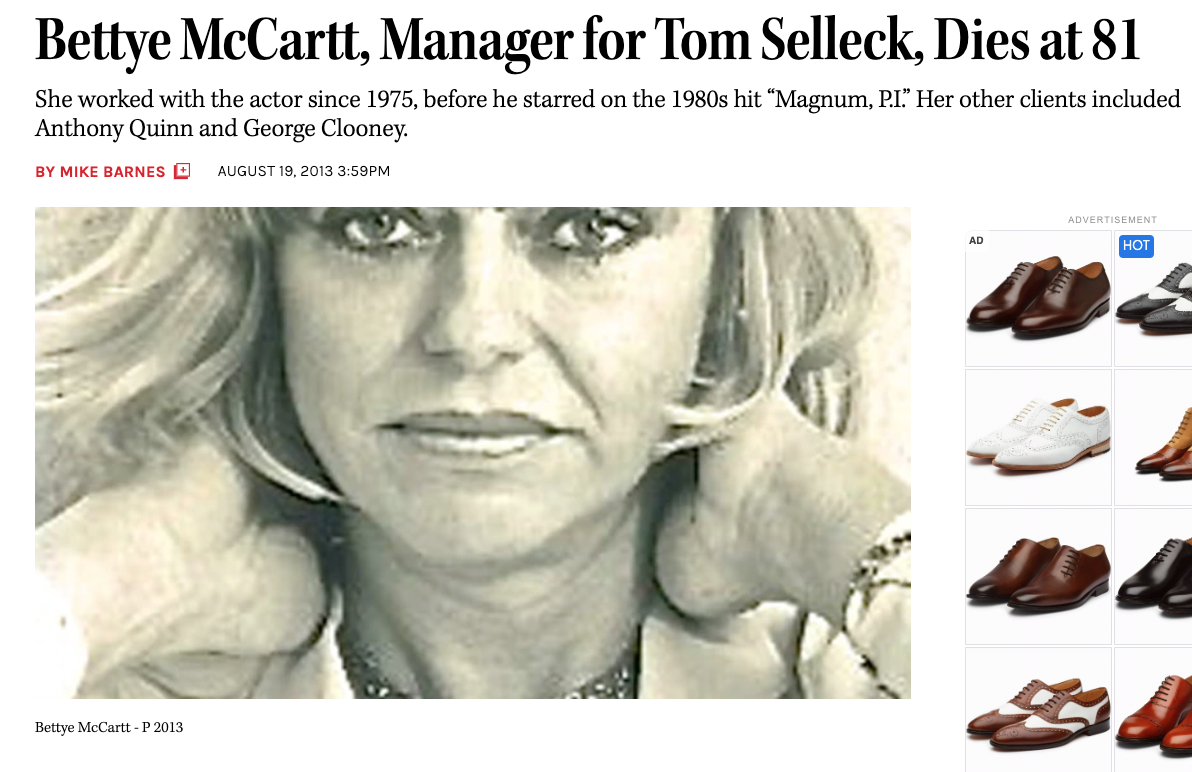
From 8.19.13 THR obit: “As owner of Agency for Artists and as a partner in the McCartt, Oreck & Barrett Talent Agency, her many clients also included actors Maureen O’Hara, Anthony Quinn, Wilford Brimley, George Clooney, Billy D. Williams and Brian Austin Green; authors Louis L’Amour and Henry Miller; and TV director Tony Wharmby (JAG, NCIS).

“McCartt started working with Tom Selleck as both his agent and manager in 1975. When the actor signed with CAA in 2008, she continued as his manager until her death [in August 2013].”

Maher & Morgan

Another pleasant hang. We’re all accustomed to Piers Morgan being a tart, adversarial figure, but here he’s entirely personable and relaxed.

At the 31:30 mark, Maher blanks on Thomas Mitchell, the actor who played Scarlett O’Hara‘s father in Gone With The Wind. Mitchell’s two best performances — “Kid” Dabb in Only Angels Have Wings and Mayor Jonas Henderson in High Noon, who stabs Gary Cooper in the back.

Maher: “[Gone With The Wind], by the way…entertaining as fuck, and the people who need a disclaimer [about the 83-year-old racist content]…this is the problem, you fucking babies. Can’t you just see by the film stock that things were very different back then? History in general, we evolve. Just celebrate that we are not [as] racist any more. This generation [Millennials] needs a trigger warning and a Klonopin to get through an episode of [something or other].”

Around the 34-minute mark they talk about victim culture and “the end of the empire, what happens to successful civilizations, they get soft and mushy in the mind….weakness is celebrated and the stiff-upper-lip and resilience is now to be condemned.” And they get into pronouns around the 40-minute mark.

Random Darts

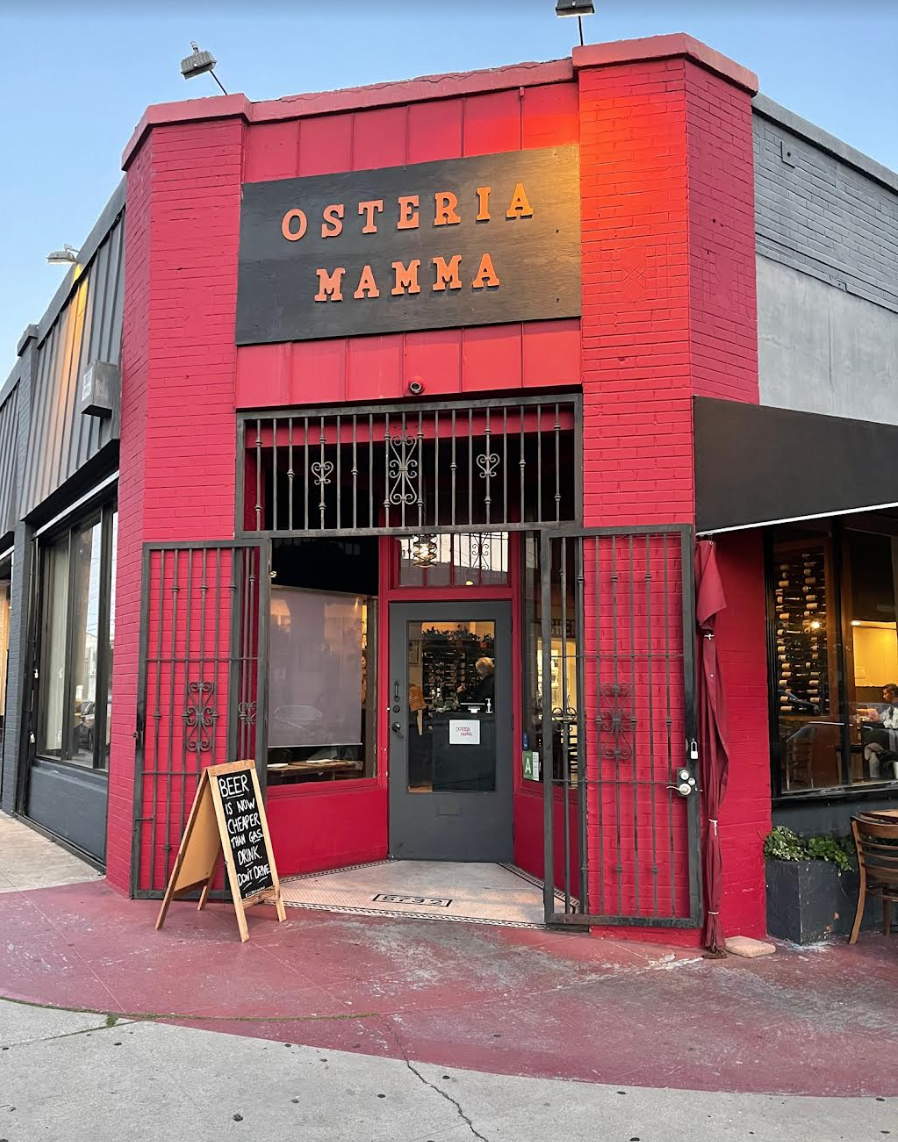
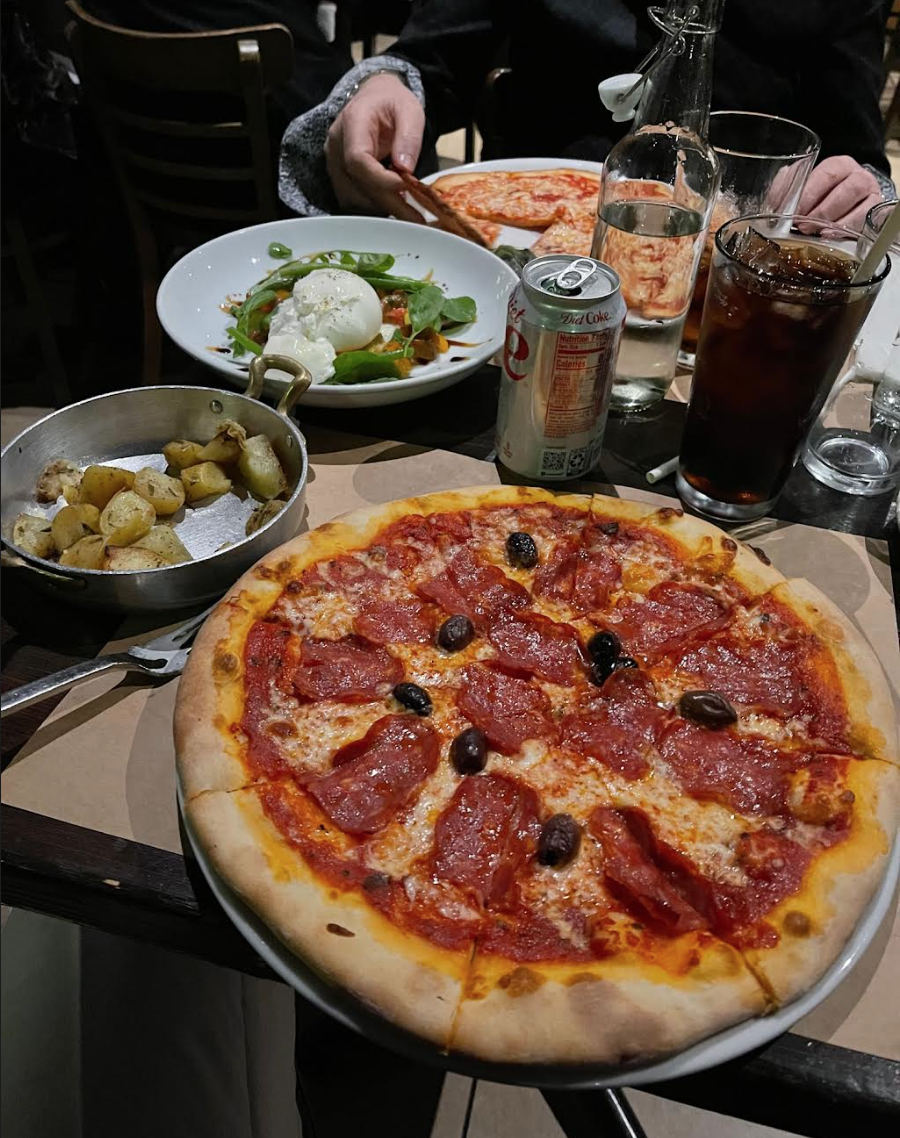
The key thing when you dine at a place like Osteria Mamma is not to anger your waiter. Don’t send too many things back, I mean. I sent back a puree-like green soup because it wasn’t exciting enough. Then I added insult to injury by asking the waiter to please re-heat the potatoes. So I was pushing it.

For a half-second I saw the waiter looking at me sideways and I knew…I didn’t think it was likely that he would spit in my one of my dishes, but the thought occured to me that if I don’t stop sending stuff back something like that might happen.

That said, he was a very nice and polite guy, and he spoke with a genuine Italian accent. The bill was split in half and we (i.e., attorney friend Mark and myself) tipped him 20% each. I know, I know…some waiters might seethe and mutter to themselves “fuck you…why didn’t you tip me 25%?” But I took a chance with 20%.

Read more