Suspenseful Re-Branding

Perhaps later this year the New Beverly Cinema will program a superficially linked double bill — Phillip Noyce‘s The Desperate Hour and William Wyler‘s The Desperate Hours.

Five months ago Noyce’s film played at the Toronto Film Festival as Lakewood. Now it’s got a catchier title. Here’s my 9.21 review with the title switched out:

An adult all alone and on a phone, having to talk his or her way out of (or through) a tough, high-pressure situation. I don’t know how many times this set-up has been built into a compelling feature, but I’m thinking at least four**.

The very best is Steven Knight‘s Locke (’14), an 85-minute character study about a construction foreman (Tom Hardy) grappling with issues of personal vs. professional responsibility. Three years ago Gustav Möller‘s The Guilty, a gripping, Danish-made crime thriller that I just re-watched yesterday, delivered similar cards. Last weekend a same-titled remake, directed by Antoine Fuqua and starring Jake Gyllenhaal, played at the Toronto Film Festival, and will debut theatrically on 9.24 before hitting Netflix.

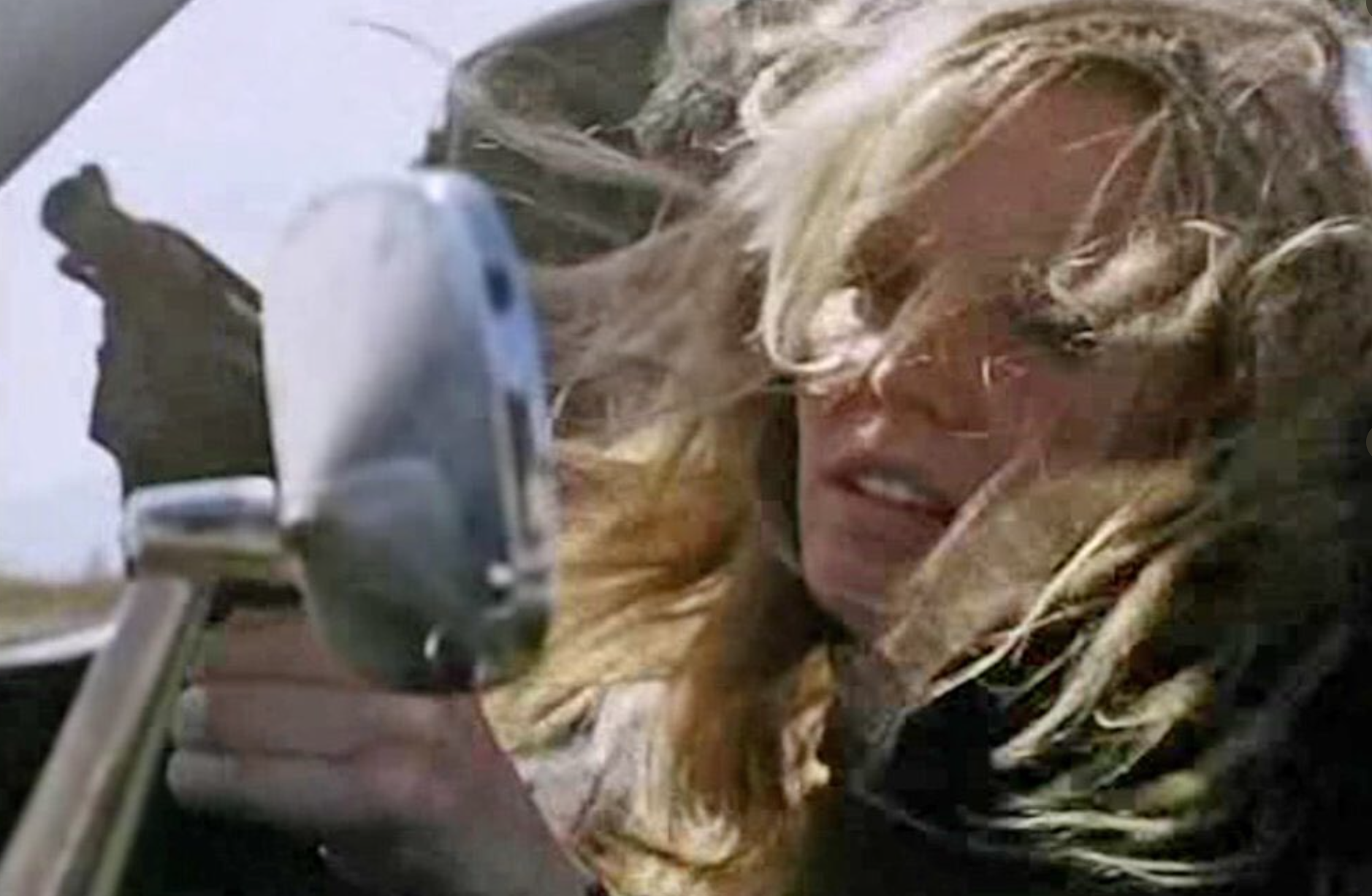
Now there’s Phillip Noyce‘s The Desperate Hour, which stars Naomi Watts as Amy, a widowed, small-town mom reacting not only to news of a Parkland-esque high school shooting, but to the possibility that her sullen and estranged son Noah (Colton Gobbo) may be involved in some way.

Nearly two-thirds of this 84-minute film (47 minutes) are focused solely on Amy and her iPhone in a remote wooded area. We’re talking about a torrent of smooth steadicam footage plus several overhead drone shots and some elegant editing (kudos to Lee Haugen), plus Watts stressing, emoting and hyperventilating her head off — a one-woman tour de force.

Right away I was thinking Noah might be the shooter, and that, you bet, made me sit up and focus all the more. And that’s all I’m going to say.

My second reaction was about Amy’s iPhone, and what an amazing reach it has. She’s in a woodsy area a few miles from town (I didn’t catch how many reception bars were showing) and yet she experiences only a couple of signal drop-outs, and she’s watching all kinds of video and whatnot without a hitch.

I was also impressed by her iPhone’s battery — what power! (I never leave home without a back-up battery for my iPhone 12 Max Pro — I have too many active apps and the battery is always draining hand over fist.)

Despite all that’s going on at the high school and having to juggle all kinds of incoming info, Amy continues to jog during most of her phone marathon.

If there’s one thing that viewers will be dead certain of, it’s that Watts will stumble and suffer an ankle injury. I was telepathically begging her not to. HE to Watts: “C’mon, stop…don’t…there are all kinds of obstacles on your forest path and you obviously need to focus so just start speed-walking”…down she goes!

The pace of The Desperate Hour is very fast and cranked up, and Amy is nothing if not resourceful. She manages to persuade an auto mechanic whom she doesn’t know to supply crucial information about Noah’s whereabouts, as well as info about a possible shooter’s name and contact info. All kinds of conversations and complications ensue, and you’re always aware that Chris Sparling‘s script is determined to increase the stress and suspense factors.

Most of these efforts felt reasonable to me, or at least not overly challenging or irksome. The Desperate Hour is a thriller. I didn’t fight it. I accepted the rules and requirements.
Read more

Nighy’s Forthcoming Best Actor Nomination…Right?

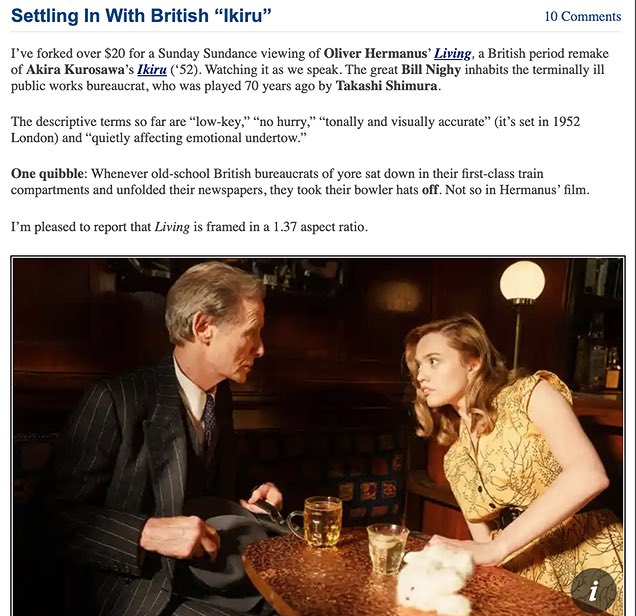
Living, the Ikiru remake that played Sundance ’22 last weekend, has been acquired for distribution by Sony Pictures Classics.

Directed by Oliver Hermanus and adapted on the page by Kazuo Ishiguro, this modest British period drama stars the great Bill Nighy. He’ll almost certainly be among the Best Actor contenders, and will almost certainly be on the award-season campaign trail starting next fall.

Living is a fine, honorable, occasionally touching film but not, I submit, the masterpiece that some have called it. It didn’t strike me as some kind of enhancement or special strengthening of the original 1952 Akira Kurosawa classic; it struck me as maybe a little more than a tasteful remake, but not much more than that. I respect and approve of Living. Can we let it go at that?

If You Believe in Fairies…

In a Best Picture Oscar spitball piece, IndieWire’s Anne Thompson has called Spider-Man: No Way Home a “long shot”. She has this deeply emotional, hugely successful Sony release in 20th place — a lower ranking than those shared by THR‘s Scott Feinberg or TheWrap‘s Steve Pond, but in the same ballpark.

Thompson’s top-ten noms are purely about safety, purely about raising a damp finger to the wind and adding her voice to the chorus of conventional thinkers.

I know that I speak for hundreds of industry veterans by saying that the elite Feinberg-Pond-Thompson mindset being knocked off its axis would be absolute heaven.

Please consider clapping your hands in order to tell this crew how full of shit they are. Peter Pan author James M. Barrie once urged audiences to clap in order to keep Tinkerbell alive — I’m asking the same thing here. Vote for the millions of younger ticket buyers out there, for those who’ve paid to see S-M: NWH more than once because it pushes a button that they wanted pushed before they knew it. Vote to show respect for a film that falls short of profound art but which really turned them on. That means something.

If Blanche Dubois had the floor, she would urge the following to Academy and guild members: “Don’t hang back with the snoots!”.

I’m not talking about which Best Picture contender is “better”, whatever that means. I’m talking about how a Spider-Man Best Picture nomination would startle these smug know-it-alls, those handicappers from the land of stupor. I’m talking about the sheer pleasure of this prospect.

Oscar nomination voting begins two days hence — Thursday, 1.27.22. Voting ends on Tuesday, 2.1.22. The nominations will be announced on Tuesday, 2.8.22, with the ceremony happening on Sunday, 3.27.22 — roughly eight weeks away.

Broad Side of a Barn

Not once in my life have I spoken the anachronistic term “broad”. It’s been out of circulation for decades, and yet in 2005 Urban Dictionary posted the following definition: “Word for a woman. Less respectable than lady but much more respectable than bitch. As in ‘Man, look at those two broads…they are smokin’!”

Bitches and ho’s used to be (and perhaps still are) common terms within urban hip-hop culture, okay, but broads? Not in this century or even the second half of the 20th. It was used by coarse types (gangsters, gamblers, saloon singers) during the ’20s, ’30s and ’40s, okay, but started to fade in the ’50s.

Richard Rodgers and Lorenz Hart used “broads” in “The Lady Is A Tramp,” a 1937 tune they wrote for “Babes in Arms“. It’s also in the 1957 film version of Rodgers and Hart’s Pal Joey when Rita Hayworth sings “I’m a broad with a broad, broad mind.” Humphrey Bogart, Frank Sinatra and the Rat Pack crowd almost certainly used the term from time to time. It’s impossible to imagine Ronald Colman, Cary Grant or Gary Cooper saying it, but I’ll bet it was part of Bob Hope‘s vocabulary — ditto Desi Arnaz‘s.

In Some Like It Hot a Spats Columbo henchman (Harry Wilson) flirts in an elevator with “Josephine” and “Daphne” (Tony Curtis and Jack Lemmon) by asking, “Pardon me for askin’ but haven’t we had the pleasure of meetin’ you two broads before?” (In response to which Lemmon says, “You must be thinking of two other broads.”)

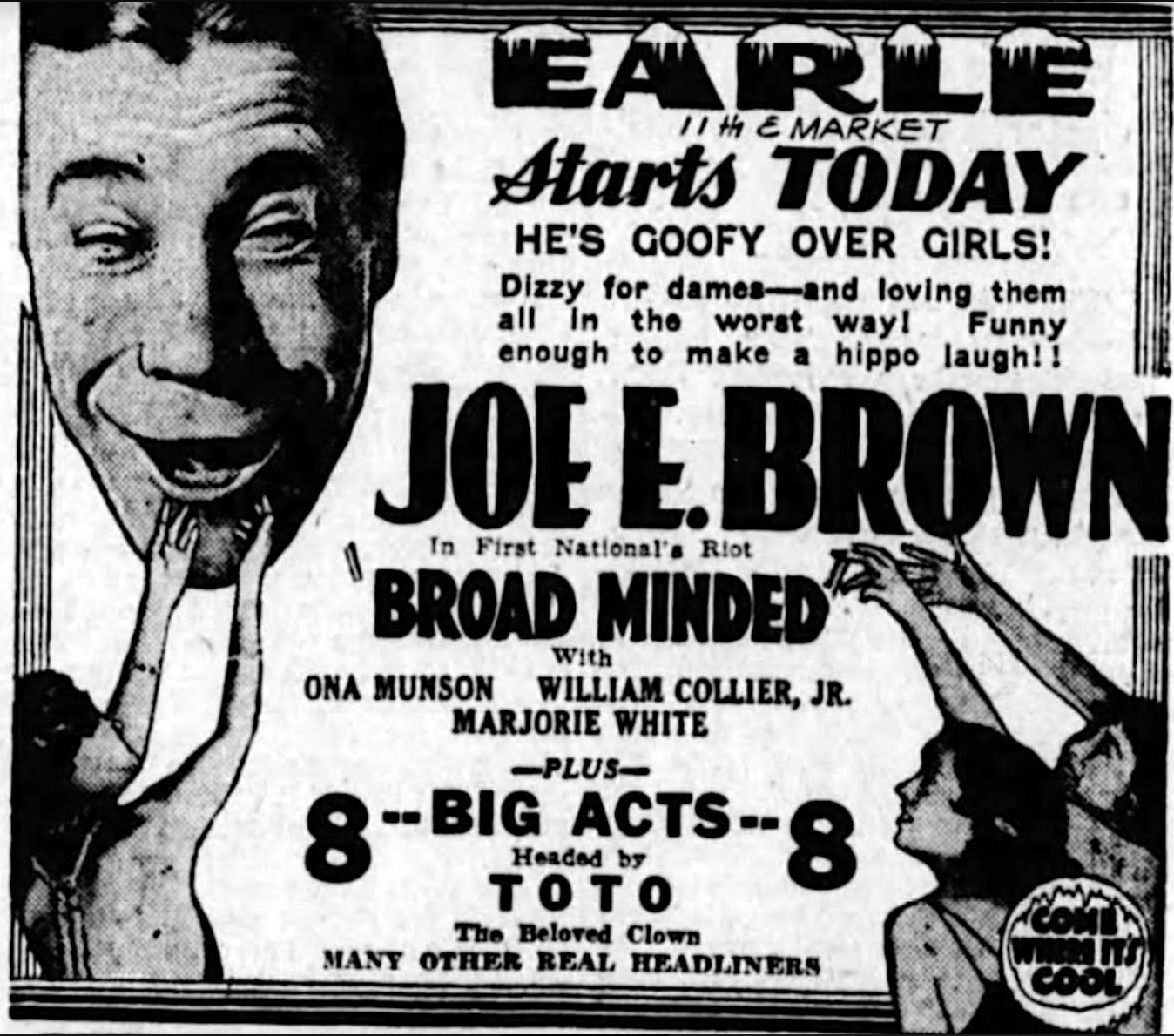
All that said, I laughed when I saw this ancient ad for Mervyn LeRoy‘s Broad Minded, a 1931 Joe E. Brown comedy.

Now that it’s on the table, HE hereby proposes that Browne, LeRoy, Broad Minded screenwriters Bert Kalmer and Harry Ruby, Richard Rodgers, Lorenz Hart, Frank Sinatra and Rita Hayworth be posthumously cancelled. At the very least, The Academy Museum (i.e., “Woke House”) should post an apology for Hollywood culture having encouraged sexist attitudes by using this deplorable term in certain films. The museum should also sign a pledge to never install exhibits that include the above.

Read more

Dylan Wells To The Rescue

The Austin-residing Dylan Wells stepped in today and solved the agonizing missing-comments Patreon problem** that has been plaguing Hollywood Elsewhere for more than a week. Other well-meaning tech guys tried to fix the issue and failed. This is the difference between being a professional-level tech guy and a genius-level one. Dylan reports that a Disqus update caused the problem. Hollywood Elsewhere is enormously thankful to Dylan for “slaying the dragon,” so to speak.

Dylan’s summary of the problem that no longer exists (thank God):

Jiminy Cricket’s Uncle in Fascist Italy

How curious that a new teaser for Guillermo del Toro‘s animated re-telling of Pinocchio focuses not on Geppetto or his carved-wood son Pinocchio or the kids turned into donkey slaves, but on a sophisticated insect Sebastian J. Cricket, obviously related in some way to Jiminy Cricket.

What has a fucking cricket to do with all this, especially a tale that considers the shadow of Benito Mussolini??

Guillermo’s “dark, twisted retelling of the famous Carlo Collodi fairytale, about a wooden puppet who comes to life and dreams of becoming a real boy, takes place in 1930s Fascist Italy. When Pinocchio comes to life, he turns out not to be a nice boy, causing mischief and playing mean tricks. But at its core, Pinocchio is “a story of love and disobedience as Pinocchio struggles to live up to his father’s expectations.”

God in Heaven

I’ll tell you right that John Cameron Swayze Mitchell looks too skin-and-bones to play Joe Exotic, who’s always had roundish, semi-jowly features. Kate McKinnon as Joe’s nemesis Carole Baskin…I’m fine with that. With McKinnon, not the show. I hate watching egoistic with horrible taste in clothing and hairstyling lowlifes make their lives even lower.

HE Endorses Slovakian AirCar

From Sam Tonkin’s 1.24.22 story in London’s Daily Mail, “Futuristic flying ‘AirCar’ that can transform from a road vehicle into a plane in under THREE MINUTES is certified to fly after passing safety tests in Slovakia“:

“AirCar certification opens the door for mass production of very efficient flying cars,” said Professor Stefan Klein, AirCar’s inventor, the leader of the development team and test pilot. “It is official and the final confirmation of our ability to change mid-distance travel forever.”

“The project’s co-founder Anton Zajac said: “Fifty years ago, the car was the epitome of freedom. AirCar allows us to be free again.”

“King Richard” Is Different, You Bet

Click here to jump past HE Sink-In

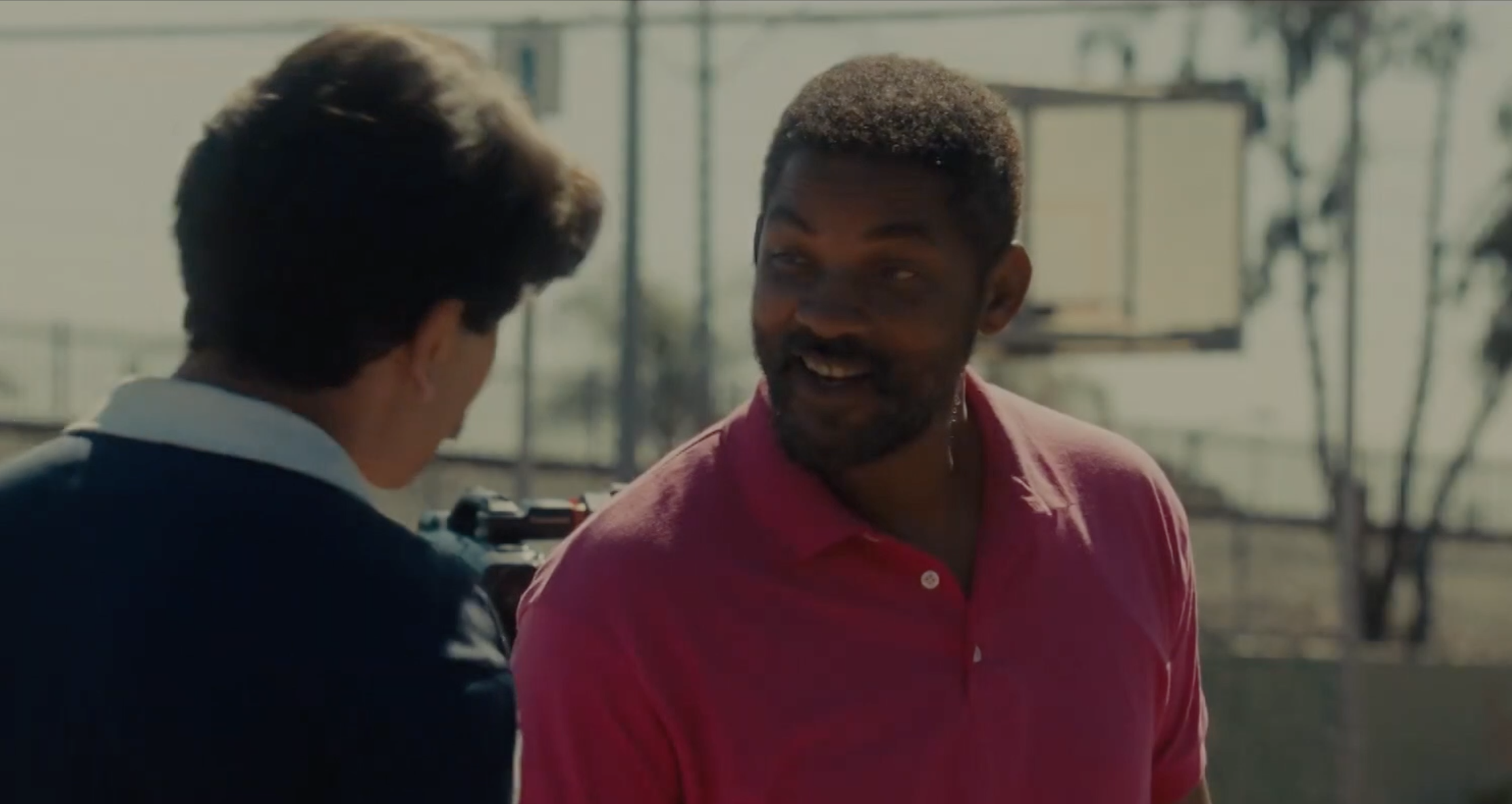
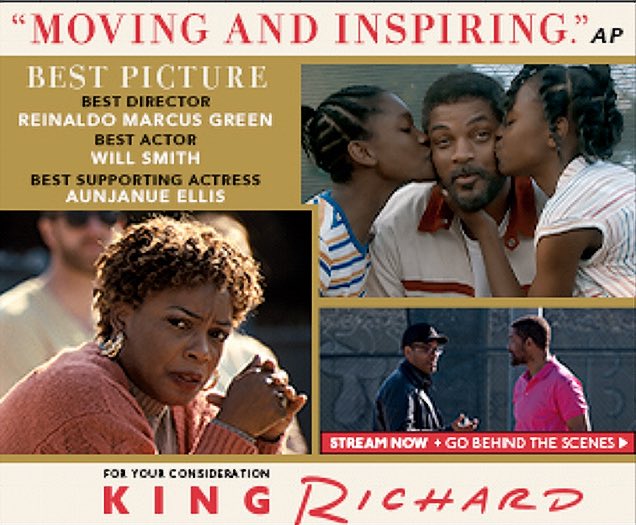
Reinaldo Marcus Green and Zach Baylin‘s King Richard has been in the award-season swirl of things since 11.19.21, but the buzz began at the Telluride Film Festival on 9.2.21. And since that debut I’ve been among those who’ve said “this is it!…the big Will Smith moment!…his best performance ever!” and so on.

I wasn’t wrong to jump on this horse, hoopla- and column-subject-wise, but within the last couple of weeks I’ve been giving King Richard a re-think, and I’ve realized that it’s bigger — more — than just an historic Will Smith triumph. It’s a genuinely great film about a family, and that doesn’t mean (let’s be clear about this!) a “family film.” King Richard is way beyond that realm.

This realization didn’t hit me at first. For ever since I turned 15 or 16, I’ve disliked the idea of movies made for or even about families. For decades the notion of films made by the old-time Disney factory — movies that felt a bit sappy and wholesome and formulaic — made me uncomfortable. (Except, that is, for the Jeffrey Katzenberg-led animated films of the ‘90s, which were exciting and joyful.) But otherwise family-friendly films were something to avoid. For me at least.

And yet King Richard is arguably the most thrilling (and I mean spiritually) film about the struggles of an ambitious family of the 21st Century. And not in the usual sort of way. It’s not so much about emotions and hugs and serendipity and God’s good fortune, but teamwork, discipline, self-respect and tenacity.

It’s also one of the smartest, most complex and most character-driven sports films ever crafted, and the credit for that goes to Green, who just buckles down, cuts out the superfluous b.s. and tells this hard-fought success story with the drill-sergeant discipline of…well, Richard Williams.

Story-wise, King Richard is clean and crafty and radiates authority, and credit for that aspect can also be shared by screenwriter Zach Baylin. The result is a genre-defying “family film” because it’s not aimed at the usual suspects. It’s aimed, really, at movie lovers and filmmakers who can appreciate what first-rate craft and storytelling are really about

What emerges are three movies in one. It’s a tennis-boot-camp-run-by-a-tough-dad family film. A strong-mom family film, due to the knockout performance by Aunjanue Ellis. And a family saga that plays like one of the greatest, down-in-the-trenches competitive tennis films ever made.

Seriously — name a film about the world of professional tennis — the tennis “racket”, if you will — that feels more real or recognizable or satisfying in a socially attuned, business-is-business way. And name a family-oriented film about strength and waking up early and working hard and thinking right…name another such film that behaves less like the usual product.

The Williams sisters — Venus (Saniyya Sidney) and Serena (Demi Singleton) — are sunny and mellow and well-behaved and glorious on the courts, and their mom, Oracene “Brandy” Price (Ellis) is a model of domestic steel and maternal resolve.

And the film is about rigor and devotion and absolutely no relaxing or kicking back. It’s about “if you fail to plan, you plan to fail.” It’s about “only the strong and gifted who get up early and go to bed at a reasonable hour succeed.”

So it’s not just a Will Smith film (although it is) — it’s a Reinaldo Marcus Green film, an Aunjanue Ellis film, a proud Black family film, a no-slacking-off film, a “show me the money” film, a Saniyya Sidney and Demi Singleton film, a Tony Goldywn and Jon Bernthal and Dylan McDermott film. In short, a team effort about the very tough discipline of filmmaking as well as tennis.

It’s finally a film about faith and belief and the kind of persistence that must not and cannot quit.


One of Greatest Musical Scores & Theme Songs

…for a film that’s reasonably decent and excitingly composed and a nice atmospheric New Orleans spooker, but which feels at times a teeny bit too lurid and sexualized for comfort, to the point of almost feeling like an exploitation film….almost.

That would be Giorgio Moroder‘s Cat People score and especially David Bowie‘s Cat People song vs. Paul Schrader’s 1982 erotic thriller, which I watched last night on Amazon.

I hadn’t seen Schrader’s remake in many years, and it’s really not that bad for the most part. But the music is what really seizes you. My very first viewing of Cat People was in a smallish Manhattan screening room, and the sound was so weak and faint (due to mixing or volume?) you could barely hear the percussion under Bowie’s singing. The sound in this music video is perfect.

The boyish Nastassja Kinski (now 61) with the taut muscular bod and oddly shaped lips and funny European feet, and those sex scenes with the late John Heard…I don’t know what to say except that schtupping and eroticism were weighing very heavily on Schrader’s mind back then. (He was having it off with Kinski at the time.) I was also thinking a lot about eroticism and whatnot at the time, but who cared? I was just a critic in the third or fourth row.

Schrader, by the way, is back in New Orleans as we speak, shooting The Master Gardener with Joel Edgerton.

Name other extraordinary scores that were composed for reasonably decent films, and wound up being the most affecting or exciting or profound element. I’ll name three that outshone the films they were meant to enhance — Miklos Rosza‘s scores for Ben-Hur, King of Kings and El Cid.

Attending With Trepidation

I haven’t seen Frank Perry’s Play It As It Lays (‘72), easily one of the greatest Hollywood-is-hell films of all time and certainly one of the finest jaded, glum-minded ‘70s dramas about affluent perversity…I haven’t seen it projected on a big screen for at least 15 years. (It played at the American Cinematheque’s Hollywood flagship theatre…uhm, sometime around ‘06 or ‘07.). I’ll be catching the 1.28 showing at the Los Feliz Cinematheque, but I’m extremely worried that the 35mm print will be faded (i.e., “pink”) or damaged all to hell. This movie is now a half-century old. If this happens I’m going to be very, very upset.

Read more