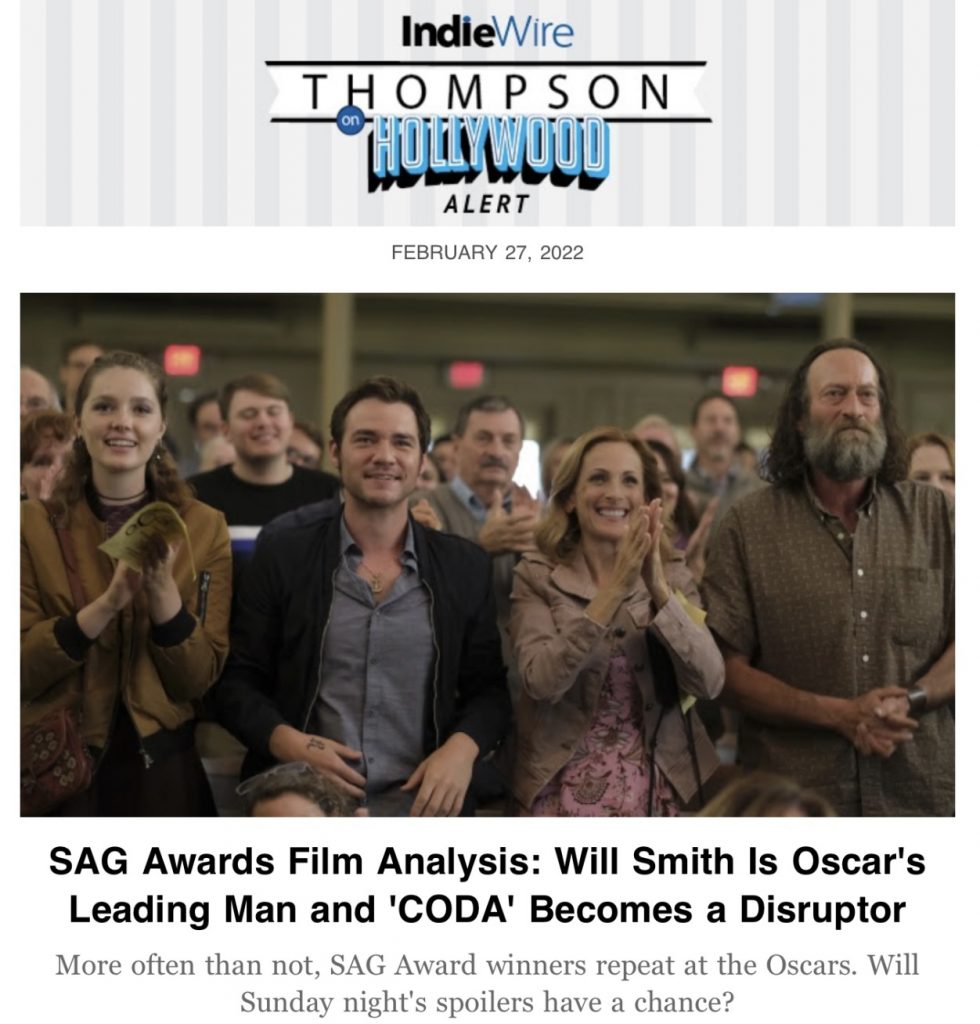
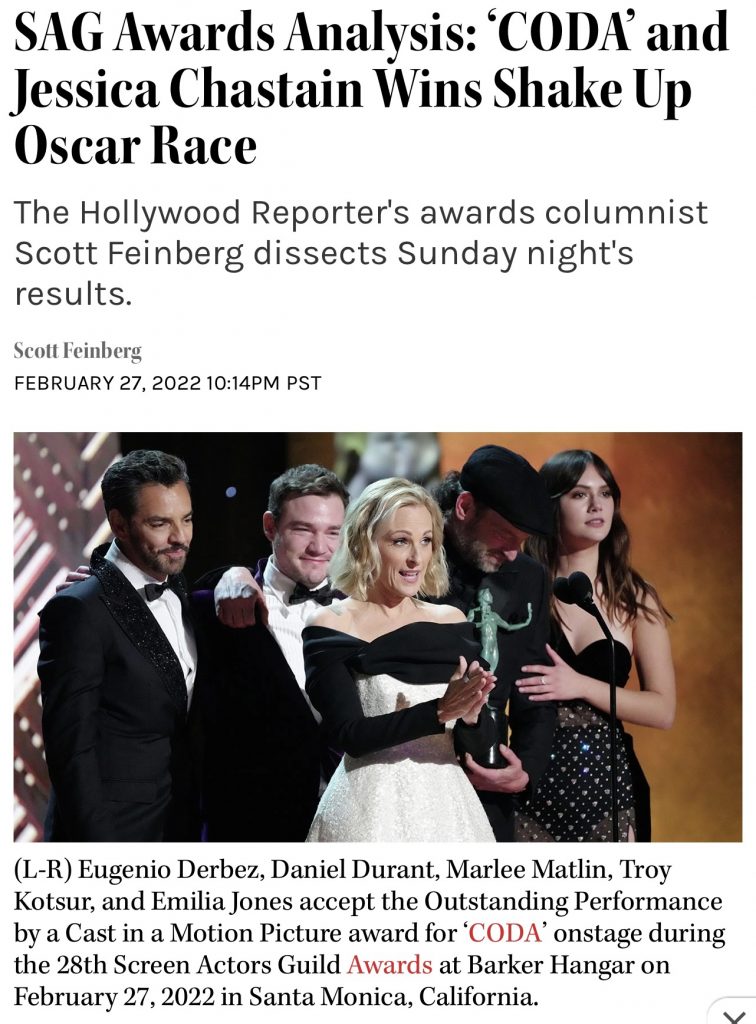
So the (apparently) likely winner of the Best Picture Oscar was directed by Sian Heder and the locked-down Best Director Oscar winner is Jane Campion. So women are definitely ruling the roost on 3.27.22. A white male winning in either category is a strict nyet.
With Oscar voting beginning on Thursday, 3.17, and ending on Tuesday, 3.22, women everywhere will be voting for this pair — where is the downside in not being on Team Heder-Campion?
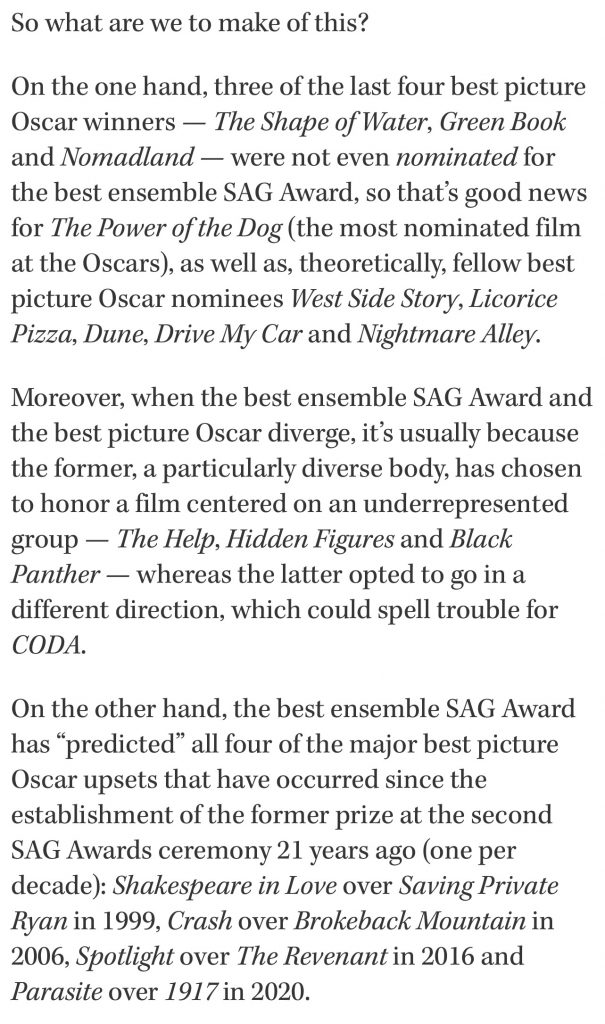
With The Power of the Dog finished as a Best Picture winner and eight other nominees (Belfast, Don’t Look Up, Drive My Car, Dune, King Richard, Licorice Pizza, Nightmare Alley, West Side Story) more or less scratched due to this and that factor, CODA seems like the most likely champ.
I hate to admit this but where else can I go?
CODA has only three nominations (Best Picture, Best Adapted Screenplay, Best Supporting Oscar), and a film with three noms or less hasn’t won Best Picture since the late ‘20s and early ‘30s — Grand Hotel (’32) had only one Best Picture nom but it won — Best Picture winners Broadway Melody of 1929 and Wings had three or fewer.
The New Academy Kidz (virtue-signallers, gender and POC representation is everything, down with white males) believe that West Side Story can’t win because (a) it flopped commercially and (b) it’s a white man’s movie (directed by a white man, originally written by an English white man, adapted by a white man in the mid to late ’50s, recently re-adapted by a white screenwriter).
The New Academy Kidz don’t like King Richard for Best Picture, apparently, because they don’t like that the story was focused on a gnarly, obstinate, not hugely likable man of color (i.e., Richard Williams). Sends a mixed message — they only want POC characters who are 100% sympathetic.
In the view of “Yvan,” an Awards Daily commenter, the state of the Oscar race is about mediocrity prevailing.
“Yvan“: “CODA, Will Smith and The Eyes of Tammy Faye? After all of the great films and performances last year, this is what’s it come down to? I’m gonna keep following along in hopes of Kristen Stewart or Penelope Cruz prevailing on Oscar night but wow, DeBose aside, this is shaping up to be an exceptionally bland set of TV movie winners.”