“Macho” In The Comfort Zone

I regret to note that Clint Eastwood‘s Cry Macho (HB0 Max), an amiable road movie about an old white guy (Clint) and a Mexican teenager (Eduardo Minett) on a long journey, is a little too familiar and laid-back and maybe even too meditative for its own good. And it’s weirdly written and clumsily handled here and there.

On the other hand it’s about values and warmth and home-cooked tacos and treating horses and other animals with kindness and slow dancing in the cantina. It’s a nice movie, an okay one…it’s mostly fine. I know — I just said it’s under-energized, and now I’m saying it’s mildly okay. Who am I? What am I? I don’t know what to feel or think about this film, but I wish it had been more than just another “getting to know and like you” road movie. Tougher or craftier or plottier…something.

And the theme that eventually seeps through during the second half of Clint’s film, about macho behavior being over-rated and all…I’m sorry but this feels like a so-whatter. The machismo or toxic-male factor has been pretty much debunked, deballed and pushed aside for the last…what, 20 or 25 or 30 years? Sensitivity, listening to people, offering them basic respect, turning the other cheek if at all possible…that’s been the basic rule for some time now, or at least where I live.

Yes, Cry Macho is minor Eastwood. It doesn’t gun the motor — it cruises. You could even say it idles at times. But it’s a gentle and elegant film in some respects, particularly during the second act when Clint’s Mike Milo and the kid, travelling from Mexico to a big ranch in Texas owned by Minett’s dad (Dwight Yoakum), stay for a few days at a little cantina and horse-stable business run by 50ish Marta (Natalia Traven), who takes a shine to the 80ish Mike. (Let’s be generous and accept the notion that he’s younger than the actual Clint and might be able to…uhm, well, “perform”.)

There’s no avoiding the fact that Clint’s voice sounds frail and a bit weak. The guy was 89 or 90 when they shot the film, and he doesn’t look or sound much younger. Was it only 13 years ago when Gran Torino came out and people were saying “wow, Clint’s getting old but he’s still a tough and gritty old bird.” Eastwood was 78 or so when he made that excellent film. And here we are in 2021. Time marches on and cuts no one a break.

Except in the world of Cry Macho. There’s a scene early on when Clint is visiting Minett’s mother at her Mexico City home. She’s clearly a bad egg, but the movie suddenly loses its mind when she suddenly comes on to him…an alcoholic 40something femme fatale suddenly wants an 80ish geezer to fuck her? Then he turns her down and she feels insulted? What’s going on here?

Later on the kid and his pet rooster, Macho, stow away in Clint’s SUV and Clint doesn’t spot him? Kinda ridiculous.

Remember that scene in The Vikings when Tony Curtis‘s hunting bird attacks Kirk Douglas and does some serious damage? And the scene in Once Upon A Time in Hollywood when Brad Pitt‘s fat ugly dog attacks Charles “Tex” Watson and saves the day? A Mexican bad guy suffers a similar fate, only in this instance the attacking animal is Macho, who’s been toughened by cockfighting in Mexico City.

I kinda like that now and then Clint prefers to camp on the ground and shit outdoors rather than crash in a motel. Then again Yoakum has given him a bundle of travel money by so why camp? He’s against showers and pillows and mattresses?
Read more

After All These Years…

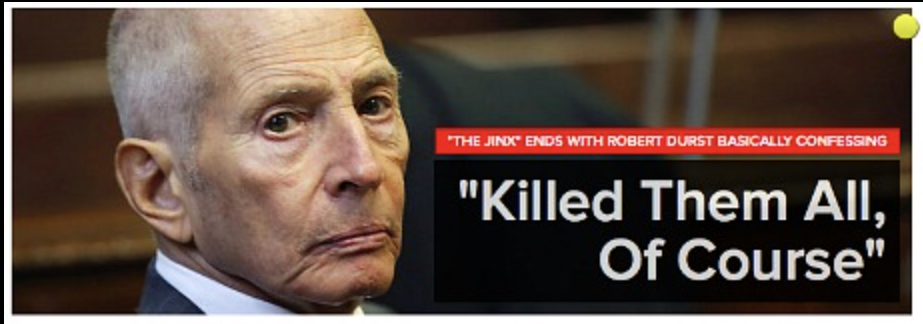
The strange and perpetually morose Robert Durst, 78, a wealthy real-estate heir who was identified as the likely killer of three persons by Andrew Jarecki‘s The Jinx miniseries six years ago, has been found guilty of the murder of Durst’s friend and confidante Susan Berman in December 2000.

Posted on 3.16.15: The Jinx director Andrew Jarecki has visited CBS This Morning to discuss the timeline of his interviews with real-estate heir and accused murderer Robert Durst.

Durst was arrested in New Orleans only last Saturday night, or less than 24 hours before the airing of the final Jinx episode, “The Second Interview,” during which an audio recording is heard of Durst muttering that he “killed them all” — a presumed reference to his late wife Kathie Durst, who disappeared in 1982, as well as Durst’s murdered friend Susan Berman, who was shot in December 2000, along with Galveston rooming-house resident Morris Black, who died in ’01 after an altercation with Durst.

This startling recording and other incriminating information (particularly the two envelopes with the word “Beverley” printed in highly similar block-letter handwriting, delivered in ’99 and ’00) was shared with Los Angeles law enforcement authorities “many months” ago, Jarecki said this morning. Jarecki’s first sit-down interview with Durst happened over a three-day period in 2010, he explained, and then a follow-up happened “a couple of years later” or sometime in 2012.

Read more

Those Sunset-Red Nicholson Glasses

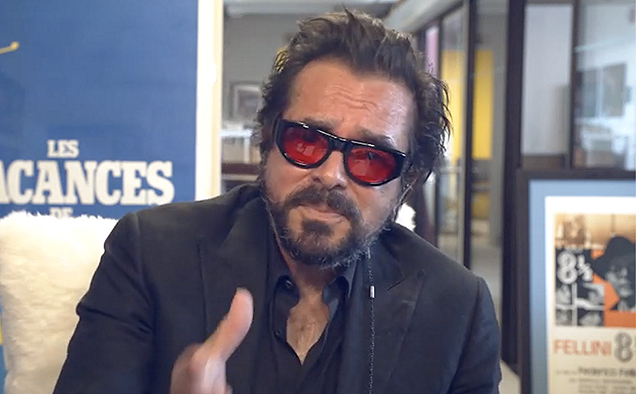
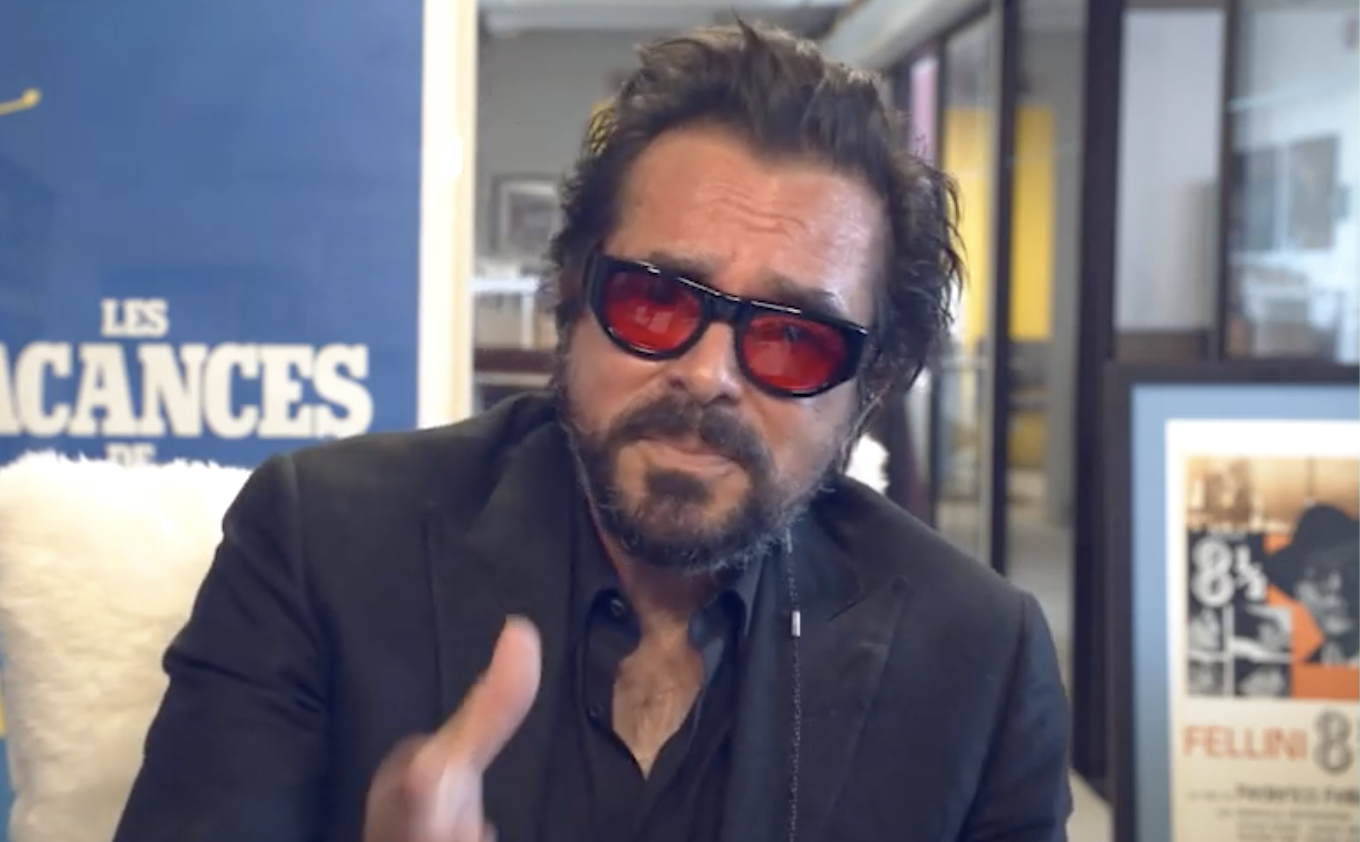
Not to take anything away from director-writer Paul Schrader or his recently released The Card Counter, but the thing that held my interest during the below Zoom interview between Schrader and Santa Barbara Film Festival honcho Roger Durling…the thing that really put the hook in as I watched and listened last night…what matters most right now are Durling’s magnificent Jack Nicholson-styled, red-mud-with-a-hint-of-amber reading glasses.

All my adult life I’ve wanted to own a pair, but I somehow never got around to it. Okay, I never pursued them because I suspected they were out of my price range. Durling informs that the manufacturer is Jacques Marie Mage, and that the basic price is $650 per pair. And that’s without the crafting and insertion of prescription lenses.  

Obvious question: Why doesn’t some enterprising second-tier designer create a knockoff version of Jacques Marie spectacles? Affordable by someone like myself? Glasses you could buy for, say, $150 or $200.

This enthusiasm in no way suggests that Durling’s Schrader interview is anything less than absorbing, intelligent, interesting. One of the most intriguing aspects is Schrader’s raspy voice. I remember interviewing him somewhere near the old Columbus Circle Paramount building at the time of American Gigolo (’80), and he was giving the exact same kind of answers back then.

Arrival of “Tammy Faye”

Having finally seen Michael Showalter, Abe Sylvia and Jessica Chastain‘s The Eyes of Tammy Faye (Searchlight, opening today), I can say with authority that Fenton Bailey and Randy Barbato’s 21-year-old documentary with the same title is just as interesting and actually a little better in some respects. (The only problem is that the Amazon rental is in standard definition, aka 480p.)

The feature version isn’t half bad, but strategy-wise it’s primarily aimed at landing Chastain a Best Actress nomination, which will probably happen. She’s playing either one of the most self-deluding or notoriously insincere American frauds of all time, and Chastain really pours her heart out — she’s not satirizing this big-hearted, indisputably grotesque woman but she is playing it very broadly. Because Tammy Faye Bakker wasn’t exactly a woman of subtlety or great spiritual depth, and of course the silver eyeshade + false eyelashes makeup is half the performance.

The movie gives Chastain a big “pour it out, sing it loud” moment at the end, but there’s not a lot of “there” there.

The film is a straight biopic — completely rote, right down the middle, all the expected beats of a rise-and-fall saga, no surprises.

Start to finish televangelist Jim Bakker (Andrew Garfield, playing a variation of the same anxious bunny-puppy he’s always been) and wife Tammy Faye constantly speak to everyone (including each other) in the language of homilies and bromides about God wanting us to live an abundant life, and they’re so obviously hustlers and grifters from the get-go. What you see is what you get — these people are half serious believers and half Satan worshippers. They really think that God (a Great Being in the sky with a personality) wants them to live a flush life with all the perks…if they love Him enough and really wear their hearts on their sleeves and keep the spirit going.

As Variety‘s Owen Gleiberman wrote the other day, The Eyes of Tammy Faye is basically what used to be called a “TV movie” — moderately flat photography, not a lot of style…this happens, that happens, this happens and then the next thing happens. I didn’t hate it and I was half-engaged for the most part, but it definitely improves when the tragic downfall stuff kicks in during the final third.

Friendo: “There’s no denying that even for a biopic, it’s prose, not poetry. That’s why I’m not really drawn to seeing it again. It’s lumpy and chronological, etc. And yes, the documentary is great.

“But to me the actors — not just Chastain but Garfield also (darker than usual — he really makes Bakker a sociopath) — weren’t just having ‘fun in a broad way.’ I think their performances are actually quite psychological, and that the movie is too. That’s what’s interesting about it. It ushers us right inside the deluded, fraudulent, curious psychology of the Bakkers even more than the doc did. It may not be as good a film; but it does something a little different. That said, I don’t expect it to have much traction with audiences.”

Read more

Passable Resemblance

Michael Gandolfini obviously resembles his late father, James Gandolfini, but let’s not get carried away. Michael has his own (smaller) nose, doesn’t have his father’s toothy smile and he speaks in an amiable, mild-mannered way that doesn’t seem to suggest great volcanic currents within. Most significantly, he doesn’t have his dad’s deep-register voice. And he’s 22 now, so his voice isn’t likely to change. I haven’t yet seen The Many Saints of Newark (Warner Bros./HBO Max, 10.1) so let’s hold off on further observations. Any way you slice it Michael has his own life to live.

Thanks All The Same

Inside last night’s AMC Dine-In plex on Maxella, I ordered a regular-sized bag of popcorn and a Diet Coke. “That’ll be $18,” the girl said. Something froze inside, perhaps a twinge of hostility. I apologized and cancelled the order.

At the Aero on Montana, they call a popcorn and a small Coke combo a “Roosevelt” or something that sounds like that. The cost is $6 or thereabouts, maybe $7.

There’s a small restaurant-deli not far from the Maxella plex, across the street and 100 yards down. 45 minutes before the show, I ordered a small salad with two spicy meatballs on the side. I had envisioned a tab of $16 or $18 or $20, somewhere in that realm. “$26 plus a suggested tip of $4 for a total of $30,” the computer said. I politely cancelled the order.

Adding insult to injury to my AMC Dine-In experience, during the Noovies! promo crap that they show before the trailers and the feature, I had to watch Collider’s Perri Nemiroff announce a slate of hellish upcoming features (CG-driven, high-velocity, barf-bag franchise stuff). It has been my view all along that Nemiroff smiles too much, and way too strenuously at that. Now she’s shilling for Satan.

Plus our viewing experience was suffering from gross sound attenuation. As I struggled to hear Jessica Chastain and Andrew Garfield mouth Jim-and-Tammy dialogue, boomy bass tones from the theatre next door kept intruding. I could actually hear the melody from Lou Reed’s “A Perfect Day,” which is used for the Spencer trailer, bleeding through.

Kidman’s Honorable AMC Ad

Earlier this evening in a Marina del Rey plex I watched this promotional spot. Nicole Kidman was presumably paid for her services, of course, but right now I’m telling myself she might have done it gratis, just to lay her heart on the line and to possibly help raise consciousness here and there…to remind younger film lovers how it used to be from time to time.

“We come to this place for magic,” Kidman begins. “We come to AMC theatres to love, to cry, to care. Because we need that, all of us. That indescribable feeling you get when the lights begin to dim. And we go somewhere we’ve never been before. Not just entertained but somehow reborn, together. Dazzling images on a huge silver screen. Sound that I can feel. Somehow heartbreak feels good in a place like this. Our heroes feel like the best part of us, and stories feel perfect and powerful. Because here, they are.”

Heartbreak? Perfect and powerful stories? Movies that flip that deep down switch, etc.?

Kidman is describing a kind of theatrical experience that happened every so often (i.e., infrequently) in the 20th Century and up until fanboy movies began to take over about a decade ago, give or take, and certainly since wokester cinema became a persistent presence about five or so years ago, and since cable and streaming became the the default end-game for any Hollywood or English-language film with serious aspirations. You can also find “the Kidman experience,” so to speak, at film festivals.

Otherwise anyone who gets around (Kidman included) knows that the kind of levitation she describes in the spot has all but ceased in the plexes, which have become gladiator arenas and repositories for rancid formulaic crap. Except during award season and even then on a mostly-miss-the-mark basis, the suppliers of commercial fare aren’t the least bit interested in even trying to fulfill the Kidman aesthetic.

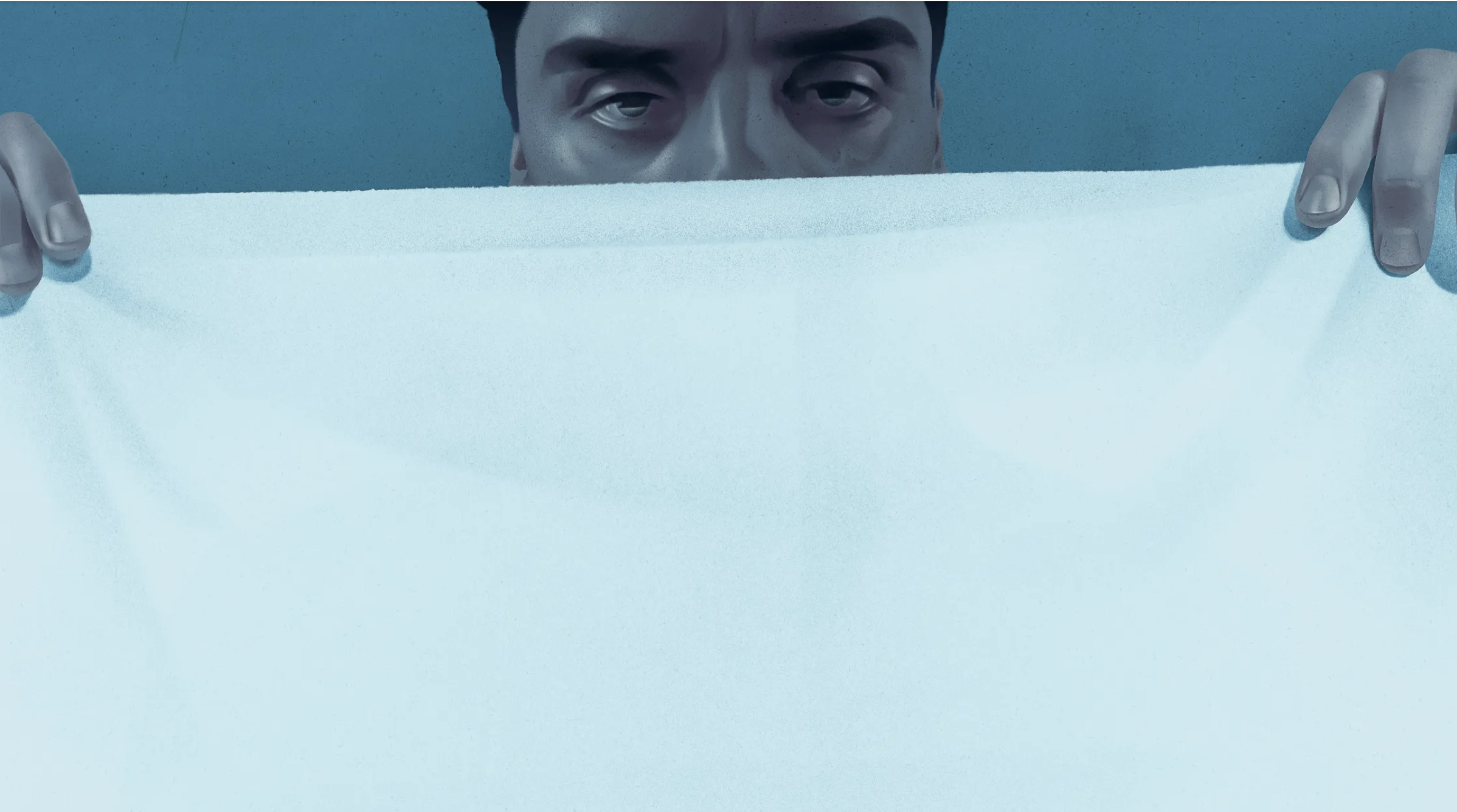
“SupersinfulCalvinisticguiltandexpiation!”

From Anthony Lane‘s New Yorker review of The Card Counter. Illustration by Karolis Strautniekas.

9:33 pm: Four ticket-buyers (myself, some guy and two women) are the only souls in theatre #3 at the AMC Marina Dine-In, for a 9:30 pm showing of The Eyes of Tammy Faye.

9:48 pm: Here’s hoping Michael Showalter‘s biopic begins before 10 pm.

“Is He Man or Beast?”

Guillermo del Toro‘s Nightmare Alley is quite an eyeful — magnificent cinematography by Dan Lausten (Mimic, Crimson Peak, The Shape of Water) and knockout production design by Tamara Deverell. But like I said the other day, the lead should’ve been a younger guy — somebody in their early 30s, like Tyrone Power was in the mid 1940s when he starred in the original Nightmare Alley. Seedy and middle-aged Bradley Cooper…well, it’s certainly a different way to go. He kinda looks like a Grapes of Wrath hobo.

Not A Big Enough Fan

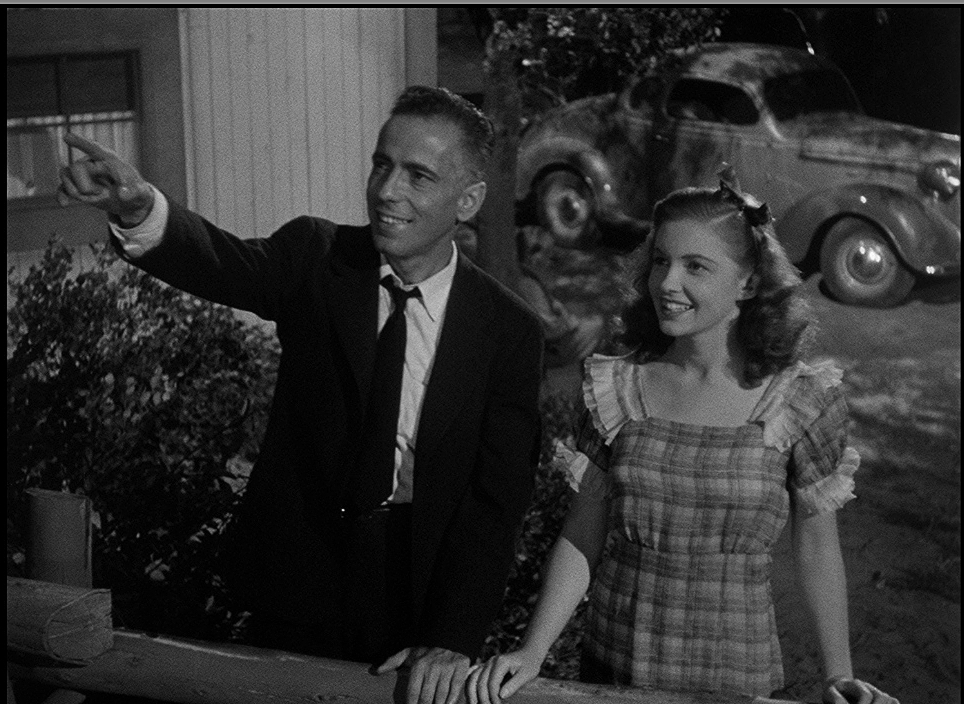
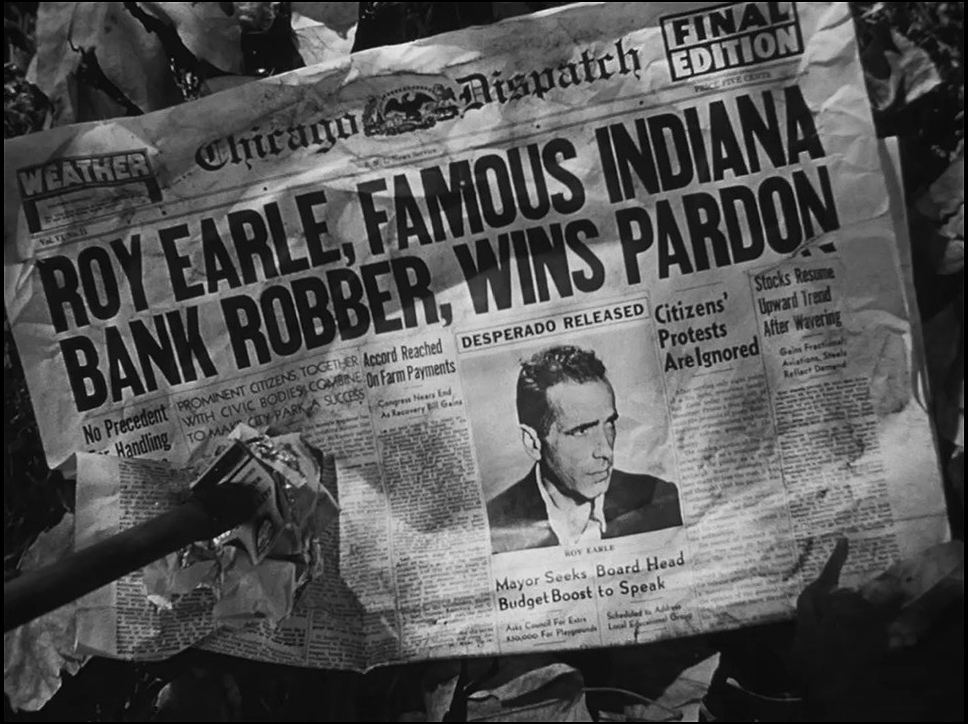
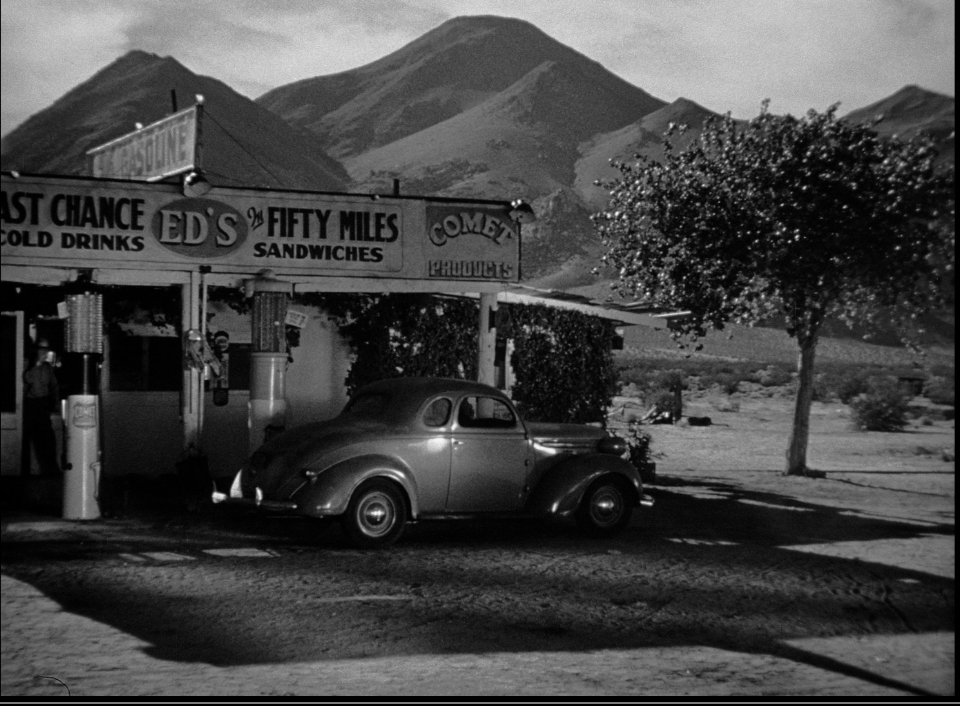
I’ve watched High Sierra two or three times, and it always brings me down. The deck is stacked against poor Roy Earle (Humphrey Bogart), who’s a relatively decent guy when the pressure’s off. Except the pressure’s always on, and he doesn’t know how to survive except by robbery and whatnot, and it’s obvious that sooner or later someone’ll rat him out or the cops will close in.

Roy is a loser, a dead man, doomed — not a chance in hell, and I prefer to watch films about guys who have at least a fighting chance of making it through, which is to say guys who are smart or quick enough to at least guess what’s coming around the corner.

Unfortunately Roy, a decent fellow on his own terms and in his own space, isn’t crafty or clever enough. Plus I’ve never liked his gray hair, and it’s always bothered me that he isn’t perceptive enough to realize that Joan Leslie is kind of a dumb bunny and that she has no romantic interest in him anyway. It takes Roy forever to realize Ida Lupino is a better girl all around.

When it comes to Raoul Walsh crime flicks, I’m a bigger fan of White Heat. Cody Jarrett might be crazy and cruel, but he’s smarter and more big-time than Roy. Roy is obviously a better human being than Cody, obviously. I realize that. I’m sorry for Roy, but I’ve seen White Heat 10 or 12 times and could watch it again right now.

Not Getting The Influence Thing

If I were Prince Harry, which is to say flush and abundant, I would have gotten micro hair-plug treatments a long time ago. He’s obviously loaded enough to have the very best-quality work done, and without going to HE’s clinic in Prague. I’ve had two treatments in that fair city, and I know what they can accomplish and what they don’t accomplish, and I’m telling you that no one has to rock the Glenn Kenny look unless they want to. As long as they can afford $2K and change per visit.

Gabriel Garcia Marquez’s “100 Days on Theatre Screens”

For his Oppenheimer biopic deal with Universal, Chris Nolan said he needed $100 million plus (a) a $100 million marketing budget, (b) total creative control, (c) 20 percent of first-dollar gross, (d) a blackout period during which Universal would not release another movie three weeks before or three weeks after his release, and (e) a 100-day theatrical window.

A little more than two years ago N.Y. Times contributor Nicole Sperling posted an article about a conflict between Netflix and exhibitors over playdates for Martin Scorsese‘s The Irishman.

In the piece former 20th Century Fox distribution exec Chris Aronson stated that “more than 95 percent of movies stop earning their keep in theaters at the 42-day mark.”

In an 8.21.19 HE story about the story, I wrote the following: “Exhibitors fear that [Netflix’s] proposed 21-day window will persuade ticket-buyers to bypass The Irishman in theatres, as they would only have to wait three weeks to see it at home.

“90% of The Irishman‘s theatrical revenue will come from educated, review-reading, 35-and-over types who will want to immerse themselves in Scorsese’s wiseguy epic (it allegedly runs around three hours) and be part of the conversation, and most of these transactions will happen during the first three weeks, four at the outside.

“A portion of the under-35 megaplex mongrels may attend out of curiosity, but the bulk of the business will come from Scorsese loyalists and cultivated cineastes.

“So if Netflix wanted to be accommodating, they would agree to wait 45 days to stream — half of the window that exhibitors want. My hunch is that the deal with AMC and Cineplex will result in a 30-day delay. Somewhere between 30 and 45 == that’s where the peace lies.”

I’m astonished to read that Nolan believes that his Oppenhiemer-builds-the-atomic-bomb movie will be generating even modest theatrical revenue beyond the 42-day mark. Most movies that aren’t wowser-holy-shit blockbusters are usually “over and done” between the 14- and 21-day mark, 30 days at the outside.