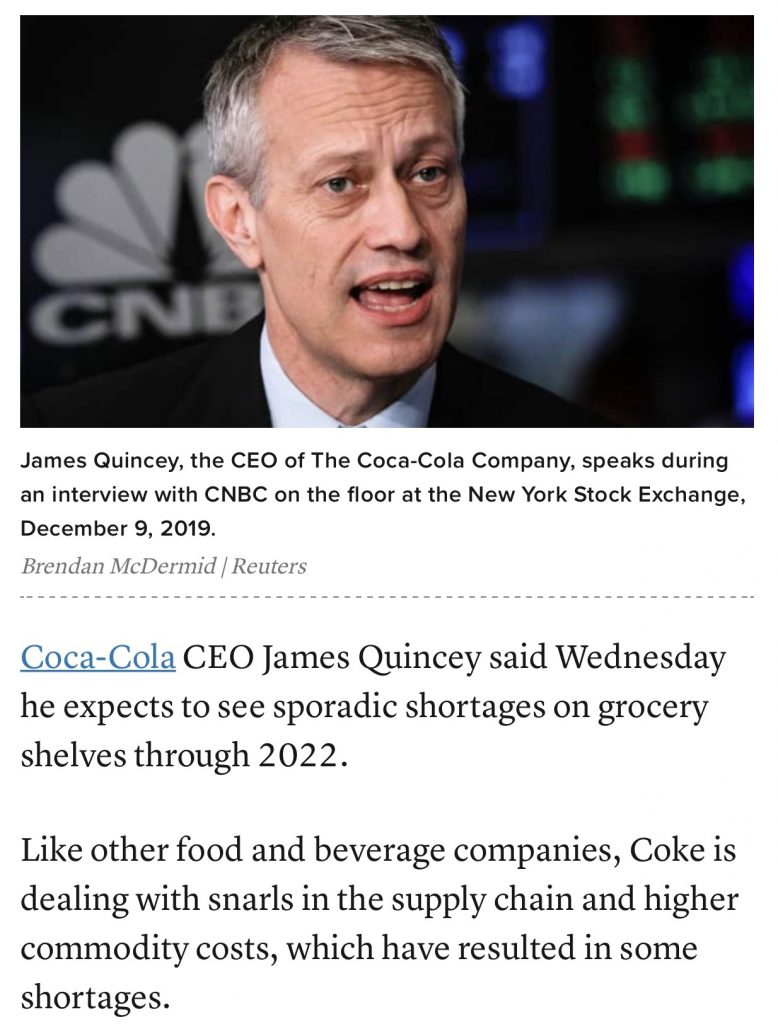
I know that Diet Coke isn’t especially healthy, and that it’s almost synonymous with Trumpism. But I’m a junkie all the same — my brain associates the taste of it with feelings of normality and assurance — and right now the shortage…hell, the absence of silver Diet Coke cartons on supermarket shelves is causing a certain distress. All the other soft drinks are there in abundance — Diet Coke is the only one that’s AWOL.
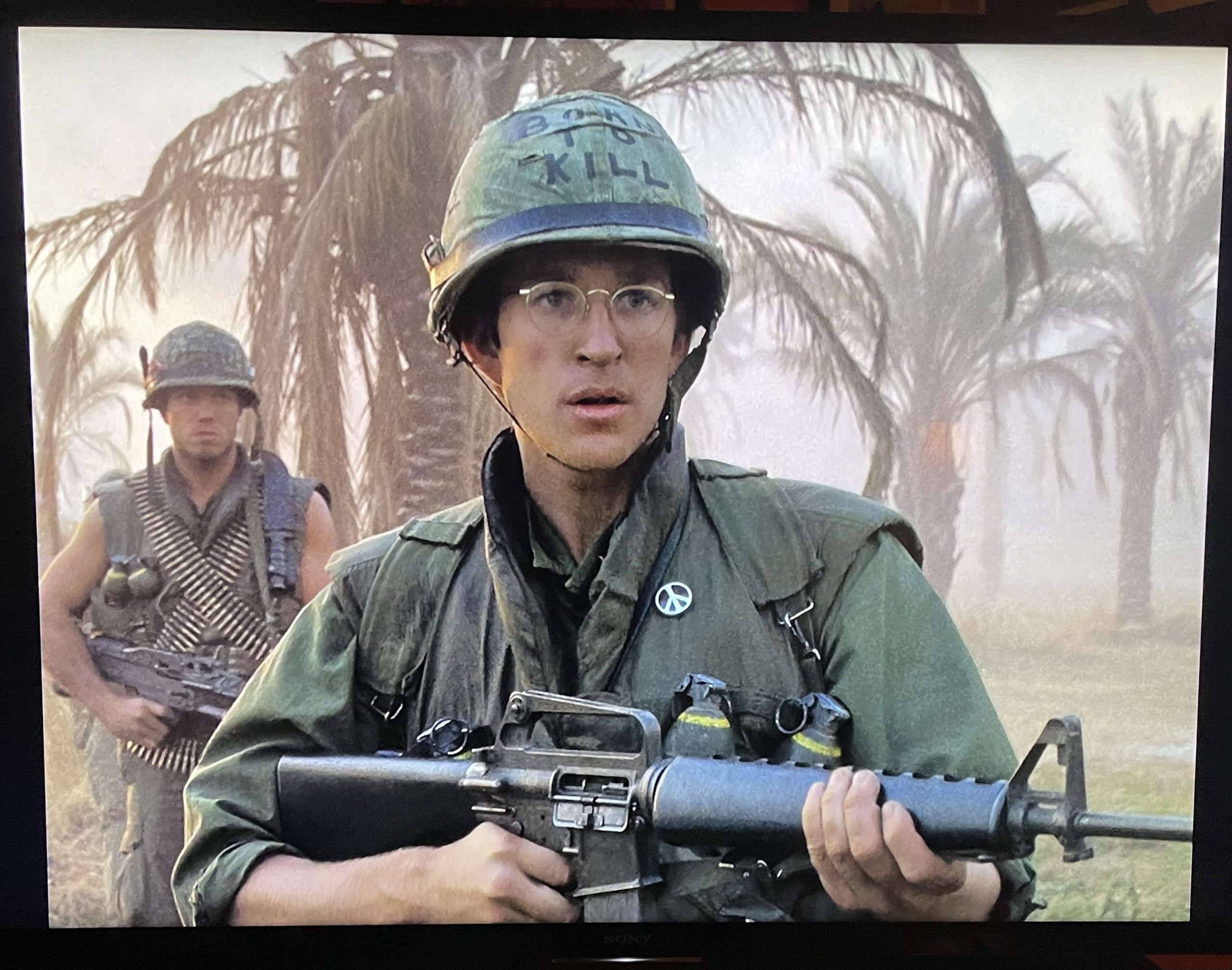
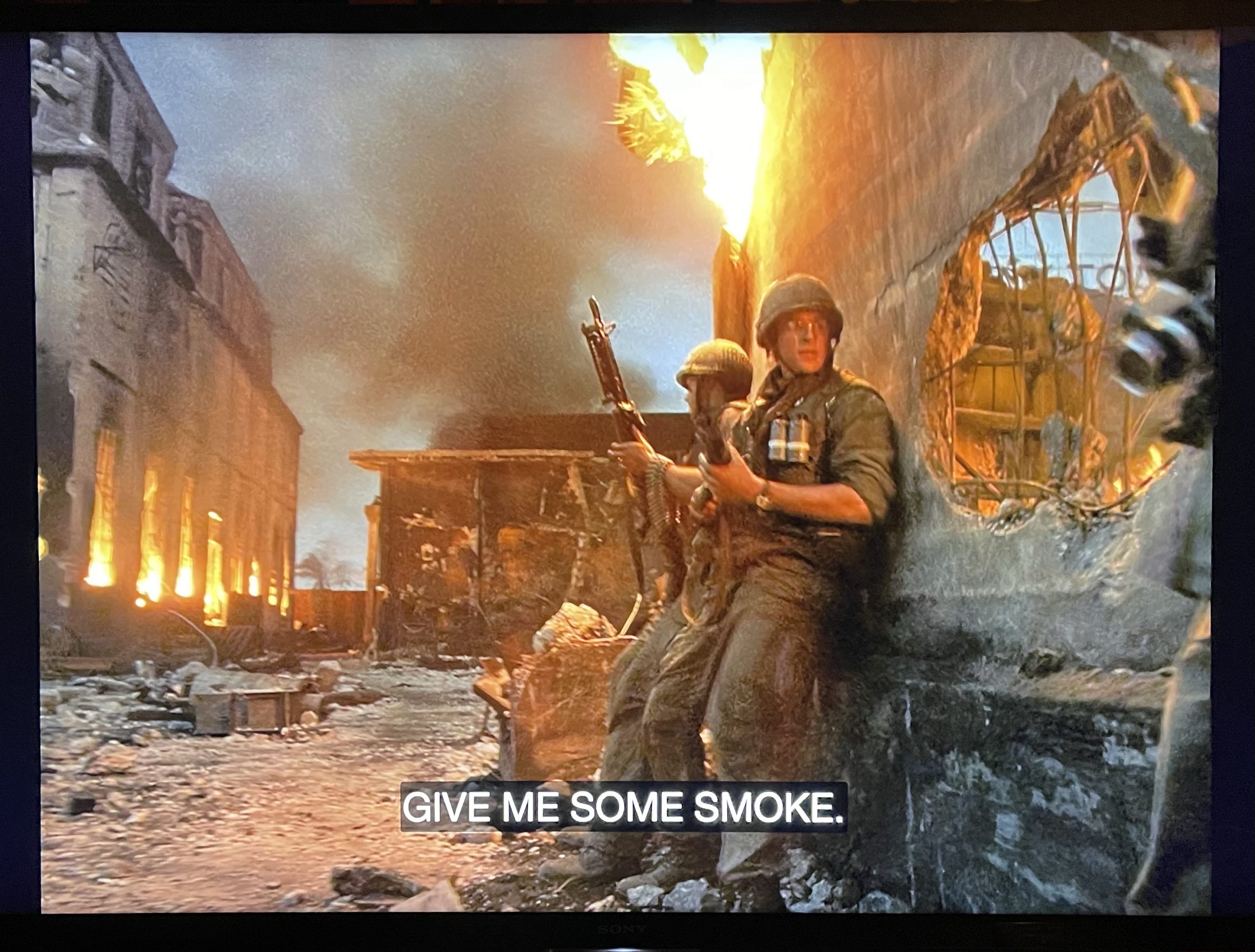
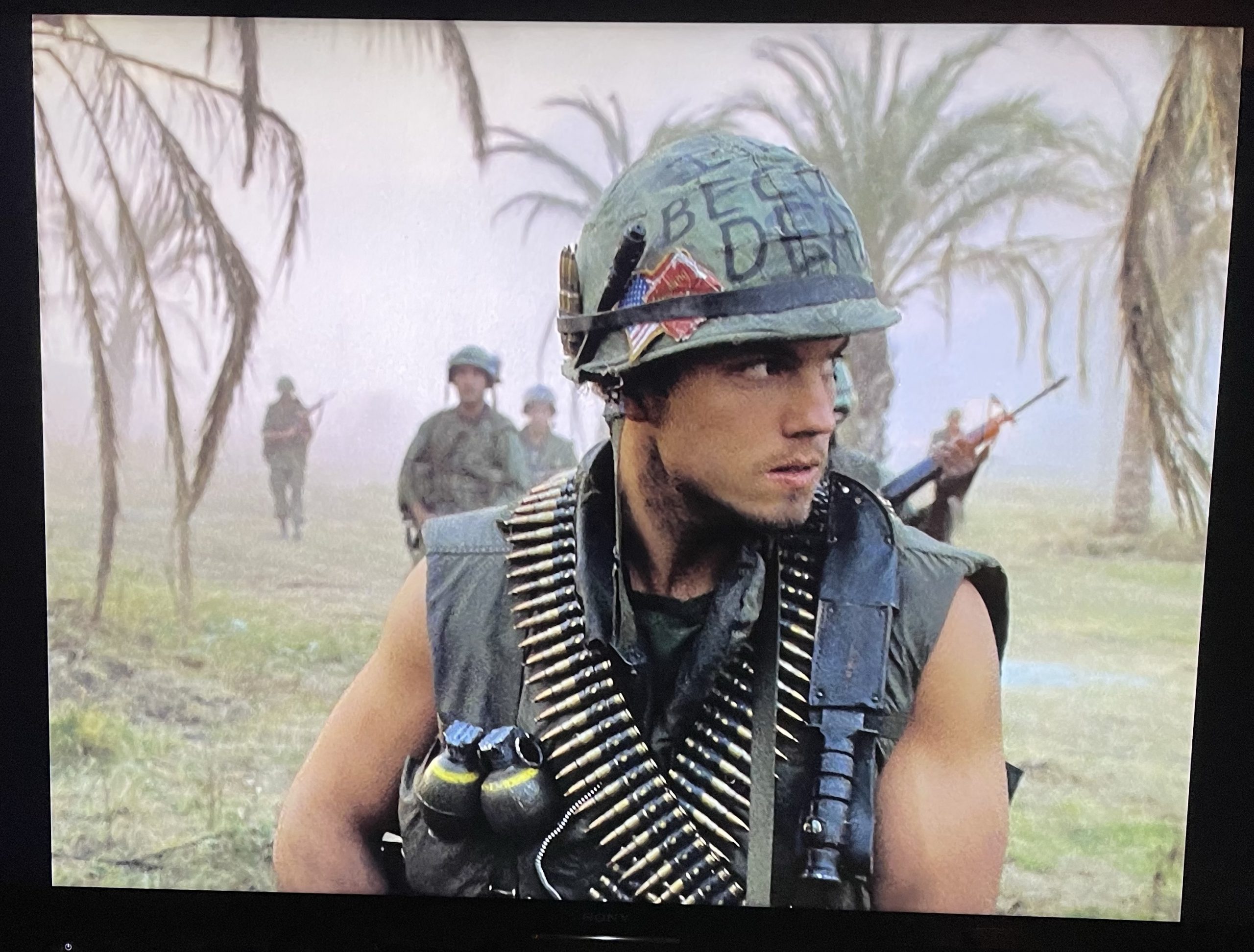
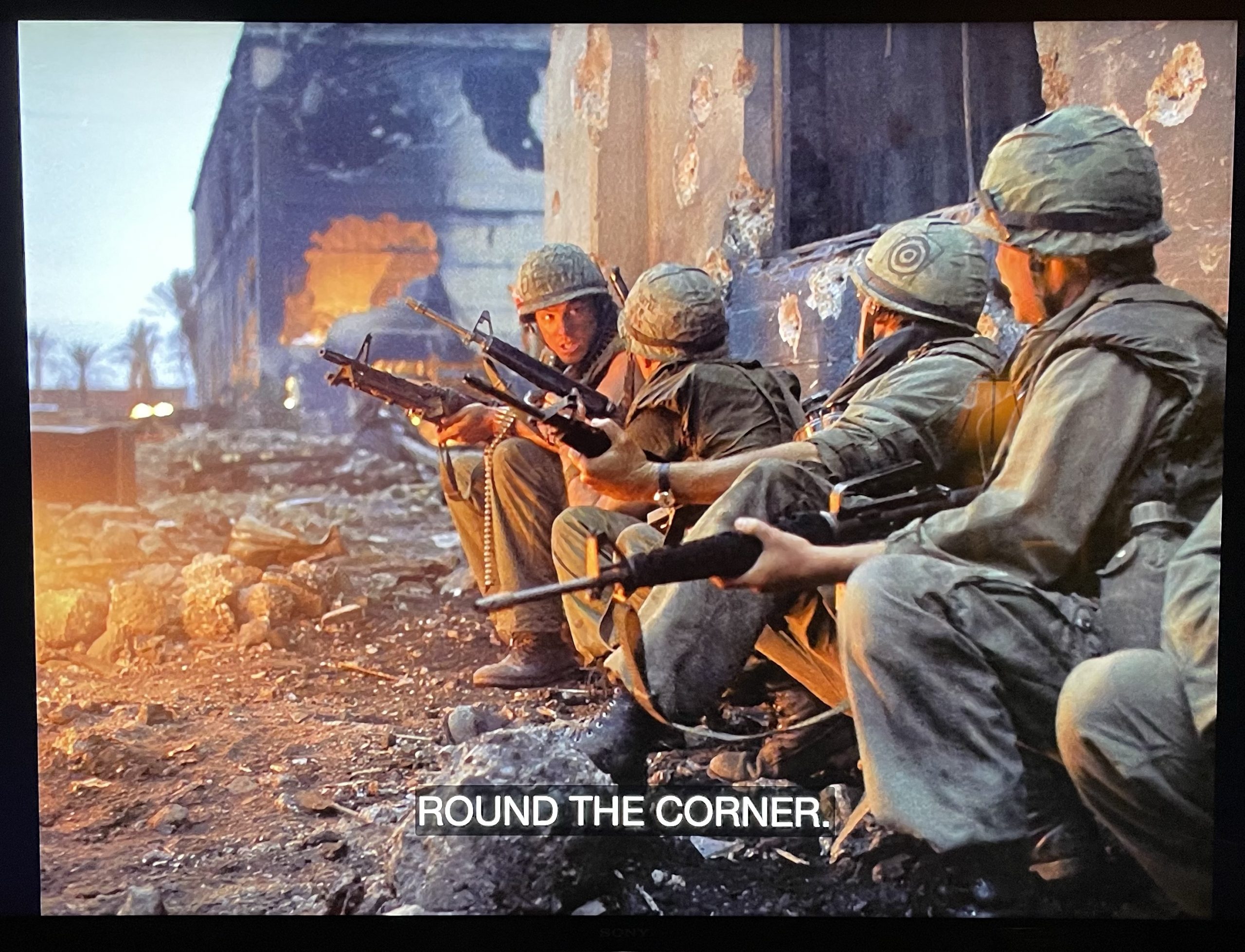
The rarely-shown 1.37:1 version of Full Metal Jacket is back on HBO Max. Please understand there is only one way to re-experience this 1987 war classic, and that’s via the HD boxy version. It is absolutely the most visually pleasing version anyone will ever see. Perfectly framed. The head room is transporting. Nothing is cleavered or trimmed. Exactly the way Kubrick wanted it.
I hate everyone and everything connected to Spider-Man No Way Home (Sony, 12.17). Okay, I don’t really mean that. I hope the film makes money and those who like to sit through this crap will feel satisfied or at least placated. But if I could erase the Spider-Man cinematic universe from everyone’s consciousness by clapping my hands three times, I would definitely clap my hands three times. Maybe that means I do hate everything connected to it.
Two days ago Tatiana and I saw Joachim Trier‘s The Worst Person in The World (Neon). We were both deeply impressed and moved by this acclaimed Norwegian relationship drama, which is sure to be among the top contenders for Best Int’l Feature Oscar. Don’t forget that the lead performance by Renate Reinsve won the Best Actress trophy at the close of last July’s Cannes Film Festival.
The film stirred something strong and extra in Tatiana, and so she decided to bang out some thoughts. Note: She refers to her ex-husband Alexey in the first section. Here’s the essay:
I was very affected by The Worst Person in The World for an unsurprising reason. In some ways the lead character, Julie (Renate Reinsve), reminded me of myself when I was in my 20s.
1. Maternal instinct
Julie: Almost 30 but she doesn’t want children, confessing to her boyfriend Aksel that she has no maternal instinct.
Me: I had friends that at the age of 17 or 18 years old who were obsessed with having babies and their own families. It took me a long time for the maternal instinct to manifest within.
I got pregnant at 24, and I know the exact date and place — 10.28.98 in the heart of Nizhny Novgorod, right across from the Linguistic University, where my son is studying right now. I was pregnant but at the same time wondering why I wasn’t feeling the emotions that I thought future mothers should have. I told myself that these urges would gradually come to me.
Like Julie, I was not ready to be a mother. I was actually afraid of being a bad mother in life. I compared myself with my mom who sacrificed a lot because of us. [Tatiana has an older sister and a brother.] What made me happy with my pregnancy was that Alexey, my ex-husband, would be an excellent father. He had this inside. I was telling myself: well, I will not be an excellent mom, but Alexey will be a great dad. And he has excellent genes. And is very smart.
Women choose fathers for our children. On a subconscious level. The final decision is always on us.
Gleb was born on 7.28.99. I was full of joy, of course, but on some level I couldn’t quite accept that the baby was my son and I was his mother. The night Gleb was born, my one-year-older sister Svetlana came to stay and help with the baby for three months. She had a four year old son and knew all about baby care. When Gleb was one month old, we hired an amazing nanny whose name was also Tatiana. Plus we had a cleaning person.
Every morning I left at 8:15 am for my classes at the university, and then returned home around 3-4 pm. I was a very lucky mom, because Gleb was the sweetest baby in the world. He fell asleep around 9 or 10 pm and usually slept until 7 am. I don’t remember sleepless exhausting nights. And as I mentioned, I didn’t have to do all the routine work around the house.
The maternal instinct finally happened when Gleb was around one year old. And that was exactly the feeling I was waiting for.
2. Relations, Sex and Real Love
Julie: Being in a serious relations with Aksel, one night Julie crashes a party, meets a barista guy (Eivind), experiences a strong sexual and emotional attraction. Later she confesses to Aksel that she wants to quit their relationship, explaining that he dominates her in a certain way and she doesn’t feel happy. She leaves him for a new page of her life. With Eivind.
She says that she feels herself at peace with Eivind. Later, though, we can feel that they are not really a spiritual or intellectual match. Julia complains that Eivind will be “happy with working as a coffee barista when he hits his 50s, and never reading books”, and that Julie “wants more”. It’s obvious that she misses intelligent conversations with Aksel. When the physical passion fades away, many things in a partner become obvious. Passion always blocks our perception.
It basically comes down to his belief that if you’ve found success in the entertainment industry then you’re probably a major shit and your flaws are probably more appalling or more malignant than the Average Joe’s, and that no one wants to schtup, much less fall in love with, a person who is basically Dorian Gray so forget it, dutch — go work out, grab some takeout, watch a Bluray, play with your cats.
It’s true that the entertainment industry attracts the worst people in the world, but by this I mean those who are neurotically desperate to curry favor — the glad-handers, hangers-on, Starbucks gigglers, personal assistants, sucks-ups, kiss-asses, grossly insincere flatterers, wine-bar howlers, yes men, phonies. Los Angeles also attracts, however, the finest crazy people in the world — the 24-7 obsessives, the most talented, the deepest, the funniest, the most mystical or hardcore, the most eccentric, the most impassioned, the trickiest, the most dedicated to art and achievement and truth and great suits and T-shirts.
Do you know which group probably gets laid a lot more? The former. Because the latter group doesn’t even think about getting laid 60% or 70% of the time. I know that being empty or shallow or not a very kind or thoughtful person will never, ever get in the way of having sex with someone attractive, or so I’ve deduced over the years. The hottest women always seem to be with the creepiest-looking or (judging by the vibes) most spiritually unappealing guys, or so it seems.
If a James Mason-like angel was to descend from heaven one night and sit down at a restaurant table and say, “Jeffrey, I’m afraid there’s no delicate way to put this but given your enormous work load and dedication to your column and your samurai poet aesthetic and general lack of patience with mounting a Gen. George S. Patton Third Army European tank campaign plus all the rest of the bullshit you have to submit to in order to have even a chance of striking a match with the right woman, the odds are very much against your ever getting lucky again, much less entering into a lasting, loving relationship,” I would be okay with that.
I would nod and shrug and say, “Yeah, you may be right…okay, got it, c’est la vie.” And at the same time I would say to myself that James Mason doesn’t know everything and that maybe I’ll get lucky regardless, but if he’s right then whatever…I’ve got a really full life going right now and I’ve got all my slut years (’70s and ’80s) to look back upon, and I can roll with that. On the other hand I’ve gotten lucky at the drop of a hat and lost my mind and lost all sense of proportion about things. For two or three weeks, I mean.
Rushfield: “If you work in the entertainment industry and you’re successful, then there is a small chance you are not a horrible person. If you are a horrible person, then you probably have horrible values and that applies especially to your romantic life and what you think you want from that. And that makes finding a suitable life partner challenging. [And] If you moved to LA to work in the entertainment industry and you are not successful, then everyone who moved to LA to work in the entertainment industry on some level wants to shun you as [if] you had the plague, which also makes finding a suitable life partner challenging.”
During a visit to Memphis in early February 2009, I did a quickie tour of four tourist attractions — Graceland, Sun Studios, the Lorraine Motel and Beale Street. I was gratified to find that Sun Records, the small recording studio that was begun by the great Sam Phillips in 1950 and the place where Elvis Presley recorded his first few tunes, is a homey little shrine — an old-time funky studio and souvenir shop that reeks of the mid ’50s.
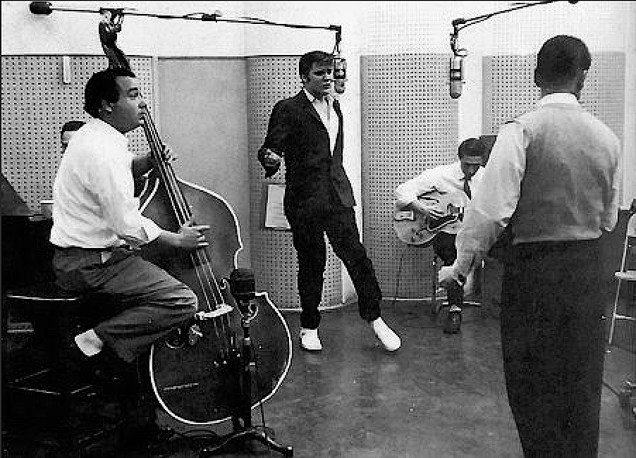
After tapping out yesterday’s riff about Baz Luhrman‘s Elvis (Warner Bros., 6.4.22), it hit me that I’ve never once visited the former site of Radio Recorders, where Presley recorded “All Shook Up” — easily the coolest and most popular hit single of his career — on 1.19.57.
Radio Recorders was located at 7000 Santa Monica Blvd.. two blocks east of La Brea and a 14-minute drive from my place. (Nine minutes on the rumblehog.) I’ve been living in this cutthroat, dog-eat-dog town for nearly 40 years and it never even occured to me to visit this historic rock ‘no roll site. What’s wrong with me?
Many most people have a fundamental inability to face potentially devastating threats to human existence. What matters most to them is hanging on to the conditions of life they know — the familiar, the banal — rather than dealing with whqt’s coming around the corner.
Five words — complacency by way of denial (or denial by way of complacency).
This is clearly the basic theme of Adam McKay‘s Don’t Look Up (12.10), which has been screening for a few and is screening for more than a few starting tomorrow.
Quick — name a significant 1963 film that dealt with roughly the same psychological response to imminent human extinction. Correct — Alfred Hitchcock‘s The Birds.
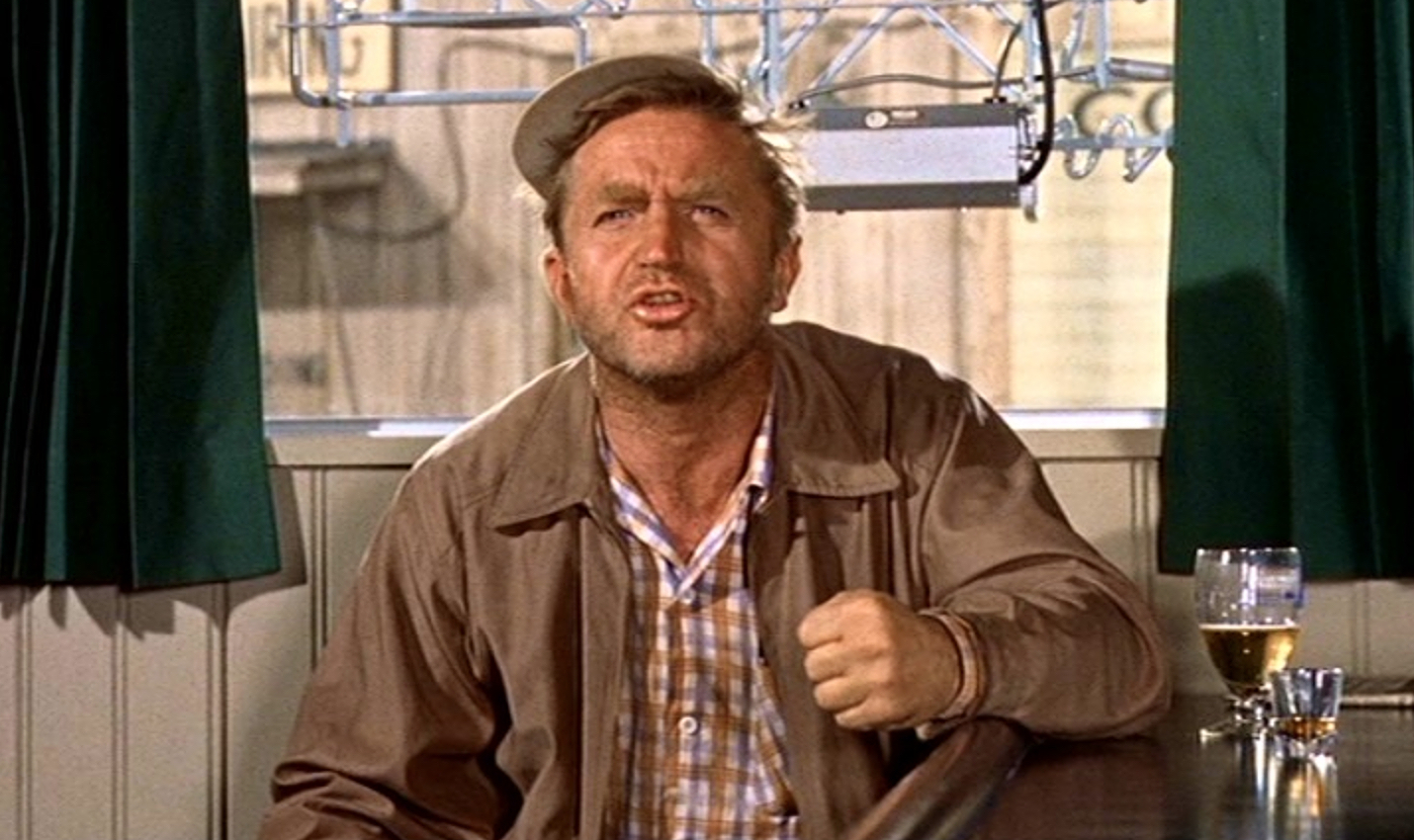
Bodega Bay was abounding with complacency and denial, and it all came to a bubble in that famous luncheonette scene in which recent bird attacks were discussed and the town drunk (Karl Swenson) occasionally proclaimed “it’s the end of the world!” He was right and nobody listened. Because drunks are only to be tolerated, if that.
In Don’t Look UpLeonardo DiCaprio and Jennifer Lawrence play astonomers who’ve detected an oncoming meteor that will most likely destroy the earth upon impact. They are also playing Swenson’s character.
Shapiro is less funny than Chapelle, but he’s 100% accurate here. I’m sorry but he is. YouTube commenter: “I wish that person” — slender woman with glasses — “had answered what a woman is. The mental gymnastics would have been fascinating.”
HE intends to catch a recently restored 4K version of Dennis Hopper‘s under-appreciated Out Of The Blue (’80) at the Metrograph on Sunday, 11.28. The film’s star, Linda Manz, passed from lung cancer in August ’20. Hopper was substance abusing when he did publicity for Out of the Blue. I know because I tried to interview him at a Manhattan hotel sometime in April ’80, and he kept me waiting for over two hours — guess why? But at least now I can say I blew off a Dennis Hopper interview, etc. I have that memory. He came down to the lobby at the last minute as I was walking out, and I remember that hyper look in his eyes.
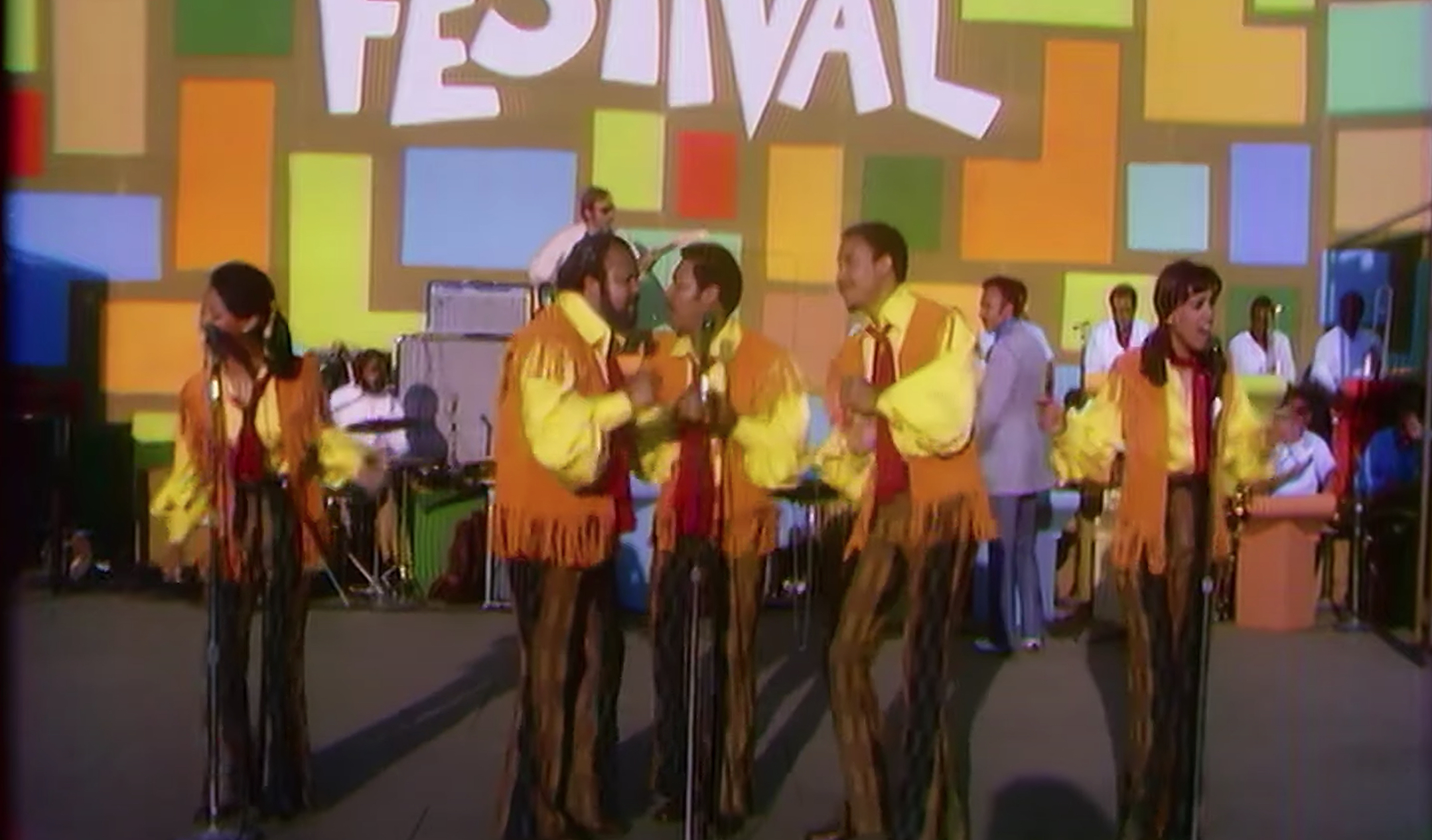
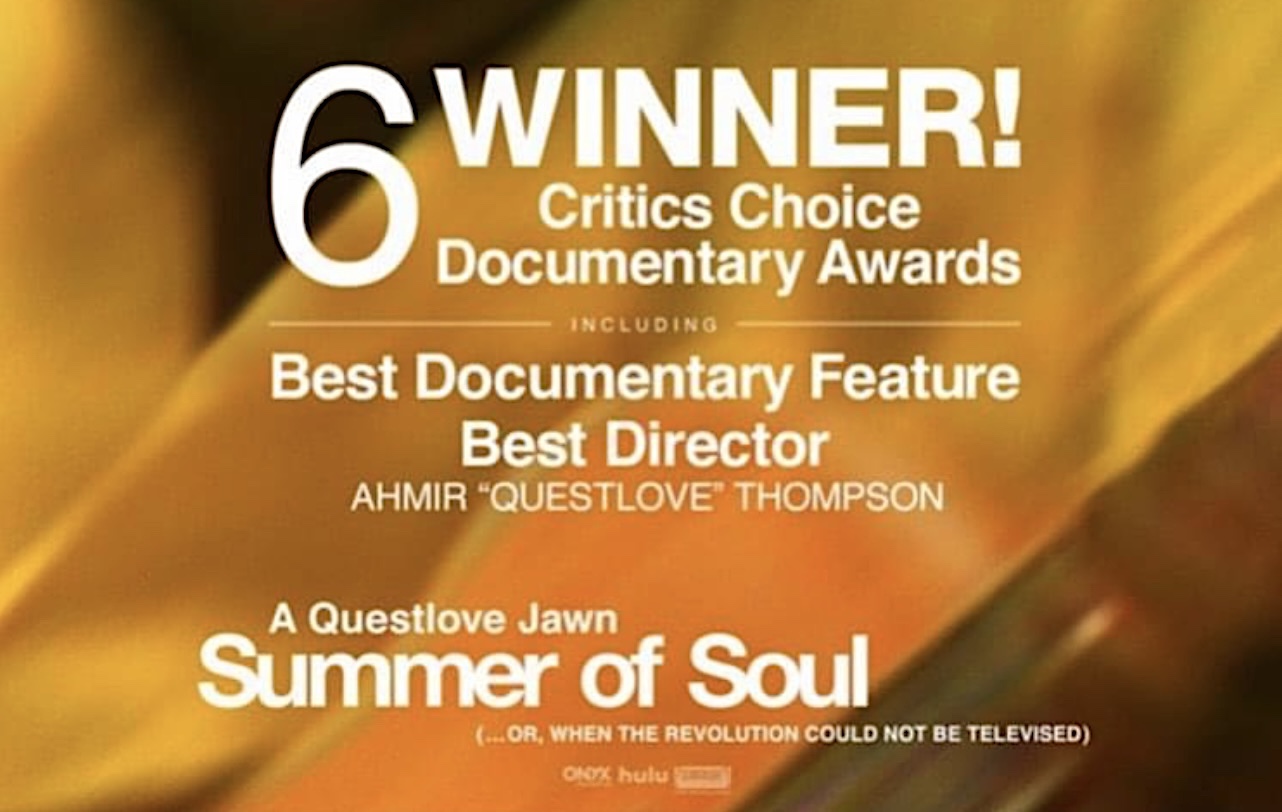
May I ask why Summer of Soul, which is basically just a restored-concert-footage thing with three or four talking-head interviews thrown in…why is Summer of Soul the runaway presumed winner? It’s a highly engaging, finely tuned musical high, but what’s so “best of the year” about it? Any ideas, suspicions, etc.?
From HE’s 7.16.21 review: “Shot during the mid-to-late summer of ’69 at the Harlem Cultural Festival, the doc is half…make that two-thirds about music and a third about revolutionary-cultural uplift. Changes were in the air; terra firma was shifting. ’69 was the year, remember, when average African Americans began self-identifying as ‘black’.
“And the footage is magnificent. You can almost feel the heat, smell the New York air, grass and trees, the cooked food, the cigar and cigarette smoke and the faint scent of flat, room-temperature beer.
“Most of the film — directed by Ahmir “Questlove” Thompson, shot a half-century ago by Shawn Peters, brilliantly edited by Joshua L. Pearson — is focused on the great songs and performances, and is what you might call (for lack of a better term) honky–friendly. Nobody says anything about the legacy of inherently evil whiteys or The 1619 Project or CRT…a blessing! Then it becomes more political and more Black-attuned about the serious consciousness elevations that were happening everywhere in all corners, and then it whips back into a more-or-less pure musical mode at the end.”
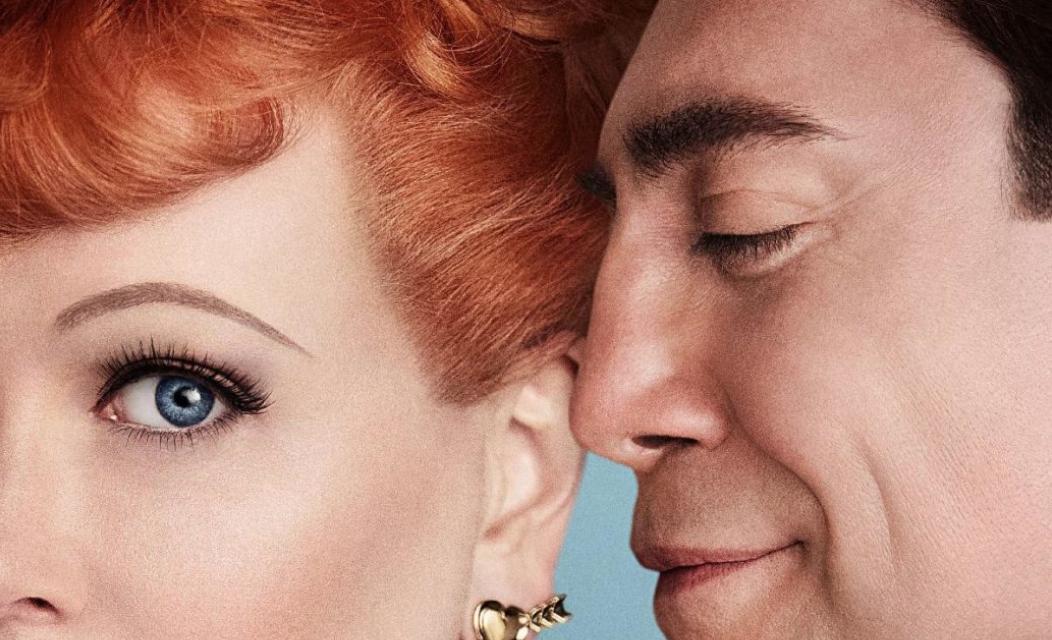
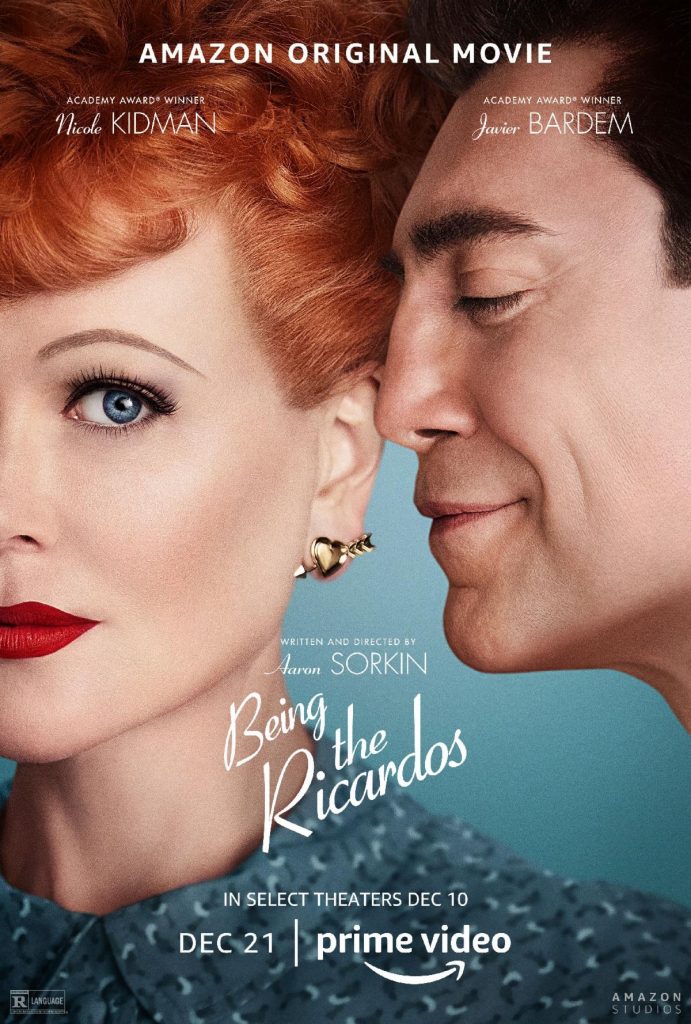
Philip Morris was an I Love Lucy sponsor for four years — ’51 to ’54. This wasn’t a magazine ad but a 1953 cardboard standee, promoting Christmas packaging for cartons of Philip Morris King Size cancer sticks. HE to Clayton Davis: Desi was Cuban, of course, but here he looks half-Spanish and half like Raymond Burr in Perry Mason….kinda like Javier Bardem looks in Being The Ricardos (Amazon, 12.10).