1. 4 Months, 3 Weeks, 2 Days; 2. Before The Devil Knows You’re Dead; 3. No Country for Old Men; 4. Once; 5. Superbad; 6. Michael Clayton; 7. There Will Be Blood; 8. Things We Lost in the Fire; 9. Zodiac; 10. The Assassination of Jesse James by the Coward Robert Ford; 11. Atonement; 12. American Gangster; 13. I’m Not There; 14. Sicko; 15. Eastern Promises; 16. The Bourne Ultimatum, 17. Control; 18. The Orphanage; 19. 28 Weeks Later; 20. In The Valley of Elah; 21. Ratatouille; 22. Charlie Wilson’s War; 23. The Darjeeling Limited; 24. Knocked Up; 25. Sweeney Todd.
HE reply: For all its negative or deplorable aspects, award season — an annual rite that encourages filmmakers to at least try to make aspirational, quality-calibre films — is the only thing preventing the film industry from becoming a totally synthetic garbage mechanism. It is worth holding onto at all costs. Actors, directors, producers, screenwriters and distributors all want their moment in the sun. Ditto high-end craftspersons.
Industry press people were given a big celebration tour this morning of the Academy Museum of Motion Pictures, which will open to the public on Thursday, 9.30. It’s beautifully designed (we’ve all seen the photos and videos) and, according to a friendo who attended, is quite the stirring atmospheric history trip as you stroll through it.
I didn’t attend, naturally, being the beloved and admired fellow that I am and always have been, but friendo’s basic impression was that the museum’s sensibility and atmosphere conveys a mixed or blended message — an historical celebration of a once hugely influential, 116-year-old industry (naturally) plus earnest attempts to instruct and enlighten.
What the museum is effectively saying to visitors is this: “While we’re obviously paying tribute to those classic, iconic Hollywood accomplishments and traditions of yore…that fabled tinseltown mythology that reflects a sometimes difficult but always passionate history…a Hollywood of royalty and high-style glamour and iconic cultural influence reaching back 100 years and more…despite this obvious effort on our part, we are also celebrating the new emerging Hollywood of today, and that means a commitment to diversity and change and the lifting of all boats.”
What the museum represents and is in fact celebrating, the friend says, is a view that the industry is committed to doing the right thing…the Academy believes itself to be at the vanguard of a social-political revolution within the entertainment realm, a cultural changeover that has been sought for decades and has finally come into being over the past five or six years.
In short, friendo asserts, after visiting the museum and contemplating all the features and exhibits and the cultural “all” of it, one is left with a definite feeling of from-the-top-down wokeness — that Hollywood culture is being re-defined in service of progressive cultural goals and ideals. The past is represented, of course, and in many eye-filling and fascinating ways. But the bottom line is that after absorbing this cultural showplace “nobody could ever call out the Academy for not being inclusive.”
In short, the museum is as much of an effort to self-define or re-define — “self” in this instance being representative of the views of rich industry elites — as it is an architecturally wowser, high falutin’ temple of Hollywood worship.
Friendo feels that while the museum is about trying to arouse the spirit and/or warm the cockles of the hearts of Joe and Jane Popcorn, the woke stuff may not impress as much.
Friendo: “Tourists don’t necessarily want to learn about the multicultural history of the Oscars…the museum’s focus in on identity and inclusivity…not about the studios or the verve or the sexuality or dangerous glamour…it’s very beautiful and very woke and instructional….we are going to school you about whatyoushouldknow…almost a museum version of the Soderbergh Oscars.”
Bottom line: The Best Supporting Actress Oscar won by Hattie McDaniel for her unforgettable performance as “mammy” in Gone With The Wind is honored by the Academy museum, but otherwise mentions of Gone With The Wind itself are not prominent. (Friendo can’t recall seeing any displays or plagues that mention David O. Selznick‘s 1939 classic.)
Is every aspect of Gone With The Wind, which has more or less become the new Birth of a Nation, deserving of praise? Obviously not. There are portions that are deeply ugly. But it still represents a major historical chapter in the history of this town, it’s still the most financially successful film of all time ($3.4 billion adjusted gross), and the second half of Part One — the burning of Atlanta to “I’ll never be hungry again” — is still magnificentcinema.
You may or may not have read that David Chase and Alan Taylor‘s The Many Saints of Newark (Warner Bros./HBO Max, 10.1) is divided into two chapters and set four years apart.
The first half (maybe closer to 40% or 45%) happens in 1967, and is colored by (a) fraternal family stuff, (b) racial tensions, (c) Newark race riots, (d) sexual betrayal and (e) the absence of Michael Gandolfini. The young Tony Soprano is played in this portion by William Ludwig.
In fact, The Hollywood Reporter‘s David Rooneycalls this section “the dominant storyline,” as in “more impressive than the second half.”
Michael, who resembles his late father, James, who headlined HBO’s legendary Sopranos series from ’99 through ’07, doesn’t turn up until the 1971 section, which is heralded, incidentally, by the Rolling Stones‘ “Sway.”
And in the view of Variety‘s Owen Gleiberman, the film’s final portion doesn’t persuade that Michael is on the path to becoming the reigning crime boss of northern New Jersey.
“The thing we most want from [Many Saints] is a sense of revelation. We want it to show us how Tony Soprano, growing up as a ‘normal’ Italian-American teenager, slipped onto the road that would lead him to become a gangster sociopath. We need to see him take that first step.
“The movie may have convinced itself that it shows it to you, but this Sopranos fan found Tony’s ‘evolution’ toward the dark side to be even less convincing than Anakin Skywalker’s transformation into Darth Vader at the climax of Revenge of the Sith.
“At the end, I felt like we needed a second prequel, or maybe just that essential TV thing: another episode.”
So let’s be honest — The Many Saints of Newark is only partly the return of Tony Soprano in the person of Michael Gandolfini (i.e., the second half), and it isn’t even quite that, in Owen’s opinion.
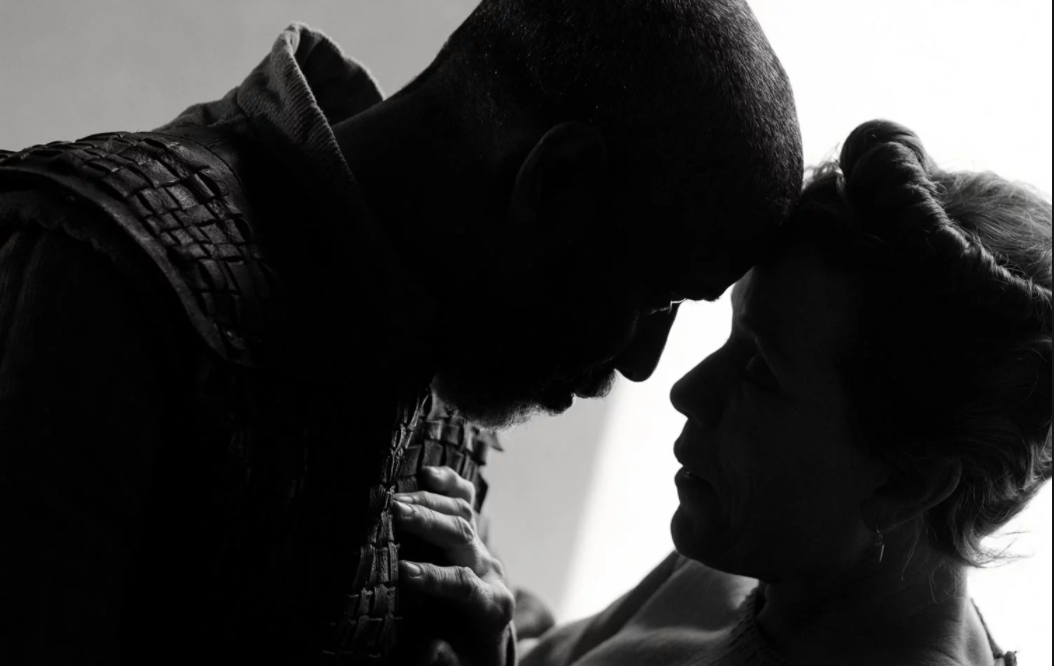
Predatory hawks. Grayish, fog-shrouded milieu…like nuclear winter. 1.37 aspect ratio. “By the pricking of my thumbs, something wicked this way comes.” Fine but calm down.
One thing stands out — a look of somber self-awareness, a hint of resignation on Denzel’s face.
Three or four days ago I was heading east on Wilshire, just past Beverly Glen Blvd. 45, 50 mph. I was wearing my white helmet, which has a large, adjustable, brown-tinted visor. But I hadn’t strapped the helmet under my chin (which I often forget to do) and suddenly I was buffeted by a big gust, and the wind got under the visor and lifted the helmet right off my head…whoosh.
I pulled over to the side. As I did this I heard at least one car (or was it two?) honking in alarm. Perhaps they’d hit the helmet; it sounded as if someone might have. I parked and looked back. The white helmet was sitting in the gutter about 30 feet away; the visor was nowhere to be found.
If a cop had witnessed this I almost certainly would’ve gotten a ticket. “Failure to properly secure helmet,” something like that.
This had never happened before, but it was okay. I wasn’t alarmed or even flustered. My attitude was “well, that happened!” I put the helmet back on and went on my way. I have a black back-up helmet with a visor — no worries.
…would be even faintly excited about seeing David Gordon Green‘s Halloween Kills (Universal/Peacock, 10.15), especially given the fact that it’s only the middle-chapter in DGG’s grown-up Michael Myers vs. Laurie Strode trilogy — Halloween (’18), Halloween Kills and 2022’s Halloween Ends.
The franchise killer respectfully requests that you wire all payments to his business manager, not his agent.
Halloween Kills is the twelfth godforsaken installment in the franchise.
The New York Film Festival press screening of Joel Coen‘s The Tragedy of Macbeth happens on Friday morning, 9.24. Several public screenings of the A24 release will happen a few hours later (Alice Tully, Walter Reade and two other venues).
There’s an embargo, as always. Critics can never post reviews of the opening-night NYFF film until that night.
I’ve been detecting “uh-oh” reactions for a while now, but let’s cool our jets until the moment arrives.
Roman Polanski‘s shortened but reasonably faithful Macbeth (’71) ran 140 minutes; Coen’s version runs 105.
The trailer for TheTragedy of Macbeth pops on Tuesday, 9.21.
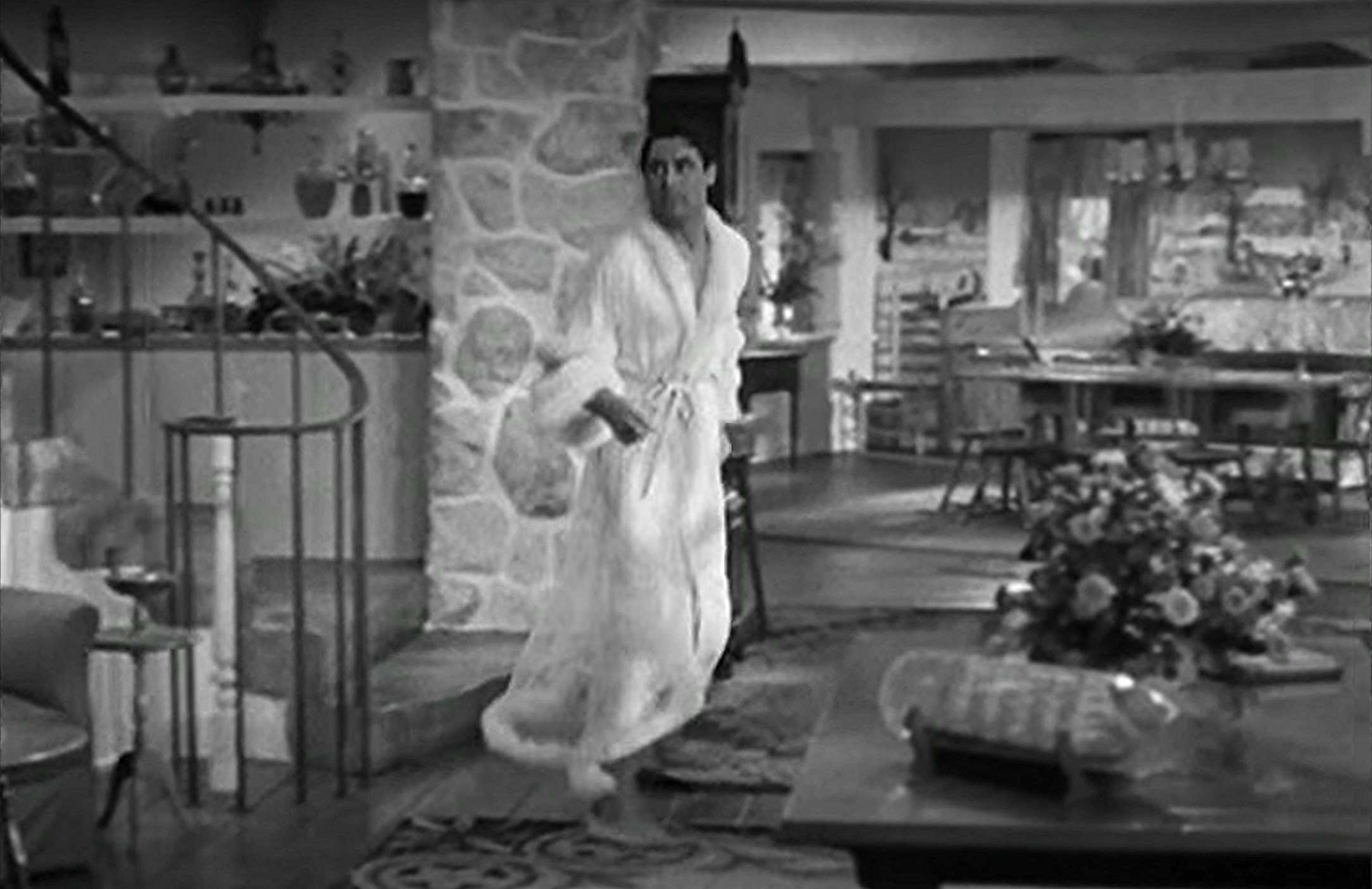
The sprawling Connecticut ranch-style home (French doors, spacious, big lawn, sycamore trees) owned by Katharine Hepburn‘s wealthy mother in Bringing Up Baby became a real thing. Howard Hawks, director of the 1938 screwball comedy, and his wife “Slim” built a home based on the design. They either called it “Hog Canyon” or it was built in Hog Canyon — I could never figure out which. (Originally referenced in “Legendary Movie Homes,” posted on 3.17.21.)
This is days old but having spent a little time with 14 year-old Hailee Steinfeld in the backstage area of Santa Barbara’s Lobero Theatre back in February ’11 (a month or two after True Grit opened), I just wanted to register my personal surprise when she made her appearance at the Met Gala.
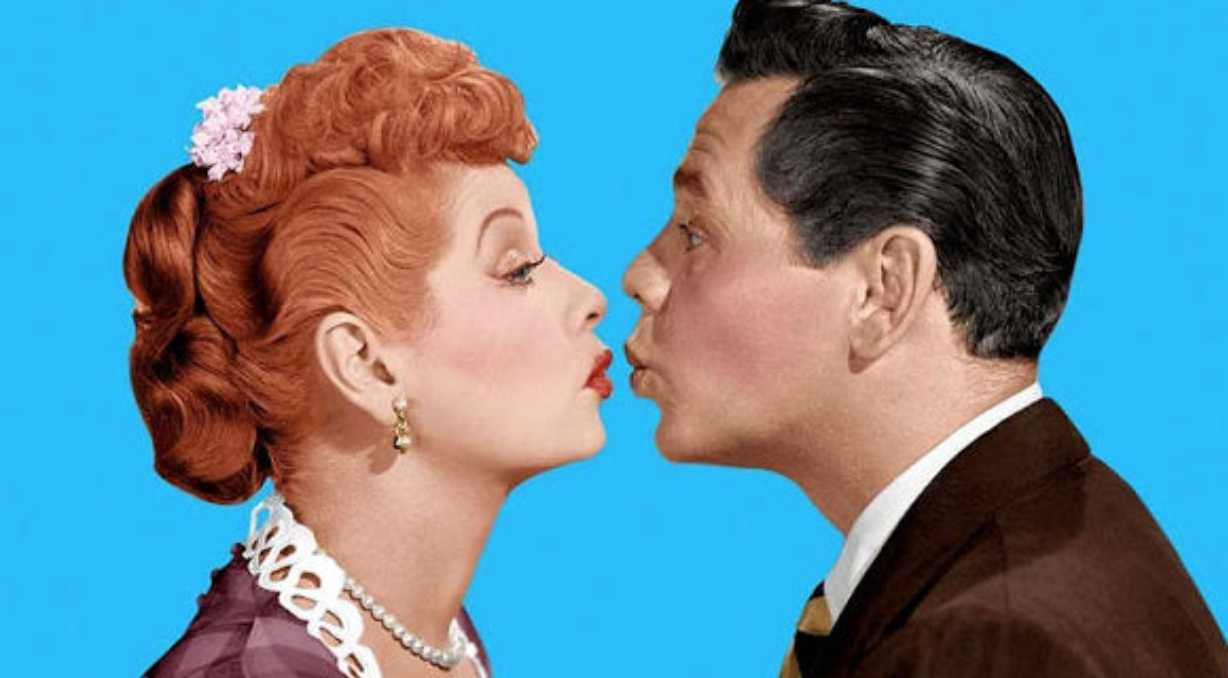
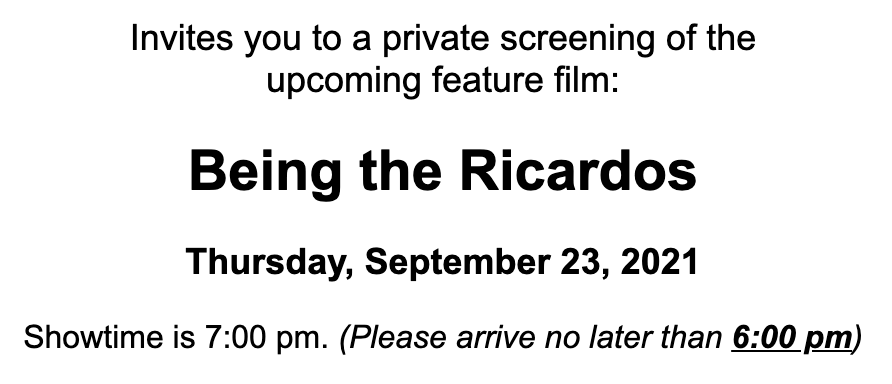
Somewhere in these United States, 35 to 64 year-olds** have been invited to see Aaron Sorkin‘s Being The Ricardos later this week. Word around the campfire is that Javier Bardem‘s performance as Desi Arnaz is the standout element, and a likely contender for a Best Supporting Actor Oscar. The descriptive copy in the invitation is a bit windy, but here it is:
“Being the Ricardos, directed by Aaron Sorkin, charts the ups and downs of Hollywood legends Lucille Ball (Nicole Kidman) and Desi Arnaz (Javier Bardem) in creating their iconic I Love Lucy TV show, which both strengthened and destroyed them as a couple.
“Even though the series allowed them to play house and become people they weren’t in reality (but wished they could be), the movie examines how being the top pop icons of the day took a toll on both their personal and professional lives in an inventive and unique style, filled with kinetic energy.
“As Lucy and Desi prepare over the course of a single week to shoot an episode that will go down in history as having some of the funniest and most memorable scenes to grace television, we will be enthralled to peek into why despite all of that passion and success their world-famous relationship could never be.”
Cutting to the chase: Arnaz’s Cuban upbringing taught him that catting around outside the bonds of marriage was perfectly acceptable or at least workable.
Excerpt from Chicago Tribune interview with their daughter Lucie Arnaz: “My father loved women, and Latin American countries have a whole different code of ethics. There’s the home with the wife, and the house with the mistress. Each is highly respected by the other.
“Unfortunately, my mother was from upstate New York, and my father couldn’t get her to go along with that concept.”
A 1955 Confidential article alleged that the Cuban-born actor told a friend, “What’s she so upset about? I don’t take out other broads. I just take out hookers.” (Reported in an 8.13.20 Vanity Fair article, titled “Did Desi Really Love Lucy?“)
Obviously Arnaz was an inconsiderate sexist dog. If a husband is determined to run around to his heart’s content, he at least needs to keep it on the down-low. Out of respect for his wife’s honor, I mean. Never push it in her face. Allow her to think that things might be okay.
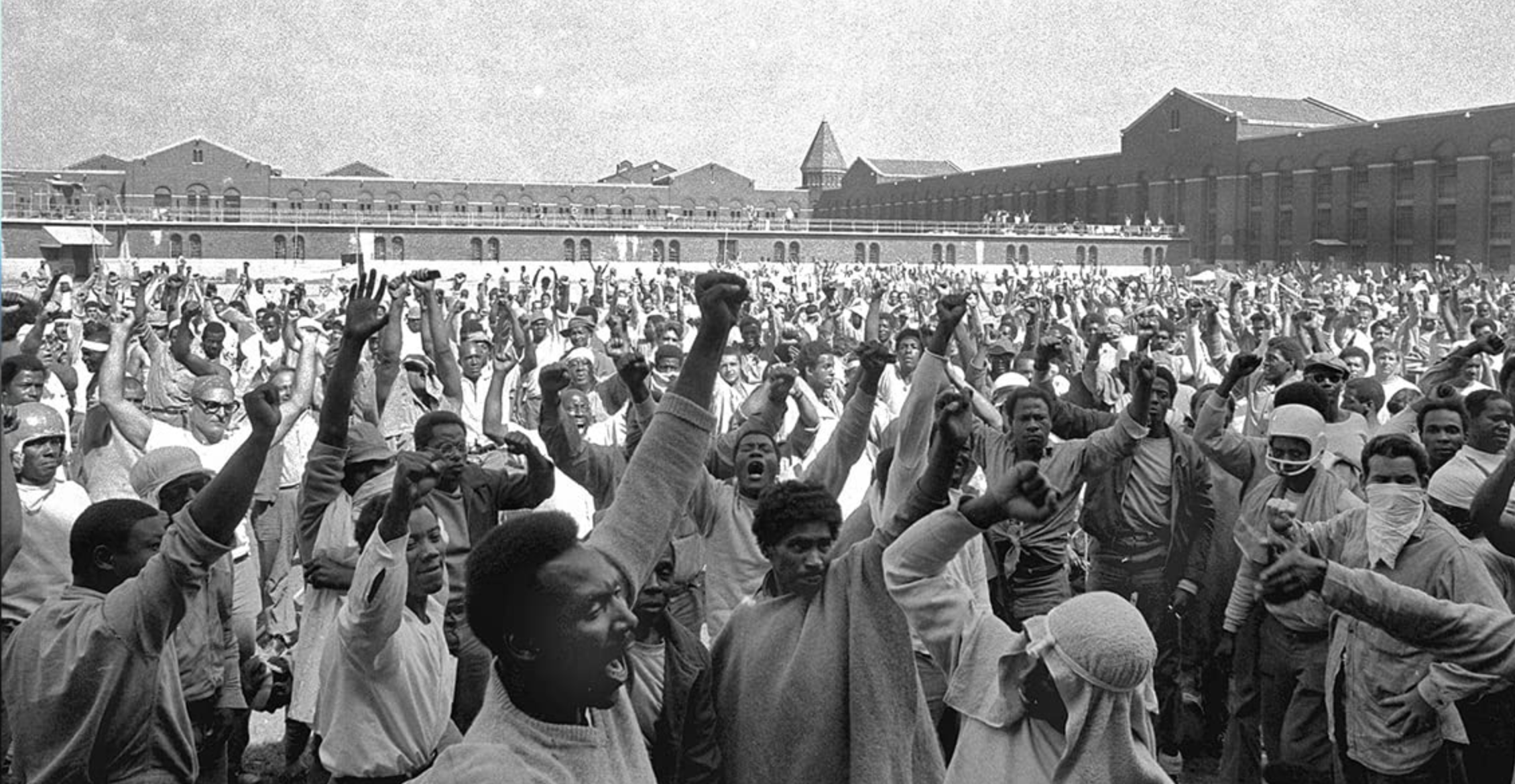
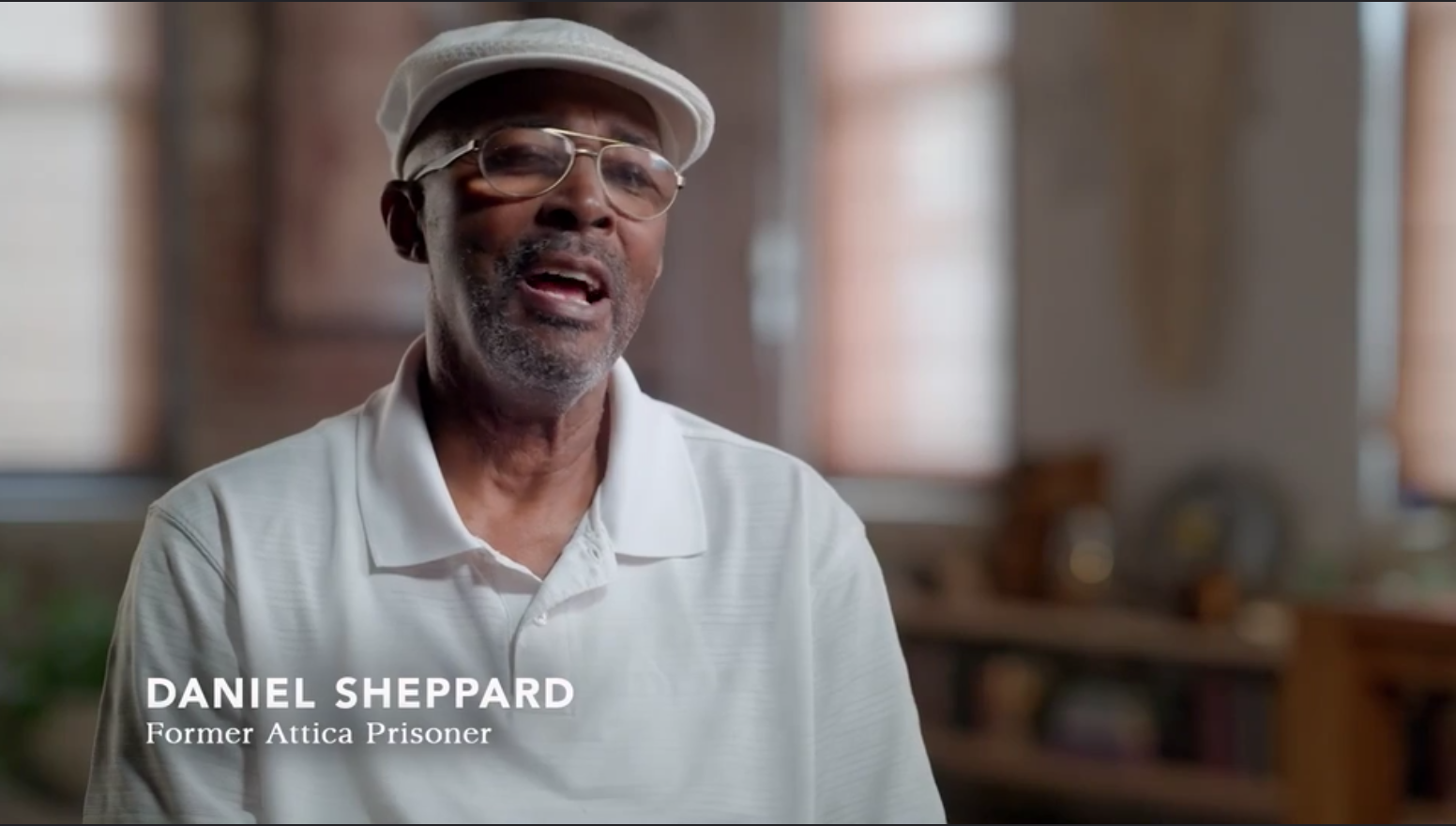
I’ll never forget Al Pacino repeatedly yelling “Attica!” in Dog Day Afternoon…a film moment burned into our brains. But to watch Stanley Nelson‘s Attica is to travel right back to the original uprising of ’71 and experience the pain and brutality and ugliness first-hand. But completely fascinating start to finish.
I saw Nelson’s two-hour doc last night, or roughly 11 days after it played at the Toronto Film Festival. All I could say or think was “good God” and “Lordy Lordy.”
Attica is devastating and infuriating — the ultimate portrait of one of the most revolting acts of state-sanctioned racial savagery in American history — a portrait of white-working-class hatred of militant black men from a half-century ago, and how one of the most appalling acts of mass murder happened at the end of a four-and-a-half-day prison-revolt standoff at Attica prison in upstate New York.
The inmates were simply tired of being treated like dogs — they wanted better food, decent medical care, less hostility, more toilet paper, etc.
On 9.13.71 the New York corrections officers and prison staff shot and killed 43 people — 33 inmates and 10 correctional officers who had been taken hostage. They also injured and tortured hundreds more.
I don’t know when Attica will play on Showtime (nothing comes up when you do a title search on the Showtime site), but with the 50th anniversary having already passed I would presume sooner rather than later.
The film lasts exactly 1 hour, 56 minutes and 35 seconds.
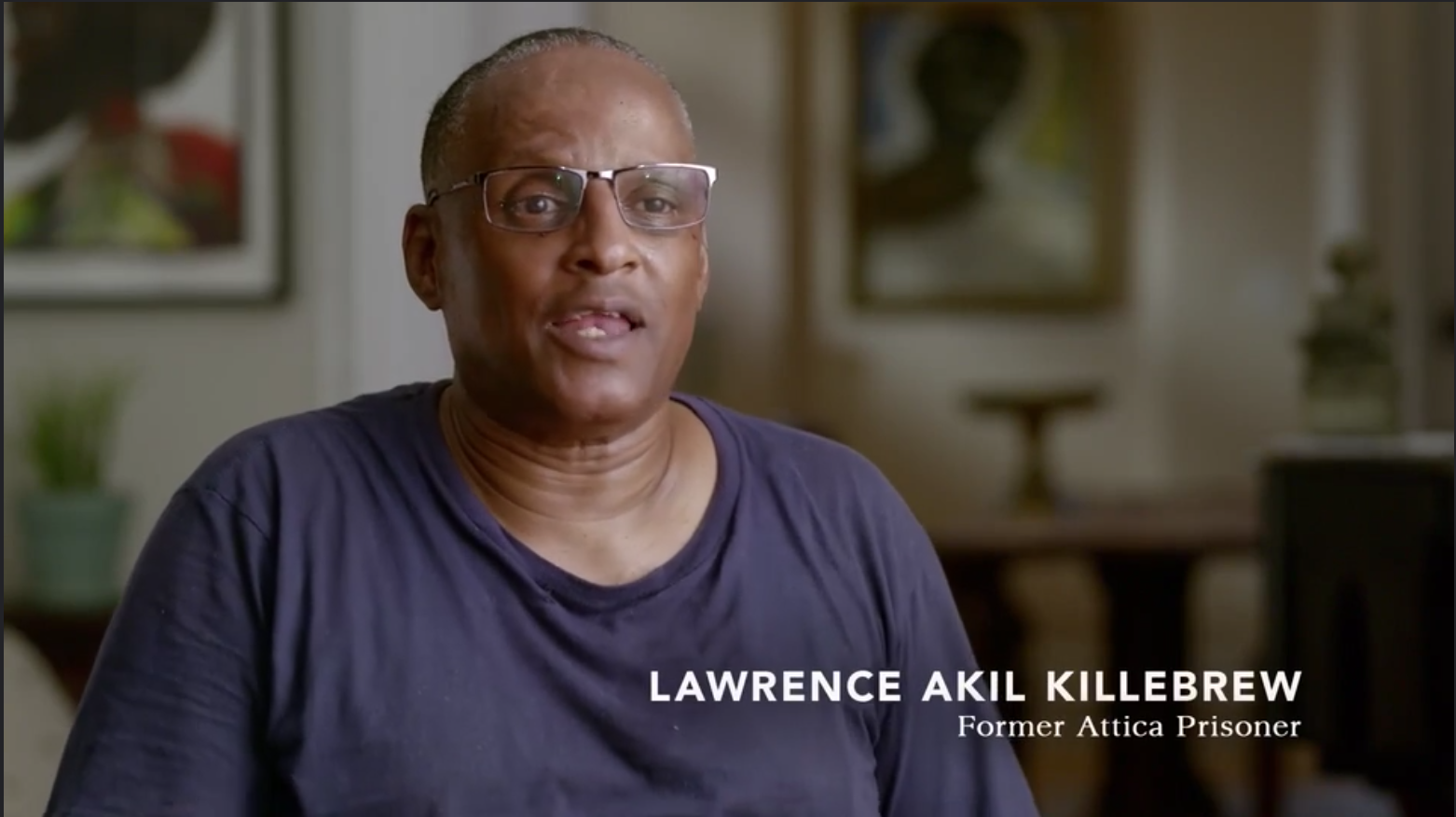
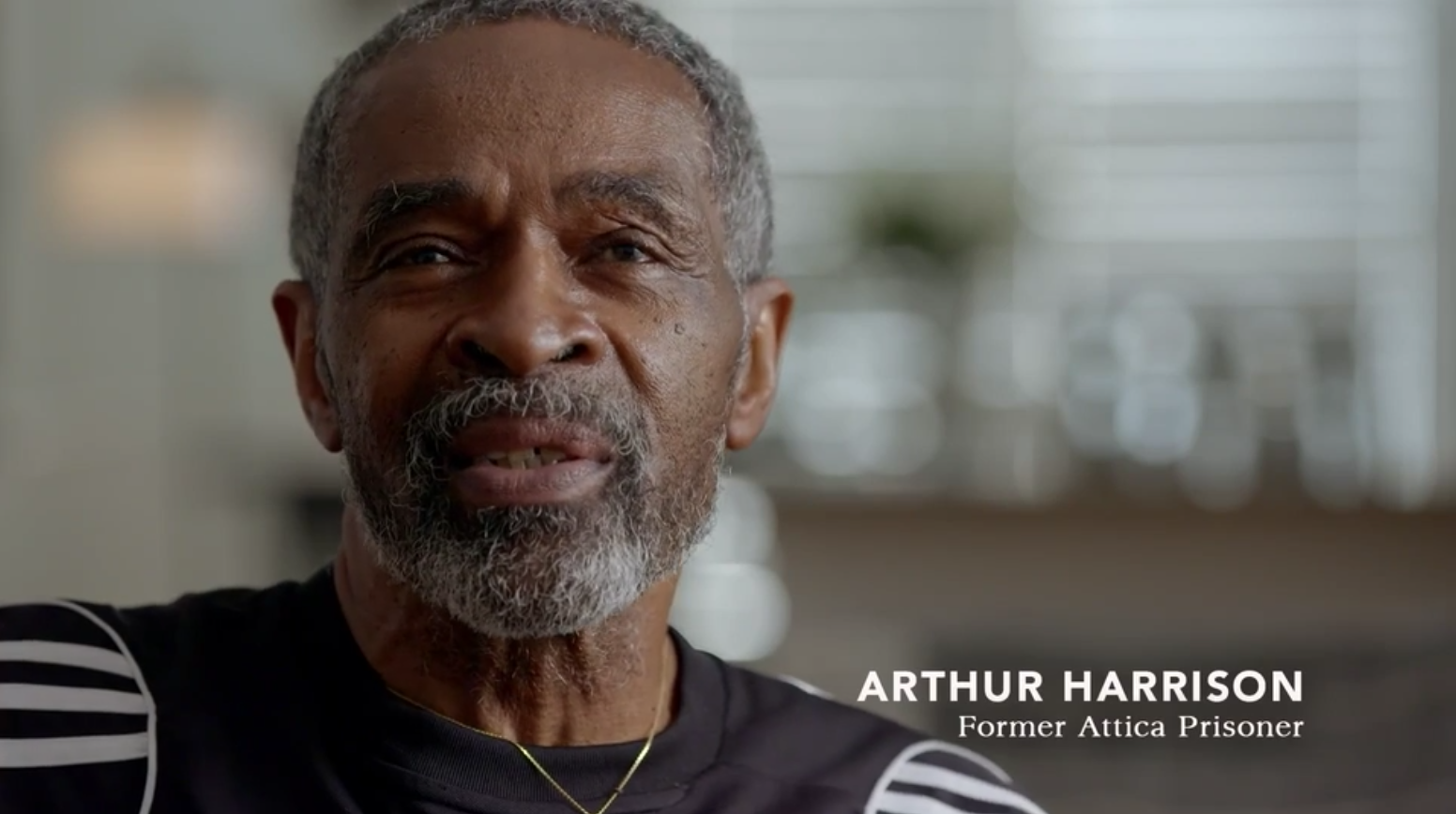
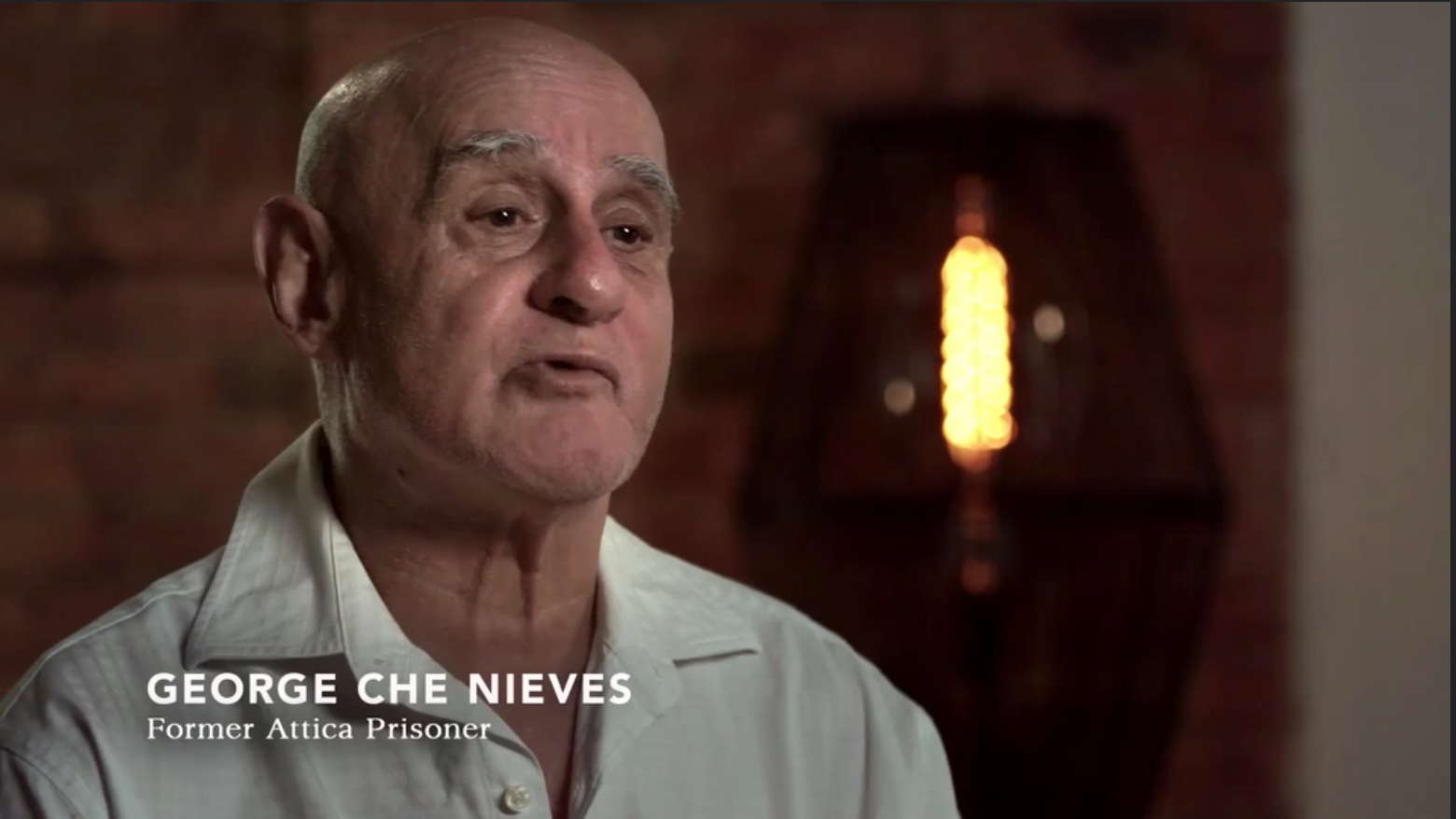
Nelson has interviewed several prisoners, journalists, and other eyewitnesses who were right there, and boy, talk about nightmares coming alive! Plus he blends in news coverage, surveillance footage and anything else he can get his hands on.
Attica is not what you’d call a pleasant sit, but it really grabs you by the lapels, and when the horrible stuff kicks in at the very end, it makes you sick and enraged.
Who apart from the prison guards and other state militia were the biggest bad guys? That’s easy — Gov. Nelson Rockefeller and President Richard Nixon. Racist swine to the core, and completely at peace with shooting the occupiers in cold blood.
Boilerplate: “Attica goes beyond the five days of rebellion and gives a broader understanding of the Attica tragedy in the crosscurrents of politics, race, power and punishment during the early 1970s. Through expert voices and archival images of urban and suburban life, the film explores the tensions between a young, radicalized population of mostly black and Latino inmates, and correctional officers from a predominately white company town, where the Attica prison was the primary employer for generations of families.”