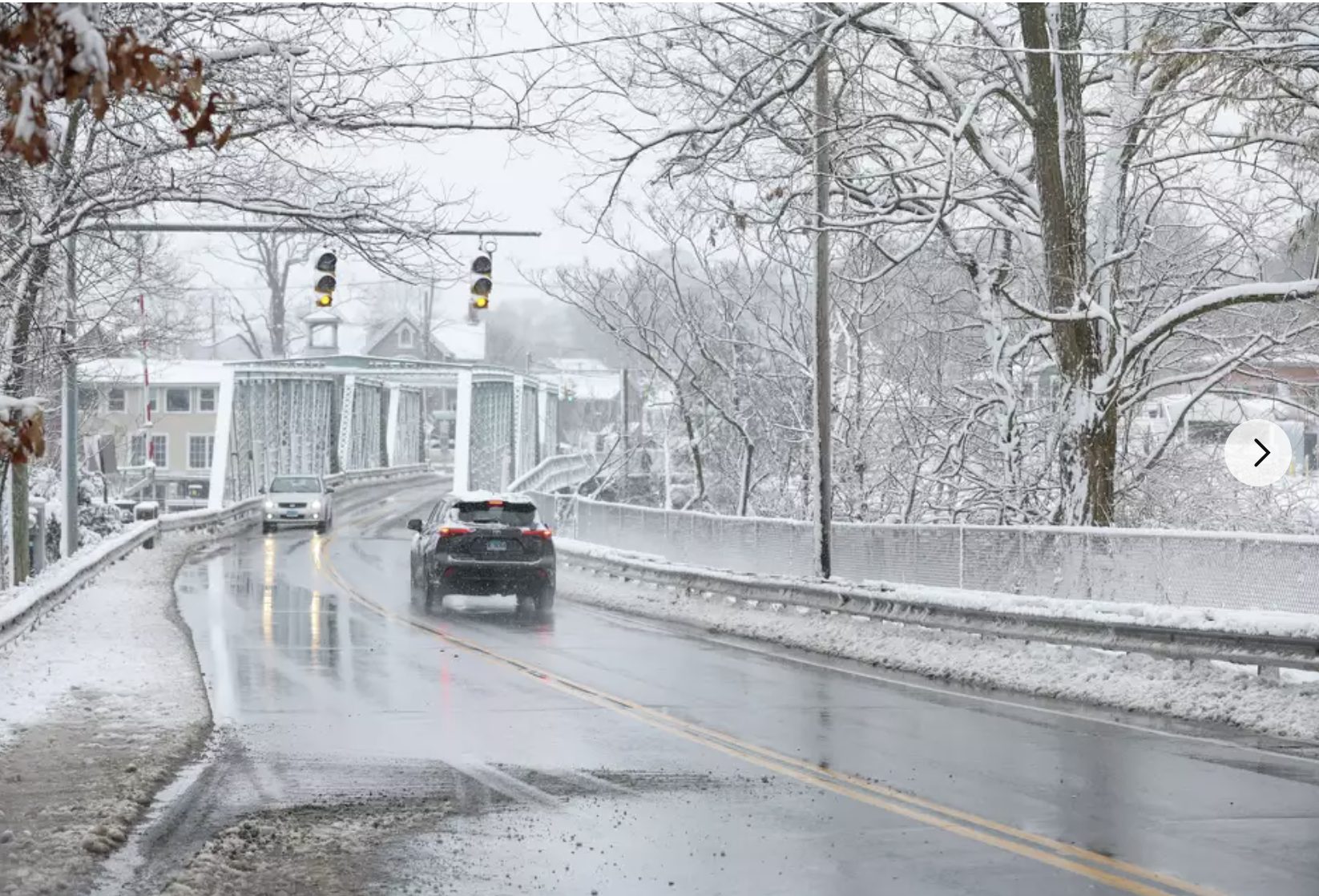
I can handle cold temps in the low 40s and 30s, but forget the 20s and don’t even mention the teens. And no wind, for God’s sake! Half the time I dream about living in Key West or, better yet, Cuba or Belize or Turks and Caicos. I hate windy cold. Stuff of nightmares.
Images
Gaudy, Intravenous Feminist Trash
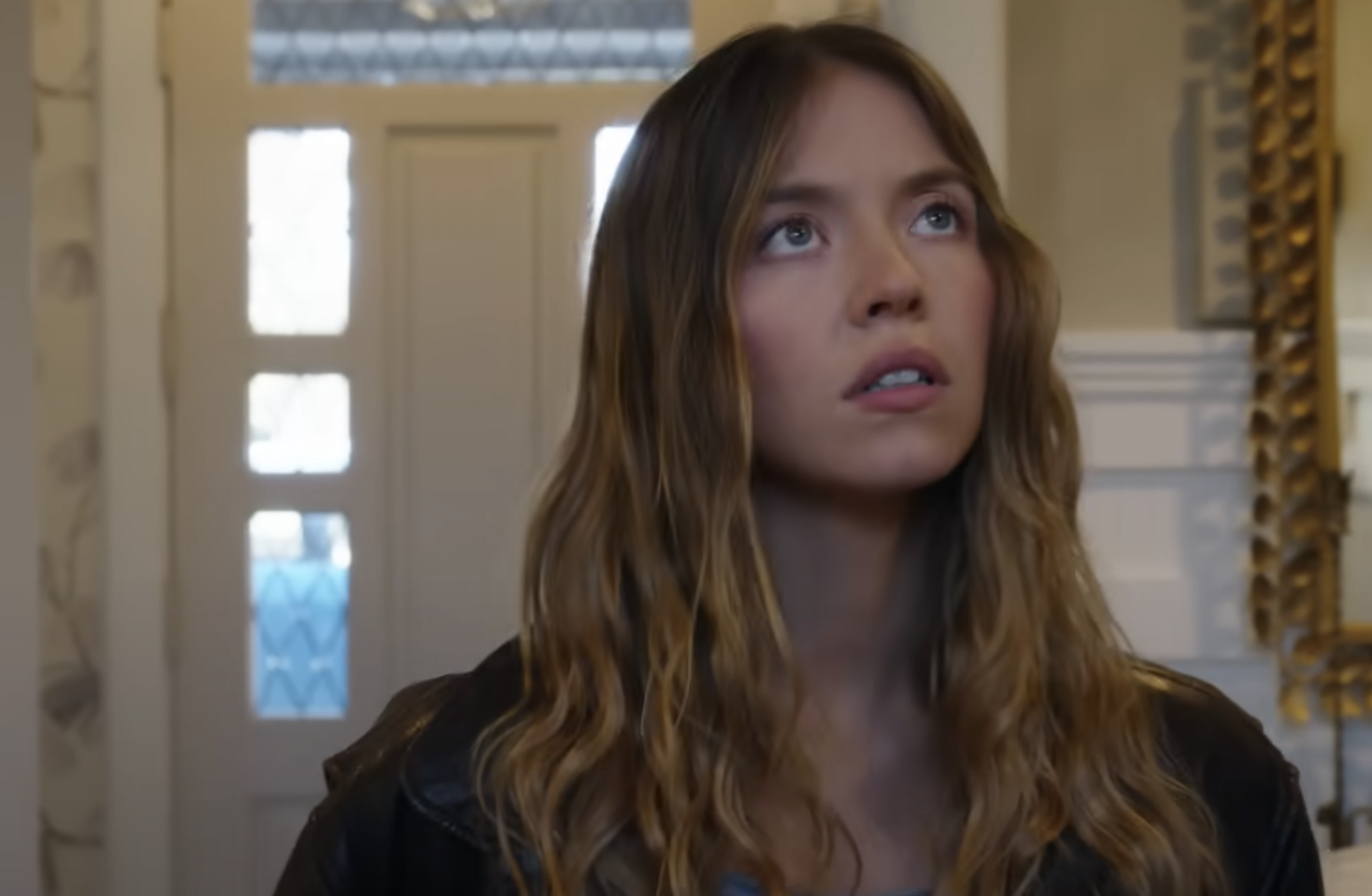
From Owen Gleiberman‘s obliging, carefully phrased review of Paul Feig‘s The Housemaid (Lionsgate, 12.19):
“The Housemaid [is] a movie of diabolical developments, and that’s what’s captivating about it. That, and Elizabeth Perkins’ droll performance as a mother-in-law from WASP hell, and the fact that in following the ins and outs that made the novel such a hit, the film creates an ideology of male-female relationships that’s at once timely, glibly mythological, and born to be milked by a Hollywood thriller.
“There’s a note of pop sadism at work in the material; The Housemaid features scenes of people terrorizing each other in violently gaudy ways. Yet the scenes don’t feel exploitative, because they express the characters’ drives, and the audience is hanging on the outcome. In the thick of awards season, when those of us in the media are busy nattering on about prestige films, this is the kind of stylishly tricky high-trash movie that can steal some of the limelight.
“Wealthy White Husband Is A Shithead….Shocker!“, posted on 3.22.25:
Indications are that Paul Feig‘s The Housemaid (Lionsgate, 12.19), based on Freida McFadden‘s three-year-old novel, a feminist potboiler that has since grown into a multi-book franchise, is going to be a bit of a groaner…perhaps even a forehead-slapper.
All feminist airport fiction is based upon a single premise, which is that the principal male character is a toxic piece of shit who has made his own bed and deserves all the bad karma that’s sure to come his way.
It certainly seems unlikely that Feig’s film will deliver the intrigue and complexity of Im Sang-soo‘s The Housemaid (’10), which I recall as being half-decent.
Both versions have vaguely similar plots with the husband banging (or at least looking to bang) the housemaid, and the wife freaking out and the usual blowback kicking in.
The Housemaid costars Sydney Sweeney as the titular character; Amanda Seyfried and Brandon Sklenar (the bearded, nice-guy suitor in It Ends With Us) are her wealthy employers.
More Shyamalan Than Spielberg
No TV weather woman would freeze up like this, and the news show floor techs wouldn’t just stand there like frozen zombies. Seized by some kind of invisible force and not knowing why or how or anything, Emily Blunt would do her best to pretend that everything’s okay. She would improvise a little blah-blah, air some bullshit, etc.
Where are the UFOs, and where’s Carlo Rimbaldi when we really need him?
The “In The Bedroom” Solution
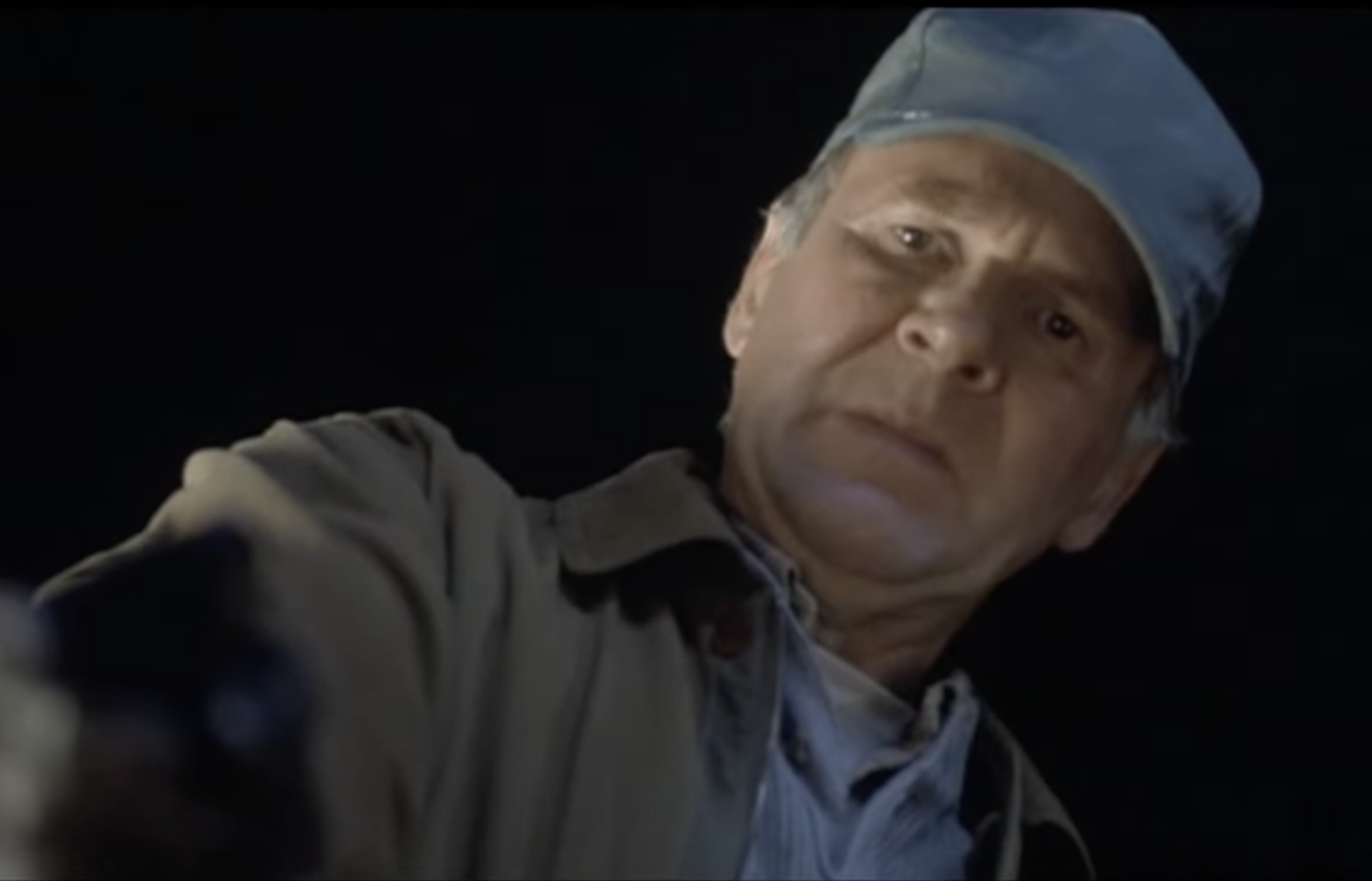
Sources have told People that Nick Reiner was allegedly acting erratically with guests at Conan O’Brien‘s Christmas party last Saturday night. Source: “Nick was freaking everyone out, acting crazy, kept asking people if they were famous.”
Us Weekly was told that the 32 year-old drug-susceptible asshole behaved “creepily” at O’Brien’s soiree, while a third insider told TMZ that Nick looked out of place at the party, wearing a hoodie when the dress code was formal.
And yet the prevailing view among comment-thread predators in yesterday’s “Odious Aftermath” discussion was that if an obviously disturbed youth is fated to kill his or her parents, it’s better for the parents to just say “okay, we accept this…bring it on”.
I was in a not-great, probably-going-nowhere place for a certain period in my early to mid 20s, but writing and journalism gradually lifted me out of that hole. Maybe a three-year period, give or take. Okay, call it four years. Hell, make it five.
I just barely crawled out of that attitude, that downward swirl kind of life, but while I was “under the weather” I could feel the weight of my vague gloom getting a bit worse each succeeding year.
Yes, I was drinking and drugging back then (pot, speed, Coors beer and Jack Daniels-and-ginger-ale were my constant companions, my beloved hermanos) but not — or so I’ve long told myself — to the point of any kind of insane self-destructive addiction. Thank God I had a certain inner decency or resolution of some kind within…some kind of fortunate spiritual inheritance, probably from my mother’s side of the family. Call it luck or God’s grace.
But to have lived in this kind of sinkhole for 17 years like Nick Reiner apparently has?….for more than half of a 32-year span of life? Forget it. You’re sunk. I’ve seen and felt that downhead vibe in others who never found their way out of the pit…some who just couldn’t turn things around and make something good or half-promising happen.
After 17 or so years of anguish Nick Reiner has finally found his catharsis. He’s murdered the people who brought him into this world and loved and nurtured him as best they could but ironically (or in Nick’s all-screwed-up head at least) never stopped making him feel depressed and enraged. He’s clearly a self-hater of epic proportions…a demonic figure.
Another Slip-On-The-Ice-and-Fall Episode…Spared!
Earlier today I slipped on a small patch of ice, my calves and ankles went flying and I came crashing down…whummp…whooof! But I bounced right back. No aching rib cage, no sprained wrists, no bruised elbows, no aching knees or snapped bones…nothing. My resilience amazes me, I’m branded on my feet, etc.
What saved me? I didn’t fall on hard frozen ground or asphalt or gravel or rocks, but upon a soft mound of snow.
I wasn’t so lucky in mid-February 2019 when I slipped and fell on an icy slope in the Sierras. Nothing was broken but my ribs ached like a sonuvabitch for a good two or three weeks.
“Tarsem Singh’s ‘The Fall‘”, posted on 1.19.13:
I experienced a bulletproof moment last night. Fairly amazing. I fell on some ice and came crashing down on my right elbow, and nothing happened. I got right up and kept walking. My glasses were destroyed but no aches or scrapes, no bruises, no morning-after stiffness, no Advils…nothing. I could have theoretically busted my arm. A great feeling.

It was vaguely akin to that Pulp Fiction moment when John Travolta and Samuel L. Jackson are shot several times by a kid who bursts out of the bathroom and yet none of them are hit — all the bullet holes are in the wall behind them. This led Jackson to want to quit being a hitman and just “walk the earth” like Caine in Kung Fu, “meet all kinds of people, get into adventures.”
Grotesque, Shocking, Ghastly
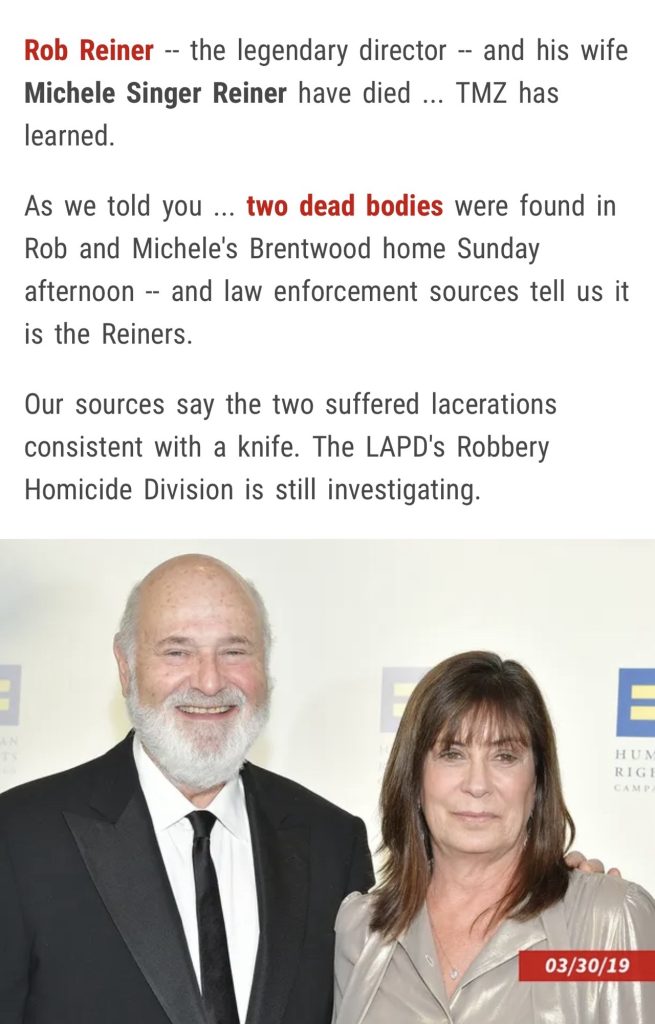
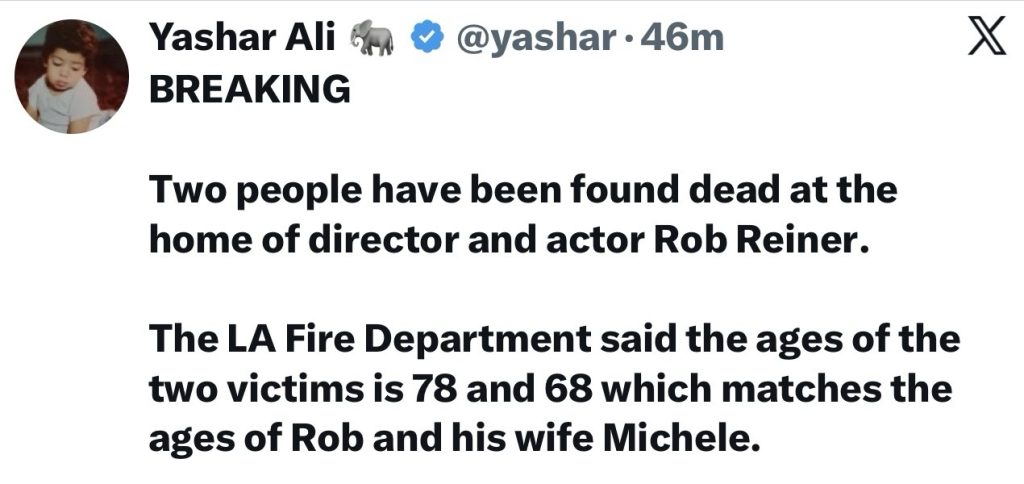
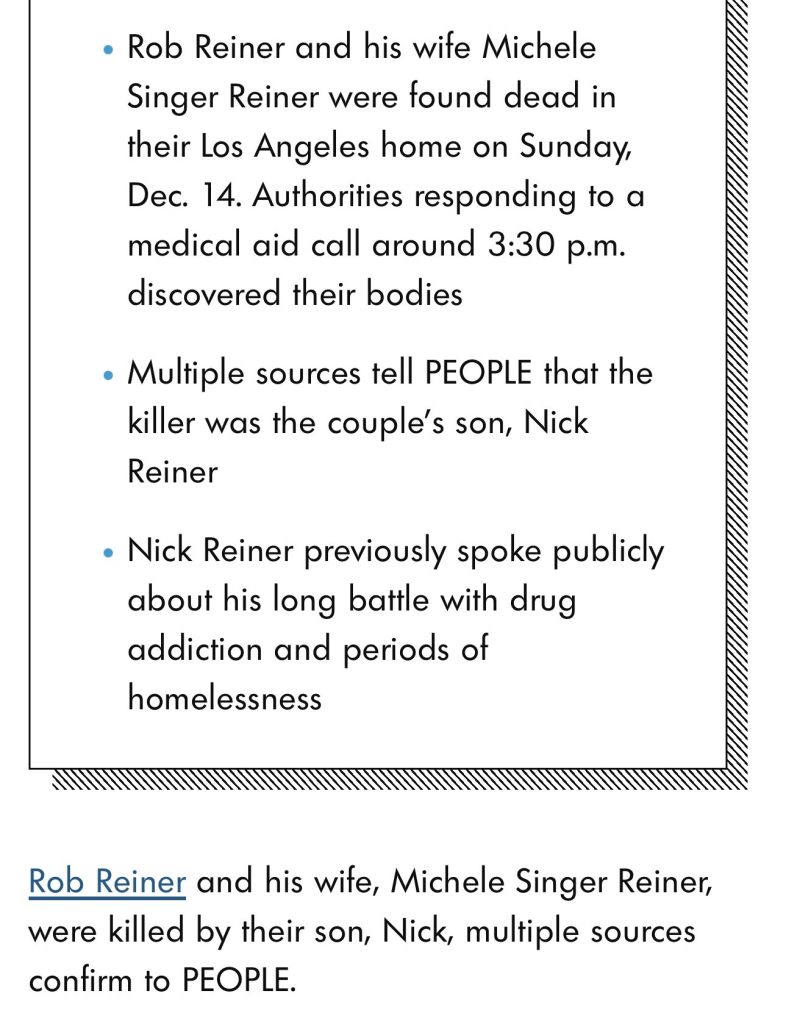
Rob Reiner…good God. Murdered. Late Sunday afternoon the famed director, 78, and his wife, Michele Singer Reiner, 68, were found stabbed to death in their flush Brentwood home on South Chadbourne Ave. (south of Sunset).
Reiner’s 32 year-old son Nick, who co-wrote Being Charlie, a decade-old, well-intentioned family melodrama, directed by the elder Reiner and based on Nick’s own teenaged struggle with drugs and homelessness, has been identified as the assailant. Being Charlie premiered at TIFF in September ‘15. Nobody saw it, a critical bust. streaming on Fandango.


YouTube link…this is getting more and more surreal.
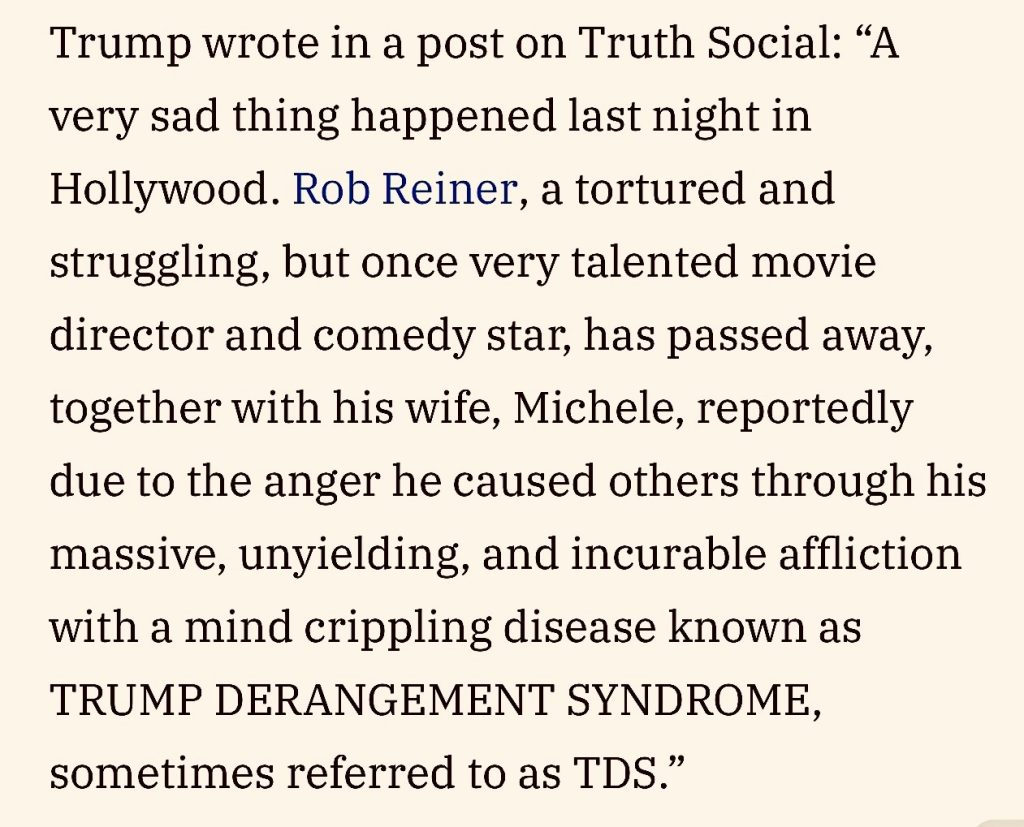
10:45 am Monday: Talk about psychotic and deranged behavior…President Trump has posted that “anger” triggered by the elder Reiner’s intense, years-long criticism of Trump’s policies and impulsive style of governing was somehow a factor in his killing.
Delayed Remembrance
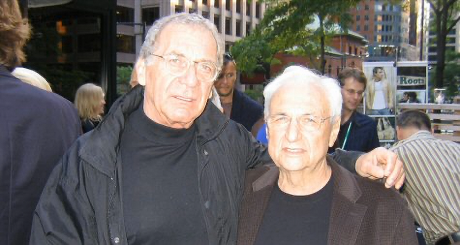
Legendary architect Frank Gehry died exactly a week ago at age 96. His spirit ascended from inside his home in Santa Monica. I don’t know why I didn’t jump on this right away as I’ve always loved Gehry’s creations and was deeply moved and honored to meet him in Toronto 19 years ago — a handshake at an outdoor cocktail party for Sydney Pollack‘s Sketches of Frank Gehry, on 9.10.06.
HE-posted 19 years ago: Sydney Pollack‘s Sketches of Frank Gehry (Sony Pictures Classics, 5.12.06), which I caught yesterday at a public screening at Toronto’s Elgin theatre, is a stirring, hugely likable portrait of the most daring and innovative architect of our time.
Corny as this sounds, Sketches left me with a more vivid feeling of celebration and with more reasons to feel enthused and excited about life than anything I’ve seen so far at this festival.
I knew a few things about Gehry before seeing this film, but not a whole lot. Now I feel like I know a few things. The man is the Pablo Picasso of architects. He’s a risk-taker who lives big and tosses the creative dice all the time and really goes for it. And I now know about his significant creations (the most famous being Disney Hall in downtown Los Angeles and a seaside museum in Bilbao, Spain), how he creates, who he mostly is, where he’s been.
Sketches is more than just a meet-and-understand-Frank-Gehry movie — it’s a contact high.
Here’s a discussion I did with Pollack about Sketches….apologies for the sound quality. Poor Sydney passed less than two years later (5.26.08).
It’s a film that lets you into the head of a genius in a very relaxed and plain-spoken way, and it lets you share in the sense of being a person of Gehry’s magnitude — a guy who has created a kingdom out of a supreme confidence in his dreams, but at the same time someone honest enough to admit he doesn’t precisely know what he’s doing much of the time.
This is partly due to Gehry having been very open and unguarded with Pollack as the doc was being shot, and partly due to Pollack having sculpted this film in a way that feels more personal and congenial and relaxed than your typical portrait-of-a-noteworthy-person movie.
And yet Pollack doesn’t relent in passing along all the information we need to know about Gehry. It’s all done with total thoroughness and clarity of purpose.
I met and spoke with Gehry and Pollack at a nice cocktail party on Wellington Street late yesterday afternoon, courtesy of publicist Amanda Lundberg. What a pleasure to hang with these guys. I left the party feeling wise and steady and optimistic about everything.
Sketches of Frank Gehry will air on the PBS “American Masters” series in late ’06, but Pollack first wants it to play theatrically. This should happen. I can see this film being an essential “see” with people of a certain stripe, and yet a ten year-old kid could watch it and understand almost everything.
I can only repeat that the film is much more than just a sturdy documentary — it’s a profound turn-on. I’ve looked at Gehry’s buildings and designs — those weirdly bent and sloping pieces of steel and sheet metal and glass and what-have-you — but I never really “saw” them until yesterday.
There’s a wonderful edit right at the beginning of the film, which I won’t spoil by describing in too much detail. Suffice that it takes Gehry’s doodly drawings and brings them into full-metal aliveness in a single stroke.
There’s another delicious moment when Julian Schnabel is asked about Gehry’s press critics, and he refers to them as “flies on the neck of a lion…they’re the sort of people who complain that Robert Duvall’s character in Apocalypse Now is over the top.”
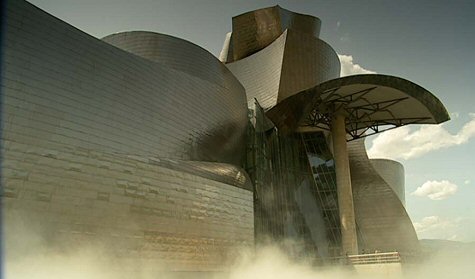
Gehry’s Guggenheim museum in Bilbao, Spain.
20 Likeliest 2026 Keepers
The common consensus is that 2025 has been a fairly weak year. It seems safe to say, however, that 2026 will be a much stronger one, at least by intuitive HE gut criteria. At least 20 qualitative humdingers, by my count, and an impressive roster of grade-A directors (Inarritu, Fincher, Guadagnino, Spielberg, Nolan, Mungiu, Farhadi, Sorkin, Gilroy, Farhadi, et. al.).
Two days ago World of Reel‘s Jordan Ruimy posted a list of 70something 2026 films that struck him as noteworthy at the very least, and in some cases high expectation-level.
In this post I’ve pruned the list down to 20 safe bets — i.e., presumptions of quality based upon esteemed critical regard and/or aspirational histories. Most of these represent my idea of festival toppers or possible award-worthy titles, or both.
1. Untitled Black Comedy a.k.a Judy (d: Alejandro Gonzalez Inarritu, p: Tom Cruise)
2. The Adventures of Cliff Booth (d: David Fincher)
3. The Oydssey (d: Christopher Nolan)
4. Untitled UFO Movie (d: Steven Spielberg)
5. Artificial (d: Luca Guadagnino)
6. Wild Horse Nine (d: Martin McDonagh)
7. Jack of Spades (d: Joel Coen)
8. The Entertainment System is Down (d: Ruben Ostlund)
9. Fjord (d: Cristian Mungiu w/ Renate Reinsve, Sebastian Stan)
10. Parallel Tales (d: Asghar Farhadi)
11. Minotaur (d: Andrey Zvyagintsev)
12. Coward (d: Lukas Dhont)
13. The Way of the Wind (d: Terrence Malick)
14. Resident Evil (d: Zach Cregger)
15. 1949 (d: Pawel Pawlikowski)
16. The Basics of Philosophy (d: Paul Schrader)
17. Switzerland (d: Anton Corbijn)
18. Michael (d: Antoine Fuqua)
19. The Social Reckoning (d: Aaron Sorkin)
20. Behemoth! (d: Tony Gilroy)
Yeah, I know…all dudes and “where are the 2026 films directed and written by women?” Anger, anguish and male-hate separatism by way of If I Had Legs I’d Kick You, Sorry Baby and The Chronology of Water have a place on our communal cultural serving tray.
There are many other high-intrigue titles or potential commercial hits due to open next year. I’ll try to assemble a respectable list of promising maybes and/or second-tier titles later today.
We all understand that Joe and Jane Popcorn are either totally unaware of or only slightly interested in award season favorites. The Oscar telecast heyday has long been over. Best Picture Oscar cred went out the window after Hollywood began woking itself into cultural irrelevance in 2018 or ’19 and especially after EEAAO cleaned up in early ’23.
Nonetheless it can be safely assumed that next year’s Best Picture noms will include the Inarritu-Cruise, The Social Reckoning, The Odyssey, The Adventures of Cliff Booth, Spielberg’s UFO flick and Fuqua’s Michael Jackson biopic…these six at least.
Imagine That You’re General Dwight D. Eisenhower
And the task of somehow marshalling, organizing and leading a successful “Stop One Battle After Another” campaign — the Oscar-season equivalent of a June 1944 D-Day invasion — has become your responsibility.
A tall order, a steep uphill slog, and — be honest — almost sure to fail. But if you don’t man up and rise to this herculean challenge, the next three months will be a Bataan death march.
So you have no choice, Ike. The burden may break you, but you must become Fidel Castro in 1958 Cuba. Convince the citizenry that celebrating a leftist POC girlboss agitprop fable about a stoner stepdad trying to rescue his Zoomer stepdaughter from the clutches of her deranged biological beau pere boner pants will be against their economic interests. Warner Bros. has already eaten the bitter herbs. Let it end there.
Raise high the roof beam, carpenters! Persuade your flock that it has to be the last 25 minutes of Hamnet or the entirety of the obviously superior Sentimental Value. Save yourselves!
Painful as it may be, split your soul into two halves and become Ralph Meeker and Timothy Carey in Act Three of Paths of Glory. Meeker: “See that cockroach? Tomorrow I’ll be dead and it’ll be alive, and will therefore have more contact with my wife and child than I will.” Without a moment’s hesitation Carey squashes the bug with his right fist, and replies sardonically and sotto-voiced “now you’ve got the edge on him.”
Is it possible to flatten OBAA with the same take-it-or-leave-it decisiveness? Probably not, but as Richard Kiley’s Don Quixote once sang…
Now That Netflix Is Finally Streaming “Jay Kelly”
Filed from Venice on 8.28.25:
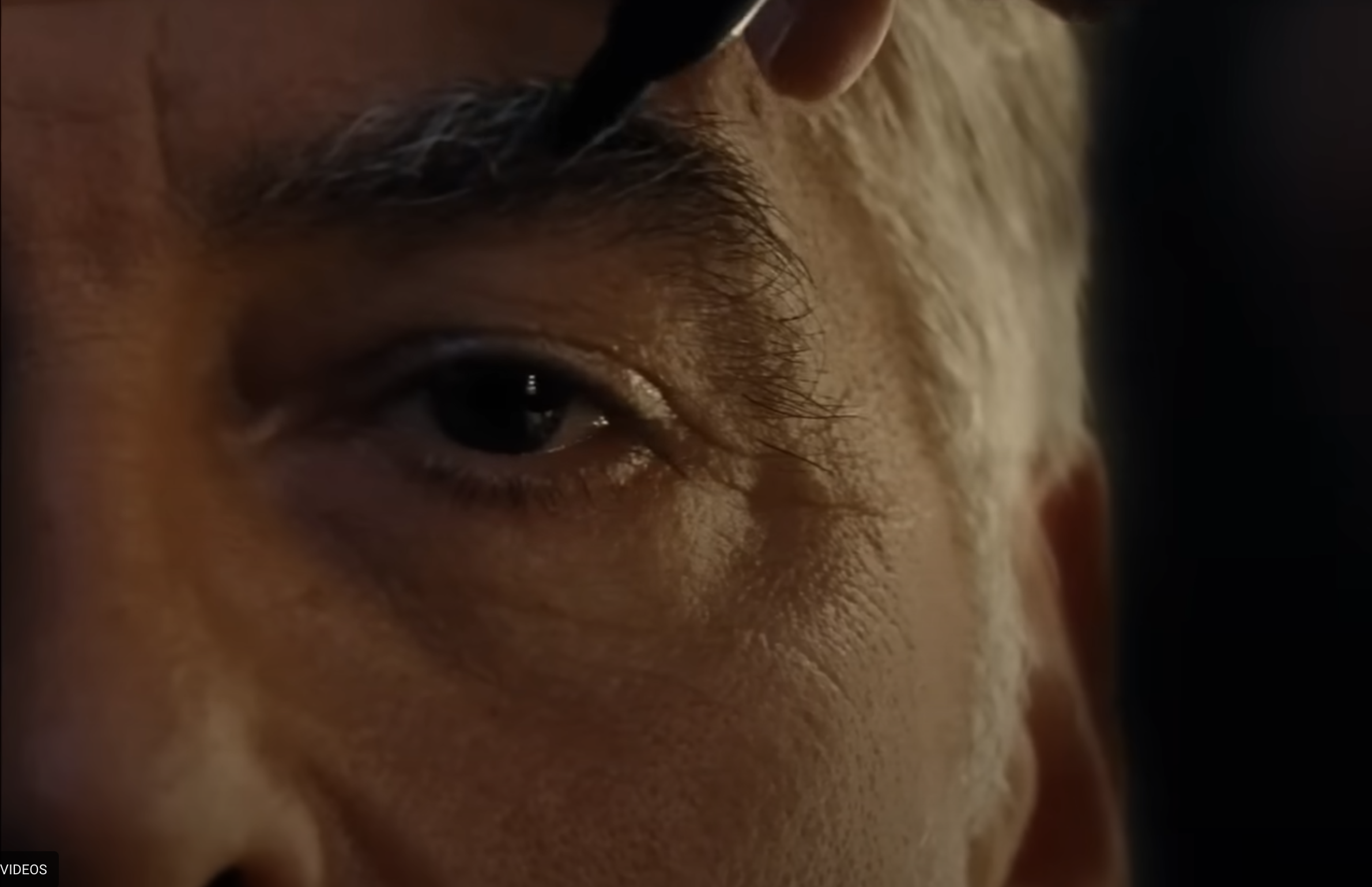
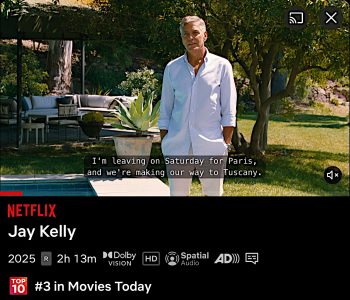
Noah Baumbach‘s Jay Kelly (Netflix, 11.14) — a reflection-and-meditation piece about a 60ish movie star’s life (in some respects literally George Clooney’s, one gathers or infers, and doubly so during a tribute at the very end which presents a montage of Clooney’s films) — is actually fairly decent, and it ends in a very affecting and bittersweet way.
It’s a summary of a rich guy and his famous life and what it’s all meant or seems to mean, and the final emotional residue in terms of friends, family, selfishness, distractions, blessings, highs and lows…really the whole magillah.
It’s generally fast and fleeting and briskly assembled, and is actually reminiscent, in some respects and as curious as this may sound, of Charles Dickens‘ “A Christmas Carol” (in particular the 1951 film version that Brian Desmond Hurst directed and which Alistair Sim brought to life), especially as the film is largely about Clooney’s Kelly absorbing a series of some uncomfortable and sometimes painful realizations about how his business associates, old friends and especially his two daughters really feel about him.
It’s not a masterwork — it doesn’t feel heavy or deep enough, and seems a bit facile at times — and it’s certainly not on the corrupted-adult level of Tony Gilroy‘s Michael Clayton, in which Clooney gave his finest performance.
But Clooney plays it openly and with vulnerability — he knows this line of country like the back of his hand — and the film itself conveys, persuades, penetrates. It sells its own movie-star, “this is the life he’s chosen” narrative.
At times Jay Kelly feels a bit old-fashioned — very “scripted”, very “acted” and a little schmaltzy here and there, and the visual flashback transitions are almost on the level of The Man Who Shot Liberty Valance (’62).
But it finally feels whole and melancholy and solemnly considered, especially at the very end. It’s expansive and exploratory and fully felt, and is very well acted by not just Clooney but by Adam Sandler (as Jay’s manager), Laura Dern (publicist), Billy Crudup (former acting buddy), Riley Keough (daughter #1), Grace Edwards (daughter #2) and Stacy Keach (roguishly “charming” dad on the downswing).
Jay Kelly is a show and a “movie” but it works according to its own delivery terms, and is certainly better than I thought it would be, and the final line absolutely kills — it even brought a tear to my eye.
It’s therefore a solid A-minus or a B-plus, and Clooney and Sandler really touch bottom, bring the goods.
Quibble #1: Everyone in Kelly’s inner circle has pretty much written him off emotionally. They regard him as flaky, immature, undependable, self-absorbed. But that’s what many big-time actors are for the most part, no? Doesn’t everyone accept this? Many and probably most famous actors are in love with themselves first, and their family and friends second. Big deal. Roll with it.
Quibble #2: Billy Crudup plays a 50ish might-have-been actor who resents and is actually enraged at Kelly for having stolen a key part that Crudup had auditioned for and badly wanted at the time, but the annals of film acting are filled with stories about a friend who was just tagging along who wound up getting the role from an impromptu audition instead of the primary guy. Just because Crudup was extra-hungry for the role in question doesn’t mean he was entitled to it, or that he was right for it. Mature people understand that life can be an unfair.
Quibble #3: Nobody would ever refer to a big film tribute event taking place in “Tuscany”…they would say Siena or Florence or Volterra or Radda in Chianti. Just like no one would talk about a similar-type event in the States happening in the “Deep South” or the “Pacific Northwest.”