John Flynn is dead

John Flynn, director of Rolling Thunder as well as the semi- legendary 1973 crime pic The Outfit (which you still can’t get on DVD), passed away on Wednesday, April 4th, and I only just found out today…er, yesterday.

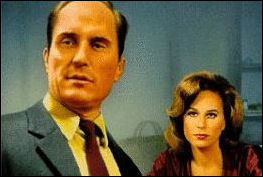
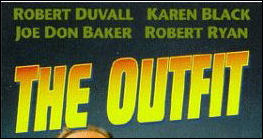
Warner Home Video should naturally release The Outfit on DVD as a fare- thee-well tribute to Flynn. Based on Richard Stark‘s (i.e., Donald Westlake‘s) 1963 book of the same name, it’s a lean, hardboiled crime film costarring Robert Duvall, Karen Black, Joe Don Baker, Robert Ryan, Richard Jaeckel, Joanna Cassidy and Sheree North.

Duvall gives one of his best performances (in my book anyway) as Macklin, an ex-con out for revenge against some cold-blooded mob types. The Outfit is a studly, pared-to-the-bone programmer in the same realm as Charley Varrick. Not as sombre or big-city noirish as The Friends of Eddie Coyle, but a very fine and flavorful film of its type.

Nothing Is Private

Here I am finally paying attention to Alan Ball‘s Nothing Is Private, an allegedly high quality, sexually frank period drama (based on Alicia Erian‘s “Towelhead“) that sounds like it will definitely be pushing MPAA ratings boundaries. It’s basically about a 13 year-old half-Arab, half-Irish girl named Jasira (Summer Bishil, said to be super-phenomenal in the part) getting sexually involved with two older guys while living with her brusque-mannered Lebanese father in Houston in the early ’90s.


Summer Bishil, breakout star of Alan Ball’s Nothing Is Private

It costars Aaron Eckhart, Maria Bello, Peter Macdissi, Toni Collette and Eugene Jones. The producer is Scott Rudin. I can’t find a mention of a distributor, but Rudin’s ties are with Disney/Miramax. There’s loose talk about this film possibly going to Cannes. but release-wise it looks like a fall entry.

All I have to go on is an early March Ain’t It Cool test-screening review by some dude named “Rocksalt.” I don’t know the guy, he could be a plant and nobody knows anything. But AICN editor Drew McWeeny didn’t seem all that suspicious. If “Rocksalt” isn’t a plant and Ball’s film is half as good as he describes, Nothing Is Private certainly sounds like Oscar material.

“Set during the first Gulf War, politics and racism — while present — take a backseat to the real meat of the story,” he writes, “which is Jasira’s relationship with the three men in her life: her abusive father (Peter Macdissi, a/k/a “Olivier” on Six Feet Under), her lecherous neighbor (Aaron Eckhart), and her horny boyfriend (newcomer Eugene Jones).

“But to simply call them ‘abusive,’ ‘lecherous’ and ‘horny’ does a disservice to them all: these are extraordinarily complex characters. As bad as they are, all have redeeming qualities. And in their own ways, all of them care very deeply for Jasira. It’s a very funny film as well… as dark as her situation is, there’s a lot of humor in it. It’s not nearly so oppressively dreary as the plot on paper sounds.”

The guy really goes nuts over Bushill….

“It’s early in the year for me to be making grand statements (something I’m not prone to doing in the first place) but Bushil’s performance isn’t just ‘good’ — heck, ‘m not sure ‘great’ does it justice. This is like going straight from high school to the major leagues and hitting a grand slam in your first at-bat.

“This isn’t like the occasional nomination you see for a kid (Haley Joel Osment, Abigail Breslin, etc). This is the performance of the year, male or female, and the one to beat come Oscar 2008. There are scenes of such raw, awkward, and subtle emotion on display here they simply boggle the mind.

“There may be naysayers who suggest that Ball is fetishizing her and is just as bad as the male characters in the film. Bishil is onscreen nearly the entire running time, at the center of every scene, lovingly photographed (and I might as well say it — she is astoundingly beautiful), but with a performance this good, you want to give it as much screen time as you can.”

Everything’s Gone Green

A movie called Everything’s Gone Green would naturally be presumed to be about conservation and global warming. It’s actually a wise, intelligent and mildly amusing little film (emphasis on the “mildly”) about GenX mores, values and lifestyles in Vancouver, British Columbia. But it’s a little too amiable and mild-mannered, even though it obviously came from the heads of some very bright, sophisticated and spiritually-centered people — first-time director Paul Fox and screenwriter Douglas Coupland (the author of “Generation X”) in particular.

The problem is that dramatically Everything’s Gone Green never gets out of second gear. That’s not a terrible thing to say about a film. At least I’m saying that the motor is running and it’s in some kind of gear and not just idling in neutral. But you know what driving in second gear is like. You’re moving along and that’s cool, but there’s a voice saying “c’mon, c’mon….let’s get going.”

I didn’t feel bored because the outdoor Vancouver locations are fascinating, the dialogue is smart and witty and the actors don’t try to “act” or overdo it — they’re appropriately low-key and unforced. But the movie is so laid back that it over- relaxed me, and before I knew it my eyelids had begun to droop and I wound up taking a short nap. But this is one of those films that are okay for some fast shuteye. I’m not trying to be a smart-ass by saying this. I’m just observing that when I woke up, not that much had happened and it wasn’t hard to figure what I’d missed so…you know, cool. No harm done.

Everything’s Gone Green is about a bright, vaguely bored young guy named Ryan (Paulo Costanzo) who gets canned from his job on the same day that his girlfriend (Katharine Isabelle) gives him the boot and his frazzled, ’60s generation parents have a fit…forget it, it’s not worth bringing up.

Ryan, who has friendly dead-fish eyes and the requisite disaffected-young-guy whisker thing going on and light brown hair that is Brillo-pad thick, then lucks into a gig writing about winners for the state lottery. He happens to meet a sparkly-eyed set-dresser (Steph Song) who finds him attractive, but he also runs into her ex-boyfriend, who’s a bit of a slime. He persuades Ryan to take part in a scheme in which he sells the names and numbers of lottery winners to the Japanese mafia, who offer to buy the wining ticket for a bigger bulk sum than the winners would otherwise receive. (Or something like that.) Not an illegal enterprise, exactly, but there’s a bit of an ick factor.

Anyway, Ryan does pretty well by the scam — he gets to buy a brand-new yellow Mustang and some new threads — but Song’s character doesn’t like what he’s up to and refuses to be his girlfriend because of this. I lost interest in this point. Women are always the ones to say to husbands, boyfriends and would-be boyfriends, “If you don’t stop your involvement in this morally shady enterprise, I’ll leave you” or “I’ll stop fucking you” or, if the sex hasn’t kicked in yet, “I won’t consider fucking you.” Al I know is, when women say these things to guys in movies and plays, I say to myself, “Here we go again…”

My telepathic advice to Ryan was as follows: “Get out of the scam because you’re going to eventually get popped or shamed in some way, even if it’s not strictly illegal, and also because you’ll be losing a hot girl if you don’t. But the girl, on the other hand, is going to guilt-trip you no matter what the issue is in the future so you might want to get down with someone who’s a little more comme ci comme ca.”

Anderson on “Stranger”

Todd Komarnicki‘s Perfect Stranger script “thinks it’s far smarter than it is — the pseudo-profundity runs thick and rich, and what should be killer lines land like matzoh balls dropped off a 30-story building.” — from John Anderson‘s hilarious brief but hilarious review in the 4.12 Variety.

Readers may also want to consider Stephen Holden‘s warning in his N.Y. Times review about the “ridiculous, convoluted story” with a “ludicrous bombshell revelation” at the end.

Farrow, Spielberg, China, Darfur

I noted a few weeks ago that Mia Farrow and her son Ronan, in their capacity as UNICEF Goodwill Ambassadors, had accused Steven Spielberg in a 3.28.07 Wall Street Journal editorial of aiding and abetting the genocide in Darfur by cuddling up to the Darfur- coddling Beijing government in his capacity as a 2008 Beijing Olympics pageant consultant.

“Is Mr. Spielberg aware that China is bankrolling Darfur’s genocide?,” Farrow wrote. “Does [he] really want to go down in history as the Leni Riefenstahl of the Beijing Games?” Spielberg obviously read the editorial because four days later, according to this N.Y. Times story by Helene Cooper, sent a letter to President Hu Jintao of China, “condemning the killings in Darfur and asking the Chinese government to use its influence in the region to bring an end to the human suffering there.”

Not long after a senior Chinese official, Zhai Jun, “traveled to Sudan to push the Sudanese government to accept a United Nations peacekeeping force,” Cooepr reports. “Zhai even went all the way to Darfur and toured three refugee camps, a rare event for a high-ranking official from China, which has extensive business and oil ties to Sudan and generally avoids telling other countries how to conduct their internal affairs.”

Here’s a chance for the bully-boy right-wing readers of this column to trash Farrow for her Hollywood-elitist liberal humanitarian sentiments, or something along those lines. C’mon, guys….the podium is yours.

Singer vs. Van Zant

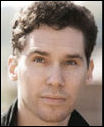
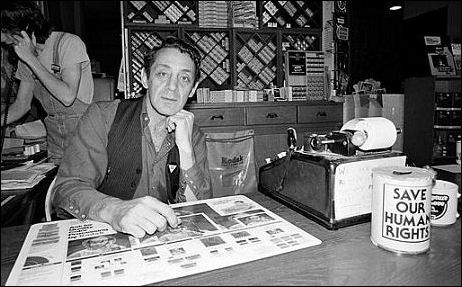
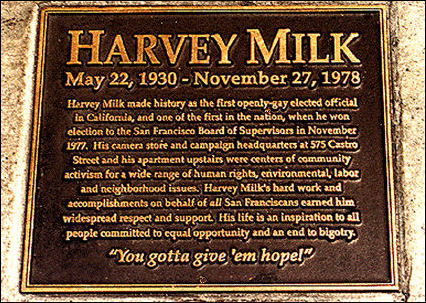
24 years after the release of Rob Epstein‘s The Times of Harvey Milk, one of the most touching documentaries ever made, and more than a year after Brokeback Mountain awoke Hollywood to the idea that well-crafted tragedies about gay men running into destructive forces can melt the hearts of Average Joes, a race has suddenly kicked in between two projects and two big-name directors — Bryan Singer and Gus Van Sant — to make a dramatic feature about assassinated San Francisco supervisor Harvey Milk.


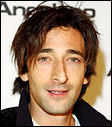
(l. to r.) Bryan Singer, Harvey Milk, Adrien Brody, Gus Van Sant

My first thought as I read Michael Fleming‘s Variety story was, “Good…about time.” But my second thought was, “For Chrissake…”

Why do these competing-project wars always happen? What kept producers Neil Meron and Craig Zadan from launching The Mayor of Castro Street, which Singer is intending to direct starting sometime in early to mid 2008 with Chris McQuarrie having rewritten a script by Brandon Boyce, a year or 18 months ago, when Brokeback heat was being felt everywhere?

Why is Van Sant, who was once going to direct Castro Street and even wrote a draft of the script years ago, only now attaching himself to an untitled Milk script by Dustin Lance Black? Why not a year or two years ago?

Which director is going to sign Adrien Brody, a dead-ringer for Milk and probably the best choice for the role box-office-wise, and which will sign Hank Azaria, another first-rate thesp with a resemblance factor in his favor?

And why doesn’t Fleming provide at least a hint about which project is most likely to be made and seen first? Allow me to offer my own analysis. The Singer/ McQuarrie project has the heat and history (The Mayor of Castro Street has been in development for 15 years, with Oliver Stone wanting to make it eons ago with, as I recall, Robin Williams in the lead role) and Warner Independent money behind it. But it seems to me that the race is Van Sant’s to lose.

Singer is going to be shooting Valkyrie, his United Artists/World War II/Tom Cruise movie, starting in July and will be tied up until at least early ’08 and probably into the spring…right? So despite Zadan’s saying to Fleming that Warner Independent “is pushing us to get the film made right away,” it’s looking more like nine or ten months from now, at best.

This situation seems to give an advantage to Van Sant, who isn’t doing a World War II movie with Tom Cruise and is not, as far as I can tell, planning to shoot another film this summer. He therefore has the next few months to refine and finalize the Black script and get it cast and financed in order to start shooting in the fall, and then get it into the Toronto Film Festival by September ’08. And possibly into theatres by the end of the year.

Under the best of circumstances, could Singer’s Milk project hope to be finished and seen before the summer of ’09?

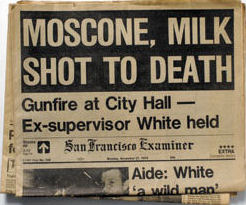
In fact, I’m thinking that the smarter plan for Van Sant would be to avoid the straight-biopic route and shoot his Milk movie in the style of Elephant or Last Days. I see a film covering the last two of three days of Milk’s life as psycho fireman and ex-supervisor Dan White frets and freaks over having resigned and finally deciding to sneak into City Hall and shoot Milk and San Francisco Mayor George Moscone. And then fast-forward to the White murder trial and the twinkie defense and the reduced sentence that resulted, and the outrage that came from that.

It will obviously matter a great deal if Van Sant and Singer manage to make first-rate films about Milk, but what will matter the most is which film is seen and released first.

As Fleming writes, “The fates of Capote and Infamous have demonstrated how important it is to be first in the marketplace when it comes to rival fact-based pictures. Capote came first and became an awards season darling highlighted by an Oscar win for Philip Seymour Hoffman; Infamous followed a year later, and, despite good reviews, a dead-on Capote perf by Toby Jones and the presence of Daniel Craig and Sandra Bullock, barely got noticed.”

In fact, Infamous wasn’t a very good film; it certainly wasn’t on the level of Capote. And the resemblance factor aside, Jones’ performance simply wasn’t as touching or classy as Hoffman…sorry. This fact plus people being reluctant to revisit the exact same material a year later is what killed Doug McGrath‘s film.

Seinfeld rules

This muddy-looking video clip is why Jerry Seinfeld should host next year’s Oscar awards, Key passage: Award shows are “all a big jerkoff,” he says. “They don’t mean a goddam thing. Stupid… they’re all stupid. On TV, it’s beyond me why we feel the need to…dig out these jagoff bowling trophies six times a year so all these people can pat each other on the back about how much money they’re making [and] boring the piss out of half the world. And I had not already won [a lot of ] these awards, I would not be talking like this.”

2007 Oscar Balloon is up

The first comprehensive stab at HE’s 2007 Oscar Balloon (which is now mint green with brighter colored balloons) is up and running. Please give it a once-over and suggest any appropriate takedowns or additions. As the year progresses I will start to boldface those contenders who have exceptional heat. I’m not trying to say that the ’07 Oscar race has begun…please. That won’t happen (i.e., it won’t begin to take on any kind of shape) until July-August, with the real kickoff, as always, being September’s Toronto Film Festival. Enjoy the balmy Oscar-free climate while it lasts.

Honeymoon Killers

Lonely Hearts (Samuel Goldwyn, 4.13) wasn’t nearly as hard to sit through as I’d been told to expect. In a groggy, heavy- lidded way I could even describe this period police drama as reasonably decent. And if you’re into red-lipped hotties it’s worth checking out for Salma Hayek‘s performance as infamous serial killer Martha Beck, a bad-ass mama who’s emotionally obsessive (to put it mildly) and almost sadly malicious.

What’s great about Hayek is that her twisted behavior feels earnest and believable. She’s way too pretty and curvy to play Beck as she actually was (i.e., homely and obese, somewhere between 250 and 300 pounds), but I didn’t care. I didn’t feel Hayek was acting as much as being. She’s quite depraved and quite good.

Except for her very last bit, that is, when she’s about to be fried in the electric chair. She calmly looks at a cop watching her and says with an almost impudent look on her face, “So long.” The real Beck silently mouthed the words, which would have been a better choice. I know I didn’t buy Hayek’s coolness and resolve. I’m guessing that everyone feels terrified when they’re about to be put do death. A guy watching Saddam Hussein on the gallows in Iraq said he looked scared. That felt right when I read that.

So the movie is not an embarassment, and yet I can’t call Lonely Hearts anything to write home about. The story isn’t especially moving or startling or thematically rich, and it hasn’t been shot in what anyone would describe as stylistically stand-out. The pacing is just this side of slow, the color is drab and bleachy, and nothing pops through as exceptional. It’s a been-there, done-thatter.

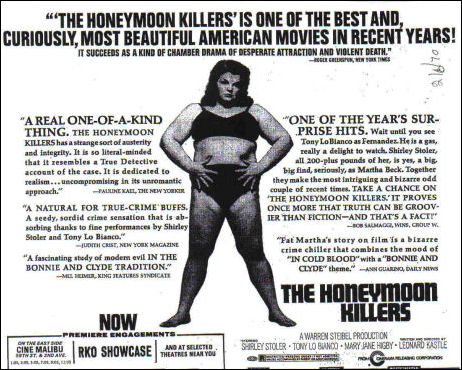
A period drama about a couple of overweight Nassau County detectives (John Travolta, James Gandolfini) on the trail of a couple of real-life nutbag psychos, Lonely Hearts is the third or fourth movie version of the true “Honeymoon Killers” saga. (The best was Leonard Kastle‘s The Honeymoon Killers.)

We’re seeing it again now because Todd Robinson, the director-writer, is the grandson of Travolta’s character, Det. Elmer C. Robinson. And he wants us to know that his grandfather had all kinds of rage boiling inside, that he was haunted by his wife’s suicide, that he took his job a little too personally. And he managed to persuade everyone who helped him make Lonely Hearts that this would add something significant. It doesn’t.

Robinson obsesses about catching Beck and Ray Fernandez (Jared Leto), a pair of cold-blooded killers. But they’re primarily scam artists, and sloppy ones at that. Their haphazard game is about Ray, a hyper, balding guy with a jerkwad moustache, seducing older women, gaining their confidence, and getting them to part with their cash. The wackjob element comes from the lovesick Beck being unable to watch (or listen to) Fernandez making love with these women, which leads her to kill some of them out of concern that Fernandez is actually falling for them.

The story is about Travolta and Gandolfini, who look like they’d outweigh a Holstein cow if you put them both on the same scale, trying like hell to hunt down Hayek and Leto and not succeeding for 90% or 95% of the film. I obviously knew that satisfaction was an hour or two around the corner, but I wasn’t into following the hints and maybes and the accumulation of leads like I was with David Fincher‘s Se7en, say.

What I cared about is how sick and depraved Hayek was playing it. Not that I enjoy watching diseased behavior, but this was where the juice was. The cops were too flat, too bored with themselves, too accustomed to the grind. Scott Caan, another Nassau County detective, played a variation of the same cocky smart-ass he always plays. Strictly tinsel on the tree.

You know something’s wrong when you’re watching a movie about real-life killers and all you can think about is going home so you can look them up online and read the real stories and look at the old photos.

One last Hayek thought, (i.e., one that her Beck performance caused me to ponder). Why is it that the craziest and most psychotic women are always the best in bed, and the steadiest, most loyal and most sensible women (i.e., the best partner types) are always a little bit rote in that department? God has a perverse sense of humor — that’s all I can say.

No Reservations

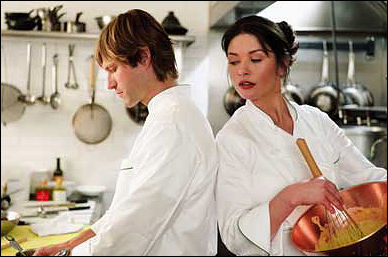
Anyone who saw and loved Sandra Nettlebeck‘s Mostly Martha when it opened five years ago needs to click on the trailer for No Reservations (Warner Bros., 7.27), the Scott Hicks-directed remake with Catherine Zeta Jones and Aaron Eckhart playing the Martina Gedeck and Serge Castellito roles. It looks like a spirited romantic souffle, but it seems exactly (and I mean exactly) like the German movie, only slicker and cuter with a power-pop girly song on the soundtrack.

There’s one toxic line in the trailer, I regret to say. Jones, playing a sophisticated chef coping with heavy stress, says to costar Bob Balaban, “I wish there was a cookbook for life,” and he answers, “It’s the recipes that you create yourself that are the best.” (I flinched when I heard that; I may have also moaned slightly.) I know that I haven’t trusted Hicks in a long time. His last good film was Shine, and that was 11 years ago. Since then he’s made Snow Falling on Cedars (’99) and Hearts in Atlantis (’01), and they both blew.

No Reservations has been a long time coming with a lot of potholes and false starts. I’ve run this history before, but here it is anyway….

A little more than four years ago Variety’s Michael Fleming reported that director Lawrence Kasdan (Grand Canyon, The Big Chill, et. al.) was starting work (along with screenwriter Terri Minsky) on a U.S. remake of Mostly Martha for Castle Rock. There was moderate excitement about this since pretty much everyone with any taste was fairly taken with the ’01 German-made original.

I ran a rave in June 2002 about Martha, calling it “a culinary Kramer vs. Kramer” about a female Hamburg chef (Gedeck) with selfish tendencies having to take care of her recently deceased sister’s young daughter. I also called it “the most succulent, sensually appetizing, food-trip movie since Big Night or even Babette’s Feast.”

But Kasdan and Minsky, who wanted to set their film is some foodie city like New Orleans or San Francisco, ran into difficulty (I don’t know what kind) and their movie never happened.

In May ’04, a moderately painful, obviously Martha-inspired confection called Raising Helen, directed by Garry Marshall and starring Kate Hudson and John Corbett, was released by Disney and wound up earning just under $40 million domestically. It had the same set-up (sister dies in car crash, selfish single professional woman suddenly has to take care of her kids, etc.) although Hudson’s Helen wasn’t a chef — she worked at a modelling agency.

And then along came No Reservations, which is a resuscitation of the Castle Rock-Kasdan project. And again it’s about a selfishly-inclined lead character (now back to being a chef) taking care of her diseased sister’s young daughter (Abigail Breslin). The script is by Carol Fuchs, and the chef boyfriend is being played by Eckhart.

Imus shouldn’t have been canned

“For what it’s worth, today in my magazine writing class at Hunter College we discussed the Don Imus brouhaha, and not one kid, not even the black kids, thought he should be fired. Censured, fined, suspended…sure. But not fired. Looks like they understand the First Amendment better than the craven corporate types.” — hotshot Manhattan entertainment journalist Lewis Beale.

Weekend tracking

Disturbia and Perfect Stranger are going to be neck and neck this weekend. The latter is tracking at 71, 33 and 14, and Disturbia has been clocked at 61, 35 and 15. Neither one is going to blow the roof off.

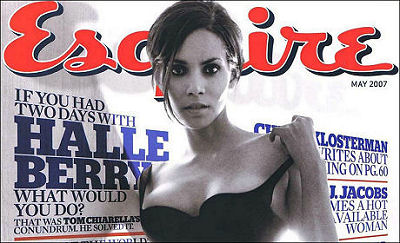
A guy I know suspects that Disturbia might perform a little bit better, possibly because moviegoers are picking up oppressive formula fumes coming off the latter, a Bruce Willis-Halle Berry thriller. (A friend says Stranger, which had its all-media screening last night, has an irritating twist element at the finale that’s been used solely because movies like this are supposed to have twist endings.)

Does anyone know or care about Shia LaBeouf, the Disturbia lead guy? I know that a GenY Rear Window movie seems a little more enticing than Berry playing Nancy Drew and agitating Willis until things come to a boil.

Tracking on Spider-Man 3 (Columbia, 5.4) is phenomenal — 95, 44 and 32. By the time it opens the first choice figure will be over 50. Two semi-noteworthy films are opening against it — Curtis Hanson‘s Lucky You (35, 20 and 1) and September Dawn (13, 16 and 0).

4.20: Fracture (41, 29 and 4), Vacancy (54, 25 and 3) and In The Land of Women (31, 24 and 2).

4.27: Condemned (31, 29 and 0), The Invisible (38, 18 and 0), Kickin’ It Old School (26, 16 and 0), Next (45, 24 and 1).