Backlash

“Make no mistake, this is a review,” says CHUD’s Devin Faraci about Matt Selman‘s girlishly giddy, fluttery, not-to-be-trusted riff about Watchmen. “And make no mistake, despite what [this] reviewer and Simpsons executive producer says, he’s a journalist in this case.

“He’s blogging on the Time magazine website in a Time magazine-sanctioned blog, for the love of God! [And] I’m going to guess that he’s probably drawing a dime or two for his work.

“This is sheer bullshit, and I hope that the next time some studio flack talks about how online breaks embargo, they remember that it was Time fucking magazine that did it. And let it be noted that I have no problem with the embargo and with Warner Bros enforcing it; I have a problem with certain elements in the media believing that they’re above it all.”

Watchmen Whore

“For me, Watchmen isn’t a movie at all. It’s a miracle the likes of which my 14-year-old self would never have believed. Now the special thing that it still feels like only I know about has been given to the whole world. I hope they like it. I don’t think I realized how close I was to the original book until I saw such a loving, detail-rich, almost obsessive recreation of that universe. It had my heart pounding and head swimming. I barely slept that night. Someone took the most special personal thing of my adolescence and put it on a movie screen. That doesn’t happen every day.

“What will people who’ve never read Watchmen even think of this film? What will it be like for them to sit through these crazy, violent, colorful three hours and not recognize almost every line – almost every image? Will they be utterly baffled, bored, or totally love it? Is Watchmen even a good or bad movie? I have no idea. I stand powerless before the Gods I once worshiped in my attic bedroom, now moving and talking and fighting and loving on a giant screen. And I find myself unable to judge them.”

In other words, Nerdworld blogger Matt Selman, a longtime Simpsons writer and now one of the show’s executive producers, is a completely prejudiced and unreliable shill. He’s an invested pre-believer, a suck-up, an emotional pushover — his word means absolutely nothing.

Only when a vigorous non-fan of comic book fantasy and phantasmagoria like myself sees Watchmen and does cartwheels…only when someone like me freaks out and sings arias about this film will it mean anything to anyone.

Steadfast Spielberg Toady

“Sooner or later, you know you will crash into the densest of Armondic icebergs, i.e., Steven Spielberg. White regards the maker of E.T., Schindler’s List, and 1941 to be ‘the greatest of all American humanist directors, every bit the equal of John Ford…the measure by which all films and filmmakers must be judged.’

“The possible notion that Spielberg, eternal box-office boy-king of Hollywood, may embody the Reagan-Clintonist consumerism White claims has ruined serious film appreciation in this country is rejected with little more than a sardonic chuckle. For White, defending Spielberg is a waste of his breath, ‘a distraction.’ If you can’t grasp the self-evident greatness of A.I. and Munich, that’s your problem, not his.” — from Mark Jacobson‘s New York magazine profile of N.Y. Press critic Armond White, published on 2.15.

Shaker-Upper

“Although the specific plans [for the Oscar show] are heavily under wraps, the physical relationships of the audience to the stage, and the stars to one another, are being radically altered,” according to Patricia Leigh Brown‘s article in today’s print edition of the N.Y. Times. “The biggest change involves reimagining some of the seating arrangements in concert with redesigning the landscape of the stage, including a new, curvaceous thrust. The novel new topography will allow more interesting camera work and more varied and streamlined entrances and exits.”

No Grades

There’s a line of narration in this trailer for The Haunting of Connecticut (Lionsgate, 3.27) that drives me batty. Virginia Madsen talks about how her family, dealing with a major illness situation, was “just a regular family like anyone else…we didn’t ask for this and we didn’t deserve it.” In other words, you deserve what happens to you. Which means, following her logic, that some people out there do deserve to get hit with some form of tragedy. Some do, some don’t.

What a clueless and pathetic way to assess life and fate and the whole magillah.

“We didn’t deserve it” presumes there’s some kind of Godly accounting going on all the time that takes a measure of everyone’s moral and ethical worth, and that all the good and positive things you’re doing and have done are being tallied and evaluated and that you’re basically getting graded, like in school. The offshoot is that morally good people with “good grades” deserve and will generally get a better life with more or less favoring winds, and that bad people and their selfish habits deserve a difficult, trouble-plagued one because they’re living the wrong way and have made their own bed.

Well, I believe that losers do create their own issues and create their own karma, but there are no guarantees of fairness or clear-sailing for even the best of us. The good people don’t get “good grade” passes that help them avoid awful fates. Anybody can get hit with some horrible tragedy (read about the people who were on that plane that crashed in Buffalo), and when it happens it has nothing to do with their “grades” or their karma or anything. I despise people who cling to contrary Sunday-school beliefs. Whenever I hear “I deserve this” or “I deserve that,” it’s like chalk on the blackboard.

Silver Predicts Henson

Nate Silver, the numbers-and-poll-crunching whiz kid whose accurate primary and general election predictions were posted last year on fivethirtyeight.com and won him immense respect, has delivered an analysis of the Oscar contenders and delivered one big surprise — i.e., that Benjamin Button‘s Taraji P. Henson will win the Best Supporting Actress Oscar. No way. Bank on Penelope Cruz.

Silver claims there’s a 71.1% likelihood that Mickey Rourke will win the Best Actor Oscar. The late Heath Ledger has an 85.8% chance of winning the Best Supporting Actor Oscar. (Do ya think so?) Kate Winslet, he says, is a 67.6% favorite over Meryl Streep, who only tallies a 32.4% likelihood. (A voice tells me she might win anyway.)

Best Director contender Danny Boyle, the auteur of Slumdog Millionaire, has a 99.7% chance of winning, and Slumdog Millionaire itself is 99% favored to win Best Picture.

The Atmosphere, Stupid

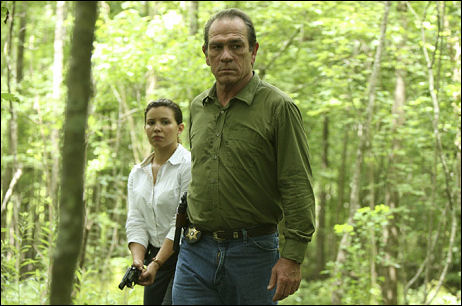
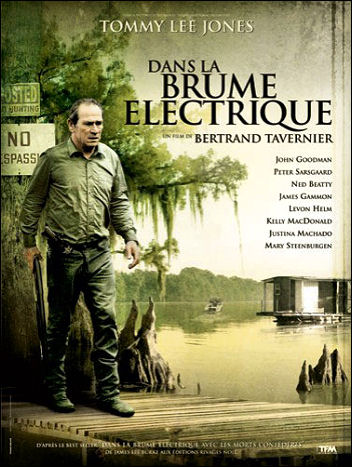
The U.S.-only version of Bertrand Tavernier‘s In The Electric Mist, a truncated thing that will turn up in DVD stores on March 3rd, wasn’t as hard to watch as I’d been led to believe by certain critics. Ever since Tavernier’s longer, more atmospheric cut played at the Berlin Film Festival earlier this month, the word has been that the 15-minute-shorter U.S. cut is “brisker but less coherent,” as Variety‘s Leslie Felperin put it.

Felperin also wrote that the shorter version ends with a “tacky summing up” and a self-consciously spooky final twist that “makes [it] play like a made-for-TV movie.” Actually, it uses the exact same final shot that ended Stanley Kubrick‘s The Shining, although it’s coming from a different place.

The underlying idea, in any case, is that ghosts are swirling all over, under and through southern Louisiana’s swamplands and low-lying small towns, reminding their more receptive residents of the journeys our ancestors took, the burdens they carried, what this country used to be and still needs to be, dammit, if at all possible.

The 102-minute U.S. version is a familiar whodunit-type deal that’s far from terrible. The problem is that the pacing and exposition feel a little too choppy and rushed. This is a movie that needs to breathe, and you can just tell that the guy who recut Tavernier just wanted a whodunit that unfolds along traditional lines. The guy was obviously saying all along, “Trim the flavor and cut to the chase.”

I was semi-aroused and intrigued with this 102-minute version, being content with and even soothed at times by Tommy Lee Jones‘ performance as Dave Robicheaux, the slightly mournful and laconic lawman hero of several James Lee Burke novels. Yes, Jones has played this kind of weary fellow before, and as far as I’m concerned he can on playing this kind of guy until he’s 90 if he wants to.


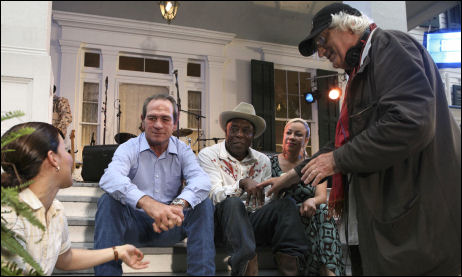
Some of the Electric Mist cast and the white-haired Tavernier during the shoot.

The whodunit side, I have to say, isn’t as interesting as just being in the world of the film and the story. This is a flick about mood, aroma and personality. There are niggling plot points to consider, yes, but only people who read crap in airports and love vacationing in Vegas and Cancun and Atlantic City will care about that. I’ve been through lone-wolf investigative dramas like this all my life. We’ve all watched them to death and are sick of the same old hash, and we want something more, dammit. Which is what Tavernier was on about, or so I gather. Tryng to explore the unspoken seep-through stuff.

The problem with the shorter version is that it needs more moisture and mosquitoes. It needs to slow down even more than it does now and let the old natural swamp vibe just seep in and intoxicate. This, I presume (and also according to what L.A. Weekly critic Scott Foundas wrote), is what Tavernier’s version tries to do.

The IMDB says Tavernier’s version will open in France on 4.15.09 and in Belgium a week later. One hopes that discs of his cut will find their way to these shores before too long. The best thing, of course, would be for special screenings of Tavernier’s version to show at the Film Society of Lincoln Center through Kent Jones, at the Film Forum, at the American Cinematheque in Los Angeles, and at other venues for serious film lovers around the country.

Accelerate

There’s this New York interview with 35 year-old supermodel Kate Moss that went up yesterday. The idea is to plug a Kate Moss for Topshop collection of urgent-style apparel. But I’d be remiss if I didn’t allude to the slideshow that’s attached to the article. It’s funny how people can look younger than their years for a long period, and then out of the blue they look somewhat older. No crime in this, but Moss could be 40 or 41 now. That’s the lifestyle catching up, of course.

If I Ran The Academy

Or, as “the Bagger” put it today, if I “owned every one of the Academy’s 5,800 votes, what injustices would be rectified?” Okay, here’s what.

One, Revolutionary Road would be a Best Picture nominee. Two, Michael Shannon, a beautiful glint-of-madness actor with things to do and miles to go before he sleeps, would win for Best Supporting Actor. Three, The Dark Knight would still not be one of the five Best Picture nominees because it wore me down by being too damn long. Four, WALL*E, just for fun, would be. Five, The Visitor‘s Hiam Abbass would be a Best Supporting Actress nominee, and she might even win.

Let’s go for five more. Six, Kate Winslet would win the Best Actress Oscar for her work in Revolutionary Road and not The Reader. Seven, Gomorrah would be a Best Foreign Film nominee, for Chrissake. Eight, Steven Soderbergh‘s Che would be a Best Picture nominee. Nine, Clint Eastwood‘s iconic Gran Torino performance would be one of the five Best Actor nominees. And ten, I would create a Best Walk-On, Smaller-Than-Supporting Performance Oscar.

Fierce Meditation

“The first thing you should know about Gomorrah,” says New Yorker critic Anthony Lane, “is that no fewer than three members of its cast have been arrested on suspicion of illegal activities. There could be no more unimpeachable testament, surely, to the integrity of Matteo Garrone‘s film, which is about organized crime in Naples. Many of the actors were recruited from the area, presumably on the basis that they already knew the ropes, not to mention the Kalashnikovs.

“There are five stories, layered and stuck together, raising the possibility that Garrone modelled the whole thing on a lasagna verde. We get them morsel by morsel, and the brisk dicing between them can catch the viewer unprepared.

“There is Toto (Salvatore Abruzzese), age thirteen, who spies a dropped gun in the street, returns it to local thugs, and, in reward, becomes a mini-mule in the drug trade. There is a pair of teen-agers, Marco (Marco Macor) and Ciro (Ciro Petrone), fools in love with a gangsterish ideal; “I’m numbah one! Tony Montana!” they cry, acting out their pantomime of Scarface in an empty tenement, where a sunken, unused bath echoes not just old Brian De Palma movies but much older tubs, in the balneae of Pompeii, across the bay.

“There is also Don Ciro (Gianfelice Imparato), whose name hints at potency, but who is, in fact, a frightened hireling in a cheap blouson, distributing cash to those families who exist on the say-so of the Camorra. And there is Franco (Toni Servillo), the most accomplished gentleman on view, and the one most at ease with evil; aided by a reluctant sidekick, Roberto (Carmine Paternoster), he arranges for the disposal of industrial waste. That sounds like a filmmaker’s convenient symbol, but, if you live in certain parts of southern Italy, the poisoning of the land is right in front of your nose, and under your skin.

“Last, and best, of the central figures is Pasquale, played by Salvatore Canta-lupo. (Has any bunch of actors had better names?) Pasquale is a Thurberish drone, keeping his head down but unable to stop lifting up his eyes to resplendent things. He is a tailor, working his fingers off in the service of couture, or, rather, of its speedy, backroom simulacrum. In a bid to earn more, he accepts a secret offer to tutor Chinese immigrants in his delicate art, and what follows is a touching nocturnal farce. Bundled into the trunk of a car, he arrives not at some dripping sweatshop but at a spotless workplace, lined with eager apprentices who applaud his entrance as though he had come to conduct them: ‘They called me Maestro!’ he whispers to his wife, creeping back at dawn.

“Moments like this achieve what so few American movies seem to be doing just now: they take on a big subject, unwieldy and unglamorous — in this case, the illegal economies that thrive under globalization, and on which we unwittingly feed — and dig out from it a cluster of private dramas that are highly specific, and yet which could, you feel, find an answering gleam almost anywhere on the planet.

“Toward the close, at a truck stop, Pasquale glances at a TV and sees a clip of a radiant Scarlett Johansson parading at a movie premi√®re, wearing a dress that he himself ran up at cut price, or perhaps its costlier identical twin; the expression on the tailor’s face is, you might say, his final master class, proving the beauty of ruefulness.”

“Are You Over Five Feet Tall?”

This 1959 clip shows that the mystery-guest segment of the old What’s My Line? show was harmlessly amusing. (Certain amusements, I’m saying, are definitely harmful.) If a present-tense show tried reviving this I’d probably watch. I chose this clip because Gore Vidal was one of the panelists, and because Arlene Francis says to James Cagney at the end that “you’re a wonderful performer and we don’t see nearly enough of you in films.” A year or so later she starred with Cagney in One, Two, Three.

Oddball

The Guardian‘s Peter Bradshaw today came up with a list of the ten weirdest (i.e., most embarassing) Oscar presentation speeches of all time. Good idea, but who’d tap out such a thing without links to video clips? This makes Bradshaw’s article seem the weirdest of all.