Shelter From The Storm

In Jason Reitman‘s Up In The Air, airports are cavernous antiseptic places in which people like George Clooney‘s Ryan Bingham feel very much at home. Comforted, even. That’s my feeling also. No man-made atmosphere makes me feel quite as serene as an airport. When I’m waiting for a plane, I mean. (And after I’m through the security scan.) A blissful feeling of being neither here nor there. All my cares and anxieties suspended. It’s actually kind of beautiful.

I know and accept, of course, that airport environments are no substitute for anything, least of all the real rock ‘n’ roll of life. I only know what I feel when I’m inside them. I’m in a kind of womb — a place in which the normal heave and pitch of things doesn’t happen or disturb. The appointments, challenges, pressures, deadlines — all that will surround me and more after I’ve landed. Expected, understood. But what a charmed feeling it is to be within an airport with all of that stuff outside, and with nothing to do inside but chill. I especially love three- and four-hour layovers. I adore browsing around, having a cafe au lait, leafing through magazines, looking at the hundreds of travellers. (Especially the women.)

I feel especially calmed by airports in Europe. Especially those in Germany and Switzerland. Maybe because the wifi is always fast and accessible. And because the technologies in both countries always seem to be state of the art or even ahead of the game. I guess I’m mainly thinking of Zurich Airport. I could live at Zurich Airport — live in an actual apartment there, I mean — and almost be happy. I could almost die there. Tony Gilroy used it as a backdrop in Duplicity (just an exterior shot, actually — the interiors were shot in Newark). And of course, Roman Polanski was arrested there yesterday. What a nice place to be cuffed and kept in a holding cell. I mean that.

Great Start

I’ve been sensing that Michael Moore‘s Capitalism: A Love Story might break through. Maybe not in a Farenheit 9/11 way but certainly in a better-than-Sicko way. Jay Leno saying he really liked it was a tipoff. An ex-Fox News broadcaster told me a week or two ago, “A Michael Moore film that’s ‘fair and balanced’? I’m as stunned as you are. Every tax-paying American needs to see this film immediately.”

The limited opening this weekend resulted in the year’s spiffiest per-screen average — $60,000 on four screens for a total of $240,000. The Overture release has grossed a total of $306,586 since Wednesday’s opening. Next weekend’s 1000-plus screen opening will tell the tale. Indiewire‘s Peter Knegt points out that “one hopeful sign was the film’s large increase from Friday’s gross ($62,000) to Saturday’s ($95,000).”

Safire Departs

William Safire, the witty and cogent N.Y. Times columnist and rapier wordsmith, died today at a Maryland hospice at age 79. Pancreatic cancer took him out.

The tightness and clarity of his prose was a huge influence upon my own meager scribblings. I so enjoyed his stuff (“Yamani or ya life?“) that I decided early on to forgive Safire for having been a Nixon/Agnew speechwriter. On top of which I always half-loved those withering phrases he tapped out for Agnew — “effete corps of impudent snobs,” “nattering nabobs of negativism,” etc. And like everyone else I rarely missed his “On Language” columns, also in the Times.

Robert D. McFadden‘s obit says that “unlike most Washington columnists who offer judgments with Olympian detachment, Mr. Safire was a pugnacious contrarian who did much of his own reporting, called people liars in print and laced his opinions with outrageous wordplay.”

Indie Crisis Summit

There are tons and tons of quotes but no clear through-line in Anne Thompson‘s 9.26 Indiewire report about Friday’s Indie Crisis panel, organized by Rajendra Roy and Marian Koltai-Levine, at the Museum of Modern Art.

So let’s focus on the positive side. Sellers, Thompson reports, “struck a more positive note. There’s nothing to explain the shock in the specialty studio acquisitions market, said one lawyer. DVD rentals should compensate for the decrease in DVD sales. Theatrical numbers are robust, and pay deals, though receding slowly, still exist. Clearly, the irrational need to bid high at a festival has been replaced with a slower, more thoughtful approach based on checking out all the films and then deciding which ones to buy later on. The pattern of the past few festivals has become a slower trickle of smaller deals culminating after the festival.

Focus Features honcho James Schamus “downplayed the so-called crisis, insisting that basically, entitled white guys are not skimming as much money off movies as they used to. People were flipping companies. Over the past decade, distributors were contributing to insanely inflated buys. With the drop in DVDs, there are fewer resources on hand.

“‘There are plenty of good movies out there,’ he said. ‘I go to festivals and see movies that I hope will get acquired. There’s a renaissance creatively. But turning filmmakers into distributors seems like a mixed bag idea.'”

SPC, IFC and Magnolia, Thompson reminds, “are the ones buying movies. Some complaints were raised about how little the distribs pay now, and the fact that foreign filmmakers’ work is often subsidized, so they can afford these deals in a way that American indies cannot. IFC insisted that their filmmakers do, indeed, make money.

“One filmmaker argued that folks got spoiled by the studios, and should stop relying on them and reduce their scale. The magic left because people became part of the system. Reinvention is in order. Another filmmaker insisted that his film get a theatrical release rather than VOD. Engaging critics is key, he said, throwing a movie into the cultural mosh pit. No independent film will succeed without critical support. Critics are undervalued, he argued.

“Another doc producer said that audiences are gravitating to HBO and cable, which are often of higher quality than indie film. One producer said that selling films like product on the internet is the future: aligning with ad networks and social networks.”

Can I make a suggestion? Something that might not punch up indie business as much as lessen the downside? Indie producers, directors and distributors might want to ease up on movies about unshaven middle-aged child molesters. Just a thought.

Cheap Swiss Theatrics

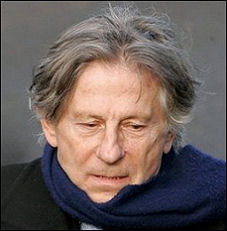
Roman Polanski was arrested yesterday by Swiss police for possible extradition to the United States for that largely discredited, over-and-done-with 1977 charge over his having had sex with a 13 year-old minor and then, after serving six weeks in jail, having jumped bail on 2.1.78 after learning of a prosecutorial betrayal that would have put him back in the slammer for God-knows-how-long.

The victim forgave Polanski long ago, and Marina Zenovich‘s doc about the case, Roman Polanski: Wanted and Desired, explained how prosecutorial corruption and misconduct by Judge Laurence J. Rittenbad stank to high heaven. And now the case stinks even worse. What the Swiss authorities did was bizarre and pathetic.

Update: The L.A. TimesHarriet Ryan reported this morning that L.A. prosecutors planned the whole pinch.

Polanski, 76, was detained after arriving at Zurich airport yesterday to receive an honorary award at the Zurich Film Festival. A Swiss Justice Ministry said that U.S. authorities have sought Polanski’s arrest since 2005. “There was a valid arrest request and we knew when he was coming,” ministry spokesman Guido Balmer told The Associated Press. “That’s why he was taken into custody.”

Balmer said the U.S. would now be given time to make a formal extradition request. The Swiss statement said Polanski was officially in “provisional detention for extradition,” but added that he would not be transferred to U.S. authorities until all proceedings are completed. Polanski can contest his detention and any extradition decision in the Swiss courts, he said.

Polanski flew the coop after being informed than an arranged deal with the late Judge Laurence J. Rittenband that would have given Polanski a non-incarcerational “time served” jail sentence (he was imprisoned for 42 days of observation in the wake of the arrest) was being reneged on. The Oscar-winning director has lived in France for the last 31 years.

In France, Culture Minister Frederic Mitterrand said he was “dumbfounded” by Polanski’s arrest, adding that he “strongly regrets that a new ordeal is being inflicted on someone who has already experienced so many of them.”

Polanski’s victim, Samantha Geimer, now a 45 year-old mother of three children, has repeatedly forgiven Polanski and said that the U.S. judicial system should just let it go. “I have survived, indeed prevailed, against whatever harm Mr. Polanski may have caused me as a child,” she’s reportedly said, adding she now believes Polanski fled “because the judicial system did not work.”

In a 2003 interview, Geimer said “Straight up, what he did to me was wrong. But I wish he would return to America so the whole ordeal can be put to rest for both of us.” Furthermore, “I’m sure if he could go back, he wouldn’t do it again. He made a terrible mistake but he’s paid for it“.

In 2008, Geimer stated that she wishes Polanski would be forgiven, “I think he’s sorry, I think he knows it was wrong. I don’t think he’s a danger to society. I don’t think he needs to be locked up forever and no one has ever come out ever — besides me — and accused him of anything. It was 30 years ago now. It’s an unpleasant memory [but] I can live with it.”