Last Licks

Four pics from my last full day in San Francisco — Saturday, 7,17 — which included a hike in the Mt. Tamalpais/Muir Woods vicinity. City weather was windy and borderline chilly at times; Marin County was somewhat warmer but nothing to write home about. They barely have summers up there.


Saturday, 7.17, 3:40 pm.

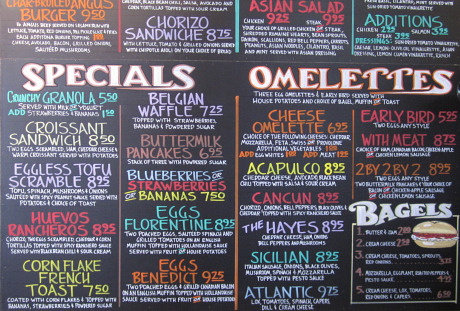
Saturday, 7.17 — neighborhood Italian joint near corner of Hayes and Gough.

7.17, 3:25 pm.

20 Days?

I had dinner in San Francisco with an ex-girlfriend who’s into astrology, and she told me that some astrological guru she knows is predicting that the second Big Recession will kick in on August 8th. I didn’t say anything to the ex, but a part of me froze when I heard this. I shared my fears with a friend over dinner last night, and he said he doesn’t see it happening.

I, Claudius

The Sunday afternoon poolside scene at the Hollywood Roosevelt, where I did an interview yesterday afternoon with Salt director Phillip Noyce, is pure Roman decadence. It’s Caligula meets New Babe City with lotsa drinks, string bikinis, body oils, etc. Not that many WASPS, though, and some of the guys looked a little dorky. (Like that shirtless guy talking to the hottie at the beginning of the video.) But it was quite a thing to see. You couldn’t help but chortle.

Choice

If you’ve seen The Kids Are All Right, you need to read this ugly Andrea Peyser piece which appeared in the N.Y. Post‘s online edition on 7.15. She basically feels that Mark Ruffalo‘s “sperm donor” character, who’s a little on the impulsive and immature side, deserves more respect and understanding than director-writer Lisa Cholodenko shows him over the course of the film. And that the film itself is basically Hollywood lefty gay propaganda that won’t play in the heartland.

Peyser seems down with Ruffalo’s character because he’s straight, and she appears to dislike or at least disapprove of the gay-mom characters, played by Annette Bening and Julianne Moore , because gay people shouldn’t be raising and screwing up their kids (i.e., influencing their attitudes about gay people). Nice.

Peyser feels it’s an insult to Ruffalo’s biological sovereignty for him to be referred to as the “sperm donor” instead of biological father. I can see her point, but biological co-authorship matters only if the father (or the mother) lives up to the demands of parenthood in a steady, compassionate, straight-arrow way. I would have personally liked the movie a bit more if Ruffalo hadn’t been tossed onto the compost heap at the end, but guys are dogs, let’s face it, and this seemed like a half-reasonable way to go.

Peyser is clearly irked that Cholodenko favors the domestic gay relationship over Moore briefly knocking boots with Ruffalo’s resturateur. Which is basically true, Cholodenko being gay herself and all that entails. (Would Peyser knock a film from a straight male director that doesn’t seem to treat a gay or bisexual character with full respect and fairness? Kinda doubt it.) But Chololdenko is also a good director doing the best work of her career thus far. For dramatic and/or moralistic purposes (or both), Cholodenko is supporting a committed parenting relationship over an impulsive affair — what’s so twisted about that?

What matters is that Cholodenko sells us on the compassion, foibles, vulnerabilities and all-around normalcy of Bening-Moore. They’re a caring, quirky, struggling couple trying to do the right thing by their kids. I see what Peyser’s beef is — she wants a restoration of a primarily straight culture in which gay people live in the recesses and don’t raise kids. She’s entitled to feel this way, of course. If she wants to argue against treating everyone fairly or decently regardless of sexual orientation, let her. But what a pathetic way to look at things.

If I had two kids that I couldn’t raise for whatever reason (illness, jail, impending death by gangsters) and I had to choose between their being adopted by a decent gay couple like Bening-Moore or a bigot like Peyser, I’d definitely go with the dykes.


Early Cobb

I’ve never seen Chris Nolan‘s Following, which came out 12 years ago. It played a few festivals (Toronto, Palm Springs) but not Sundance, and I’m still too lazy to pick up the DVD, which came out in late ’01. IFC Films is guessing lot of folks who’ve seen Inception are just as lazy, and might be in the mood to check out this 16mm monochrome mood flick, shot in London. They’re re-releasing it on demand for three months via various cable providers.

“A struggling, unemployed young writer takes to following strangers around the streets of London, ostensibly to find inspiration for his new novel.

“Initially, he sets strict rules for himself regarding whom he should follow and for how long, but soon discards them as he focuses on a well-groomed man in a dark suit. The man in the suit, having noticed he is being followed, quickly confronts the young man and introduces himself as ‘Cobb‘.

“Cobb reveals that he is a serial burglar and invites the young man to accompany him on various burglaries. The material gains from these crimes seem to be of secondary importance to Cobb, who takes pleasure in rifling through the personal items in his targets’ flats. He explains that his true passion is using the shock of robbery and violation of property to make his victims re-examine their lives. He sums up his attitude thus: ‘You take it away, and show them what they had.'”

New Zone

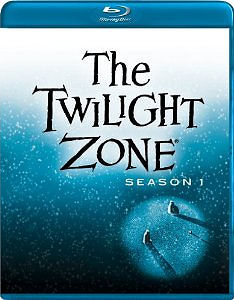
We all know about the theology of grain monks (i.e., an old film should never be refined beyond what audiences saw when it played the local Bijou), but do they have allies in the TV-transfer realm? I’m asking because it seems a bit curious (and at the same time very cool) that a forthcoming Bluray of the first Twilight Zone season (’59 to ’60) will look better than what Rod Serling was able to see in his private screening room, and far better than what Average Joes saw on their Sylvania or RCA Victor sets.

“All new 1080p high-definition transfers have been created from the original camera negatives,” the promotional copy states, “as well as uncompressed PCM audio, remastered from the original magnetic soundtracks,” resulting in 36 episodes (contained on five discs) “presented in pristine high definition for the first time ever!”

If you were a TV-transfer monk, wouldn’t you find this a betrayal of the Twilight Zone‘s original visual aesthetic? Imagine if the Image Entertainment people behind this Twilight Zone Bluray were to stage a coup at Criterion. Imagine the monk horror when they suggest at the first post-coup meeting that Stagecoach could be cleaned up a bit. “No!” the monks would shriek. “Leave those scratches alone! And don’t mess with the grain…please! Show some respect! John Ford wanted this film to look a little bit shitty and dog-eared. And it’s our responsibility to maintain this look into perpetuity!”

The Twilight Zone Bluray will be out on 9.14, and will set you back about $75 bills.

Full Tank

A financial-sector guy who always sends me reactions to HE stories rather than post a public comment says he’s totally smitten by Inception. “I saw it yesterday and the only knock I can come up with on it is that it might be too good,” he writes.

“I was telling some co-workers that this guy might be the answer to every gripe people have about Hollywood these days. ‘There are no original stories,’ ‘Too much CGI,’ ‘Sick of 3D,’ ‘Everything is dumbed down,’ etc. Nolan is making high-level high stakes popcorn movies that deliver on almost every angle and in the face of a degree of difficulty that no one else has to face. We are witnessing the natural progression of genius and we have no idea what his ceiling is.

“The only question that exists for Nolan now is not ‘can he’ but ‘for how long can he do it?’ Obviously that remains to be seen, but right now at this moment, he’s the best screenwriter and director on the planet — due respect to Ridley, Almodovar, Coens or any other name you want to throw out there. No one else can pull of something this good of this scale twice in a row. We should remember this time when a real genius is at his absolute best and the future looks brighter still. It’s a good time to be into stuff like this.”

Soul Snatchers

If by clapping three times I could eradicate all forthcoming comic-book movies (and thereby impose a permanent frown on the faces of Devin Faraci, Drew McWeeny and the rest of the die-hard Comic-Con crowd), I would clap three times. Same difference if I could magically eliminate the notion of a superhero from the minds of all men, women and children on the planet earth, you bet.

For comic-book movies are surely the scourge of the film industry — agents of infantilism and same-itude, a pox upon the art and intrigue of storytelling, a tumor inside the ribcage of our movie-making culture.

The good news about comic-book movies is that they occasionally fail (Jonah Hex) or fall short (Kick-Ass), proving if nothing else that this mostly deplorable genre is not infallible. The bad or dispiriting news is that this may not be giving Hollywood execs sufficient pause, as the continued and growing success of San Diego Comic-Con (which kicks off Thursday) seems to suggest.

“I’m not quite sure how we reached a point where Comic-Con became the engine that drives Hollywood but that is absolutely the case,” laments critic Marshall Fine.

“A steady diet of comic-book and zombie and other fantasy movies is like a steady diet of Big Macs for the mind and soul. Unfortunately, no one will ever make the Super-Size Me revealing the brain-deadening effects that overconsumption of these films is having. Yet it’s out there, slowly stripping audiences of their ability to focus on anything that doesn’t distract them with big flashes and booms and super-powers and the like. It’s a self-fulfilling prophecy, in which feeding this particular beast allows it ultimately to consume all our brains, and take over the culture.

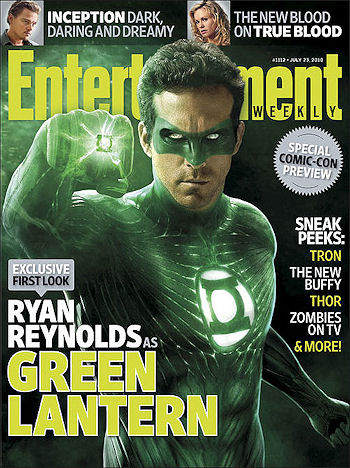
“Ah, Comic-Con: the tail that wags the entertainment dog. Would that we were able to brutally crop that particular tail. Instead, it’s being celebrated on the cover of Entertainment Weekly, as though it isn’t yet another harbinger of what is destroying movies that make you think and feel something other than the brief endorphin rush of cheap thrills.”

Calling Morgan Spurlock! There really is a documentary in this — an exploration of how comic-book movies transformed from a live-wire Hollywood phenomenon into something approaching a cultural pestilence.