Wrong Term

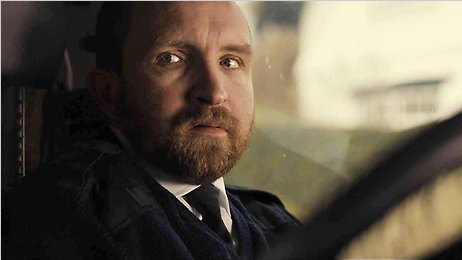
Due respect to the N.Y. Times editors who worked on John Anderson‘s profile of Eddie Marsan, but Marsan isn’t “that guy,” as their headline states. He’s that brute, that British oaf, that homely animal, that rage-hound, that Mike Leigh regular, that half-psychopath, that proletariat muttonhead.


Eddie Marsan

In my book “that guy” tends to refer to a persona created and maintained by a leading actor. It suggests acceptance, approval, affection. It means “a guy we might choose to be if we weren’t already taken,” etc. Robert Redford used to play “that guy” during the ’70s and early ’80s…okay?

Blaxploitation Lando-Fly

“Who’s the baddest dude in the galaxy? Who’s slicker that Super-Fly? Cooler than Captain Kirk?” The trailer was shown at ComicCon 2010. A website was discovered a few days later. Patrick Sauriol‘s Coming Attractions did a whole run-down on Blackstar Warrior on 7.29.

I still can’t figure what year this film was made in. Obviously well after the Blaxploitation wave of the early to mid ’70s. It was most likely produced after The Empire Strikes Back (’80) but before Return of the Jedi (’83).

Here’s the documentary about the film’s discovery: Part 1, Part 2 and Part 3.

“Cut the charm, Lando!” “Lando shuts the man up.” “No, gentleman — he is dangerous. Calrissian must be destroyed!”

Alma

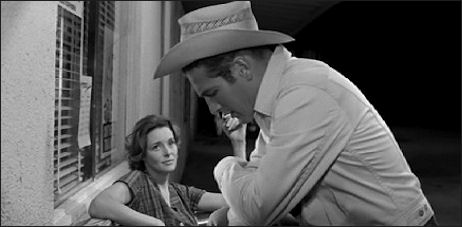
“I’ll remember you, honey,” a sassy Paul Newman said to Patricia Neal as she stepped onto a bus in Hud. “You’re the one that got away.” Actually Neal, who died yesterday of lung cancer at age 84, was the one who stuck around and toughed it out.

She led a long, distinguished, sometimes tumultuous life, and yet her most lasting impression — for fans like myself anyway — is that of a cultivated, unfussy woman who, in her prime, was probably amazing in bed. You’re not supposed to mention stuff like this when a respected octogenarian philanthropist (which Neal was) passes away, but I would have loved to have gotten lucky with her around 1950 or so, around the time she made The Day The Earth Stood Still. A little while after the end of her three-year love affair with Gary Cooper, I mean, and before she met Roald Dahl, her husband of 30 years, in ’51.

How does one stifle erotic associations with a pistol-hot lass whose heated entanglement with Cooper in the late ’40s is a tragic Hollywood legend? (He ended it and returned to his wife, and Neal regretfully had an abortion.) Couple this with Neal’s hotel-room scenes with Andy Griffith in A Face in the Crowd (’57), and especially her portrayal of the sleepily sensual Alma in Martin Ritt‘s Hud (’63), for which won a Best Actress Oscar in 1964, and you’re talking one hot mama. That deep husky voice of hers only enhances the vibe, of course.

Neal is also remembered, sadly, as the actress who got hit with awful cards when two of her children with Dahl suffered tragedy — a son brain-damaged by a taxi accident in Manhattan, a daughter dead from measles at age 7. This was followed by Neal herself being nearly destroyed by three strokes — i.e., cerebral aneurysms — in ’65. She was left immobile and speechless, but gradually recovered. Neal returned to acting in ’68 with The Subject Was Roses.

“I think I was born stubborn, that’s all,” Neal says in a biography on the website of the Patricia Neal Rehabilitation Center.


Roald Dahl’s Gipsy House, taken by yours truly in Great Missenden, England, during last fall’s Fantastic Mr. Fox junket.

And then she divorced Dahl in ’83 after learning of his affair with Felicity Crosland, whom Dahl married and stayed with until his death in 1990. Neal had lived with Dahl at his Gipsy House estate in Great Missenden, England (where I visited last fall during the Fantastic Mr. Fox junket) for 25-plus years. She lived the remainder of her life in New York and Martha’s Vineyard.

For me, Alma is her greatest performance, closely followed by her portrayal of an ambitious TV journalist in A Face in The Crowd. It’s odd that her work in Hud led to a Best Actress Oscar as Alma is clearly a supporting role. Hud is an ensemble thing, but it obviously belongs to Newman with Neal and her two costars, Brandon de Wilde and Melvyn Douglas, vying for secondary honors. I’m not saying Neal didn’t earn it. She was awesome in the part.

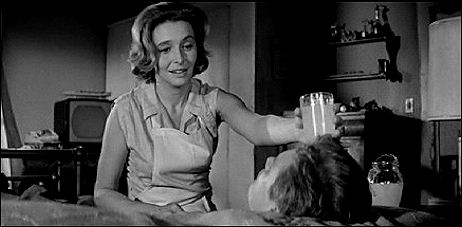
I love her Alma-isms. I love her earthy drawl and the way she hands out peach ice cream on the front porch after dinner. I love the way she places a cold glass of lemonade on De Wilde’s forehead after he’s been kicked around inside a cattle pen. I love the sexual tension in her scenes with Newman. “Ahve already spent time with one cold-hearted bastard,” she says after he’s made an unwelcome pass. “Ahm not lookin’ for another.” You believe her for the most part, but not entirely.

I haven’t even mentioned her performance in The Fountainhead (1949). It’s hard to like that film because the Ayn Rand dialogue sounds so pretentious. (“I wish I had never seen your building,” Neal says at one point. “It’s the things that we admire or want that enslave us. I’m not easy to bring into submission.”) At least she gets through it without sounding dopey or bewildered.

Very few have seen Neal in a 1964 black-and-white film called Psyche ’59, although it’s watchable on YouTube.

She played a nurse who has an affair with John Wayne in Otto Preminger‘s In Harm’s Way (’65). Duke, 57 or 58, was looking a little saggy and beefy in that film, and yet Neal, only 38 or 39 but with her looks starting to decline, was judged an appropriate romantic match. That’s Hollywood for you. When you’re done as an erotic object, they really let you know it.

Metaphor

Worth 1000 has posted several entries in a minimalist movie-poster series. I’m waiting for the connection between a gasoline hose and Zoolander to kick in. It’s been a while since I’ve seen it. Maybe I’m thinking too strenuously. Gayboy humor, fishnet T-shirts, Owen Wilson, teeny-weeny cell phone, etc.

Son of Numbers

With its earnings of $11.1 million, Salt has taken the highly coveted fourth-place spot, beating back Dinner for Schmucks ($10.4 million, down 56%) and Despicable Me ($9.4 million, down 39%). Step Up, as expected, retreated to third place after coming in second on Friday — it will finish tonight with $15.4 million. The Other Guys is the walk-away winner, as reported, with $35.6 million. Inception has come in second with $19 million even.

Bloody Kids

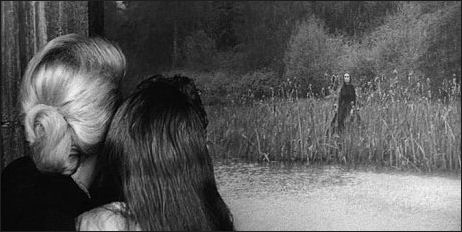
A Bluray of Jack Clayton‘s The Innocents (’61) is out on 8.23…in England. Still haven’t determined if it’s an all-region; I’m presuming it’s not. Apart from my fetish for monochrome Scope, The Innocents is attractive for being nearly as scary as Robert Wise‘s The Haunting (’63), also shot in the same format. A powerful tone of eerie creepiness kicks in during the last third. That shot of a female ghost (or, if you will, a motionless dead woman standing in the reeds along a river) has never left my mind.

Some other longed-for black-and-white Bluray Scope films: The Hustler, Battle Cry, Love Me Tender, A Hatful of Rain, Man of a Thousand Faces, The Three Faces of Eve, The Roots of Heaven, The Young Lions, The Best of Everything, Our Man In Havana, Sink the Bismarck!, Sons and Lovers.

Not From There

When I first heard about Wyclef Jean intending to run for president of Haiti, I said to myself, “That’s cool, right? A cool entertainer, a soul man, a man of the people…gotta be a good thing.” Now I’m not so sure. Not just because of what Sean Penn said a couple of days ago but also N.Y. Times columnist Charles Blow, same date.

’50s 3-D Festival

On 5.31 I wrote jokingly about Gorilla at Large (1954), a cheeseball 3-D thriller about a heavy-set guy in a gorilla suit terrorizing Anne Bancroft under a circus tent. Cameron Mitchell, Raymond Burr, Lee J. Cobb and Lee Marvin costarred. Lo and behold it’s booked to play 8.14 at the Film Forum as part of a two-week 3-D series (8.13 to 8.26).

Also included are Man in the Dark, a black-and-white 3D noir I’ve never seen (probably crap) and Alfred Hitchcock‘s Dial M for Murder. If the focus was chintzy 1950s 3-D (as opposed to the grotesque run of 3-D films that came out in the early ’80s), why didn’t the Film Forum book 3-D versions of Hondo (the John Wayne western), Miss Sadie Thompson (w/ Rita Hayworth) and Money From Home, the Dean Martin-Jerry Lewis comedy?

And Then You Die

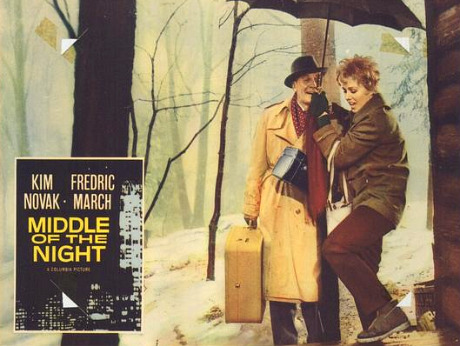
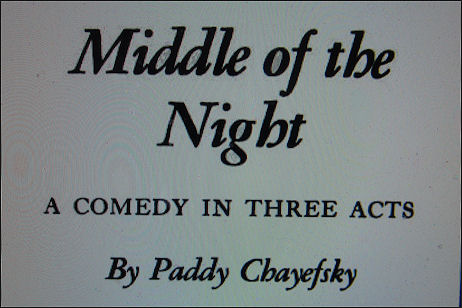
I’ve been a Paddy Chayefsky fanatic for as long as I can remember, but until last week I’d never seen Middle of the Night (’59), a May-December romance drama that Chayefsky adapted from his stage play. It meant having to buy a whole Kim Novak DVD package but a voice told me right away, “Now is the time…you can’t put off seeing a serious Chayefsky work, even a lesser one, any longer. Do it.”

It’s about Fredric March, a recently widowed 56 year-old who runs a Manhattan clothing business, having an affair with Kim Novak, an insecure 24 year-old divorcee. It’s a grim, grim film — even the off-screen sex feels like a vague downer of some kind. But it also feels honest and even courageous in the sense that relatively few 1950s films painted frank portraits of big-city despair and depression.

Middle of the Night is a dirge — the kind of movie that you can easily respect but otherwise requires a certain effort to get through. Right away I was telling myself “this is good but I’m not enjoying it, but I’m determined to stay with it to the end because it’s a Chayefsky thing and is obviously well acted, especially by March and Novak and Albert Dekker, and because it has some fascinating 1959 footage of midtown Manhattan and yaddah-yaddah.”

When I say “well-acted” I mean according to the mode and style of 1950s acting, which tended to be on the formalistic, speechifying, straight-laced side. (Which is why the internalized styles of Brando, Clift and Dean were seen as huge breakthoughs.) I found myself wishing that director Delbert Mann has asked everyone to tone it down a bit. Nobody mutters or stammers or speaks softly, or struggles with a thought.

Middle of the Night is about loneliness and guilt and fear of social judgment that you’re not behaving as you should (or as your family wants you to behave), and the opposing notion that you may as well lunge at whatever shot at temporary happiness that comes along because life basically sucks and no one gets out alive. It feels cleansing to come upon an Eisenhower-era drama that admits that a fair percentage of people are miserable (even or perhaps especially those who are married) and explores this situation in some detail, and with the usual blunt eloquence that you get from any Chayefsky work.


The original stage play is described as a “comedy”? By what planetary standard?

Everyone in the cast (including Lee Grant and Martin Balsam as March’s daughter and son-in-law) walks around with a certain melancholy under their collar, unhappy or at least frustrated but committed to keeping up “appearances.” God, what a self-torturing way to live!

A drama about a love affair has to have some kind of basic chemistry going on. There are some couples you can accept as lovers in a film or a play, and others you just can’t. And I’m sorry but I was having real trouble imagining a perspiring, buck-naked March sliding and slithering atop a damp and moaning Novak. Just writing that sentence creeps me out even now. There are some people you’d rather not think about in a sexual context and the older March, beginning with his performance in The Best Years of Our Lives (’46), is one of them — no disrespect intended. His Middle of the Night character is supposed to be in his mid ’50s but March was around 61 or 62 when the film was shot, and he was evidently never much of a 24 Hour Fitness guy to begin with. By today’s standards he looks at least 70 if not older. So it feels very weird and strange that Novak would even half-entertain the idea of doing this guy. Then again March always seemed genuine and grounded as an actor — you always believed he really felt what he was saying.

Choice Middle of the Night dialogue (courtesy of the IMDB):

Jerry Kingsley (i.e., March’s role): “Listen, sonny boy. Love, no matter how shabby it may seem, is still a beautiful thing. Everything else is nothing.”

Walter Lockman (i.e., Dekker’s part): “I haven’t had ten cent’s worth of life! Not a dime! Believe me!” And this: “When they bury me, they can put on the gravestone, ‘This was a big waste of time.'”

Gallo

This 2004 audio interview between Vincent Gallo and Hikari Katano is thrilling. It reminds me of what fun it’s been to speak to Gallo — the guy is fierce, blazing. He says some stuff about Eric Roberts and Julia Roberts that you may not believe, but you have to at least consider it. Thanks to HE reader 90027 for the link.

“Dead” To The Studios?

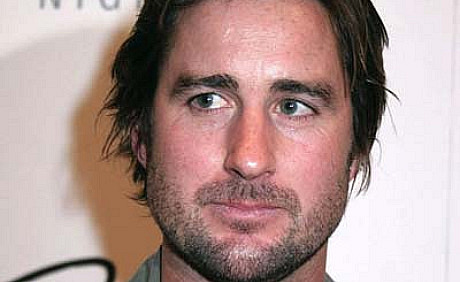
New York/”Vulture” hip-hop homies Willa Paskin and Claude Brodesser-Akner have roughed up Middle Men star Luke Wilson in a piece about his stalled career. Maybe “stalled” is putting it too harshly. But “diminished” and “not happening like it was five years ago” are fair. The bottom line is that Luke is a good guy. He was perfect in The Family Stone. His direction of The Wendell Baker Story was charming and winsome. He just needs to (a) get lucky again and (b) drop a few pounds.

“Not so long ago, Luke Wilson was a promising up-and-comer, equally comfortable in quirky indies, dude-aimed bromances, and lady-targeted romantic comedies,” the piece begins. “A few years and questionable choices later, he’s probably best known as the guy trying to sell you cell-phone service in those much-mocked AT&T commercials. What happened?”

Here’s the toughest passage: “‘Luke’s career has become an example of what not to do,’ says an agent. ‘He may be valuable on the independent market, but in the studio world? He’s dead to the industry. He’s in actor’s limbo. He did six movies in 2007, but most of ’em are crap. Instead of doing six bad movies, do one good one. I mean, Vacancy? Are you insane? Putting him into genre thrillers for a paycheck?”

I wrote the following on 11.24.09: “I first saw Luke Wilson’s ‘better 3G experience’ AT&T ad yesterday. My first thought was ‘why is he doing this?’ Then I figured okay, the last thing he did that really connected was his nice-guy-brother role in The Family Stone, and Luke’s last semi-popular Eloi movie was My Super Ex-Girlfriend and…well, there’s also the fact that Henry Poole Is Here didn’t fly and TV ads pay pretty well. Nothing wrong with a little financial fortification.” I guess I was being too generous. I should have applied some judgment.