Letter From A Friend

Three or four days ago Awards Daily‘s Sasha Stone sent me and several others a list of questions for her 2nd Oscar Roundtable discussion. Here’s the article that resulted. The questions + my original responses follow:
Stone: Do you think The King’s Speech was always going to be the film that appealed to the highest number of voters, and that it was only a matter of time before it started winning the big awards?

Wells: Apparently, sadly, yes.

Stone: Or do you think it became the stronger pick as an anti-vote to the rest of the more challenging fare?

Wells: I’m sure that many, many people who wanted/needed that extra emotional oomph factor in their Best Picture preference decided somewhere along the way that they were anti-Social Network to some degree. They looked around for that distinguished huggy bear/comfy-blanket factor, and they found it in The King’s Speech.

Stone: Do you think The King’s Speech is a film that would have won in any year or do you think its popularity is somehow specific to this year, 2010? Does Obama have anything at all to do with it?

Wells: We’re all dealing with just as much of an agitated political/cultural climate under Barack Obama as we were under George Bush, if not more so. I don’t think there’s any connection.

But I’ll tell you one factor that hasn’t yet been brought up. Naysaying The Social Network is a way of conveying a roundabout fuck you to the GenYs and GenXs by the less-hip, less-engaged, less-forward-looking portions of the Boomer and blue-hair community. I’m not saying all boomers and blue-hairs feel this way, but a lot of them, deep down, are essentially telling the younger generation that The Social Network is “a very fine high-end film but it’s yours, not ours….a very smart and strong drama but there’s not much of an emotional arc for the main character and not nearly enough heart and that’s how we feel. Now sit in that chair in the foyer and wait your damn turn. We know you’re nipping at our heels and that you’ll be taking over the industry sooner or later, but we run it now and so KISS OUR COLLECTIVE ASS, you computer-head, iPad-obsessing, insufficiently emotional, Jersey Shore-watching, baby-sipping, hoodie-wearing, sandal-wearing, constantly-texting whippersnappers!”

Stone: Why do you think Christopher Nolan failed to get his third potential Oscar nomination for direction?

Wells (i.e., channelling Stephen Colbert): Because he’s too cold, too British, too geeky-fanboy-tecchy. He needs to grow up, find his soul and make a nice huggy bear/comfy blanket movie….or he’ll get no love from us!

Stone: Do you think that the recent spate of darker, less traditional Academy Best Picture winners — The Departed, No Country for Old Men, The Hurt Locker only won because they didn’t have a movie like The King’s Speech to go up against? Is The King’s Speech like Titanic in that way?

Wells: In terms of delivering strong emotional currents, The King’s Speech — a very nicely done, highly polished upscale buddy movie — is a modest trickle compared to Titanic‘s damburst. That said, the last four or five years witnessed an abandoning of the Academy’s huggy-bear requirement in its Best Picture selections. The wins of The Departed, No Country for Old Men and The Hurt Locker were evidence of this. If you analogize setting aside the huggy-bear requirement with the pattern of an alcoholic getting sober and attending AA meetings, hailing The King’s Speech is a relapse — the Academy is back to slurping the booze.

Stone: Do you personally think it matters what film wins Best Picture?

Wells: A Best Picture Oscar is a kind of significant statue, a stamp, the chiselling of a thought, a moment in time carved on a Thai mahogany bedpost that will be looked at and contemplated for decades to come.

[Posted from 35,000 feet on an LAX-to-JFK flight — Sunday, 2.6.11, 2:15 am NYC time.]

Adios, L.A.

My sincere (if unsurprised) congrats to Social Network screenwriter Aaron Sorkin for his taking the WGA Award earlier this evening for Best Adapted Screenplay, and also to Inception’s Chris Nolan for winning the Best Original Screenplay WGA trophy — very much deserved. And now for six hours of cramped, sleepless hell on a Delta red-eye to JFK, leaving in 23 minutes.

Loose-Shoe Directors

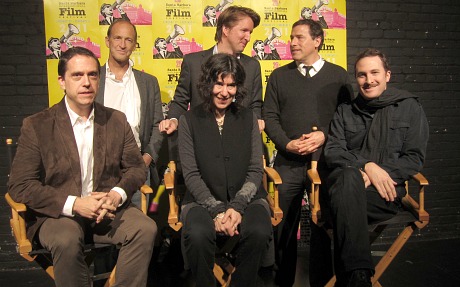
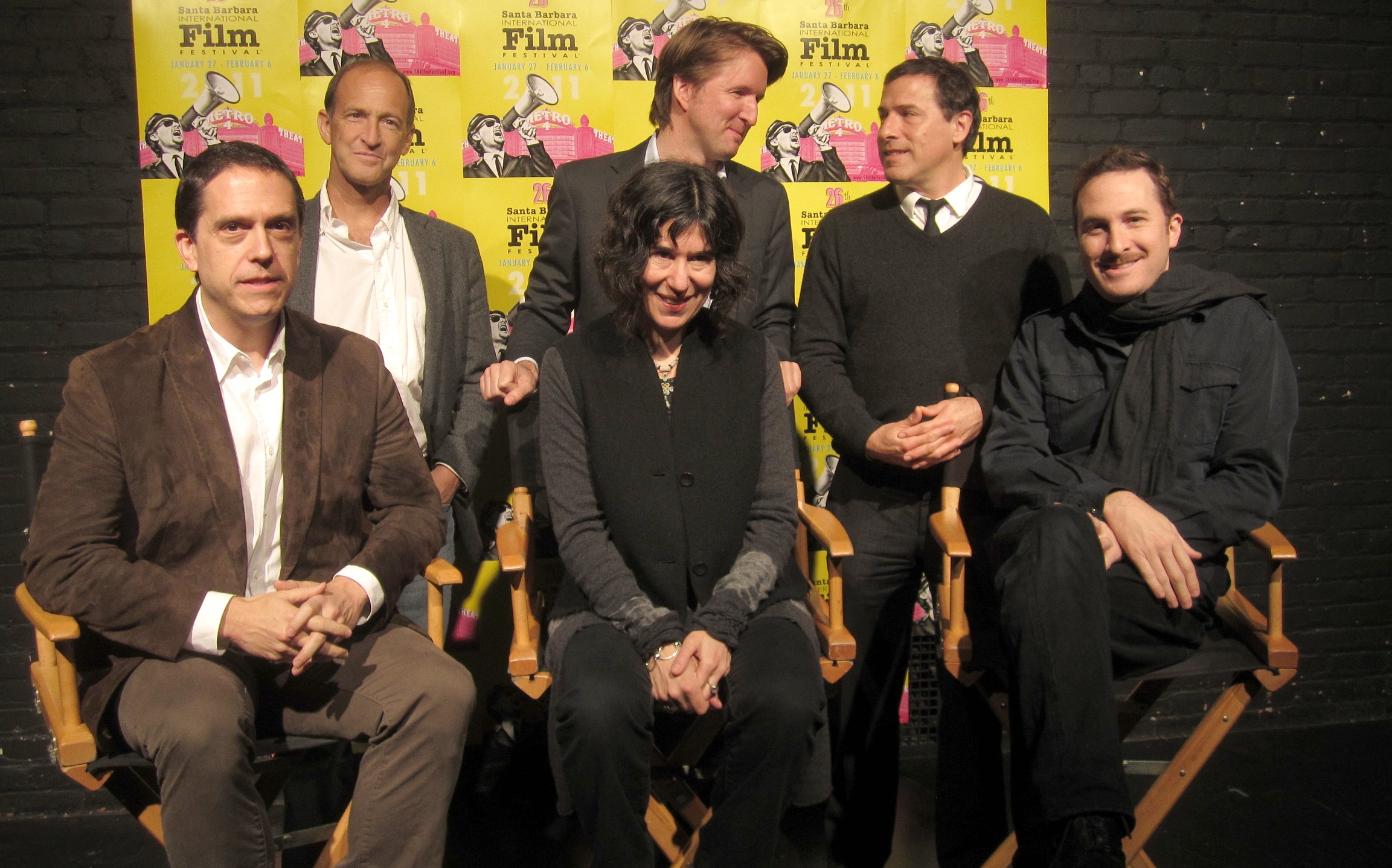
The Santa Barbara Film Festival Director’s panel concluded about four hours ago. I don’t know why it’s taken me so long to post but here it is. Peter Bart moderated a discussion between Black Swan‘s Darren Aronofsky, Inside Job‘s Charles Ferguson, The King’s Speech‘s Tom Hooper, Toy Story 3‘s Lee Unkrich, The Fighter‘s David O. Russell and Winter’s Bone‘s Debra Granik.

Aronofsky took the prize, if you ask me. Funny, fast on his feet, honest, straight dealer. Hooper and Russell tied for second place. Unkrich, Granik and Ferguson tied for third.

Bart’s two best lines: (a) “Last year we had [the formerly involved] Kathryn Bigelow and Jim Cameron. Have any of you ever hooked up with another director?,” and (b) “He who defers rarely sees.”

I was jerked awake when Russell used the term “movie gods,” although he didn’t mean it in an HE way. He was referring to the gods who decide which films will be green-lighted and which won’t be. But it was flattering nonetheless to think that the term is catching on to some degree.

Aronofsky #1: “Actors are always in control. At is most intense movie acting is a 30-second burst of emotion and then we call cut. So I never pushed Natalie [Portman] too close to the edge. Working with Mickey Rourke, who doesn’t respect directors or scripts or other facets of the filmmaking process, definitely changed the way I work.”

Aronofsky #2: “An elderly important Italian dignitary came into the theatre before Black Swan was about to screen at the Venice Film Festival, and he got a long standing ovation. And at the end of it I leaned over and said to him, ‘I’m really, really sorry for what’s about to happen.”

Aronofsky #3: ” I could play Russell or Hooper. We could all say each other’s lines. But on February 28th, we’re all going to get back to work.”

Virtuosos

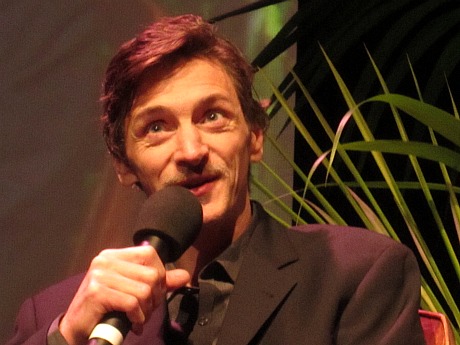
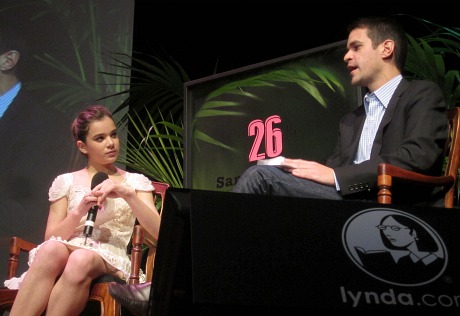
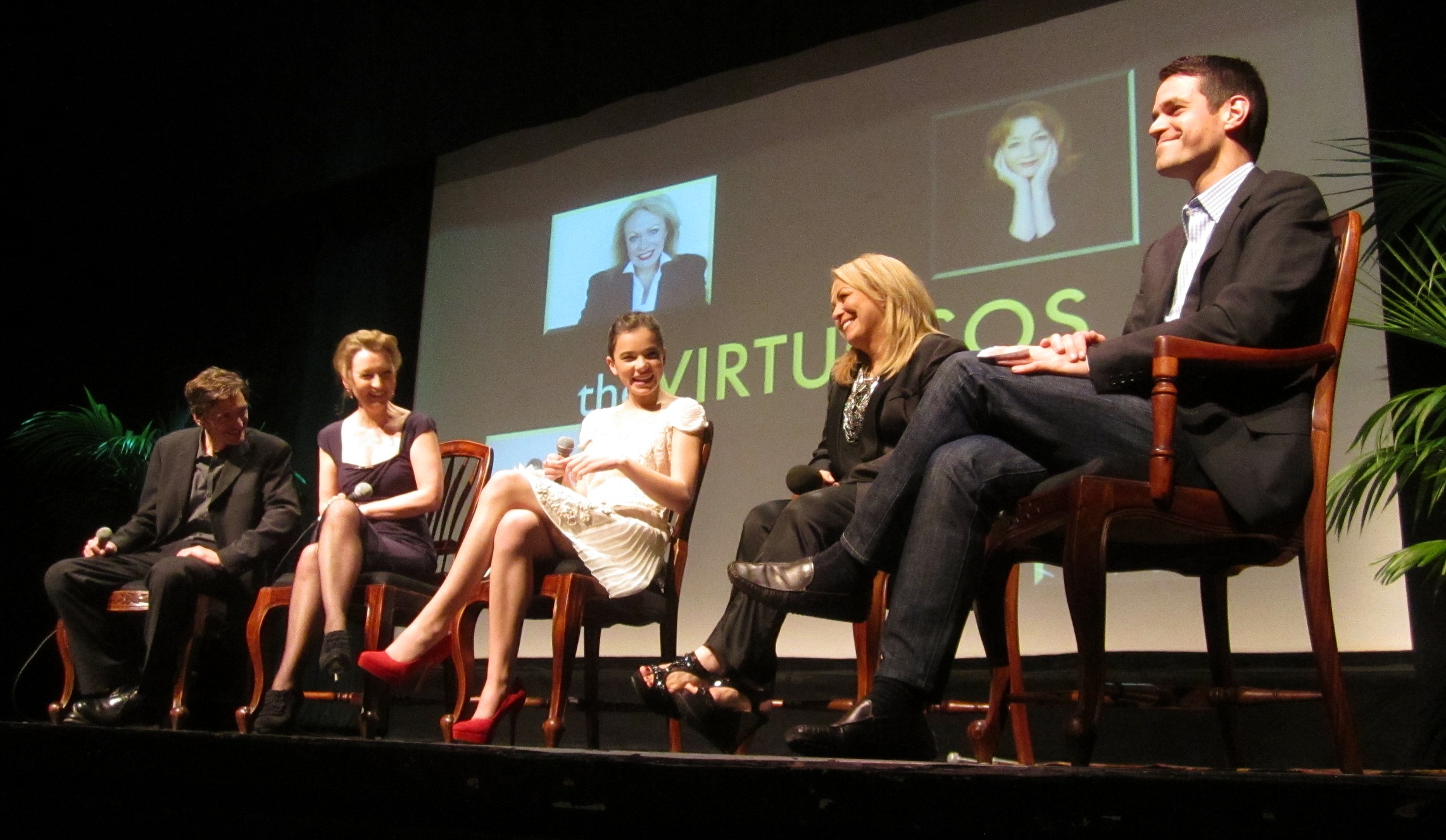
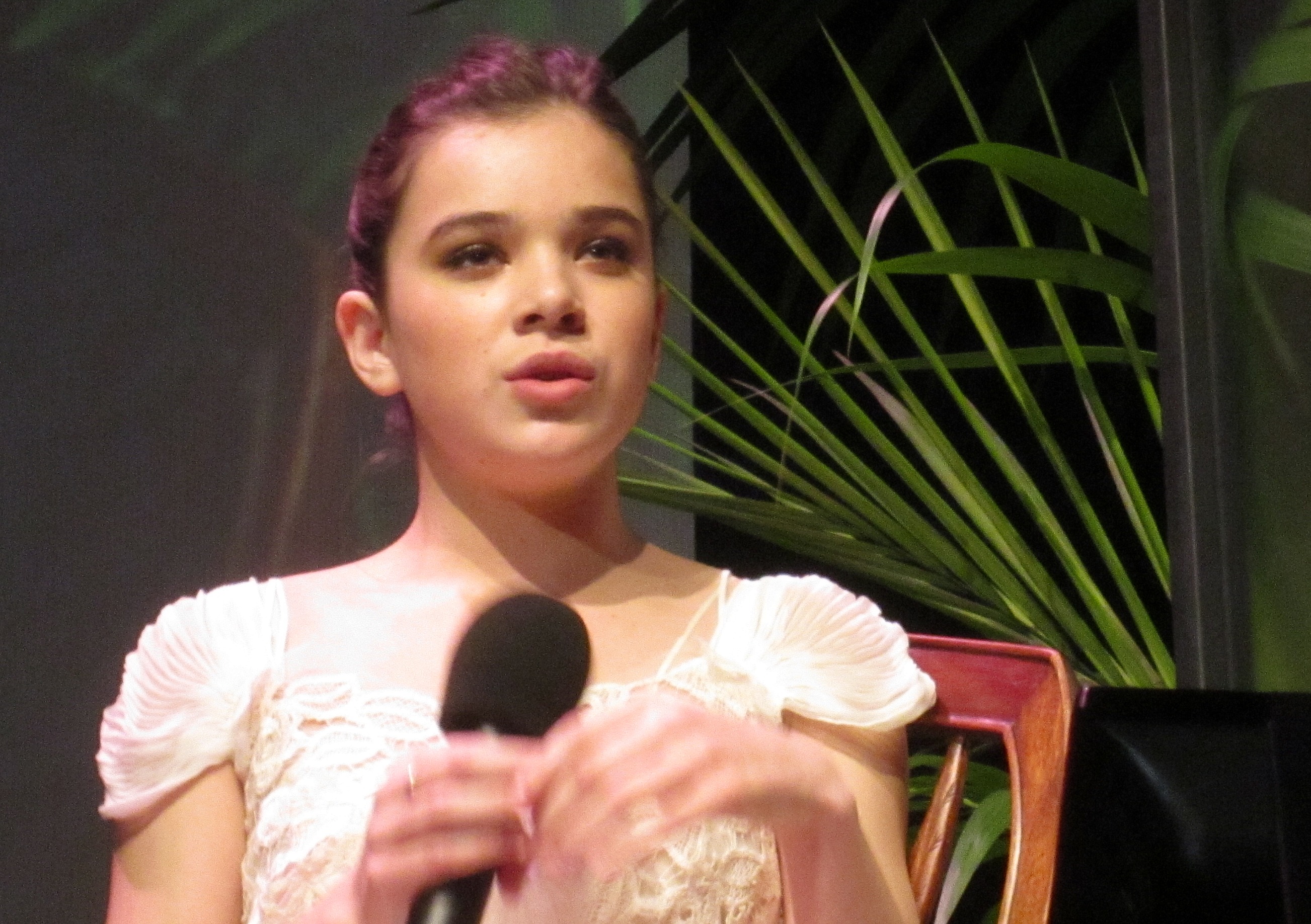
Entertainment Weekly‘s Dave Karger handled things quite nicely as the moderator of the Virtuosos Award ceremony at the Lobero last (i.e., Friday) night. The honorees were Another Year‘s Lesley Manville (funnier and looser than she was before the Oscar nominations), Winter’s Bone‘s John Hawkes (relaxed, funny, self-deprecating), Animal Kingdom‘s Jacki Weaver and True Grit‘s Hailee Steinfeld (much taller than she seems in the film).


Hailee Steinfeld

Big Guru Con

Toronto Star critic Peter Howell has put on his straw hat and white bucks and red-and-white sport jacket and done the old soft-shoe about how the Gurus of Gold don’t dictate or act as tastemakers — “we just predict.” That’s their claim, yes, and to some extent it’s true.

But the Gurus know full well (and David Poland most of all) that when they vote for a certain film as the likeliest Best Picture nominee or winner it becomes a beacon for the Zeligs out there, for all the Academy members who aren’t sure where to turn and are basically just looking for warmth and assurance and the safety of a crowd.

And that is what people all over the globe want more than anything else — not to stand tall and alone and be “right” (whatever that means), but to know the balm of acceptance and companionship and bon ami and the embrace of brothers and sisters.

The urge to blend in and belong is a very strong one. It exists, I would imagine, in about 80% or 90% of the human population. The rebel, iconoclast and independent thinker club (to which I belong) constitutes, at best, 10% of humanity, and perhaps even less. And the Gurus know this, and yet they pretend that they’re just idly sitting on the sidelines, watching the action in the center arena like hockey fans and calling it as best as they can, and they are so full of shit I can barely stand it. They are kingmakers and they know it.

Howell puts it thusly: “A fellow [Sundance] traveller looks up at me from beneath his snow-fringed toque and exclaims, ‘Hey! Aren’t you one of those Gurus o’ Gold?’

“‘I am indeed,’ I replied, proud at my first street recognition as a Guru, but also a little wary. I noticed with relief that he had no shotgun. Utah is part of the Wild West, after all.

“‘Why are you guys bailing on The Social Network?’ my transit inquisitor continued. ‘Why are you following the other sheep and promoting The King’s Speech?’

“I sighed deeply and began the critic’s speech I’ve given many times on this topic. I love The Social Network, but it’s my sworn duty as a Guru o’ Gold to predict what the nearly 6,000 members of the Academy of Motion Picture Arts and Sciences are likely to choose for Best Picture and other Oscars,” and that’s all.

That’s the ostensible duty, all right, but the final effect is something else entirely.

Moscow Diary

I’m asking myself if I should book a flight to Moscow to catch the 3.31 theatrical opening of Bruce Robinson‘s The Rum Diary. This isn’t the loneliest, saddest and most unloved Johnny Depp film of all time (that would be 1997’s The Brave), but it’s certainly the loneliest of this century. The $65 million film (according to IMDB Pro) is also slated to open in Sweden on 9.23.11.

Forget the Chill Wills Analogy

In the view of Deadline‘s Pete Hammond, a personally-funded FYC Oscar ad, like the one Melissa Leo recently ran for a few days, can be a politically risky thing.

To me, Hammond seemed to be suggesting that the only politically acceptable form of award-season advertising is the kind created and funded by distributors and their highly paid marketing gurus. Heaven forbid that someone like Leo, the Fighter costar who’s a near lock to win the Best Supporting Actress Oscar, might want to elbow her way past the refusal of magazines to put over-45 ladies on their covers by taking some glammy shots of herself and booking a few website ads to show them off.

The ads half-alluded to the fact that Leo is superb in The Fighter, of course, but also to the fact that she’s highly spirited and attractive.

Ads are always judged in terms of style, class and tone, and Leo’s now-disappeared ads, I feel, got it right. They were fine. She looked great. No harm done. We’ve all been so trained to squint our eyes and arch our backs whenever an individual takes out an ad of any kind. Only corporations and major companies can do this!

Hammond’s view is primarily due to faint but lingering memories of the notoriously self-generated Chill Wills Alamo ad campaign of 1960, which sought to generate support for Wills’ Best Supporting Actor-nominated performance. It was widely seen as an embarassment, and it failed to boot — Peter Ustinov won for his performance as Lentulus Batiatus in Spartacus.

Leo told Hammond that she “did hear a lot of very positive comments, particularly from women of a certain age who happen to act for a living and happen to understand full well the great dilemma and mystery of getting a cover of a magazine. I also heard there were negative comments, but no one said them to my face, sadly. I like to hear what people think. I could explain myself.”

Realm of the Surreal

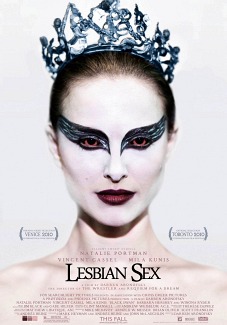
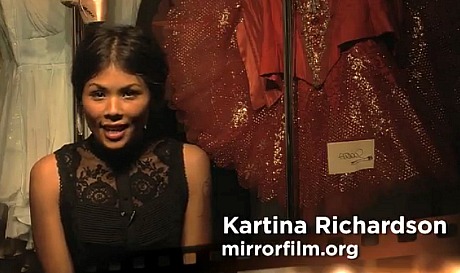
Here’s an engaging At The Movies segment in which mirrorfilm.org’s Kartina Richardson delivers her Four Faces of Nina explanation of Darren Aronofsky‘s Black Swan, and about how the film is essentially about opposing identities at war.


Kartina Richardson of mirror.org

The four psychological components of Natalie Portman‘s ballet dancer, Richardson explains, are the imp, the baby, the housekeeper and the center. But the main-event battle is between the imp, the nihilist spreader of chaos, and the fretting housekeeper. The center laments as the imp “sabotages,” the baby wails and the housekeeper “cleans up the mess.” Meanwhile “the bathroom is Nina’s only escape from public scrutiny,” Richardson notes.

Here is Richardson’s prose rundown of same.

The At The Movies video is also worth watching if you haven’t caught co-host Iggy Vishnevetsky, the brilliant Russian wunderkind critic, in action. He has a smooth voice and manner, but has been instructed to read copy and behave exactly like all movie talk co-hosts have read and behaved since the beginning of time, and so he comes off as having been constrained and almost half-neutered.

When Iggy informs co-host Christy Lemire that he doesn’t agree with her praise of Black Swan, you can feel the both of them furiously projecting “calm” and “gracious” and mellow-yellow glide patterns. I’m sorry, Roger, but as bright and stimulating as this show has been so far Iggy and Christy are, in a McLuhanesque sense, just two more Stepford co-hosts.

I wrote a year or two ago that the only way to break through this robot bind (and overcome the demands of those experienced TV producers who always make everyone sound and behave exactly the same) is to introduce drinks on the set. Glasses of wine or light beer, I mean — no hard stuff. And allow/encourage Iggy and Christy to imbibe and get gently bombed during taping. And show the glasses of cheer as they speak. Not to make them slurry or sloppy or rude but irreverent and happy and a little more impulsive.