Panned Lincoln, Yes, But Not Damningly

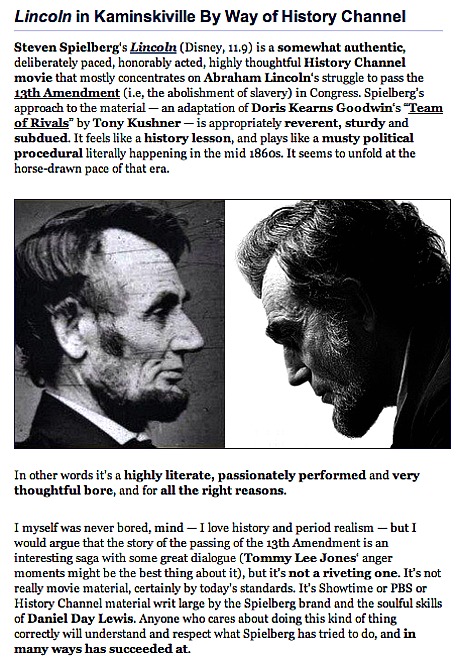
I just happened to re-read my initial Lincoln review, which I posted on 11.8.12. I have a reputation of being a knee-jerk Spielberg hater, yes, but what I said here was fairly perceptive and on-point, I think. Measured, contained, judicious. I didn’t just crap all over it. Yes, I am very, very proud of having been part of the team that prevented…okay, that hit this film with enough bee-bee pellets so that enough Academy members felt discouraged from giving it the Best Picture Oscar. But I wrote about it with an even hand, I think. I said what I felt I had to say in just the right way. Final sentence: “The bottom line? Lincoln is a good film, deserving of respect and worth seeing, but it happens at an emotional distance and feels like an educational slog.”

Best of First Half of Second Decade…So Far

In late ’09 I posted a tally of the 42 Best Films of the First Decade of the 21st Century. A little more than four months from now we’ll be at the halfway mark of the second decade — 2010 through 2014 or five years. Obviously I should wait until late December but here’s a temporary list of the best so far, and then I’ll update between Christmas and New Year’s Eve….fair enough? Doing a decade or half-decade sum-up requires harshness. You throw out everything except the real dead-to-rights bell-ringers. Every year people put certain films on their Ten-best lists because they feel they should (peer pressure, ad pressure, political correctness). Two or three years later those “should” choices go right out the window.

So far the 2010 to 2014 list includes 35 films. Some of these will have to get chopped by year’s end. The five best of the last four years and eight months (in this order & including not-yet–opened festival viewings): Tie between The Wolf of Wall Street and The Social Network, followed by Leviathan, Zero Dark Thirty, A Separation.

Best of 2010 (in this order): The Social Network, The Fighter, Black Swan, Inside Job, Let Me In, A Prophet, Animal Kingdom, Rabbit Hole, The Tillman Story, Winter’s Bone (10). Best of 2011 (ditto): A Separation, Moneyball, Drive, Contagion, X-Men: First Class, Attack the Block (6). Best of 2012: Zero Dark Thirty, Amour, Beasts of the Southern Wild, Barbara, The Grey, Moonrise Kingdom (6). Best of 2013: The Wolf of Wall Street, 12 Years A Slave, Inside Llewyn Davis, Her, Dallas Buyers Club, Before Midnight, The Past, Frances Ha (8). Best of 2014: Leviathan, Locke, Wild Tales, Ida, The Grand Budapest Hotel (5).

42 Best of the First Decade (’00 to ’09): Zodiac, Memento, Traffic, Amores perros, United 93, Children of Men, Adaptation, City of God, The Pianist, The Lives of Others, Sexy Beast, Avatar, There Will Be Blood, Michael Clayton, Almost Famous (the “Untitled” DVD director’s cut), 4 Months, 3 Weeks and 2 Days, Collateral, Dancer in the Dark, A Serious Man, Girlfight, The Departed, Babel, Ghost World, In the Bedroom, Talk to Her, Bloody Sunday, No Country For Old Men, The Quiet American, Whale Rider, Road to Perdition, Open Range, Touching the Void, Maria Full of Grace, Up In The Air, The Hurt Locker, Million Dollar Baby, The Motorcycle Diaries, An Education, Man on Wire, Revolutionary Road, Che and Volver.

Trumpets, Fanfare, Come-Ons

The Film Before The Film, created by Nora Thoes and Damian Perez, Berlin-based students at the BTK University of Applied Sciences, and running 9 minutes plus 2 and 1/2 minutes of end credits, covers the evolution of main-title sequences. Nothing stunning but a solid comprehensive job. No mention of Saul Bass‘s Ocean’s 11 titles sequence? I’ve always hated those laser blue titles used for the Salkind’s ’78 Superman…too slow, repetitive and show-offy. (Posted this morning by Slashfilm‘s Peter Sciretta.)

Read more

All That Jazz

I never liked school or submitting to any kind of group dynamic. So I avoided Alcoholics Anonymous when I gave up the hard stuff (particularly my nightly doses of vodka and pink lemonade) in ’96, and I never did AA after I gave up wine (i.e. my beloved Pinot Grigio) and the occasional beer in March 2012. If I had a Bible it was Pete Hamill‘s “A Drinking Life” — lone wolf, cold turkey, do it yourself, my action and not “God’s,” etc. Sobriety has been pretty wonderful for the last 30 months and has ushered in unexpected clarity and stability in many areas of my life, but attending a few Al-Anon meetings in Santa Monica back in ’07 and ’08 (at the behest of a girlfriend) reminded me that I wasn’t born to follow.

But last Friday I was talking to a sober filmmaker about sobriety, and I was reminded that opening up and talking about the welcome changes always ushers in good feelings. So before I knew it I was asking him about attending a meeting somewhere. He thought I might enjoy it because of the beautiful, eccentric women that attend a particular meeting at Cedars Sinai on Sunday evenings. (“If you’re looking for a love at an AA meeting, the odds are good but the goods are odd,” is how he put it.) He turned me on to a sober friend who attends the Cedars Sinai gathering. So I talked to the friend and he gave me the particulars and said he’d save me a seat. I showed up just in time at 6:59 pm. I stood in the back for the most part and sat on a garbage can for about 20 minutes. I never found the sober guy.

Read more

For Those Who Were There

A friend talked me into attending the U.S. premiere of Neil Norman‘s Pushin’ Too Hard, a doc about the mid ’60s SoCal rockers The Seeds, at the Egyptian last Saturday night. Yeah, I know…who? The Seeds formed in ’65, put out only one serious Top-40 hit (“Pushin’ Too Hard“) in ’66, and released three medium-selling L.A.-area singles (“Can’t Seem To Make You Mine”, “Mr. Farmer” and “A Thousand Shadows”) before breaking up in ’68. This happened largely due to the eccentric wanderings of lead singer Sky Saxon (a.k.a., Richard Marsh). Like many under-equipped psychedelic adventurers of the ’60s, Saxon eventually dropped too many tabs and wound up living, mentally-speaking, in his own private fruit-loop Neverland. He died at age 71 in ’09.

The film feels a little too long — it could stand a trim of a good 20 minutes if not more. It doesn’t feel like a pro-level job — a bit on the ragged, sloppy-ass side — but that fits in with the low-rent, garage-bandy Seeds sound and the rep they had. It’s an okay film — a good-enough, second-rate doc about a band that went a little beyond flash-in-the-pan status, but not by much. The tone of the narration by legendary ex-groupie Pamela des Barres (who was sitting right behind me) feels too spunky and self-consciously “spirited”, like she’s narrating the history of Shindig, the ABC rock-music series.

Read more

It Keeps On

My only disagreement with John Oliver is that the Michael Brown liquor store shoplifting video is irrelevant. It’s certainly a non-issue as far as the legality of that cop shooting the unarmed Brown several times is concerned, but it’s probably relevant as far as offering an indication of Brown’s attitude and mindset just before the shooting.

Read more

Grand Scheme

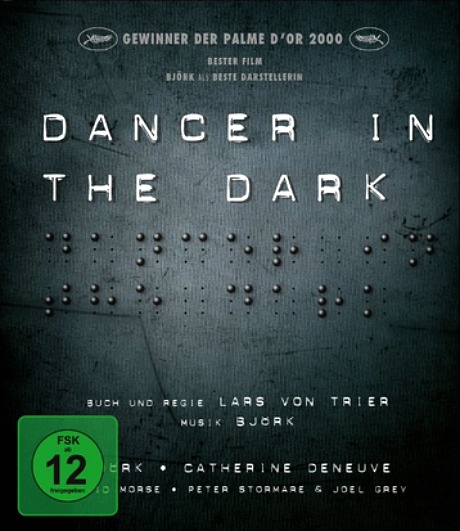
For its depiction of musical sequences as neurotic fantasies occuring in the mind of a tragic heroine (Bjork) who can’t cope with reality, and for its use of dozens upon dozens of stationary video cameras to cover the dancing and singing, Lars von Trier‘s Dancer in the Dark is one of the few groundbreaking musicals in cinematic history. (A new Bluray version is out this month.) The other biggies are (b) Gene Kelly and Stanley Donen‘s On The Town, the first musical shot in real-world locations, (c) Richard Lester‘s A Hard Day’s Night, the first semi-comical, nouvelle vague-styled rock musical featuring the first-ever MTV music video sequence; and (c) Bob Fosse‘s Cabaret, in which all song-and-dance numbers were performed on a club stage with nobody “breaking out in song” within the narrative.


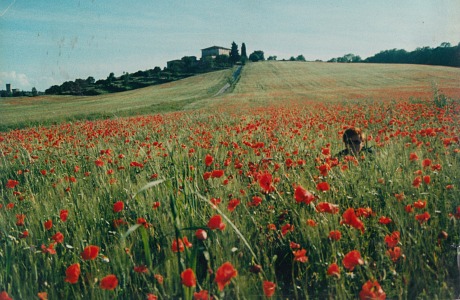
Dozens of acres of tall grass and red flowers on some grand estate somewhere south of Siena, Italy. Taken in late May of 2000. I was detoxing from the Cannes Film Festival, which had screened Lars von Trier’s Dancer in the Dark a week earlier to great fanfare.

Read more

We’re Dead

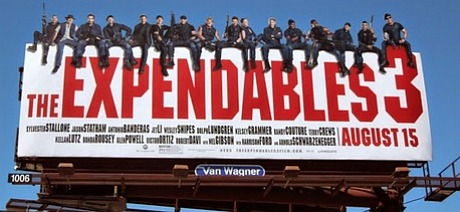
Sylvester Stallone‘s Expendables franchise is all but toast. Domestically for sure. The Expendables 3 flopped this weekend with a lousy $16.2 million haul, or about $10 million shy of expectations. All three Expendables films have been B-movie “product,” made with a smug and cynical attitude. “Yo! We’re just farting around here and the public is in on the joke so fuck it, y’know?…we’re all getting well paid and the chumps are lining up so why fuck with the formula?” The Expendables (’10) cost $80 million to make and it earned $241 million worldwide with a Rotten Tomatoes rating of 41%. The Expendables 2 (’12) cost $100 million to produce with a worldwide gross of $311 million and a 65% Rotten Tomatoes score…getting good at this! The Expendables 3 cost $90 million but was heavily pirated (over 5 million downloads) and the word must have gotten around that it’s a piece of shit. It takes the public years to catch on. With very few exceptions (Rocky, First Blood, Copland) Stallone has doggedly starred in or directed mediocre films. That’s what he does. He’s in it for the money and the fine cigars. He had a major-league franchise that had a potential to be something more but he blew it. What’s he gonna do, create another popular franchise? He’s done.

Self-Referencing Fourth-Wallers

In this third-act scene from Howard HawksHis Girl Friday (’40), Cary Grant dismisses a prediction of career doom by saying “listen, the last person who said that to me was Archie Leach a week before he cut his throat.” Grant was referring to himself, of course. In a first-act scene in Warren Beatty and Buck Henry‘s Heaven Can Wait (’78), Dyan Cannon told Charles Grodin that she should be “canonized” for conspiring to kill her vile multi-millionaire husband, Leo Farnsworth. Name other films and scenes in which actors briefly stepped out of the film by mentioning their off-screen selves or reputations — anything along those lines.

Who Needs Sleep?

For whatever reason…exhaustion?…my body decided to ignore all of the usual summonings this morning (including the kitten lying on my head and licking my ear) and sleep until almost 11 am. After crashing around 1:30 am. Nine hours and change. My normal routine is to bag maybe six hours plus an hour of Twitter before rising. It sure feels good to get more sleep than I need on occasion (my usual idea of a nice long slumber is seven to eight hours), but I’ve always fought against going to bed before midnight. I sometimes take hour-long naps around 4 or 5 pm, except they aren’t naps. When I go under I sink to the bottom of the pond. A lot of people sleep in the manner of dogs or cats — they float on the surface and are woken by the slightest ripple. Not me.

I know, I know…I posted a sleeping riff 17 months ago but what the hell.

My inability to crash before midnight or 1 am is my parents’ fault. They sometimes made me go to bed at 8 or 8:30 pm when I was grade-school age. I remember being furious about lying under the sheets when it was still light out during the summer months, especially when I could hear friends of mine still playing in the street below. I used to lie there and seethe and ask God why I had such fucked-up parents. I resolved to stay up late from those days on. I never made my kids go to bed too early when they were six or seven or eight — I didn’t have them on very many school nights (my ex had custody) but when I did they always stayed up until at least nine or so. Weekends were free-for-alls. Sometimes it was a chore to get them to crash around midnight or 1 am, especially Dylan.

Read more

Home Depot Whoop-Ass

Denzel Washington‘s Creasy in Man on Fire made a big impression on me. Released in 2004 and probably hatched in ’02, it was basically a metaphorical 9/11 payback film — a violent conservative fantasia about a no-bullshit ex-CIA badass going after “the other” (i.e., third-world gangstas, creeps, monsters) and making them howl before killing them with impugnity. I’m a fair-minded, violence-averse, somewhat egotistical lefty humanist in Urban Outfitters socks but I’ve wanted more Creasy ever since. Now, finally, The Equalizer is bringing it all back home.

Stood Up, Did The Right Thing

I caught Rory Kennedy‘s Last Days In Vietnam a couple of months ago at the L.A. Film Festival. It held me, got to me, melted me down. It’ll air next April on PBS’s American Experience but please, please see it theatrically when it opens around the country in September and October (New York’s Sunshine and Lincoln Plazas on 9.5, L.A.’s Nuart on 9.19, the S.F. Bay Area on 9.19). Trust me — it’s a truly exceptional doc. My only beef is that Kennedy should have spoken to some former North Vietnamese combatants and government guys and gotten their perspective.

“I felt profoundly moved and even close to choking up a couple of times while watching Last Days in Vietnam yesterday at the Los Angeles Film Festival,” I wrote on 6.13. “The waging of the Vietnam War by U.S forces was one of the most tragic and devastating miscalculations of the 20th Century, but what happened in Saigon during the last few days and particularly the last few hours of the war on 4.30.75 wasn’t about policy. For some Saigon-based Americans it was simply about taking care of friends and saving as many lives as possible. It was about good people bravely risking the possibility of career suicide by acknowledging a basic duty to stand by their Vietnamese friends and loved ones (even if these natives were on the ‘wrong’ or corrupted side of that conflict) and do the right moral thing.

Read more