Name Five Presidents

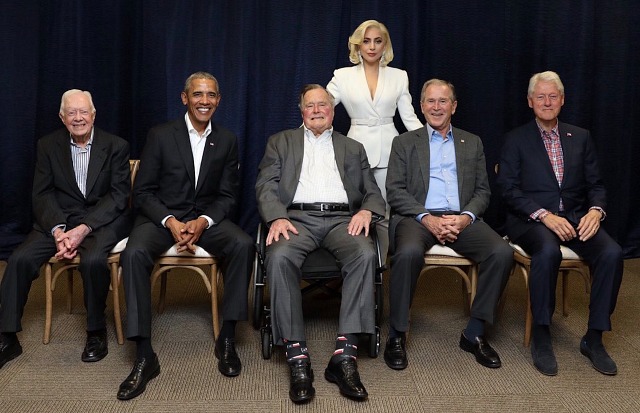
George H.W. Bush turned 93 last June. I don’t know what’s going on with the poor guy, but one look and you’re reminded of that old Bette Davis saying that “old age isn’t for sissies.” I’ve long sensed that I’ll follow in the steps of Kirk Douglas or Norman Lloyd, but remind me to take an overdose of something before I get to this stage.

Read more

Reynolds Woodcock’s Odd Passion

Initial reaction #1: World-class actresses have always had a certain X-factor quality, an unmistakable spark of passion or depth of feeling when the camera gazed upon them. They didn’t have to be classically beautiful (i.e., Bette Davis) or boudoir sexy, but they had to have that combustible quality. I realize that all cultures are constantly evolving and that aesthetic standards change with them, but Vicky Krieps, no offense, doesn’t have that “it” quality. She just doesn’t.

Krieps strikes me as an arresting actress as far as the task of conveying complex emotions is concerned, but she clearly lacks magnetism. She reminds me in some ways of Brief Encounter‘s Celia Johnson — an emotionally relatable but spark-free actress with plain, unremarkable features. In the ’50s, or the period in which Phantom Thread occurs, Krieps might have had trouble being cast as a housemaid or shopkeeper or a barely-noticed office clerk, much less as the costar of a film about an intense, highly-charged relationship.

Key trailer quotes: “When I was a boy I would hide things in the liners of garments…things that only I knew were there….secrets.” “So why are you not married?” “May I warn you of something?” “Perhaps I’m looking for trouble.” “Stop!” “There’s an air of quiet death in this house.” “You’re not cursed, you’re loved.” “What game? What precisely is the nature of my game?” “Are you thinking of ruining my evening? And possibly my entire life?” “Stop it!” “Whatever you do, think carefully.”

Initial reaction #2: I’m not feeling the crazy in this trailer. The theme seems to be “leave this artist alone to create what he needs to create…if you fuck with his system or his behavior or obsessive work patterns, you will bring on nothing but trouble.” It seems to basically boil down to Rex Harrison‘s song of complaint and lament in My Fair Lady, “An Ordinary Man.” Key Lyric: “Let a woman in your life, and your serenity is through.”

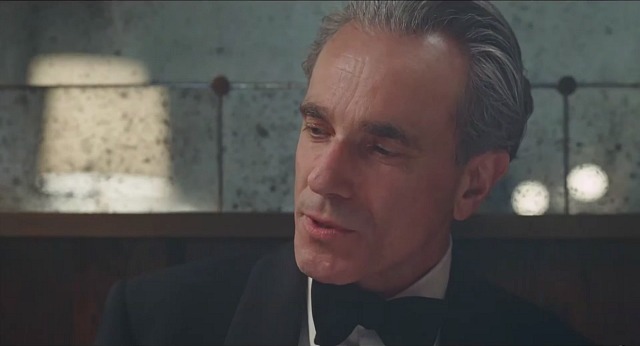
An older, graying, work-obsessed couturier named Reynolds Woodcock (Daniel Day Lewis) falls for a significantly younger but plain-featured woman named Alma (Vicky Krieps), and at first everything is delightful. But as the initial passion begins to recede it becomes clear that Alma has certain feelings and convictions that clash with Reynolds’ realm. Reynolds’ sister Cyril (Lesley Manville) quietly warns Alma not to interfere with his creative process as Alma begins to reveal a dark, possibly even perverse side to her nature. What began as a love affair begins to transform into a battle of wills and passions.

Initial reaction #3: Where are the hints of Phantom Thread being a classy, upmarket Fifty Shades of Grey, as rumors have had it?

Initial reaction #4: Perhaps Paul Thomas Anderson‘s point in casting the unremarkable looking Krieps was to convey something about the sometimes curious nature of love and passion. You may not see or sense the thing that lights Reynolds Woodcock’s fire, but R.W. certainly does, and that’s all that matters as far as the watching of this film is concerned.

Read more

Better Left Unsaid?

It’s obviously unwise at this point to express any kind of mixed feelings about anyone in the firing lines for sexual assault or harassment. The smart play is to keep your head down and STFU. You’d have to be fairly brutish to not sense the serious trauma and anguish that many women have experienced at the hands of God knows how many powerful, scruple-free jackals out there. But there are…how to put this without sounding like a pig sympathizer? Maybe no way. I should probably just zip it.

A friend noted this morning that James Toback‘s neck is now on the chopping block and asked “where’s it all going to end?” My answer: “It’s just beginning.”

My presumption is that every older, obnoxiously randy swagger-hound (i.e., particularly those who revelled as youths in the nookie heyday of the late ’60s and particularly the quaalude-fed, Sodom-and-Gomorrah-ish ’70s)…any such person who decided long ago that getting laid through the unscrupulous use of power and economic leverage was more important than adhering to basic standards of decency, kindness and compassion…many if not most of these guys are going to experience the howling of the mob and perhaps even in some cases the kiss of steel.

Most of us have lived our lives with an understanding that bad behavior results in punitive measures. This is how any civilized society discourages ugly, intolerable acts — “You fuck up, you know what.” I began to realize this when I was….what, a year old? Every time I’ve made any kind of mistake or broken any rule, the same admonishments have applied. Not cool, dude. Correct your behavior or else.

But those who’ve lived and operated within the quiet, cushioned realms of the entertainment industry have been taught a different lesson: “Within limits you can get away with a lot of stuff, especially if you’re loaded and don’t behave like an absolute animal.”

If life tells you again and again and again and again that you can skate or sidestep out of the usual consequences, after a while you’ll start to believe that you’re largely bullet-proof. It’s bad conditioning, obviously, but it happens.

43 years ago Noah Cross said to Jake Gittes, “I don’t blame myself. You see, Mr. Gittes, most people never have to face the fact that at the right time and the right place, they’re capable of anything.”

Another thing no one has mentioned: the film-culture guys who’ve been accused of sexual assault or harassment so far (Devin Faraci, Cinefamily’s Shadie Elnashai and Hadrian Belove, Harry Knowles, Harvey Weinstein, et. al.) have not been blessed with matinee-idol looks.

Handsome or otherwise presentable smoothies in the tradition of Brad Pitt, Montgomery Clift, Cary Grant, Warren Beatty, George Clooney or Gregory Peck along with God knows how many hundreds of thousands of marginally appealing guys have never, to go by most accounts, had to resort to unsavory means of persuasion. Largely, one presumes, because they had the pick of the litter but also because life and circumstance taught them to be well-mannered and respect others. Would that this were true for all men.

Hoodie Guy

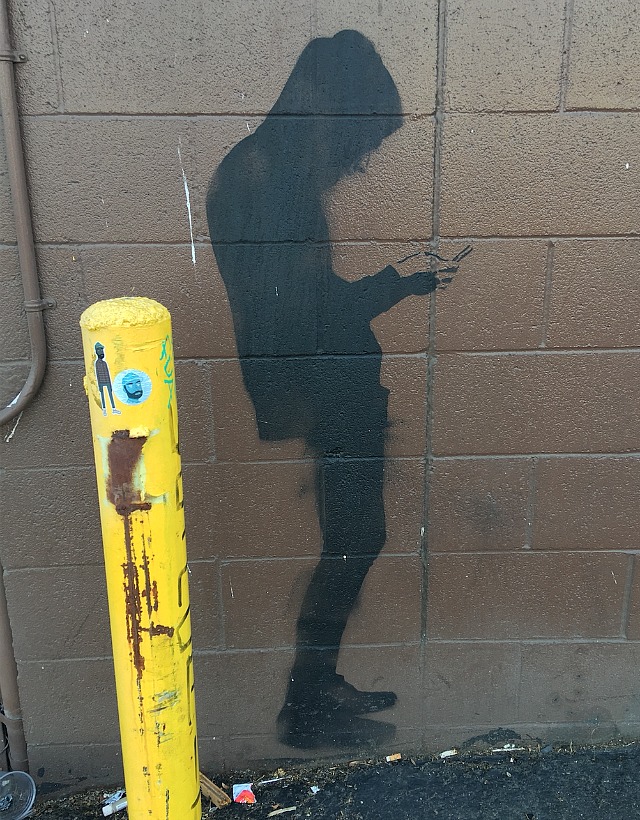
This Banksy-like figure, nicely painted in a delicate, ghostly, air-brushed style, is on a wall adjacent to the big Rite-Aid parking lot at the southwest corner of Fairfax and Sunset. I was pulling out yesterday on the bike and happened to notice it. Whoever painted this certainly isn’t trying to snag a lot of attention. It’s way off to the side and smaller than life. If it’s not a real Banksy it’s a pretty good imitation.

Purity Guillotines

During an interview on last night’s Real Time with Bill Maher, former Hollywood Reporter editor Janice Min said something that I’m not allowed to say for fear of being accused of being some kind of Harvey Weinstein or Roman Polanski ally, which I’m not. The thing that Janice said (and my heart skipped a beat when she blurted it out) was “I feel like we’re in a little bit of a Robespierre French Revolution time period.”

Translation: We’re seeing the beginnings of a movie-industry version of “the terror,” or a period in post-revolutionary France over a ten-month period (September 1793 to July 1794) that was marked by mass executions of “enemies of the revolution.” I don’t want to go out on a crazy limb but a distant cousin of this mentality is alive and well in Hollywood right now, and the Robespierre figures are…Jesus, I’m afraid to mention their names. I guess I’m not much of a Danton-esque figure, huh?

Note to Robespierres: I wouldn’t have mentioned this analogy, guys, if it hadn’t been for Janice Min. I would have stayed shivering and huddling in my little mouse hole, trust me, but Janice mentioned the unmentionable. I agree that all sexual predators must be identified, shamed and prosecuted, but Robespierre-like tendencies are worth watching out for.

Bill Maher: “SNL didn’t do Harvey Weinstein jokes, and got shit about it. James Corden did some and he got shit about it. So which is it? Aren’t publicists telling their clients not to talk about it…?

Janice Min: “Oh, terrifying! I feel like we’re in a little bit of a Robespierre French Revolution time period.”

Bill Maher: “I would say every week. The purity police, yes.”

The good stuff begins around the 8:05 mark:

The Man Who Wouldn’t Take A Bow

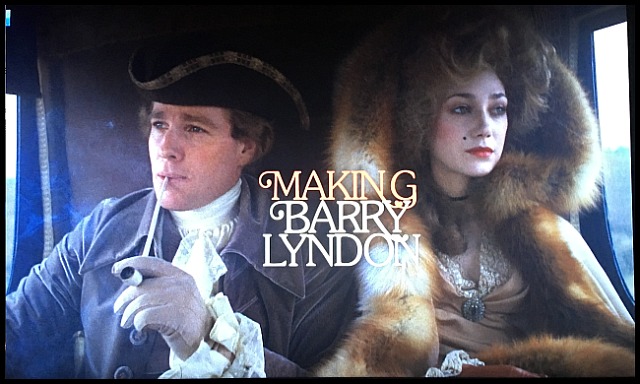
There’s an interesting “Making Barry Lyndon” doc on Criterion’s new Barry Lyndon Bluray. Newly produced by Criterion and running 38 minutes, it features interviews with producer Jan Harlan, Kubrick assistant Leon Vitali, assistant directors Brian Cook and Michael Stevenson, and actor Dominic Savage. It also uses audio clips from a 1976 interview with The Great Stanley K..

But you know what it doesn’t have? Interviews with the once immensely popular Ryan O’Neal as well as costar Marisa Berenson, both of whom are still with us and walking around and doing things. And that seems strange to me, especially in the case of O’Neal. 

There’s no denying Barry Lyndon is O’Neal’s most admired film by far, or that a semi-exalted place in cinema history is assured O’Neal because of it. And yet when the classiest, most blue-chippy Bluray distributor in the world comes calling (as they surely must have), O’Neal refuses to sit down and share?

I suspected at first that O’Neal might not have participated due to illness, as I’d read five years ago that he was dealing with prostate cancer and lukemia. But O’Neal rebounded, at least to the extent that he’s now planning (or was recently planning) to costar in a U.K. tour of A.R. Gurney’s Love Letters with Love Story costar Ali McGraw. (One of the bookings will happen at Wolverhampton Grand Theatre from 11.13 thru 11.18.)

I don’t know when the “Making Barry Lyndon” interviews were captured, but probably last winter or spring, or at the very latest early summer. O’Neal couldn’t afford three or four hours to sit down and chat? Health concerns aside, the only other reason O’Neal might have declined is that 42 years later he’s still smarting over the public’s generally lethargic reaction to Barry Lyndon, and that he still believes it all but killed his career.

O’Neal spent over a year shooting Barry Lyndon. Principal photography took 300 days, from spring 1973 through early 1974 with a break for Christmas. Alas, the film was considered a commercial disappointment and even suffered a mixed critical reception, and O’Neal, poor fellow, won a Harvard Lampoon Award for the Worst Actor of 1975. O’Neal claimed here and there that his career never recovered from the film’s reception. “Oh, it’s all right but [Kubrick] completely changed the picture during the year he spent editing it,” O’Neal told Gene Siskel in a 1984 interview.

Read more

The Road to Manderley

Last night I finally had a look at Criterion’s Rebecca Bluray, which has been circulating since 9.5. The second disc contains a discussion by film historian and visual-effects maestro Craig Barron about Rebecca‘s visual strategies and “trick” effects. Barron knows his stuff except for one nagging little thing. 10 or 12 times he mispronounces Manderley, the name of Maxim de Winter‘s grand Cornwall mansion, as “Mandalay.”

The odd thing is that the Criterion guys who shot and edited this visual essay didn’t notice the boo-boo. If they had, they could have simply asked Barron to drop by a recording studio somewhere and say “Manderley” a couple of dozen times into a microphone, and then loop in the correct pronunciation. No biggie. Or maybe they noticed the error but decided not to shell out the extra coin. 

Criterion is supposed to be Tiffany-level, the gold standard of home video — letting a mistake like this slide is unbecoming.

Read more

So Much For The Charles James Aspect

From an allegedly official Phantom Thread synopsis: “Set in the glamour world of 1950s post-war London, renowned dressmaker Reynolds Woodcock (Daniel Day-Lewis) and his sister Cyril (Lesley Manville) are at the center of British fashion — dressing royalty, movie stars, heiresses, socialites, debutantes and dames with the distinct style of The House of Woodcock.

“Women come and go through Woodcock’s life, providing the confirmed bachelor with inspiration and companionship until he comes across a young, strong-willed woman, Alma (Vicky Krieps), who soon becomes a fixture in his life as his muse and lover. Once controlled and planned, Reynolds finds his carefully tailored life disrupted by love.

“With his latest film, Paul Thomas Anderson paints an illuminating portrait, both of an artist on a creative journey and the women who keep his world running. Phantom Thread is Paul Thomas Anderson’s eighth movie, and his second collaboration with Daniel Day-Lewis.”

What happened to the high-strung gay or bisexual aspect that Vulture‘s Kyle Buchanan wrote about on 6.7.16? The rumble had been that PTA’s fashion-world film was loosely based on the life and career of Charles James, a renowned couturier who peaked from the late ’40s to early ’60s. James married Nancy Lee Gregory, a rich Kansas socialite, but was commonly understood to be gay.

It would seem that Reynolds Woodcock isn’t based on James at all except for the designing thing. “The women who keep his world running”?

Is “Woodcock” an allusion to stiffitude? Or to George Furth‘s payroll clerk in Butch Cassidy and the Sundance Kid?

Second verse, same as the first.

Read more

Either You Get It Or You Don’t

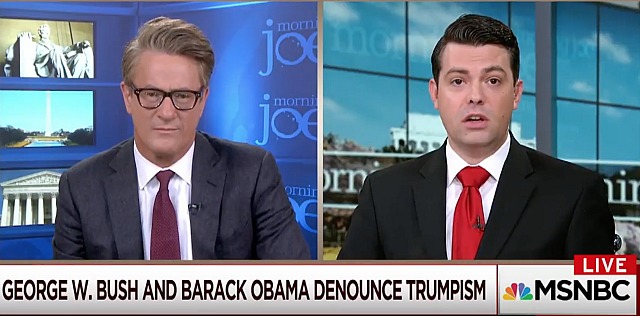
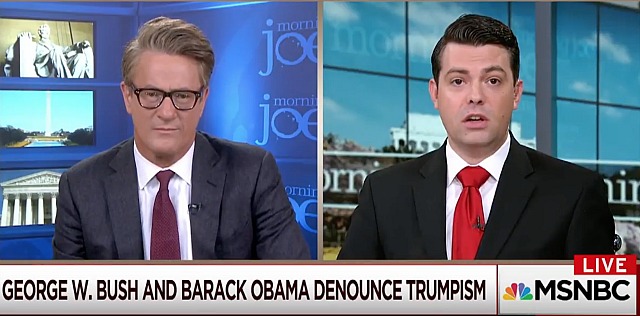
Early this morning Joe Scarborough and the conservative guy on the right side of the screen assessed their appearance before heading off to work. They both said to themselves as they stood before the bathroom mirror, “Yeah, I look pretty good.” And yet only one of them did in terms of their ties. Obviously Scarborough’s tie is natty and cool, and the fat red tie worn by the conservative guy is pretty close to ridiculous. It’s almost a scarf or a shawl. Anyone who wears a big fat red blanket around their neck is (a) almost certainly a right-winger and (b) probably has some kind of screw loose. And it’s not just guys. Conservative women love red also (overcoats, dresses). I’ve never worn a red tie (fat, medium or skinny) in my entire life.

Killer Quips That Didn’t Quite Land

I liked Tootsie as far as it went, but I was never over-the-moon about it. And I never understood the screaming hilarity that greeted Bill Murray‘s kicker at the end of Dustin Hoffman‘s big wig-removing scene — “That is one nutty hospital.” I realized, of course, that it was intended to stop the show, but the first time I watched Tootsie at the Zeigfeld all-media I didn’t even come close to laughing. I just went “uh-huh, okay, not bad.” What’s the definition of a great kicker line? One that you laugh or at least smile at even though you’ve heard it 35 or 40 times. “So we’re even,” “Nobody’s perfect,” “Because I just went gay all of a sudden!,” “Traffic was a bitch,” etc.

Streisand’s Curious Allegiance

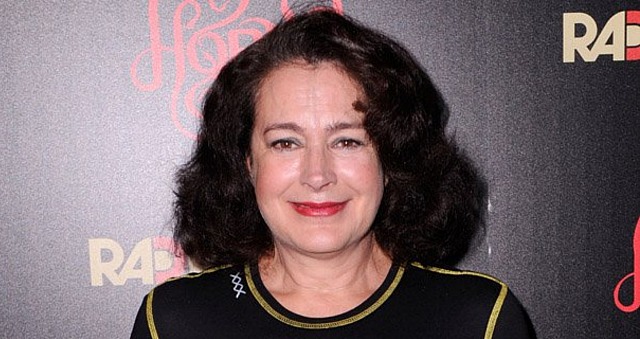
During a 10.19 podcast in Austin with “Dudley and Bob with Matt,” the fearless and legendary Sean Young passed along two noteworthy sexual harassment anecdotes from the early to mid ’90s, one involving Harvey Weinstein and the other concerning Barbra Streisand.

The Harvey thing is funny but almost a so-whatter. If you ask me the Streisand story is the eye-opener.

Young claimed that Harvey whipped out his gross animal member sometime before, during or after the making of Miramax’s Love Crimes, and that her response was ‘You know, Harvey, I really don’t think you should be pulling that thing out…it’s not very pretty.'”

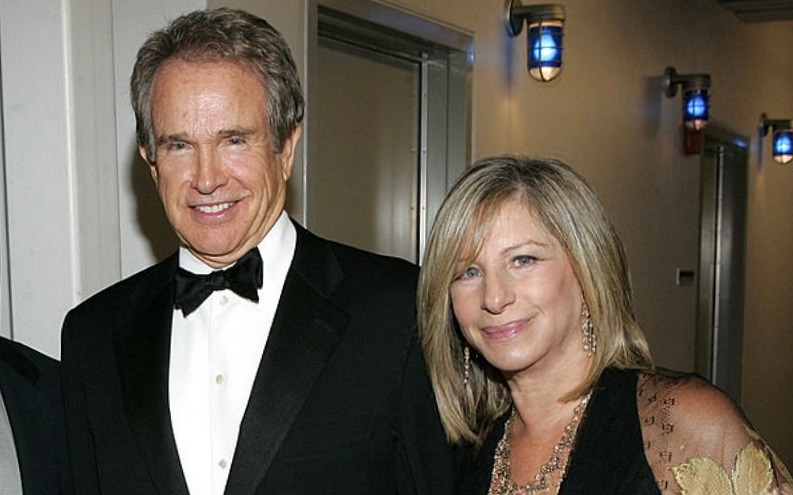
During a pre-production interview with Streisand about a role in The Mirror Has Two Faces (’96), Young claims that Streisand harshly criticized her for talking to the press about having been sexually harassed by Warren Beatty during the making of Dick Tracy. (Beatty has denied the incident.) “I think it’s disgusting that you talked to the press!” Streisand allegedly hissed. In the podcast Young says, “And what I had said to the press was that I was harassed. That I was sexually harassed by Warren Beatty. And she told me she thought that was disgusting.” Young adds that Streisand mentioned at the time that she herself had “been” with Beatty.

The Weinstein anecdote is mentioned around the five-minute mark; the Streisand story happens about a minute later.

Who Would’ve Thought?

“What we can’t have is the same old politics of division that we have seen so many times before. That dates back centuries. Some of the politics that we see now…we thought we put that to bed. That’s folks lookin’ 50 years back. It’s the 21st Century, not the 19th Century. C’mon!” — Barack Obama speaking yesterday in New Jersey for Democratic gubernatorial candidate Phil Murphy.

Read more