Don’t Listen to Ehrlich About “Memory”

I loved Alexandre O. Philippe‘s Memory — The Origins of Alien, which I saw last night at 10 pm. It digs down, re-explores and triple-dip examines each and every aspect of Ridley Scott’s 1979 classic…an absolute delight. It has everything, delivers everything…you leave completely sated, satisfied and well fed.

Please pay no attention to David Ehrlich’s pissy Indiewire review, to wit: “Philippe’s feature-length analysis of the roots and repercussions of Ridley Scott‘s horror masterpiece, seems determined to reconcile its two fundamental truths. The first is that every successful movie reveals something profound about the time when it was made. The second is that great art taps into a collective unconscious as old as time itself, tracing a direct line from ancient mythologies to modern pop culture.” — correct.

“At the very least, Philippe’s entertaining but frustratingly incomplete documentary confirms that Alien did both of those things, and it did them well. [But it’s] far more interested in exploring where the Xenomorph came from than it is in contextualizing why it was born in 1979 (and continues to grow inside of us today)” — and I didn’t care.

“Caught somewhere between a genealogy project, an oral history, and an in-depth video essay about the iconic scene that seared Alien into our imaginations, it reaffirms the film’s basic power without probing deeply enough to achieve any power of its own” — bullshit.

Guillermo del Toro is going to worship Memory, and tweet his ass off about it.

Let McConaughey Be McConughey

Acting rep-wise, Matthew McConaughey has gone through three or four stages. First he was the stoner guy from Dazed and Confused. Then he was the hunky blonde guy who starred in all those insufferable romcoms (The Wedding Planner, Thirteen Conversations About One Thing, How to Lose a Guy in 10 Days, Two for the Money, Fool’s Gold). Then he became Mr. McConnaissance with The Lincoln Lawyer, Bernie, Killer Joe, Mud, Magic Mike, The Paperboy and his Oscar pony, Dallas Buyers Club. And The Wolf of Wall Street. Then he became Mr. “Jesus Enough With The Grim and Gritty McConnaissance” with Interstellar, The Sea of Trees, Free State of Jones, Kubo and the Two Strings, Gold, The Dark Tower and White Boy Rick. Now with the help of Harmony Korine, he’s back to being the wild Stoner Guy.

Possibly The Worst Film of All Time

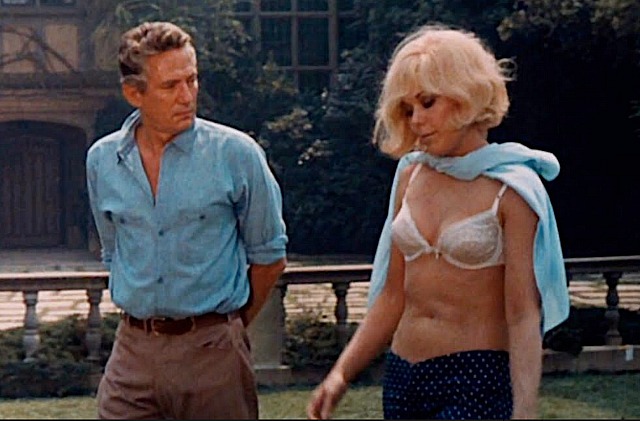
“Heavy-handed camp about Hollywood — an attempt to fuse Sunset Boulevard, Vertigo, The Barefoot Contessa and Whatever Happened to Baby Jane?. Peter Finch plays a Svengali-like movie director. His great star, the glamorous foreigner Lylah Clare, died mysteriously a few hours after marrying him, and now he is turning a young American actress (Kim Novak) into Lylah. The stale, gaudy script (from a teleplay by Robert Thom and Edward De Blasio) provides roles for Coral Browne as a bitch columnist, Rossella Falk as a predatory European lesbian, and Valentina Cortese as a designer.

“Maybe an amusing macabre pastiche could have been made of it if the director, Robert Aldrich, hadn’t been so clumsy; it’s a static piece of filmmaking. With Michael Murphy, George Kennedy and Ernest Borgnine, who has rarely been worse — he demonstrates his shouting range.” — Pauline Kael on Robert Aldrich‘s The Legend of Lylah Clare (’68).

Roger Ebert wrote the film was “awful…but fairly enjoyable“, while Life‘s Richard Schickel felt that the film would catch on as a cult classic because it was “not merely awful…it is grandly, toweringly, amazingly so…I laughed myself silly at Lylah Clare, and if you’re in just the right mood, you may too.”

At various times, director Robert Aldrich blamed Novak’s performance and bad editing for the film’s failure. But in 1972, Aldrich said “I think there are a number of faults with” the film. “I was about to bum rap Kim Novak, when we were talking about this the other day, and then I realized that would be pretty unfair. Because people forget that Novak can act. I really didn’t do her justice. But there are some stars whose motion picture image is so firmly and deeply rooted in the public’s mind that an audience comes to a movie with a pre-conception about that person. And that pre-conception makes ‘reality” or any kind of myth that’s contrary to their pre-conceived reality impossible.

Read more

This May Not Be Why Sundance Deep-Sixed Hollywood Elsewhere

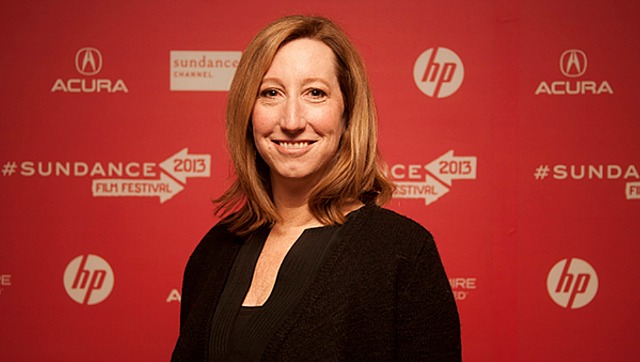
At this morning’s Sundance Film Festival press conference, exec director Keri Putnam said that organizers had noticed “a disturbing blind spot” in the press credential process. “Diversity isn’t about who is making the films,” Putnam said. “It’s about how they enter the world.” She said that the festival noticed that they were admitting “mostly white male critics.” That influenced the kind of films that were championed by reviewers, which in turn meant that only certain types of films scored big deals and major distribution pushes.

“This lack of inclusion has real-world implications,” Putnam remarked. “So we decided to do something about it.” She said that organizers re-shaped the credential process as a result. “63% of the press is from underrepresented groups this year,” Putnam said.


Sundance exec director Keri Putnam.

So this is why Sundance ’09 declined to approve the festival press pass that I’ve been wearing for the last 25 years? Because I’m a white guy with certain standards? Because I tend to wave off those Sundance films (i.e., well over half of them) that are either so-so or don’t cut the mustard? Hollywood Elsewhere celebrates gold-standard or silver-standard movies…period. Bronze and zinc, not so much.

One question to Keri Putnam: Show me one other veteran Sundance journalist like myself, someone who’s been covering this festival like a locomotive for a quarter-century and who has championed the hell out of dozens of great and near-great films that began their lives in Park City…please show me one other veteran journalist of my history, standing or calibre who had their press pass declined this year. Just one.

Comment from “MD” at the bottom of Variety story about the Sundance press conference: “The Caucasion critics who were denied credentials based on their gender/ethnicity should be filing appropriate anti-discrimination lawsuits immediately.” Sold! Except who else was affected by Putnam’s anti-white-guy edict? I don’t think I can afford a lawsuit on my lonesome.

It’s my understanding, actually, that I may have been singled out for deep-sixing because last June or July critic Scott Weinberg may have sent Sundance a letter of complaint about me and my column. This, at least, is what an industry pal confided a few days ago. The alleged complaint presumably boiled down to the fact that a certain party or parties didn’t like my personality or my style of writing.

The industry pal confided that Weinberg resolved to get me after a Twitter dispute that erupted after a screening of The Incredibles 2. I know that Weinberg proclaimed himself an enemy of all things HE after the Oxfordgate caper of 2009.

Read more

This or That Predator…But Not Both

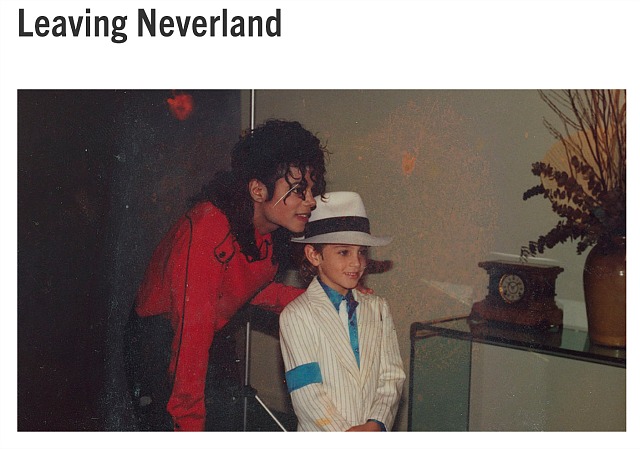
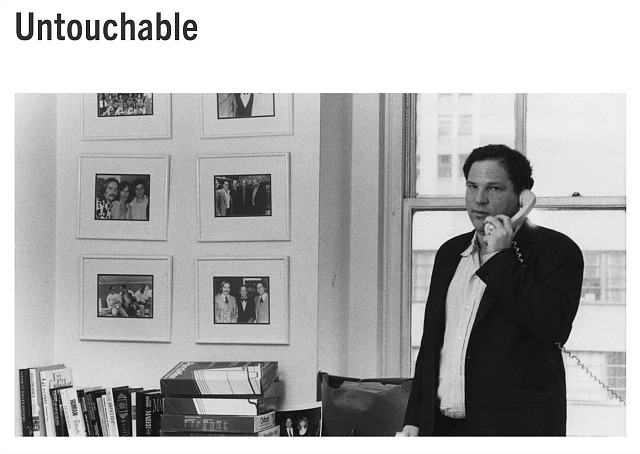
My first screening conflict of the 2019 Sundance Film Festival happens tomorrow morning. I had to choose between two sexual predator docs — Untouchable, Ursula Macfarlane‘s “inside story of the meteoric rise and monstrous fall of movie titan Harvey Weinstein,” which begins at 9:30 am, or Dan Reed‘s Leaving Neverland, a 236-minute study of the late Michael Jackson and his perverted penchant for the company of young boys.

I’d prefer to see both, of course, but I chose the Jackson doc. Because I’d like to see something truly damning about the guy, and because the nearly four-hour length suggests something epic. I’ll see the Harvey film soon enough.

Sidenote: Leaving Neverland begins at the Egyptian theatre at 9 am, but I’ve been told to be there no later than 8 am, and that 7:45 am might be even better!

Not That Much

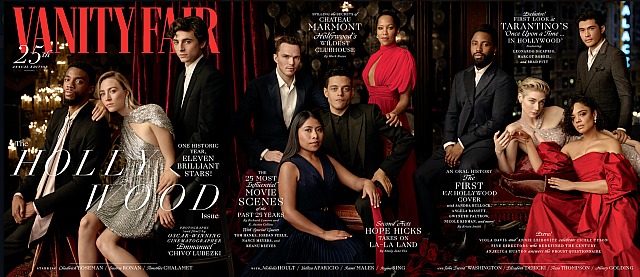
Vanity Fair‘s annual big-deal Hollywood issue is finally out. The big attraction for me are the set photos from Quentin Tarantino‘s Once Upon A Time in Hollywood. As for the cover subjects, I’m not sensing much of an electric royalty, top-of-the-mountain factor aside from Black Panther‘s Chadwick Boseman and Bohemian Rhapsody‘s Rami Malek — both major-league talents and part of something really big.

Saoirse Ronan is one of our finest actresses, but Mary, Queen of Scots is a dud. Timothee Chalamet‘s Beautiful Boy performance is a strenuous meth-head drag, and nomination-wise it was elbowed aside by the Academy. John David Washington is the weakest link in BlacKkKlansman. Tessa Thompson was okay in Sorry to Bother You, but was no reason to do handstands. Ditto Nicholas Hoult in The Favourite (and by the way that Hitler youth haircut is unflattering). Regina King is fine in If Beale Street Could Talk, but all she has is that scene in Puerto Rico in which she begs a rape victim to reconsider her testimony. Henry Goulding in Crazy Rich Asians is nothing…he just plays a rich smoothie. Congrats to Roma‘s Yalitza Aparico for her Best Actress nomination, but she’s more of an organic presence than an actress. Elizabeth Debicki was good enough in Widows, but I’m not understanding the hoo-hah.

Read more

$50K for Roll In The Hay

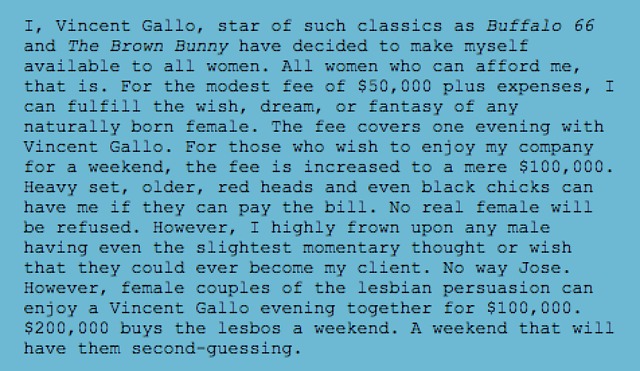
I’ve always respected director-actor Vincent Gallo (The Brown Bunny, Buffalo 66). Partly for his acting, partly for his edge and ballsiness and blunt talk. A 57 year-old Republican and provocateur whose career has been slowing down over the last decade, Gallo has never seemed to care about behaving the way that people in this town want you to behave, especially these days.

A couple of days ago I came upon an apparently legit post on his website that indicates Gallo is still way, way out there. In a phrase, he’s offering his services to women who are rich enough to fork over $50K for a night of love and exotica. I don’t know how old the post in question is, but nothing I could offer by way of an introduction could properly suffice. It reads like a put-on, but I sense sincerity.

I’m calling Gallo’s offer “apparently legit” because it links to Gallo’s merchandise page, which links to his self-named website, which looks like it was designed in 1997.

Close Enough To Taste It

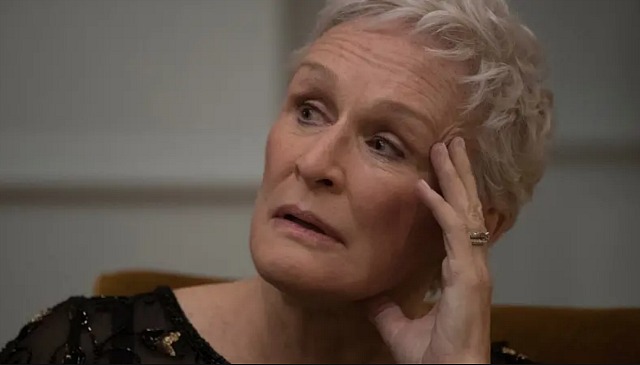
16 months ago Björn Runge‘s The Wife premiered during the 2017 Toronto Film Festival. At Roy Thomson Hall, to be precise. I was there in the mezzanine, mesmerized by Glenn Close‘s slow-boil performance as a strong but resentful wife of a Nobel Prize-winning author (Jonathan Pryce). After it ended I was convinced — dead certain! — that Close would land her seventh Oscar nomination, and that she might actually win this time.

The Hollywood Reporter‘s Jon Frosch wrote that Close’s performance is “like a bomb ticking away toward detonation” — perfect. But she’s not just playing her husband’s better in terms of talent and temperament. She’s playing every wife who ever felt under-valued, patronized or otherwise diminished by a swaggering hot-shot husband along with their friends and colleagues as well as — why not? — society as a whole.

In the months that followed I kept re-stating my belief that Close’s Oscar-winning moment would finally be at hand. I said it again after catching a Wife screening in midtown Manhattan. The mostly over-50 crowd whooped and cheered, and you could just feel it.

“This Academy contingent is going to vote for Close en masse, no question,” I wrote. “Over the last 30-plus years she’s been nominated for six Oscars (The World According to Garp, The Big Chill, The Natural, Fatal Attraction, Dangerous Liaisons, Albert Nobbs) without a win — this will be the clincher.”

But deep down I wasn’t 100% sure. Noteworthy journos kept saying “yeah, maybe, Close is very good,” etc. My response was “no, not maybe — definitely.”

Early last November I felt slightly irked by an Eric Kohn and Anne Thompson Indiewire podcast about likely Best Actress contenders. Olivia Colman, Lady Gaga, Melissa McCarthy, Charlize Theron, Rosamund Pike and even Hereditary‘s Toni Collette were discussed, but not Close. This despite 22 out of 25 Gold Derby spitballers having predicted a Close nomination. What exactly was Kohn and Thompson’s blockage?

Read more

Hate, Vanity Feeds Virtual Mob

Excerpts from Damon Linker‘s “How Twitter Could Be The Death of Liberal Democracy,” posted yesTerday (1.22) on The Week:

“In 1984, George Orwell famously described a totalitarian political order in which people were kept as docile subjects in part by a daily ritual called ‘Two Minutes Hate’ in which the population directs all of its pent up fury at ‘Goldstein,’ a possibly fictional enemy of the state.

“Thanks to Twitter, we now know that the same dynamic can arise spontaneously, with fresh ire directed at a new manifestation of the partisan enemy nearly every day. It shows us that under certain circumstances — our circumstances — people can and will fasten onto an endless succession of real-life Goldsteins for the sheer, addictive joy of it — for the pure, delirious pleasure of denouncing manifestations of evil in our midst. Nothing, it seems, is quite as satisfying as singling out our fellow citizens for their moral failings and indulging in fantasies of their fully justified punishment.

“Too little attention has been paid to what may be the most potent facet of the social media platform: its ability to feed the vanity of its users. There’s always an element of egoism to intellectual and political debate. But Twitter puts every tweeter on a massive stage, with the nastiest put-downs, insults, and provocations often receiving the most applause. That’s a huge psychological incentive to escalate the denunciation of political enemies. The more one expresses outrage at the evils of others, the more one gets to enjoy the adulation of the virtual mob.”

“They display an impulsiveness and unhinged rage at political enemies that is incompatible with reasoned thinking about how we might go about governing ourselves, heal the divisions in our country, and avoid a collapse into civic violence that could usher in tyranny.”

Countdown

Sundance-wise, Park City-wise, today (Wednesday, 1.23) is for preparation, contemplation, buying groceries, schmoozing, filing and so on. As long as you’re bundled up, I mean. The air is like ice-cold steel — it’s Antarctica out there.

I really don’t know how many films I’ll be able to see. Maybe 10 or 12, maybe 15…who knows? Even if the number is low, it’ll still be a worthwhile quest. Better this than sitting around Los Angeles. It all begins tomorrow afternoon.

Mekas Is Gone

It would be correct and appropriate if the Sundance Film Festival could somehow arrange for some kind of special tribute to the late Jonas Mekas, the “godfather of American avant-garde cinema” who passed this morning at age 96. Mekas is a major historical indie-realm figure, and it would just seem…well, curious if Sundance didn’t make an effort to honor the guy.

The Lithuanian-born Mekas was a filmmaker, journalist-critic, poet and creative collaborator of Andy Warhol, Nico, Allen Ginsberg, Yoko Ono, John Lennon and Salvador Dalí. He stood up and articulated a vision and a platform for alternative cinema in the mid ’50s, and he kept that torch burning for the rest of his life.

Until recently Mekas was presiding over the AFA as artistic director and was planning “a long-dormant expansion plan to build a cafe, a rooftop terrance and a library to house decades of film materials gathered around the world,” according to a 2017 Indiewire profile. At the time Mekas had “raised around $4.5 million from donations and silent auctions” with a target goal of “just over $12 million.”

I know Mekas best as the co-founder of the Anthology Film Archives (32 2nd Ave, New York, NY 10003), which he and colleagues Stan Brakhage, Ken Kelman, Peter Kubelka, James Broughton and P. Adams Sitney launched in 1970. As the managing editor of the short-lived Thousand Eyes Cinema Guide (’78 and ’79), I would publish Anthology program plans on a monthly basis. The last time I visited the AFA was for a screening of John Flynn‘s The Outfit (’73).

Here’s a warm-hearted essay on Mekas by seasoned journalist-critic Robert Koehler.