What Difference Will $1200 Make?

Let’s say you’re a freelancer currently unable to earn anything due to a coronavirus shutdown. Or an employee who’s been temporarily suspended because your employer has been forced to temporarily close or cut back. It would certainly be a welcome thing to receive a $1200 check from the government as every little bit helps. But presuming that the stimulus check would be a one-off, how much help would $1200 actually represent?

You could use it to help put a minor dent in your rent or mortgage payment for a month. Or you could buy $20 worth of food each day for 60 days. Or you could pay off your utility bills for a while. But the pandemic is going to be with us until mid to late summer and possibly (God forbid) into the fall or even beyond. So at best a $1200 windfall would make a slight difference for a very short period.

$1200 is fine, but it’s basically pizza money, a few Uber rides, a cable or cell phone bill, cat food, two or three tanks of gasoline, etc. And then back to the salt mines.

Absolute Masterpiece

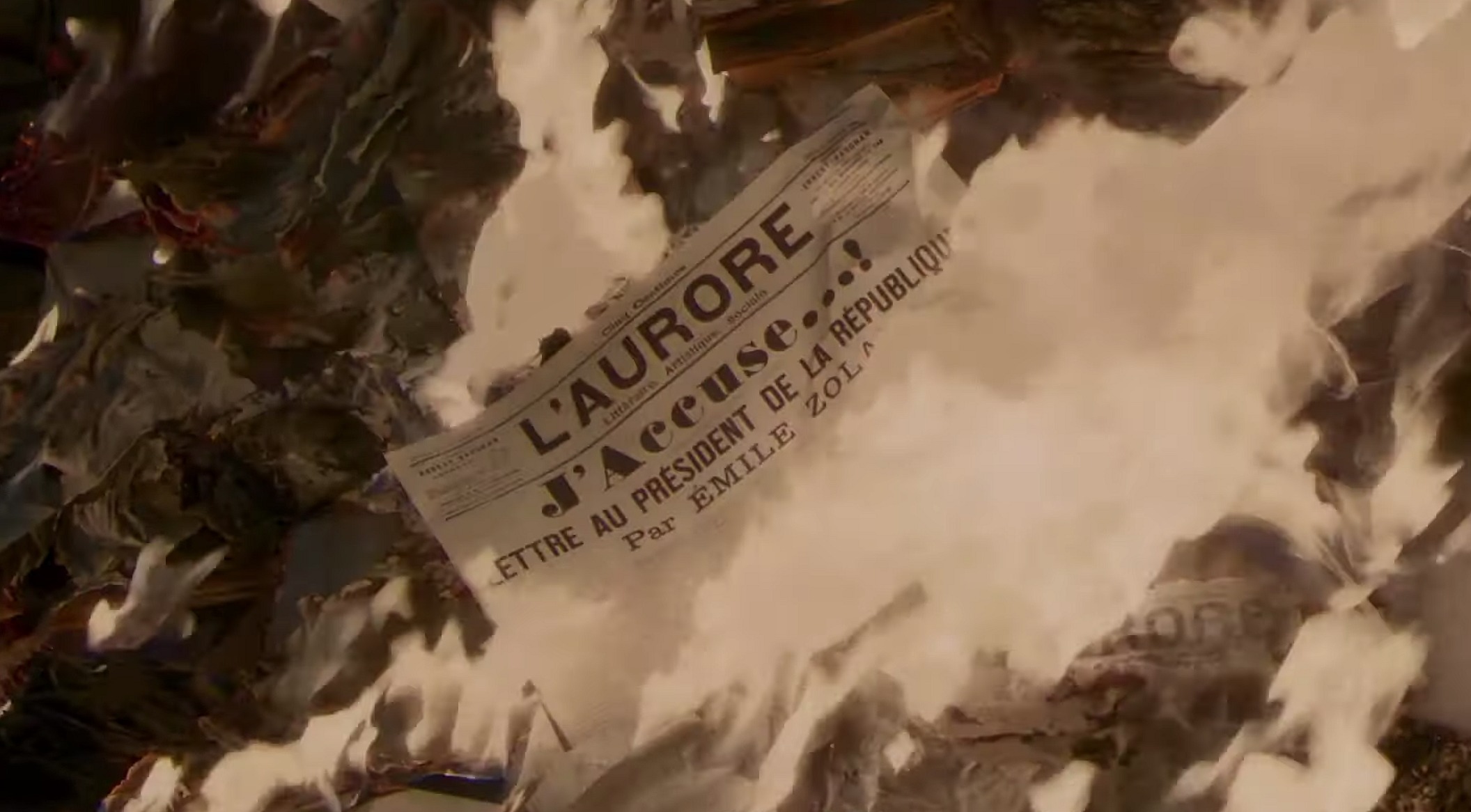
Last night I finally saw Roman Polanski’s “J’Accuse” (aka An Officer and a Spy). Yes, I watched it illegally, but we’ll never see it in this country because of the #MeToo Khmer Rouge prohibition of all things Polanski and so I figured, okay, just this one time. Actually I also watched Woody Allen‘s A Rainy Day in Manhattan illegally, and with the same justification.

In any event I watched it on the 65-incher in 1080p with English subtitles, and my God, the “holy shit, this is great” and “why can’t more films be this good?” current. The 86 year-old Polanski is undimmed…he seems to be as commanding and bull’s-eye as when he made Repulsion, Chinatown, Rosemary’s Baby, etc.

J’Accuse has been crafted with absolute surgical genius…a lucid and exacting and spot-on retelling of an infamous episode…a sublime atmospheric and textural recapturing of 1890s “belle epoque” Paris, and such a meticulous, hugely engrossing reconstruction of the Dreyfus affair…a tale told lucidly…a clue-by-clue, layer-by-layer thing.

You know what J’Accuse is? A bedtime comfort flick — comforting because it’s so damned good.

Stop me if you’ve heard this before, but it’s a tale of anti-Semitism and a rigged conviction for treason, an innocent man condemned to Devil’s Island, nationalist rightwing groupthink, suppression of the truth and the punishment of those who would bring the perversion to light.

Most of us know the basic bones, but Polanski’s film is absolutely riveting because of the detailed approach that he applies to each and every character, setting, line, costume, light source and choice of location. Adult-level subtlety to die for.

It’s my idea of a perfect film in every respect — Polanski and Robert Harris‘s brilliant screenplay, the ace-level production design by Jean Rabasse and art direction by Dominique Moisan, Pawel Edelman‘s naturally lighted cinematography, Alexandre Desplat‘s music…every single element is aces. Polanski concentrates on elements that 99% of today’s directors would run screaming from. The discovery portion of the film is all about ripped-up letters pasted back together, bureaucratic records, folders, etc.

Jean Dujardin’s lead performance as Georges Picqart, the intelligence officer who uncovered the frame-up, is easily his career-best. Ditto Louis Garrel as Dreyfus plus Emmanuelle Seigner, Mathieu Amalric, Melvil Poupaud, Eric Ruf, Laurent Stocker, etc. And with everyone under the constraints of the era, of having to hold themselves erect and behave in a stiffly correct manner.

I was especially taken having recently endured Justin Kurzel’s True History of the Kelly Gang (IFC Films, 4.24), which looks and feels like nothing more than a director re-inventing and re-stylizing the past in order to show off and look cool. I got through it but not without frustration.

J’Accuse is a textural, cerebral masterpiece, and yet one of the most affecting anti-racism films ever made. The sight of the Parisian nationalists and anti-Semites cheering on the lying military brass…the MAGA redhats of their day.

Read more

Quietly Shattered, Crushed, Stunned

For the last week or so it’s been sinking into me. Simultaneously appalling and suffocating, and so overwhelming that I’ve only been able to gradually process it one day at a time. We’re all living in a dystopian realm, the likes of which I’ve never known, almost a kind of On The Beach atmosphere…a low-security, self-policed concentration camp with all the comforts of home.

As HE regulars know (especially the scolding “virusbros“) I’ve been out two or three times since returning from Texas…wearing the usual mask and surgical gloves, and of course keeping my distance from one and all. CVS and Pavilions stopovers plus aimless rumblehog roamings.

What an inert, boring, vanilla, nothing-level existence.

In a 3.24 piece called “10 Comedies to Lift Your Mood”, The Hollywood Reporter‘s Todd McCarthy mentioned that what we’re all going through is spiritually analogous to what many Americans went through during the early days of the Great Depression. That sunk in. Right now probably is the bleakest time of my life in certain ways…perhaps in all ways.

“You Can’t Leave”

The Third Day, a forthcoming six-part HBO series that begins on 5.11, looks reasonably decent. But the trailer also suggests it’s basically Midsommar meets The Wicker Man…right?

And why is Jude Law starring or costarring in just about every other film and cable series these days? Is he the new Michael Caine? Does he ever say no? The New Pope, the Rhythm Section, Vox Lux, Fantastic Beasts: The Crimes of Grindelwald, A Rainy Day in New York, The Nest, etc. I understand that Law’s early aughts hot period — The Talented Mr. Ripley, Cold Mountain, Enemy at the Gates, Road to Perdition, I Heart Huckabees, Alfie, Closer, The Holiday — ended 14 or 15 years ago and we all have bills to pay, etc. I’m nonetheless sensing that he’s too willing to be in anything that comes along.

Read more

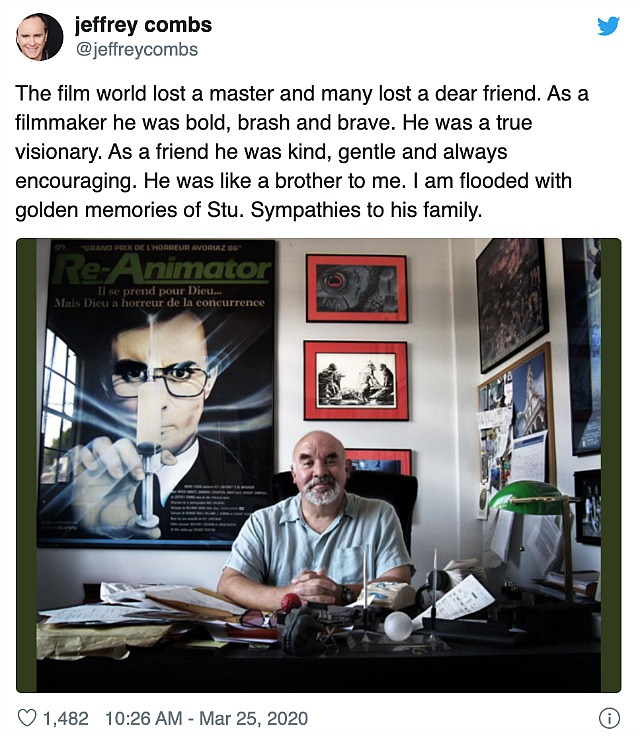
Passing of Stuart Gordon

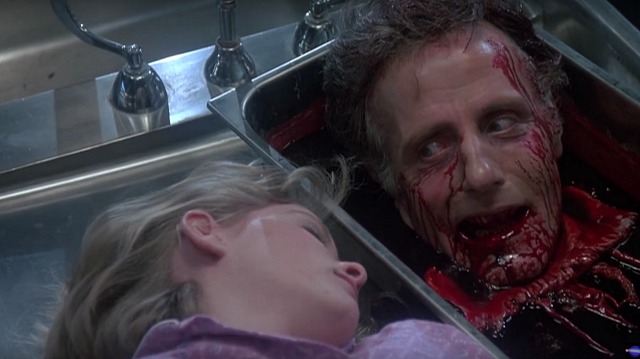
The late Stuart Gordon had a rich and varied life, but he was mainly known for one thing and one thing only — his riotously funny horror-comedy Reanimator (’85), which I saw with five or six friends at Manhattan’s Rivoli (B’way and 49th) in late October 1985. We were all working at New Line Cinema at the time, my specialty being publicity and press kits. The Rivoli viewing, no lie, was one of the greatest theatrical experiences of my life — we laughed, howled, screamed, thigh-slapped, spilled our drinks and popcorn, laughed some more.

As it happened I soon after moved into a bungalow complex on Hightower Drive, and Reanimator star Jeffrey Combs was living right next door.

Reanimator was directed and coadapted by Gordon, the source being H.P. Lovecraft‘s “Herbert West: Reanimator“, a horror short story written in 1921. his partner Brian Yuzna produced it, and the coscreenwriters were Dennis Paoli and William J. Norris.

They all deserve an eternal pat on the back for coming up with the most insanely perverse oral sex scene in the history of motion pictures.

Gordon passed yesterday at the age of 72.

Read more

Reprehensible Asshole

But then you knew that about all Republicans spouting the current Trump slogan…”let’s get back to work already…if some over-60 types wind up dying then they die but no more hibernating.”

When My Tolerance Snapped…

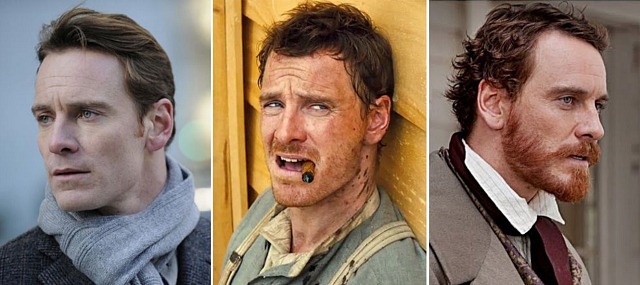
…and I realized I really and truly couldn’t stand the presence of Michael Fassbender any more…Steve Jobs is what did it to me…from that point on my basic attitude about Fassbender was “fuck that guy and also, unfair as it sounds, the movies he’s starring in.”

Super-condensed review of Steve Jobs, posted on 9.6.15:

“The main thing is that Fassbender just bothers me. I didn’t like him, didn’t care for his company, didn’t like those cold fuck-you eyes. All through it I was saying to myself “I know this is a class A enterprise with a sharp Aaron Sorkin script, but how much longer do I have hang with this prick?”

I will never watch Steve Jobs again. Just thinking about those endless Sorkin walk-and-talks…aagghh!

36 Years Ago

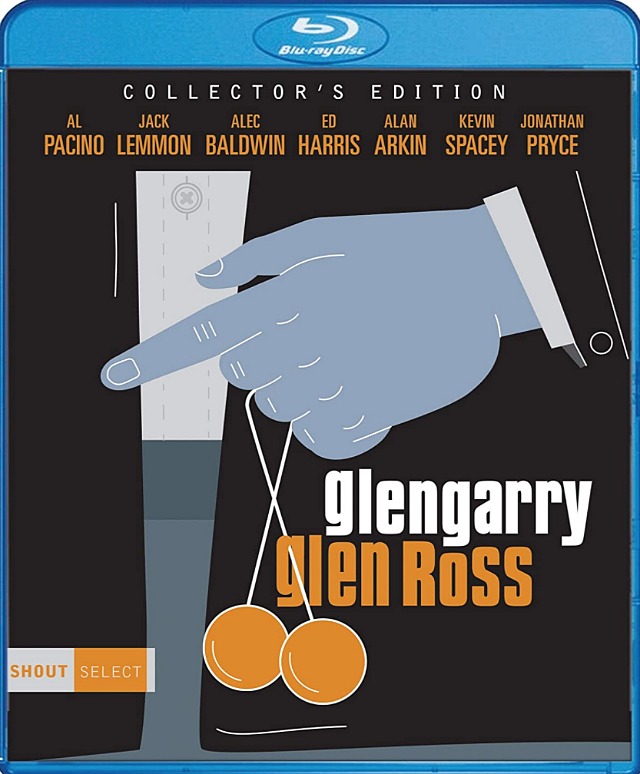
A special edition Shout! Factory Bluray of Jamie Foley‘s Glengarry Glenn Ross pops on 6.2.20.

Sometime around 3.25.84 I attended a Broadway pre-opening performance of the original Gregory Mosher-directed play with all the big-gun critics (Frank Rich, etc.) in the orchestra. Joe Mantegna‘s Tony Award-winning performance as Ricky Roma ruled — a performance as seminal and historic as Humphrey Bogart‘s Duke Mantee in the B’way stage version of The Petrified Forest. Not to mention Mike Nussbaum, Robert Prosky (a brilliant Shelley Levine), Lane Smith, James Tolkan, Jack Wallace and J.T. Walsh.

Read more

Woody’s Days in Capua

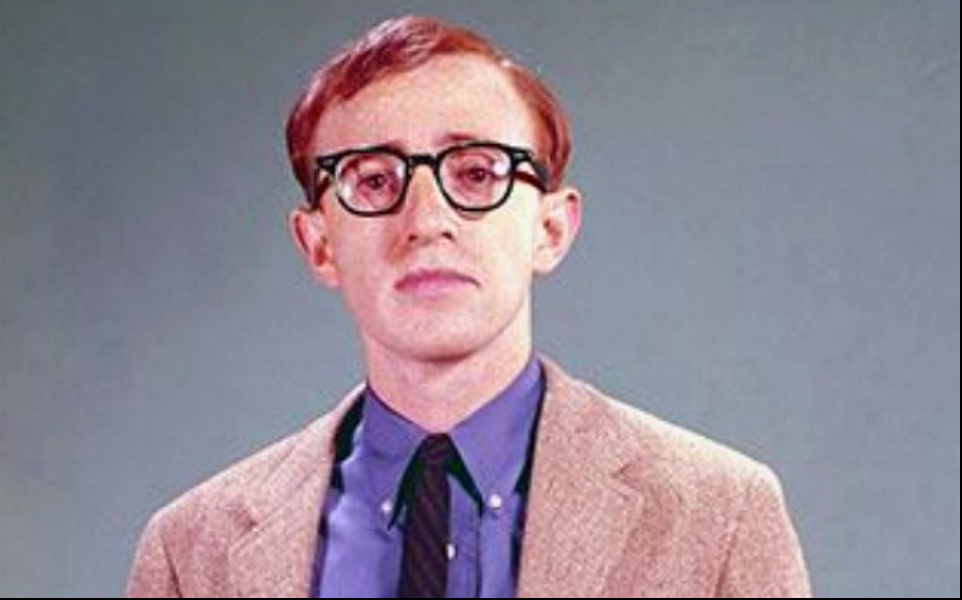
I’ve read a little less than half of Woody Allen‘s “Apropos of Nothing.” I’ve gotten as far as the launch of Play It Again, Sam, his 1969 stage comedy that costarred himself, Diane Keaton, Tony Roberts and Jerry Lacy. This was also when his romantic relationship with Keaton began.

I’m loving the book completely, but I have to say that the portions dealing with Allen’s fascinating if occasionally bewildering childhood and early adolescence in Brooklyn (roughly his first 15 or 16 years) make for richer reading than the portions that cover how his career began — first as a kid who submitted jokes to Manhattan newspaper columnists, then an in-house joke writer, then as a comedy contributor to The Colgate Hour and Caesar’s Hour, then his beginnings as a stand-up comic in the early ’60s, etc.

The “starting to make it happen” stories are fine, but the childhood stuff is full of wide-eyed wonder, fevered impressions, impossible dreams.

Allen’s description of his first look at 1942 Times Square, when he was seven years old and his father had taken him along on some errand, is truly thrilling. Ditto how he loved the way women looked and smelled and felt during brief hugs when he was knee-high to a grasshopper. Plus the absolute joy of watching old-school movies every Saturday afternoon with a five-years-older female cousin at his neighborhood theatre. A lot of this material was covered in Radio Days, of course, but the writing is tart and wise and a joy to sink into.

The childhood portion, in short, is like the first 35 or 40 minutes of Stanley Kubrick‘s Spartacus (i.e., the first 25%) inside the gladiator school in Capua — the story tension and the personal suspense element about when and how Kirk Douglas and his bros might break out. Apropos of Nothing is similarly about young Woody’s confinement inside his family’s small apartment and the middle-class neighborhood he explored as a kid, and always the hovering question of when and how he’s going to break free.

Watching Polanski Pic Tonight

I’ve been waiting to watch An Officer and a Spy (aka J’Accuse) for six months now, or since it played at the 2019 Venice Film Festival. (Remember film festivals? People of particular persuasions travelling and gathering and watching brand new films, etc.? Those were the days.) The version I’ll be watching this evening is in 720p with English subtitles. I can just about taste it.

“Rainy Day” Reminder

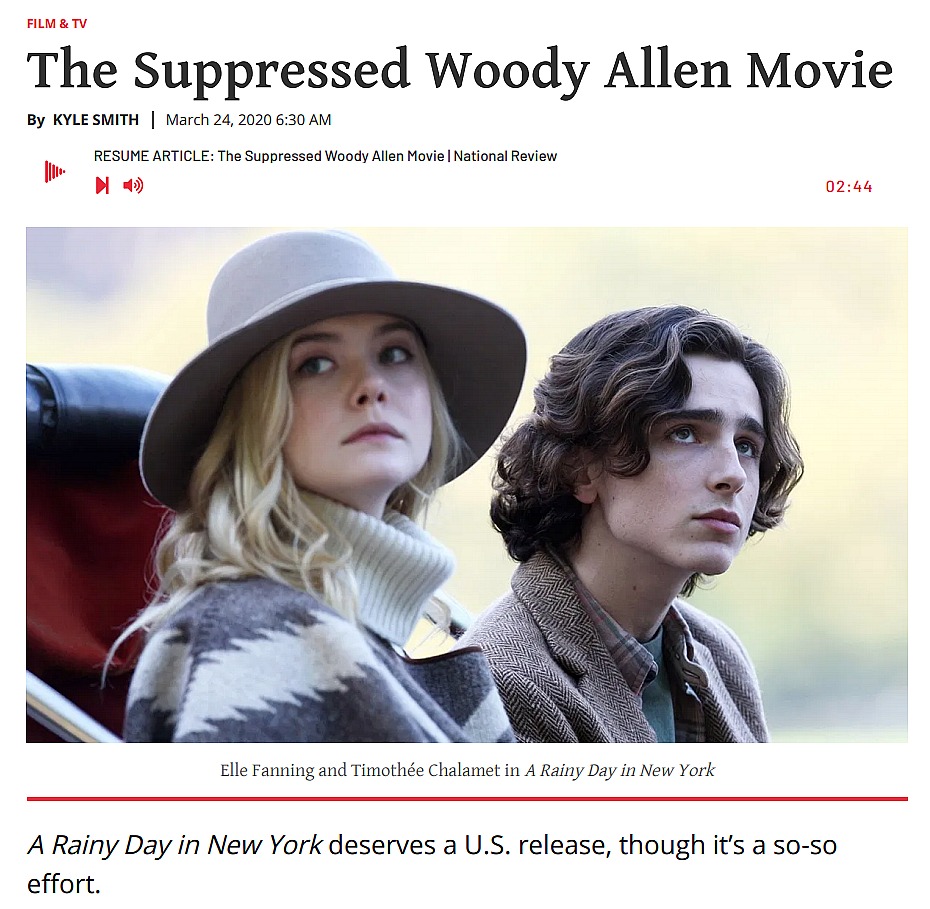
From Kyle Smith‘s “The Suppressed Woody Allen Movie,” posted on 3.24.20, reviewed via a French DVD: “Although Allen is no longer in his prime as an artist, I’ve seen all of his movies and I wasn’t about to miss A Rainy Day in New York despite the damage done to his reputation in 2017, when he got singed in the wildfire started in a burn-the-witches spell of hysteria.

“Allen became persona non grata thanks to the resurfacing of a discredited and almost certainly false allegation that he sexually abused his then-seven-year-old daughter in 1992.

“I can’t fathom why Rainy Day, alone among the dozens of films Allen has made since 1992, should be suppressed in this country, but that is not to say it’s a strong effort. Unfortunately, it continues his string of mediocre-to-poor films.

“Like every other young person in the movie — people in their early twenties drop references to Grace Kelly, Sky Masterson, Yasir Arafat and going to medical school in Grenada — Gatsby talks an awful lot like an 84-year-old comedy writer, and his ideal weekend turns on joining the mummified habitués of the Pierre and Carlyle Hotels, where a college student would feel about as welcome as Allen would at Coachella. Allen writes his scripts on a typewriter, is a stranger to the internet, and it seems fair to say that his stock of references could use a bit of freshening.”

From “Rainy Day Goes Down Easy,” posted on 12.6.19: “A Rainy Day in Manhattan feels like some kind of self-satirizing spoof — a ‘sophisticated’, old-fashioned, Allen-esque satire that could have been made 30 or 40 years ago, and in fact seems to be happening in some kind of weird time vacuum.

“Some critics have said it doesn’t work because it’s all taking place in Woody World (i.e., bucks-up Manhattan and the same kind of tony locales that Allen has used since the days of Annie Hall and Manhattan) and that the younger lead actors (Timothee Chalamet, Elle Fanning, Selena Gomez) clearly don’t belong in it — they would never talk like naive young snobs or make witty Allen-esque cracks about this or that.

“But it’s amusing in a kind of goofball way because they’re all pretending that Woody World is an actual place and so they’re all playing a kind of dress-up and just cruising through and acting nonchalant, like it’s all a masquerade and they’re just going through the notions.

“And I really like the way Chalamet handles himself in this milieu. He’ll probably never ever behave this way in another movie ever again, and it’s fascinating to watch him pretend to be an Allen kind of guy (flush, entitled, smart-assy, tweed jackets) with casual confidence and just submitting to the unreality of it all.

“And at the same time the movie is fine as a whole — it shuffles along and seems to enjoy itself with an occasional wink at the camera. It doesn’t offend because it’s just gliding along…who cares? You’d have to be a real asshole to pan this without mercy. You’d have to have a fairly thick broomstick up your ass to begin with.”