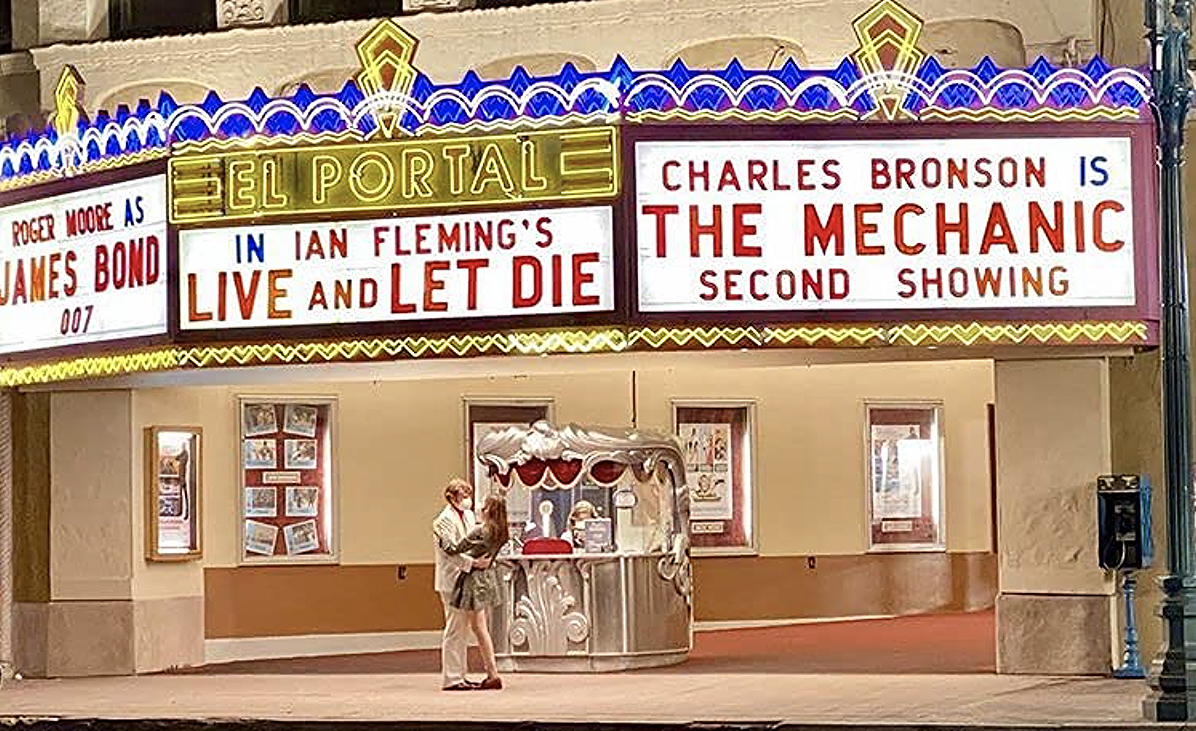
Young Walken Moments

It was late in the afternoon in the fall of ’78 when I ran into Chris Walken upon the New York-bound platform of the Westport train station.

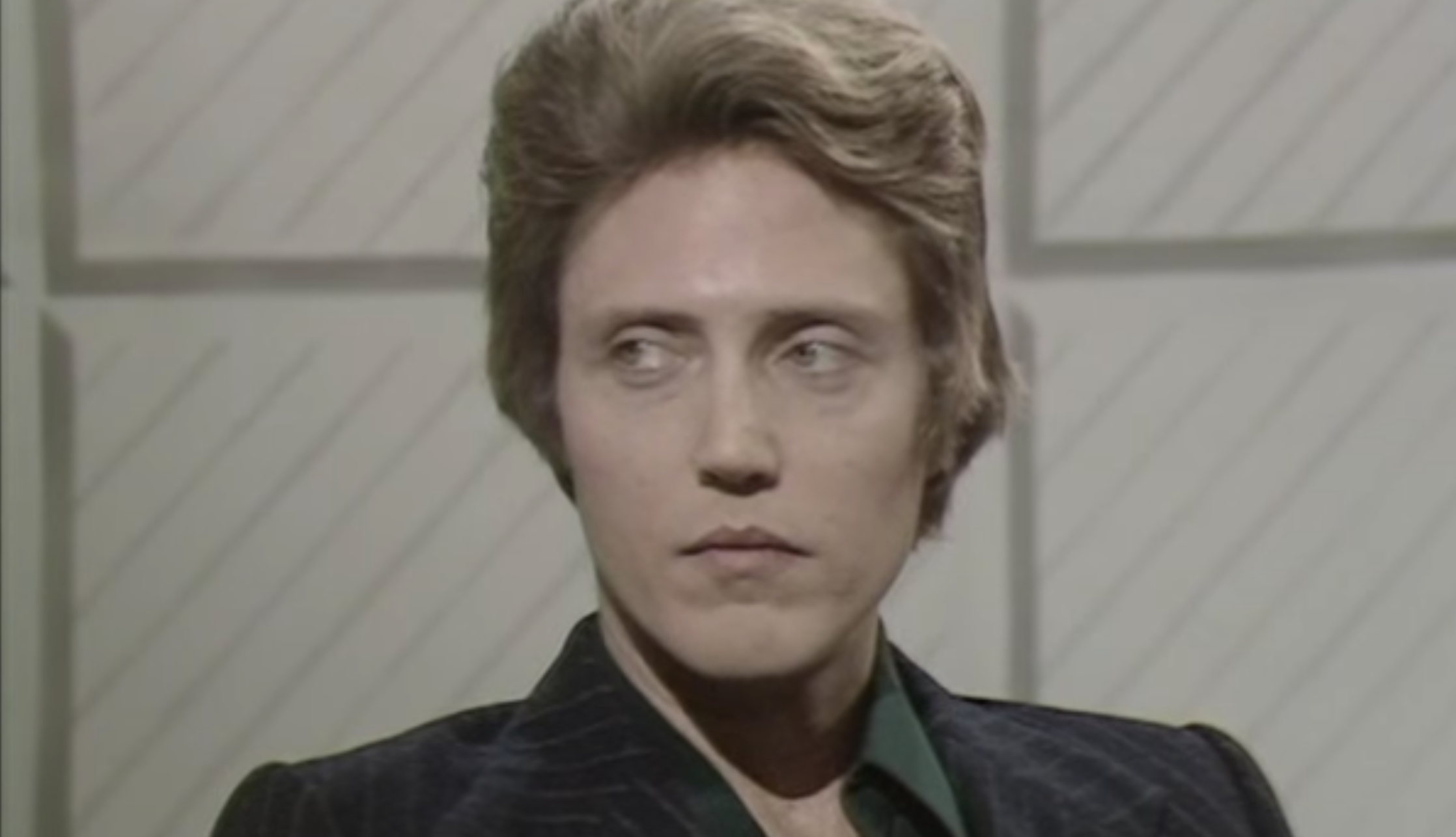
Tall and slender and good-looking in a curious, off-center sort of way, Walken looked that day like he does in the below interview, which was taped in late ’80. He was 35 but could’ve been 29 or 31. Same hair, same calmness of manner, same “waiting for something to happen” watchfulness.

I’m pretty sure it was a Sunday. I’d been visiting my parents (Jim and Nancy) in Wilton. Walken had been in Westport to visit his manager, Bill Treusch.

Our encounter happened two or three months before The Deer Hunter opened. I hadn’t seen that pretentious, wildly overpraised Michael Cimino film at the time, and it was probably for the better. I was simultaneously taken aback (“Whoa, this movie is up to something!”) and at the same time irritated. Those ridiculous Russian roulette scenes, that interminable Russian wedding celebration and those absurd mountain peaks in rural Pennsylvania drove me insane. I was surprised and moved by the “God Bless America” finale.

At that precise moment in time I knew Walken from only two roles — that “who’s this guy?” performance in Paul Mazurskys Next Stop, Greenwich Village (’76) and his bit part as Diane Keaton‘s weird, soft-spoken brother, Dwayne, in Annie Hall (’78).

Anyway I stepped up to the platform, ticket in hand, and there he stood, reading a newspaper. I felt a certain natural kinship with Walken as I resembled him somewhat, and I wasn’t shy back then anyway so I introduced myself. Walken was cool and casual (“I’m Chris”), and we wound up talking all the way into Grand Central Station.

I visited Walken’s Upper West Side apartment twice in ’79, although he wasn’t there. I had an excellent thing going with a lady named Sandra, you see, who was working for Walken and his wife as a kind of au pair girl or house-sitter. I remember the oriental rug on the living room floor, you bet, and the wood-burning fireplace in front of it. I don’t know why Sandra and I didn’t last for more than four or five weeks but it wasn’t for lack of interest on my part. She was quirky and moody, but that was part of the allure.

I spoke to Walken one or two years later (’80 or ’81) when I went backstage at the Public Theatre after a performance of The Seagull. (He played Trigorin, and rather well at that.). He had no recollection of our train-ride discussion. Zip. I could have mentioned Sandra as an ice-breaker but I thought better of it.

The chicken-and-pears video was shot, I’m presuming, at Walken’s home in Wilton, Connecticut, which is where I lived for a few years and where I did my last two high school years. Paul Dano went to high school there also. And Keith Richards has a big home there.

I love, love, love, love the way Chris Walken pronounces “chicken” and “pears.” Certain people says certain words perfectly, and I mean better than anyone else in the world. Walken saying “pears” (“peahrs“) is like Peter O’Toole pronouncing “ecclesiastical.”
Soggy Gary

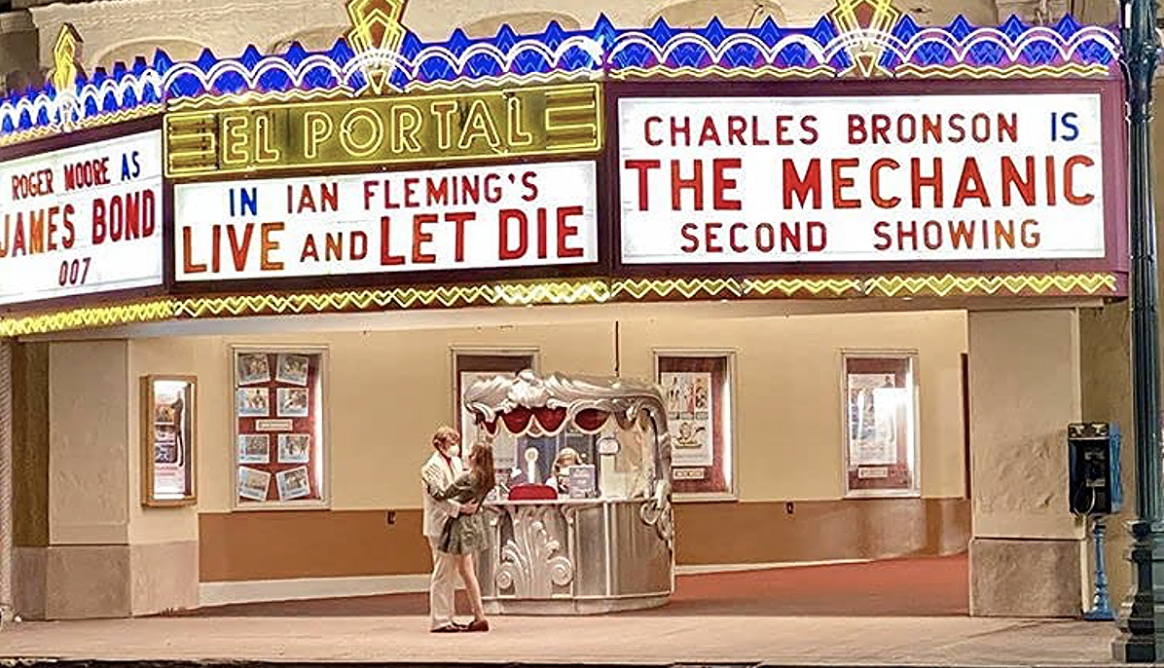
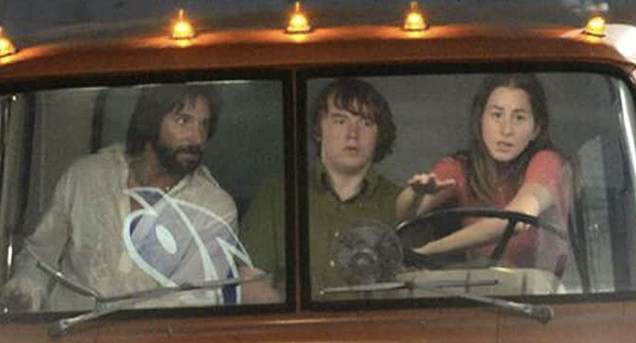
Showbiz411’s Roger Friedman on Paul Thomas Anderson‘s Soggy Bottom: “The forthcoming film stars Cooper Hoffman, the 18 year old son of the late, famed Philip Seymour (aka “Philly”) Hoffman, as a child actor in Hollywood in the early 1970s.

Cooper’s character’s story is modeled on that of producer Gary Goetzman, Tom Hanks’ producing partner. Bradley Cooper plays a producer modeled on Jon Peters, the former hairdresser who became Barbra Streisand‘s lover and producer, and who was one of the inspirations for Warren Beatty‘s “George Roundy” character in Shampoo. (Along with Jay Sebring.)

Goetzman was a child actor in the ’70s, costarring in Yours Mine & Ours (Henry Fonda, Lucille Ball) and Divorce American Style (Dick van Dyke, Debbie Reynolds, Jason Robards).”


Many Decades Ago

A 67 or 68-year-old woman, identified in court papers as “J.C.”, has filed a sexual abuse lawsuit against Bob Dylan, alleging that the singer-songwriter sexually abused her in 1965, when she was 12 years old and Dylan was 24.

The suit alleges that Dylan gave her drugs and alcohol 56 years ago, and established an emotional connection that allowed him to sexually abuse her for a six-week period between April and May 1965. It alleges that Dylan used threats of physical violence, “leaving her emotionally scarred and psychologically damaged to this day.” Some of the abuse is alleged to have occurred at the Hotel Chelsea in New York.

A schedule of Dylan’s professional engagements posted earlier today by Showbiz 411‘s Roger Friedman indicates Dylan was touring in England between 4.26.65 and 6.2.65. If verified, the claim about sexual abuse of “J.C.” in May ’65 in New York City seems questionable.

Variety‘s Gene Maddaus: “The woman filed suit under New York’s Child Victims Act, the 2019 law that opened a two-year period during which the ordinary statute of limitations was suspended for claims of child sexual abuse.

“The deadline to file such suit fell on Saturday, 8.14, and the suit against Dylan was filed on the evening of Friday, 8.13.

“The suit alleges claims of assault, battery, false imprisonment and intentional infliction of emotional distress. The claim was filed by attorneys Daniel Isaacs and Peter Gleason.”

Read more

Vaguely Blows

My honest view of the forthcoming K cover for their Citizen Kane 4K disc (11.23.21) is that it’s kinda dull. It certainly isn’t what any honest designer would call “oh, wow.”

Serious question: Which other films could be represented by a single letter on a Bluray cover? Besides Costa GavrasZ, I mean. If Criterion wanted to go minimalist with a North by Northwest 4K disc, they could use a NXNW…right? They could go with a big M for a Manchurian Candidate jacket cover, I suppose. Or a big R for a Raider of the Lost Ark cover.

But you know what? Fuck this idea. You could decide to single-letter anything. It’s a lame concept.

The first minimalist one-letter logo was the trapezoid N for NBC, which was used between ’76 and ’79.

Read more

Winger Zinger

Before Geena Davis was cast as catcher and assistant manager Dorothy “Dottie” Hinson in A League of Their Own, Debra Winger had the role. In an 8.13 Telegraph interview, Winger says that she trained hard and took the part seriously, but decided to quit when director Penny Marshall cast Madonna as centerfielder Mae “All the Way” Mordabito.

Winger interpreted the Madonna casting as a sign that Marshall intended to make an insubstantial “Elvis film.”

If you ask me Winger was being a bit harsh in her assessment of the then-30-year-old pop singer and sometime actress. I had seen Madonna in the original B’way production of David Mamet‘s Speed-The-Plow in ’88, and while it was obvious that she wasn’t a gifted actress she wasn’t half bad. Another way of putting it is that Madonna held her own as well as she could. She certainly didn’t embarass herself of let down her costars, Joe Mantegna and Ron Silver.

Based on this performance alone, Madonna deserved at least a modicum of respect from Winger.

Winger’s final assessment of League: “As entertaining as [the final film] was, you don’t walk away going ‘Wow, those women did that.’ You kind of go ‘Is that true?’”

Read more

People Aren’t Honest, Change Their Minds

On 9.27.18 Barbra Streisand said she was a fan of Bradley Cooper and Lady Gaga‘s A Star Is Born. “It’s very good,” Streisand told Billboard. “Every time that film is made it’s a success. I loved Judy Garland‘s version, I like this one a lot, and I liked mine.”

But couple of days ago she told an interviewer with Australia’s The Sunday Project that she’s changed her mind. Or that she wasn’t being honest in the first place.

“At first, when I heard it was going to be done again, it was supposed to be Will Smith and Beyoncé, and I thought, that’s interesting. Really make it different again, different kind of music, integrated actors. I thought that was a great idea,” Streisand said.

“So I was surprised when I saw how alike [the Bradley-Gaga version] was to the version that I did in 1976. I thought it was the wrong idea. I can’t argue with success but I don’t care so much about success as I do originality.”

Two interpretations: (a) Streisand wasn’t being honest three years ago or (b) she saw it again and thought about it and decided she had been too generous in her initial assessment. This happens. Showbiz people are always reluctant to diss a new film — it’s easer to just say “it’s good” and get out of the way. And people sometimes re-think things and change their minds.

More interesting to me: At the 4:34 mark in the Sunday Project interview, Streisand pronounces the word “singers” as “sing-GURS.” That’s a Brooklyn thing, a Long Island thing. You know…the way some people pronounce Long Island as “Long-GYLAND“?

If You Remake It, They Will Come

Three or four thoughts come to mind in the wake of Variety‘s Joe Otterson reporting that a series adaptation of Field of Dreams has been ordered straight-to-series at Peacock, with Michael Schur serving as writer and executive producer.

Question #1: What is the difference between shameless and shameful? Or do both equally apply in this instance?

Question #2: The notion of expanding a perfectly made film (i.e., one with a beginning, middle and an end within the span of 107 minutes) into a series is hideous, of course. By this I mean conceptually hideous. On a line-by-line, scene-by-scene, episode=by-episode basis, the hideousness of such a series could potentially be off the charts.

Question 3: Phil Alden Robinson‘s 1989 original (based on W.P. kinsella‘s “Shoeless Joe”) imagined the return of several great players from baseball’s early days — Shoeless Joe Jackson, Eddie Cicotte, Buck Weaver, Chick Gandil (but not Ty Cobb!). As long as we’re digging in for a series, how about bringing back a more recent roster of legendary players — Willie Mays, Lou Gehrig, Hank Aaron, Ted Williams, Babe Ruth, Joe DiMaggio, Maury Wills, Mickey Mantle, Jackie Robinson, Duke Snider, Stan Musial, Roger Maris, Hoyt Wilhelm, Curt Flood, Warren Spahn, et. al.?

Question #4: And what about the creation of two cornfield ghost teams so they could play each other? Or four teams? Or a whole league’s worth? Wouldn’t every dead baseball player worth his salt want to get in on this?

Otterson reports that Schur’s Peaccock series will “reimagine the mixture of family, baseball, Iowa and magic that makes the movie so enduring and beloved.”

Now that you mention it, let’s digitally de-age and reconstitute Burt Lancaster‘s Moonlight Graham back to his late 20s or early 30s, move him to Dyersville, have him play on a regular basis.