Adams Breaks It All Down

Thelma Adams to Sasha Stone about how the factors of racism and homophobia have affected Oscar viewership: “When Republicans like Trump spent the past 10 years mocking Hollywood and rightwing cranks spent decades fear-mongering about the mythical liberal agenda, why the heck would we not expect to see 10 or 15 million Republican viewers stop watching?

“A huge number of those people that have abandoned the Oscars would rather sit in the dark on Oscar Night rather than risk seeing any LGBTQ Oscar winners thank their partners for their love and support. Why do we even want those people watching the Oscars with us?

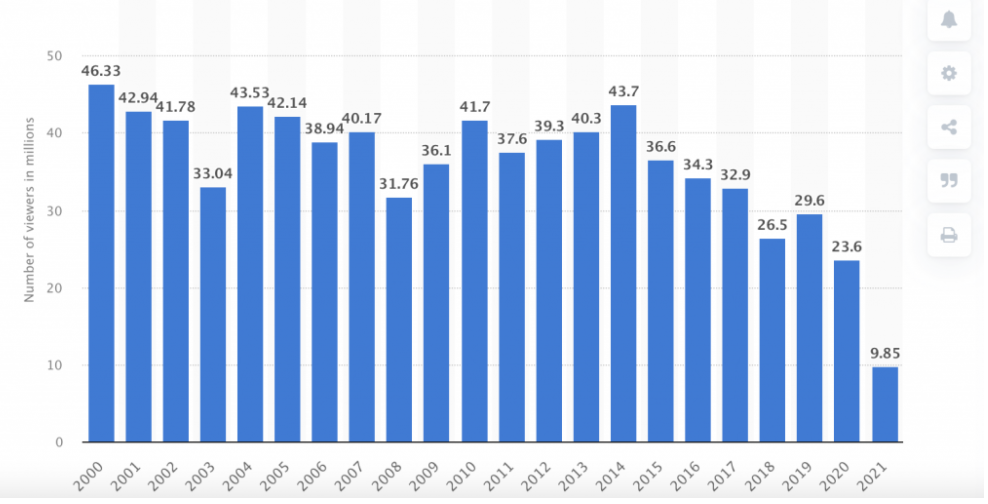
“Do I have any proof for my suspicions? Well, only circumstantial, but there’s this: What was the very first year that Oscar ratings plummeted from the 40 million range to the 30 million range? It was 2003, the year after Denzel and Halle won, that’s when.

“And what other shift in the Oscars coincided precisely with the steady decline in viewers? The decline began right after movies like Brokeback Mountain and Milk and Dallas Buyers Club started winning major awards, that’s when. So those changes that caused the Oscars to lose wrongheaded viewers were not anything the Oscars did wrong. Those viewers stopped watching when the Oscars began doing things right. It was the new era of [embracing] progress that upset several million viewers. How’s that for a theory?”

“Licorice Pizza,” If You Will

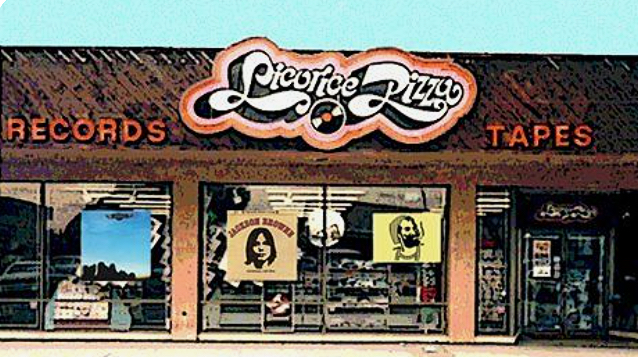
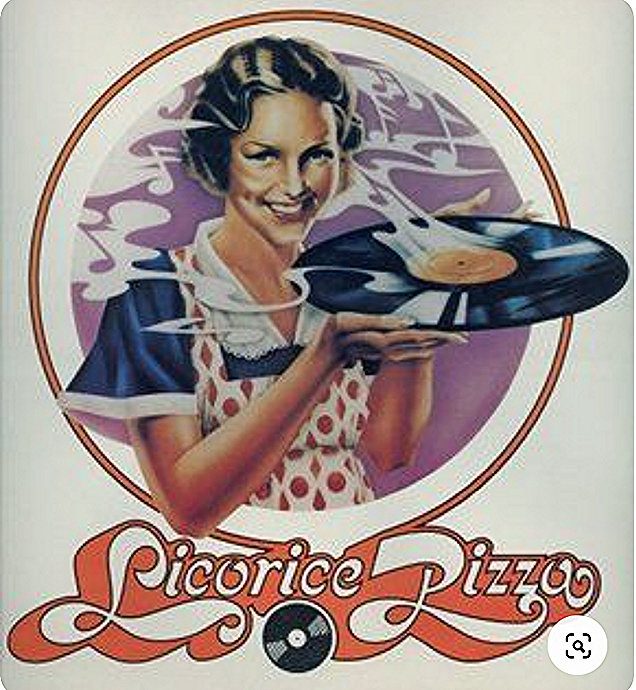
World of Reel‘s Jordan Ruimy is reporting that the actual, real-deal title of Paul Thomas Anderson‘s Soggy Bottom (a working title that’s been kicking around for months) is Licorice Pizza.

The title doesn’t do much for me, but I guess it’s okay. PTA’s film is set in Los Angeles in the early to mid ’70s. Back then Licorice Pizza was a Southern California-based record store chain with 34 locations, including one on the Sunset Strip.

3:35 pm: Wikipedia has run with the new title, although their page is still titled “Soggy Bottom“.

Ruimy has linked to a Reddit guy named The_Horace_Wimp who claims to have attended a London screening of a 35mm print of American Graffiti earlier today, and that the trailer for Licorice Pizza played before it began. Others on Twitter are also reporting that this new title is legit.

Read more

Rushfield Explains The Basics

Awards Daily‘s Sasha Stone recently asked “the best and the brightest” several basic questions about what’s broken and needs fixing in the Oscar realm. One of the questions was “why do you suppose the [Oscar telecast] ratings have dropped so dramatically since 2014?”

Here’s how The Ankler‘s Richard Rushfield replied:

1. RR: “The sector became bloated and self-important, glutted on a eight-month long season.” HE sez: The season was eight months long between ’20 and ’21, true, but it’s been a six-month thing for years and is reverting back to that.

2. RR: “They rested on an ancient creaky format that in every way is at odds with the entire drift of the culture.” HE sez: True, but how exactly could they have remedied this problem? The Oscars have been “the Oscars” since the late 1920s, and the televized versions hasn’t substantially changed since the early ’50s. Older viewers like the sameness of it all — the red carpet, the smart-ass jokes, the emotion, the tributes, the buildup to the big awards, etc. It is what it is. Millennials watch to some extent; Zoomers don’t care.

3. RR: “Hollywood stopped minting new stars that people were excited to see. The ones that did come along, we see far too much of already via social media, etc. Glamour requires some level of scarcity. Instead we’ve flooded the market with them.” HE sez: The only stars I care deeply about are ones who came to prominence in the ’90s and aughts, for the most part.

4. RR: “The stars when they were up there had became a bunch of pompous bores. Take a creaky old format, and throw in a bunch of fantastically rich people scolding their audience — and you’ve got a formula to chase audiences away in droves.” HE sez: Rushfield’s use of the term “scolding the audience” means industry wokesters admonishing Joe and Jane Popcorn for not getting with the progressive program.

5. RR: “But most of all, above all else, it’s a race between a bunch of movies that very few people have even heard of, let alone seen. Who is going to watch a race between some movies they’ve never heard of?”
HE sez: I’ve explained why Average Joes aren’t watching wokester movies.

6. RR: “If they can’t figure out how to address that last problem, then no other fix is going to make any difference.” HE sez: They’ll never fix this problem. The elite Hollywood community is going to have to accept the fact that they’ve politically isolated themselves from the hoi polloi, and that the Oscar awards no longer mean much to most of the country, and that they’re basically become about the values of “aggressive progressives.” The Oscars will simply no longer be the cash cow they once were, and they’ll have to downshift in scale and expense.

“Increasingly Niche Tastes”

In a recent “What I’m Hearing” column about the Motion Picture Academy’s plan to somehow arrest and even turn around the ratings plunge that has been increasing over the last five or six years, Matthew Belloni wrote that the “increasingly niche tastes of Academy members” are a principal reason why most people haven’t seen the films up for awards.

The whole rundown was posted earlier today by Awards Daily‘s Sasha Stone.

What Belloni means by “increasingly niche tastes” is that since ’16 or thereabouts, the film industry has increasingly fallen under the grip of aggressive progressives, otherwise known as wokesters (POCs, #MeToo-ers, LGBTQs, obliging guilty liberals, kowtowing corporations). And they’ve been calling the shots more and more, and it was this increasingly dominant influence that made last spring’s Steven Soderbergh Oscar telecast seem like such a suffocating experience.

We all understand that the Soderbergh Oscars absolutely killed whatever was left of the old mystique. They made it clear that the Oscars had been transformed into a West Coast Tony awards thing — awards that reflected the mentality of an elite membership that had its own progressive game going on, and to hell with skillfully finessed movies for the politically neutral meatheads — i.e., films that reach out to people and reflect their lives as actually lived.

(Sidenote: it’s heartening to note that one such film is Reinaldo Marcus Green‘s King Richard, due from Warner Bros./HBO Max on 11.19.)
Five or six years ago the “increasingly niche tastes” crowd, understandably goaded by the election of Donald Trump, decided that the older-white-male dominance had to be strongly diminished and that the world needed to change. And so the industry, Marvel and D.C bullshit franchises aside, needed to increasingly forego the usual escapist or emotional engagement elements and/or baseline reflections of real life that movies have historically provided over the decades, which meant mostly ignoring the experience of average Americans who live outside the NY/LA bubble.

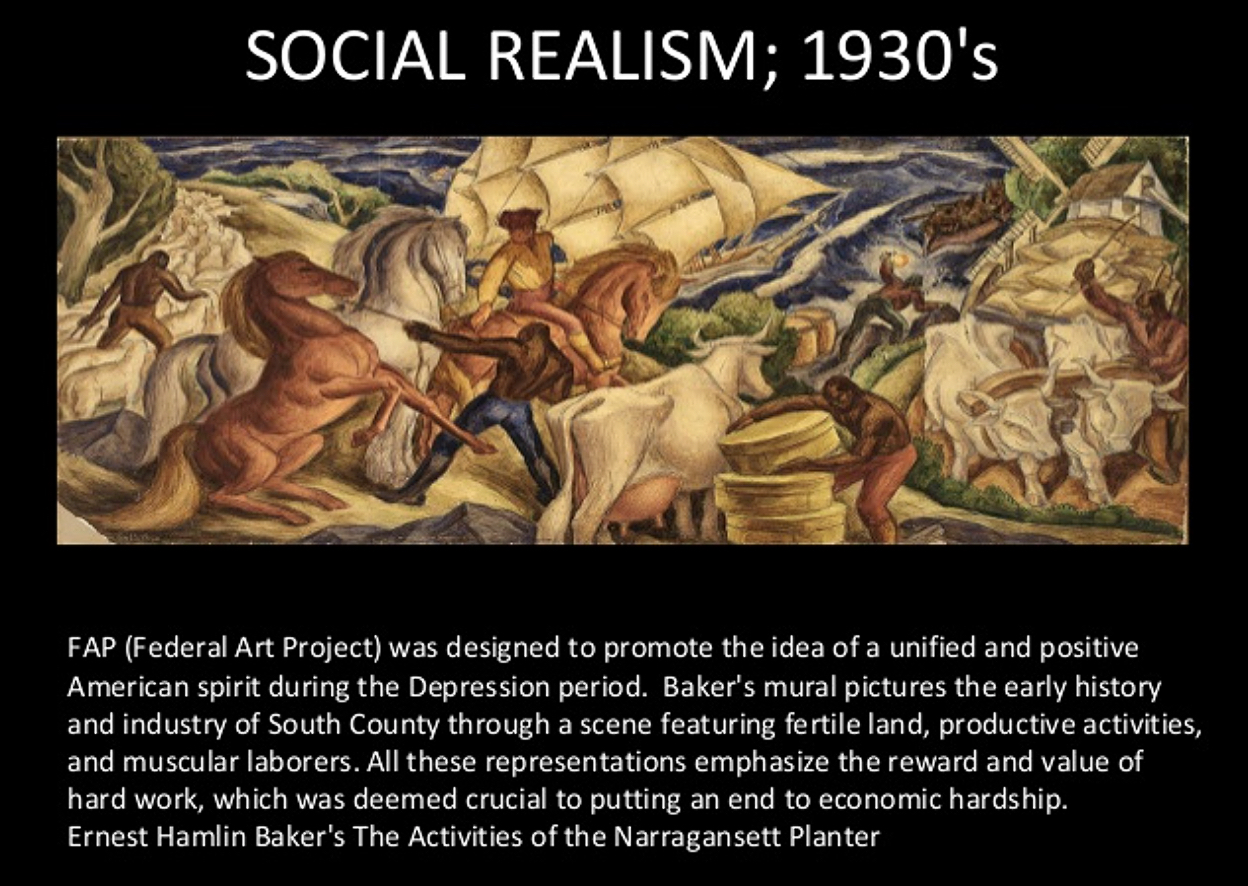
Streaming changed everything and the pandemic really up-ended the salad bar, but what’s been implemented more and more over the last five or six years is a variation of the social realism movement that took hold in the modern art world of the 1930s.

I explained it all on 3.22.21 in a piece called “Wolfe Reminds, History Repeats.” Here it is again in a nutshell:

“Since wokeness began to manifest in ’17 and certainly since the pandemic struck, the movie pipeline has been losing steam and under-providing, to put it mildly. Nothing even approaching the level of Spotlight, Manchester by the Sea, Call Me By Your Name, Dunkirk, Lady Bird, La-La Land, the long cut of Ridley Scott‘s The Counselor, Zero Dark Thirty or Portrait of a Woman on Fire has come our way from domestic filmmakers.

Above and beyond an array of pandemic suffocations, a significant reason for the strange absence of robust cinema, for this general faint-pulse feeling, is (wait for it) wokeness and political terror.

Read more

Unmitigated Cash Grab

Since the release of the original and revolutionary The Matrix 22 and 1/2 years ago the red pill vs. blue pill metaphor has completely embedded itself into the mass mindset. You knew it had really penetrated when Elon Musk invoked it 16 months ago, and Ivanka Trump responded “taken!” The blue pill means safety and security by way of mediocrity and tedium, and the red pill is about illumination and “whoa!” and adventures in Wonderland. We’ve all been chewing on this notion since the late Clinton administration.

And yet Lana Wachowski, director, co-writer and producer of The Matrix Resurrections (Warner Bros., 12.22), felt obliged to literalize and re-boot the metaphor by showing us actual pills of a red and blue color in the new trailer. My response was “really?” The metaphor has to be re-explained because…what, GenZ never got the memo or something?

Why would anyone want to make another film with the word “Matrix” in it at all? It’s been 18 years since the double-shot poison cocktail of The Matrix Reloaded and The Matrix Revolutions killed this franchise but good. Why would anyone want to drink from the same glass again?

From “Shoulda Quit When They Were Ahead“, posted on 4.1.14: “I remember paying to see the original The Matrix in the old multiplex at the Beverly Connection, on the southeast corner of La Cienega and Beverly Boulevard. It was opening weekend, and I remember floating out of the theatre and listening to the chatter as the crowd trudged down the stairway exit. A visionary knockout. The first grade-A cyber adventure. Bullet time! Obviously a hit.

“For the next four years I was convinced that the press-shy Wachowskis, who’d also directed the brilliant and hot-lesbo-sexy Bound, were pointing the way into 21st Century cinema and that everything they would henceforth create would dazzle as much as The Matrix, if not more so.

“And then The Matrix Reloaded came out a little more than four years later (5.15.03) and the millions who’d flipped over The Matrix were standing around with dazed expressions going “wait…what? ” And then The Matrix Revolutions opened on 11.5.03 and that was it…dead, finished, imploded. Larry and Andy who?

Read more

Really Bad Casting

Earlier today I rented Impeachment: American Crime Story. I watched a portion of episode #1, and I just couldn’t get over the wrongness of Beanie Feldstein as Monica Lewinsky. They just don’t look similar, not even a little bit. Monica was shapely; Beanie is chubby. I can’t invest in the supposed reality. I’d like to submit, but Feldstein keeps getting in the way.

Sarah Paulson is excellent as Linda Tripp. Make that delicious. Such a brilliant actress; such a carefully measured performance; you can read her every thought and suppressed impulse.

Missed It in Telluride

Okay, I wanted to see or do other things when it was showing. I’ll catch it soon. The idea of Joaquin Pheonix playing a gentle, mild-mannered uncle seems odd. Most of us have come to accept that default Joaquin means being self-absorbed and caught up in the usual melancholy and smoking cigarettes, etc.

Funny

A friend said the other day that my reactions to the bowling pin films seemed a bit harsh. I explained that since I’ve been more or less thrown out of the house, I’m simply not qualifying my reactions with political considerations.

There’s certainly no chance of sweet-talking my way into the good graces of these monsters. Last weekend I looked into the calculating eyes of Netflix’s Albert Tello…wow. But this is the business I chose to live and work in. A world defined by situational fair-weather alliances that can turn on a dime. We’re living through a grotesque and puritanical Robespierre chapter in our history, and as much as it pains me to admit it, I seem to be a variation on Georges Danton.

All good critics lead with the positive. I don’t mean that they hype stuff cynically, but they put their enthusiasm out there as much as honesty allows. All my life I’ve been looking for stuff to love, and when I’ve found a film that either hits the mark or comes very close I’m never shy about saying so, or about looking at a glass that’s half full and saying that in so many words. (Like my review of Becoming Led Zeppelin — an imperfect film that I liked all the same.) On the other hand, another part of HE’s mission is to take the wind out of the sails of stuff that’s been overpraised.

A friend agrees with me about Jane Campion‘s film, and strongly suspects, as I do, that Average Joe audiences are going to hate it. Because there’s just not enough going on, for one thing. Two-and-a-half hours of a grim and chilly Montana milieu, and all leading to a message about suppressing one’s own homosexual nature being bad. Not to mention punching a defenseless horse, and don’t get me started on castrating bulls with a sharp blade.

I was reminded that last weekend Pablo Larrain, Joe Wright and Alexander Payne were saying how much they admired Dog. Which means less than zero, of course, as fellow directors are always fellating each other.

The fact that four Gold Derby prognosticators (Anne Thompson, Chris Rosen, Matthew Jacobs, Thelma Adams) have The Power of the Dog as the top of their Best Picture rosters means even less — they’re basically saying “go, Jane…we’ve been admiring your work for years and our ardor hasn’t cooled.” Just wait and see what happens when The Power of the Dog starts streaming…just wait.

Three Bowling Pins

Kenneth Branagh‘s Belfast, Jane Campion‘s The Power of the Dog and Pablo Larrain‘s Spencer screened in Telluride last weekend, and in my opinion they’re all shortfallers. Certainly as far as the Movie Godz are concerned.

Each is destined to slam into a big thick concrete wall. Joe Popcorn and your straight-shooting, shake-it-off Academy and guild types will see to that. Every year we have to re-learn the difference between rarified mountain-air reactions vs. sea-level reality. We’re about to be schooled yet again.

There was only one film that hit a grand slam last weekend, and that’s Reinaldo Marcus Green, Zach Baylin and Will Smith‘s King Richard — period. A Best Picture Oscar nom is 100% assured, and even at this early date the odds seem to favor a win. Not to mention a Best Actor trophy for Smith, and a likely Best Supporting Actress nom for Aunjanue Ellis, who memorably portrays the brutally honest wife of Smith’s Richard Williams and the mother of tennis legends Venus and Serena Williams.

Right now certain critics, award-season handicappers and industry voices are telling each other that Belfast, The Power of the Dog and Spencer are award-season hotties. They’ll continue to insist upon this narrative for the next two or three months, and eventually the smoke will clear.

Belfast (Focus Features, 11.12), which producer Sid Ganis believes to be one of the best films he’s ever seen in his life, is a mawkish family drama that channels The Wonder Years, and delivers a vague impression of the “troubles” that plagued northern Ireland in the ’60s and ’70s. Plus a monochrome palette, perhaps the most insufferably cute and endearing performance by a child actor (Jude Hill) in film history, a dab or two of puppy love, Cieran Hinds‘ genuinely charming performance as a kindly grandpa, and loads and loads of Van Morrison. Then again the curious affection some have for this film (watch it win the TIFF audience award) may keep the torches burning.

The Power of the Dog is a chilly and perverse cattle-ranch drama that insists over and over that it’s a very bad thing for toxic males to suppress their homosexuality. (HE agrees.) Campion is a top-tier filmmaker but Dog‘s milieu is grim and stifling and melancholy, like the dark side of the moon. Yes, Benedict Cumberbatch is excellent as the enraged and closeted Phil, but he’s basically doing Daniel Day Lewis‘s “Bill the Butcher” in Gangs of New York. Or, if you will, “Daniel Plainview” in There Will Be Blood.

Spencer is an oddly surreal dreamscape flick that uses Lady Diana‘s anguished and loveless marriage to Prince Charles and a 1991 Christmas celebration at Queen Elizabeth’s Sandringham estate as the basis of what boils down to an elite psychological meltdown flick…”poor free-spirited, pheasant-sympathizing, pearl necklace-loathing Diana vs. the cold, bloodless gargoyle royals,” etc. Yes, Stewart will most likely be Oscar-nominated for Best Actress — her performance is definitely commendable.

Same Teaser I Saw A Month Ago

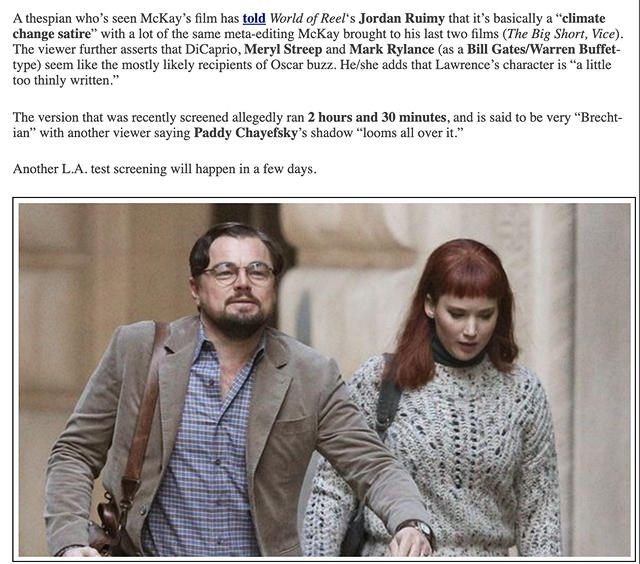
In early August a bootleg copy of a Netflix teaser for Adam McKay‘s Don’t Look Up appeared on YouTube. Today a similar teaser appeared legitimately. Same Leonardo DiCaprio chin-beard and anxiety attack, same sense of hurtling meteoric panic-anxiety, same Jonah Hill smiling conference line about “whoa, dude…you are stressing me out“, etc.

Bemoaning The Brogue

Four days ago (Friday, 9.3) I tweeted about one of my Belfast problems — the partly indecipherable Irish accents. Cue the usual HE knee jerk derision about my ears being the problem…naturally. But earlier today (9.7) along came Rory Carroll’s Guardian piece (“Hollywood Struggling With Accents in Branagh’s Belfast”) about others having the same issue.