Shame & Glory of Golden Globes

BEST MOTION PICTURE – DRAMA

The Power of the Dog (Netflix)

BEST PERFORMANCE BY AN ACTRESS IN A MOTION PICTURE – DRAMA

Nicole Kidman, Being the Ricardos

BEST PERFORMANCE BY AN ACTOR IN A MOTION PICTURE – DRAMA

Will Smith, King Richard

BEST MOTION PICTURE – MUSICAL OR COMEDY

West Side Story (20th Century Studios / Walt Disney Studios Motion Pictures)

BEST PERFORMANCE BY AN ACTRESS IN A MOTION PICTURE – MUSICAL OR COMEDY

Rachel Zegler, West Side Story

BEST PERFORMANCE BY AN ACTOR IN A MOTION PICTURE – MUSICAL OR COMEDY

Andrew Garfield, Tick, Tick…Boom!

BEST MOTION PICTURE – ANIMATED

Encanto (Walt Disney Studios Motion Pictures)

BEST MOTION PICTURE – NON-ENGLISH LANGUAGE (FORMERLY FOREIGN LANGUAGE)

Drive My Car (Japan / Janus Films)

BEST PERFORMANCE BY AN ACTRESS IN A SUPPORTING ROLE IN ANY MOTION PICTURE

Ariana DeBose, West Side Story

BEST PERFORMANCE BY AN ACTOR IN A SUPPORTING ROLE IN ANY MOTION PICTURE

Kodi Smit-McPhee, The Power of the Dog

BEST DIRECTOR – MOTION PICTURE

Jane Campion, The Power of the Dog

BEST SCREENPLAY – MOTION PICTURE

Kenneth Branagh, Belfast

Read more

Saget Suddenly Passes

TMZ is reporting that Full House‘s Bob Saget has died. He was only 65, and in the middle of a multi-city tour and, to go by recent tweets, having a great time. “Multiple sources” have told TMZ that Saget passed late this afternoon (Sunday) at Orlando’s Ritz-Carlton. Quite unexpectedly. Very sorry.

Finest Rendering Yet

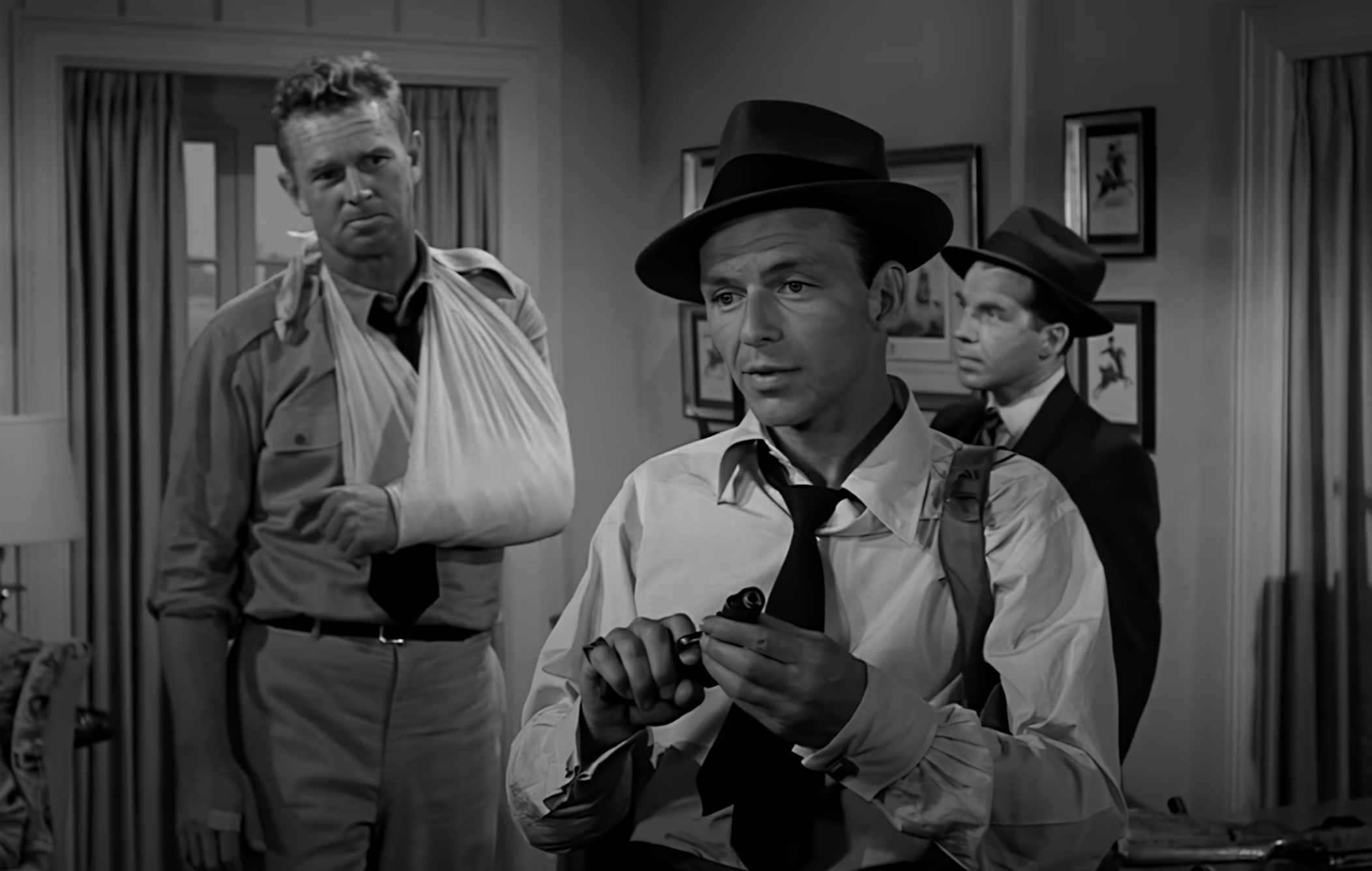
Lewis Allen and Richard Sale‘s Suddenly (’54) has been in the public domain for decades. I’ve seen different versions maybe five or six times. They’ve ranged from mildly tolerable to better-than-decent to good to first-rate. Plus I own what I believe is probably the best-quality Bluray version. But I honestly believe that the GoldenAgeClassics 4K UHD version, which was posted on 1.6.22, is the best I’ve ever seen.

The detail is exquisite, and the monochrome tones and shadings are as rich and natural and un-pushed as anything I’ve ever seen via streaming. I’ve mirrored this version on my 65-inch and it looks great. Plus the corners of the 35mm image are rounded, which indicates that every square inch in every shot has been rendered — no cropping whatsoever. Acres of head room. Hats off to the Golden Age guys…excellent work as far as it goes.

Lang’s Critical Support of “Bottle Rocket”

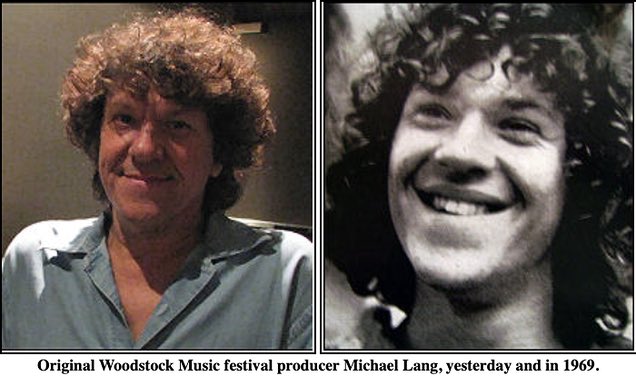
I’m sorry to report that Woodstock organizer-producer Michael Lang has passed at age 77. Taken by cancer (non-Hodgkin’s lymphoma) at Manhattan’s Sloan Kettering hospital…tough break. I last spoke with Lang at the June 2009 Manhattan press junket for the Woodstock Bluray, which I own to this day. He struck me as lucid, settled, self-accepting and open to possibilities.

It’s less well known that Lang provided the funding for the re-shooting (or extended shooting) of Wes Anderson and Owen Wilson‘s original black-and-white Bottle Rocket short. Here’s how I explained it on 7.28.11:

It’s fairly common knowledge that the key movers and shakers in turning Wes Anderson and Owen Wilson‘s Bottle Rocket (’96) into a “go” feature were the late Polly Platt, producer-screenwriter L.M. Kit Carson and concert promoter and Woodstock ’69 maestro Michael Lang.

Bottle Rocket was green-lighted because Carson slipped the 13-minute black-and-white Bottle Rocket short — directed by Anderson, co-written by Wes and Owen and exec produced by Carson and Lang — to Platt in early ’94. The short had just played at Sundance, and Platt was involved in cutting the doomed musical I’ll Do Anything with director James L. Brooks.

Carson had seen a few minutes of rough footage that Anderson had shot, and convinced Lang to invest $7500 to pay for the short’s production costs.

“Polly was the person who persuaded Jim Brooks to watch the Bottle Rocket short during lunch break,” says Carson. “They were in the editing room on I’ll Do Anything, and she stuck the tape into a VHS player and and made him watch it. When it ended Brooks looked up and said, ‘What’s anybody waiting for? Make a deal. This is a go picture.’ No-shit-thanks, Polly Platt, for this movie.”

Here’s part 1 and part 2 of the original Bottle Rocket short.

“Wes and Owen had showed me some rough footage,” Carson recalls. ” It wasn’t even a cut-together film. I got Michael Lang to write a check for $7500, and we took that and re-shot the short.”

Current Sundance honcho John Cooper was a programmer at the time, and he told Carson’s partner Cynthia Hargrave that the short “‘has to be 13 minutes and no longer” so that’s the length they cut it to.

After the Sundance showing Carson sent the tape to Platt at the recommendation of producer Barbara Boyle, who’s now a senior professor/chair/something-or-other with UCLA’s film program.

Bottle Rocket being greenlighted by Brooks and Columbia “was a major moment….a comet coming out of the universe and hitting Wes Anderson on his left shoulder,” says Carson.


(l. to r.) The late Polly Platt, Wes Anderson, L.M. Kit Carson, Michael Lang.

Something Extraordinary

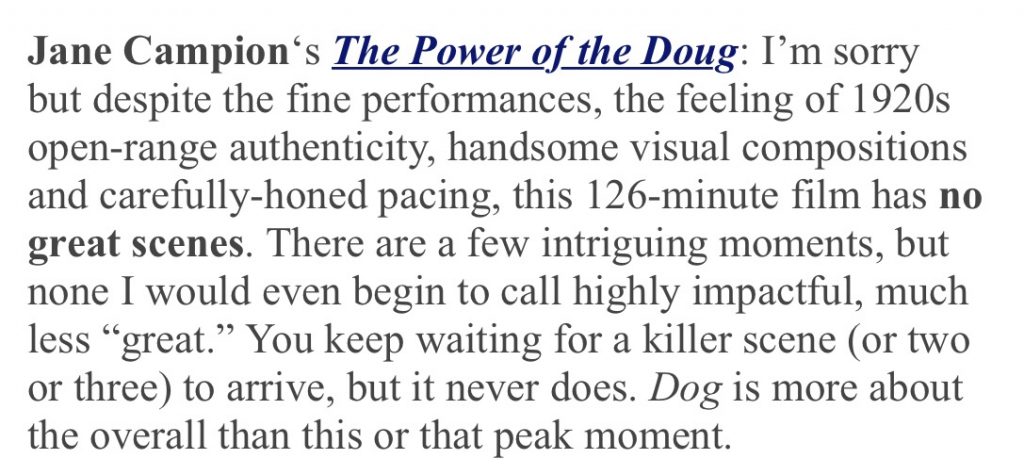
…and perhaps even breathtaking happened in my head when I accidentally mis-titled Jane Campion’s 1920s Montana western. All I knew was that the attitude suggested by The Power of the Doug felt curiously liberating. If the first name of Benedict Cumberbatch’s smelly, snarly, well-educated, self-loathing gay guy had been “Doug” instead of “Phil”, the whole package would have radiated a different mood or tone. Just don’t ask me to explain.

Movie-Making As It Used To Exist Has Been “Called Off”

I’m not saying that exploratory, real-world, adult-level filmmaking has disappeared altogether. It pops up on rare occasions — Parallel Mothers, King Richard, The Lost Daughter, Drive My Car, The Worst Person in the World, Riders of Justice, Zola, Licorice Pizza, The Card Counter. It just seems that so many films are woke instructionals — movies that seek to educate audiences about how things shouldn’t be and where our brave and gleaming future lies, and how things should have been in the past (i.e., presentism).

Woke Stalinism hasn’t entirely taken over the streaming narrative art form (i.e., movies), but it’s certainly changed the game. The basic idea is to instruct the general population how to think and behave. It’s 1930s social realism with a 21st Century spin. Movies are no longer for the most part about entertainment or transportation or soul-massaging — they’re about lessons from the comintern.

The Power of the Dog instructs all macho stinky gay guys to own their lives and bodies and not devote themselves to making the lives of others so miserable. The Tender Bar instructs us to disregard the fact that young lads who resemble a Jordanian version of a tweener Omar Sharif can easily and naturally grow up to look like Tye Sheridan, or at least that it’s more important to pretend this could happen than to acknowledge biological reality. (While concurrently instructing all film critics to not even mention this aspect of the film, if they know what’s good for them.) Belfast tells us to smile and bask in the warmth of the family unit and the joys of puppy love and karaoke-style singing. (And not so much about “the troubles”, especially considering that Kenneth Branagh‘s childhood family members are Protestant and therefore somewhat loyal to the British.) The found footage of Summer of Soul instructs us to celebrate African-American culture and the joy of great thumpin’ and crankin’ and wailin’ (including the sounds of the legendary Sly and the Family Stone), and to remind industry and press veterans that if they fail to nominate Summer of Soul for Best Documentary then they might be racists, and might therefore have to face appropriate penalties for same.

Posted on 3.22.21: “The bottom line is that the erratic pursuit of sweeping, penetrating, soul-touching art (a rare achievement but one that has occasionally manifested over the decades) has been more or less called off, it seems, because such films or aspirations, in the view of certain #MeToo and multi-cultural progressives, don’t serve the current woke-political narrative.

“There is, in fact, a historical precedent for what’s going on right now, and it’s nicely recounted on page 30 and 31 of Tom Wolfe‘s “The Painted Word“. Because what happened in the modern art world in the 1930s — i.e, the dominance of “social realism” — precisely mirrors what’s going on today.

“For upscale, sensitive-person, social-reflection dramas have fallen under the influence of a new form of ’30s social realism and, it could certainly be argued, are being used to illustrate and argue against social ills that wokesters regard as evil and diseased. The result has been a new form of enlightened propaganda cinema.”

Friendo: “Yellowstone shocked everyone when it turned out to be a huge hit, even though it’s basically hardcore macho men and sexy women. Which is something you never get from movies these days. Everything has been muted, feminized, Stalinized. Putting a female in the lead of a movie like the most recent Terminator…who gives a shit? Wokesters have just spun things out with no real sense of who they are — it’s just ‘knock down the next thing.’ But what they’ve done to film art is crushing, just crushing.”

Jordan Ruimy: “I read your ‘wokeness has taken over American film’ piece (we’ve been saying this since Moonlight / Get Out**). It’s honestly a great reason to just full-on embrace European cinema. They don’t have much wokeness. Cannes and Venice, brah. Very soon our yearly top ten lists will be 90% Euro cinema.”

** HE adds: “And the kowtowing tyranny of Bob Strauss-style critics.”

Thoughtful, Open-Hearted Hound with Values

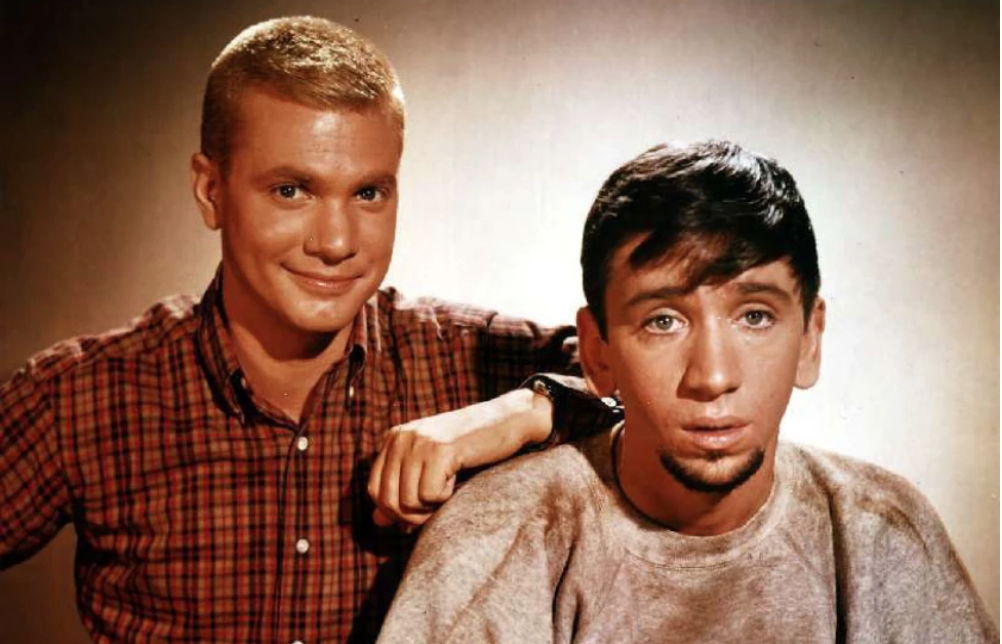
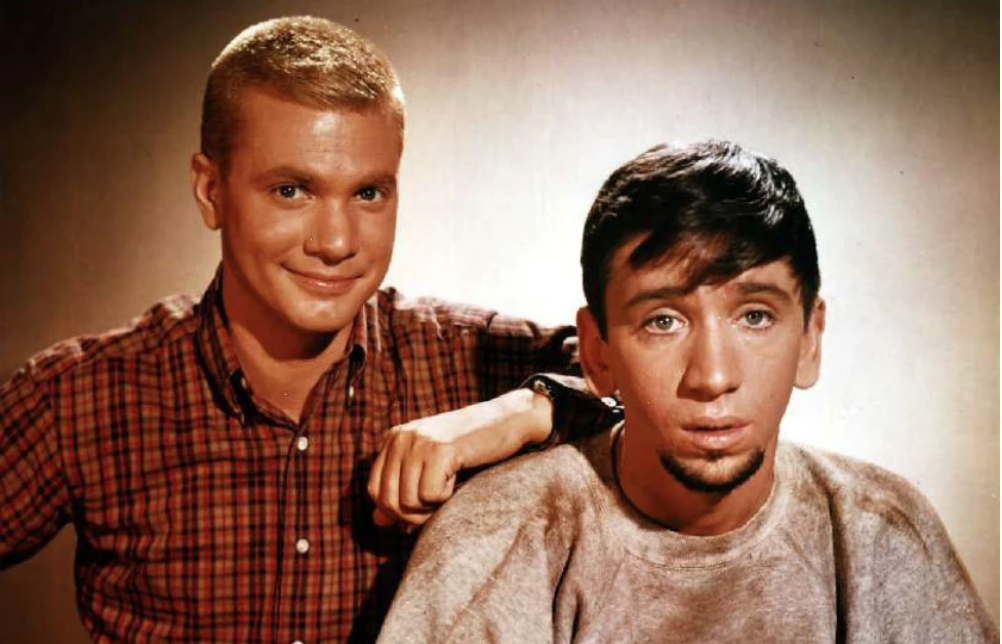
Dwayne Hickman, forever and indelibly identified as the star of The Many Loves of Dobie Gillis (September ’59 to June ’63), passed this morning at age 87. Hugs and condolences to friends, fans, family, former colleagues.

And by “former colleagues,” I’m partly referring to Dobie Gillis costar Warren Beatty, whose path and potential in life led to historic accomplishments, Oscar nominations and wins, and the altering of cinematic culture. During his heyday Beatty was an extraordinary, legendary, real-life hound while Hickman only played one, and the kind of hound, by the way, who never really experienced an erection (even an erection of the mind) or coped with primal lust and longing and hot blood.

For Dobie Gillis‘ romantic passion was more in the realm of Percy Bysshe Shelley than Lord Byron — he sought love and assurance and the perfect mating with a sister of the spirit — a soul priest in search of the perfect nun. It’s not that Dobie tried and failed to get laid during the four-year run of the series — he never even seemed cognizant of the idea. Wokester prudes can point fingers at Beatty’s off-set behavior in the ’60s, ’70s and ’80s, but at least he was alive and pulsing on the planet earth.

But Hickman’s Dobie was kind and considerate and thoughtful — he believed in middle-class values (the show was one of Hollywood’s final expressions of the sleepy and hermetic 1950s, ending only a few months before the murder of JFK and the onset of ’60s social turbulence) and he identified, remember, with Pierre Auguste Rodin‘s “The Thinker”.

Born in 1934, Hickman costarred with the recently departed Dean Stockwell in Joseph Losey‘s The Boy With The Green Hair (’48) and was, at the time, considerably taller than Stockwell.

Hickman’s first big score was a recurring role on The Bob Cummings Show (’55 to ’59). He also played a Marlon Brando-like rebel in Rally ‘Round the Flag, Boys! (’58). Hickman began playing the teenaged Gillis at age 25, and with blonde hair yet. (His hair reverted to brown in subsequent seasons.) His biggest post-Gillis score was the role of “Jed” in Elliot Silverstein‘s Cat Ballou (’65), along with costars Jane Fonda, Lee Marvin and Michael Callan.

Incidentally: Hollywood Elsewhere has always identified with Bob Denver‘s Maynard G. Krebs, the difference being that while Maynard was known for freaking out whenever he heard the word “work”, HE freaks whenever anyone mentions the word “woke.”