See It Differently

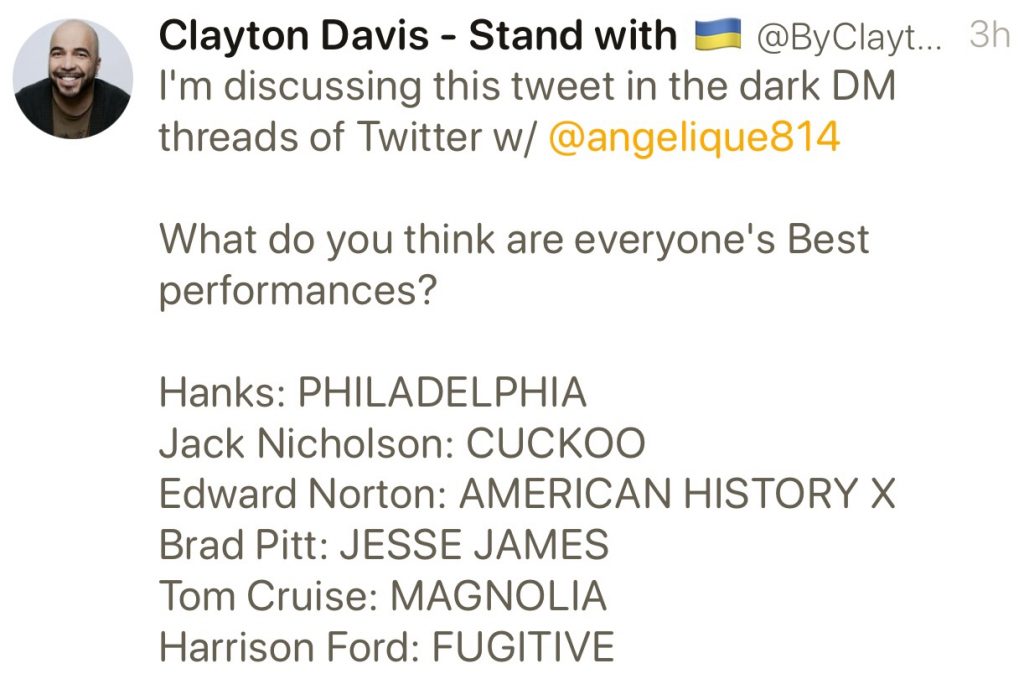
I kind of agree with Clayton Davis about Tom Hanks…actually I don’t. I think Hanks’ best performance was in Cast Away, followed by Big. (Denzel Washington was significantly more real-deal than Hanks in Philadelphia.)

HE sez…

Jack Nicholson: THE LAST DETAIL

Edward Norton: PRIMAL FEAR

Brad Pitt: MONEYBALL

Tom Cruise: JERRY MAGUIRE

Harrison Ford: WITNESS

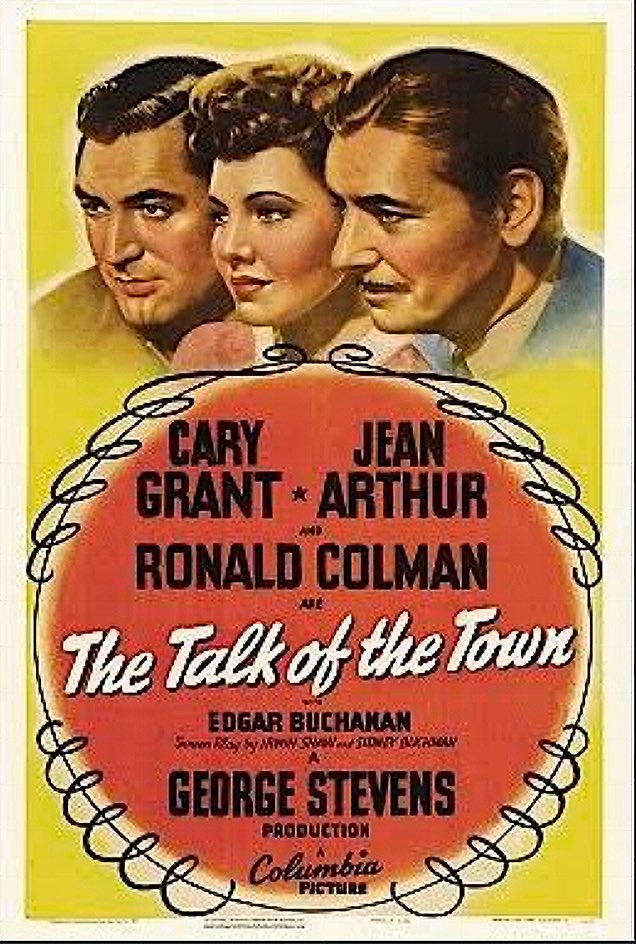
“Talk of the Town” Given Bum’s Rush…Again

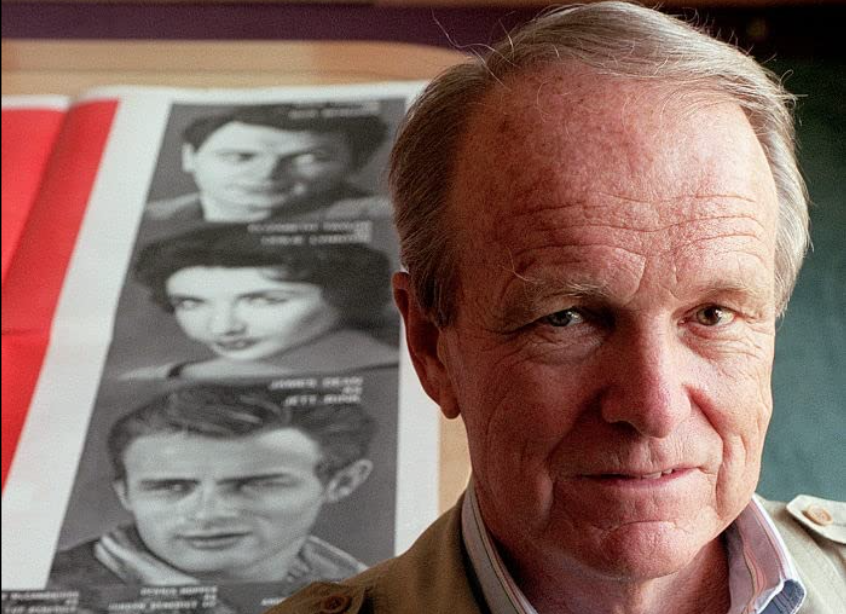
George Stevens: A Filmmaker’s Journey (’84), an illuminating study of the legendary director of Gunga Din, A Place in The Sun, Shane, Giant and The Diary of Anne Frank, is one of my all-time favorite biographical documentaries.

Directed by Stevens’ illustrious son George Stevens Jr., a long-time pillar of the Hollywood community who recently celebrated his 90th birthday, the 110-minute doc teems with familial warmth, first-hand recollections and classic Hollywood bon ami.

I first saw it at an Academy screening in March of ’85. (Or so I recall.) It was a huge moment for me personally in that I was able to shake hands with Cary Grant during the after-party. Grant had starred in three Stevens filmsPenny Serenade (’39), Gunga Din (’39) and The Talk of the Town (’42). And yet, oddly, the doc had skipped over the latter effort, a pro-labor, anti-ownership political comedy that costarred Jean Arthur and Ronald Colman.

During my 25 or 30 seconds of Grant time I started to mention my disappointment and slight puzzlement about The Talk of the Town‘s absence in the doc, but them someone else butted in and I lost the moment.
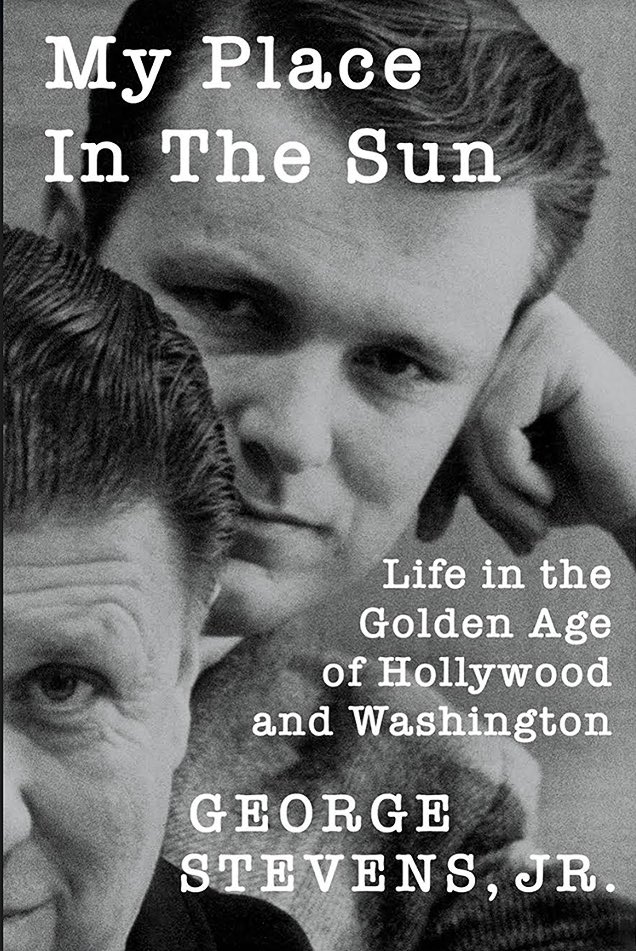
Flash forward 37 years to last night, when I read a little less than half of Stevens, Jr.’s “My Place In The Sun” (University Press of Kentucky, 5.17.22), a memoir and TV a first-hand witnessing of so many fascinating and legendary Hollywood moments.

I had hoped that, being a book and all, it would provide the kind of microscopic observational detail that George Stevens: A Filmmakers Journey had been obliged to leave out.

As a longtime fan of The Talk of the Town, I was especially hoping to read something fresh or novel about the dynamic between his dad, Grant, Colman and Arthur. Any intimate details about the making of this Oscar-nominated Columbia release would have sufficed. But George barely mentions it.

Here’s what he says:
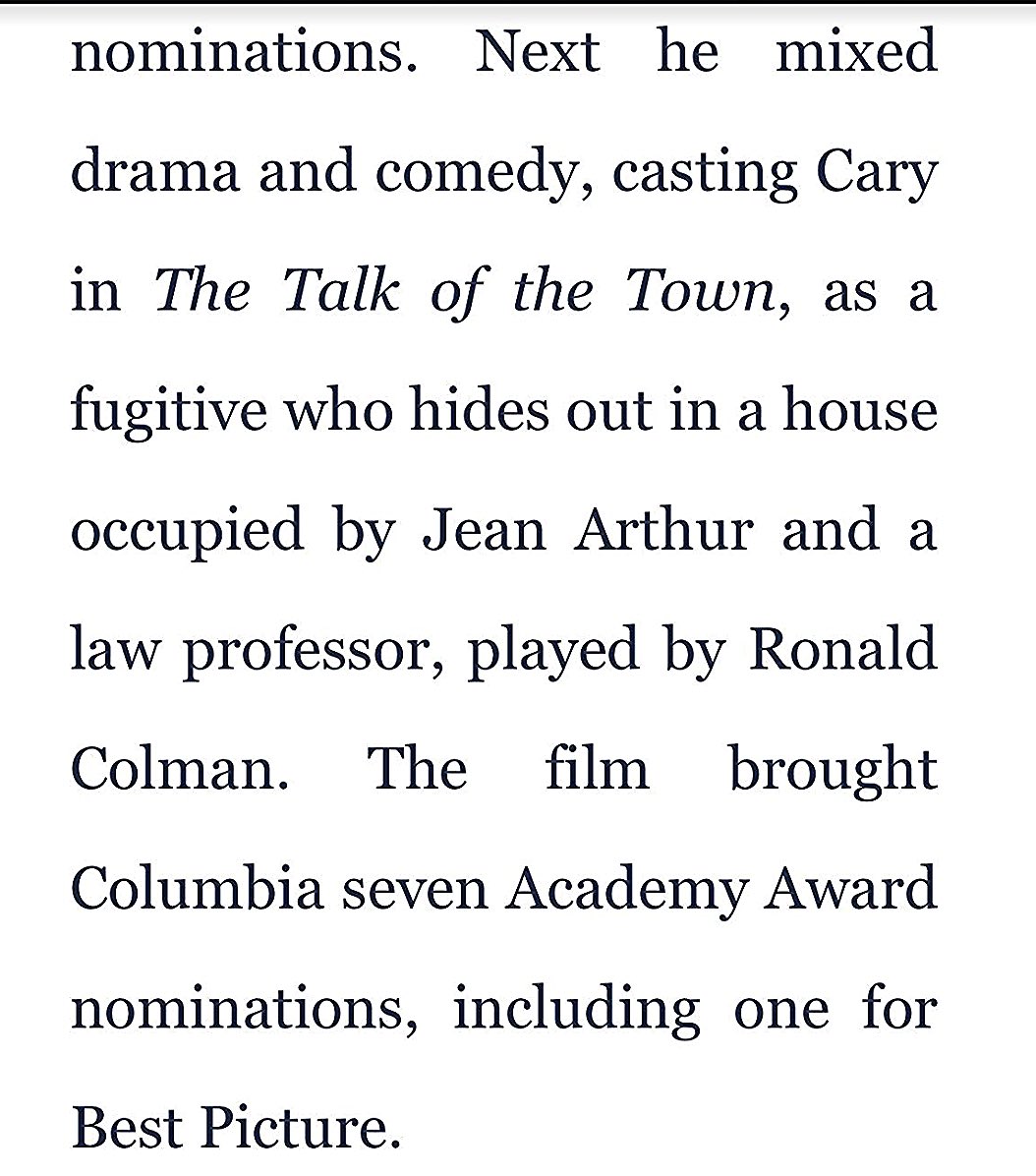
It’s fair to say that between omitting any mention of The Talk of the Town in his 1984 documentary and giving it a lousy 48 words in his new memoir, George Stevens, Jr. is not a huge fan.

I would say, in fact, that “My Place In The Sun” is not what anyone would call an exacting, deep-drill, no-holds-barred memoir. It’s very well written and heartfelt at just the right pitch, but also tidy and proper — it’s the story George wants to tell but perhaps not (all of) the story that actually went down, warts and all. But it’s fine.

It seemed obvious from the style and tone of the book that Stevens would never in a million years mention The Great Shane Aspect Ratio Bluray Skirmish of 2013 — a conflict that happened between March and April of that year, and which the honorable Joseph McBride lent his support to and which Woody Allen probably decided when he allowed me to post his views on the matter.

A friend who’s read the entire book says that the Shane aspect-ratio episode isn’t mentioned. Which makes sense. Leave well enough alone.

By any measure it was a bizarre chapter in which Stevens, Jr. advocated (or at least defended) the issuing of Warner Home Video’s Shane Bluray with a 1.66:1 aspect ratio, which the film was not shot in during the late summer and fall of 1951.

Many of us were appalled by the 1.66 thing — a cleavering that would have unmistakably compromised Loyal Griggs‘ original compositions. As we all recall, Warner Home Video ultimately folded and decided to issue the Shane Bluray in the original 1.37:1 aspect ratio. All’s well that ends well.

Don’t Touch This

“We all know that the body positivity movement has grown into something far more than just a level-headed way to prevent bullying based on bady shape. It’s become a movement that promotes something that is objectively bad for your health as something that’s healthy. Instead of taking self-responsibility to nurture your body into good health, body positivity helps you pretend that bad health is good health.” — from “If Body Positivity Logic Was Used Everywhere,” a recent YouTube posting by “AwakenwithJP.”

25 Years Later, Same “Edge” Problem

The Edge (’97) is a rugged Alaskan wilderness survival drama, and more precisely about three two men vs. one badass Kodiak bear who wants to maul and eat them.

Initially it’s about three guys who’ve crash-landed in a remote Alaskan lake — aloof billionaire Charles (Anthony Hopkins), smart-ass photographer Bob (Alec Baldwin) who’s been secretly schtupping Charles’ wife Mickey (Elle MacPherson), and Bob’s assistant Steve (Harold Perrineau).

But Steve gets killed by the bear early on (25 years ago non-white supporting players always died first in action films), and then it’s down to Hopkins vs. Baldwin and the jealousy-cuckold-greed dynamic.

The film is therefore propelled by two major conflicts — (a) the bear vs. Charles and Bob, and (b) Charles vs. Bob over Mickey, and more particularly Bob in Act Three wanting to kill Charles so he can marry Mickey and live like a rich guy.

But here’s the thing: Charles and Bob may dislike or even hate each other during a good part of the film, but they also go through a series of what you might call “survivalist epiphanies.”

What transpires between them in terms of trust, selflessness and fighting the bear together is far more profound, they realize at the end, than Baldwin wanting to continue fucking MacPherson and perhaps living off Charles’ money if and when he dies.

The Edge, in short, should have been about Baldwin’s abrasive, greedy asshole photographer learning that there are greater and more transformative things than great MacPherson sex and loads of dough. Bob and Charles should have ended the film as brothers who are much closer to each other than either one has ever been to MacPherson.

There should have been a scene in which Baldwin admits to Hopkins that he’s boning MacPherson, but adding “are you gonna stay with her after all this? I wouldn’t. I mean, I didn’t betray you, Charles…she did. You and I are fine. She’s the problem.”

The Edge premiered at the 1997 Toronto Film Festival. Director Lee Tamahori, screenwriter David Mamet and producer Art Linson all gave interviews. I can’t recall if I interviewed Mamet then or at some later point, but I definitely recall explaining my alternate Edge ending.

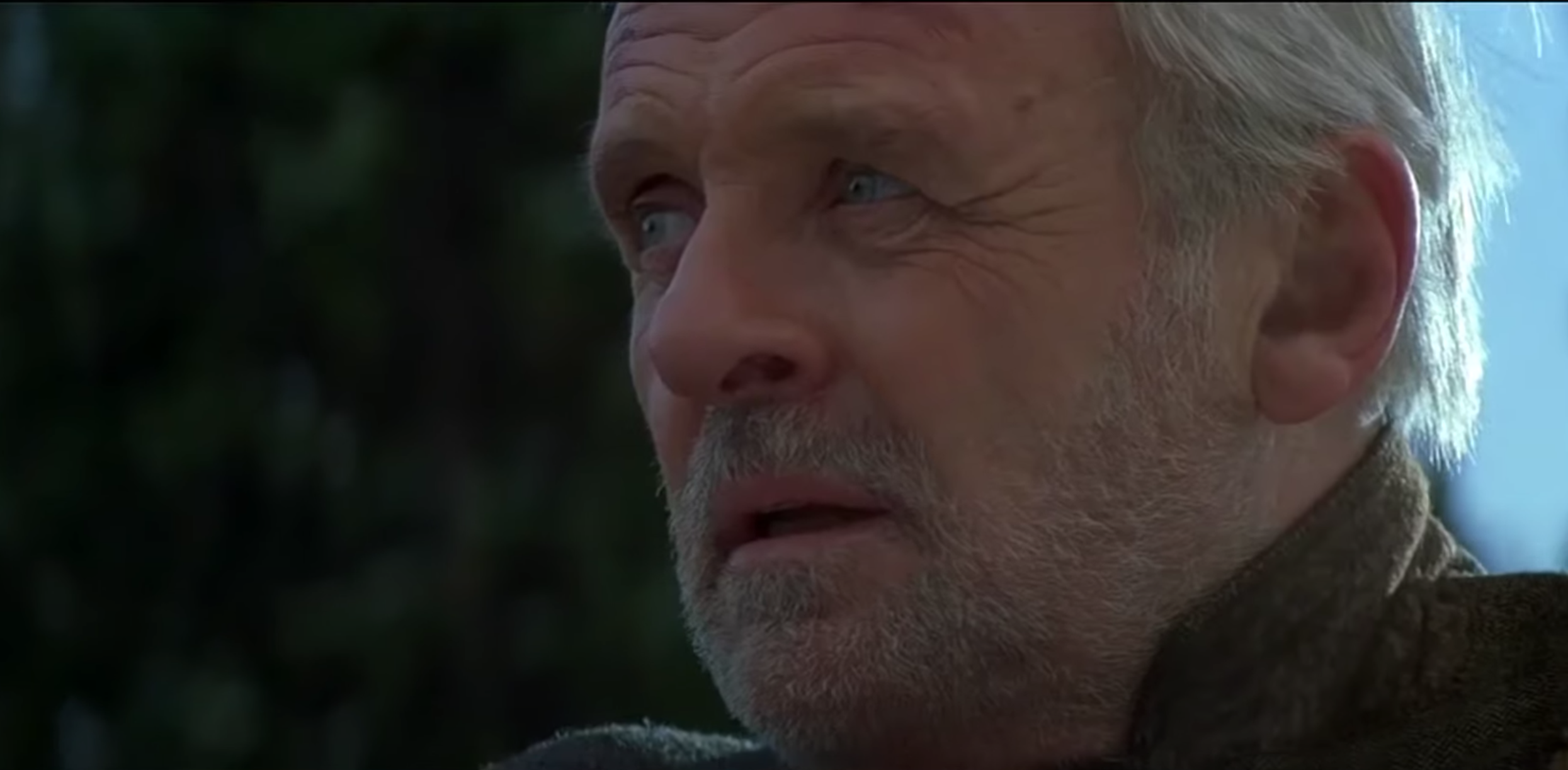
The best part in the whole film is when Hopkins mentions how some people who’ve become accidentally stranded in the wilderness wind up “dying of shame.”

If The Edge was made today, Perrineau’s character would be the strapping boyfriend of MacPherson as well as the one who survives to threaten Hopkins life at the end. Baldwin, a disposable white guy with an alcohol problem, would be killed by the bear early on.

IMDB: “In his memoirs, Alec Baldwin put much of the blame of the movie underwhelming performance at the feet of director Lee Tamahori, who he believes watered down David Mamet’s script and was more interested in action than character.”

Smart Woman Producer Submits to “Northman”

Received this morning: “Last night I saw a totally booked screening of The Northman. The room was filled with young filmmakers, largely men, and there was a crackling sense of anticipation. But when the credits rolled at the end, there was a discernible sense of deflation.

“It’s a beautiful looking film — one haunting vista after another. Stunning cinematography. An authentic universe — sweaty, muddy, bloody guts, chaos. Very believably true to life.

“But unfortunately [there’s] no emotional context. For all the [ravishing compositions], it’s submerged in ice-cold story telling. No human connection to the drama and tragedy. All that electricity and no plug.

“You keep waiting for that connection. For the satisfaction and conflict that comes with a visceral story of righteous revenge.

“But there’s no there, there.”

Dying of Shame

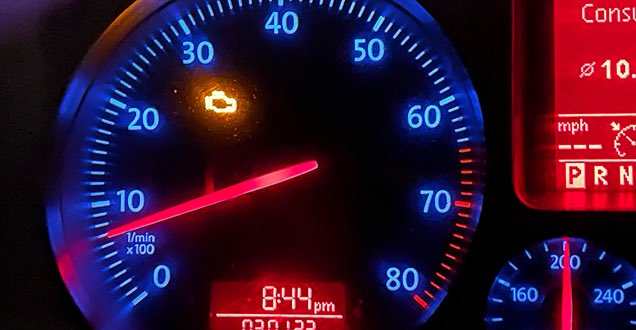
Since buying the 2009 VW Passat in late February, it’s been in the shop six times — Blutooth radio installation, cracked-windshield replacement, a noisy wheel-strut problem, repairing the coolant circulation system, sealing up a serious oil leak, replacing a faulty radiator — and right now it’s in the shop for a seventh time. This time it might be some kind of oil pump malfunction. The night before last an oil-can icon appeared — the online manual said this indicated a low oil level. I’ve since been told this actually indicates low oil pressure, but that’s not what the icon indicated.

The idea was to drive back east and then use the Passat as a train-station and grocery-shopping car — very sparingly, no regular commuting. That’ll never happen. I should have bought a Toyota or a Honda, I realize, but I couldn’t find one that was (a) less than eight years old, (b) had less than 150K miles and (c) didn’t cost an arm and a leg. So I opted for a $4K purchase of the Passat, knowing there would be issues down the road but expecting that I could at least drive it across the country with my suitcases, some boxes, my grandmother’s oriental rug, my red bicycle and the cats.

God to HE: You have wounded your life with a foolish purchase, but now I’m going to double-down and make it even worse than you feared. Did you say seven visits to your mechanic’s garage? That’s chicken feed. Let’s see if we can’t push that number up to ten.

Driving across the country is officially out. I can’t drive this car more than ten blocks without something new going wrong with it. At least in its present condition.

Now I have to fly back east before flying to Nice. Then I’ll have to return to LA and try to re-sell the car for the original $4K I shelled out, especially with my ability to show recent receipts for $4K worth of serious repairs. It’s a handsome black car with good tires and a lot of creature comforts, and with all the pricey parts replacements I’m sure it’ll be fine to just drive around as a neighborhood car.

Last night I was so profoundly upset by my catastrophic decision to buy this shithole lemon that I was unable to sleep. A fresh ambien script is waiting at my local CVS, but I had none at home. I finally crashed about 5 am. This has easily been the most financially calamitous purchase of my adult life. It’s on the same level as spending thousands of dollars on cocaine in the ‘80s. A monumental disaster.

Around 3 am I started watching Lee Tamahori‘s The Edge, the 1997 psychological action drama about Anthony Hopkins and Alec Baldwin crash-landing in the Alaskan wilderness and being stalked by a killer Kodiak bear. There’s a line that Hopkins’ character, a cuckold billionaire, says at least three times — that many people who get lost in the wild and are suddenly struggling to survive wind up “dying of shame,” as in “how did I let this happen?…how could I be so stupid and short-sighted?”

Hence the title of this post.

Read more