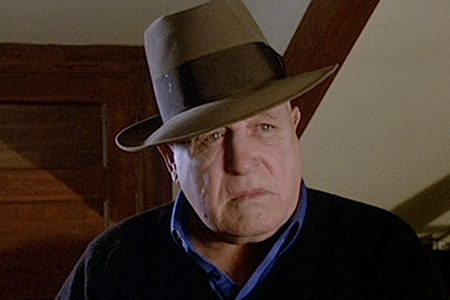
Yesterday’s Bill Murray news almost felt like an obituary. Per Eriq Gardner’s Puck report, the 72 year-old legend not only misbehaved on the Being Mortal set (i.e., straddled and mask-kissed a ‘much younger’female production staffer) but agreed to cough up $100K and change to make the issue go away.
In today’s woke-serpent world, this may mean that Murray is finished, at least for the time being. Unfair as this sounds, he’s suddenly the new Frank Langella…a soft predator who may or may not be an insurance problem because he can’t be trusted to play by the current rules. Too old to be saved or converted.
I don’t know how much of this “Murray is finished” talk is smoke and how much is mirrors, but it feels like such a shame that the mob wants him tossed…the latest name to be placed on the hit list. Maybe his alleged banishment isn’t permanent and he can slip back into film or streaming roles after a couple of years.
Friendo: “The fact that the media and entertainment industries want to assassinate Murray for doing…what’s the word? Oh, yes…next to NOTHING is most certainly a shame. Not to mention terrifying. Cancel culture is an addiction.”
Let’s pretend that Murray got hit by a truck yesterday and that it’s time for an obit. If I had an hour to grind one out I would insist that the most glorious year of Murray’s life happened in 1993, when he delivered his two greatest performances — a sardonic Chicago loan shark named Frank “The Money Store” Milo in John McNaughton and Richard Price‘s Mad Dog and Glory, and a sardonic TV weatherman in Harold Ramis‘s Groundhog Day. Murray was around 42 when he shot both.
Murray”s third-best performance happened five years later in Wes Anderson‘s Rushmore, in which he played Herman Blume, a wealthy Houston businessman (also sardonic) who falls in love with a grade-school teacher (Olivia Williams), and in so doing ignites a feud with a 15 year-old romantic rival, Max Fischer (Jason Schwartzman).
Some thoughts about Milo, which I posted three years ago:
“Mad Dog and Glory is about a curiously touching friendship between Milo and Robert De Niro‘s Wayne — a timid, lonely Chicago cop who specializes in forensics and crime-scene photographs. Milo is a Chicago mob guy who becomes a big brother and ‘friend’ of Wayne’s after the latter saves his life.
“Milo is a lot like Murray in many ways, just not internally. He’s angry and doesn’t really like himself or his friends or his life. He wants to be somewhere else. He’s seeing a therapist to try and deal with the hostility, and he performs a stand-up comedy routine at a place called the Comic-Kaze Club, which he owns. But he doesn’t want to lose the gangster life either.
“Frank and Wayne’s connection begins when Wayne — joshingly called “‘Mad Dog’ by his cop pals — saves Frank’s life during a grocery store holdup by calming down a jittery holdup man and sending him away without bloodshed.