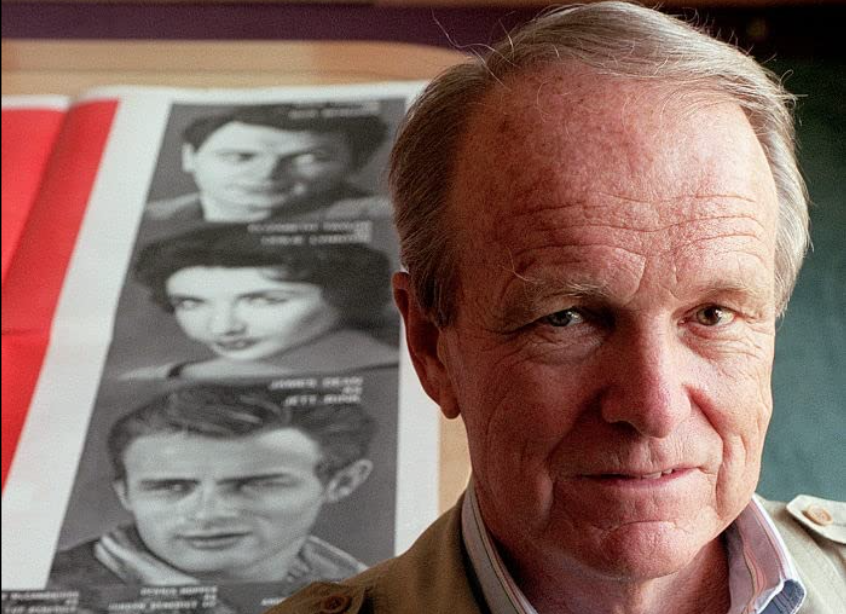
George Stevens: A Filmmaker’s Journey (’84), an illuminating study of the legendary director of Gunga Din, A Place in The Sun, Shane, Giant and The Diary of Anne Frank, is one of my all-time favorite biographical documentaries.
Directed by Stevens’ illustrious son George Stevens Jr., a long-time pillar of the Hollywood community who recently celebrated his 90th birthday, the 110-minute doc teems with familial warmth, first-hand recollections and classic Hollywood bon ami.
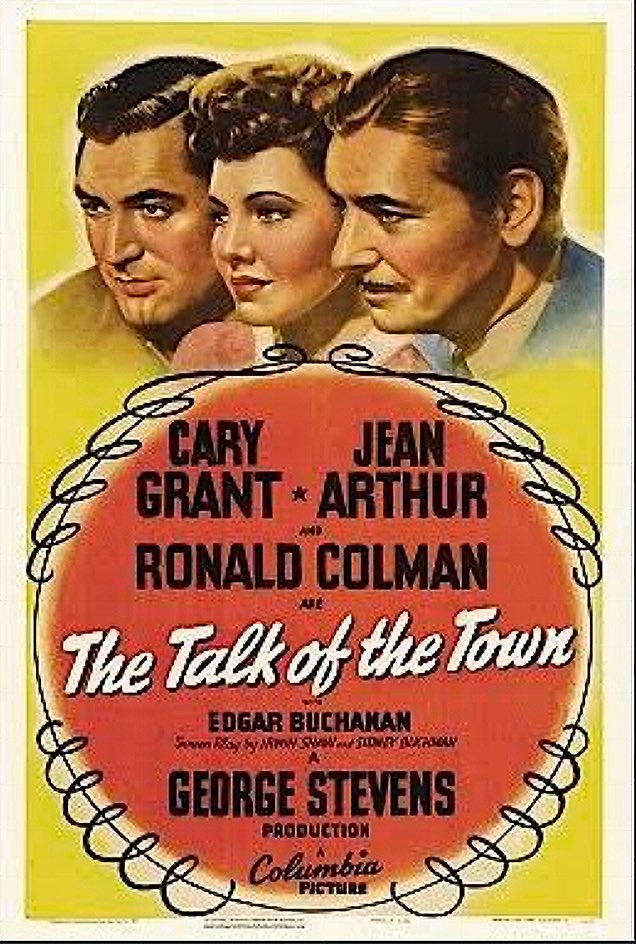
I first saw it at an Academy screening in March of ’85. (Or so I recall.) It was a huge moment for me personally in that I was able to shake hands with Cary Grant during the after-party. Grant had starred in three Stevens films — Penny Serenade (’39), Gunga Din (’39) and The Talk of the Town (’42). And yet, oddly, the doc had skipped over the latter effort, a pro-labor, anti-ownership political comedy that costarred Jean Arthur and Ronald Colman.
During my 25 or 30 seconds of Grant time I started to mention my disappointment and slight puzzlement about The Talk of the Town‘s absence in the doc, but them someone else butted in and I lost the moment.
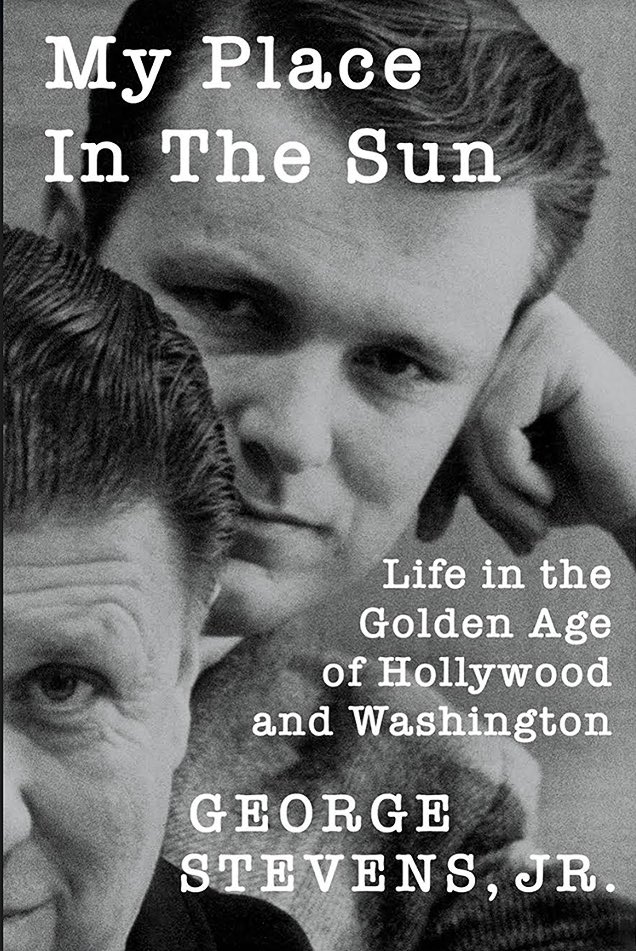
Flash forward 37 years to last night, when I read a little less than half of Stevens, Jr.’s “My Place In The Sun” (University Press of Kentucky, 5.17.22), a memoir and TV a first-hand witnessing of so many fascinating and legendary Hollywood moments.
I had hoped that, being a book and all, it would provide the kind of microscopic observational detail that George Stevens: A Filmmakers Journey had been obliged to leave out.
As a longtime fan of The Talk of the Town, I was especially hoping to read something fresh or novel about the dynamic between his dad, Grant, Colman and Arthur. Any intimate details about the making of this Oscar-nominated Columbia release would have sufficed. But George barely mentions it.
Here’s what he says:
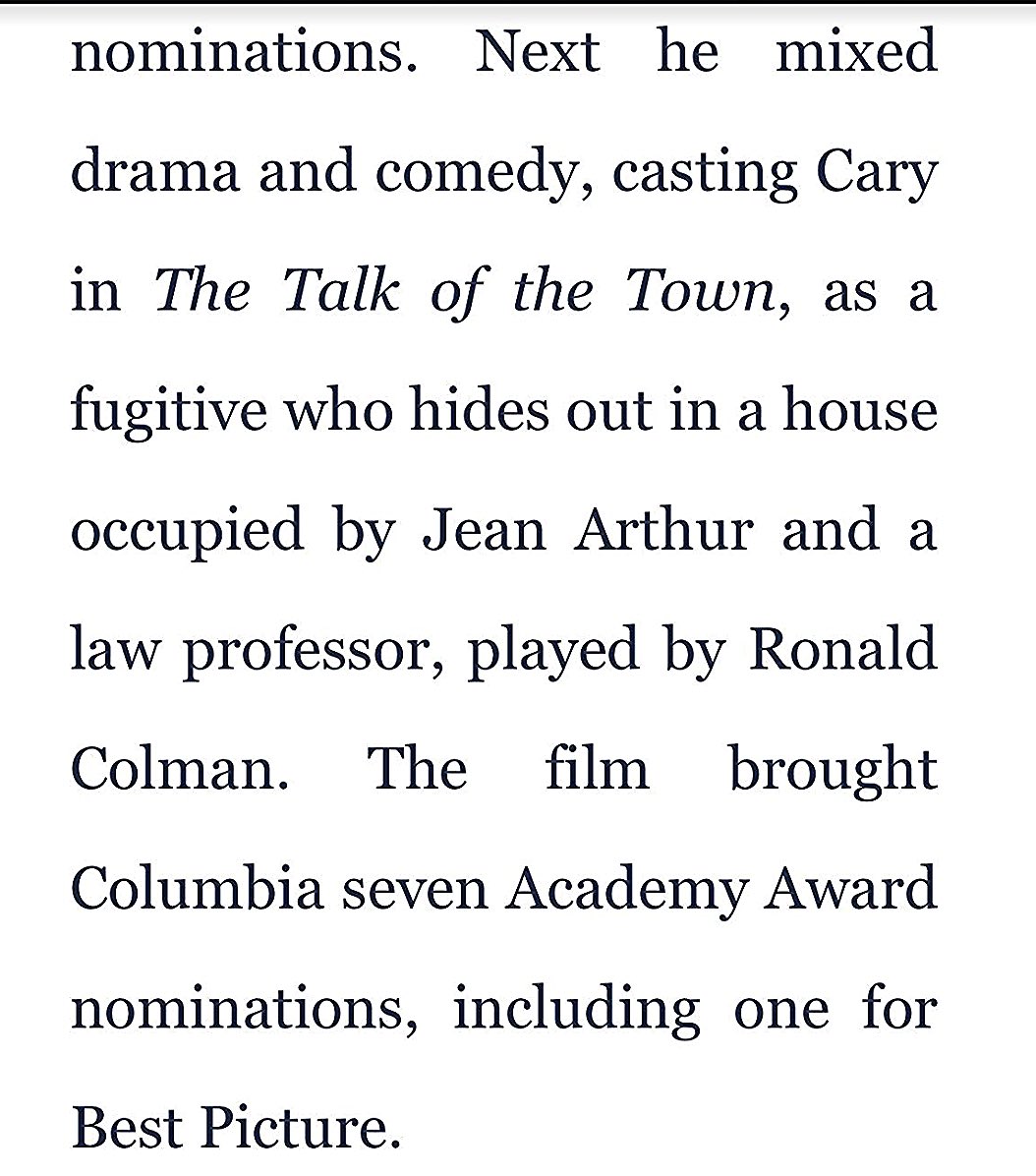
It’s fair to say that between omitting any mention of The Talk of the Town in his 1984 documentary and giving it a lousy 48 words in his new memoir, George Stevens, Jr. is not a huge fan.
I would say, in fact, that “My Place In The Sun” is not what anyone would call an exacting, deep-drill, no-holds-barred memoir. It’s very well written and heartfelt at just the right pitch, but also tidy and proper — it’s the story George wants to tell but perhaps not (all of) the story that actually went down, warts and all. But it’s fine.
It seemed obvious from the style and tone of the book that Stevens would never in a million years mention The Great Shane Aspect Ratio Bluray Skirmish of 2013 — a conflict that happened between March and April of that year, and which the honorable Joseph McBride lent his support to and which Woody Allen probably decided when he allowed me to post his views on the matter.
A friend who’s read the entire book says that the Shane aspect-ratio episode isn’t mentioned. Which makes sense. Leave well enough alone.
By any measure it was a bizarre chapter in which Stevens, Jr. advocated (or at least defended) the issuing of Warner Home Video’s Shane Bluray with a 1.66:1 aspect ratio, which the film was not shot in during the late summer and fall of 1951.
Many of us were appalled by the 1.66 thing — a cleavering that would have unmistakably compromised Loyal Griggs‘ original compositions. As we all recall, Warner Home Video ultimately folded and decided to issue the Shane Bluray in the original 1.37:1 aspect ratio. All’s well that ends well.