Look at the face of PBS News Hour interviewer Jeffrey Brown during this Manchester By The Sea piece, which posted three days ago. He’s really, really fascinated by director-writer Kenneth Lonergan, which seems to indicate that Brown has only recently gotten into the film. Who waits this long to pay attention to a great movie? From my perspective Manchester, which has earned $41 million domestic, is over a year old and by any measure enjoyed its movie-culture peak during the Telluride-Toronto-New York film festival cycle, which was four months ago, and again when it opened last month. And yet two out of three moviegoers will tell you it’s depressing. No — it’s called sad, and the morons refuse to get or accept that. Best description ever, from Boston Globe critic Ty Burr: “A ghost story about a man who’s still alive.”
 Jeffrey Wells
Farhadi Won’t Attend Oscars, But A Symbolic Oscar Vote For The Salesman Is Essential
The psychology behind Donald Trumps’s Muslim immmigration ban “is not just limited to the United States,” Iranian director Asghar Farhadi has said in a statement. “In my country hardliners are the same. For years on both sides of the ocean, groups of hardliners have tried to present to their people unrealistic and fearful images of various nations and cultures in order to turn their differences into disagreements, their disagreements into enmities and their enmities into fears. Instilling fear in the people is an important tool used to justify extremist and fanatic behavior by narrow-minded individuals.
“However, I believe that the similarities among the human beings on this earth and its various lands, and among its cultures and its faiths, far outweigh their differences. I believe that the root cause of many of the hostilities among nations in the world today must be searched for in their reciprocal humiliation carried out in its past and no doubt the current humiliation of other nations are the seeds of tomorrow’s hostilities.
Polanski Agonistes
I’ve said over and over since Roman Polanski’s September ’09 Zurich bust and all the other ludicrous harassments that followed that the now 83-year-old director is an Art God who gets a pass, at least from this quarter. The man has been lashed and bruised for over 40 years because of a single selfish incident**, one that he did 70something days in prison for before hightailing it when the presiding judge reneged on a plea deal (the whole sordid saga was recounted in Marina Zenovich‘s Roman Polanski: Wanted and Desired). Samantha Geimer, the victim in the mid ’70s rape case, said two years ago that Polanski “said he did it, he pled guilty, he went to jail…I don’t know what people want from him.”
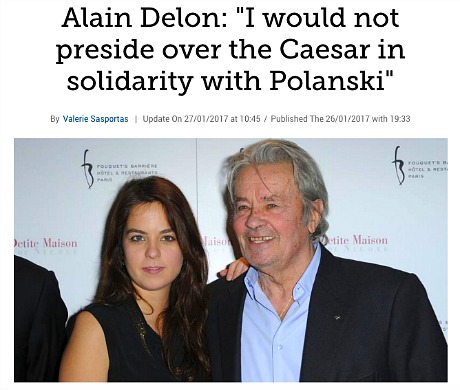
But there’s no stopping the SJW pitchforkers. When RoPo was recently nominated to serve as president of the 2017 Cesar Awards French feminists (including the webmasters of Osezlefeminisme pushed back strongly enough to cause Polanski to withdraw. In a 1.26.17 Le Figaro interview the 81 year-old Alain Delon said that Polanski should be praised, not trashed. “If I were asked to preside over the Caesars in his place, I would not go, in solidarity with Polanski,” Delon added. “Every time he goes across the street, [are] we going to talk to him about 1970?”
The only problem with Delon’s support, of course, is that he’s a rabid right-winger.
Back In The High Life
Snowstorms are wonderful and cold weather builds character, but warm weather is really nice to come back to. What a balmy feeling as I emerged from my Las Vegas-to-Burbank Southwest flight and stepped onto the tarmac…the late afternoon sun about to set, inhaling that familiar Los Angeles stink, that soft olfactory caress of healthy flora, soot, car fumes, terra firma and Del Taco dumpsters. It actually became a little cool as the sun went down, but I felt so comforted by the hometown vibe that the first thing I did after dropping my bags was to hop on the bike and just feel the breeze as I wove my way through traffic. I get around, and a lot faster than anyone in a car. I’m Neal Casady, the young Alain Delon, Ray Hicks, Charles Bukowski, Henry Miller…a free man in Paris.

Randy Newman’s “My Life Is Good”
Gold Derby‘s Tom O’Neil to Hollywood Elsewhere‘s Jeffrey Wells: “CONGRATS to Kevin Polowy for reaping 100% perfect score predicting the PGA awards! CONGRATS also to Tariq Khan, Joyce Eng and Sasha Stone for Best Scores predicting ACE Eddies: 100%. SAG Awards are TONIGHT — Please make sure we’ve got YOUR predix! Competition is FIERCE!”
Wells to O’Neil: What about the Muslim immigration ban protest at LAX? I’m not trying to be an asshole — I really feel that the Muslim protest thing is the only thing that matters now.
Sidenote: On top of which the competition isn’t fierce. SAG’s ensemble award will go to either Moonlight or the surging Hidden Figures. Manchester‘s Casey Affleck will naturally land the Outstanding Male Performance award and La La‘s Emma Stone will take the Outstanding Female Performance honor, Moonlight‘s Mahershala Ali will take Best Supporting Male and Fences’ Viola Davis will win the Best Supporting Actress prize.
Maybe O’Neil was referring to “fierce” competition on the TV side.
Up With STEP Sisters
Time constraints caused by schedule overlap kept me from seeing all of Amanda Lipitz‘s STEP last night (I caught 55 minutes’ worth), but I saw enough to absorb the basic scheme and appreciate that despite a slightly raggedy approach it’s a spunky, engaging, “we’re black and proud and headed for college if we can earn good enough grades and somehow manage the financial aspect” thing. It’s about hard work, high hopes, heart, family, ups and downs, etc.
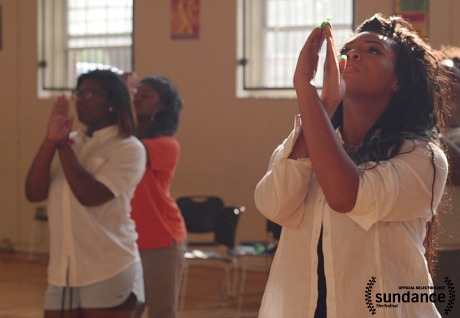
We’re all familiar with docs and narratives about high-school strivers. The best of them are rough and real but also comforting and inspiring. We can do this if we really believe in ourselves and work our asses off and if fate or God smile, etc. STEP feels like one of the better ones. It ends, of course, with a competitive performance finale, the outcome of which gives you a nice “fuck yeah!” feeling. (Or so I was told by a guy who saw the whole thing.)
Shot in late 2015 (or a few months after the Baltimore unrest sparked by the death of Freddie Gray), the doc focuses on three senior girls at the Baltimore Leadership School for Young Women who are members of the stepdance team, and are known as the “Lethal Ladies of BLSYW.”
The most magnetic of the three is Blessin Giraldo, a spirited looker who’s looking to attend college away from Baltimore, where she’s seen some tough times both at home (her mother suffers from depression) and elsewhere, except she’s having scholastic difficulties and is therefore putting her future in some jeopardy.
The second most interesting is the brilliant Cori Grainger, a shy, cautious type hoping to attend Johns Hopkins University on a full scholarship. Bringing up the rear is Tayla Solomon, whose single mom is a corrections officer. Like Blessin, Tayla also isn’t earning high-enough grades, at least at one point in the saga.
Holding Pattern
Last night I caught my last two films of the 2017 Sundance Film festival– Amanda Lipitz‘s STEP, a rousing, affecting doc (recently acquired by Fox Searchlight) about getting out and over for a trio of inner-city Baltimore girls whose involvement in a Baltimore Leadership School for Young Women step dance team is fused with their attempts to gain admission to a good college, and Ted Bourne, Mary Robertson and Banks Tarver’s TRUMPED: Inside The Greatest Political Upset Of All Time. I’ve been working on reviews of both, but I’ll have to finish them (or try to) at Salt Lake City’s airport. My Park City Transportation shuttle arrives in 25 minutes.
Emmanuelle Riva Slips Away
Emmanuelle Riva, who at age 84 gave one of the cinema’s saddest and most searing performances about facing the end of one’s life in Michael Haneke‘s Amour (’12) and who also delivered, at age 32 or 33, one of the most enduringly erotic currents in film history in Alain Resnais‘ Hiroshima mon amour (’60), has passed on, a little more than three weeks shy of her 90th birthday. Respect, condolences — a truly great actress who almost beat out Jennifer Lawrence for the Best Actress Oscar.
Hurt’s Emotionally Subdued Assassin Was Arguably His Most Touching
In his Variety obit for the late John Hurt, Owen Gleiberman notes that Hurt’s extraordinary range always involved empathy for this characters, a prime example being “his mordant undertone of regret” as the professional killer in Stephen Frears’ The Hit (1984).
The character was called Braddock, and Hurt’s portrayal of this flinty fellow was a kind of game, in a sense. All through the film he did the standard taciturn and frosty thing, the proverbial ice-man, a void in his soul. And yet Braddock was almost entirely driven by emotion. The trick was to convey occasional spigots of the stuff beneath the tough-guy facade.
Braddock was cold, clipped, hard-boiled. Strictly a professional, always guarded, always with the shades. But Hurt’s task in The Hit was to secrete little flickers of feeling, little hints of alone-ness and black humor or existential fear, and — during the third act — to convey hints of buried camaraderie and even compassion for Terrence Stamp‘s Willie Parker.
The fact that Braddock had a thing for Laura del Sol‘s Maggie wasn’t so much conveyed by Peter Prince‘s script but by Hurt’s extraordinary finesse. You eventually get the idea that Del Sol might be the great love of Braddock’s life.
Steve Martin Was Nearly Beheaded
Bill Maher is obviously 100% dead-on, but the ugly fact is that in today’s Twitterverse, a realm of politically correct wild dogs looking to rip your flesh and consume your intestines over the slightest hint of an infraction…the ugly fact is that daily columnists like myself have to occasionally walk stuff back. Not with some whiny-ass “apology” but a straight, subdued admission along the lines of “okay, maybe I could’ve phrased that with a little more sensitivity.” You have to at least be open to an occasional admission of this or that shortcoming, first and foremost because I make little mistakes all the time. Nickle-and-dime missteps of phrasing, slight errors of judgment, etc. The trick is to catch them on my own or, depending on the situation, admit error when called out. If, that is, I’m actually in the wrong, and that’s a big “if” so watch it.
Key quote: “While you self-involved fools were policing the language at the Kids’ Choice Awards, a madman talked his way into the White House.”
All Hail John Hurt
Tapped out on a Park City shuttle: On the passing of the legendary John Hurt, two of my all-time favorite performances: the ambitious, duplicitous Richard Rich in Fred Zinneman‘s A Man For All Seasons (’66) and Braddock, the solemn, taciturn assassin in Stephen Frears‘ The Hit (’85). I loved Hurt’s angularity, that aura of cultivation, that wonderful sandpaper voice, those intense drill-bit eyes. And I loved the way he wept like a child when, as Caligula, he was stabbed to death near the end of I, Claudius. Not to mention his legendary chest-fever scene in Ridley Scott‘s Alien (’79). If only I could post a thought from Guillermo del Toro, who directed Hurt in both Hellboy films. I hate to admit this, but I’m somehow not recalling his performance in Midnight Express (’78) — he was a fellow prisoner of Brad Davis‘s in that Turkish jail? Very few will recall his performance as Susannah York‘s professorial, weakish husband in Jerzy Skolimowski‘s The Shout (’78), but he held that film together.
Had It With The Damn Cold
The exotic thrill of tramping through powdery snow drifts and breathing in sub-zero air is gone. I’m sick and tired of bundling up with the extra layers, long johns, jean jacket covered by an overcoat, scarves, gloves and my black cowboy hat. No offense but I want my Southern California temperatures back (my flight leaves early tomorrow afternoon), and I want to hit the balmy Santa Barbara Film Festival. Tonight I’m having an early dinner and then catching an 8:30 pm screening of Trumped: Inside The Biggest Political Upset of All Time, which will air on Showtime in February. Here’s Owen Gleiberman’s Variety review.
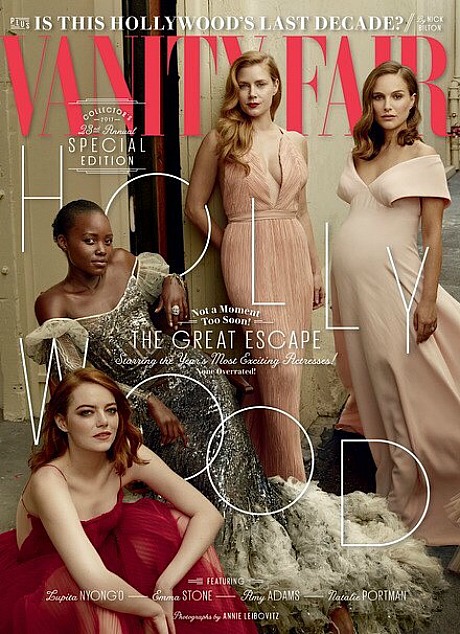
Nobody got very excited about Queen of Katwe after it opened last September but that didn’t stop Vanity Fair editors from including Lupita Nyong’o in the company of award-season headliners Emma Stone, Natlie Portman, Amy Adams, etc.
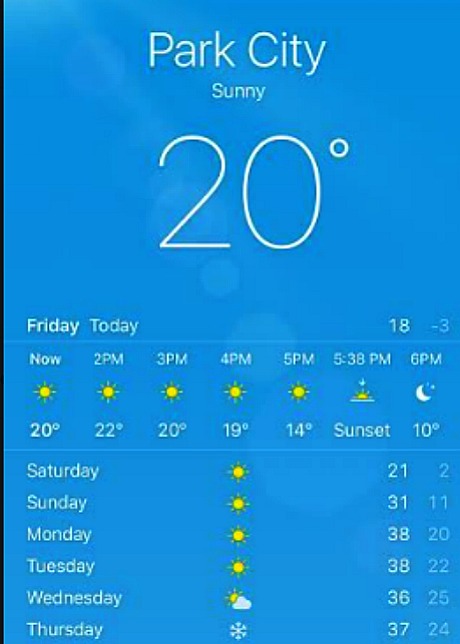
I don’t care if weather.com says it’s 20 degrees outside — it definitely feels more like 5 or 10 right now.