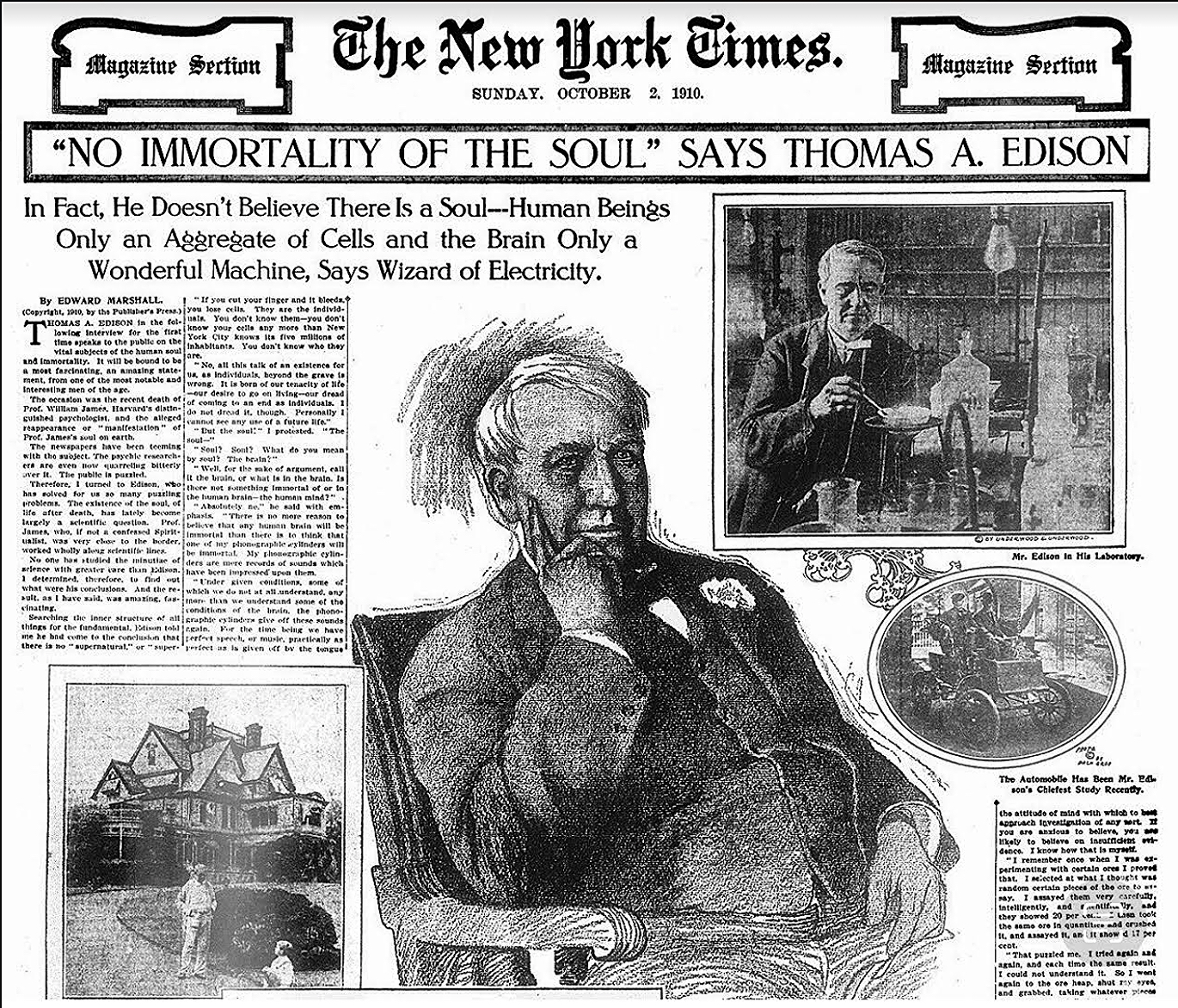
“What did Thomas Alva Edison know? He sure knew how to rain on people’s parades back in 1910, I’ll tell you that much! In any event we, the citizens of 2021, don’t want to hear his alleged insights either.”
Seriously, folks…when Tom O’Neill, Steven Gaydos, Guy Lodge and all the other wonderful people of our delightful mutual hellscape escape this mortal coil, I’m afraid that no cosmic residue will remain. Me too, I’m afraid. Lights out and adios, muchachos. Be here now.
So the moon’s on a collision course with earth due to…what again? Basically another Armageddon by way of When Worlds Collide (’51). The lead casting of scary movie guy Patrick Wilson is a tip-off. The fat Millennial guy with glasses is British actor John Bradley (Game of Thrones).
YouTube guy: “It’s been awhile since we’ve had a movie like this. I feel like we’re overdue for another fun and entertaining disaster flick. And leave it to the pioneer himself, Roland, to deliver!”
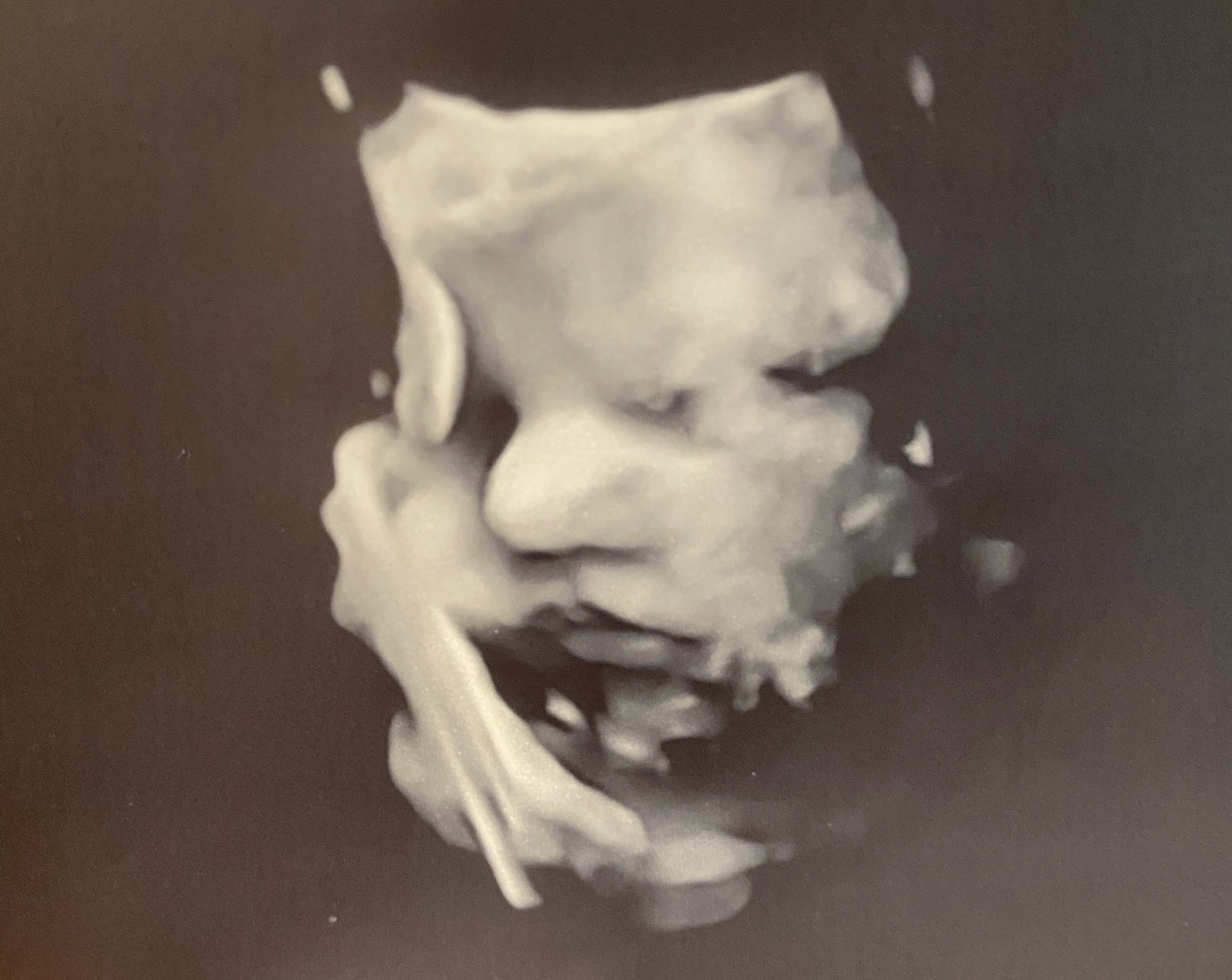
Theunnamed daughterof Jett Wells and Caitlin Bennett is due on 11.18. (I’ve just been told that Maeve is a placeholder.). My first reaction to the new ultrasound image was “part serenity, part Francis Bacon portraiture, part Rodin’s ‘The Thinker.’” It’s like she’s resting her face on the palm of her right hand.
I thought I knew what ugliness was in high school, and I did in a manner of speaking. Young, callow, short-sighted ugliness. But the ugliness of right now (the Millennial and Zoomer kind, the Tom O’Neill kind, the wokester snowflake kind, the Variety kind) is worse, much worse.
You could almost call…hell, I will call SNL guy and King of Staten Island star Pete Davidson the Warren Beatty of the 20teens and ’20s. I don’t keep close tabs and it’s none of my damn business anyway, but it seems as if the guy is constantly getting ass, and now Gawker is reporting that Pete is putting the high hard one** to Kim Kardashian.
Quote: “Gawker can exclusively confirm via our own ‘insider’ that Kardashian, 41, and Davidson, 27, spent the night together at a Los Angeles hotel on October 28. Do we need to say it? They were not having a Gilmore Girls marathon.”
The impulsive Shallow Hal crowd (Millennials, Zoomers) will probably avoid Asghar Farhadi‘s A Hero (Amazon, 1.7.22) like the plague, but it’s easily one of the 2021’s finest films. It’s all dialogue and all medium shots, but the titular character of Rahim (Amir Jadidi) is slowly nibbled and then bloodied and finally swallowed by the social media mob. 127 minutes long, A Hero is a steady and persistent indictment of…I don’t know, everyone and everything.
“They were the candy store years because there were drugs, stardom, the pill. I met a couple of girls in bed more than once, and I had sex in public places, like Studio 54.” — Dustin Hoffman, quoted in a Studio 54 piece on colorized.com.
The original Schrager-Rubell version of Studio 54 opened on 4.26.77 and closed on 2.3.80. Hoffman turned 40 on 8.8.77.
From HE review of Matt Tyrnauer‘s Studio 54 (“The Way It Was“), posted on 1.22.18: “Bob Calacello or somebody mentions how Studio 54 happened in a glorious period in American culture that was post-birth control and pre-AIDS. The film explains how liberal sexual attitudes were particularly celebrated by urban gay culture, which was just starting to sample freedoms that today are more or less taken for granted. Guys couldn’t hold hands on the street but they certainly could once they got inside Studio 54.
“But one thing you can’t say in today’s climate (and which Tyrnauer’s film doesn’t even mention in passing) is that the ’70s were also agloriousnookieeraforheterosexualguys. It was probably the most impulsive, heavily sensual, Caligula-like period (especially with the liberal use of quaaludes) to happen in straight-person circles since…you tell me. The days of Imperial Rome?
“This kind of thing is now a verboten topic, of course, with the 2018 narrative mainly being about how guys need to forget ‘impulsive’ and turn it down and be extra super careful in approaching women in any context. But things were quite different back in the JimmyCarterera. I’m not expressing any particular nostalgia for those days, but the new Calvinism of 2018 couldn’t be farther away from what the social-sexual norms were 40 years ago. Just saying.”
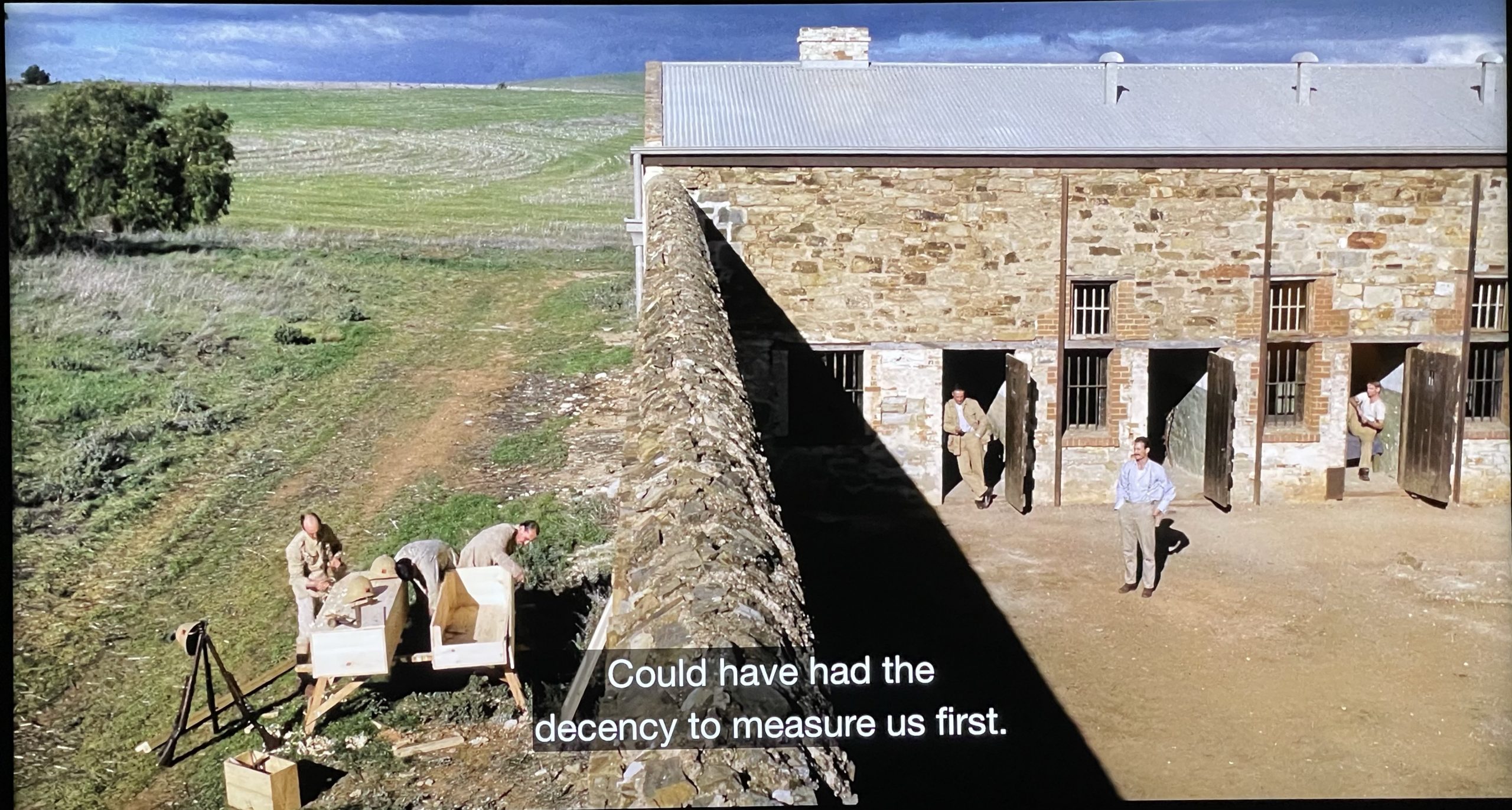
Thompson/Thomas: “The fact of the matter is that war changes men’s natures. The barbarities of war are seldom committed by abnormal men. The tragedy of war is that these horrors are committed by normal men in abnormal situations. Situations in which the ebb and flow of everyday life have departed, and been replaced by a constant round of fear and anger, blood and death. Soldiers at war are not to be judged by civilian rules.”
I’ll give Lightyear credit for its apparent interest in shaded lighting schemes and misty visual textures. There’s one shot that looks like Dagobah from The Empire Strikes Back. This aside, Disney-Pixar spinoffs of this sort are nothing but banal family fare + corporate jizzwhizz.
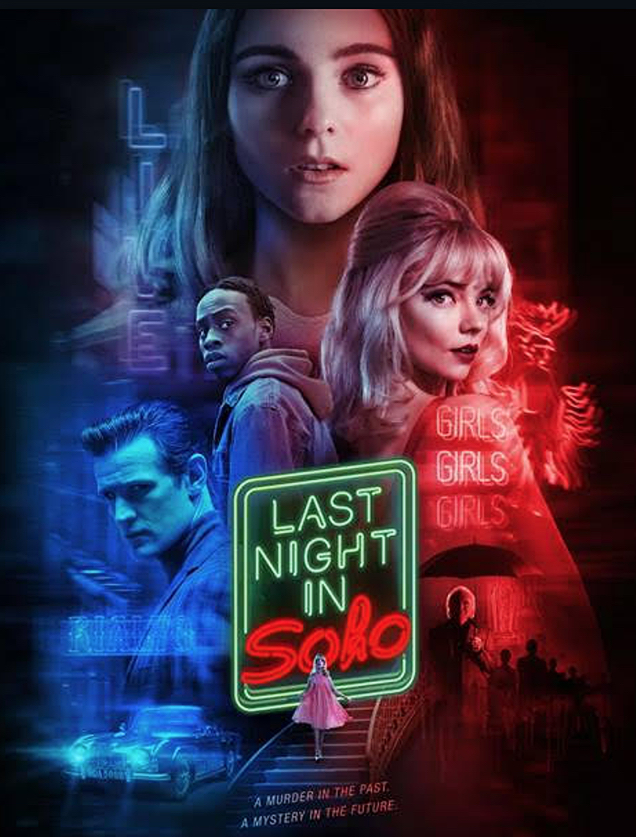
Edgar Wright‘s Last Night in Soho is “struggling” at the box-office. That’s the polite way of putting it. In fact it’s a flop. It cost $43 million to make plus God knows how much to market, and the total domestic haul is somewhere around $4.2 million. Last Night in Soho opened with $993K in the UK for a lousy eighth place showing. $2.296 million earned in 19 international territories…phffft.
The thinking seems to be that Soho might have performed better if it wasn’t up against Antlers and The French Dispatch. My personal suspicion is that Millennials and Zoomers took one look at the ’60s time-trip plot and figured it had nothing for them.
I’m basically a Hot Tamales man, followed by Good & Plenty, Jujyfruits, Red Twizzlers, Swedish Fish and cinnamon bears. I despise anything chocolate-y. Especially Reese’s peanut butter cups.
When I was 14 or 15 I was sitting next to a fetching blonde filly (same age) in a movie theatre. We were chatting and flirting, but then she started eating Reese’s peanut butter cups. Our relationship went south.
If you ignore the final 20 to 25 minutes, the finest werewolf film ever made is Mike Nichols‘ Wolf (’94). An adult, Manhattan-flavored, A-grade enterprise. Enjoyable performances by Jack Nicholson Michelle Pfeiffer, Christopher Plummer, James Spader. A first-rate script by Jim Harrison. Wesley Strick, an uncredited Elaine May. Who wrote the peanut butter scene?
But steer clear of the original The Wolf Man (’41). Produced and directed by George Waggner, it runs 70 minutes but feels like 110. Generally tedious, often boring, sluggishly paced, clunky dialogue. It’s obvious that Larry Talbot (Lon Chaney, Jr.) has something to do with the gruesome mutilations as they only begin when he arrives at his father’s (Claude Rains) mansion. Plus he acts guilty and shifty when the murders are discussed. Plus he has the jowly face of a drinker. Plus he’s a foot and a half taller than Rains — how’d that happen?
And it makes no sense that Evelyn Ankers would be “interested” in Talbot, as he’s clearly unstable with erratic, hair-trigger mood swings. (Ankers and Chaney didn’t get along off-camera.)
The best character is Maria Ouspenskaya‘s gypsy lady…she wants Larry to fulfill his wolf destiny…she’s in his corner, supports him, cares for him.