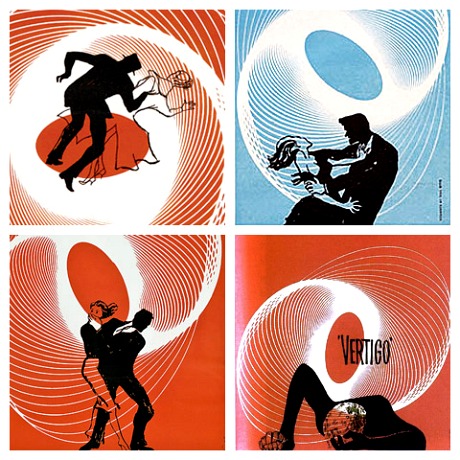
Heartaches

In honor of Valentine’s Day (i.e., today), New York‘s Intel recently asked readers to “write down all the sex you’ve had and we’ll share it with the world.” Classy! And pretty far away from the spirit of Valentine’s Day. And banal. In 1983 or thereabouts I started counting everyone I’d “been” with and came up with a tally of around 175. I meant it deep down each and every time, but that was the ’70s for you — the greatest era for nookie since the days of the Roman empire. And so what?

Here’s a much better question: “Write a very short story about The Big Love Affair That Got Away.”

The late Sydney Pollack said over and over that happy-ending love stories aren’t that satisfying. What moves people are ones about love affairs that never quite work out. The former lover you can never quite get out of your head or heart, etc. I could tell a story-and-a-half in that regard (an affair with a married journalist that lasted 2 and 1/2 years), but some other time. Or maybe never.

But everyone has a sad story like this. Or two. Valentine’s Day is about the heart, and that usually means The Hurt. And “happily ever after,” by the way, is probably the most dishonest, disconnected-from-reality phrase ever dreamt of in the history of literature. “Moderately semi-contented ever after” is more like it in the case of longterm “happy” relationships. I’d rather reminisce about the Really Great Relationship that never quite came together.

Cue all the HE readers who are extremely happy in their marriages and who pity me for having been unlucky in love and so on. Let me just say in advance that I’m not saying it’s not good to be happy or content, but that it’s more moving to think about the really exceptional man/woman whom you thought was Really The One but then something went wrong.

They Wuz Robbed, Part 2

Daniel Day-Lewis fully deserved the 1989 Best Actor Oscar for his performance in My Left Foot — no dispute. But Academy voters were way wrong in denying Nicolas Cage a Best Actor nomination — at least that! — for his hilarious landmark performance in Vampire’s Kiss.

Tom Cruise killed that year as Ron Kovac in Born on the Fourth of July, and fully deserved a nomination. Ditto Robin Williams for his wise-teacher performance in Dead Poet’s Society, and Kenneth Branagh‘s electrifying turn in King Henry V of England. But who today would argue with a straight face that Morgan Freeman‘s performance in Driving Miss Daisy deserved a nomination as much as Cage’s?

Oscar Poker #21

Last night Scott Feinberg didn’t agree with Awards Daily‘s Sasha Stone and yours truly that it’s better to live in a state of denial about The King’s Speech cleaning up on 2.27 than to accept it, and to cling to a slender reed of a pathetic pipsqueak hope that The Social Network has any chance in hell. We all realize with a heavy sigh what’s happening out there, but Feinberg’s response is more adult-minded than mine or Sasha’s.

After I while I said, “Can we stop obsessing about this Oscar race stuff — it’s over, people are sick of it — and talk about something else here and there?” — but Sasha swatted me down. We did, however, talk about (a) Cannes accomodations and (b) the likely winners of the upcoming Spirit Awards. The iTunes link is above; here’s a non-iTunes link.

Phister Beats Deakins?

Who wasn’t assuming that True Grit‘s Roger Deakins would take the big kowabunga prize at last night’s American Society of Cinematographers awards? It was understood and accepted. The fix was in. If you’d called around last Friday and asked motorcycle mechanics in Palmdale, pharmacists in Norwalk, Chinese restaurant chefs in Monterey Park and licensed massage therapists in Newport Beach, to a man they would have said “gotta be Deakins.” So how to explain Inception‘s Wally Phister scoring an upset win?

TheWrap‘s Steve Pond called Phster’s win “a bit of an upset.” A bit? It was a 5.5 earthquake. Faint cries were heard in the canyons. Chandeliers swayed in the foyer. DVD collections fell onto the floor.

Just before Pfister’s triumph, Deakins had been honored with the ASC’s Lifetime Achievement Award, which followed his winning a Best Cinematographer BAFTA award in London.

Pfister also defeated Black Swan‘s “Matty” Libatique, The King’s Speech‘s Danny Cohen (strictly a coattails nomination) and The Social Network‘s Jeff Cronenweth.

Scott Feinberg was predicting that Pfister will take the Best Cinematography Oscar over Deakins even before last night’s ASC stunner. His reasoning, according to a piece he put up this morning, is that (a) “most voters will not realize that Deakins was the cinematographer on True Grit when they fill out their ballots” because no cinematographer’s name appears on the actual AMPAS form, and (b) Average Joe Oscar voters “won’t care one way or the other.”

Feinberg’s lament: “It has always struck me as bizarre that Academy members are only considered to be qualified enough to vote for the nominees in their specific field, but somehow ‘become’ qualified enough to vote in every category during phase 2 of voting. This, to me, offers a clear explanation for why people like Deakins (who was nominated for two different films in the best cinematography category three years ago but failed to win for either of them) and Kevin O’Connell (a sound mixer who has been nominated for a sound-related Oscar a record 20 times without actually winning) get nominated so frequently but never win: their peers appreciate the magnitude of their accomplishments, but the rest of the Academy does not and instead votes rather ignorantly.

“For these reasons, I’m inclined to predict that the Best Cinematography Oscar will, once again, go to someone other than Roger Deakins, most likely Pfister for his fine work on Inception, or, if Academy members really, really like The King’s Speech, to Danny Cohen.”

They Wuz Robbed, Part 1

As much as I respect and admire Cloris Leachman‘s performance in The Last Picture Show, which won a Best Supporting Actress Oscar for 1971, Ann-Margret‘s portrayal of Bobbie-the-alleged-ballbuster in Carnal Knowledge, I now feel, dug deeper and delivered in a way that was more real, wide-open, vulnerable. All hail Mike Nichols for making this scene work as well as it does, and for generally hitting the film out of the park.

This scene alone (half of which obviously belongs to Jack Nicholson) more than proves my point about how good she was. What 2010 Best Picture nominee has a scene this raw and penetrating?

This kicks off a daily feature, running from today through 2.27, in which I’ll post video clips of performances that should have won in whatever category, but didn’t. Over and out.

Westport Anasthetic

Sunday, 2.13, 4:31 pm — nothing startling or noteworthy, simply a taste of that feeling of vague resignation that always creeps in during my Westport visits.

Fincher Can Rest Easy

The fact that the BAFTA bunch handed its Best Director prize to The Social Network director David Fincher this evening instead of to the King’s Speech helmer Tom Hooper — overcoming Hooper’s home court advantage — suggests that Fincher is all the more likely to win the Best Director Oscar on 2.27.

Otherwise The King’s Speech ran the table at the Orange British Academy Film Awards, taking 7 trophies including Best Film, Best British Film, Best Original Screenplay, and acting honors for Colin Firth, Geoffrey Rush and Helena Bonham Carter and some other prize.

TSN won for Best Film Editing, the Best Cinematography prize went to Roger Deakins‘ work on True Grit, Best Art Direction went to Inception and Best Costume Design was won by Alice in Wonderland.

O'Neil Pally on Bening Train

Gold Derby‘s Tom O’Neil, writing on the Envelope’s Awards Tracker, says he was “flabbergasted” on 2.10 when a sage Academy member said his Best Actress vote is going to Annette Bening. O’Neil gasped because this guy “has backed all of the underdogs who ended up winning in recent years — Crash, Marion Cotillard, Tilda Swinton.” The wise guy’s other picks: The King’s Speech (Best Picture), David Fincher (director), Colin Firth (lead actor), Christian Bale (supporting actor) and Melissa Leo (supporting actress).

Liquored Up

Lee Marvin‘s Kid Shelleen in Cat Ballou (’65) was the funniest movie drunk of all time. I remember my alcoholic father totally losing it when he first saw this otherwise so-so Eliot Silverstein film. Drunks were enjoyable as hell in the ’50s and ’60s, but they stopped being funny sometime between the late ’70s and the time of Iran Contra. Dudley Moore was hilarious in the original Arthur (’81) but seven years later he was dead meat in Arthur 2: On the Rocks.

The main problem with Cat Ballou was that horrible musical accompaniment from Stubby Kaye and Nat King Cole. It grates.

For his brilliant drunkenness, Marvin won the 1965 Best Actor Oscar, an equivalent of a BAFTA award for Best Actor, a Best Actor Golden Globe award and a Best Actor prize from the 15th Berlin International Film Festival.

Rome Bacchanalia

Consider Kirk Douglas and Cyd Charisse‘s wild car ride through Rome (starting around the 3:13 mark) in this clip from Vincente Minnelli‘s Two Weeks In Another Town (’62). Obviously studio-shot with rear-screen backdrop and a wind machine, it recalls Lana Turner‘s hysterical car ride in Minnelli’s The Bad and the Beautiful (’52). And it shouts out a self-disgusted, I’m-really-miserable-and-have-had-it-up-to-here nihilism that I associate with other compromised characters in Minnelli’s best non-musical films.

In a review of this and three other mid-career Minnelli films from Warner Archives, N.Y. Times columnist Dave Kehr describes Two Weeks as basically about Hollywood exiles at Rome’s CineCitta studios. I would describe it also as being about Minnelli’s own life and frustrations, and about the fact that his powers were ebbing when he made it.

Douglas is “a washed-up actor who checks out of a rehab center when he’s offered a job on a film being shot in Rome by the director (Edward G. Robinson) who first made him a star.” Two Weeks in Another Town also features Claire Trevor, Daliah Lavi, George Hamilton and Rosanna Schiaffino.

The film’s Wikipage says the story was seen by some as partially inspired by the early ’50s relationship between actors Tyrone Power (i.e., Douglas) and Linda Christian (Charisse) and producer Darryl Zanuck (Robinson).”

Christian’s fame, it says, stemmed largely from having wed and divorced Power. They were married from 1949 to 1956. Christian later had a dailliance with athlete Alfonso de Portago, and was photographed with de Portago at the 1957 Mille Miglia car race when he later crashed his Ferrari and died, killing at least ten spectators in the process. Power died the following year of a heart attack at the age of 44. Christian was later also briefly married to the Rome-based British actor Edmund Purdom.