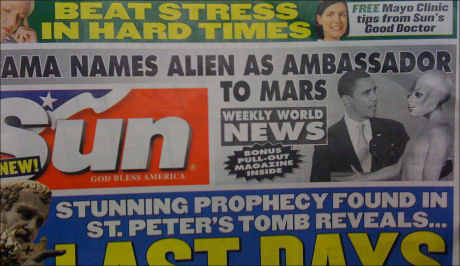


Yarrow Hotel lobby — 1.15.09, 4:20 pm. Sitting here filing, waiting for the 6:30 pm press screening of Mary and Max, which I’ve been calling Mikey and Nickey and Moxie Heller and Cottontail.

To be in an airborne jet, hit a flock of geese, crash land in the Hudson River, not sink, climb out on the wing, get your pants and feet wet, get picked up by a boat, get dropped off somewhere in Manhattan’s West 40s, visit an emergency room for a check-up and then be driven downtown to the Tribeca Bar & Grill for a plate of seared salmon and a couple glasses of perfect Pinot Grigio. Talk about feeling tremendously alive!
As Winston Churchill once said, “There is nothing so exhilarating as to be shot at without result.”
Jeremy Piven spoke to Good Morning America‘s Diane Sawyer this morning to try to put the mercury-poisoning/Speed-The-Plow thing to bed once and for all. Never!
Variety‘s Robert Koehler has called Jonathan Parker ‘s (Untitled) “one of the rare American indie films to land a world premiere at a fest prior to Sundance [that nonetheless] bears all the hallmarks of a prestige Sundance movie, from a hip cast including Adam Goldberg, Marley Shelton and Eion Bailey to a brilliant score by leading new music composer and Pulitzer winner David Lang.
“Parker jabs and pokes at the New York contemporary art world with some satirical success. Teasing today’s new realms in painting, conceptual art and music is almost too easy, and the impressive aspect of Parker’s latest is an evident grasp and respect for what’s worthy and worthless in the fecund present-day scene. The smart-ass comedy isn’t sustained throughout, but there’s more than enough here for a bright fest roadshow and theatrical gallery space.”
Here’s my review again.
“I have to believe that if Slumdog Millionaire wins Best Picture, it will further cement the awards as an elitist back-patting ceremony which is rapidly distancing itself from the general moviegoing public as it is, ” writes HE reader Evan Boucher.
“There are three different types of people seeing movies these days. The A students of cinema like yourself — journalists, buffs and your grad students living in the village who see mainstream, indie, shorts, foreign,cult…everything. On the other end are the F students, the ones lining up for things like Saw V and Wanted, thinking the latter is the best thing they’ve ever seen because someone made a bullet curve. And in the middle you have people with the intelligence to realize when a movie sucks and to appreciate something when it’s really really good.
“Which brings me to Slumdog., which is a very good film but a tough watch. Personally I felt like I had to pay unbelievably strict attention to understand what people were saying, and even then I feel like I missed half of it. But I can spot when a director or actor as at the top of their game, even if I can’t always understand it, and you can tell that this is a special film, if you have the capacity to understand it.
“This is a perfect year for the academy to step out of its elitist, country-club mode. Because there are two films out there that were widely regarded by critics and people who actually pay to see movies — WALL*E and The Dark Knight. More people paid to see these two movies and came away satisfied than every other Oscar contender combined. They’re powerful in their own ways and entertaining and universal, which a lot of the films on your Oscar Balloon list are not.
“We live in a cinematic environment where there are movies for people, and then there are movies for critics. The critics used to be a barometer for what people would like, but the disconnect is huge right now and the gap is widening. Ten years from now, people will look back and say that 2008 was the year The Dark Knight came out, not Revolutionary Road or The Reader.”
Following her double-win at the Golden Globes last Sunday (Best Actress for Rev Road plus Best Supporting Actress for The Reader), Kate Winslet being double-nominated by BAFTA yesterday has me worried. We wouldn’t want to see this happen with the Oscar nominations or in the final voting. It’s too much. It feels hoggish.
I understand Kate’s people pushing her in both categories in order to build a storm of acclamation and critical mass, but I really think it’s time to nip this one in the bud. She’ll probably win the Best Actress trophy for Rev Road — highly deserved — but that’s enough. It wouldn’t be cool for her to manage a double win. Most of us, I think, want to see either Doubt‘s Viola Davis or Vicky Cristina Barcelona‘s Penelope Cruz win the Best Supporting Actress Oscar.
Ricardo Montalban passed yesterday at age 88 — sorry. Then again, having lived a exciting high-style life for 88 years is hardly a tragedy. When you hear his name you think (a) Fantasy Island, (b) his muscular pecs in Star Trek: The Wrath of Khan (very impressive for a guy who was 61 years old) and (c) Esther Wiliams costar. But my strongest memory is the way he said the words “rich Corinthian leather” in those Chrysler Cordoba commercials. (His Wikipedia bio says that the adjective was “soft,” not “rich.”)
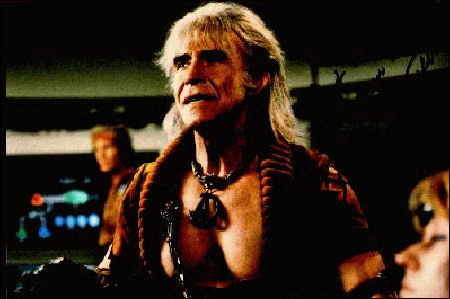
I loved Montalban’s Ahab-ish dying words in The Wrath of Khan — “for hate’s sake, I spit my last breath,” etc. And he was half-decent, I thought, as a Kabuki player in Joshua Logan‘s Sayonara (’57), although it was pretty silly to hire a Mexico City Latino to play a Japanese guy.
The pancreatic cancer that has been weakening poor Steve Jobs is apparently back and aggressive as hell. I’m very sorry. May his remaining days be creative, spiritual and full of love. It does seem weird, however, that so many people are convinced that when Jobs dies, Apple will start to die as well. There are no young bucks out there with the instincts and abilities to keep that company grooving along like it should? C’mon.
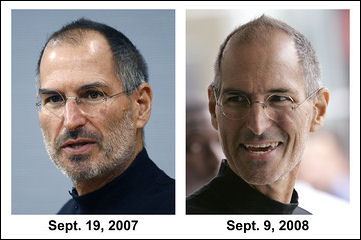
I felt nothing but contempt for the Spanish soldiers in El Cid who cried like children when word got out that the arrow in Charlton Heston‘s chest might be fatal, or at least incapacitating. “We cannot fight the Moors without the Cid! We will not” An army that refuses to re-charge and re-constitute itself when a leader dies is indeed finished. But why would Apple stockholders think and act this way? Cowards. Sheep.
Of all time. Or at least in my experience on this planet. It’s amazing to me that there are people in third-world countries who are actually paid money to design and manufacture these back-breaking coil-spring mattresses. They must know, surely, that the possibility of people feeling comfortable enough to actually fall asleep on them is very slight. I’ve slept better on hard-metal cots in city jails.
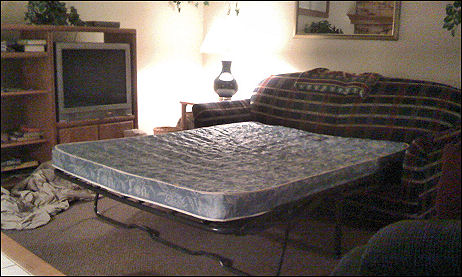
You have to be a sadist to make one of these things; you certainly have to be a masochist to willingly sleep on one. I gave up after four, four and a half hours. Awful.
I’m in a new place on Friday so it’s nothing to obsess about. But the combination of sitting through tonight’s opening film, the claymation Mary and Max (which is partly about a 44 year-old morbidly obese guy, voiced by Phillip Seymour Hoffman) on top of another night trying to sleep on this torture mattress from Jakarta…I don’t know. Feels like a tough combo.
The insulation in this cardboard milquetoast condo, located on Park City’s Windrift Lane (a little bit of a hump north from Kearns Blvd.), is on the shitty side also. I can feel the frigid early morning air seeping through the window behind me. The cheapest home-building materials known to modern man have gone into the construction of thousands of Park City condos. I know, having stayed in quite a few since the early ’90s.
This is a fairly typical example of middle-American architecture and home construction when penny-pinching figures in. Icy air leaking into the living room and yet the guy who designed this one went in for a little counter-flourish by installing a tiny jacuzzi tub — a poor man’s jacuzzi — in the bathroom. Hey, I’m Tommy Tune! A home, in other words, that’s a little more about show than substance.
As sorry as I am about the passing of Patrick McGoohan, I wasn’t that taken with his internals on-screen. I loved, of course, the magnificent snap, crack and timbre of his voice — what an instrument! — blended with that purring Irish-English accent. But McGoohan always — almost always — played creepy obsessives with cold eyes and cold souls, and I can’t say I ever liked him all that much.
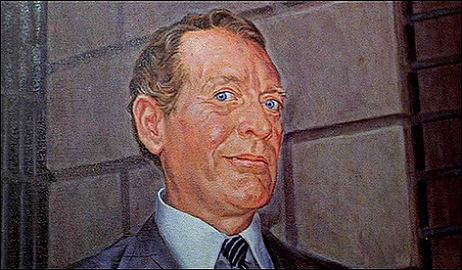
I respected him, naturally, for his chops, for that undercurrent of whatever, for that well pedigreed quality. He was a first-rate actor.
I loved the metaphor of The Prisoner, the ’60s TV series, but I never watched more than a couple of episodes — sorry. McGoohan, for me, was defined by his series of twisted and malevolent big-screen pricks in Silver Streak, Escape From Alcatraz, Scanners, Braveheart, etc. Yes, he was very good at putting out this particular mood and color.
What kind of actor in his right mind would turn down the James Bond role over moral grounds? He once stipulated “no kissing” in his contract for Danger Man, the British TV action series. I seem to recall reading way back when that he was a bit of a conservative prig, an old-school moralist, etc.
And why, with his British theatre background and that awesome voice, didn’t he appear on Broadway more often? In 1985 he was nominated for a Drama Desk Award played a British spook in a stage production of Hugh Whitemore‘s Pack of Lies, opposite Rosemary Harris.
If you don’t know anything about the semi-infamous Star Hotel/cowboy hat/ residual-scent episode, read about it here and then continue. I walked into the Park City police station about 10:15 pm this evening and asked if they had my cowboy hat. It took them a while to find it, but find it they did. Good guys! I now look like the Durango Dude. I am here in Park City — stoked, outfitted, ready to rock, getting my press pass tomorrow morning, etc. Life is good again.