As I Lay Dying

As I Lay Dying

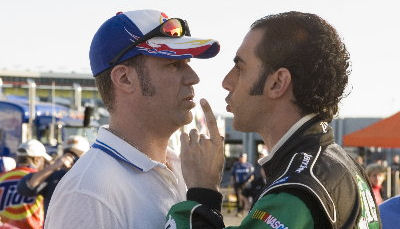
Usually if I go to a comedy and don’t laugh, I’ll wind up writing it’s no good or that I hate it, or both. Well, a different thing happened with Talladega Nights: The Ballad of Ricky Bobby (Columbia, 8.4). I didn’t laugh much at all — two or three titters, a couple of chuckles — but it’s not a bad film. I respected it. It’s quite smart, very hip and a piece of searing social criticism.
I just didn’t laugh. Well, barely. A critic sitting next next to me was shrieking — you should have heard the sounds he was making — and I sat there like one of those statues on Easter Island.


Wil Ferrell, Sascha Baron Cohen in Talladega Nights: The Ballad of Ricky Bobby

I’ve seen Little Miss Sunshine three times and felt light and tickled each time, but that’s a film about real people. I recognized every character from my own life, and it kept reminding me of how folks actually are and how pathetic and yet hilarious it can all seem. Talladega Nights is all about stereotypes. There’s not a real person in the whole thing. That’s not a bad strategy on Will Ferrell and director Adam McKay’s part — it’s just the way they decided to go.
Except their humor is impersonal. It isn’t about human foibles and quirks and peculiarities. Every last character in Talladega Nights is an archetype or cliche. It never gets “real” or down to earth. (Same deal with their last film, Anchorman.) Nobody exudes any kind of quiet, settled-down ordinary-ness. Again, this isn’t a problem. McKay and Ferrell know what they’re doing. And they decided to do a Southern social-critique thing and write all the characters as eccentric twits or douchebags or styrofoam heads. A lot of people are going to find this quite funny…whatever.
< ?php include ('/home/hollyw9/public_html/wired'); ?>
Joke after joke, scene after scene, Talladega show us what total fools white-trash Southern hee-haws are. It says they’ve got no real values and they care only about conspicuous consumption, and that all they like to do is tear around in muscle cars, buy new stuff, serve their kids junk food and go apeshit at NASCAR races. And it doesn’t let up.
The irony, of course, is that Tallageda is expected to play much stronger with red- staters than anyone else. The people it shits on the heaviest are going to be its biggest fans.
It actually goes a little too hard on the folks down there. Talladega is really mean. Mort Sahl said the cruelest jokes are the funniest, but there’s a limit. I wanted to find a Southerner and gived him/her a hug after seeing it.

I love all kinds of things about the South. Southern life doesn’t have to be about vulgarity or voting for Dubya or hating the environment. But when it comes to driving fast cars I’m more of a Last American Hero type than a Dukes of Hazzard guy. And when it comes to comedies I prefer everyday average realism as a starting ground.
I haven’t really laughed at anything Will Ferrell’s done since he did his George Bush impressons. He makes me smirk at times. Maybe if I went back to smoking dope I’d find him funny, but I’ll never get high again so that’s that
I loved Sacha Baron Cohen as Farrell’s arch-nemesis, a gay French race-car driver named Jean Girard. In fact, now that I’m thinking about it, I did laugh at Talladega when Cohen was on-screen and cranking. I can’t make myself feel much enthusi- asm about anyone or anything else in the film. While I was intellectually apprecia- ting what Ferrell and McKay were up to, this movie was also making me feel para- lyzed. At times I felt like I was hibernating. I felt like a bear. At times I was making hibernating-bear snoring sounds.
I was roused out of my slumber when Ferrell stabbed his left leg to prove to his friends he’s actually paralyzed, even though it’s psychosomatic. And I chuckled at an insert shot of a French-language cover of “L’Etranger” by Albert Camus. And I half-snorted at a fake Eleanor Roosevelt quote in the beginning.
But I spent a lot of time dreaming about things I’d like to do and places I’d like to see before I sleep. This movie isn’t giving me anything, I was muttering to myself. It’s not bad and I respect Ferrell and McKay, but it’s eating up two hours of my life.

I left about five minutes before it ended (it didn’t matter) and as I was walking up the aisle I saw a woman sitting in the back row, and talk about a morose expres- sion. This woman wasn’t thinking about places she’d like to visit — she was think- ing about whether she felt better about a bottle of Seconals or a sharp razor blade in a warm tub. Every time I think about Talladega Nights that woman’s face is going to come back to me.
I really do love the South in a lot of ways. I love Savannah, Georgia, and those fine old rural plantations with their mossy tall trees. My grandfather came from a Kentucky horse farm, and something about that probably softened my feelings about rural Southern life. I’ve always felt a kind of love for Lyndon Johnson, deluded and self-destructive as he was, in part because he reminds me of my grandfather. I’ll always love young Elvis (the ’54 to ’57 version). I loved Tommy Lee Jones’ char- acter in Coal Miner’s Daughter. And I’ve always love those fatty Southern foods and the way those earth aromas fill up if you stand in some rural area late at night and just breathe them in.
I guess I’m acknowledging in my usual half-assed way that Talladega Nights really is a Southern culture trip, and all the brassy vulgarity it shows made me think about the aspects of Southern life that are getting lost and smothered by corporate forces…the same thing that’s happening everywhere to American small-town life.

Balloon Dismissals

Balloon Dismissals

Four weeks from the Toronto Film Festival and the start of early Oscar season, and it’s becoming clear that certain films I put into the presumptive Oscar Balloon way back when have to be eliminated. I’m sorry but life is necessarily Darwinian at times, and handicappers like myself are merely agents of that process.
On top of which David Poland began running his Gurus of Gold chart today, and this goaded me into action. Poland is saying he didn’t invite me to participate this year because I resigned from last year’s Guru gang at the end of the Oscar road, sometime in late January or early February. And he’s right. I did quit. It became boring and tedious filling out those damn charts every week, and I finally couldn’t stand it. Of course, Poland is also playing his little chickenshit game by excluding me.
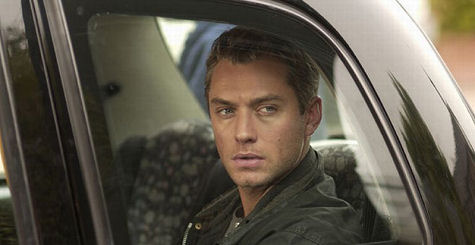

Jude Law in Anthony Minghella’s Breaking and Entering

This is solely about Best Picture dismissals. Everything flows from this category, as a film not in contention for Best Picture (i.e., or one considered to be at least potentially in that game) rarely supplies serious contenders sparring in other categories, although exceptions do crop up from time to time. Of course, I could turn out to be dead wrong about one of these kills down the road, which means I may do a 180 and put a title back in.
Perhaps some of these films shouldn’t have been in the Balloon in the first place, granted, but I have to work with a starting template of some kind and felt it was bettter to be generous to a fault than not. The idea here isn’t to piss on these movies. I’m just saying that as good as they may be, they’re starting to like they Might Not Be Giants in an Oscar Derby sense.
< ?php include ('/home/hollyw9/public_html/wired'); ?>
Best Picture Kills:
(1) The Departed (Warner Brothers / dir: Martin Scorsese). Reason: Any film that isn’t going to the Toronto Film Festival by the call of the distributor almost certainly has issues of some kind, so barring a miracle hard-luck Marty is once again out of the derby. (Poor guy can’t seem to catch a break in this regard.) This isn’t to say it won’t be a commendable, enjoyable or successful film otherwise. Cast: Matt Damon, Leonardo DiCaprio, Jack Nicholson, Vera Farmiga.
(2) Breaking and Entering (The Weinstein Co./dir: Anthony Minghella). Reason: A contemporary London drama that automatically deserves a serious looksee because of the Minghella factor. But I started feeling uncertain two or three months ago when I began hearing…well, better not to pass it along. B & E may well be intriguing and recommendable for any number of reasons, but at this juncture it doesn’t sound, look, or feel like Best Picture material. I may be wrong but that’s how it smells right now. Cast: Jude Law, Juliette Binoche, Robin Wright-Penn, Ray Winstone, Martin Freeman, Vera Farmiga.
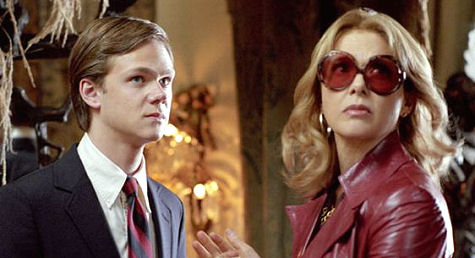

Joseph Cross, Annette Bening in Ryan Murphy’s Running With Scissors

All The King’s Men (Columbia Pictures/dir: Steven Zallian): Reason : Something’s wrong with this film. I can feel it. Sean Penn’s hoarse screaming of those campaign speeches with that actorish down-home cracker accent he’s using is deeply unappealing in the trailer. He’s a great actor but I’m not looking forward to sitting through this performance…I’m really not. If this period drama had any kind of Best Picture fortitude, somebody would have seen it by now and begun talking it up. It opens on 9.22 and I haven’t heard any distant jungle drums heralding its arrival. Cast: Penn, Jude Law, Kate Winslet, James Gandolfini, Mark Ruffalo.
(4) A Good Year (20th Century Fox/dir: Ridley Scott): Reason: The more I read about it and look at the trailer, the more appealing it seems. I would love it if a quality-of-life film such as this turned out to be derby material, but the more I meditate upon the mood of the trailer and the somewhat predictable story arc (i.e., financial kingpin grows a soul, learns to savor life’s organic/pastoral pleasures), the more my gut tells me it’s probably a case of Ridley Lite. Nothing wrong with that — I’m looking forward, I can’t wait, and I’ll always love Crowe — but it’s not looking like a heavyweight deal. And so what? This could a laid-back winner of another stripe. Cast: Russell Crowe, Albert Finney, Abbie Cornish, Marion Cotillard, Valeria Bruni-Tedeschi, Didier Bourdon.
(5) Running With Scissors (Columbia/dir: Ryan Murphy) Reason: The word is actually pretty good on this one. Sassy, funny, oddball coming-of-age, life-lesson stuff. I’m just picking up signals that it lacks the water-table gravitas and emotional current to be in the Best Picture race. Said to be fine and worth seeing on its own terms, though. I was pitched about inteviewing Ryan Murphy (and I’d like very much to salute any ex-Entertainment Weekly writer who’s gone on to greater things) but after saying I wanted to see Scissors as a pre-condition…well, I’d still like to see it. Cast: Annette Bening, Joseph Cross, Brian Cox, Joseph Fiennes, Evan Rachel Wood, Alec Baldwin, Jill Clayburgh.
(6) The Prestige (Touchstone/dir: Chris Nolan) Reason: A turn-of-the-century dramatic thriller about competing magicians shouldn’t have been listed among my Best Picture hopefuls in the first place. It’s just that Nolan is such a first-rate director — one of the very best working today — and I keep thinking one day he’s going to hit it out of the park. Not this time, though. The buzz is excellent but the trailer tells me it’s primarily a genre film meant to satisfy the plebes (and I include myself in that category). Cast: Hugh Jackman, Christian Bale, Michael Caine, Scarlett Johansson, Rebecca Hall, Andy Serkis, Piper Perabo, David Bowie.
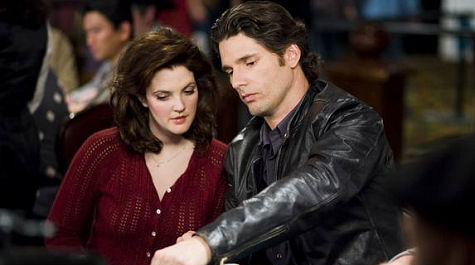

Drew Barrymore, Eric Bana in Curtis Hanson’s Lucky You

Children of Men (Universal/dir: Alfonso Cuaron) Reason: An obviously thoughtful doomsday drama that looks superb and whip-smart and technically top-of-the-line. (A director friend who’s seen it says the compositions and long shots are Kubrick-like.) But any movie previewed at Comic-Con featuring Michael Caine in hippie hair and being called a “thriller” on www.comingsoon.net is most likely not Best Picture material. That sounds like a big lunge but you know what I mean. Educated filmgoers, cineastes, cultists and geeks will probably be delighted, but the futuristic plot places it in the basket of political-polemical films that never seem to end up in the Best Picture derby. Cast: Clive Owen, Julianne Moore, Charlie Hunnam, Michael Caine, Chiwetel Ejiofor.
(8) Zodiac (Paramount/dir: David Fincher). Reason: A dark, gritty procedural about an actual hunt for a real-life San Francisco-area serial killer that began 37 years ago is, again, a film that may well have grand distinctions and fantastic chops, but it’s almost certainly not Best Picture material because of the lack of an emotional current of any recognizable kind, much less a cathartic emotional crescendo, in the script that I read a few months ago. Plus it’s hard to figure if Paramount is going to release it platform-style in late December to qualify it, or whether they’re just going to open it on 1.17.07 with no platform. Cast : Jake Gyllenhaal, Robert Downey, Jr., Mark Ruffalo, Anthony Edwards, Ezra Buzzington.
(9) For Your Consideration (Warner Independent/dir: Christopher Guest). Reason: May well be clever, funny, sharply satirical, etc., but not remotely made of the stuff that gets you into the derby. Chris Guest operates on his own sub-atomic plane. Cast: Carrie Aizley, Bob Balaban, Ed Begley, Jr., Jennifer Coolidge, Paul Dooley, Ricky Gervais, Christopher Guest, Rachael Harris, John Michael Higgins, Michael Hitchcock, Don Lake, Eugene Levy, Jane Lynch, Michael McKean, Larry Miller, Christopher Moynihan, Catherine O’Hara, Jim Piddock, Parker Posey, Harry Shearer, Fred Willard.
(10) Hollywoodland (Focus Features/dir: Alan Coulter). Reason: An atmospheric, above-average Hollywood noir with a steady hand and fine performances. But it’s more of an early-fall than a late-fall film, if you catch my drift. And it’s certainly not a year-end one. Which isn’t to put it down. I’m just trying to weigh its merits in the proper context. Cast: Adrien Brody, Ben Affleck, Bob Hoskins, Diane Lane.
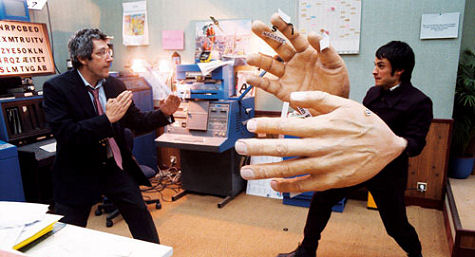

Gael Garcia Bernal (r.) in Michel Gondry’s The Science of Sleep

Lucky You (Warner Bros./dir: Curtis Hanson). Reason: Gambling movie, not going to Toronto Film Festival, the curse of Eric Bana, etc. I finally saw the trailer on the big screen last night, and it doesn’t look half bad. Hanson is a first-rate filmmaker, as everyone should know by now, and his having worked with Eric Roth on the script is some kind of quality guarantee. But unlike Hanson’s excellent, under-appreciated In Her Shoes , this one doesn’t feel Best Picture-ish. (Note: Lucky You has changed its release date from 9.8 to 10.27.) Cast: Bansa, Drew Barrymore, Robert Duvall.
(12) The Painted Veil (Warner Independent/dir: John Curran) Reason: Looks to be an exotic, high-toned period drama, set in the 1920s, about a married London woman’s journey of self discovery by way of an adulterous affair and dealing with cholera-afflicted Chinese natives. Whatever aesthetic pleasures it may ultimately yield, one can sense immediately by way of its 9.15 release date that it’s probably not derby material. Cast: Naomi Watts, Edward Norton, Liev Schreiber.
(13) The Science of Sleep (Warner Independent/dir: Michel Gondry). Reason: I still haven’t seen it, but it’s been at festivals and hasn’t generated anything that sounds like derby-entry buzz to me. Trippy and imaginative, I hear, and a likely smart-audience favorite. Cast : Gael Garcia Bernal, Charlotte Gainsbourg, Alain Chabat, Jean-Michel Bernard, Emma de Caunes, Inigo Lezzi, Stephane Metzger, Miou-Miou.
Best Picture Add-On:
Blood Diamond (Warner Bros./dir: Edward Zwick). Reason: It’s a Zwick film about moral growth in a wartime atmosphere, and it’s opening on 12.15 with Warner Bros. behind it — that in itself tells you it’s in the game. Set in 1990s Sierra Leone, it’s about a South African mercenary (Leonardo DiCaprio) and a fisherman (Djimon Hounsou) whose fates become interwined “in a common quest to recover a rare pink diamond that can transform their lives.” That last part sounds like horseshit but Zwick always tries hard and Diamond is looking pretty assertive at this stage. Cast: DiCaprio, Jennifer Connelly, Hounsou, Michael Sheen, Stephen Collins.
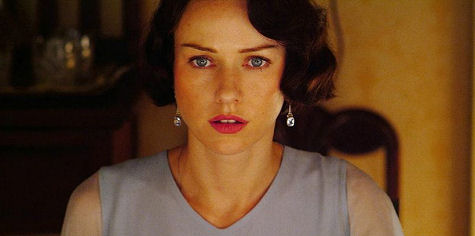

Naomi Watts in John Curran’s The Painted Veil

Little Miss Sunshine (Fox Searchlight/dirs: Jonathan Dayton, Valerie Faris). Reason: It sometimes takes a while for people to realize just how exquisite and emotionally on-target a film is, even if it opened at Sundance and feels indie-ish. Cast: Gregg Kinear, Steve Carell, Toni Collette, Paul Dano, Alan Arkin, Abigail Breslin.
Best Picture Keepers in order of probable (i.e., perceived) Oscar strength:
Flags of Our Fathers (DreamWorks); Babel (Paramount); Dreamgirls (DreamWorks/Paramount); The Pursuit of Happyness (Columbia Pictures); World Trade Center (Paramount); Stranger Than Fiction (Columbia); The Good Shepherd (Universal Pictures) and Blood Diamond (Warner Bros.)
Plus The Fountain (Warner Bros.); Litttle Miss Sunshine (Fox Searchlight); United 93 (Universal); Infamous (Warner Independent); Reign O’er Me (Columbia); Red Sun, Black Sand (DreamWorks); Fur (Picturehouse); The Holiday (Columbia); Little Children (New Line); The Good German (Steven Soderbergh); Notes On a Scandal (Fox Searchlight ) and maybe Stephen Frears’ The Queen (Miramax).
The Oscar Balloon adjutments are done.

Deep Polanski

Deep Polanski

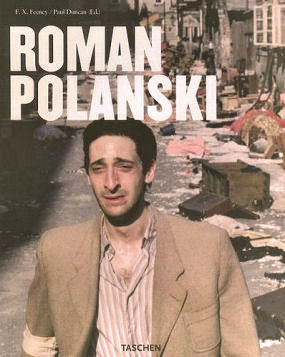
Over the last couple of weeks I’ve been reading “Roman Polanski” (Taschen), an eye-filling and genuinely inspiring review of one of the greatest living filmmakers of our time. It runs 192 pages, and I wouldn’t have minded an extra 100 pages or so. I have no problem with calling it the most insightful, alluring and fetchingly phrased book about Polanski ever.
The photos, selected by editor Paul Duncan, are exceptional but F.X. Feeney’s smoothly written 30,000-word essay is the soul of it. The book is a peach and a picnic for lovers of “Repulsion”, “Knife in the Water”, “Rosemary’s Baby”, “China- town”, “The Pianist”, “Macbeth”. It even made me want to return to “Frantic”, which I bought into because I found it impossible to believe that Harrison Ford would marry Betty Buckley.


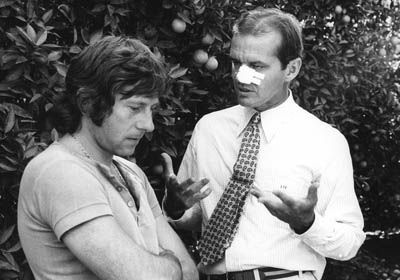
Roman Polanski (l.) and Jack Nicholson during the making of Chinatown (1974)

One look at “Repulsion”, which I first saw in my early 20s, and it was clear Polanski knew how to sock it to you but good. That rotting rabbit on the plate, the bleeding cuticle of that old woman in the beauty salon, the man briefly reflected in the closet-door mirror, that loudly ticking clock, the cracking walls — Polanski was a guy who knew from nightmares and had a knack for conveying creepiness and perversity in a way that anyone could feel.
The idea you always get from any Polanksi film is that life is not to be trusted, unsafe…teeming with predators. Feeney’s copy notes that “the ghostly truth [behind his films] is that Polanski was orphaned by the Nazis and wandered Poland alone from ages 9 to 13. In each of his films, the omniscient viewpoint feels ‘childlike’ in the least innocent sense: we listen and watch…wary of what’s been hidden or is being planned in secret,…one’s survival (even within the playful confines of a fantasy) depends on not missing so much as one detail.”
< ?php include ('/home/hollyw9/public_html/wired'); ?>
I’ve been talking to F.X. about doing an interview about the Polanski book since mid June. Last week I hit upon the idea of simply writing out a few e-mailed questions and having F.X. write back. His replies came in yesterday and here they are:
HE: How long did it take you to research, write, and then re-write everything? How many words? When did you do the work?
Feeney: I worked from October 2003, to early May 2004. Mind you, I had been researching it since the late `60s and early `70s, when I was in my late teens. Polanski was a very early hero of mine. I have always felt at home in his films. There was never any need to ‘interpret’ his movies, as with other greats.

“The only way I could make sense of 2001: A Space Odyssey when I first saw it was to try and understand the ‘meaning’ of the monolith. Polanski was immediately involving, by contrast. If you’ve ever felt scared while you’re alone in a house, Repulsion and Rosemary’s Baby make instant sense. Any kid, any grownup, can watch and be perversely tickled by firsthand knowledge of what those poor heroines are feeling.
“My hands-on research began as I tramped around Poland in late November and early December of 2003. I visited the house where Polanski lived in Krakow, prior to the Nazi invasion. A local guide — a wonderful character who calls himself ‘Bob of Bobtours dot com’ — drove me to Wysoka, in the Tatras mountains south of Krakow, where Polanski hid out after escaping the ghetto at age 9.
“A 90 year-old camp survivor living up in those hills remembered the family Polanski boarded with, and directed us precisely to the spot where their hut once stood. (‘Three bus stops past the church, to where a long road curves up to the right.’) A photo I took of that place is in the book — along with another I took of the ‘half lion, half dragon’ Polanski remembers over the door to the house where he spent his few happy times as a kid.
“The following week I went to CAMERIMAGE, a magnificent, intimate, world-class film festival devoted to honoring cinematographers, and held each year in Lodz, Poland. Polanski attended the film school at Lodz — pronounced ‘Woodge,’ and fondly nicknamed “Hollywoodge” by partisans of the festival.


Catherine Denueve in Repulsion (1965)

“There, in addition to hobnobbing with David Lynch, Peter Weir, James Ivory, Christopher Doyle and an army of great cameramen and young filmmakers, I ran into a wealth of Polanski’s old schoolmates, and was even given a tour of the film school, which is still thriving. “Polanski always sat there, on the seventh step,” the rector told me as we climbed the wide staircase to the screening room, where the students used to hang out and socialize by the hour.
HE: How did you speak with Polanski? (Over the phone, I presume.) How many conversations? How long did the interview process take?
Feeney: “There were no conversations with Polanski. When I first reached out to him, through a mutual friend — film director Hubert Cornfield, now deceased — Polanski’s response was courteous but absolute: ‘I hope never to be interviewed, ever again.’
“Truth is, Polanski has dealt with everything in print over the past 40 years, be it the Nazis’ murder of his mother, the Manson gang’s massacre of Sharon Tate and his unborn son, even the incident of ‘unlawful sex with a minor’ (which is the actual wording of the crime for which he pled guilty — not statutory rape), and the question of whether or not he’s coming back to America — he’s dealt with all of it, exhaustively, in print and on TV, again and again.
“A fellow Polanski scholar, Paul Cronin — editor of ‘Roman Polanski: Interviews’ — shared an indispensible bulk from his archive. But above all there is Polanski’s own 1984 autobiography, which is blisteringly honest. I decided to fuse these countless fragments into a coherent mosaic while focusing primarily on the films.


Polanski’s wife and actress Emmanuelle Seigner with Polanski two or three years ago

“Polanski did cooperate very generously in terms of providing access to the rare graphic images at his office that my editor Paul Duncan gathered for his superb layouts. Polanski never intervened, though he did review the text for factual inaccuracies. In my original draft I had written that Wysoka is 35 kilometers south of Krakow — he changed that to 40. He adjusted one or two other things of that nature. Otherwise, his stance was a respectful ‘no comment,’ good or bad.”
HE: What film is he proudest of at this stage? My guess is The Pianist, but maybe it’s Knife in the Water or Cul de Sac.
Feeney: “Cul de Sac is his favorite, of record — everything that is most pure and original in himself is in that film, although it was hell to make. (Uncooperative weather, bedbugs at night, moody actors.) His two favorite working experiences were Chinatown and The Pianist — in each case, he enjoyed the unwavering support of his backers, cast and crew.”
HE: What is your favorite Polanski film personally? Which of his films do you think is the greatest? And why?
Feeney: “This is like asking me my favorite Beatles song. (Actually, that would be ‘You’ve Got to Hide Your Love Away’ — but do we have to sacrifice all the rest?)


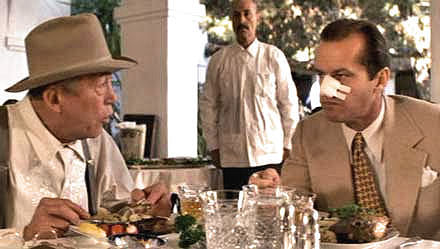
John Huston, Jack Nicholson in Chinatown

HE: Will Polanski ever return to this country?
Feeney: “The great misconception I try to correct in the book is the question of why he’s in exile. Several times, lately, in a number of venues, I’ve come across erroneous newspaper accounts which say ‘Polanski fled the US to escape arrest.’ No — he pleaded guilty, took full responsibility, even did prison time and stood ready to pay a hefty fine. Unfortunately Judge Laurence J. Rittenband reacted badly to the overheated media coverage. The day after Polanski was released from Chino [state prison], Rittenband reneged on the careful deal worked out with the prosecutors and arbitrarily threatened Polanski with further and unlimited jail-time. The judge’s freakout became contageous and Polanski boarded the next jet out of Dodge. (See pages 109 and 111 of my book.)
“As for his present exile, and his chances of returning: Remember The Exterminating Angel, the Bunuel classic in which dozens of wealthy people are trapped at a party for 40 days and 40 nights (eventually resorting to cannibalism), all because nobody wants to be thought rude by being the first to leave? That’s Polanski’s position. He pleaded guilty, he did time, he made amends — through civil courts, he settled with the young woman in the late 1980s / early 1990s. The way is technically clear to an amnesty, but nobody in power wants to be the first one to let him off the hook.
HE: My favorite Polanski scenes are in Repulsion. The loud ticking clock as Catherine Deneueve lies in bed, terrified that an intruder will come into her bedroom, etc. And the arms and hands shooting out from the walls and grabbing her. What are your favorites?
Feeney: “I’m with you in loving Repulsion, through and through. As for Cul de Sac, I would call your attention to a few things — particularly the long magical interlude on the beach at daybreak, all done in one breathtakingly sustained complex master shot. There, Donald Pleasance, Lionel Stander and Francois Dorleac — Catherine Deneueve’s elder sister, dead in a car crash later in 1966 — get along peaceably for a change. It’s subtle, but the rest of the movie’s emotional power is energized by this little truce.


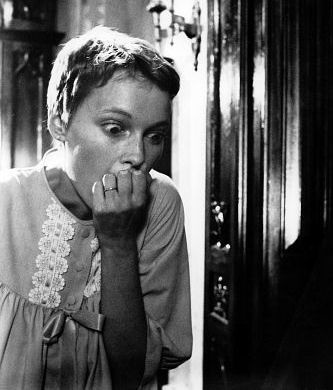
Mia Farrow in Rosemary’s Baby

“In Chinatown, pick any scene. My favorites tend to involve John Huston — but as Robert Towne points out, check out and savor any scene in where the characters (and ourselves) are obliged to wait. Take the moment when Jake is rudely forced to wait all day in a Water & Power honcho’s outer office. He persists in waiting — to the great irritation of the secretary. The same goes, more famously, for the little showdown through gritted teeth with the clerk at the hall of records. Who among contemporary directors would have the bold audience sense to try such scenes, much less pull them off? Paul Thomas Anderson comes to mind, but otherwise? Almost no one.
“Polanski’s last five films are all great, in my opinion. Bitter Moon (1992) is a sexy wonder, Death and the Maiden (1995) a magnificent thematic follow-up to Chinatown particularly as articulated by Noah Cross (Huston) to Jake Gittes, when he says: “Most people never have to face the fact that, under the right circumstances, they’re capable of anything.” Ben Kingsley, Sigourney Weaver and Stuart Wilson give three exceptional performances that demonstrate precisely that horrible truth. The Ninth Gate (1999) is a hoot.
The Pianist (2002) and Oliver Twist (2005) constitute twin valedictories — the former recreates the historic reality of Polanski’s childhood with a vital fidelity, and the latter catches the inner reality of his childhood — at large in a hostile universe, but protected by an indestructible optimism.”
Wells addendum: I have one beef with the book, which is the cover photo — a shot of a tearful, devastated Adrien Brody in The Pianist walking down a littered street. This is not Polanski to me — a man full of grief and pain. Polanski, to me, is the crafty jackal, the brilliant manipulator, the pervy purveyor of the sinister. Polanski is not about boo-hoo but heh-heh. He’s the scared little boy who probably once said to himself, “I’ll escape the clutches of those Nazi bastards, and then I’ll come back when I’m older and make brilliant films and scare the shit out of their sons and daughters and then make them feel ashamed of their parents…hah!”

** Feeney is also the author of Taschen’s forthcoming Michael Mann book, due on 9.5.06.

Bitter Tea

Bitter Tea

I missed David Poland’s 7.24 summary of an old media vs. new media dustup that largely occured the day before, but better late than never. The highlight was a short but stinging criticism of Time magazine critic and documentarian Richard Schickel by Hollywood Reporter columnist and RiskyBiz blogger Anne Thompson for a recent and obviously resentful Schickel diss of online film critics and columnists.
Poland’s account opens with a 7.23 Cathy Siepp guest editorial in the L.A. Times that laments a persistent tendency of old-media Times staffers to diss online writers and reporters in a clueless and petty way. (Poland has been one of the dissees in a David Shaw piece that ran in the Times five years ago.)


Time film critic, author and documentarian Richard Schickel; Hollywood Reporter columnist Anne Thompson

Then it shifts over to the brief Schickel-Thompson contretemps, which was over a remark in a Schickel-penned book review that ran in the 7.23 L.A. Times. Schic- kel began his piece with a diss of online film columnists by saying that the current film-writing “pendulum seems to be permanently stuck at the burbling end of the spectrum, where the bloggers — history-free and sensibility-deprived — weekly blurb the latest Hollywood effulgence and are rewarded by seeing their opinions bannered atop movie display ads in type sizes elsewhere reserved for the outbreak of wars and the demise of presidents.”
This brought a response from Thompson titled “Is Time‘s Richard Schickel out of date?”, and it said the following: “Is Schickel feeling the pressure of younger critics nipping at his heels? Enough. If you’re too outmoded to understand today’s movie aesthetic — or the existence of many blogs that feature excellent film criticism, along with the ones that don’t — stop writing about them. Schickel is a terrific book writer, documentary filmmaker and voiceover artist. There are plenty of worthwhile activities to keep him busy.”
< ?php include ('/home/hollyw9/public_html/wired'); ?>
Do most online film columnists exude the aesthetic sensibility and historical perspective of, say, Schickel or Charles Taylor or David Edelstein? Some don’t. But there are just as many (if not more) insufficiently cultivated writers in the print world as in the cyber, and what certain online pundits may lack here and there in terms of cultured perspective and/or sophistication is more than compensated for with their passion and to-die-for particularity.
It’s widely recognized, I think, that online film writers convey far more in the way of personality and hot-blood conviction than old-media types, who, I sense, are often constrained by their editors’ insistence upon conveying a tone of measured semi- dispassionate journo-speak. Obviously not always — I ‘ve always loved the honed precision of Schickel’s Time reviews along with those by print guys Joe Morgen- stern, David Ansen and Peter Rainer (among dozens of others) but I sometimes wonder what these guys really, really think deep down, and how they’d phrase it if they’d let their hair down a bit.

But of course, Schickel’s ire is mainly about the attention the online pundits are getting by way of quotes in print ads. My God…this is one of the brightest, most learned and most sophisticated film critics in the world, and with these words Schickel has put on the cloak of a grumpy old coot swatting at pesky young whippersnappers nipping at his professional heels. He and some of his brethren obviously feel threatened by the encroaching presence and power of the online film crowd. As well they should.
Shickel should really try and shake this attitude off. He knows all about the dynamics of change and how young conquistadors have always moved up and eventually displaced the entrenched. Nobody wants to be the older guy who doesn’t get the new sensibility, but it happens to the best of them. It’s an old story. Where’s his perspective?
A similar kind of old order-new order clash between film writers and their editors happened 46 years ago in the case of a young upstart critic named Andrew Sarris. In the summer of 1960 Sarris was lambasted in some Manhattan editorial circles for writing far too seriously and respectfully about Alfred Hitchcock‘s Psycho, which obviously casts Sarris in a perceptive forward-thinker mold by today’s standards.
Three years later N.Y. Times critic Bosley Crowther, easily the biggest frog in the pond back then, ran a rave review of Joseph L. Mankiewicz’s Cleopatra. Try and find anyone today who feels Cleopatra is even a half-good film. (I think the opening 20 minutes with Rex Harrison are pretty good, but then Elizabeth Taylor rolls out of that Persian carpet and it all goes to shit.)

Later that year Crowther expressed dismay at the impudence of Dr. Strangelove, and particularly its lack of respect for the U.S. military. Four years later Crowther viciously panned Bonnie and Clyde, and that was it. He was over. The culture had passed him by.
Crowther’s fuddy-duddyisms and Schickel’s disdain of new-media film writers obviously aren’t analagous in every respect, but the older-guy analytical tendencies are, I feel, at least somewhat similar. Older entrenched writers don’t tend to get new stuff as completely as younger, not-as-corporately-connected writers, and some of them tend to bash avatars of the new for being crude or pandering or not worldly enough. But worlds change.

Men Apart

Men Apart

We all know the five-year anniversary of the 9/11 attacks is happening soon, and that Hollywood has gotten into this already with Paul Greengrass’s United 93 (which I still feel is the best theatre-released film of the year so far), and that Oliver Stone’s World Trade Center is about to pop on August 9th, and that the TV networks are planning on airing some 9/11 stuff in September.
And I can understand people saying, “Look, leave me out of this…we all went through it and it was awful but I’ve moved on…enough.”


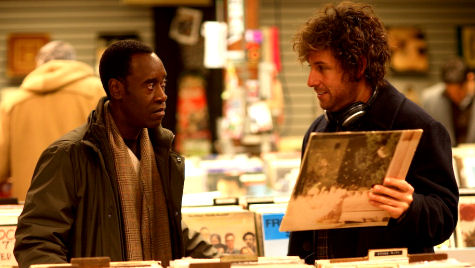
Don Cheadle, Adam Sandler in Mike Binder’s Reign O’er Me

But what if there was a 9/11 movie that was only nominally about 9/11? A movie about dealing with 9/11 grief by not dealing with it, by keeping it in a box? Which, let’s face it, is where an awful lot of people are still at these days. (Like the ones who refused to see United 93 last spring, for instance) And which opens a door in a broader sense to a whole way of living, or not living as it were.
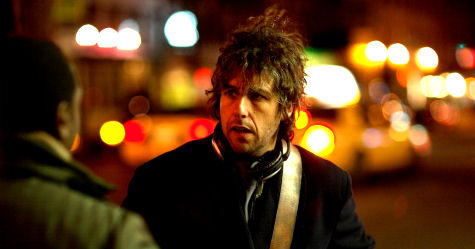
This is what Mike Binder’s Reign O’er Me, which I saw a couple of weeks ago, is more or less about. Set in Manhattan, it’s about a dentist and a widower in his 30s named Charlie (Adam Sandler) who lives in a state of total shutdown that requires never feeling grief over his dead wife and daughters — killed on 9/11 because they were on one of the jets that slammed into the towers. Because the hard drive has been erased and he’s living somewhere else.
< ?php include ('/home/hollyw9/public_html/wired'); ?>
The story’s about how Charlie slips into a renewed friendship with a dental-school pal named Allan (Don Cheadle), a well-to-do husband and father who relates to Sandler because he’s also living in a place of crust and solitude, and how this friendship brings some comfort to both. And then, very gradually, a bit more.
I’m bringing this up because I know Reign O’er Me is honest and real and excep- tional. And because I’m hearing that Sony Pictures execs are also high on it and have tested it with Average Joes and gotten some great test scores, and are thinking about opening it on December 1st and going for what they can get.

I’m also talking about Reign because I feel it touches the communal 9/11 current in a sadder and more intimate way than World Trade Center…no offense to Oliver or Michael Shamberg or Stacey Sher or Paramount, because they’ve made a good film also. But Reign has a metaphor that spreads out and sinks in. Which is that everybody (or almost everybody) buries the stuff that hurts.
I’m also mentioning Reign O’er Me because Sandler is damned convincing as Charlie, and despite his having never gone into serious acting territory, his work is good enough here to warrant entry into the year-end derby. I’m serious.
Sandler has never tried to do much more than his patented Sandler shtick (Punch Drunk Love and maybe The Wedding Singer excepted). But his Reign performance is a trip off the reservation. And it all crescendos in a breakdown scene at the end of Act Two that nails it and makes the performance whole. Say what you will about Click and Little Nicky, but Sandler’s Charlie is going to earn serious respect.
I’m also talking about Reign O’er Me because it’s Binder’s best film ever — it’s at least two or three notches better than The Upside of Anger, which I thought was a solid 8.5 with a couple of nicely full-bodied performances by Joan Allen and Kevin Costner.
And because Cheadle is superb in the film also — I found him much more affecting in this than in Hotel Rwanda. And because the rest of the cast — Jada Pinkett Smith, Saffron Burrows, Liv Tyler, Robert Klein, Melinda Dillon, John de Lancie, Donald Sutherland, and Binder himself — give rooted, lived-in performances all down the line.

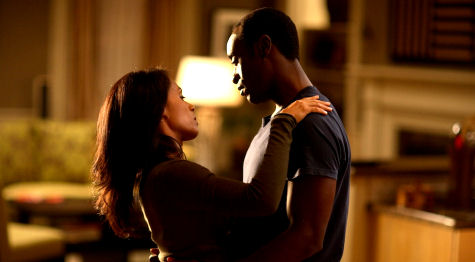
Jada Pinkett Smith, Don Cheadle

And because Russ T. Aslobrook’s widescreen photography, which was captured with a digital Genesis camera, is quite beautiful at times, the footage of nighttime Manhattan in particular.
And because the whole thing just works in a layer-by-layer way. Because it has a certain decency and quiet focus…a not-slow, not-hurried, building-into-something- true quality. And because it’s finally as much about Cheadle’s character and his marital issues as it is about Sandler’s emotional novacaine.
There are plans afoot to try to get it shown at certain festivals and hire the right publicity firm, etc. The usual moves for any quality-level drama with a December release date. Reign O’er Me (which is incorrectly called Empty City on the IMDB) may or may not get awards traction…who knows? Resistance among the Sandler haters may be so stiff that they won’t consider him for Best Actor…but I would be astounded if he doesn’t pick up support among the handicappers.
That’s about it. I just wanted to put this out there and let everyone know that some- thing pretty damn good has joined the fray…nothing more.

An Indie McTheatre

An Indie McTheatre

The first indie film superplex in the country is being built right now in West Los Angeles…ooh-rah.
One doesn’t normally think of independent, alternative and foreign movies playing in big, swanky, state-of- the-art theatres…but that’s the deal with the Landmark Film Center, which will open in June 2007. Twelve screens, three stories tall, stadium seating, a lounge, a wine bar, a couple of restaurants and a book store. Like the Arclight Cinemas in Hollywood, only newer and a few miles closer to the sea.


West L.A.’s Landmark Film Center, due to open in June 2007

And with totally free parking (which beats the Arclight’s policy of always hitting you up on the way out, even with validation) as well as smiling valet guys in white shirts and black vests hanging out in front.
Being a Landmark Theatres project, people will probably refer to this destination as the Landmark or the LFC . I like LFC better, even if it sounds vaguely akin to Ken- tucky Fried Chicken. If I were Landmark’s marketing guy I would suggest calling it the LBD, or the Landmark Big Dick. Just kidding.
< ?php include ('/home/hollyw9/public_html/wired'); ?>
An indie superplex is a very up-to-the-minute deal.
Seeing a foreign or indie-type film in L.A. has always meant going to a small or mid-sized plex — either the Landmark’s stand-alone Nuart or that twin-screened operation on Wilshire and 14th, or the shoebox miniplexes (Landmark’s defunct Westside Pavillion plex or Laemmle’s Sunset 5, which has the worst theatre seats in the world) or Laemmle’s two-screen art theatres on the Wilshire strip in Beverly Hills.
But 11 months from now, the LFC will change all that. L.A. movie mavens will be able to see the latest Gus Van Sant or Jim Jarmusch or Wim Wenders film in a much more plush and archecturally hip environment. I’ve never seen alternative fare myself in a posh stadium theatre except at the Toronto’s Cineplex at Bloor and Yonge during the Toronto Film Festival, and I definitely won’t mind having this option in my back yard.


Landmark Film Center bar, where I hope they won’t be charging $10 for mezzo-mezzo California Chardonnay.

Moviegoers have developed a taste for first-class moviegoing over the last six or seven years, which means that today’s exhibitors are looking at a fairly simple equation: provide stadium seating in a plush, uptown atmosphere, or sooner or later you’ll be dead. Landmark, which has 57 theatres in 23 markets nationwide, is simply recognizing this fact and getting in step.
The yen for stadium seating “started around ’98,” says Landmark’s head film buyer Ted Mundorff. “People started voting with their pocketbooks, saying they wanted stadium seating and they weren’t going to support old-style theatres” — seats built on a slightly graded or sloping floor — “if presented with any kind of choice.
“When the AMC Grand 24 opened in Dallas with modern stadium seating, it absolutely changed the town,” he says. “Same with the Mission Valley 20 in San Diego. It was very clear what people wanted.”
The success of Pacific’s Arclight — a first-rate superplex in Hollywood with cavernous theatres and state-of-the-art projection and sound — bears this out, and AMC having just built their new plex in Century City is also part of this trend.
The Landmark Film Center “will be very complimentary to the Arclight experience,” says Mundorff.


Landmark vp Ted Mundorff

The sightline advantage is the main stadium-theatre selling point, but people are also into bigness these days. The big hotels, particularly the ones in Las Vegas, Atlantic City and Cancun, are measured in hundreds or thousands of square yards. McMansions are the going thing all across the country with buyers who can afford them. Exhibitors are merely following suit by building McTheatres.
The size of the LFC stadiums “will vary,” says Mundorff, “with nine falling under the small or intimate category to three fairly large ones.” The plex will have “full digital capability, and full 35mm capability,” he adds.
How will the LFC affect the business and the programming at West L.A.’s Nuart? “It will give us the flexibility of playing even more product at the Nuart,” Mundorff answers. I’m not sure what that means, but if the IFC catches on fewer patrons will be buying tickets at the Nuart, no? The two will be only a mile or so apart.
I’ve also been told that the L.A. Film Festival, which enjoyed a resurge a few weeks ago by moving to Westwood, is planning on staging a significant portion of its events at the LFC next summer. Good idea.
I drove by the LFC construction site the other day and all you can see is a big green tent. Maybe Los Angelenos don’t like to look at brawny construction workers kicking up dust, or maybe commercial developers feel it’s not attractive enough or something.
They don’t do the tent thing as much in Manhattan. You can always look through the hole in the wooden fence bordering any construction site and see what’s happening. It’s part of the grit that goes with that town. Coverups are more the thing in L.A. — facelifts, green tents, scenery-blocking billboards.


And let’s not have anyone selling micro-bags of popcorn for $5.75 either.

But these artist illustrations (sent to me by Landmark uber-publicist Melissa Raddatz) provide an idea of the LFC experience. Look at the photo directly above this graph — the smiling guy approaching the popcorn stand (i.e., the one with the girlfriend) looks a lot like Hank Azaria. And the wine bar looks cool. A place to meet hot women with good taste in movies.
The main accomplishment of the LFC will be, just for redundancy’s sake, an upgrading of the indie-film experience — a larger-environment, richer-impact thing that not only ties in with current exhibition trends but may restore a sense of specialness to the indie-film watching.
McTheatres, after all, are the closest thing we have these days to the old movie palaces that were fairly standard in this country from the 1920s to 1960s. They’re also a blessed reversal of the shoebox megaplex trend of the late ’70s early ’80s, which everyone hated.
Big swanky movie theatres are, in a sense, holy places because of the big-temple atmosphere. As film essayist F.X. Feeney told me this morning, “Movies in big theatres are like ball games in that they deliver euphoria to masses of people on cue. Churches and ballgames and big theatres are all kind of tied together in this sense, all part of the American spiritual experience.”

The Fun’s Over

The Fun’s Over

[Before reading this article, click on this mp3 file — the song you’ll hear fits the mood of what’s being said.]
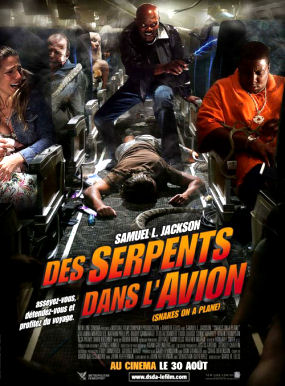
For yours truly, the helium began to leak out of the Snakes on a Plane balloon when it was announced last Tuesday that New Line had decided not to advance- screen it for critics. That was a big uh-oh for those who knew the code. Then came last Friday afternoon’s Snakes presentation at Comic-Con, and that was it. End of story, case closed, unplug the phones.


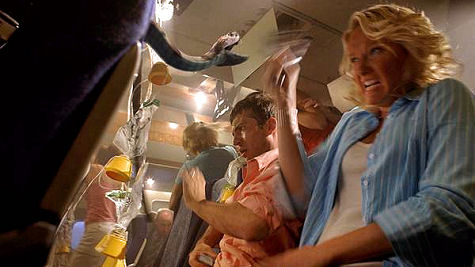
Dumb animatronic snake drawing response from actress hired to play terrified passenger in New Line’s Snakes on a Plane (8.18)

Judging by the eight or nine-minute reel I saw in Hall H, Snakes on a Plane is going to be a wackazoid cheeseball thriller for the pseudo-hippers. But not that much fun for people like me.
The reel seemed to promise a film that will be energetic and kick-assy and will almost certainly do the old New Line exploitation bootie-shake from start to finish. But it also had some fake-snake CG that seemed to be generated by FX software created in 1997. And of course the snakes are lethal killing machines that actually go “hssss!” like a pissed-off audience sitting in a movie theatre. And some of the big snakes, like Spielberg’s Jaws shark, rumble and growl like lions on the plains of Kenya. And some of the animatronic snake models don’t look right.
< ?php include ('/home/hollyw9/public_html/wired'); ?>
The reel promised a lot of screaming and sweating and some great snake-kill moments, but the cutting didn’t seem all that great. (It seemed to me that a bit with Samuel L. Jackson slipping into the pilot’s seat and trying to bring the plane out of a steep dive — a standard plane-thriller gambit — was handled pretty sloppily.)
And it had at least one instance of shamelessly bad dialogue when Jackson says to a senior stewardess when things get rough, “I need you to be strong for me.” A guy I talked to later on tried to dismiss this as part of the joke that I’m incapable of getting because of my own problems, not the movie’s. If I had a sense of humor I would relish the fact that Snakes on a Plane is a genre parody, he meant. So SoP is Airplane now? I think not. Some dialogue isn’t awful enough to be funny — it just goes thud.


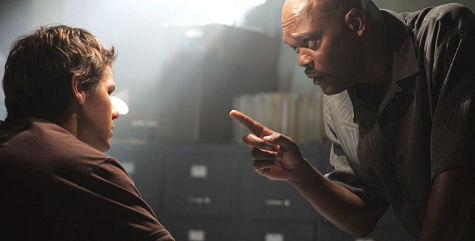
The great Samuel L. Jackson (r.) at FBI agent Neville Flynn.

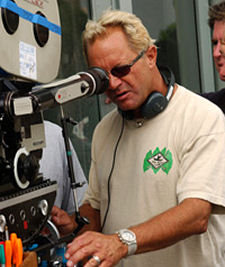
But the hoo-hah demeanor projected by Snakes director David R. Ellis is what really did it. 45 seconds after he walked out on-stage and started talking about the film, alarm bells were racketing in my head. A former stunt man, actor and 2nd A.D., Ellis reminds me of a hundred below-the-line guys I’ve met in this town over the last 20-odd years…an amiable go-alonger with a good sense of humor and a lot of friends….a guy who walks around in shorts and sandals and who likes to chill in the backyard on weekends with burgers on the barbie and a can of beer in his hand.
Don’t get me wrong. Snakes will be “fun” if you go with the right downmarket attitude. It’s a safe bet it’ll clean up when it opens on 8.18 (the guessers are talking a first-weekend tally in the mid to high 20s), and I’ve been told it has at least three or four “nooo!” scenes that fans are going to howl at as they text-message their friends and spread the word. If this happens it’ll probably translate into decent repeat business.
But the X-factor, smart-guy audience that had been primed and ready to enjoy this comic horror-thriller since the Snakes internet movement began last March has been jettisoned. Jettisoned back when the film was made, I mean. The hepcats loved the title and had fun with it, but they never realized (or wanted to realize) what kind of film Snakes on a Plane actually was all along. And I include myself in that equation.
The impression I got from the short reel on Friday is that Snakes on a Plane is maybe one-tenth as hip as the Snakes riffs we’ve all enjoyed the last three or four months on www.snakesonablog.com….if that.


Snakes on a Plane director David R. Ellis

I said it a long time ago, but the best part of Snakes on a Plane happened online in March and April. The movie couldn’t possibly live up to all the hype, and now we’re all starting to get the idea that it indeed hasn’t. Reality has set in, o my brothers. Welcome to the world of 116 No. Robertson Blvd.
Jackson,who was fantastic last Friday on the Hall H stage, said at one point that he loved what had happened with the internet Snakes frenzy, and that he’s looking forward to a day when interactive fans will create plot points for a new film — that the fans will one day become the new auteurs. In fact the fans were the auteurs with the Snakes on a Plane phenomenon. They ran the show. The Snakes team and the New Line “creatives” have been playing catch-up and “hey, can we get in on this thing?” all along.
Who knows what the three Snakes screenwriters — John Heffernan, Sebastian Gutierrez, David Dalessandro — had in mind in the early stages, but I know the Snakes footage I saw on Friday and the what-the-hell, pocket-the-paycheck attitude I picked up from David R. Ellis are one and the same.
The New Line powers-that-be have basically said, retroactively, “Uhh, thanks for the internet word-of-mouth guys. We all had some fun with those clever videos and songs and posters you came up with…really loved it. But that was you, not us. Thanks for thinking it might be and for helping us make millions, and…well, try not to blame us for not being on your wavelength.”

I guess I basically drove all the way down to San Diego last Thursday to have my concerns about Snakes on a Plane confirmed, and now they have been.
I’m sure New Line publicity would like me to be strong for them. Do the dance, hold the line and wait until the movie opens on Friday, 8.18. But they showed the footage at Comic-Con and brought Ellis up on the stage, and I think it’s fair to air my impressions of that.
It just hit me I may be helping the cause with this piece. Critics and media people who haven’t thought much about SoP may read it and go “stupid piece of shit” and write it off, and then they’ll pay to see it in theatres at those 10 pm shows on Thursday , 8.17 and — who knows? — maybe it’ll be a lot more entertaining than what the Comic-Con footage reel indicated and they’ll write good reviews and spread the word.
It’s always better to see a film with low expectations (or no expectations) than high ones. Any distribution exec will tell you this, including the ones at New Line.

Soggy All Over

Soggy All Over

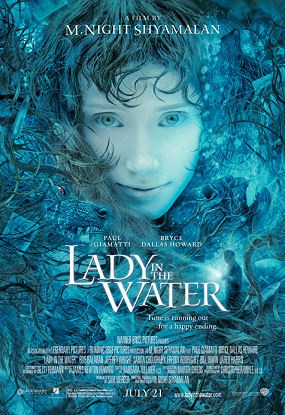
M. Night Shyamalan’s Lady in the Water (Warner Bros., 7.21) is some kind of disaster — fanciful, leaden, disconnected. But underneath all the preciousness lies an egoistic obstinacy that I found strangely touching. Night wants so much to make something loving and penetrating and out-there brave, and the failure of the thing to even ignite, much less lift off the runaway, almost breaks your heart. Almost.
Lady has a good thing going inside of it — a notion that average neurotics who lead inconsequential lives inside big apartment buildings can be selfless, gallant and resourceful — but the fairy-tale plot feels cockamamie and pasted together, and the dialogue just kinda goes plunk. I wanted it to work, but M. Night just isn’t a good- enough writer. Good screenplays never feel turgid and labored-over, and I’ve written enough shitty stuff to know what I’m talking about. And I’m sorry. Because I admire what Night’s trying to do.

And yet I didn’t much care for his coverage-restricting approach (only one camera angle per scene), which seems to emphasize rather than obscure Lady‘s script problems. And I was even bothered at times by Chris Doyle’s cinematography, which seems eccentric (occasional non-focused shots, pointlessly “off” framing) in a kind of hip sell-job way so everyone will know what a brilliant dp Doyle is.
But we need to stop for a second and acknowledge that there’s one third-act riff by Bob Balaban that’s very good. He plays a smug, priggish film critic named Farber, and I I loved it when he tries to use cliched assumptions to fortify himself in an uh-oh situation. It’s basically Night swiping at people like me, and saying “take the Pepsi Challenge and tell me who’s got a bigger, braver heart — guys like you or me?” The Farber scene is take-you-out-of-the-movie funny, yes, but at least it’s that.
< ?php include ('/home/hollyw9/public_html/wired'); ?>
I tried three times to write a pan of Lady in the Water but it wouldn’t come. That’s because I’m torn. I admire Shyamalan for trying to do something really different by standing up on the balcony railing and balancing himself in front of millions. And I feel sorry for him getting pasted left and right for not only the failings of the film but also for Michael Bamberger’s The Man Who Heard Voices, which Janet Maslin has called a puff piece but I feel is one of the nerviest tell-all books about the making of a film ever written.
But I also feel that Night has become arrogant and removed and that he needs to reshuffle the deck and start over.
Most people brave enough to see this film are probably going to lose patience with it early on, as I did. And then, I imagine, they’re going to start hating it. Or falling for it like an obsessive, with the same kind of determination that Night had all through the writing and the shooting. The story doesn’t work, but if you look at it like something that isn’t supposed to “work” but weave a spell and take you someplace new and trippy, you might be okay with it.

Either you’re the kind of viewer who finds it somehow enchanting when Paul Giamatti’s character, an apartment building superintendent named Cleveland Heep, drinks a glass of milk and gets some of it on his moustache and doesn’t wipe it off…or you’re the kind of viewer, like me, who says, “Okay, I get it…a milk-soaked moustache and he doesn’t care…a character bit…Heep is dreaming, irrational in a good way…but how many scenes are we going to have to look at this milky moldy growth on his upper lip? Wash it off, please!”
Lady is a fable about some lost people waking up and touching something vital and transforming. If you can’t go with the bedtime story-ness of it, it won’t work…it can’t work.
I know this: any filmmaker who tries to explain an arcane mythology in the very beginning of his film with animation is in trouble right from the start. Night is saying to us, I tried to make my story work on its own simple terms, but the test scores showed people are confused so I’ve stuck this in to help you understand and get into the mood.
Everyone in Heep’s apartment complex, located somewhere in the Philadelphia suburbs, is some kind of fuzzy eccentric. There’s a tall chatty Korean girl (Cindy Cheung) and her mother, a guy (Bill Irwin) who sits in front of the tube 24-7, a one-sided bodybuilder (Freddy Rodriguez), a guy trying to write a big novel (Shyamalan) while living with his sister (Sarita Choudhury), a group of guys whose lives are about cigarettes and pot), a gentle guy (Jeffrey Wright) and an older woman whose face I half-recognized until I realized….wow, it’s Mary Beth Hurt! 24 years ago she was blowing that young guy in the family station wagon in The World According to Garp …what happened?

Heep is your basic homely lonely guy with a heart — standard Giamatti stuff. And he comes alive when he meets Story (Bryce Dallas Howard), a “narf” who’s been living somewhere under the swimming pool. A narf is a kind of muse — a female life form whose task is to move people to accomplish something great. She’s also trying to return home like E.T., and her big bugaboo is something called a “scrunt” — a big snarly CG wolf with grass instead of fur.
She can be saved, however, by a guardian…only it’s guessing game as to which person in the building will fill this role. Others will help her also — a group called a “guild”, a “symbolist”, a “healer” — but who are they? If Story fulfills her mission or is saved or whatever she’ll be carried off by a giant eagle unless something called the “tartutic” stops her…wait a minute, I can’t remember what this is or was.
My memory is definitely going, Dave. I can feel it. I’m afraid.
Most of the film is about Giamatti putting together the right answers and piecing together the snarf-vs-scrunt-vs.-tartutic legend as everyone bands together to save Story and their lives in the bargain. Fuck all this, I said after an hour or so. I might have felt more supportive if, say, Bob Balaban’s film critic had turned out to be the guardian. But of course, Shyamalan has put “Farber” into Lady so he can show us what clowns and losers critics are, and that cynical know-it-alls know nothing. He may be right, but I had more fun with Balaban than any other actor or element.
I love this passage from Michael Atkinson’s Village Voice review: “The film often has the driving tension of a paranoid psychotic, desperately trying to figure out the absolutely nonsensical. This isn’t magical realism, it’s pure magical thinking — Shyamalan is mystically assuming that any idea or image that pops into his skull will make a shapely tale, no matter how much cock-and-bull logic he has to invent to Gorilla Glue it together.”

But there’s something about the goofball tone of this film that I half-liked. Not the puzzle parts or the people finding their purpose in life parts, but…well, the feelings of togetherness and community. That sounds sappy, I realize, but people need to pool their resources to save narfs and beat back the scrunts. Or at least, the people in my building do.
There will be some who will be appalled at Night’s visionary obnoxiousness in this film. I can’t argue with anyone calling this his worst movie ever — it obviously is — or maybe one of the most embarassingly “off” studio-produced films ever made.
There will be others, I’m guessing, who will be taken with it. Maybe it’ll find a family audience…people taking their kids. I think it’s too complex to appeal to eight year-olds but maybe not. And there will be others, like me, who will feel this way and that way — mostly not liking it, feeling frustrated for the most part, sometimes getting angry with it, but at the same time going, “Gee, this is too bad….if only it had worked.”
Night has to forget about writing and just be a director for the next couple of films. That’s all there it to it. He needs to make another Signs, or even make something for a big studio that isn’t about faith or spirituality or any kind of strangeness. And after he’s paid his dues and made up for Lady in the Water (a task that will take at least four or five years), he can go back to writing again. But I would honestly advise against this.

Abe’s Still on Hold

Abe’s Still On Hold

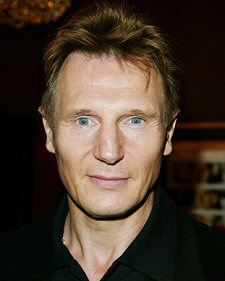
It’s funny how the progress of unfilmed movies evolve in conversations with the principals. Take Steven Spielberg‘s still-delayed Lincoln, which I’m very keen on seeing because of enthusiasm over Liam Neeson‘s playing the lead role, and because I’ve been longing for some kind of big-ass sweeping Civil War feature since falling hard for Ken Burns The Civil War way back when, and because there’s never been a decent film about Lincoln’s White House years.
In August ’05 (almost exactly a year ago) I ran a summary of two conversations I’d recently had in Manhattan with Neeson, who was very excited about the opportu- nity and immersed in study about Lincoln, and particularly how to do his voice. Neeson told me about a March ’06 start date, adding, as I wrote, that “there was an earlier plan to begin filming in February…but with this, that and whatever (including, probably, some Oscar campaigning for Spielberg’s Munich movie) this date will probably get bumped.”

Now there’s a fresh twist contained an interview with Spielberg running on a fan site called Spielberg Films. Conducted by Steven Awalt, the transcript came out of a q & a than happened three days ago — Saturday, 7.15. Spielberg is asked at one point (and remember that Awalt is a total Spielberg fan who follows every twist and turn in his career) if Lincoln is “still viable.” Awalt doesn’t ask when it will shoot, or how excited Spielberg is, or how the research and preparation is coming along. He asks if Lincoln has a pulse.
Spielberg tells him yes, it has a pulse…”it’s viable.” (There is no word in the English language that alludes to a more profoundly neutered state of being than “viable” — a truly hateful term.) “The script’s being written, and hopefully sometime in September/October of ’07 I’ll have the chance to start that. I can’t guarantee that, it’s just, once again, like Indy 4, that script is in process.”
< ?php include ('/home/hollyw9/public_html/wired'); ?>
Just to underline, Spielberg is saying there’s a “chance” he’ll start on the Lincoln pic in the early fall of ’07, and if that happens the film might be completed and released in late ’08….maybe. At least two years away and then some.
Awalt then asks, “Could it go before Indy 4?” And Spielberg replies, “I don’t know, you know…everything’s in process right now.” Another hateful term — “in process.” A term that refers at best to a state of fog or hesitancy or being immersed in some kind of bureacratic muddle.

It just sounds like there’s a lack of passion on Spielberg’s part, no? You can feel it in his words — he’s into making Lincoln but…well, let’s see how it goes. There’s clearly a lack of enthusiasm for the script, which was supposedly being worked on a year or so ago by British playwright Paul Webb, who has written at least two previous screenplays, Four Knights and Spanish Assassins.
There must have been something supporting Neeson’s belief a year ago that Lincoln would be shooting by the spring of ’06, and just as obviously something Very Big got in the way of that. If Webb’s Lincoln screenplay is “in process” like Indy 4, which has been in development since the late ’80s, the film might never be made. Spielberg has been talking about making a Lincoln movie since `01, when DreamWorks bought rights to a bio by Doris Kearns Goodwin. Her book — “Master Among Men: The Political Genius of Abraham Lincoln” — came out last fall

“Vice” Session

Vice Session

A Miami Vice press conference happened at the Four Seasons late Friday afternoon. I rode down on my bike and arrived about 25 minues in front. I was talking to a couple of friends before the show began about all the cottonball questions that always get asked at these things. So with 15 minutes to go (or around 4:25 pm), I walked up to the conference table where the talent would be sitting, picked up one of the little black mikes and addressed the 30 or 40 journalists in the room.
“I’d like to make a brief announcement,” I said. “I’m just one guy and you guys ask what you want, but since we’ll only have 30 minutes with the talent it would be nice, just speaking for myself, if everyone here would cut back a bit on the typical Us magazine softball questions in order to leave time for more substantive ques- tions. I’m just saying…you know, it would be nice if that happened.”


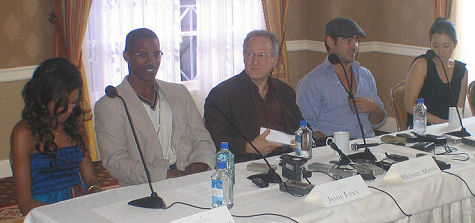
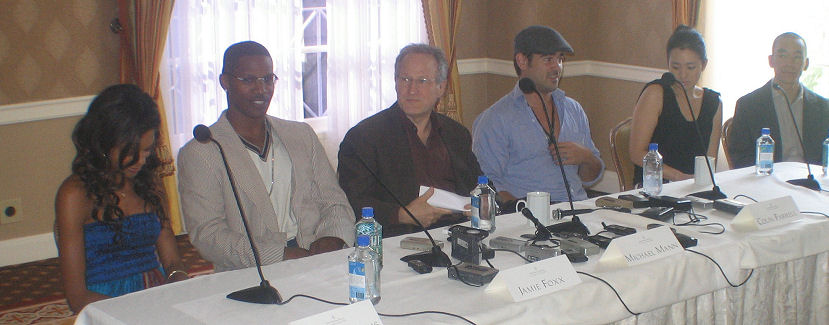
Miami Vice director-writer-producer Michael Mann (center, shortish gray hair) with stars (l. to. r.) Naomie Harris, Jamie Foxx, Colin Farrell, Gong Li and Li’s interpeter at today’s Universal-sponsored press conference at Four Seasons hotel — 7.16.06, 4:40 pm.

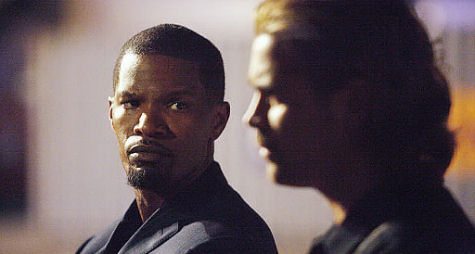
Miami Vice director Michael Mann and stars Jamie Foxx, Colin Farrell, Gong Li and Naomie Harris walked in around 4:40 pm, the press conference began, and the first seven or eight or nine questions were almost all cottonball stuff. A fair portion of the these questions came from a cluster of female African-American journalists with a certain ampleness of phsyique. They were partly the reason I made my little speech beforehand. One look and I knew.
The softballers asked questions about the ’80s TV series, about why didn’t Mann use the TV theme song, how did Foxx and Harris handle their sex scenes and how did Farrell and Gong Li handle their sex scenes? And then more questions about comparisons to the film and the ’80s TV series and how come the movie was so dark and not warmer and funnier, like the TV series was on occasion?
< ?php include ('/home/hollyw9/public_html/wired'); ?>
Foxx answered every question with charm and humor. He’s a natural entertainer, and everyone in the first two rows was making goo-goo eyes at him and having fits of laughter every time he did a bit (which was often). I’m not saying he’s not funny — he is — but you could take the obsequiousness and the obeisance-before-power in that room and cut it with a knife.
I asked Foxx the one semi-tough question of the day, which I put as follows: “Jamie, you’re a good guy in person and you obviously play one of the good guys in the film, but in the world of Kim Masters’ article that went up on Slate today, you’re kind of the bad guy. That’s how you’re portrayed, I mean. And it’s out there and people are reading it, and it seems fair to ask if the piece is accurate. Is it?”

Foxx kind of rolled his shoulders and smiled and eyeballed me and shrugged. He might have said something but I don’t remember what it was. Six or seven seconds passed, and then Mann stepped into the breach. “I think it’s ridiculous…really ridiculous,” he said. It’s wrong? I asked. The article is inaccurate? And then Mann started in about the “process” and the hurricanes and particulars about the guy that got shot and how he always makes sure that his sets are extra-safe.
But he didn’t get into the thing about Jamie Foxx and his entourage leaving the Dominican Republic location after the shooting, and how, according to Masters’ article, this abrupt departure forced Mann to end the film in Miami rather than an earlier ending that was set in Paraguay. Then Foxx chimed in and then Farrell did also, and they were all locked and unified in their view that shit happens, the process is the process, we made this film together and we’re standing (or at least sitting) together right now, and we’re not getting into Kim Masters’ view of it.
I spoke to Mann later in front of the hotel, and said, “I just realized what you meant when you said Kim’s piece was ridiculous. You meant that her way of looking at the shoot was ridiculous.” He kind of nodded and went into an extension of that earlier complex thought about the totality of the process and the ebb and flow of creativity (while briefly alluding to a factual wrongo or two that I didn’t question him about), and so on.
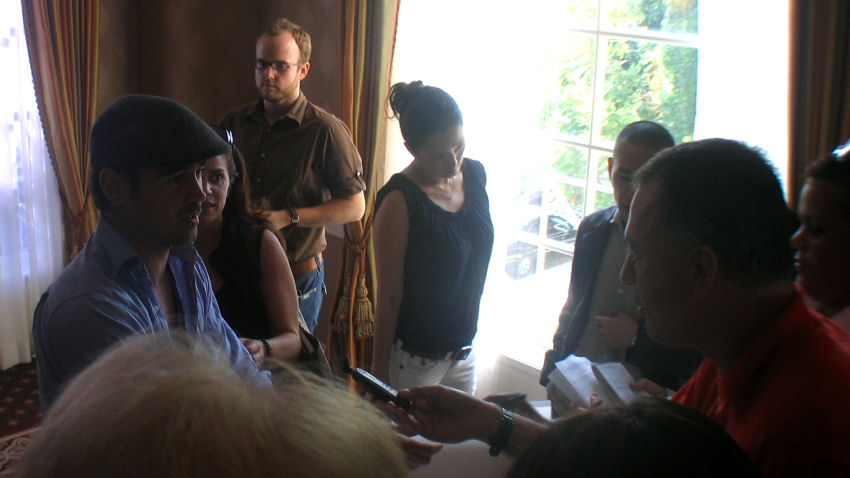
Pics: (a) Looking northeast at Beverly Hills and West Hollywood from the 14th floor balcony of the Four Seasons hotel — Friday, 7.14.06, 5:25 pm; (b) Colin Farrell (l. blue shirt) being questioned by Boston Herald‘s Stephen Schaefer with Gong Li in-between after this afternoon’s press conference; (c) Post-press conference chit-chat with Gong Li — Friday, 7.14.06, 5:15 pm; (d) Jamie Foxx signing autographs (yes, journalists ask for them after these events) — Friday, 7.14.06, 5:17 pm; (3) Jamie Foxx’s silver Lamborghini outside Four Seasons hotel after Miami Vice press conference — Friday, 7.14.06, 5:40 pm.

Way of the Ass

Way of the Ass

[Spoiler Note: If you consider a single specific description of a gross-out moment in a Kevin Smith film to be an earth-shaking spoiler, read no further.]
I can roll with bestiality as an occasional online diversion. Every five or six months, I mean. I’m not a subscriber to any of the farm-love sites, but an actor once sent me a video file…you don’t want to know. But I’ve never seen a donkey show in Tijuana, and I’m proud that the notion of attending one has never crossed my mind.


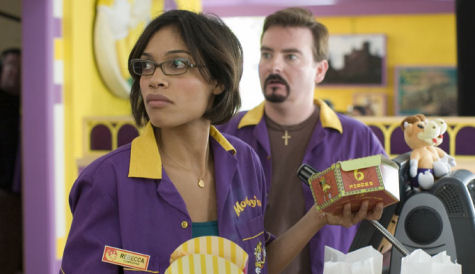
KRosario Dawon and Brian O’Halloran in Kevin Smith’s Clerks 2

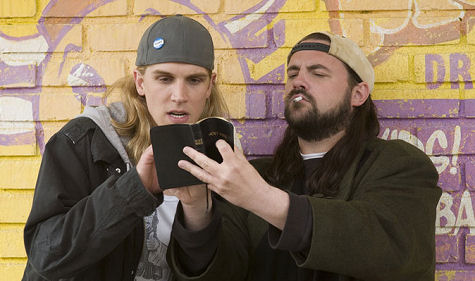
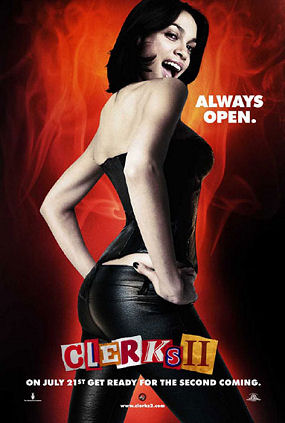
How did I get started on this subject ? Oh, yeah….Kevin Smith’s Clerks 2 (Wein- stein Co., 7.21), which does the gay-donkey thing inside a New Jersey fast-food joint called Mooby’s in the third act with the whole crew (Brian O’Halloran, Jeff Anderson, Smith, Jayson Mewes, Rosario Dawson, Trevor Fuhrman) alternately fascinated and horrified, etc.
I come from a decent middle-class New Jersey family, and I’ve read read hundreds of good books. I have two children, I can sing on-key and play drums, I know how to write, I’ve been to Paris and Prague and Rome, I know some of the best people on the planet, I used to be heavily into the Bhagavad-Gita, and here I am riffing on a scene in a film in which a bald leather-clad gay guy blows a donkey and then lubes the poor animal and anally goes to town
< ?php include ('/home/hollyw9/public_html/wired'); ?>
I was fine with Clerks 2. Okay…define “fine.” I think it means feeling okay, smiling, laughing now and then…having an alpha time of it.
I’m a fool for Jayson Mewes (whom I once called “the Marlon Brando of stoner comedies”) and also Ms. Dawson, whose passion and vivaciousness upgrades this film all to hell. (As Smith put it yesterday during a round-table session at the Clerks junket, Dawson’s top-grade acting is verified by the fact that “she makes you believe that she would fuck Brian O’Halloran.”) And it has a Jackson Five musical dance sequence that rocks out pretty well.


Jayson Mewes, Kevin Smith

I presume I don’t have to go into the basic drill about O’Halloran and Anderson playing older, slightly chunkier versons of the Dante and Randal characters they portrayed in Smith’s original Clerks…you know this. The guys getting older and still treading water in a retail service job (serving fast food instead of selling smokes), and wondering what the hell’s next.
But the energy and the humor is up and down, in and out…and I just wanted more. I was hoping for Clerks 2 to be faster and darker. That’s just me. It hangs in there true and steady, but it doesn’t build all that much as it moves along. It keeps to a certain deliberate pace and I guess I’m more comfortable with more wildness. I wanted more boyfriends and girlfriends arguing and challenging each other, more pushing the limits of propriety, more confrontations with customers, more shoving ….something looser and ruder.
I can honestly say that until last week I’d never heard, much less used, the term “porch monkey”, but Clerks 2 has rectified the first half of that situation. (If you want an idea of how racist-ugly Americans can be, check out this Wikipedia page on ethnic slur terms.) And I agreed with Randal when he asks in the film, ‘Why is ‘porch monkey’ necessarily a racial slur? It refers to a lazy guy doing nothing but hanging out on his porch. And monkey isn’t racial thing — it just implies “devolved.”
Little Miss Sunshine does something pretty amazing. It sometimes drops down into some pretty dark places, but then two minutes later it bounces right back and does something pretty damn funny, or at least amusing, and sometimes touching. With the memory of that film in my head, I was kind of hoping for some meaner, grislier, heart-of-New-Jersey darkness stuff in Clerks 2.

Kevin Smith is too nice and mild-mannered, I guess, to go in that direction. I know him pretty well and it’s really not a rumor — he’s one of the gentlest and giving-est guys working in this town. (What do you want me to do, lie about this?)
Thing is, Clerks 2 is about something very real and not altogether pretty — what happens when under-the-radar guys get into their 30s and they’re still doing nothing with their lives? What’s it like to deal with this? What options are possible? Are people doomed by this age, or do they still have a shot?
The despair levels that I’ve seen among the unambitious knockaround types I know from Fairfield County are not pretty. Rage sometimes erupts out of nowhere and then it’s “whoa….look out.” These guys are not living lives of any fullness or self-satisfaction. And there’s no one like Smith to point a finger at something psychological or sociological and say, “Forget what you’ve read or heard — this is what’s really happening.”
I think if Smith wanted to get down and make a funny movie that also takes a probing look at a sad situation that may be happening with — who knows? — tens of thousands of GenX slacker types, he could do it with one hand tied behind his back. But he hasn’t chosen to, and he’s cool with that. He’s just not a fire-in-the-belly John Osborne or Chuck Palahniuk.


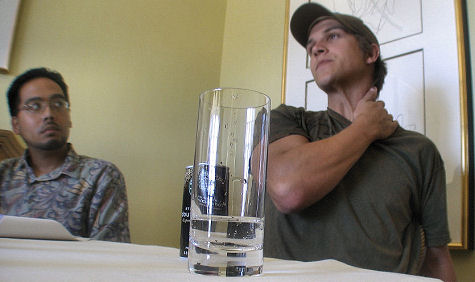
A perfectly focused glass of water (center) and a less-focused Jason Mewes at Tuesday’s Clerks 2 junket at Four Seasons Hotel — 7.11, 2:20 pm.

Nothing against Anderson and O’Halloran, but I would have preferred seeing another Jay and Silent Bob film, or even one that’s mostly about Jay. Call it a weakness, but I think Mewes is a truly gifted madman. I peed in my pants at the Silence of the Lambs stuff he does in Clerks 2, and I just think he’s a star, and that he’s got more X-factor magnetism than Anderson or Halloran have any day of the week.
I loved the Battle of the Trilogies debate scene (Rings vs. Star Wars). I was okay with the donkey-blowing, and cool with the urine ice being put into the glass of coke. I laughed at the porch monkey thing despite the negatives. The energy from Rosario Dawson is glorious when you consider the contrast. The vocal energy and the feeling in her eyes…Smith was either lucky or inspired or both when he decided to try and bring her into this.
I like O’Halloran’s sad, soulful eyes and his voice — he can do romantic lines pretty well — but I wasn’t quite comfortable with his puffy Irish kisser. With two women liking him enough to chow down on him, the guy should have dropped some pounds before shooting began. And what’s with the hair? I sat next to him during the junket yesterday and it’s kind of sandy brown, but his hair is dyed a kind of inky dark brown in the film and doesnt look right — like he did it himself at home.
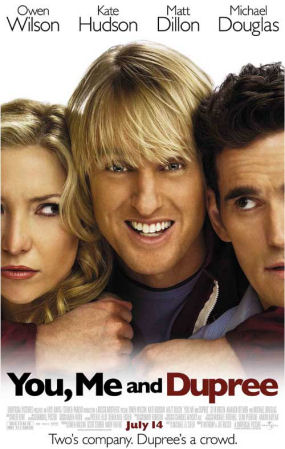
Why was I cool with Clerks 2 but hated You, Me and Dupree? Because at least Clerks 2 has some genuinely funny stuff that kicks in from time to time, and because Mewes is funnier than Owen Wilson, and because Rosario Dawson kicks Kate Hudson’s ass.

Down on “Dupree”

Down on Dupree

Reviews of You, Me and Dupree (Universal, 7.14) are starting to show up so here goes my own. As an exercise in eccentricity I thought I’d run my thoughts raw, as I first expressed them in an e-mail a few days ago.
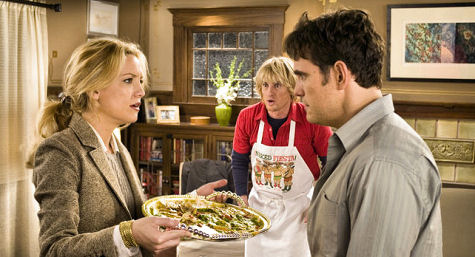
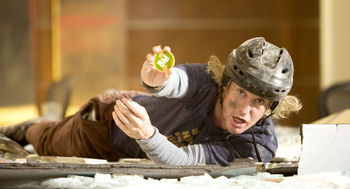
But first the basics: Carl Peterson (Matt Dillon) is an affable guy with a new wife, Molly (Kate Hudson), and a new job working for her tyrannical egotistical land- developer dad (Michael Douglas…obvious echoes of De Niro’s psycho-pop in Meet the Parents). Enter Carl’s best friend Randy Dupree (Wilson), an amiable slacker who can’t hold a job and has lost his apartment, so Carl takes pity and invites him to stay in his and Molly’s home…for a short while.


Kate Hudson, Owen Wilson and Matt Dillon in Joe and Anthony Russo’s You, Me and Dupree

“Oh my God…oh my God,” my letter began.
“You must know that You, Me and Dupree is easily one of the worst films of the year. Slapdash, undisciplined, uninispired and sans compass or clues. It’s Boudou Saved From Drowning and The Man Who Came to Dinner subjected to devolution, the TV backgrounds of co-directors Joe and Anthony Russo, and the enthralling comic vision of producers Scott Stuber and Mary Parent.
< ?php include ('/home/hollyw9/public_html/wired'); ?>
“I don’t want to sound harsh or intemperate, but if I was running Universal I wouldn’t hire the Russo brothers to be gate guards.
“There is one scene that works, in which Owen gives a rousing speech about different lifestyles and modes of growth to a classroom of eight year olds. It’s been dubbed ‘the Mothership’ scene on this Yahoo page.

“I’ll always love Owen Wilson and Dillon is actually pretty good, and Michael Douglas has obviously had some great work done and has dieted a lot of pounds off and has a great wardrobe guy to boot.
“Hudson is okay but she’s not exactly a comedian — she’s more of an aura lady — but over the last six years she’s hasn’t landed anything nearly as good as the role she played in Almost Famous, and she’s gotten weaker and less connected as the years have rolled by.
“Thank God for Owen. He plays the same spirited spiritual-flotation-device spacehead in every film he’s in, and he’s always great at it, and that’s what makes him a bona fide star. Even though he doesn’t really ‘open’ anything.
“But woebetide this movie. I leaned over and said to [name of a guy] sitting next to me about 35 minutes into it, ‘This isn’t very funny.’ And then it got worse and worse.

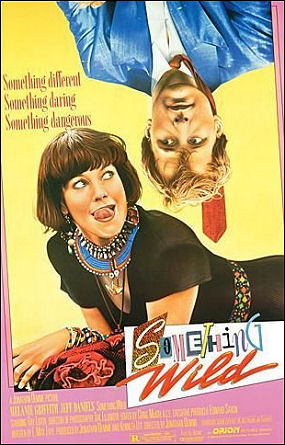
“If the Russos were geniuses, they might have transformed this thing into some- thing resembling Jonathan Demme’s Something Wild. You know it, right? Some say it’s Demme’s best film ever.
“The Russos could have run with the ball and made it lame-funny at first, but gradually darker and meaner and nastier. They could have had Dillon get into a car accident and maybe kill a pedestrian and wind up in jail and turning into a thief. Hudson and Wilson could have had an affair, and Douglas could have hired Owen and fired Dillon, and then Douglas could have seen his business fall apart for some reason. And Owen could have become a gleeful villain with a serious psycho streak.
“It could have been amazing — a movie that starts out as an exercise in “comic” tedium and morphs into a kind of melodrama-horror film. Startling, breathtaking… the audience wouldn’t know what to think or feel, but they’d definitely be talking it up.
“But not with the Russos as they really (apparently) are. Not with Stuber and Parent involved. Not with Universal’s committee process in place.

“I really think the people who helped make this thing need to leave town and go to an ashram somewhere deep in the Mexican mountains and ask themselves, ‘What am I doing with my life? What have I become? How do I live with myself after this?’
“As soon as it ended last night, the theatre emptied out like that. People sticking around for the closing credits is always a good sign that a film has affected viewers on some level. But people couldn’t get out of there fast enough.
“Every which way this movie is a tank, an embarassment…a fountain of eternal shame and remorse.”