One Of HE’s Best-Written Reviews…Seriously

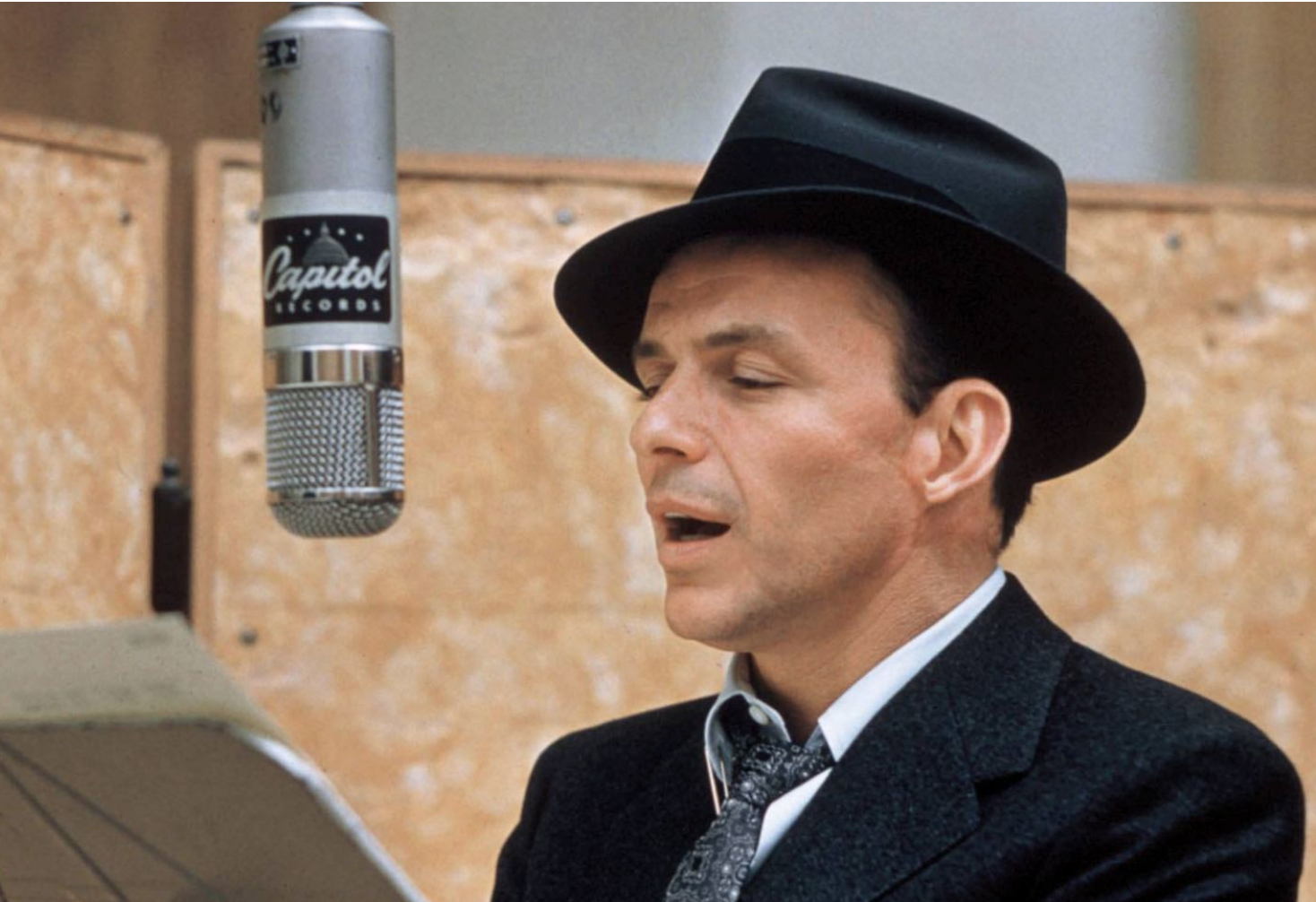
Posted 4 and 2/3 years ago, on 4.1.15: Alex Gibney‘s All Or Nothing At All (HBO, 4.5 and 4.6), the two-part, four-hour doc on Frank Sinatra, is an intimate saga of an artist with a profound vocal gift, a legendary sense of style, a swaggering ego, an open heart when it came to friends and family, a lust for the ladies, a chip on his shoulder and a street attitude that led to certain feelings of kinship and camaraderie with mob guys.

It’s quite the loving valentine, and it makes you feel like you’re in Sinatra’s home corner every step of the way, and in this sense it’s unique — there’s never been this much love and understanding shown to Sinatra and his legend from a polished, first-class doc by a world-renowned director. It’s Gibney’s trick, of course, to make you feel that you’re not being egregiously lied to. Which of course the doc is definitely doing by omission.

What matters is that Gibney’s accumulation of lies are, at day’s end, artful. Because the doc is filled with bedrock emotional truths and echoes.

And you can’t beat the first 56 years of Sinatra’s life (’15 to ’71) for sheer emotion, Shakesperean drama, urban pizazz, ups and downs, top-of-the-world success and down-in-the-gutter career blues…a saga of an all-American, knock-around life that spanned most of the 20th Century, and one that became less and less interesting when Sinatra turned smug and gray and more-or-less Republican in the late ’60s until his death on 5.14.98 at age 82.

I was quite moved and charmed by much of it, but this is a family-approved doc that’s basically about re-igniting commercial interest in Sinatra product (CDs, films) by way of celebrating his 100th birthday, which is actually not until 12.12.15. That means it’s really friendly…a doc that is always looking to show love and understanding or at least muted affection…a highly skillful handjob as far as classy, high-end biopics go. No judgment, no impartiality…every well-known or rumored-about negative in Sinatra’s bio is finessed or explained away in some first-hand, no-big-deal fashion by Sinatra himself or by a friend, or otherwise brushed off.

In no way, shape or form does Gibney’s doc approach the tone or the attitude or the sometimes cutting observations in Gay Talese‘s “Frank Sinatra Has A Cold,” a landmark 1966 profile of the then 51-year-old singer at a vaguely downish stage in his life.

And in no way does Gibney’s doc try to get into a thumbnail view of Sinatra that author Nick Tosches ascribed to Dean Martin — “A half a mozzarella who never grew up.” All or Nothing At All is about kind, understanding thoughts and contemplations. I wouldn’t even call it “forgiving” because accusations are really never heard. But it’s quite skillful and heartening and…what, calming? Gentle, intimate, stirring…always a sense of Sinatra’s sadness and vulnerability. I’m actually thinking of watching Part One all over again.
Read more

“Mindhunter” Binge

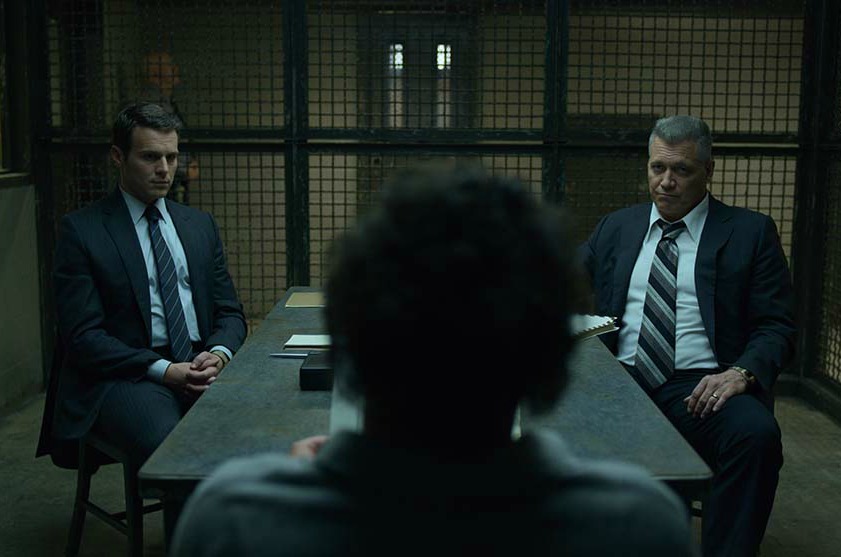
The night before last I was watching the first three episodes of the second season of David Fincher‘s Mindhunter. Not at home but on a large Hollywood Arclight screen, and it was quite the odd feeling — curious but so pleasurable — to watch a quietly chilling procedural that’s mostly about dialogue, dialogue and dialogue.

But always dry and succinct. Cunning and crafty and joined with a visual palette that tells you that something wicked will eventually this way come. Or is actually happening right now but hard to get the goods on, much less stop.

At first I was saying to myself “God, here I am in a mostly full theatre and we’re all just listening to razor sharp dialogue, and it’s so great to be doing this…to be part of what amounts to an almost surreal viewing experience by today’s standards.” Not just dialogue, of course, but Erik Messerschmidt‘s muted, shadowy cinematography along with some wonderfully fleet cutting by Kirk Baxter. But the talk is just wonderful — taut and crisp and on-point.

But the main element, as with season #1, is an inaudible hum of some kind…something strange and unsettling that you can’t quite put your finger on, but is there in spades every step of the way. It’s “normal” seeming but at the same time spooky. This is a signature Fincher thing, the same quietly throbbing undercurrent that made Zodiac such a deliciously creepy sit.

All nine episodes are currently watchable…binge-able, I mean…on Netlix as we speak. The first three were directed by Fincher, episodes #4 and #5 by Andrew Dominik, and #6, #7 #8 and #9 directed by Carl Franklin. The screenwriters vary from episode to episode, but the principals are Courtney Miles (credited with story or teleplay credits on seven out of nine episodes), Josh Donen (story credit on seven) and Liz Hannah (co-teleplay credit on #4, full teleplay on #6).

A Netflix rep just asked me what I thought. “Brilliant, haunting, masterful,” I replied. “Never poking or jolting viewers with conventional thriller or horror moves, but at the same time throbbing with a certain kind of under-the-surface tension.”

All you know for sure is that Fincher and colleagues won’t be resorting to the usual cops-vs.-serial killers razmatazz, and that you’ll believe absolutely everything they show and convey and fill your head with.

I love that Mindhunter #2 has been shot with a 2.2:1 aspect ratio (standard widescreen 70mm a.r., used for 70mm screenings of Apocalypse Now), and that the camera was a Red Xenomorph Dragon, and that it was shot in Dolby Vision 6K.

I love these episode summaries: (a) “The investigation zeroes in on a prime suspect who proves adept at manipulating a volatile situation to his advantage”, (b) “Bill’s devastating family situation spills over during his interview with Holden’s holy-grail subject: Charlie Manson. Wendy’s new romance heats up” and (c) “Hitting a dead end, Holden suggests a bold plan to draw the killer out. Bill’s family faces more scrutiny. Wendy chafes as her job begins to shift.” I eat this shit up.

Things begin almost immediately in the wake of season #1’s final episode, when Holden Ford (Jonathan Groff) lost his composure and possibly some of his mind in the too-creepy-for-words presence of serial killer Ed Kemper (Cameron Britton). This feeds into the threat of recurring anxiety attacks plus a new Xanax prescription, which leads into Holden’s Behavioral Science Unit partners, Bill Tench (Holt McCallany) and Wendy Carr (Anna Torv), quietly worrying about his ability to handle high-stress situations.

We learn early on that BSU boss Robert Shepard (Cotter Smith) is “retiring” under duress, and that his replacement Ted Gunn (Michael Cerveris) understands the methodology and is particularly supportive of Holden, who isn’t exactly a by-the-book type and is occasionally given to following his instincts.

Read more

Curious “Nashville” Love

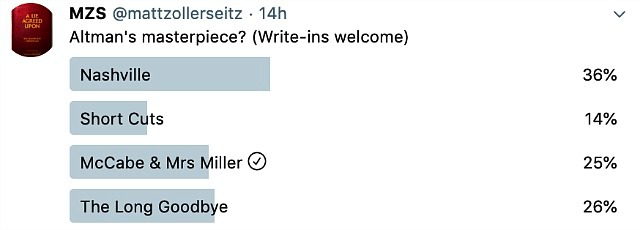
Until last night I was under a vague impression that general regard for Robert Altman‘s Nashville had been sinking, and that other Altman classics — McCabe and Mrs. Miller, The Player, California Split, The Long Goodbye, M.A.S.H., Thieves Like Us — had gathered more admirers. The results of Matt Zoller Seitz‘s twitter poll differ with that view. Odd but there it is.

Withered Nashville,” posted on 12.14.13:

Two nights ago I watched the Criterion Bluray of Robert Altman‘s Nashville (’75). And guess what? It doesn’t hold up. It’s earnestly dislikable. I wanted to shut it off after the first half-hour.

It’s a typical Altmanesque grab-bag of this and that, but it’s mainly a social criticism piece about Middle-American politics, patriotism, pettiness and celebrity. The specific focus is the banal eccentricities and pretensions of the country-music industry, but for the most part the film is snide and misanthropic. Sorry, but I’m removing it from my Altman pantheon. I loved it in ’75 but I’m pretty sure I’ll never watch Nashville again. It’s failed the test of time.

In basic construction terms Nashville is about a troupe of eccentric, improvising actor-hipsters leaning on their default Left Coast impressions of Nashville’s sophisticated-hick culture and dispensing variations on a single dismissive theme: “These people are small and petty and lame and delusional.”

Read more

Least Problematic Bong Joon-ho

Before Parasite, I’d seen four films by respected Korean director Bong Joon-hoThe Host (’06), Mother (’09), Snowpiercer (’13) and Okja (’17). My reactions were the same all along — I admired the craft and energy, didn’t believe the stories. To me it seemed obvious that Bong was more into high impact movie-ness than establishing at least a tenuous relationship between his scenarios and the terms and conditions of real life.

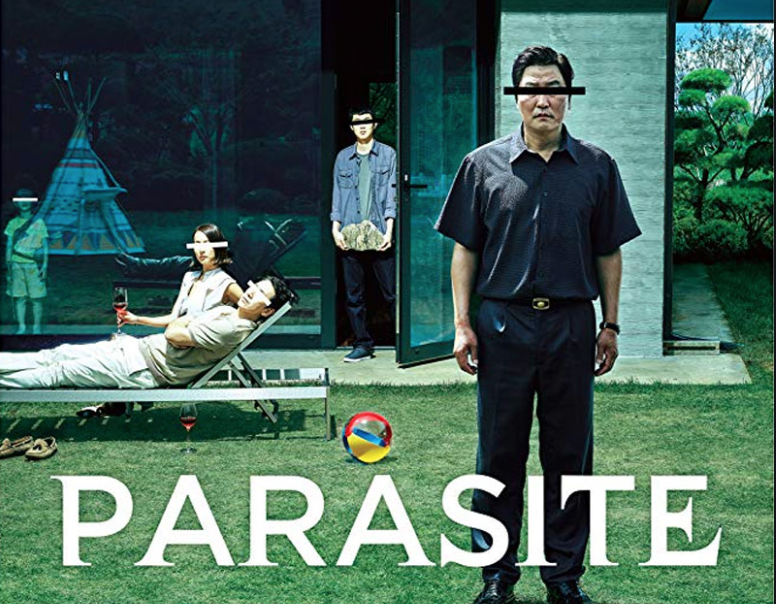
The darkly humorous Parasite, which I saw three weeks ago, is different. For the first time Bong allows you to half-invest in the story (co-written by himself and Han Jin-won), which offers a satiric portrait of South Korea’s haves and have-nots. Up to a point, the world of Parasite actually resembles the way things are, or at least could be. But it still feels more movie-ish than persuasive.

There’s no believing that the desperately poor Kim family (mom, dad, son, daughter), each having wangled jobs from the rich Park clan, could successfully pretend over the long run to be non-related strangers in the eyes of their employers. It’s completely reckless and stupid for the Kims to gorge on fine food and get drunk while the Parks are away on on a brief vacation, and it makes no sense to admit a resentful former employee into the home while they’re bombed. And the violent ending is absurd. But I liked it better than the previous four Bong flicks, and that’s not insignificant.

U.S. and British critics have been creaming over Bong Joon-ho films since The Host. They’re invested in this history, and will never modify their enthusiasm. All this trailer does is pass along the ecstatic Cannes reviews.

All Hail “Diane” — 2019’s Best Film So Far

The first quarter of 2019 ends on Sunday, and I’m telling you straight and true that Kent JonesDiane (IFC Films, 3.29) is easily the fullest and finest commercially released film I’ve seen so far this year. The most restrained and fittingly modest. Certainly the most recognizably human.

I wouldn’t call Diane trying or dreary — it’s not — but it certainly reminds you that life can be that from time to time, and that you really need to be tough and sharp just to survive in a rudimentary fashion, and that’s not even counting the guilt that’s been weighing you down for decades or your dicey, no-account, drug-addicted son who…no, wait, he’s a Jesus freak now. Never mind.

Comparing Diane to HE’s other big favorite, Dragged Across Concrete, is nonsensical as the cards they deal couldn’t be more different, but Jones’ film is still two or three notches ahead.

It’s one of those modest, drill-bitty, character-driven films that just reaches in and flips your light switch. It makes you feel human; it makes you care. I knew it was a keeper less than five minutes in. It has a 95% Rotten Tomatoes score, but why not 100?

The Oscar situation is always weighted against intimate, small-scaled films that open in the spring, but at the very least Diane is a guaranteed Gotham and Spirit Awards contender for Best Picture. And I can’t imagine Mary Kay Place, who plays the titular character, not being an all-but-certain contender for a Best Actress Oscar nom. Unless SAG and Academy voters take leave of their senses. Which is always a possibility.

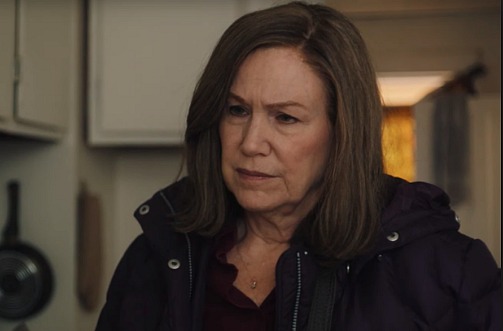
Diane is really and truly the shit. Even if you’re a GenZ or Millennial who doesn’t want to think about what life will be like 35 or 40 years hence, it’ll still sink in. There are those, I’m presuming, who’d rather not settle into a simple Bressonian saga about the weight of responsibility and life being a hard-knocks thing a good part of the time. Or who’d rather not consider the existence of a 70-year-old New England woman who lives alone but has good friends, and who drives carefully, tries to do the right thing, works part-time in a homeless soup kitchen and has been coping with certain dark recollections for decades.

Diane is certainly a rural New England mood trip. Wake up, make the bed, shovel the snow, prepare the coffee, tidy up, get it done, visit your bum son. Late winter, melting snowdrifts, real world, limited income, older person blues, “being 70something is no picnic”, enjoy a drink now and then, my friends are dropping like flies.

All through Diane you can sense tragedy waiting to pounce, and you’re constantly preparing for a shock of some kind. Including the simple kiss of death. But it goes in a different direction.

I know that Place has been working all along, but the last time I said “whoa, she’s extra-good in this” was when she played Orson Bean‘s hard-of-hearing secretary in Being John Malkovich, which was 20 years ago. Before that it was her Meg Jones performance (i.e., the no-boyfriend single who wants to get pregnant) in The Big Chill. She’s certainly never played a lead role as substantive as Diane. So there’s your Best Actress narrative — MKP played supporting characters all her life, and then fortune smiled when Kent Jones came along.

Read more

“Luce”: Assumptions, Triggers, Blind Spots

I was half-mesmerized by Julis Onah‘s Luce, a tautly written, convincingly performed domestic drama about racial agendas, attitudes, assumptions and expectations. Set in an affluent Virginia suburb, the film explores a racially mixed group of characters and asks what their core-level attitudes or assumptions about “Luce” (Kelvin Harrison, Jr.), an adopted, African-born high school student, might be. But what it’s really doing is asking the audience these same questions.

Based on J.C. Lee’s 2013 play of the same name and co-adapted by Lee and Onah, it’s basically about uncertain or ambiguous attitudes about Luce, who may or may not be as bright, likable and reassuringly well-behaved as he projects himself to be. Or maybe the real problem is in the eyes of certain beholders.


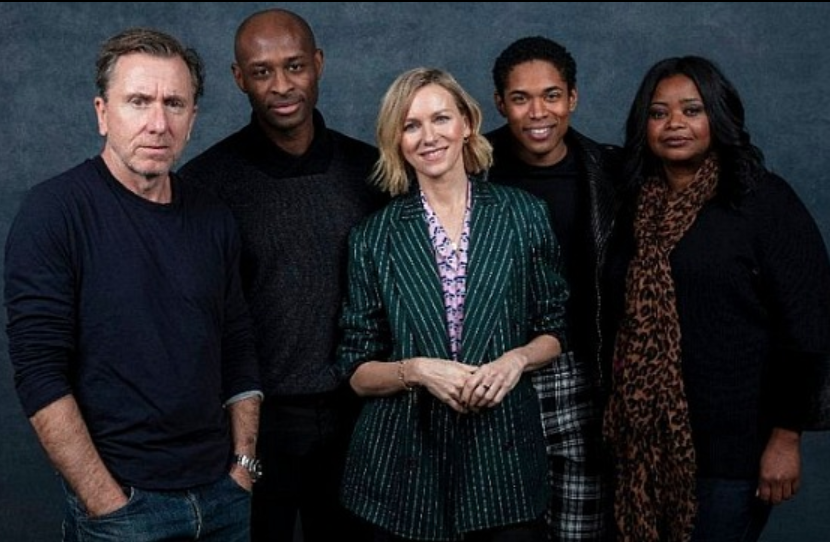
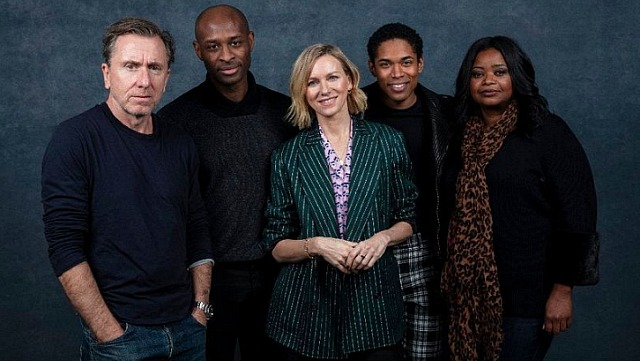
(l. to r.) Tim Roth, director-cowriter Julis Onah, Naomi Watts, Kelvin Harrison, Jr., Octavia Spencer.

The trouble starts when Harriet Wilson (Octavia Spencer), a vaguely huffy, side-eyed teacher, assigns Luce to write about a historical figure but with a special encouragement to “think outside the box.” When Luce writes about a ’70s activist who flirted with terrorism, Harriett bristles and even freaks a bit. For whatever reason the notion of Luce being some kind of closet radical alarms her, and so (this struck me as weird) she decides to search his locker for possible evidence of subversion. She finds a paper bag filled with illegal fireworks.

Harriet meets Luce’s adoptive mom Amy (Naomi Watts), shows her the essay and bag of fireworks. Amy tenses about violating Luce’s privacy, but at the same time is grappling with concerns about her son, who was reared in a war-torn African nation during his first ten years, and the kind of person he may be growing into. Or perhaps is hiding behind a veneer of charm and good cheer.

Amy discusses her worries with husband Peter (Tim Roth). But when Luce comes home from school, she doesn’t speak her mind. There’s a “vibe” at the dinner table, but nobody mentions the elephant.

This is when I dropped out of Luce, and why I was only half-mesmerized. What kind of adoptive mother wouldn’t trust her son enough to be upfront about the content of a school essay or a certain paper bag, and the possible implications of these? Her reluctance to speak her mind (or uncomfortable suspicions) told me that she’s less loving and perhaps a bit more racist than even she realizes.

Read more

Riveting, Occasionally Oddball “Cold Case”

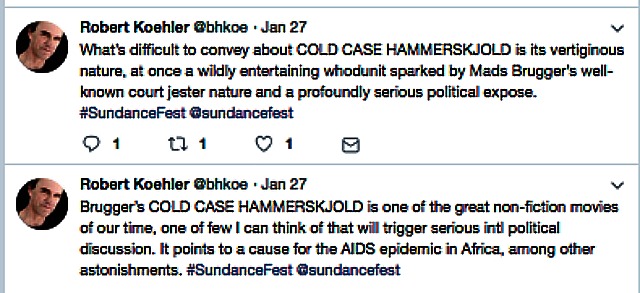
A couple of days have passed since I caught Mads Brugger‘s Cold Case Hammarskjöld, and the more I think about it, the more impressive and arresting it seems. It’s actually one of the most original-feeling investigative docs I’ve ever seen.

It begins as an investigation into the 1961 plane-crash death of UN General Secretary Dag Hammarskjöld, which happened, we gradually learn, at the hands of colonialist bad guys. The film is about how Brugger, who casts himself as a kind of whimsical, not-quite-Hercule-Poirot-level investigator, and colleague Goran Bjorkdahl gradually uncover what happened, not just to Hammerskjold 58 years ago but also…actually, I’d rather not divulge.

Suffice that Brugger comes to believe (and in fact persuades) that Hammarskjöld’s plane was shot down by Belgian-British mercenary pilot Jan van Risseghem, who was apparently doing the bidding of some ghastly ogres who were angered by Hammarskjöld’s sympathy for African nativist independence movements.

But that’s hardly the end of it.

For Cold Case Hammarskjöld is anything but a straightforward, hard-hitting, get-to-the-truth doc. In fact it represents a kind of sideways shuffle approach to discovering long-buried bones and nightmares. It is, in fact, an eccentric film, and yet the things it discovers are beyond ugly.

It’s the mixture of curious whimsy and malevolent apartheid schemings (practiced decades ago by rightwing fanatics) that gives Cold Case Hammarskjöld a tone of spooky weirdness.

I haven’t time to write a longish review (a 3:30 pm screening of Luce is bearing down upon me) but Cold Case Hammarskjold is quite a stand-alone achievement. I intend to see it again at the first opportunity.

For bit by bit, testimony by testimony, Cold Case Hammarskjold uncovers a demimonde of racist, colonial evil that feels stranger and wilder than any work of espionage fiction. In part because the doc uses a mixture of evidence, memory, facts, personality, deadpan humor and conjecture to uncover what actually (or most probably) happened.


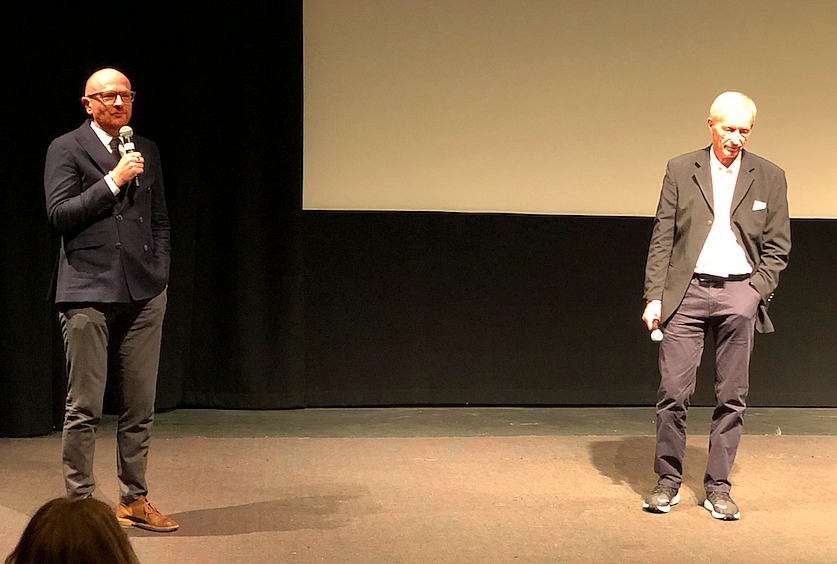
Cold Case Hammarskjöld director-writer-star Mads Brugger (l.) and investigative colleague Goran Bjorkdahl (r.).

Read more

“Official Secrets”: Pure Political Pleasure

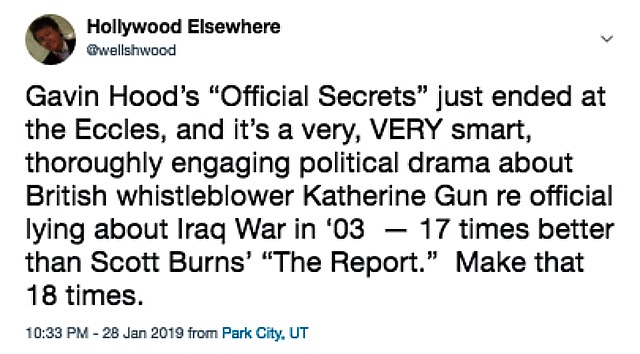
Like Scott BurnsThe Report, which was acquired by Amazon after debuting in Park City two or three days ago, Gavin Hood‘s Official Secrets (Entertainment One) is a fact-based whistleblower drama about exposing shifty, lying behavior on the part of the Bush-Cheney administration in the selling and prosecution of the Iraq War.

The Report is about Senate staffer Daniel Jones (Adam Driver) investigating, authoring and releasing a massive report on CIA torture; Official Secrets is about real-life translator and British intelligence employee Katharine Gun (Keira Knightley) revealing a U.S. plan to bug United Nations “swing”countries in order to pressure them into voting in favor of the 2003 invasion of Iraq, which of course was founded upon a fiction that Saddam Hussein‘s Iraqi government was in possession of WMDs and represented a terrorist threat.

The difference is that while The Report is plodding, sanctimonious and a chore to sit through, Official Secrets is an ace-level piece about pressure, courage and hard political elbows — a grade-A, non-manipulative procedural that tells Gun’s story in brisk, straightforward fashion, and which recalls the efficient, brass-tack narratives of All The President’s Men or Michael Clayton.

Official Secrets is exactly the sort of fact-based government & politics drama that I adore, just as The Report is precisely the kind of self-righteous, moral-breast-beating drama that I can’t stand.

The performances by Knightley, Matt Smith (as Observer reporter Martin Bright), Matthew Goode (as journalist Peter Beaumont), Rhys Ifans as Ed Vulliamy, Adam Bakri as Yasar Gun, and
Ralph Fiennes as British attorney Ben Emmerson are excellent fits — as good as any fan of this kind of thing could possibly hope for.

Hood’s Eye in the Sky was one of the finest and most gripping films of 2015, and here he is again with another winner. Hats off to a good guy.

Read more

By Light of Silvery Swoon

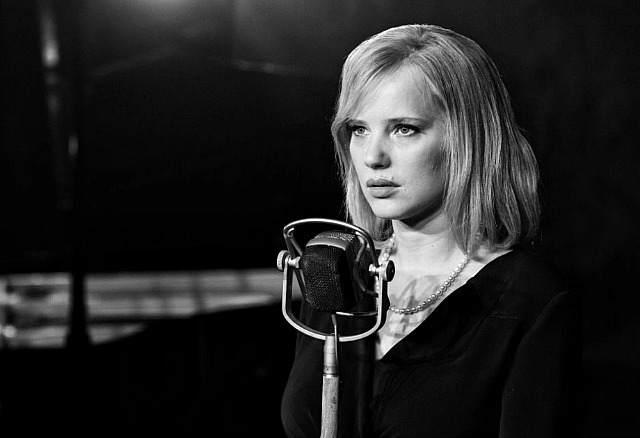
Seriously moved, enthralled or charmed as I am by Green Book, Roma, Vice, First Reformed, Can You Ever Forgive Me?, Happy as Lazzaro, Capernaum, The Mule, Black Panther, First Man, portions of Bohemian Rhapsody and the first half of A Star Is Born, Pawel Pawlikowski‘s Cold War sits at the top of the heap. Yes, even at a higher aesthetic station than Alfonso Cuaron‘s black-and-white masterwork. I’m sorry but I love Cold War a bit more.

If you ask me Cold War is the cleanest, sharpest and most tightly composed film of the year…a period haunter…a kind of half-Polish Communist, half-Montmarte jazz cavern love story that will knock your eyeballs out if you’re any kind of black-and-white connoisseur or a boxy-is-beautiful fanatic like myself.

No other 2018 film rang my bell quite the same. I don’t care what category it’s in — no other film is as concise and self-aware, as visually glistening and fatalistic and bang on the money as Cold War. It’s pure silvery pleasure, perfectly distilled, the highest manifestation of luscious arthouse porn I’ve run into all year. And it offers the greatest female performance of the year — Joanna Kulig as the sly, at times insolent, sometimes half-crazy Zula.

I recently insisted that Kulig deserves a Best Actress nomination. Her performance reignites the spirit of Jeanne Moreau in Jules and Jim (and if that doesn’t excite your spirit then I don’t know what) along with a spritz of early ’50s Gloria Grahame. A femme fatale songbird, an emotional force of nature, trouble from the word go.

You can’t watch Cold War and not fall in love with how it looks and feels. Those gleaming, whistle-clean silvery tones, Łukasz Żal‘s somewhat unusual bottom heavy framings, that feeling of being in a repressive but exotic realm, and yet one that becomes more and more of a “home” in a sense, and more familiar by the minute.

It also delivers something relatively rare in our 21st Century realm, which is a feeling that the viewer hasn’t been shown enough — that he/she hasn’t had enough time to really savor the flavor and atmosphere and characters.

Read more

Re-Communing With “At Eternity’s Gate”

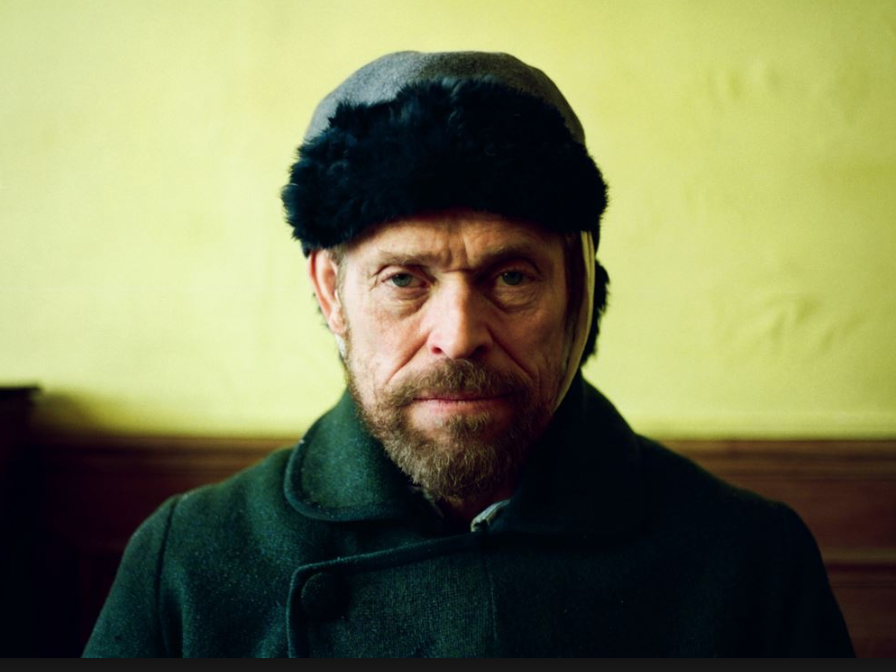
Yesterday afternoon I sat for my second viewing of Julian Schnabel‘s At Eternity’ Gate (CBS Films), which I’ve come to regard as the finest Vincent Van Gogh flick ever made. The difference between it and, say, Vincent Minnelli and Kirk Douglas‘s Lust for Life or Robert Altman‘s Vincent and Theo is an absolute belief in Van Gogh’s inner light. It’s not a tourist’s view of the man, but a portrait of an artist by an artist — a “you are Van Gogh” dreamscape flick.

In the view of many Willem Dafoe‘s performance of this gentle, conflicted, angst-ridden impressionist is his best since playing Yeshua of Nazareth in Martin Scorsese‘s The Last Temptation of Christ (’88). When I say “many” I mean the National Society of Film Critics, who yesterday morning decided that Dafoe’s performance was and is the year’s second finest, right after Ethan Hawke‘s tortured priest in Paul Schrader‘s First Reformed. That’s quite the ringing endorsement when you think of the competition.

As I said last October, At Eternity’s Gate “is more into intimate communion, intuitions, revelations.” It’s a channelling of the dreams, angels and and torment that surged within Van Gogh during the final chapter in his life, when he lived in Arles and St. Remy de Provence.

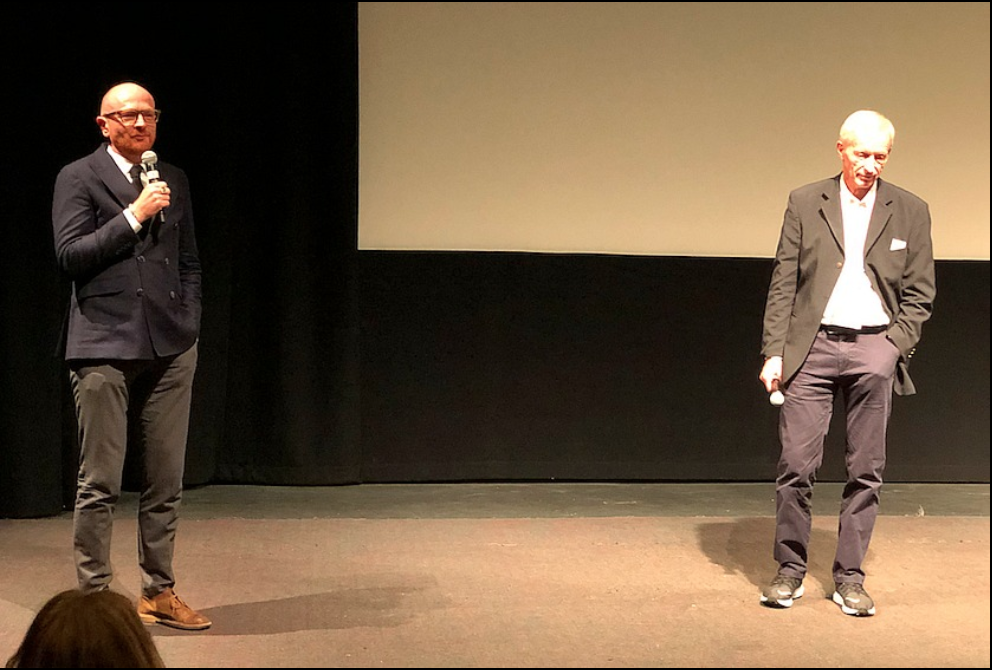
Schnabel and Dafoe sat for a q & a discussion following the screening, which happened at West Hollywood’s Soho House. After that everyone went down the hallway for a wine-and-sliders-and-swedish-meatballs gathering. HE’s own Phillip Noyce, who directed Dafoe in ’94’s Clear and Present Danger, was there; ditto producer Don Murphy.

Julian Schnabel: “The movie is about painting being above recognition. Above criticism. When you’re a younger artist, you want agreement from people. Later, you realize that what you’re doing is the thing and not the agreement from other people. I think Van Gogh was very successful. He accomplished what he wanted to do. He expressed the inexpressible. We’ve all projected this bourgeois concept about success. At a certain moment Van Gogh was, like, ‘I thought I was supposed to educate people and show them how to look at the world, but I stopped thinking about that — now I just think about my relationship to eternity, by which he meant the time to come.'”

HE interpretation by way of Tom Wolfe‘s “The Painted Word“: Van Gogh’s paintings didn’t strive to “reconstitute an anecdotal fact but constitute a pictorial fact.”

Willem Dafoe: “The idea was ‘painting what I see,’ and not painting a representation…of what I thought had to account for that thing in front of me…seeing is perception…Van Gogh is very haunted by this feeling, this vision of what he was, and he wants to share it…and I think that’s an interesting impulse…a classic artist’s impulse.”

Ruth Bader Ginsburg for Dummies

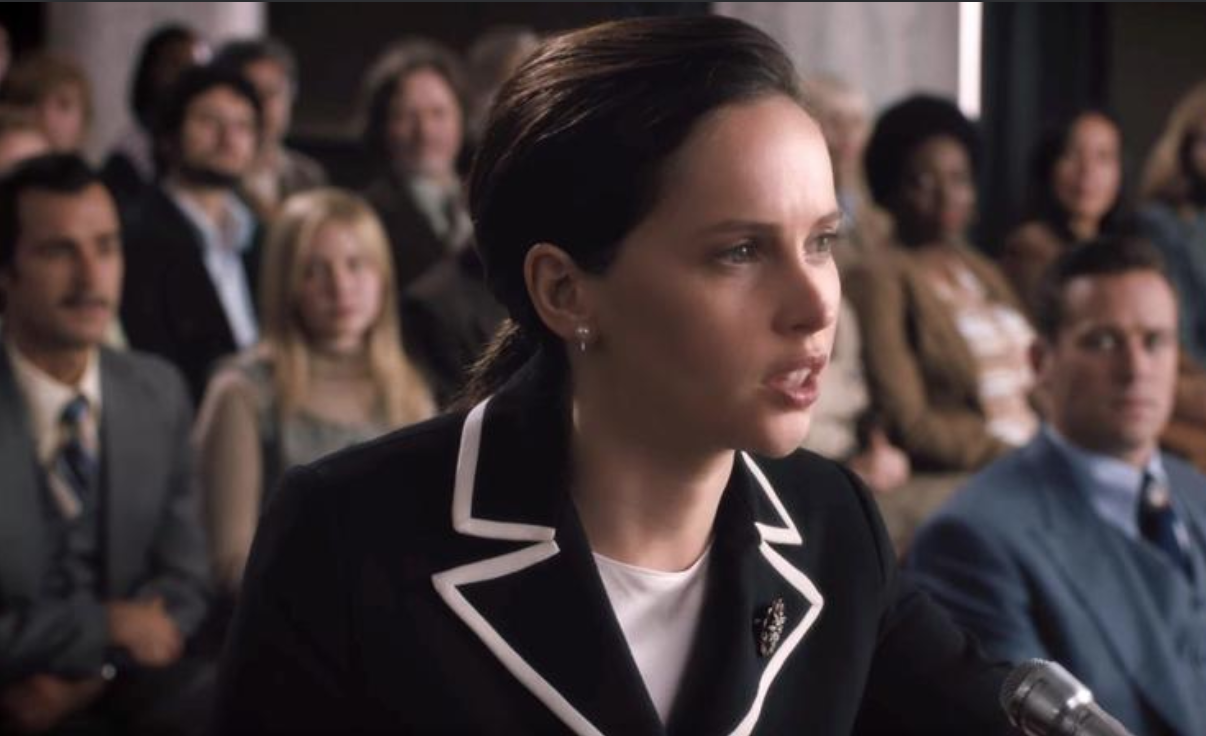
I had one strong thought in my head after seeing Mimi Leder‘s On The Basis of Sex (Focus Features, 12.25), a well-meaning but mediocre saga about the formative years of legendary Supreme Court Justice Ruth Bader Ginsburg (Felicity Jones).

That thought was that Betsy West and Julie Cohen‘s RBG, the hit documentary about Ginsburg’s life and career, is a much better movie — smarter, more engrossing for sticking to the facts, no callow tricks or formulaic finessings. And yet it gets you emotionally.

On The Basis of Sex is a Ruth Bader Ginsburg primer for none-too-brights — a frequently unsubtle, Hollywood-style treatment that clumsily tries to milk or manipulate every emotional occurence or, failing that, charm the audience at every turn.  

At every juncture the story seems to have been dumbed down to appeal to (what’s a tactful way of putting this?) viewers whose lips move at they read supermarket tabloids.

Clunky, on-the-nose dialogue.  Rote direction.  Cardboard characterizations. Over-acted, hamfisted performances, particularly by the sexist male villains.  (Sam Waterston!) Trite plotting, predictable strategies and, in one climactic instance, the use of cliched dramatic invention that made me twitch and groan in my seat.

The term “charm offensive” has never been more grossly demonstrated than a moment in which Justin Theroux, portraying ACLU legal director Mel Wulff, greets Jones with a kind of pep-rally song that involves vigorous thigh-slapping.

Bader speaks with a fairly distinctive Brooklyn accent, so how is Jones at imitating this? Not so hot. I couldn’t really hear “Brooklyn” in her speech patterns. What I heard was “British actress doing a decent job of sounding American but not really trying to get the Brooklyn thing right.”

Believe it or not there’s a sex scene between Jones and Armie Hammer, playing Ginsburg’s attorney husband Martin. Ruth Bader Ginsburg doing the nasty? Please…cut away! It was this utterly pointless detour that told me On The Basis of Sex wouldn’t be panning out. My hopes actually started to sink less than 10 minutes after it began.

Read more