Give It A Pass?

We all know what a 65% Rotten Tomatoes rating means. It means that the film in question has problems. It means that if Yesterday was a kid in science class who’s just taken a pop quiz, he’d be looking at a failing grade. Not horribly failing but a notch or two below the minimum passing grade of 70.

Regional film critic friend: “Yesterday is more of a Richard Curtis than a Danny Boyle thing. The premise is so offbeat that it actually works. The totally arbitrary nature of other things that don’t exist in human memory after a worldwide blackout — Coke, cigarettes, Harry Potter — is kind of fun.

Himesh Patel is a very sympathetic lead, and Lily James is a real cutie. Patel’s singing isn’t great, but good enough for the purposes of the film.

“The first hour is a lot of fun but Yesterday sags in the middle, and you get the feeling that screenwriter Richard Curtis has boxed himself into a corner with his premise. The ending is a typical feel-good Curtis production, which will probably turn a certain amount of people off, and the (spoiler here) confessional scene in front of a Wembley audience is one of those ‘no one would ever in a million years do this in front of a group of total strangers’ kind of sequence that is used all too often in films these days.

Yesterday is finally a reminder, as if we needed to be reminded, of how truly great the Beatles catalogue is.”

Friend who moderates a film series for 40-plus types: “I held a preview screening of Yesterday last night at the usual venue. Not only did it sell out — but the audience was probably half-kids, from about 10 into their teens. Most there with their parents. This sold out strictly on word-of-mouth and an email blast to the membership — in other words, a lot of people have seen this trailer and apparently want to see this movie.

“As an unabashed Richard Curtis fan, I was disappointed in this movie when I went to a press screening a couple of weeks ago. I felt the film had serious third-act problems, that he didn’t know how to finish it. I also felt he seriously underwrote Kate McKinnon‘s role, as well as the role of the sidekick/roadie. The latter should have had the inspiredly random humor of the Rhys Ifans character in Notting Hill but doesn’t.

“Watching it again last night, the latter two criticisms still held — but they didn’t bother as much. And the rest of it played really well for me. Better yet, it was a big, big hit with the audience, which ranged in age from 10 to 80. And there’s that surprising scene near the end that, at a minimum, will take your breath away and bring a lump to your throat. A lot of people last night walked out smiling, while wiping away tears.

“Plus, as noted, the music, which remains incredibly vital. This, the Crosby doc and Rolling Thunder make this a boomer’s musical wet dream of a summer.”

The Sure Thing Who Won’t Stand Up

Maher: “Who do the Democrats have that we know can beat Trump? There really is only one answer to that.

“And it’s not Joe Biden. I like Joe, but if we give him the keys there’s at least a 50% chance that he gets in the car and mows down a Farmer’s Market. Also young people look at him as if a typewriter is running for President.

“Bernie Sanders is an American hero in my book, but he’s another candidate who has his cardiologist on speed dial.

“I like Mayor Pete, but we must ask the question ‘is America ready to be led by a gay teenager?’ He’s 37 but looks 27…he’s the only veteran who came back from Afghanistan looking refreshed.”

HE to Maher: Yes, I am ready and eager to be led by this particular gay teenager…please.

Maher: “Never underestimate the power of being in people’s living rooms for decades. It’s not the way it’s supposed to be. It’s not the way I’d like it to be. But we live in a post-literate, post-truth, starfucker society, and this is going to be the dirtiest campaign in history.

“No one worries about Oprah being a socialist. I have Nate Silver‘ed the shit out of this, and [Oprah] is the only sure thing winner for the Democrats…no pressure.”

Anhedonia vs. Profound Joy

During the final episode of season #2 of The Sopranos, Tony (James Gandolfini) tells his sister Janice (Aida Turturro) that they were both emotionally scarred by their mother Livia (Nancy Marchand). One of her most malignant traits, Tony says, was her inability to experience joy. The psychoanalytic term is anhedonia, which of course was the original title of Woody Allen‘s Annie Hall.

The other day somebody called me a Livia-like grump, and that I’m always scowling and complaining and whatnot.

My stock response is to remind people of a riff I wrote five years ago, and reposted in ’17. It was called “Like, Want, Need.”

“I’ll tell you what I want,” I began. “I want to walk around New York City at a fairly vigorous clip. I want to love and support my wife Tatyana and my sons every way I can. I want to sail into the mystic. I want to stay in touch with everyone and offer as much offer affection, trust, intellectual engagement and friendship as I reasonably can. I want to live forever. I want good health, and to me that also means good spiritual health. I want to keep most of my hair and never grow breasts or a pot belly. I want Japanese or South Korean-level wifi wherever I go. I want to read and know everything. I want to bask in love, family, friendship and the purring of my cats until the end of time.

“I also want several pairs of slim ass-hugging jeans, and I want to be clean shaven. I want well-made shoes, preferably Italian suede or Bruno Magli or John Varvatos. I want to keep all my Blurays forever. I want color, aromas, travel. I want challenging hiking trails in high Swiss places. I know it’s not possible, but I’d prefer to always be in the company of slender people. I want to zoom around on my Majesty and use the Mini Cooper only when it rains or when I need to buy a lot of groceries. I want mobility and adaptability and the smell of great humming, rumbling cities. I want European-style subways, buses, trains, rental cars. I want a long Norman Lloyd-type life, and I insist that my mental faculties stay electric and crackling forever.” And so on and so forth.

You can say these are the words of a hopeless sourpuss, but they’re not. You can say I’m being dishonest or otherwise covering up, but I’m not. I’m no Livia and no Woody. Life is nothing without joy, and joy is nothing unless you embrace it…unless you jump into the pool with your clothes on.

Read more

Two Possible Award-Season Highlights…Maybe

A colleague has heard good things about The Aeronauts (Amazon, 10.25), an historical adventure flick about real-life scientist James Glaisher (Eddie Redmayne) and the fictional Amelia Wren (Felicity Jones) on an epic fight for survival during an 1862 gas-balloon voyage. The colleague has heard it’s “a heavy-hitter spectacle”, and that Jones might emerge as a Best Actress frontrunner. Maybe. His source insists it’s also a contender for Best Picture and Best Score.

The colleague says he’s been told that “around 80% of the movie takes place in the air.” Does anyone believe that? Maybe 40% or 50%.

The colleague also says that Taika Waititi‘s Jojo Rabbit (Disney, 10.18) is “screening very well.” Set in World War II-era Vienna and focused on Nazi persecution of Jews, the dark antiwar satire could emerge as “one of the Best Pic frontrunners after all is said and done.” Or so he’s been told. Because it’s an instructive piece about racism and prejudice.


(l. to r.) Jojo Rabbitt‘s Roman Griffin Davis, Taika Waititi, Scarlett Johansson.

Based on Christine Leunens‘ “Caging Skies,” the story is about Johannes Betzler (called “Jojo Rabbit” Betzler in the film and played by Roman Griffin Davis), an avid member of the Hitler Youth. The plot kicks in when JoJo learns that his parents are hiding a Jewish girl named Elsa (Thomasin McKenzie) behind a false wall in their home.

Pop quiz: Who in HE Land believes that a kid in 1940s Vienna would be called by the English nickname “Jojo“? The first time I heard “Jojo” was in the 1969 Beatles song “Get Back”; the second time was when Richard Pryor‘s Jo Jo Dancer, Your Life Is Calling was released in ’86. “Jojo Rabbitt” sounds like it was pulled out of the same name hat as “Jiminy Cricket” and “Foghorn Leghorn.”

My reply to colleague: Your friend, I suspect, is overly impressionable. I definitely don’t trust him/her…sorry.

The Aeronauts is fact-based, yes, but appears to be a family-friendly period adventure tale a la Around the World in Eighty Days, Up, Night Crossing, Mysterious Island, et. al. As noted, Glaisher’s balloon flight happened in 1862 — Jules Verne‘s Around The World in Eighty Days was published in 1872.

Aeronauts director Tom Harper (Wild Rose, BBC’s 2016 six-part War and Peace miniseries) is apparently one of those highly competent, proficient fellows who haven’t yet developed an especially strong imprint or creative style. I intend to see his just-opened Wild Rose (RT 93% Metacritic 78%) today or tomorrow.

Since peaking with 2014’s The Theory of Everything, Eddie Redmayne starred in a highly problematic Wachowski Brothers film (Jupiter Ascending), gave a gimmicky Oscar-bait performance in The Danish Girl and then did two Fantastic Beasts movies — a family-friendly, Harry Potter-like franchise.

Read more

All She Wrote

Let’s say you’re a successful 34-year-old screenwriter in the grip of certain self-destructive behavior patterns. Behavior that not only hurts others, but requires immediate psychiatric attention. Obviously.

Let’s also imagine that this psychological malady has resulted in charges of cruel and abusive behavior from at least eight women.

Let’s further suppose that the screenwriter in question has an interest in continuing to work and thrive in the business. So he can pay his mortgage, afford a car, start a savings account, travel, take his pets to a vet when needed…stuff like that. Let’s presume all this.

What kind of manic looney-tune nutjob doesn’t say to himself, “Let’s see…I’ve been acting like a seriously abusive asshole with women and sooner or later I’m going to have to pay the piper, especially given the current social-political climate out there. So…I don’t know but maybe I should think about possibly getting help, maybe seek treatment for my alleged cyclothymia affliction, issue apologies, commit myself to some kind of 24-hour care facility….something that might allow for a slightly better future than if I just wait for the hammer to come down, which it will sooner or later?”

There’s a phrase I’ve been hearing since I was three or four years old. The phrase is “actions have consequences.” It’s amazing how some people develop an idea that they can somehow duck this.

Read more

Mr. Milky Strikes Again

One of the complaints about Robert Wise‘s West Side Story (’61) was that here and there the Upper West Side slums of Manhattan looked too lush and pretty. Wise cleaned up the milieu, painting the tenement alleys bright red and de-rusting the fire escapes, and Daniel Fapp‘s cinematography, following Wise’s lead, made it seem as if much of the film was happening on a Hollywood back lot.

Director Steven Spielberg and dp Janusz Kaminski are clearly looking to lean the other way on their new version of West Side Story (Disney/Fox, 12.18.20). Or, if you will, Kaminski is delivering the same desaturated, vaguely milky colors that have become his trademark in a majority of the films he’s shot for Spielberg over the last quarter-century.

Kaminski did the same thing to the Washington Post newsroom in The Post — he grayed and grimmed it up, certainly compared to the newsroom captured by dp Gordon Willis in All The President’s Men.

Misheard HE lyric: “With a click, with a shock, phono jingo dorro knock…”

“Bye-Bye, Blackbird”

I realize that I’m expected to adore Jonathan Demme‘s Melvin and Howard, but I could never quite manage that. I haven’t seen this amiable, slow-moving American dramedy since the initial release. I recall being more intrigued than head over heels after catching it at the old Magno screening room (now Dolby 88), and being faintly irked by Paul LeMat‘s performance as the kindly, none-too-brilliant Melvin Dummar. (Whom I met at a Manhattan press party, by the way — Dummar, not LeMat.) To be honest the only part I found truly fascinating was the pickup-truck scene between LeMat and Jason Robards‘ Howard Hughes. And of course the refrain ending.

I’d be interested in streaming Melvin and Howard for $3.99 but I can’t see forking over $30 for the Twilight Time Bluray. It falls between the cracks.

Read more

HE’s Best Films of 2019’s First Half

There are no upcoming June releases of any apparent consequence so I may as well post HE’s Best of 2019 at Half-Time roster. A grand total of 23 films, and I don’t care if they’re docs or features, streaming or theatrical…none of those distinctions matter any more. I’m once again profusely apologizing for not having seen Christian Petzold‘s Transit but I’ll be correcting this oversight very soon.

How many of the 23 are really, really good? The first 20 with the exception of Once Upon A Time in Hollywood, which I feel is mostly a flavorful in-and-outer that pays off only at the very end. So basically 19 out of 23 are the cat’s meow. Seriously.

Jordan Ruimy‘s list: Luce, Dogman (HE: not so much), Dragged Across Concrete, Ayka (what?), The Art of Self-Defense, David Crosby: Remember My Name, Gloria Bell, Midnight Family, Cold Case Hammerskjold (excellent!), American Dharma, The Farewell (didn’t see it), Avengers: Endgame, Once Upon A Time in Hollywood, Portrait of A Lady on Fire.

I asked a young Manhattan-based friend for his 2019 faves, and he had the nerve to send a list that included David Robert Mitchell‘s Under The Silver Lakec’mon! I hate it when films that certain people have found “interesting” or “offbeat intriguing” are listed as among the year’s best. No way in hell is Harmony Korine‘s The Beach Bum (55% on Rotten Tomatoes) one of the year’s finest; ditto the Dardennes brothers’ Young Ahmed…please.

1. Kent JonesDiane / “All Hail Diane — 2019’s Best Film So Far“, filed on 3.27.19.

2. Craig Zahler‘s Dragged Across Concrete / “All Hail Dragged Across Concrete,” filed on 3.21.19.

3. FX’s Fosse/Verdon / “Fosse/Verdon — Theatrical, Exquisite, Pizazzy, Deep Blue,” filed on 4.25.19.

4. A.J. Eaton and Cameron Crowe‘s David Crosby: Remember My Name / “Crosby Doc Hurts Real Good,” filed on 1.27.19.

5. Russo BrothersAvengers: Endgame / “Okay With Nominating Endgame For Best Picture Oscar,” filed on 5.4.19.

6. Robert EggersThe Lighthouse / “This Way Lies Madness,” filed on 5.19.19.

7. Diao Yinan‘s The Wild Goose Lake / “Goose-d by Diao Yinan Levitation,” filed on 5.18.19.

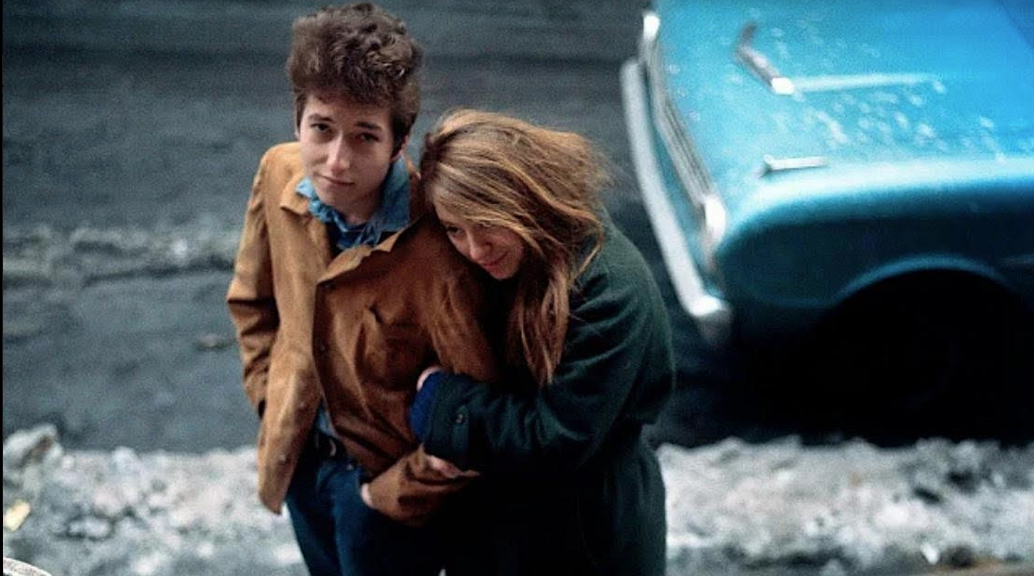
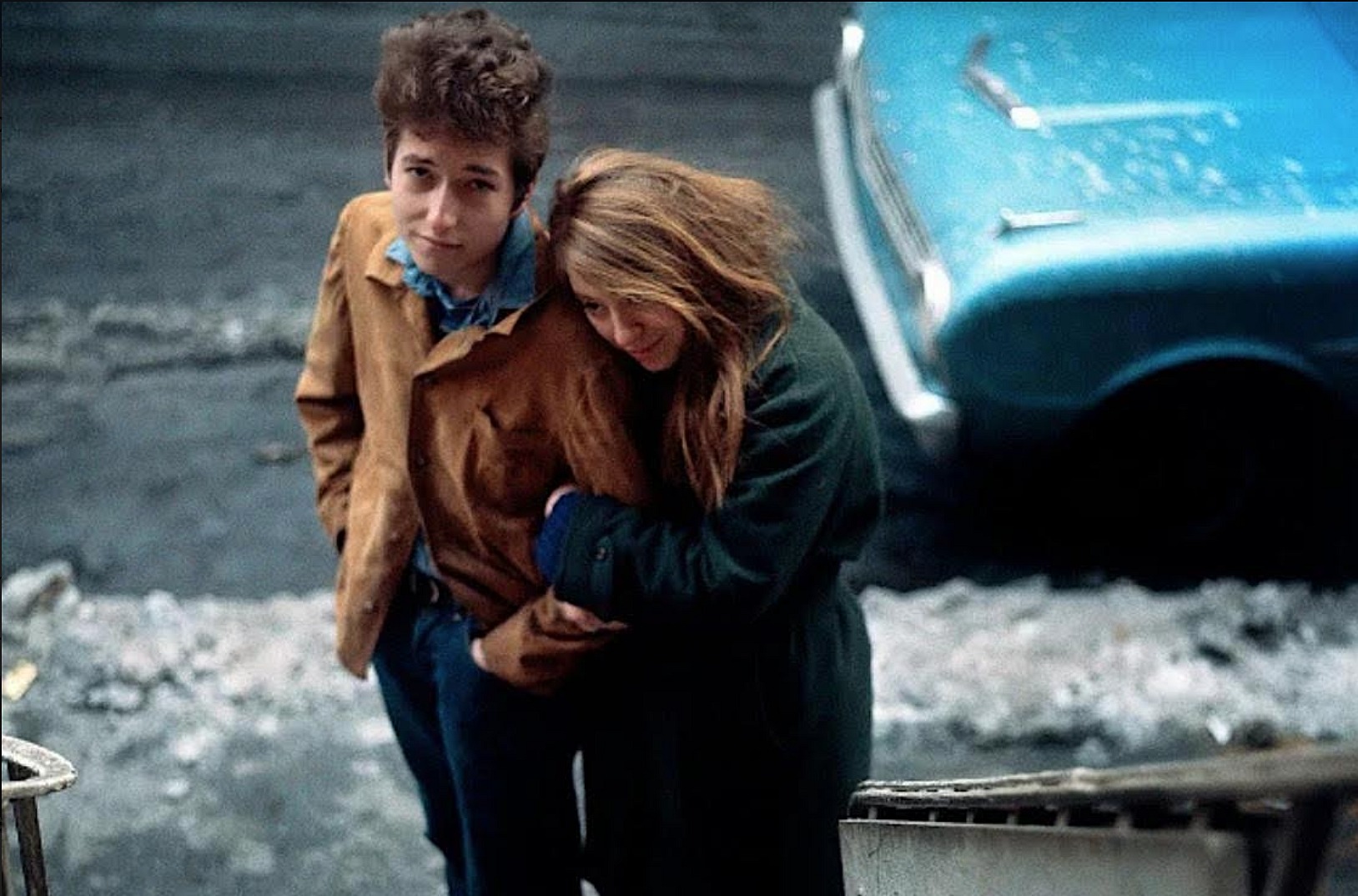
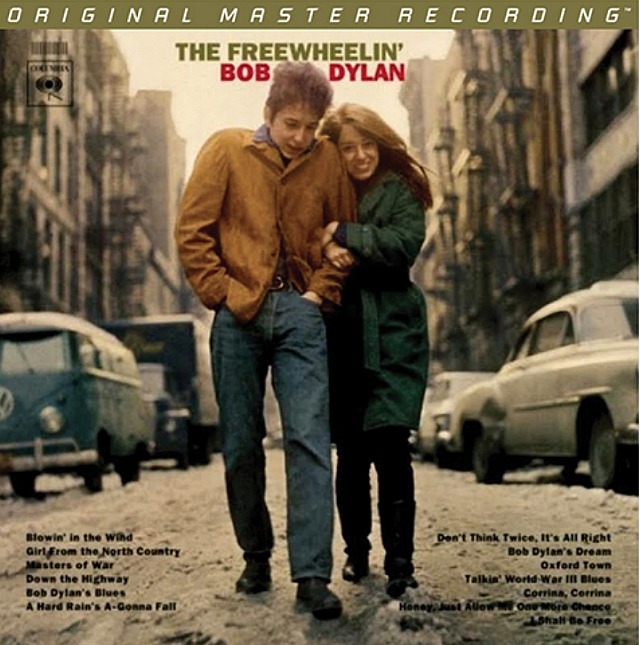
8. Martin Scorsese‘s Rolling Thunder Revue: A Bob Dylan Story / “Rolling Along With Scorsese/Dylan” filed on 6.10.19.

9. Julis Onah‘s Luce / “Luce: Assumptions, Triggers, Blind Spots“, filed on 1.29.19.

10. J.C. Chandor‘s Triple Frontier / “Five Sons of Fred C. Dobbs,” filed on 3.6.19.

11. Quentin Tarantino‘s Once Upon A Time in Hollywood / “Once Upon A Time in Hollywood Is…‘, filed on 5.21.19.

12. Olivia Wilde‘s Booksmart / “This Time SXSW Hype Was Genuine“, filed on 4.25.19.

13. Celine Sciamma‘s Portrait of a Lady on Fire / “By my sights as close to perfect as a gently erotic, deeply passionate period drama could be,” excepted from “Midnight Panini,” filed on 5.21.19.

14. Dan Reed‘s Leaving Neverland / “After Tomorrow, Jackson’s Name Will Be Mud“, filed on 3.2.19.

15. Steven Soderbergh‘s High Flying Bird / “Basically A Black Moneyball About Basketball,” filed on 1.27.19.

16. Sydney Pollack and Alan Elliott‘s Amazing Grace / “Finally Saw Amazing Grace,” filed on 12.14.18.

17. Todd Douglas Miller‘s Apollo 11 / Just because I forgot to review this Neon/CNN Films doc doesn’t mean it doesn’t deliver a profound IMAX charge. I loved that it offers no narration or talking heads.

18. Laure de Clermont-Tonnerre‘s The Mustang.

19. Mads Brugger‘s Cold Case Hammarskjöld / “Riveting, Occasionally Oddball Cold Case”, posted on 1.29.19.

20. Sebastien Lelio‘s Gloria Bell / “Moore May Snag Best Actress Nom for Gloria Bell,” filed on 9.13.18.

21. Cristina Gallego and Ciro Guerra‘s Birds of Passage / “Spreading Native Scourge,” filed on 11.26.18.

22. Kirill Serebrennikov‘s Leto / “When Russian Rock Was Born,” filed on 5.10.18.

23. Abel Ferrara‘s Pasolini / “The Night Pasolini Died,” filed on 4.13.19.

From Boston Herald‘s Jim Verniere: Arctic, Gloria Bell, Diane, Dogman, The Fall of the American Empire, Booksmart, Greta, Halston, Aquarela, Hail Satan.

Not So Fast, Guys

I haven’t seen Jake Scott‘s American Woman (Roadside/Vertical, 6.14), a hardscrabble child-rearing drama starring Sienna Miller. But I know that an erroneous impression about the film is conveyed in a 5.12 Miller interview by Indiewire‘s Kate Erbland.

The headline reads “Sienna Miller Explains Why She Finally Tackled a Lead Role After Acting For 20 Years.” The article begins by describing American Woman as “a smart and progressive film rooted in the female experience…more than that, it stars Miller as the eponymous American woman, marking the first lead role for the actress in a 20-year career.”

In the third paragraph Erbland quotes Miller as follows: “I’ve never carried a film…to be in every scene was really daunting and really challenging, without having a bigger male costar to hide behind and blame things on or being a vehicle for someone else’s film.”

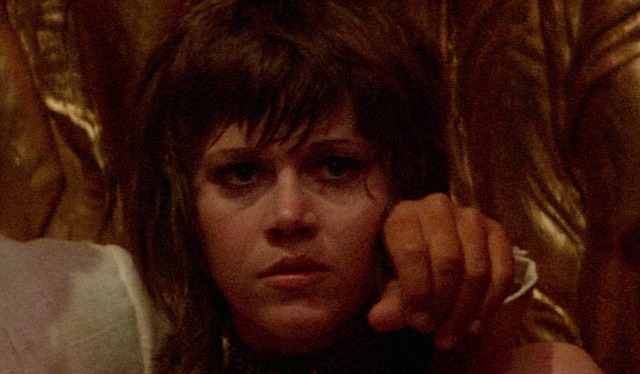
In fact Miller carried a film 13 years ago when she played Edie Sedgwick in George Hickenlooper‘s Factory Girl (’07), which I found sad, striking, richly atmospheric and pretty much the cat’s meow all around.

You could argue that Factory Girl is a two-character drama with Guy Pearce costarring as Andy Warhol, but my recollection is that Miller’s Sedgwick was much more substantial. Factory Girl was her story, her arc — Sedgwick was the one who experienced all the hurt.

I was seriously taken with Miller’s acting, and in fact interviewed her one January afternoon at the Chateau Marmont, focusing on what I regarded as a breakthrough performance. Miller was only 25 at the time.

Here’s an HE piece (posted on 6.19.07) about the three versions of the film, and about the final version being released on DVD.

Excerpt: “The saga of George Hickenlooper‘s Factory Girl will be reshuffled once again with a third version set for release on July 17th. The cliche would be to call the film’s arduous shape-shifting ‘a long strange trip’ but it really has been that.” The film had basically been through the Harvey Weinstein meat-grinder process.

“I was lucky enough to see the first version — ’60s Andy Warhol-ish, instinctual, somewhat raw and downtownish — last summer, and I raved about it soon after, and particularly about Sienna Miller‘s tragically fluttery performance as Sedgwick.”

You can stream an HD version of Factory Girl on Amazon.

Here’s one of the shots I took of Miller when we did our January 07 interview at the Chateau Marmont:

The Four Fakers

To my mind the only serious problem with Martin Scorsese‘s Rolling Thunder Revue doc is that he includes four phony talking heads among several real ones, and thereby violates the trustworthiness that we all associate with the documentary form, and for a reason that strikes me as fanciful and bogus.

The doc acquaints us with 22 or more talking-head veterans of the tour (Dylan included) but among this fraternity Scorsese inserts what Toronto Star critic Peter Howell is calling the “four fakers” — made-up characters portrayed by real, recognizable people:

Sharon Stone, who was 17 when the Rolling Thunder Tour was underway, seems to be speaking as herself but she’s actually “playing” The Beauty Queen. At first Michael Murphy seems to be speaking from his own perspective, but then you realize he’s playing The Politician. Actor-performer Martin von Haselberg (the husband of Bette Midler) plays The Filmmaker. And Paramount chairman and CEO Jim Gianopulos portrays The Promoter.

Some of what they say to the camera might be factually correct in this or that anecdotal way, but it’s all basically bullshit — made-up, written-out or improvised recollections that are performed for a chuckle, for the hell of it.

Scorsese explains his decision to include the four fakers in the press notes: “I wanted the picture to be a magic trick. Magic is the nature of film. There’s an element to the tour that has a sense of fun to it…doing something to the audience. You don’t make it predictable. There’s a great deal of sleight of hand.”

In response to which I said to myself “WHAT?” Who says RTR was driven by a sleight-of-hand, put-on mentality? I never heard that before. I thought it was about keeping it real, small-scale, people-level, driving around in a small tour bus, passing out pamphlets, etc.

Exasperated, I wrote an email to Howell, who actually attended an RTR concert in Canada at age 19 and reviewed the concert for a Toronto daily.

Wells to Howell: “Did you feel that the RTR show you witnessed was ‘a magic trick…[with] an element to the tour that has a sense of fun to it…doing something to the audience, unpredictable, sleight of hand,” etc.? What the fuck is Scorsese talking about, ‘sleight of hand’? What the fuck does that actually mean? Sounds like gibberish to me.”

Howell to Wells: “It’s total gibberish. What annoys me about this, actually depresses me, is that the Rolling Thunder Revue wasn’t some kind of scam or magical stunt by Dylan. I was there. I saw the show. I read all the reviews and interviews. It was seen at the time as a sincere attempt by Dylan to get back to his musical roots, as an antidote to the giant stadium tour of the year before. He seemed to believe this. Dylan says in the film the RTR wasn’t a moneymaker, just a great musical event with the sideshow altruism of trying to free Rubin ‘Hurricane’ Carter from an unjust jailing.

“That’s how I took it in at the time. Sad to think that Dylan and Scorsese are now making it out to be a colossal con job to show how cool they are and to keep the fans guessing. Remember when we thought of Dylan as the real deal, a guy who would speak truth to power? Now he seems determined to convince everybody that he never really meant or cared about most of what he did and sang about.

Read more

A Matter of Evaporating Trust

Posted in Park City on 1.29.19: “I was half-mesmerized by Julis Onah‘s Luce (Neon, 8.2), a tautly written, convincingly performed domestic drama about racial agendas, attitudes, assumptions and expectations. Set in an affluent Virginia suburb, the film explores a racially mixed group of characters and asks what their core-level attitudes or assumptions about “Luce” (Kelvin Harrison, Jr.), an adopted, African-born high school student, might be. But what it’s really doing is asking the audience these same questions.

“Based on J.C. Lee’s 2013 play of the same name and co-adapted by Lee and Onah, it’s basically about uncertain or ambiguous attitudes about Luce, who may or may not be as bright, likable and reassuringly well-behaved as he projects himself to be. Or maybe the real problem is in the eyes of certain beholders.

“The trouble starts when Harriet Wilson (Octavia Spencer), a vaguely huffy, side-eyed teacher, assigns Luce to write about a historical figure but with a special encouragement to ‘think outside the box.’ When Luce writes about a ’70s activist who flirted with terrorism, Harriett bristles and even freaks a bit. For whatever reason the notion of Luce being some kind of closet radical alarms her, and so (this struck me as weird) she decides to search his locker for possible evidence of subversion. She finds a paper bag filled with illegal fireworks.

“Harriet meets Luce’s adoptive mom Amy (Naomi Watts), shows her the essay and bag of fireworks. Amy tenses about violating Luce’s privacy, but at the same time is grappling with concerns about her son, who was reared in a war-torn African nation during his first ten years, and the kind of person he may be growing into. Or perhaps is hiding behind a veneer of charm and good cheer.”

Read more

Joe Popcorn Ignored Moral Message

We all know what happened with Martin Ritt‘s Hud. Ritt, screenwriters Irving Ravetch and Harriet Frank and Paul Newman wanted audiences to react to the selfish and insensitive Hud Bannon with a mixture of fascination and repulsion — as a symbol of middle-class cynicism and opportunism that was shaping the culture of 1963 America.

Instead audiences (teens especially) found Hud a roguishly charming renegade, and even a half-admirable rascal on a certain level. Newman: “The last thing people would do, we thought, was accept Hud as a heroic character…his amorality just went over their heads…all they saw was this western, heroic individual”.

The bottom line, I think, is that younger audiences weren’t so much delighted with Hud’s caddish behavior as uncomfortable with Melvyn Douglas‘s Homer, a gruff and taciturn voice of old-school morality who constantly frowns at Hud and regards him as rank and poisoned.

Younger audiences interpreted Homer’s admonishments as an echo of their parents and grandparents’ beliefs, which they found stifling to some extent. Hud repped a certain impudent freedom.

Years later Ritt said that kids who saw Hud as some kind of irreverent anti-establishment type were expressing the emerging values of the coming counterculture of the late 1960s.

50 years later the same kind of thing happened with Martin Scorsese‘s The Wolf of Wall Street. Scorsese, screenwriter Terence Winter and Leonardo DiCaprio presented what they believed was a half-comic, half-repugnant satire of Wall Street lunatics and the rancid values of guys like Jordan Belfort — a darkly comic indictment of greed and avarice among the 1%.

Instead a good portion of the audience got a huge kick out of Belfort’s excessive behaviors and ravenous appetites, and those of Jonah Hill‘s Donnie Azoff and the general madman culture of Stratton Oakmont. I remember LexG tweeting back then that he’d enjoyed WoWS for “the wrong reasons.” I had a distinct sense that a lot of people were in the same boat.

What other significant films were supposed to deliver a sobering moral lesson or inspire ethical revulsion, but in the minds of moviegoers wound up providing a kind of debased brand of entertainment?