All through the season the Gold Derby no-accounts have refused to include Paul Schrader‘s First Reformed, easily and absolutely one of the year’s ten-best, on their Best Picture spitball lists. Worse, they’ve also declined to list Ethan Hawke‘s landmark performance as a projected Best Actor nominee. Both for the perfectly idiotic reason of isolating any film that opened before Labor Day as a non-starter.
And now their cavalier, herd-following way of thinking has been embraced by the 2018 Spirit Awards nominations with four or five nominations having gone to First Reformed. Which of course seals its Oscar fate.
From here on guild and Academy members will be saying to each other, “Yeah, Schrader’s film is obviously striking and quite the career comeback and Hawke may have delivered his career-best performance, agreed, but First Reformed is a Spirit Awards thing….not in our realm.”
Shame on the Gold Derby-ites for ghetto-izing this great Bressonian film and kicking it downstairs.
In case some Academy members haven’t noticed, mainstream theatrical fare has severely devolved over the past 15 years. Almost everything made by the big studios is aimed at families and submentals, and almost all adult material (except during Oscar season) has been shunted off to cable and streaming. So out of this desert comes (among other streaming companies) Netflix, which believes in backing ambitious, adult-level features…hooray!
Netflix has recently even caved on its standard financial scheme of streaming films right off the bat from day #1, to the extent that it won’t be streaming its prize Oscar pony, Alfonso Cuaron‘s Roma, until it’s played in select theatres for a couple of weeks. I’m sorry but that’s a highly significant concession for a company like this.
And some people are giving Netflix shit over this? Somebody actually accused their willingness to go theatrical of being a “con” because they’ll be four-walling?
Netflix is investing in real movies, for God’s sake. They’ve produced the latest Coen brothers film, which at the very least is diverting and handsome as hell to look at. They backed that problematic Orson Welles film, The Other Side of the Wind, and Morgan Neville‘s They”ll Love Me When I’m Dead. They may not be the most theatrical-minded people in the industry, okay, but we’re living in a streaming world now, for God’s sake…wake up! There’s a distinct shortage of good-guy outfits in the business right now, and Netflix is certainly one of them
The across-the-board worshipping of the late Stan Lee and the corresponding corporate Marvel-ization of mainstream motion picture fare cannot be separated. Deny it or not, but these two things have happened due to an outgrowth of mass infantilization and the increasing influence of fanboy culture, which has been happening since the explosion of wide-release, teenage-catering entertainments (Jaws, Star Wars) in the mid ’70s.
It is therefore allowable for Bill Maher to have written what he wrote this morning about the Stan Lee effect. Just shut up and take it. We’re supposed to be be okay with differing opinions in our country so act that way.
“The guy who created Spider-Man and the Hulk has died, and America is in mourning,” Maher wrote. “Deep, deep mourning for a man who inspired millions to, I don’t know, watch a movie, I guess.
“Someone on Reddit posted, ‘I’m so incredibly grateful I lived in a world that included Stan Lee.’ Personally, I’m grateful I lived in a world that included oxygen and trees, but to each his own. Now, I have nothing against comic books — I read them now and then when I was a kid and I was all out of Hardy Boys. But the assumption everyone had back then, both the adults and the kids, was that comics were for kids, and when you grew up you moved on to big-boy books without the pictures.
“But then twenty years or so ago, something happened — adults decided they didn’t have to give up kid stuff. And so they pretended comic books were actually sophisticated literature. And because America has over 4,500 colleges — which means we need more professors than we have smart people — some dumb people got to be professors by writing theses with titles like ‘Otherness and Heterodoxy in the Silver Surfer‘. And now when adults are forced to do grown-up things like buy auto insurance, they call it ‘adulting’ and act like it’s some giant struggle.
“I’m not saying we’ve necessarily gotten stupider. The average Joe is smarter in a lot of ways than he was in, say, the 1940s, when a big night out was a Three Stooges short and a Carmen Miranda musical. The problem is, we’re using our smarts on stupid stuff. I don’t think it’s a huge stretch to suggest that Donald Trump could only get elected in a country that thinks comic books are important.”
HE context entry #1: Remember what Watchmen creator Alan Mooresaid nine years ago, to wit: “The average age of the audience now for comics, and this has been the case since the late 1980s, probably is late thirties to early fifties — which tends to support the idea that these things are not being bought by children. They’re being bought in many cases by hopeless nostalgics or, putting the worst construction on it, perhaps cases of arrested development who are not prepared to let their childhoods go, no matter how trite the adventures of their various heroes and idols.”
I’m very sad and sorry about the passing of William Goldman, whom I respected enormously as a screenwriter and book author, and whom I actually knew on a personal basis.
We were hardly “close” — we never talked about the difficulty of writing or women problems or anything personal. But I felt that I genuinely knew Bill as a human being, at least to some degree. I always felt settled and relaxed in his presence. And he seemed to have a certain regard for me also. At least to the extent that he took me to lunch four or five times, and always at the same elegant Upper East Side eatery that was near his apartment.
I felt profoundly honored that the writer of Butch Cassidy and the Sundance Kid, The Hot Rock (one of my all-time favorite ’70s films), Marathon Man and All The President’s Men read and admired my column. I once told myself “Jesus, I’ve gotta be doing something right if Goldman likes what I’m doing.”
We began our occasional correspondence (a phone call now and then, back-and-forth emails when something had happened) sometime in the early to mid ’90s, or when I was writing and reporting for Entertainment Weekly and the L.A. Times Syndicate. But we didn’t actually sit down and break bread until ’06 or ’07, or after Goldman became a regular Hollywood Elsewhere reader.
The only time our relationship hit a ditch was when I told Goldman that I didn’t much care for Hearts of Atlantis (’01), the Anthony Hopkins film based on a Stephen King novel. He didn’t speak to me for several months after that.
He always called me “Jeffrey” — never Jeff. He invited me up to his place once, and I remember there was a kind of shrine to Butch Cassidy as you walked through the main door. And who could blame him?
The last time I saw Goldman was at a press luncheon at 21, maybe six or seven years ago. He was sitting at a table with Joan Didion. The room was noisy and chattery and it was hard to say anything that mattered, but I belted out a hale and hearty “hey, Bill!” He looked at me with a slight smile and a slight nod. And that was it. We didn’t correspond again. And I’m sorry about that.
There’s a DVD documentary about Gunga Din, and Goldman’s commentary about that 1939 film is so eloquent when he explains why some people are so moved by that film, and particularly by the “stupid courage” shown at the very end by Sam Jaffe‘s titular character.
Famous quote: “I [don’t] like my writing. I wrote a movie called Butch Cassidy and the Sundance Kid and I wrote a novel called The Princess Bride and those are the only two things I’ve ever written, not that I’m proud of, but that I can look at without humiliation.”
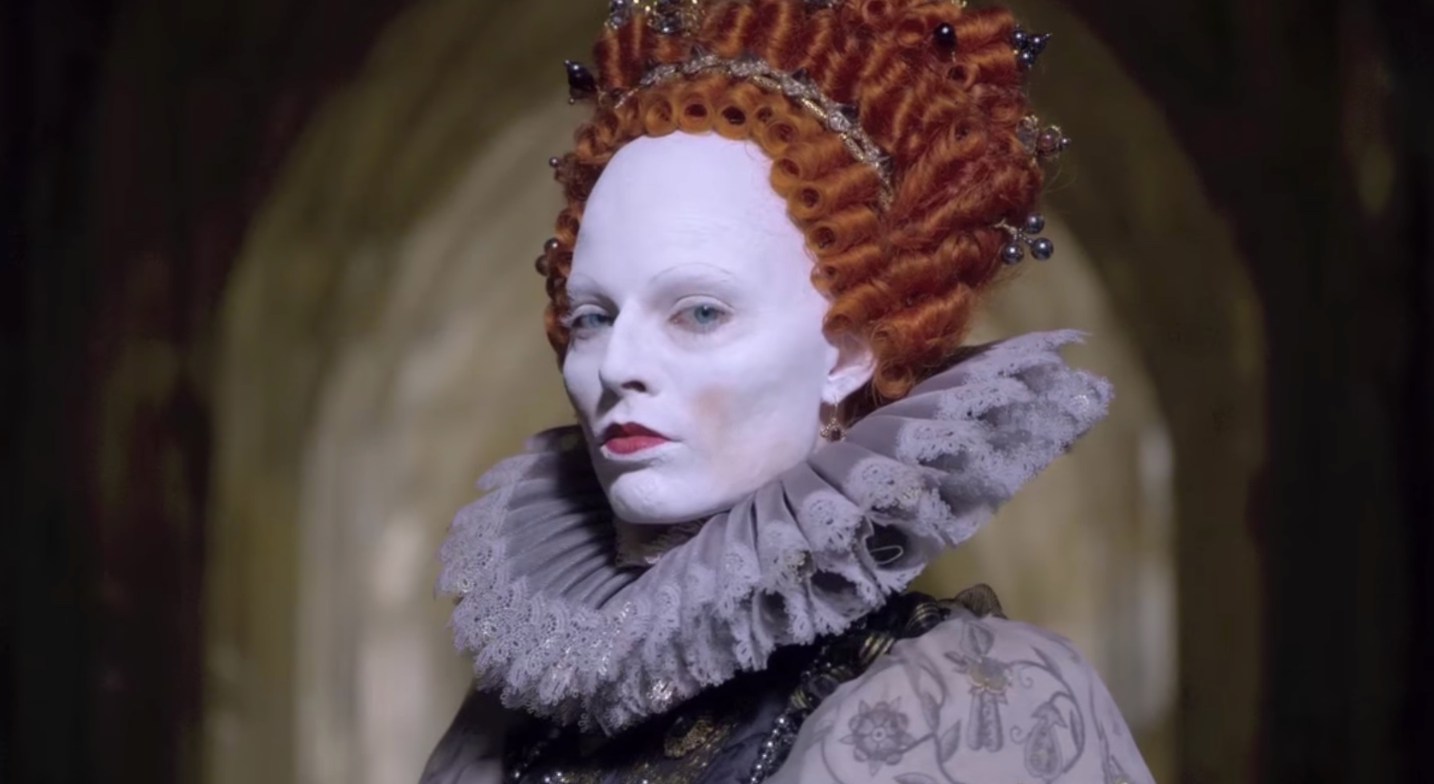
It hit me yesterday that Josie Rourke, who made her bigtime feature directing debut with Mary, Queen of Scots, has been absent from the Hollywood realm since Mary opened in late ’18. There are reasons for that, of course. One is that people like me were nearly driven to tears by Mary, an overbearing exercise in woke presentism.
“It Hurts To Watch This Film,” posted on 11.16.18: Josie Rourke‘s Mary, Queen of Scots is a slog and a drag — a hard-to-follow, sometimes infuriating attempt to make a 16th Century tale of conflict between willful cousins (the titular, flinty Mary vs. Queen Elizabeth of England) into something relevant to the convulsive culture of 2018.
I found it a slog because I didn’t give a flying fuck about anyone, and because the damp air (which wafted out from the screen) and chilly-looking Scottish exteriors made me want to wrap myself in scarves and sweaters. Why would anyone want to live in Scotland in the first place? It’s all fog and peat and stone castles. I just wanted to build a fire and huddle.
I spent the entire 124-minute running time trying to understand why I hated this film almost immediately. Have you ever walked into a crowded room and decided on the spot that you really don’t care for the vibe of a certain person standing near the punch bowl? It was like that. Within minutes I was seething with irritation. There were several factors, I gradually realized.
I felt alienated by Rourke’s attempt to impose a woke social atmosphere upon 16th Century Scotland and England — by applying a strong women-vs.-sexist pig narrative and going with multicultural casting choices. I’m not saying it’s invalid to adopt this approach (knock yourselves out), but I did find it numbing to sit through.
Early on I was telling myself I need to see Charles Jerrot‘s same-titled 1971 version with Vanessa Redgrave and Glenda Jackson. I don’t recall this film at all, but I was muttering to myself that it has to be better than the newbie…it HAS to be.
I resented having to wade through the thick Scottish accents, and realized early on that I’d have to wait for a subtitled screener to understand all of the plot intrigues. It’s one of those historical flicks in which nothing is fully clear until you go to Wikipedia and read the actual histories.
I admired Saoirse Ronan‘s feisty performance as the titular character (she’s always good) but hated the blatant “acting” by the secondary characters. Every actor explicitly conveys how their character is feeling about what’s going on — whether they’re pleased, unhappy, sad, suspicious, unsettled or whatever — and after 15 minutes of this I was ready to scream. Please, assholes…stop “acting”!
I felt especially hostile to James McArdle‘s performance as the Earl of Moray, Mary’s resentful half-brother. My second most despised performance was Jack Lowden‘s as Lord Darnley — he preens, he poses, he goes down on Mary, etc.
Beau Willimon‘s screenplay is overly complex and labyrnthian — I gave up trying to follow all the twists, turns and betrayals, especially toward the end.
Look at Benicio del Toro as he chats with BUILD’s Ricky Camilleri — he’s a ’50s beatnik, a Russian revolutionary, a wolfman, a Silicon Valley malcontent. I know Benicio very slightly, and I’ve heard the stories. Deep cat, wicked laugh, hungry poet, a man of appetites. Or, if you will, “the thinking man’s Hollywood badass.”
I was persuaded that Benicio was extra-level 24 years ago. That’s when I first saw him as Kevin Spacey‘s outgoing assistant in George Huang‘s Swimming With Sharks. In January ’95 I saw him in The Usual Suspects at Sundance, enjoyed the hell out of his Fred Fenster riff in that police line-up scene, and the rest was history.
Three personal encounters: (a) In April ’95 I persuaded Benicio (plus Bryan Singer, Elizabeth Shue, Lara Flynn Boyle, Gregg Araki, Don Murphy, et. al.) to pose for a Los Angeles magazine piece about the new neo-noir. Benicio didn’t want to pose with a gun, and I sided with him — I felt his pain. A low-key argument with my editor ensued; (b) A brief “hey” at West L.A.’s Lazer Blazer; (c) I next ran into Benicio at Gare du Nord on 1.1.00 — the day after the big Millennial new year. Standing on the platform with a suitcase, cool as a cucumber….”yo!”
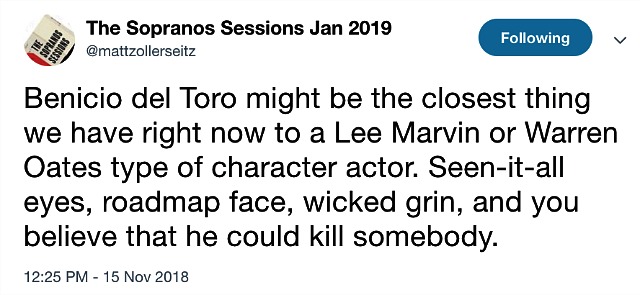
I’ve no argument with Benicio being the new Lee Marvin or Warren Oates. Why have these analogies surfaced? Because critics are hugely impressed with Benicio’s Richard Matt in Ben Stiller‘s Escape at Dannemora (Showtime, 11.18). Me too, although I’ve only seen two episodes’ worth. I’ll be working on the remainder this weekend.
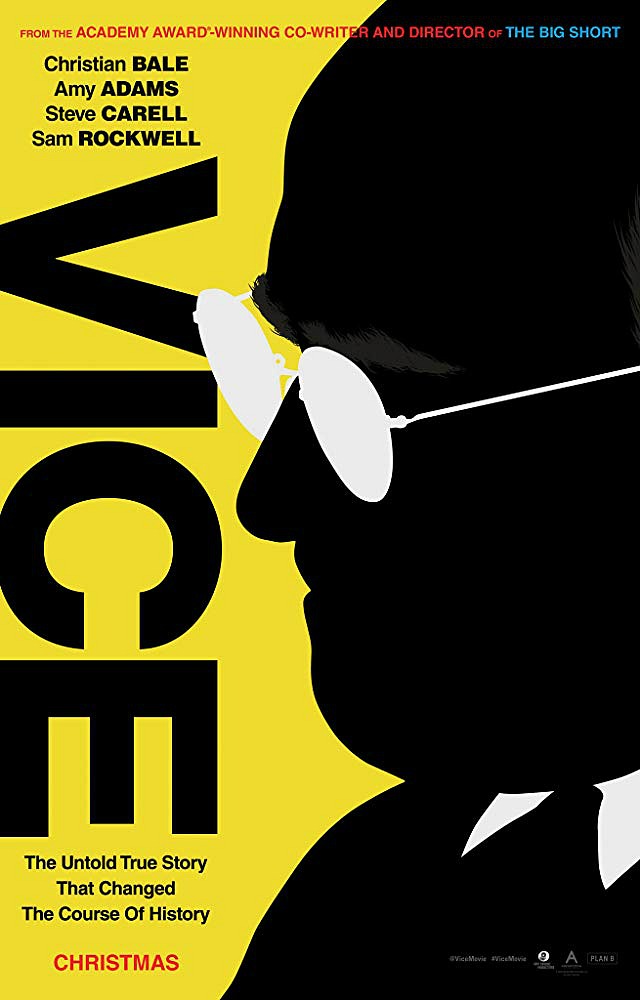
N.Y. Times columnist Maureen Dowd has seenAdam McKay‘s Vice (Annapurna, 12.25). The basic shot: “It uses real-life imagery, witty cinematic asides and cultural touchstones to explore the irreparable damage Vice-President Dick Cheney did to the planet, and how his blunders and plunders led to many of our current crises.
“With an echo of his Batman growl, Christian Bale brilliantly shape-shifts into another American psycho, the lumbering, scheming vice president who easily manipulates the naïve and insecure W., deliciously played by Sam Rockwell. While W. strives to impress his father, Cheney strives to impress his wife, Lynne, commandingly portrayed by Amy Adams.
“Before we had Trump’s swarm of bloodsucking lobbyists gutting government regulations from within, we had Cheney’s.
Before Trump brazenly used the White House to boost his brand, we had Cheney wallowing in emoluments: He let his energy industry pals shape energy policy; he pushed to invade Iraq, giving no-bid contracts to his former employer, Halliburton, and helping his Big Oil cronies reap the spoils in Iraq.
“The movie opens at Christmas, but it’s no sugary Hallmark fable. It’s a harrowing cautionary tale showing that democracy can be sabotaged even more diabolically by a trusted insider, respected by most of the press, than by a clownish outsider, disdained by most of the press.”
For what it’s worth I read a 2016 draft of McKay’s script, which was titled Cheney. I suppose you could call it vaguely “harrowing”, but I mainly got a sense that McKay wanted his audience to smirk and guffaw at Cheney’s maneuverings. It was mainly about dark, deadpan humor.
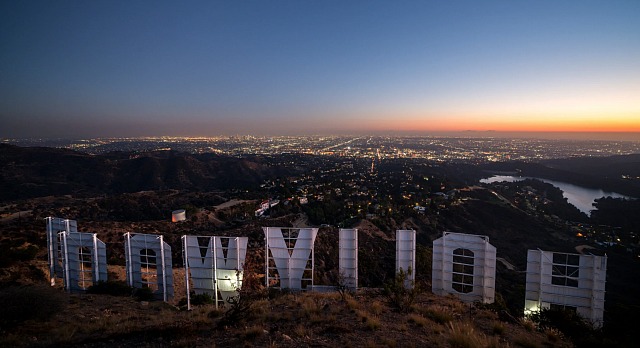
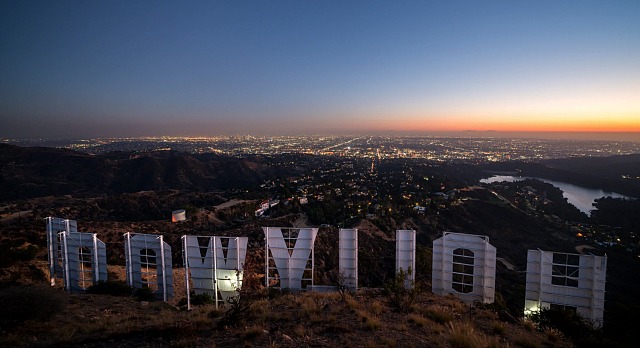
This morning I read Brooks Barnes‘ 11.9 N.Y. Times piece about the anxieties and convulsions that have seized Hollywood culture (“A Year After #MeToo, Hollywood’s Got a Malaise Money Can’t Cure“). And honestly? The thing that really moved me — the only element that didn’t pass along feelings of despondency — was the L.A. nightscape photo by Hunter Kerhart.
Takeaway #1: Behind closed doors, older entrenched white guys ** are furious and depressed and taking sedatives. Yeah, I know — poor babies, right?
Takeaway #2: Apart from the flush salaries and perks, Hollywood has become a miserable, hellish place in which to work — contentious, combative, paranoid, Stalinoid, progressive but quota-driven, polluted with downmarket crap (superheroes, sequel-itis, horror films) and seemingly devoid of any semblance of pride, joy, comfort or (are you joking?) ’70s-style creative swagger.
Takeaway #3: Everyone “supports” #MeToo, diversity and representation in the ranks — forward into the future, etc. But at the same time the knives and clubs are out. It’s I Am Legend out there. And poor Viggo Mortensen, bruised and bloody on the floor, is wondering how he could have been so clumsy or stupid for a single second in the billions of seconds that have comprised his life. And the fires of hell (probably sparked by a campfire that some asshole forgot to douse) are consuming everything west of the 405.
N.Y. Times photo by Hunter Kerhart.
And on top of all this the vast majority of Americans — the flyover audience Hollywood is looking to simultaneously fleece and entertain and in rare moments emotionally seduce — hates politically correct culture.
If there’s one overriding conviction out there in Bumblefuckland it’s that the p.c. comintern is about fickle sensitivity, arch finger-pointing and instant Twitter lynchings. So much so that Average Joes not only felt sorry for the repulsive Brett Kavanaugh but doubled-down on their loathing of coastal elites by electing some seriously toxic righties a few days ago. Urban libtards are so despised that a sizable chunk of America supports Trumpian Mussolini culture as a bulwark against progressive upheaval. And yet Hollywood decision-makers, forced or obliged or seriously committed to accommodating themselves to p.c. changes, are ironically tasked with creating diversionary dreamscapes for people who despise the very ground they walk upon. Or something like that.
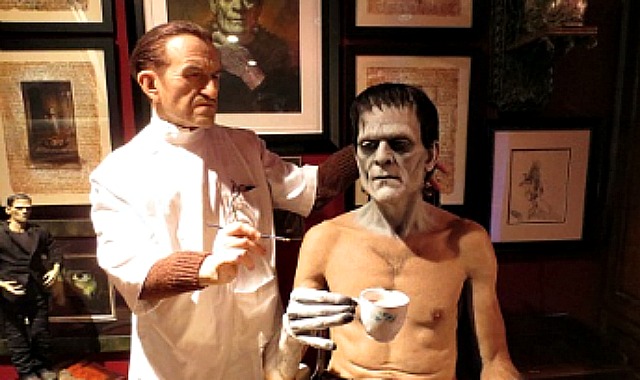
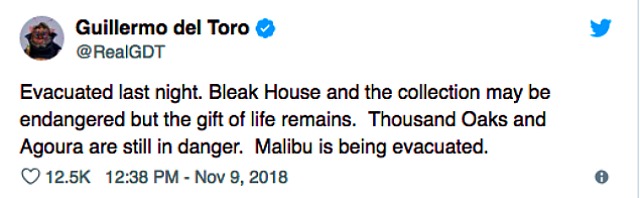
Six years ago Svetlana Cvetko, Graemm McGavin, Rihannon McGavin and I visitedGuillermo del Toro‘s Bleak House in Thousand Oaks — the greatest temple of horror-film worship that’s ever existed. Today Guillermo tweeted that Bleak House may be in danger of being consumed by the Woolsey Fire, and that he’s been forced to evacuate his home (which is right next door). I’m SICK over the possibility of Bleak House being engulfed in flames. It would be like the accidental burning of the Alexandria library.
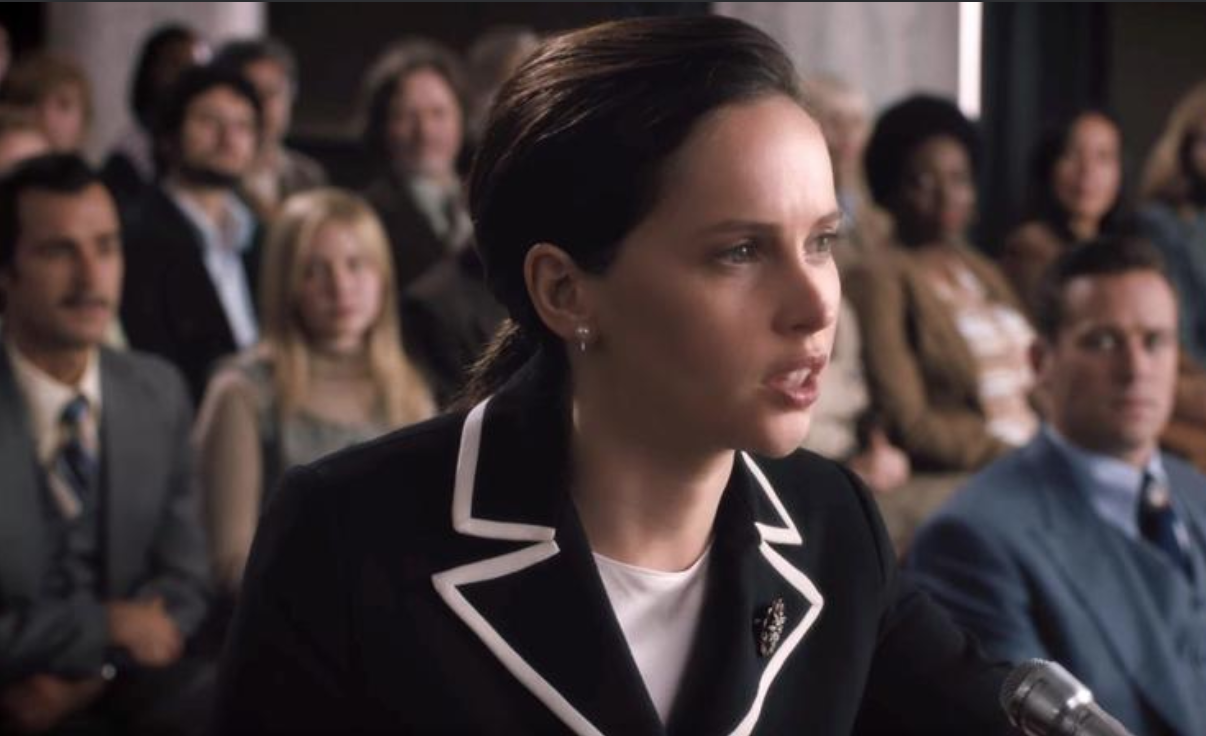
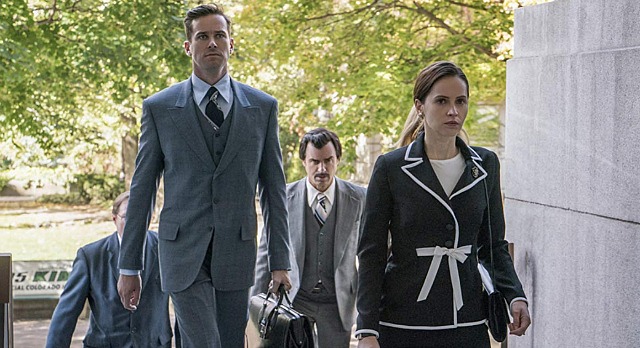
I had one strong thought in my head after seeing Mimi Leder‘s On The Basis of Sex (Focus Features, 12.25), a well-meaning but mediocre saga about the formative years of legendary Supreme Court Justice Ruth Bader Ginsburg (Felicity Jones).
That thought was that Betsy West and Julie Cohen‘s RBG, the hit documentary about Ginsburg’s life and career, is a much better movie — smarter, more engrossing for sticking to the facts, no callow tricks or formulaic finessings. And yet it gets you emotionally.
On The Basis of Sex is a Ruth Bader Ginsburg primer for none-too-brights — a frequently unsubtle, Hollywood-style treatment that clumsily tries to milk or manipulate every emotional occurence or, failing that, charm the audience at every turn.
At every juncture the story seems to have been dumbed down to appeal to (what’s a tactful way of putting this?) viewers whose lips move at they read supermarket tabloids.
Clunky, on-the-nose dialogue. Rote direction. Cardboard characterizations. Over-acted, hamfisted performances, particularly by the sexist male villains. (Sam Waterston!) Trite plotting, predictable strategies and, in one climactic instance, the use of cliched dramatic invention that made me twitch and groan in my seat.
The term “charm offensive” has never been more grossly demonstrated than a moment in which Justin Theroux, portraying ACLU legal director Mel Wulff, greets Jones with a kind of pep-rally song that involves vigorous thigh-slapping.
Bader speaks with a fairly distinctive Brooklyn accent, so how is Jones at imitating this? Not so hot. I couldn’t really hear “Brooklyn” in her speech patterns. What I heard was “British actress doing a decent job of sounding American but not really trying to get the Brooklyn thing right.”
Believe it or not there’s a sex scene between Jones and Armie Hammer, playing Ginsburg’s attorney husband Martin. Ruth Bader Ginsburg doing the nasty? Please…cut away! It was this utterly pointless detour that told me On The Basis of Sex wouldn’t be panning out. My hopes actually started to sink less than 10 minutes after it began.
From sea to shining sea and even in the rural, red-state regions, there’s a rule that everyone understands and lives by. You can use the term “the N word” but never the word itself. Because verbalizing that term, even for an instant, somehow bestows a brief spurt of cultural oxygen, and the rule is that this term must be kept in an airless, vacuum-sealed box inside a concrete underground bunker, never to be exhumed. Which is clearly how it should be.
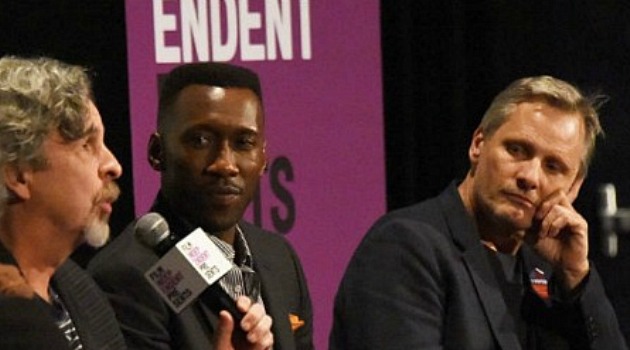
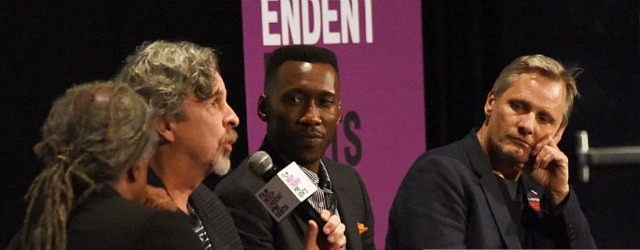
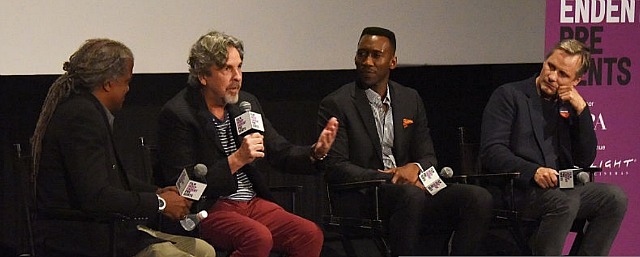
The night before last Green Book costar Viggo Mortensen, participating in a Film Independent discussion at the Arclight, said the actual, two-syllable N word. I strongly doubt that anyone suspects Mortensen, a gentle, thoughtful, well-liked guy occasionally given to long-winded explanations of feelings and undercurrents, of even being an unconscious R-word person. He just said a stupid thing. Viggo has thoroughly apologized (“I will not utter it again”), but this was a lulu of a verbal blunder.
I hate to say this — I would certainly like to imagine otherwise — but Viggo may have possibly torpedoed his chances of winning a Best Actor Oscar. Or maybe not.
I think people should consider that many actors, especially the brilliant ones, have a naturally open, expansive, dig-down-to-the-bottom-of-things nature, and that Viggo’s instinct to be vivid and/or dramatic briefly overcame his sense of social decorum. Has anyone out there ever blurted out some crude, outre expression for the sake of dramatic emphasis, and then immediately realized that too much emphasis was used? That’s all that happened here — an actorly instinct collided with a strict social taboo.
In a statement given to The Hollywood Reporter‘s Scott Feinberg and Gregg Kilday, Mortensen said the following: “In making the point that many people casually used the ‘N’ word at the time in which the movie’s story takes place, in 1962, I used the full word. Although my intention was to speak strongly against racism, I have no right to even imagine the hurt that is caused by hearing that word in any context, especially from a white man. I do not use the word in private or in public. I am very sorry that I did use the full word last night, and will not utter it again.”
Mortensen added, “One of the reasons I accepted the challenge of working on Peter Farrelly’s Green Book was to expose ignorance and prejudice in the hope that our movie’s story might help in some way to change people’s views and feelings regarding racial issues. It is a beautiful, profound movie story that I am very proud to be a part of.”
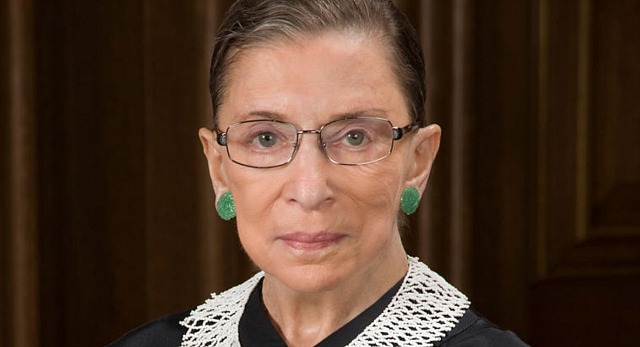
My first thought after hearing about Justice Ruth Bader Ginsburgbreaking three ribs last night was “good God, no…not another Supreme Court vacancy with Trump nominating another Kavanaugh-like partisan…Jesus, please!”
My second thought, of course, was concern for Justice Ginsburg’s well-being. It’s one thing to crack a couple of ribs in your 40s or 50s, but people in their 80s don’t hold up as well. I was actually heartened to read a N.Y. Times account that says Ginsburg “went home after her fall” in her Supreme Court office. In short she didn’t immediately call a doctor because she’s made of sterner stuff. I know it’s not appropriate to call her “a chip off the old Lee Marvin block” but this is how I would handle a fall if I was in her shoes — take the pain, suck it in, brush it off.
But Ginsburg “experienced discomfort over the night” and “was admitted to George Washington University Hospital, where doctors found three broken ribs on her left side,” according to a spokesperson. My head is worried but my heart tells me she’ll get through this.
I suppose I felt particularly startled because last night I watched Justice Ginsburg perform a heroic walk-on at the finale of Mimi Leder‘s On the Basis of Sex, the Ginsburg biopic that will premiere at AFI fest tonight. I attended a guild screening at the SVA theatre on West 23rd Street. The embargo lifts after tonight’s showing.