Narcissism, Entitlement, Hubris

During last night’s chat with John Brennan, Bill Maher said something about the Trump miasma having put America and Americans in the midst of one of the three biggest critical crossroad moments in our nation’s history, the first two being the Revolutionary War and the Civil War.

It’s now clear that a highly significant minority (i.e., the entire country outside the cities) is ready to abandon the basic tenets of democracy and for that matter sanity in order to submit to a crime-family autocrat who at least, they’re telling themselves, is trying to preserve a semblance of white-male dominance as they remember it from the ’50s, ’60s, ’70s and ’80s. Beast that he is, Trump’s supporters are rationalizing that at least he’s standing foursquare for heartland white culture (or claiming as much) and trying to prevent the multiculturals and LGBTQs from gaining too much ground.

From “How Far America Has Fallen,” a N.Y. Times opinion piece by columnist Roger Cohen, posted on 8.24:

“The thing about all the shocking Trump revelations is that they are already baked into Trump’s image. His supporters, and there are tens of millions of them, never had illusions. I’ve not met one who did not have a pretty clear picture of Trump. They’ve known all along that he’s a needy narcissist, a womanizer, a lowlife, a liar, a braggart and a generally miserable human being. That’s why the Access Hollywood tape or the I-could-shoot-somebody-on-Fifth-Avenue boast did not kill his candidacy.

“There’s a deeper question, which comes back to the extraordinary Western landscape and the high American idea enshrined in it. Americans elected Trump. Nobody else did. They came down to his level. White Christian males losing their place in the social order decided they’d do anything to save themselves, and to heck with morality. They made a bargain with the devil in full knowledge. So the real question is: What does it mean to be an American today? Who are we, goddamit? What have we become?

Read more

Do The Walker Walk

If you’re any kind of movie Catholic, you need to do the Point Blank Walker walk (clop, clop, clop, clop, clop, clop, clop) at least once after arriving at LAX. No walking with friends or family — you have to do it solo in one of those long, linoleum-floored passageways between the upstairs arrival area and the baggage carousels. There are at least one or two remaining. The one I clop-clopped on this morning is part of the American Airlines terminal. I shot some video, but I got the aspect ratio wrong. Very embarassing.

Read more

Her Brand Is Crisis

Having read the TMZ piece with the Asia Argento-Jimmy Bennett photos and Argento’s text to a friend about same, a colleague says the following:

“Asia says she wants to be part of the 90% that doesn’t give a fuck about this shit? Really? Fuck you, lady. You’ve been doing nothing but being a #MeToo crusader for a year. YOU are the one that made people freak about nearly every man in Hollywood. What the fuck?

“And by the way it doesn’t matter if Jimmy came onto her or not. It really doesn’t. Sure, if she wants to stand on the side of those who deny they assaulted people because those people were willing participants, just like Harvey Weinstein? Great. Go for it. But that is not who she has been in the public eye.

“She’s also ready to lay 100% of the blame on poor, dead Anthony Bourdain, who’s beginning to look more and more like the one who wanted it covered up because his reputation was also on the line.”

HE comment: In the TMZ text Argento describes a randy Jimmy plowing her soil and writing afterward that he loves her…totally into it. I wasn’t there, but this seems a lot more realistic than the image that certain Twitter snowflakes were advancing, that of a traumatized, sexually uncertain youth who felt assaulted by a ravenous older woman.

HE to London-based critic who shall be nameless: Are you still maintaining that my initial take on this episode was the “wrong” one?

HE to Bateman: Sorry, Bruh

Ozark star-director Jason Bateman is an HE reader, which is one reason why I’ve always paid special attention to whatever he’s up to, including the paycheck comedies. Another reason is that his performances are usually on the dryly ironic, underplayed side. A third reason is that he’s an above-average director (Bad Words, The Family Fang). Which is why I felt kinda badly as I wrote the following email, which I sent him this morning:

I have an apology to make. A big one. I try and watch as much well-reviewed cable fare as I can fit into my schedule, but between all the movies and filings and researchings and constant deadlines and whatnot, I don’t see everything. I tend to be picky. Plus I’m occasionally reluctant to get into series because of the long-haul commitment of eight to ten hours. Plus I have a prejudice about drug-dealing melodramas, especially if some of the characters are redneck biker types with tattoos and missing teeth. This is one reason why I avoided Breaking Bad; the other was that it costarred an actor I often referred to as “tennis-ball head,” and whom I can’t stand.

These are no excuses — I’m just telling you how I play it sometimes.

Last night I finally sat down and watched the first two episodes of Ozark (two of the four that you directed over the course of season #1) and was pretty much blown away. Which is to say hooked and committed. Marty Byrde is your best character, ever; ditto your best performance ever, in anything.

Clean, unfettered, no-nonsense direction. And the writing! Hats off to the decision by screenwriters Bill Dubuque and Mark Williams to give almost every character (even the lowest, scurviest ones) something arresting or eloquent or off-angled to say. I love it when everyone is sharp and clever and has sussed all the angles, regardless of their age (Marty’s two kids are great) or genetic inheritance or educational background. I was engrossed, riveted, satisfied.

I don’t know at what point I was finally sold, but I think it was the moment when the body of Laura Linney‘s boyfriend slammed into the pavement at 150 miles per hour. And I loved how you didn’t build up to this or show the cartel goons pushing him out — your character is just approaching the building, going over what he’ll say to his cheating wife, and WHUP!

Hats off, bowing down, obeisance before power.

Read more

Telluride Treadmill

I noted last year that for a majority of journos with tight travel schedules and a pile of deadlines, the four-day Telluride Film Festival is actually a three-day if not a two-and-a-half-day festival. Which means that out of 30 films typically scheduled, go-getters can maybe catch 14 or 15, tops. And that’s if you’re really aggressive about it. If you’re only moderately aggressive you’ll wind up seeing 10 or 12.

The fest doesn’t begin until mid-Friday afternoon (i.e., post Patron’s Brunch), which affords an opportunity to see two or three films during the remainder of that day. Three or four pics are catchable on Saturday and Sunday for a likely total of 10 or 11 by Sunday midnight, and maybe a couple more on Monday before leaving town. And you have to review everything as you go along.

On top of which Telluride often schedules the highest-interest films against each other so you’re always missing out on Peter in order to see Paul. On top of which are the dinners and parties.

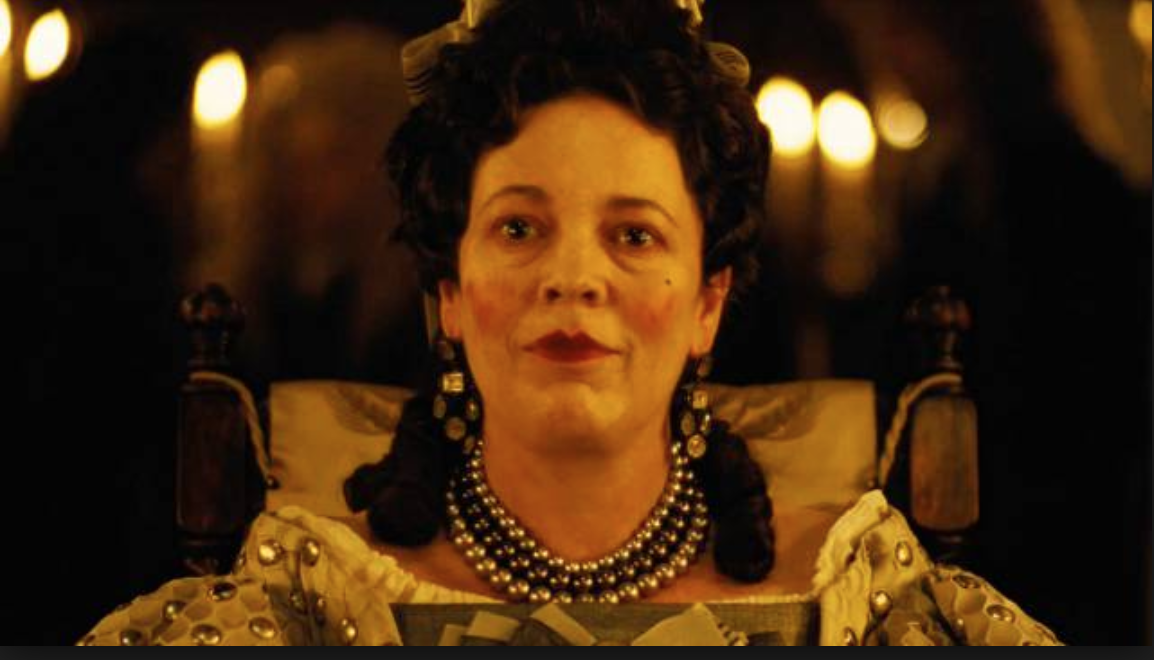
I’m given to understand that the following films are locked for Telluride ’18: Alfonso Cuaron‘s Roma, Damien Chazelle‘s First Man, Mike Leigh‘s Peterloo, Orson WellesThe Other Side of the Wind, Yorgos LanthimosThe Favourite, Olivier AssayasNon-Fiction, Marielle Heller‘s Can You Ever Forgive Me?, Jason Reitman‘s The Front Runner, David Lowery‘s The Old Man and the Gun, Yann Demange‘s White Boy Rick, Karyn Kusama‘s Destroyer, Joel Edgerton‘s Boy Erased, Pawel Pawlikowski‘s Cold War and Hirokazu Kore-eda‘s Shoplifters. (14)

HE solution to Telluride gridlock: With everyone arriving on Thursday afternoon, the festival should begin on Thursday night with hottie screenings at all the venues (Chuck Jones, Werner Herzog, Palm, Galaxy, Pierre, Backlot) starting at 7 pm and then again at 9:30 or 10 pm. Hell, stage a midnight screening or two. And then more hottie screenings on Friday morning starting at 8:30 or 9 am. Those who wish to attend the Patrons picnic could squeeze it in around 11 or 11:30 am, but a full load of screenings would continue for those who’d rather catch films than eat.

By launching on Thursday night and starting screenings early on Friday morning, four or five fresh opportunities to catch the must-sees would be on every visiting critic’s plate. And for those who might prefer to take a more leisurely, old-time approach, they can still start things off with the picnic and then the first Patrons screening at the Chuck Jones at 2:30 pm, and no harm done.

Now doesn’t that make sense?

Congrats In Order

Vulture‘s Hollywood guy Kyle Buchanan is the new “Carpetbagger” for the New York Times. He’ll be the fourth to carry that brand, the previous three being Cara Buckley, Melena Ryzik and the late, great David Carr.

The carpetbagger term fit Carr because he was basically a brainy, independent-minded New York guy (lived in Montclair) who never really played the Hollywood game. Buchanan, on the other hand, has been playing it all along, Los Angeles-based in more ways than one, schnorring and observing his way through the six-month-long award season with the rest of us.

Buchanan will launch his Times coverage with the early fall film festivals — Telluride, Toronto, New York. This morning I asked Buchanan who will succeed him as the new Vulture award-season person. “To be determined,” he said.

It always bothered me when Buckley and Ryzik would declare that Oscar season begins in December….no! It begins with Telluride and ends with the Oscar telecast, which this year will take five and a half months. Get that through your heads.

Buchanan quoted by Indiewire‘s Anne Thompson: “I’m excited to cover Hollywood out of Hollywood. Mostly, though, I hope to bring the same wit and curiosity to the job that my predecessors did. Yes, there are a lot of silly things about the Oscars — and trust, I love covering the silly things too — but I believe that when you really understand awards season, this is a continually exciting and surprising beat where the stories lend us a prism through which we can better know the world. Even a simple snub isn’t always just a snub: It can tell us a lot about what we canonize as a society and reveal where our blind spots still lie.”

Well said, Kyle. This is what L.A. Daily News critic and Oscar disser Bob Strauss is either incapable of understanding or refuses to consider.

Argento and Hypocrisy

An 8.19 N.Y. Times story reports that Asia Argento paid a go-away fee of $380K to former child actor Jimmy Bennett after the latter accused her of sexual assault in 2013, when he’d just turned 17. Argento is being called a hypocrite for having this episode under her belt while strongly promoting a #MeToo agenda vis a vis her assaultive encounters with Harvey Weinstein. But what she went through with Harvey — oppressive sexual intimidation that resulted in something like a form of Hollywood date rape — doesn’t sound remotely analogous to what happened between her and Bennett.

My limited understanding is that Argento manipulated the youth into submitting to oral sex and then rode him like Hopalong Cassidy. As in “come over here, kid.” Okay, maybe Bennett wasn’t into it. Maybe he found getting blown to be traumatic. Maybe on some level what Argento did with Bennett was vaguely akin to Kevin Spacey’s reported assault of Anthony Rapp. I wouldn’t know.

I have to be honest — my first reaction was “manipulated”? Five years ago Bennett was a teen actor trying to land parts. Has anyone ever heard of a male actor of any persuasion who wasn’t randy, particularly one in his hormonal prime? Has there ever been a young actor in the history of the planet whose basic attitude was “gee, I’m not sure if I’m ready for sex”?

Has anyone ever read about what Mickey Rooney was up to in the 1930s, when he was in his mid teens? Were there any half-willing older female actresses whom Rooney ran into that he didn’t have it off with? When he was 24 Rooney reportedly had a longish affair with 14 year-old Liz Taylor. Imagine what the twitter comintern would’ve done with that, etc.

I was 17 once. I got shitty grades in school because I spent half my day dreaming about some older ravenous hottie having her way with me. I started dreaming about older naked women when I was nine or ten. I couldn’t get laid to save my life in my mid teens — I was a teenage incel before anyone knew the term — and it was a very sad and lonely time, let me tell you. I don’t mean to sound callous or indifferent, but my understanding of “assault” does not include notions of some Asia Argento-level woman winking and saying “come over here, Jeffie” when I was 17.

Read more

The Color of Money

I want credit for enduring Crazy Rich Asians this afternoon. I paid, I saw, I suffocated. But it took 45 or 50 minutes before the oxygen ran out. Asians actually begins in a reasonably sharp and springy fashion. Peter Chiarelli and Adele Lim‘s clever dialogue, Vanja Cernjul‘s handsome lensing, Myron Kerstein‘s fleet editing, etc. I was saying to myself “hmmm…this has a good vibe.”

It’s a satire of the aggressively shallow values of the highly insecure moneyed classes of southeast Asia, but the satire doesn’t cut very deep because the film shares these values and in fact adores them. Each and every shot is about showcasing obscenely flush, over-the-top flamboyance (clothes, homes, interior designs), and by the one-hour mark the spirit weakens and the nausea kicks in.


Henry Golding, Constance Wu in Crazy Rich Asians.

The story tries to have it both ways by having the fate of the two main characters, Constance Wu‘s Rachel Chu (the actress is 36 and no spring chicken) and Henry Golding‘s Nick Young, turn on matters of soul, substance and parental heritage. But director Jon M. Chu is more in love with grotesque abundance.

As Rachel is driven up the driveway of the mega-mansion owned by Nick’s parents, Brian Tyler‘s swelling score tells the audience that this is a huge, huge moment. It says “oh my God, look at this…Rachel is approaching heaven!” It’s like Jerry Goldsmith‘s score in Star Trek: The Motion Picture when William Shatner‘s Captain Kirk is first approaching the Enterprise and his eyes begin to moisten.

Eventually I began to telepathically beg for mercy. “Please, Jon…can we have a quiet, unfettered scene on a simple beach somewhere or maybe at an inexpensive roadside foodstand?” I whimpered. “Do you have to pour your maple-syrup wealth porn all over everything at every goddamn turn?” Answer: Yes, he does.

By the end I was hating Crazy Rich Asians as much as any of the more recent Fast and Furious sequels.

Horror of George Minafer

The exalted if somewhat tragic reputation of Orson WellesThe Magnificent Ambersons (’42) has been so deeply drilled into film-maven culture that even today, no one will admit the plain truth about it. I’m referring to the fact that Tim Holt‘s George Amberson Minafer character is such an obnoxious and insufferable asshole that he all but poisons the film.

I’ve watched Welles’ Citizen Kane 25 or 30 times, but because of Holt I’ve seen The Magnificent Ambersons exactly twice. (And the second viewing was arduous.) Even Anthony Quinn‘s Zampano in Federico Fellini‘s La Strada is more tolerable than Minafer, and Zampano is a bellowing beast.

Welles admitted decades later that he knew “there would be an uproar about a picture which, by any ordinary American standards, was much darker than anybody was making pictures…there was just a built-in dread of the downbeat movie, and I knew I’d have that to face.”

He’d calculated that audiences would forget their discomfort when Minafer “gets his comeuppance” at the very end. But even in the truncated 88-minute version of the film that exists today, audiences still have to suffer Minafer’s ghastly arrogance, snippiness and smallness of spirit for roughly 80 minutes, and most people simply can’t tolerate this much abuse.

The Wiki page notes that a rough cut of Ambersons received a mixed response after a previewing on 3.17.42. Welles’ film was previewed a second time after film editor Robert Wise removed several minutes from it, “but the audience’s response did not improve.” Uhm, hello?

Why is the final La Strada scene of Zampano weeping on the beach so emotionally satisfying while the finale of Ambersons leaves you feeling a mixture of “meh” and relief? Other than the fact that Fellini understood human nature better than Welles, I think I’ve explained why.

The same issue clouds the watching of Welles’ Touch of Evil — i.e., Detective Hank Quinlan is too gross, too drooling and altogether too much to take. He all but vomits in the audience’s lap.

Criterion’s Magnificent Ambersons Bluray (4K digital restoration) will pop on 11.20.

Read more

Two Additional Remarks

In yesterday’s dismissive riff about Criterion’s forthcoming Some Like It Hot Bluray, I failed to mention an exceptional ingredient — a brilliant commentary track by UCLA film professor Howard Suber that hasn’t been accessible since Criterion’s Some Like It Hot laser disc (initially released in 1989) was in circulation.

Notice the black bars on the below ScreenPrism essay. This is how the film should be presented on 16 x 9 flatscreens. Shame on Criterion for this latest act of vandalism (on top of their teal-tinted Blurays of Midnight Cowboy and Bull Durham).

After that landmark Criterion essay about the differences between 1.37, 1.66 and 1.85 versions on their triple-disc On The Waterfront Bluray, why oh why would Criterion release a cleavered 1.85:1 version of Some Like It Hot when everyone has been savoring the 1.66 version for years and years? Why? More height is better, cleavering is evil, multi-a.r. Blurays are best, 1.66 > 1.85.

Read more

Birth of “Aimlessly Hanging Out” Genre

A new Bluray of Federico Fellini‘s I Vitelloni, the grandfather of prolonged adolesence hang-out films, streets on 8.27. But for the grace of God I almost became an I Vitelloni guy, treading water and chasing girls in Fairfield County. I finally couldn’t stand it and moved into my first Manhattan pad on Sullivan Street. It took me two years to make it as a fringe-level film journalist, but I finally did.

Originally posted 12 years ago, on 7.6.06: “There’s a trend in movies about guys in their early to mid 30s having trouble growing up. Guys who can’t seem to get rolling with a career or commit to a serious relationship or even think about becoming productive, semi-responsible adults, and instead are working dead-end jobs, hanging with the guys all the time, watching ESPN 24/7, eating fritos, getting wasted and popping Vicodins.

“There have probably been at least 15 or 20 films that have come out over the last four or five years about 30ish guys finding it hard to get real.

“The 40 Year-Old Virgin was basically about a bunch of aging testosterone monkeys doing this same old dance (with Steve Carell’s character being a slightly more mature and/or sensitive variation). Virgin director-writer Judd Apatow has made a career out of mining this psychology. Simon Pegg’s obese layabout friend in Shaun of the Dead was another manifestation — a 245-pound Dupree.

“Prolonged adolescence is an age-old thing, of course. The difference these days is that practitioner-victims are getting older and older.

Read more