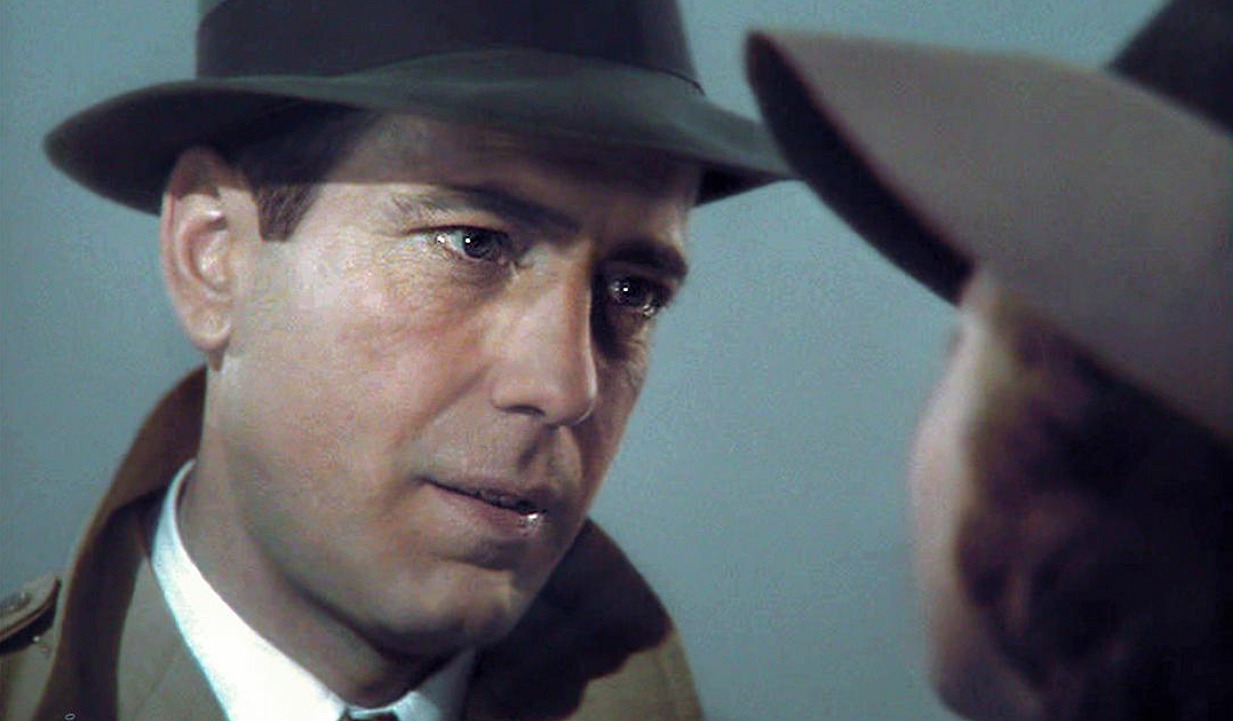
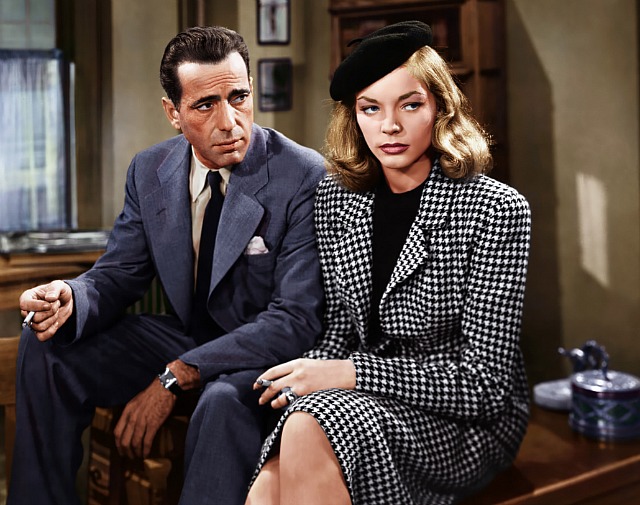
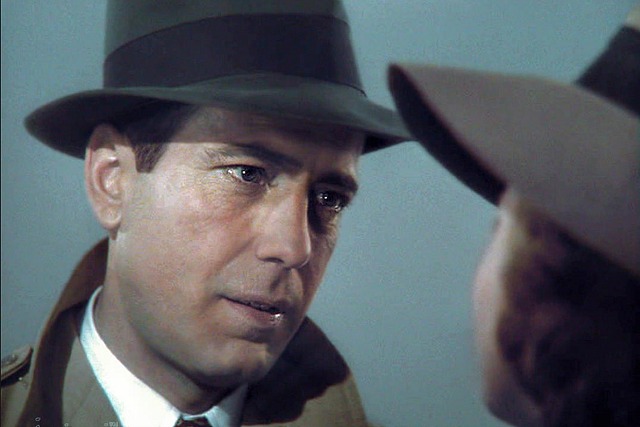
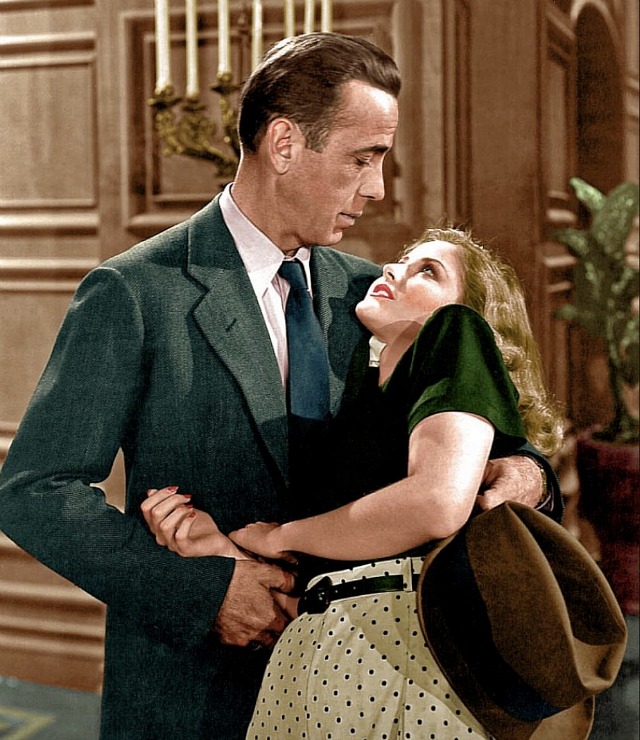
“No self-respecting cinefile approves of colorizing black-and-white movies,” I wrote on 10.28.17, “but colorizing monochrome stills can be a respectable thing if done well.”
The Humphrey Bogart-Lauren BacallBig Sleep still below is probably the best colorized b&w image from a Hollywood film mine eyes have ever beheld — ditto the Bogart-and-Ingrid BergmanCasablanca shot below it. I’m aware that monochrome films of the ’30s and ’40s were shaded and lighted to deliver maximum impact in terms of a certain silvery compositional aura, but these really look good.
Okay, not so much the Bogart-and-Martha Vickers shot from The Big Sleep, but even that isn’t too bad.
Ditto: “Remember how colorized images used to look in the bad old days? I don’t know if it’s a matter of someone having come up with a better color-tinting software or someone’s willingness to take the time to apply colors in just the right way, but every so often a fake-color photo can look really good. Incidentally: I approve of carefully tinted black-and-white newsreel footage.”
More than a little dodging and sidestepping went into the Annihilation aggregate critic ratings — 87% on Rotten Tomatoes, 80% on Metacritic. Critics are always afraid of appearing unhip or clueless — even if a movie confounds or irritates or pisses them off, it’s safer to convey knowing approval or respect for what it seems to be attempting. Presumably a good portion of the HE community saw it last night and has seen through the bullshit. And if some “liked’ it, I know they’re also bothered by it. Please share whatever reactions you may be struggling with.
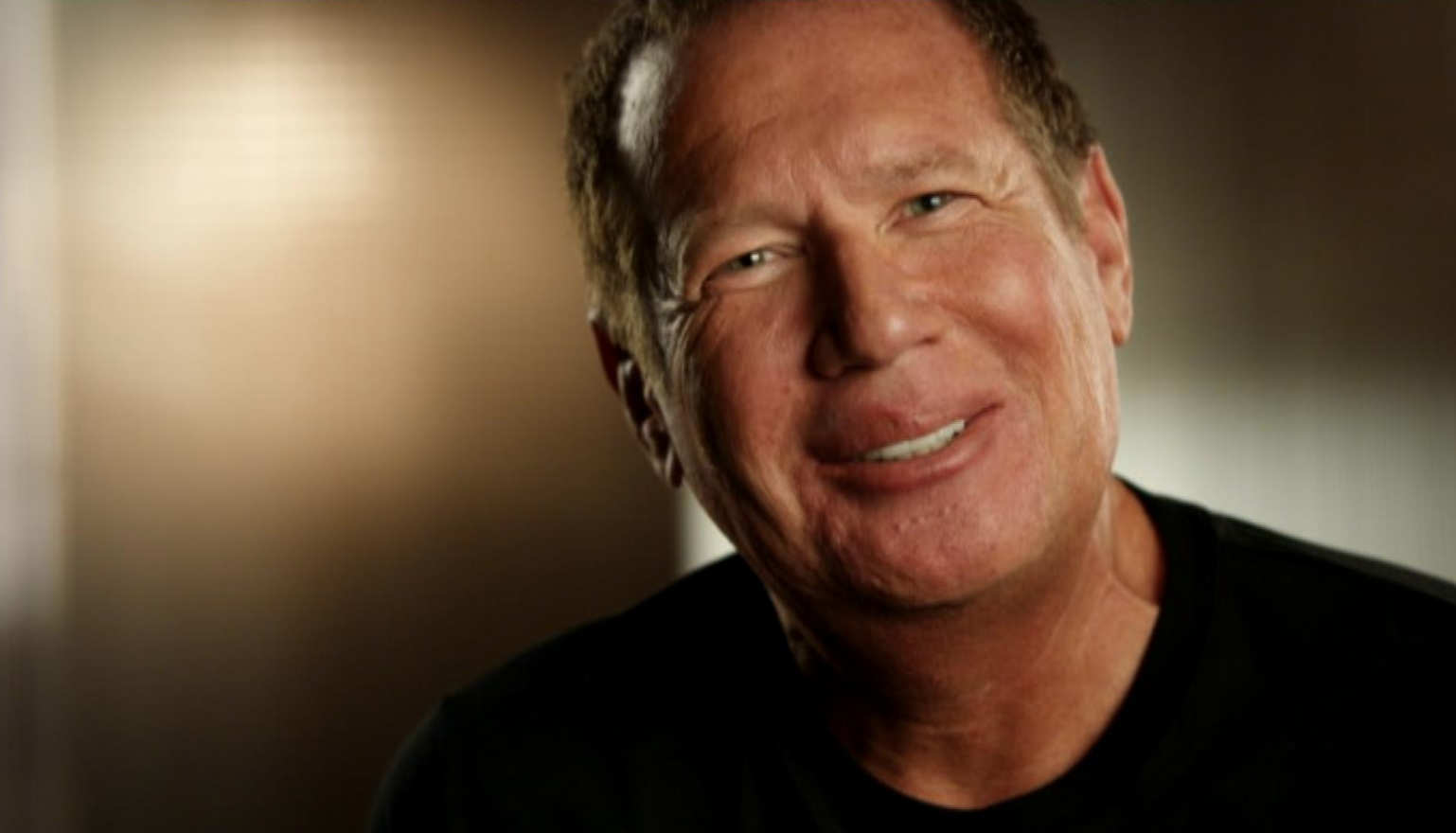
Doesn’t the fact that Judd Apatow‘s The Zen Diaries of Garry Shandling (HBO, 3.26 and 3.27) runs four and a half hours…shouldn’t that fact alone warrant special interest among Shandling fans, of which there are still many? I loved Garry’s angst, his depressive personality, his low self-esteem…I’m talking worship here. But I have to say I liked Shandling in his 40s and 50s better than the older version. His hair, for instance. Shandling had great wavy follicles in the ’90s but was down to a tennis-ball cut after Obama got elected. And his eyes got smaller — they were big and expressive in his 40s but slitty and beady in his 60s. And I don’t know about that Zen thing he got into, and I’m saying this as a former Bhagavad Gita guy. Garry once wrote “you don’t need to be anything, you can just be.” The only people who say or think that are filthy rich or completely devoted to abstinence and poverty, and Shandling wasn’t among the latter. The poor guy died of a heart attack on 3.24.16, at age 66. If there’s anything beyond death, Garry is surely part of it now, dispersed into a trillion particles of consciousness or possibly transformed into a perfect smile.
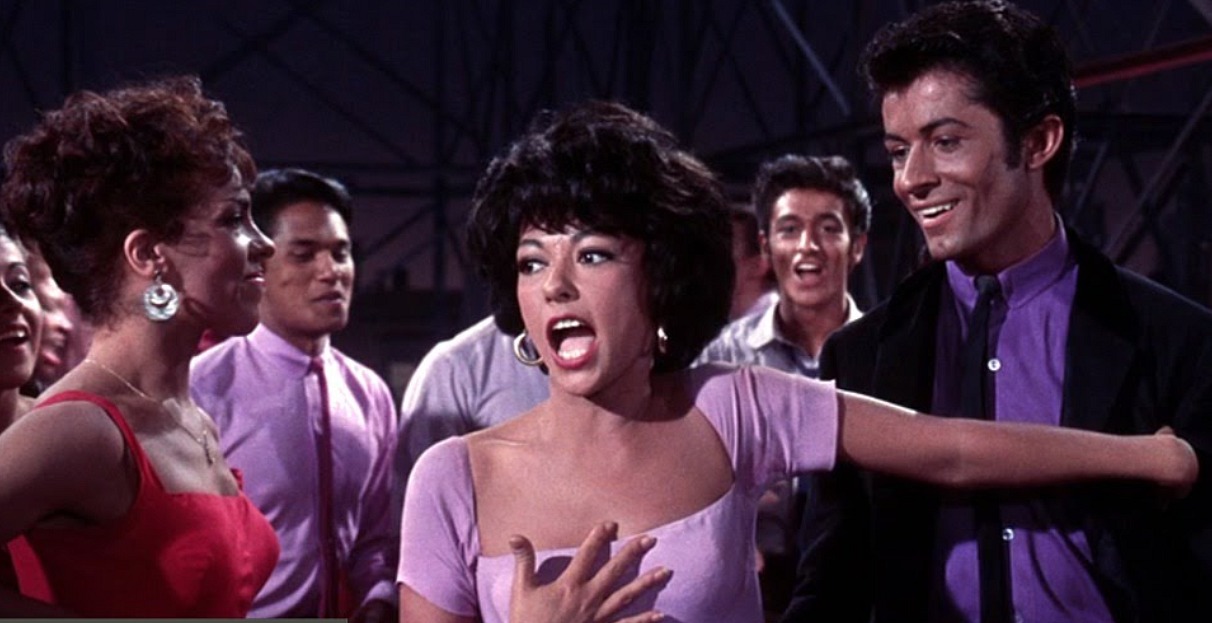
Rita Moreno‘s Anita in West Side Story was a great, full-spirited spitfire performance, but let’s be honest — she won her Best Supporting Actress Oscar on the coattails of a massive West Side Story sweep. The 1961 musical won 10 Academy Awards that night, but even its biggest fans were surprised when George Chakiris‘s Bernardo defeated George C. Scott‘s rattlesnake gambler in The Hustler. Nonetheless Moreno was the first Puerto Rican…hell, Latina actress to win such a prize, and that was no small historic thing. But Moreno (who was still involved in her eight-year-long affair with Marlon Brando at the time) was so blown away that she didn’t say anything at the podium — no thanks to director-producer Robert Wise, no shout-out to fellow cast members or other Latina actresses, nothing.
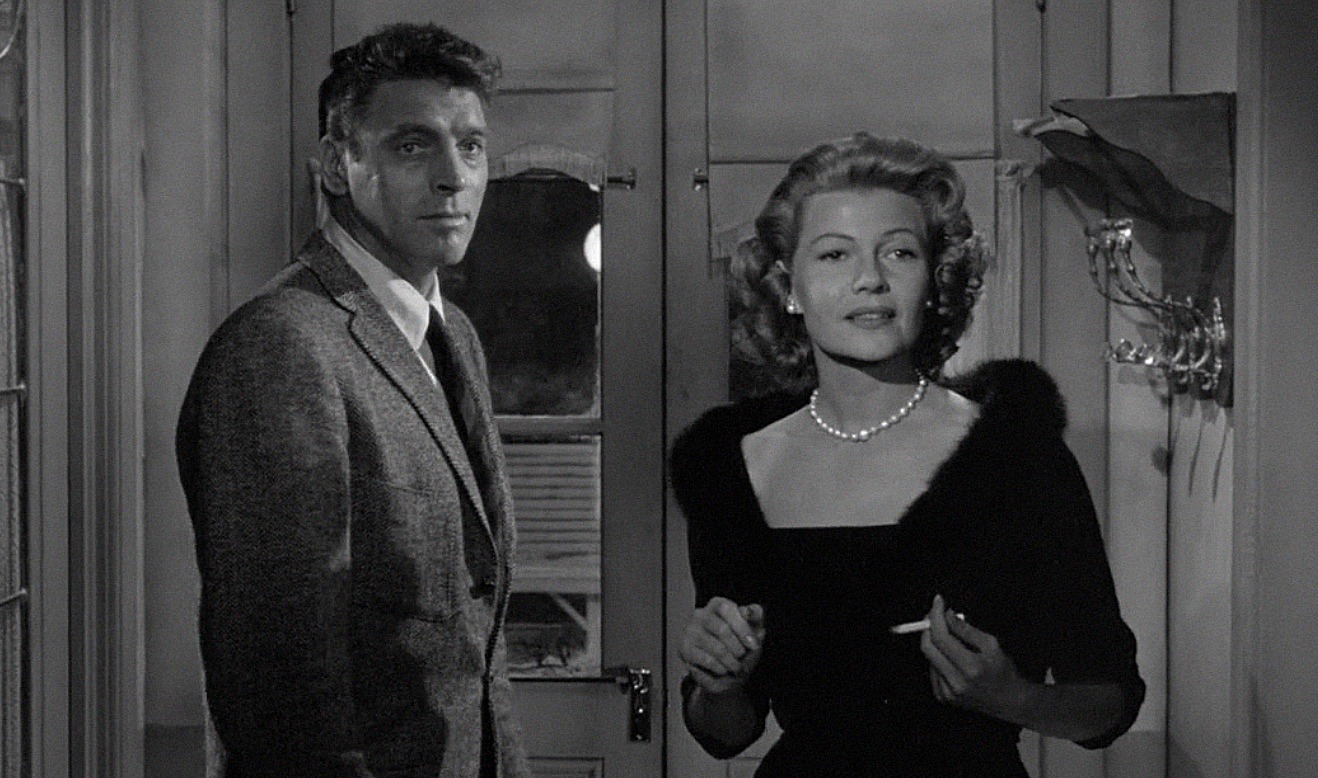
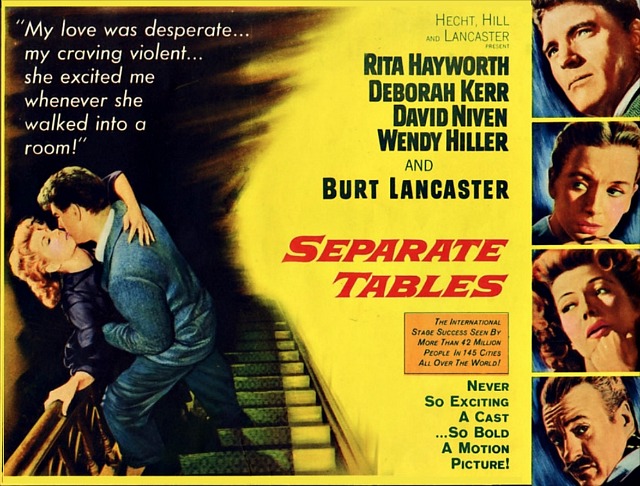
Very few remember and even fewer have seen Separate Tables, the 1958 parlor drama with Burt Lancaster, Rita Hayworth, David Niven, Deborah Kerr and Wendy Hiller. And yet this constipated, dialogue-driven film, directed by Delbert Mann (Marty) and based on a pair of one-act plays by Terence Rattigan, was nominated for seven Oscars (Best Picture, Best Actress (Kerr), Best Adapted Screenplay, Best Cinematography (Black and White), and Best Dramatic or Comedy Score) and won two (Niven for Best Actor, Hiller for Best Supporting Actress).
Separate Tables is exactly the kind of solemn, stiff-necked talkfest that was often regarded as Oscar bait in the mid-to-late ’50s. Decorum and public appearances undermined by dark secrets and notions of perverse sexuality, etc. Shudder! Erections and dampenings that dare not speak their name, or words to that effect.
Talk about “a long time ago in a galaxy far, far away,” etc. Two years before Separate Tables appeared a creepy, low-budget sci-fi thriller called Invasion of the Body Snatchers opened and was promptly ignored by the highbrows. Four years earlier (in ’54) The Creature From The Black Lagoon was greeted with similar indifference if not disdain. Today a pair of direct descendants, Get Out and The Shape of Water, are Best Picture nominees, and there’s a better-than-even (though admittedly dwindling) chance that Shape will take the Big Prize.
Yesterday I received a hilarious, spot-on essay by the great David Thomson — about Separate Tables initially, but also about how the appeal and some of the “Academy inflation” of this 60-year-old film are echoed in I, Tonya and Three Billboards outside Ebbing, Missouri.
Consider this excerpt especially: “About fifteen minutes into I Tonya, on being bowled over by the vicious hangdog look of Allison Janney’s mother, the toxic lines slipping like smoke from the fag on her lips, I was ready to give her the supporting actress Oscar on the spot. Twenty minutes later I was bored with her because she was still doing the same bitter schtick. She’s an act, a show-stopper, the sort of hag who would get a round of applause as she appears on-stage, severing any prospect of dramatic truth.
“It’s not that Janney is less than skilled, or hasn’t paid her dues for decades. She’s a clever old pro so give her the Oscar. But let’s abandon the myth that she is presenting a real ‘deplorable’ instead of saying, ‘Aren’t deplorables a riot?'”
Here’s the whole brilliant piece (the first 17 paragraphs about Separate Tables, and the rest about Janney and Margot Robbie in I, Tonya and McDormand in Three Billboards):
“I found myself watching Separate Tables on Turner Classic Movies. There it was, offered with the seemingly unassailable claim that it had been nominated for Best Picture in 1958 along with six other nominations. It even had two wins, and I remembered that one of them was for David Niven playing a bogus Major. I had seen the film in 1958 and flinched at it even then (the bogus business was all fusspot), in a year that included Vertigo, Touch of Evil, Bonjour Tristesse, Man of the West, The Tarnished Angels and many others that still seem of value.
The Black Panther sartorial thing is not for guys like me, and by that I mean X-factor movie guys. To me a movie is a movie is a movie — it’s not any kind of statement about representation or cultural celebration or any of that. It’s all about structure and believability and planting the seeds and delivering the right kind of third-act payoff, and that’s all.
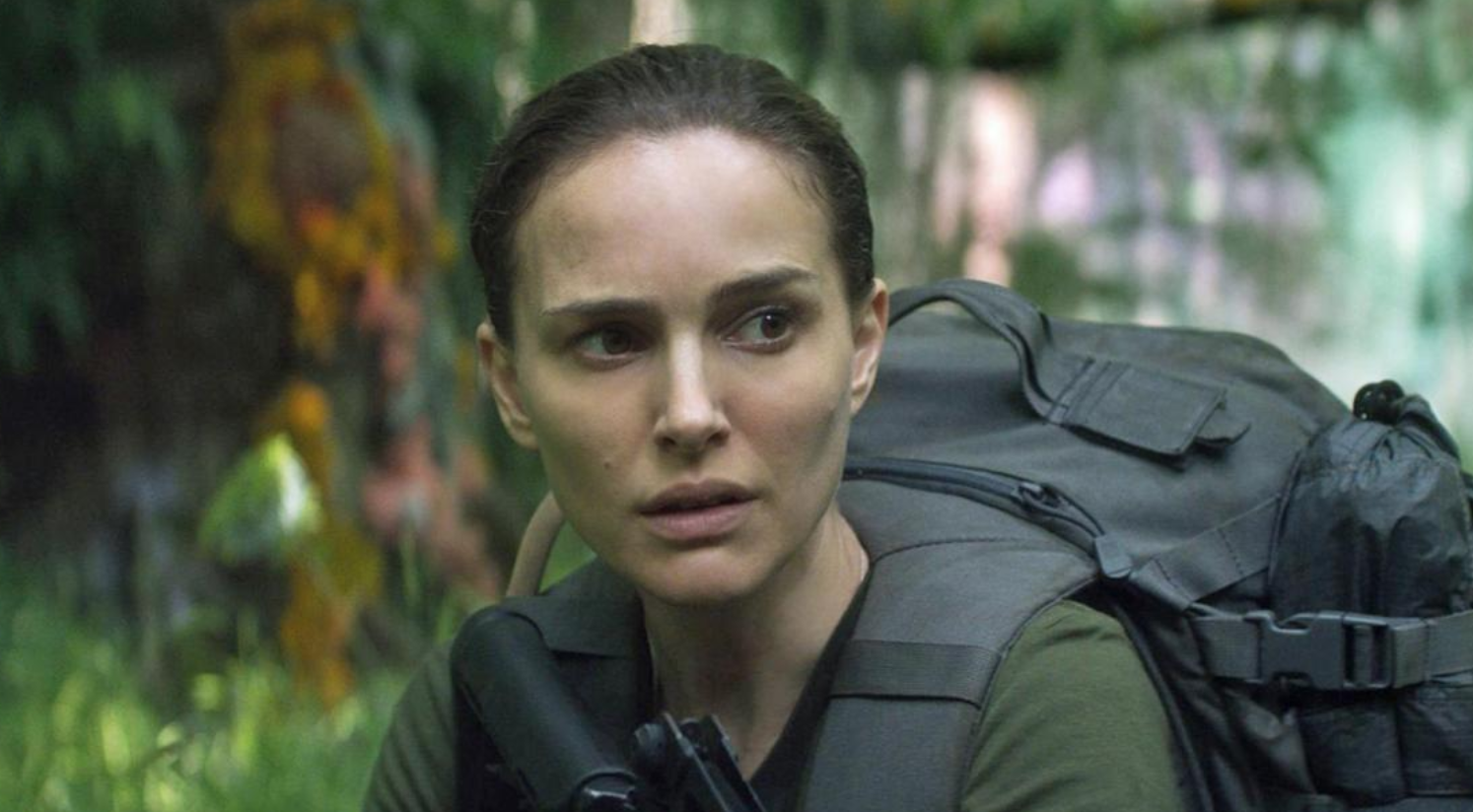
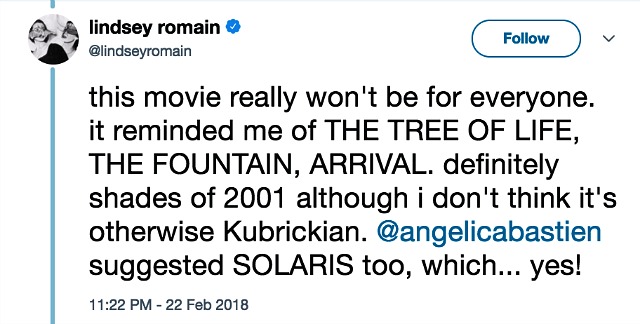
Alex Garland‘s Annihilation (Paramount, 2.23) is “trippy,” all right — a visually imaginative, microbe-level, deep-in-the-muck monster-alien flick. And it will bring you down, down, down. It will drop you into a stinking, crawling-insect swamp of your own regrets and fears and lethargies and nightmares, and will make you long for the glorious release of shooting yourself in the mouth.
It’s mainly a CG/FX show with creatures and Spielbergian space aliens and dynamic production design. It’s “inventive” in terms of the day-glo tree tumors and in a generally fungal, micro-bacterial, fiendish-mitosis sort of way, but it makes you feel like shit. It’s unrelentingly grim — basically a film about lambs to the slaughter.
Annihilation is based on a trilogy by Jeff Vandermeer that I will never read, but more precisely on the same-titled book that launches the tale.
It’s focused on Area X, a creepy, muddy lowland area somewhere in the Southern U.S. that’s been invaded and biologically inflamed by aliens. It’s surrounded by a kind of psychedelic wall made of some kind of blow-bubble liquid.
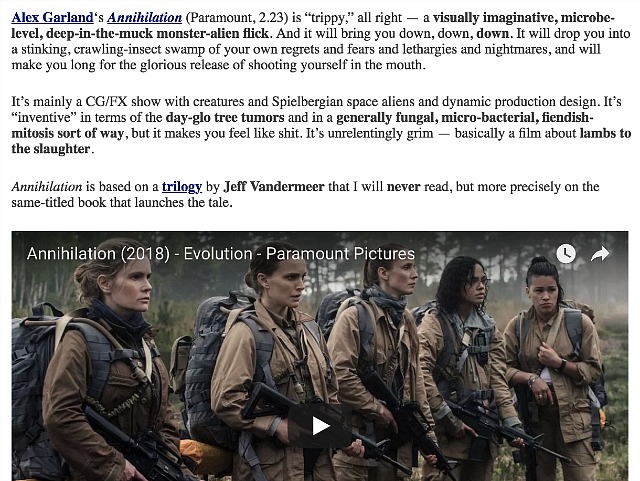
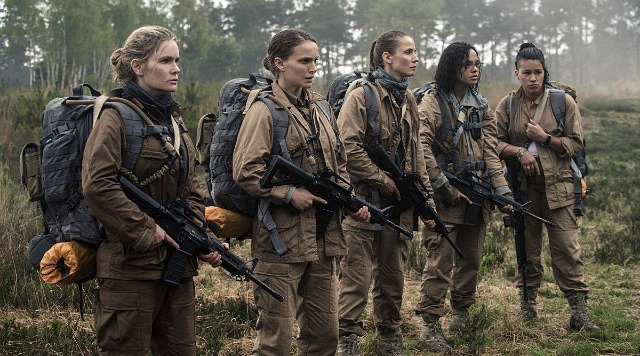
Five well-armed soldier women — a biologist played by Natalie Portman plus Jennifer Jason Leigh, Tessa Thompson, Gina Rodriguez and Tuva Novotny — enter this realm on foot, hoping to figure out the root of it all and at the same time save the life of Portman’s husband (Oscar Isaac) who has escaped Area X but is all fucked up…lethargic, no memory, spitting blood, ridden with disease.
In the book it’s a team of four, not five, that goes in, and the women represent the twelfth such expedition. The eleven previous expeditions have all ended in death or erasure for all the participants. Who would be stupid enough to join the twelfth expedition under these circumstances?
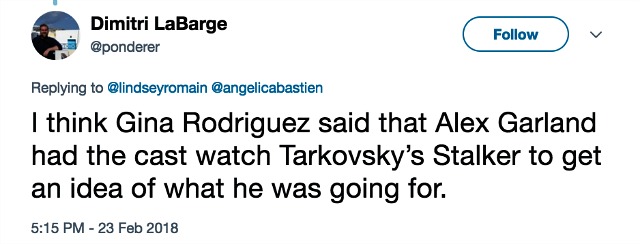
Annihilation is imaginative in ways that might feel vaguely new if you haven’t seen Andrei Tarkovsky‘s Stalker (’79) or, more to the point, read “Roadside Picnic,” the 1972 Russian horror novel by Arkady Strugatsky and Boris Strugatsky that inspired the Tarkovsky film. Or seen the two American-made sci-fi thrillers — John McTiernan‘s Predator and James Cameron‘s Aliens — that came in their wake.
So it’s not precisely “new”, but it’s definitely a grade-A, above-average haunted horror film for sci-fi dweebs. But Joe and Jane Popcorn? Not so much.
“This is imaginative, that’s imaginative,” I muttered to myself last night. “Not that I give that much of a shit, but it’s imaginative.”
90th Oscar Awards co-producer MIKE DELUCA sitting at his desk in a moderate-sized office. Nicely decorated, delicate delighting, a tropical plant. DeLuca’s phone buzzes. It’s his assistant, LORNA DOONE.
DELUCA: Hey.
LORNA: Mike? Warren Beatty on two.
DELUCA: (beat) Really?
LORZNA: On two.
DeLuca hits flashing button.
DELUCA: Warren!
BEATTY: (To someone else) Hah, okay. (into phone) Mike!
DELICA: So what up?
BEATTY: Look, Mike, I want another shot.
DELUCA: (grimacing) Aww, come on, Warren.
BEATTY: I don’t mean presenting the Best Picture Oscar again. I’d just like to present another award for dignity’s sake. Actually, Faye and I together.
DELUCA: (uncomfortable) I…I don’t know.
BEATTY: We’d just like to come on, present some minor award, clean and neat, a couple of bon mots and exit stage left.
DELUCA: You feel bad about last year. I hear you.
BEATTY: I have almost 60 years in this business, Mike. Faye has over 55. Millennials and GenZs don’t know us, but the over 40s do. Okay, the over-50s. We have some standing in this industry. We just don’t want to go out like a couple of clowns.
DELUCA: I don’t think you flubbed it.
BEATTY: Remember what Kimmel said?
DELUCA: It wasn’t your fault, dude.
BEATTY: Kimmel said, “Warren, what did you dooo?” We just wanna come out and keep it simple and dignified. You and Suzanne can check the copy.
LORNA (obviously listening in) I think it’ll take strain off the show, Mike.
DELUCA: (caving) All right. But no hemming and hawing at the lecturn, Warren!
BEATTY: No hemming and hawing.
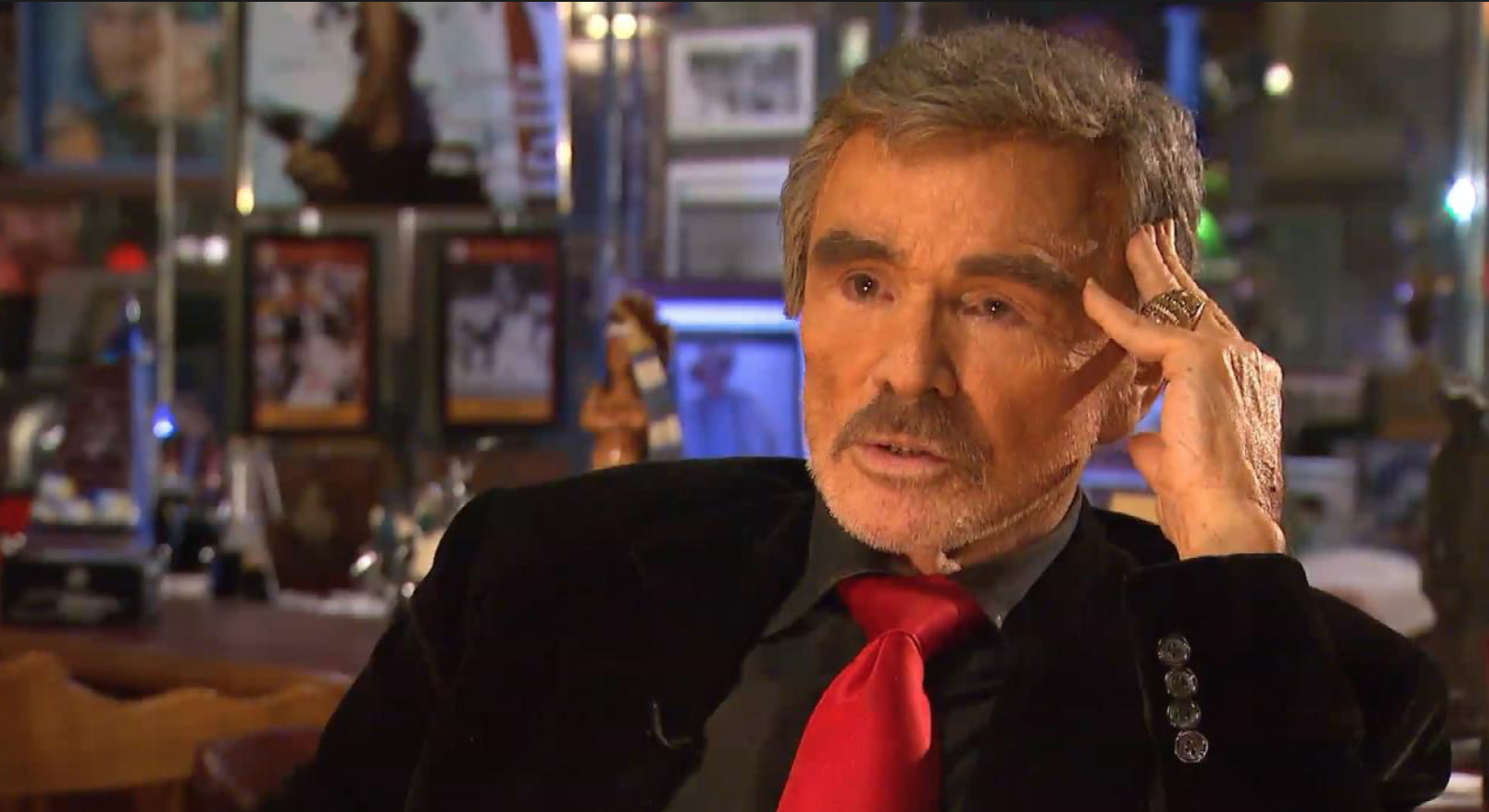
“Nobody played the role of movie star in the 1970s with more confidence than Burt Reynolds. Even as his choice of vehicles grew so indiscriminate as to gradually erode his box office appeal, he still radiated swagger, that ever-present smirk suggesting he — and we — knew it was all a put-on anyway.
“Perhaps the problem was that it was just too good an act: Burt Reynolds gave such excellent ‘Burt Reynolds’ on talk shows, in interviews and other forums that the public saw little point in continuing to fork out cash money to see him do the same thing in yet another mediocre, derivative big-screen comedy or thriller. He didn’t take enough risks, and the few times he did were misfires or weren’t appreciated enough. Few stars achieved such massive popularity while retaining a sense of unrealized potential.
“It’s a bittersweet legacy that writer-director Adam Rifkin aims to pay affectionate tribute to in The Last Movie Star (A24, 3.30) which has been retitled by U.S. distributor A24 after playing initial festival dates as Dog Years.
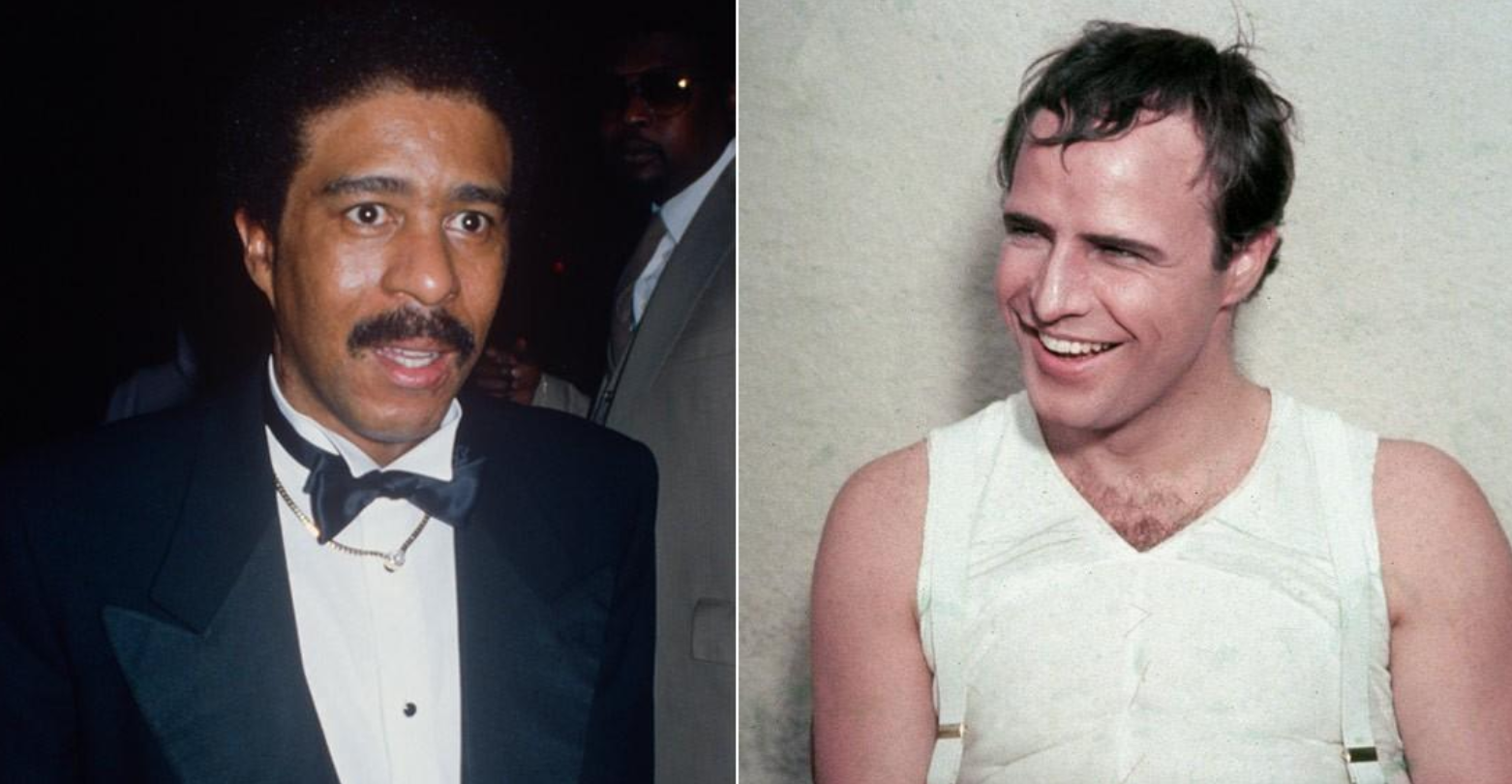
I always knew Marlon Brando indulged in same-sex intrigues from time to time (eons ago the late Dennis Wilson told me that Brando once suggested a little hotel-room action) but for some reason I can’t handle the idea of Brando doing Richard Pryor. It just hasn’t gone down well. I think it’s more about Pryor as a lust object than anything else. Or Pryor undressed, to be honest. It just doesn’t feel right. So I’ve been watching a series of Brando YouTube clips to try and, no offense, flush out certain images.
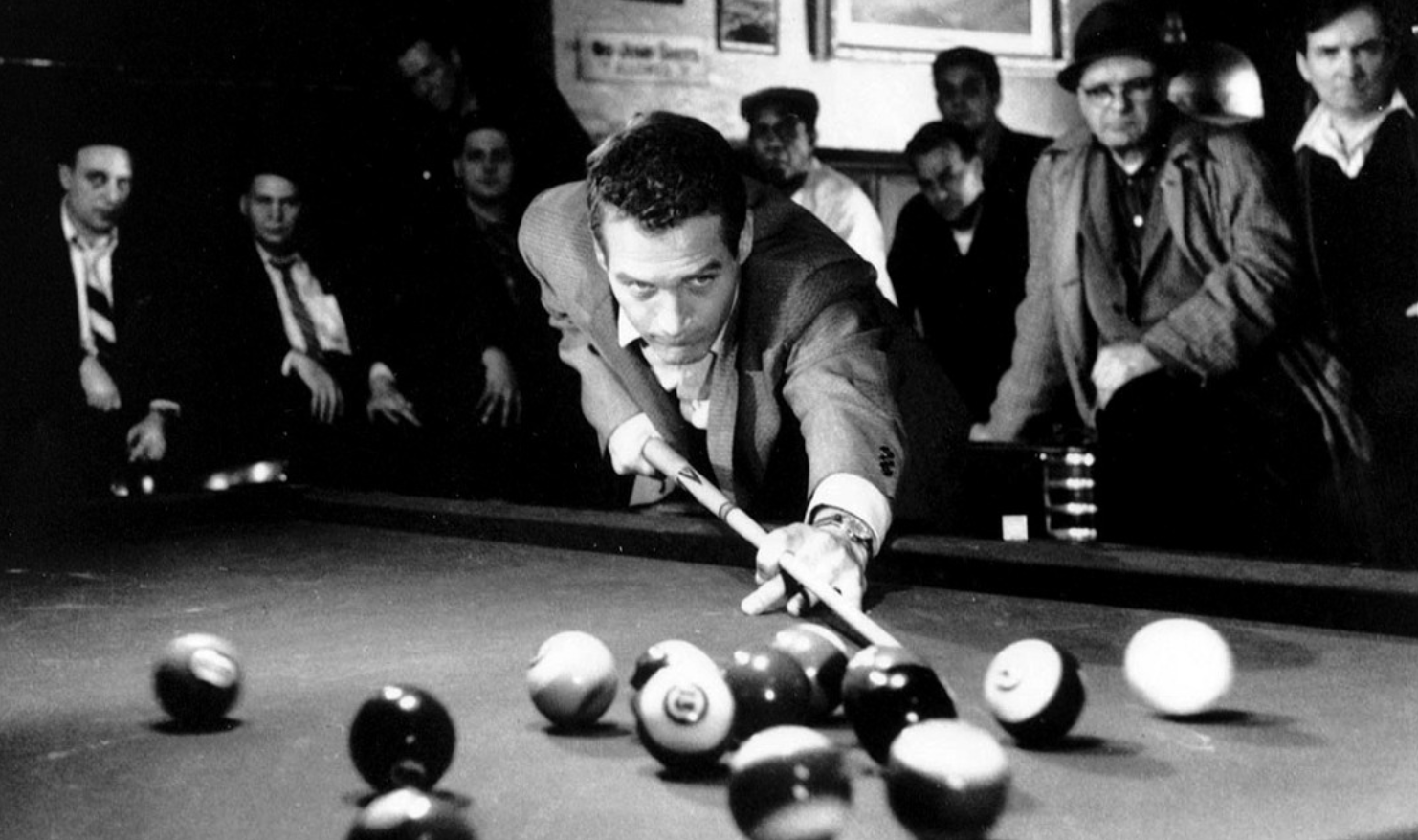
When I first learned to shoot pool I used the standard left-index-finger-over-the-cue-stick method. 90% or 95% of players do the same. Obviously because the left-finger wraparound keeps the stick steadier and the aim more precise. But somewhere along the way I decided to become a flathand player, mainly because I thought it looked cooler. I haven’t played with any regularity since my early 20s, but since I became a flathand guy my playing has been somewhere between mediocre and embarassing. I was a better pool player when I was 18 (I used to play with my friends all the time) than I am today. When I think of what I could’ve become…
Same thing with drawing. I used to be a half-decent sketch artist from age 8 or 9 until I was 15 or 16, but then I stopped developing. Today I’m no better at drawing faces or figures than I was in mid teens. If you’re half-decent at something when you’re fairly young (piano, dancing, acting, violin, gymnastics, painting), you have to stay with it in order to become better and better. Failing to do so is a shame. Hell, it’s a sin.
Never in Oscar history has a director-writer written an Oscar-winning original screenplay (as a solo writer) that has also won Best Picture…never.
Reworded: If the director-writer of a Best Picture contender is the sole author of a Best Original Screenplay nominee and that screenplay goes on to win an Oscar, the film will almost certainly not win Best Picture.
That, at least, is what 89 years of Oscar history tells us. Yes, the screenplay for Annie Hall won Best Original Screenplay, but that was co-authored by Woody Allen and Marshall Brickman. Spotlight won for Best Original Screenplay also, but again, it was co-authored. Any exceptions?
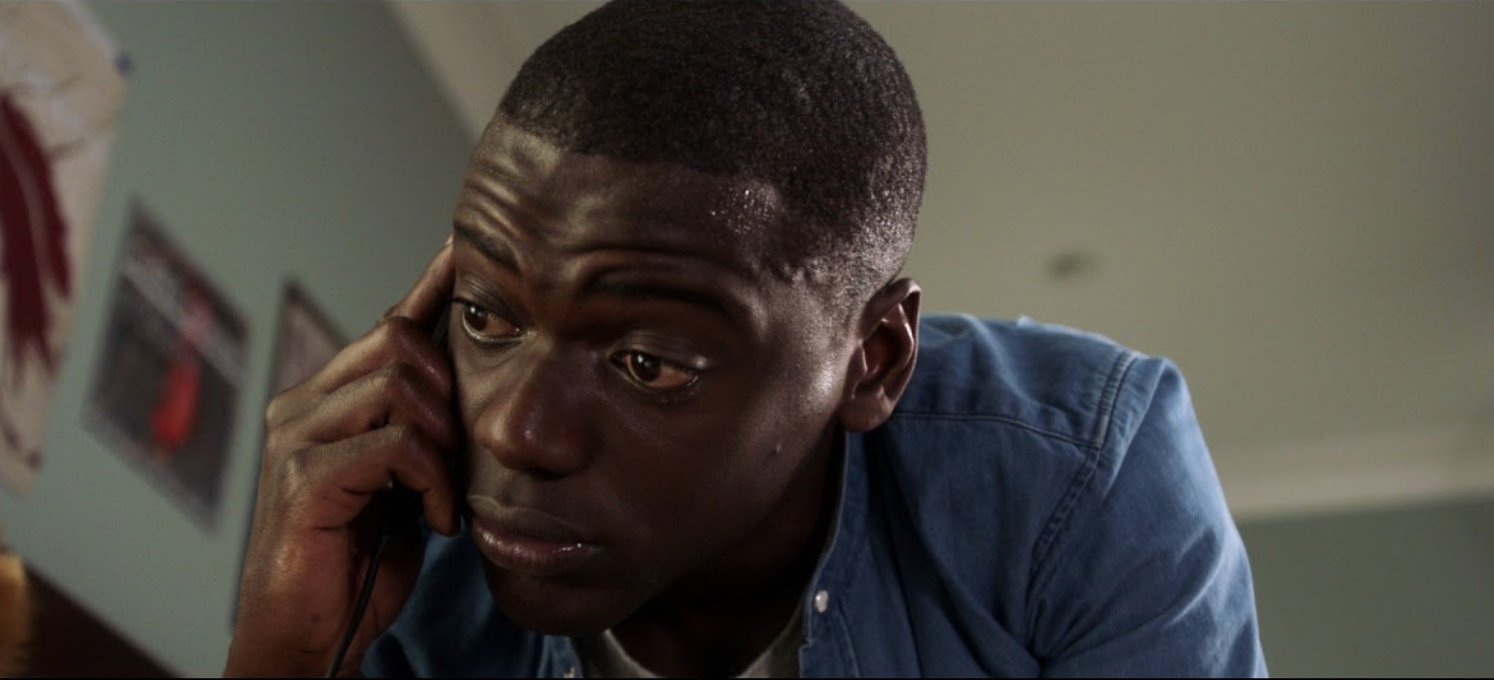
The solo-authored nominees for Best Original Screenplay are Greta Gerwig‘s Lady Bird, Jordan Peele‘s Get Out and Martin McDonagh‘s Three Billboards Outside Ebbing, Missouri. (The Big Sick and The Shape of Water were co-authored.) So if Martin McDonagh wins the Oscar, you can pretty much count on Three Billboards not winning for Best Picture.
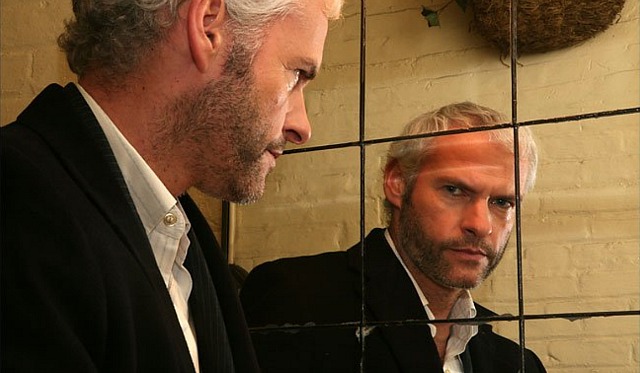
Three Billboards director-writer Martin McDonagh.
I’m not sure if Three Billboards or Get Out will win Best Original Screenplay. Is anyone? An Oscar-handicapping friend believes that McDonagh has it in the bag, and that Get Out, which he regards as little more than a racially-themed knockoff of an Ira Levin Stepford Wives deal, will go home empty-handed. If this happens, the “woke” crowd will be staggering around in a state of shock.
We all know that The Shape of Water will win the Best Picture Oscar, and that Guillermo del Toro will take the prize for Best Director. Fine with me, go with God, everyone loves Guillermo, etc.
But if you apply the Howard Hawks rule of film excellence (three great scenes and no bad ones), there’s no getting around the fact that 70% of Michael Shannon‘s scenes are “bad ones” — darkly obsessive, fiendishly sadistic, unfocused. My favorite scene, which I’ll gladly call a great one, is the black-and-white, 1930s-style dance number between Sally Hawkins and gill-man. And the underwater lovemaking scene with Sally in a red dress — another goodie. But what’s the third?
Both Lady Bird and Get Out have no below-the-line nominations. For a Best Pic winner with no BTL nominations, you’d have to go back 37 years to a Best Picture winner, Ordinary People, with that handicap. On top of which neither Lady Bird nor Get Out are up for Best Film Editing and again, you need to go back 38 years for that winner.