Humor Is Always About Pain

Talk to any comedian — there’s no such thing as “a joke.” There’s only slap-in-the-face reality and the clever spinning of some painful, humiliating experience by way of wit, audacity and imagination. Jokes are always about ghastly things of one kind or another, and in this light there’s no such thing as going “too far,” even in a political satirical sense. I feel that Kathy Griffin‘s severed Trump head appropriately addressed one of the most malevolent gargoyles in American governmental history in tit-for-tat terms. It expressed what I feel about that bloated orange pig, and it provided a satisfying emotional fantasy. But why is dead Trump bleeding from the scalp?

Beefy Bods, Yokel Accents

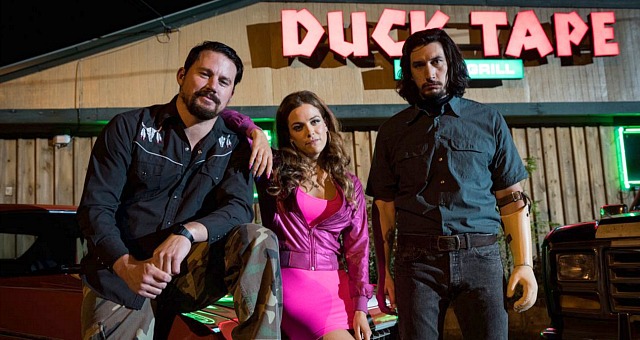
What I’m hearing are blue-state actors doing exaggerated yeehaw accents, perhaps as some kind of underlying roundabout commentary about the sickening, world-threatening stupidity of Trump voters. Or maybe not. I’m also wondering if director Steven Soderbergh told the principal male cast members (Channing Tatum, Adam Driver, Daniel Craig) to bulk up with Trump voter food. These guys look fairly beefy, and Tatum looks fucking fat. I only know one thing, which is that all Trump voters must hang. Okay, not “hang” but the more pain and suffering these assholes have to cope with, the better. 

Wiki boilerplate: “Trying to reverse a family curse, the Logan siblings — Jimmy (Tatum), Mellie (Riley Keough) and Clyde (Driver) — try to execute an elaborate robbery during the legendary Coca-Cola 600 race at Charlotte Motor Speedway in Concord, North Carolina during Memorial Day weekend.”

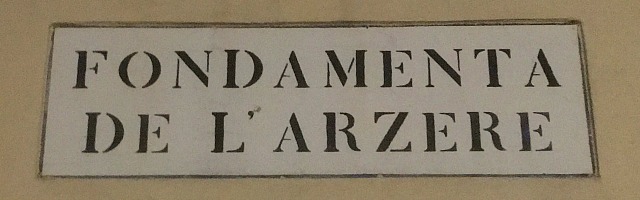
All Quiet on Fondamente de l’Arzere

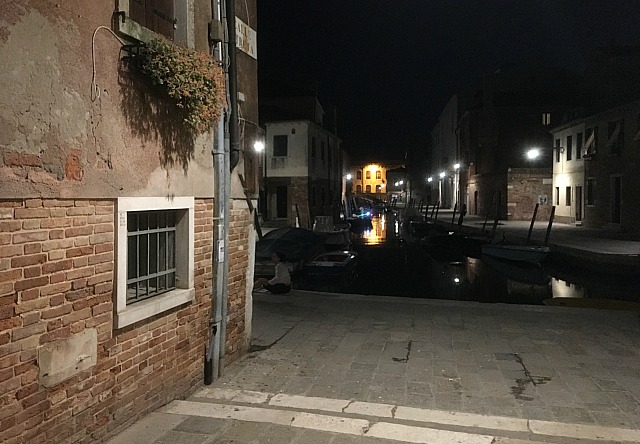
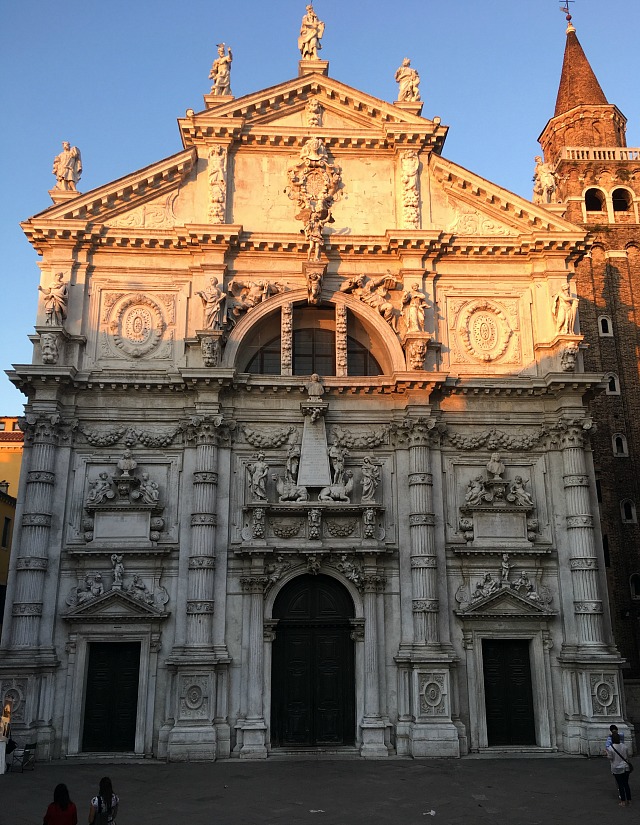
There’s a soul-soothing atmosphere of quiet throughout the Dorsoduro and San Croce districts after dark. No scooters, no sirens, no thumping bass tones emanating from clubs, no half-bombed 20something women shrieking with laughter…just the barely-there sound of bay water lapping at pier pilings. There are many places, I’m sure, that are just as quiet when the sun goes down. But there are very few where you can’t hear hints of the far-away hum of civilization, where traces of the usual nighttime rumble aren’t at least faintly audible. I can sit at home in West Hollywood and feel cool and collected, but I’ll always hear the occasional helicopter or motorcycle whine or subwoofer speakers thumping in someone’s car or louche party animals roaming nearby. Venice is dead-mouse quiet, especially after 10 pm or thereabouts. You can hear a pin drop.


Last night we tried some of the home-made pasta sold by this guy, and there’s a huge difference between it and the usual stuff you buy at Pavillions.

Read more

No Man Buns

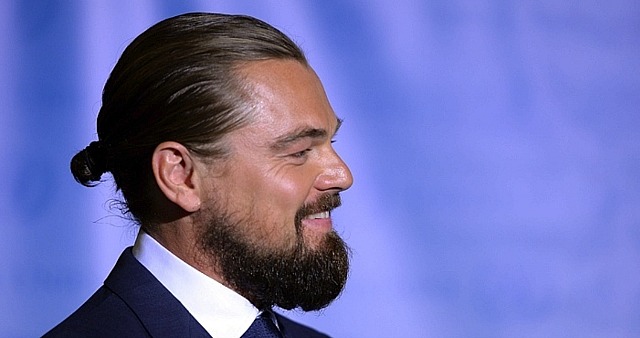
Why grow your hair long if you’re just going to pull it back with a rubber band or velvet strap of some kind? If your hair is long, you need to rock that shit. Because man-buns are like…why? It’s like you were late for some black-tie thing and didn’t have time to style your Legends of the Fall hair or at least comb it out, and so you just tied it back and ran out of the door. In the spirit of “shit or get off the pot”, you need to either own your long hair or be a shorter-length guy. I’m talking to you, Emmanuel Lubezski. Because (a) there isn’t much difference between a man-bun, slicked-back moderate length hair and an Aaron Paul tennis-ball thing, and (b) man buns do nothing for the wearer. They make you look “hip” on a certain level, but also louche and indecisive and a bit scraggly. Joaquin Phoenix was wearing a man bun at the Cannes Film Festival awards last night. This plus wearing Converse lace-ups to the ceremony (what potential award-winner comes to Cannes without a pair of uptown shoes?) plus the pot belly thing….honestly, what a douche.


Read more

Political Agendas

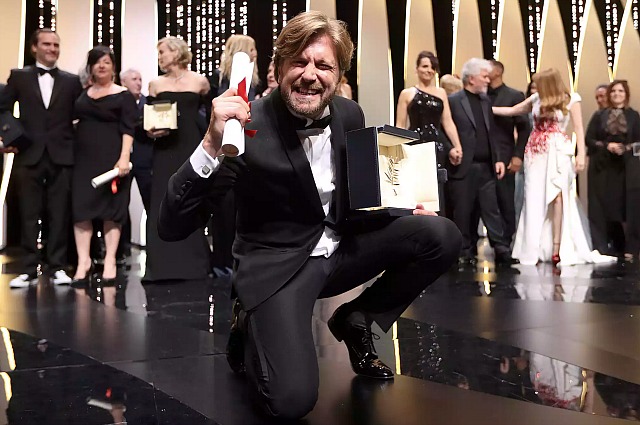
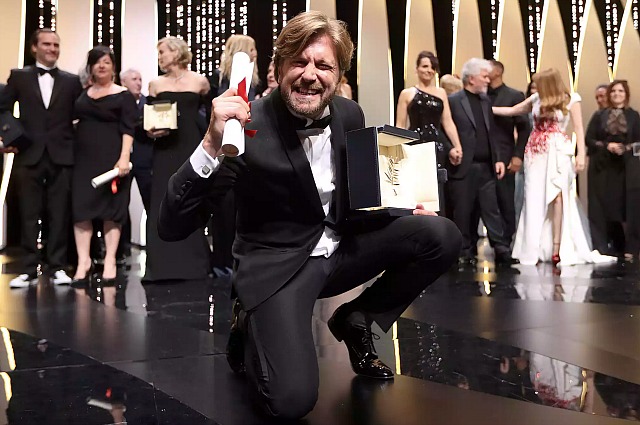
Last night’s Palme d’Or win by Ruben Ostlund’s The Square, a dry, sharply-ordered satire of political correctness in Sweden (which I called “a serving of deft, just-right comic absurdity”), was fully deserved. I would have voted for Andrey Zvagintsev‘s Loveless, a brilliant missing-child melodrama that won high praise from nearly every Cannes-visiting critic, but it only managed a third place showing — i.e., the Jury Prize. This isn’t a tragedy (it was celebrated), but it wasn’t appropriate either. I blame the usual political agendas.

The Square director Ruben Ostlund at the conclusion of last night’s Cannes Film Festival awards ceremony.

The 2014 Cannes jury shafted Zvyaginstev’s Leviathan with a piddly screenwriting award, and now another Cannes jury has delivered a similar message. Loveless should have at least won the Grand Prix, but that award went to Robin Campillo‘s BPM (Beats Per Minute), a impassioned, seriously didactic period film (i.e., early ’90s) about Parisian ACT UP members battling bureaucratic indifference and/or foot-dragging in the battle against AIDS.

BPM is a commendable (i.e., thumbs up but less-than-great) film, but the Grand Prix win, trust me, was largely about jury president Pedro Almodovar pushing a film with a progressive gay agenda.  Pedro wanted this and the jurors went along.

I’m also blaming the inappropriate Jury Prize win for the Zvyaginstev on the feelies — i.e., jury members who wanted to honor films that supplied up vibes and socially constructive messaging, which the gloomy Zvyagintsev film couldn’t quite accommodate. I don’t know for a stone fact that Will Smith was a prominent voice among the feelies, but how could I not at least suspect this? Look at the movies he’s chosen to do over the last 20-plus years…good God.

The impetus for handing the Best Director prize to The Beguiled‘s Sofia Coppola was, I’m guessing, almost entirely a progressive-female-agenda thing. (I don’t know that jury member Jessica Chastain was pushing for this, but it would have been odd if she’d been neutral…c’mon.) The Coppola trophy was almost certainly inspired by the fact that the last time a Cannes jury gave their Best Director trophy to a woman was in 1961, when Soviet filmmaker Yuliya Solntseva won for The Chronicle of Flaming Years.

I’m saying all this because The Beguiled is far from brilliant or audacious. It’s just a slightly better-than-decent remake of Don Siegel‘s 1971 original — nothing more than that.

Read more

Sweaty, Exhausted, Proud

We were loaded down with bags, and decided on the spur that shelling out 40 euros for a water-taxi to our rental (2290 Fondamente de L’Arzere) might not be a bad idea. Our landlady had told us, I mean, that it would cost 40 euros, but she was wrong. The thugs running the water taxi service told us (a) the price is 60 euros and (b) they would only drop us off at the San Basilio vaporetto stop. It was all I could do to restrain myself from taking a poke. We refused and humped it over on foot. Not easy when you’re lugging all that weight, but I felt good for not submitting. Hundreds of baaahing tourists go along with this extortion every day but not people of character and backbone.


Read more

As Long As His Sins Allowed

The first Allman Brothers album hit on 11.4.69, and right away you had to give it up for vocalist and keyboard player Gregg Allman, who at age 22 had a beautiful bluesy, achey, gin-guzzly, gravel-gut voice that made him sound like some 48 year-old, self-abusing guy who’d lived through more than his share of hard times. That voice carried him for the rest of Allman’s life, and peace be to his soul for that. For that voice, along with brother Duane’s inspired guitar playing and the churning, pumping sound of the band itself, gave birth to Southern rock. As it must to all men death came yesterday to Greg Allman. He might have lived another 15 or 20 years had it not been for years and years of alcohol abuse, which of course led to liver cancer. All party animals pay the price in the end. But if the final measure is “quality, not quantity,” Gregg Allman lived a rich, abundant, at times ecstatic life. Cheers, respect, condolences, salute.

Read more

Cuaron Charms, But Declines To Talk About Roma

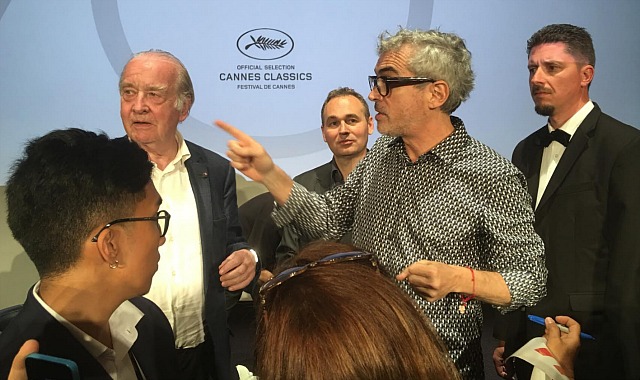
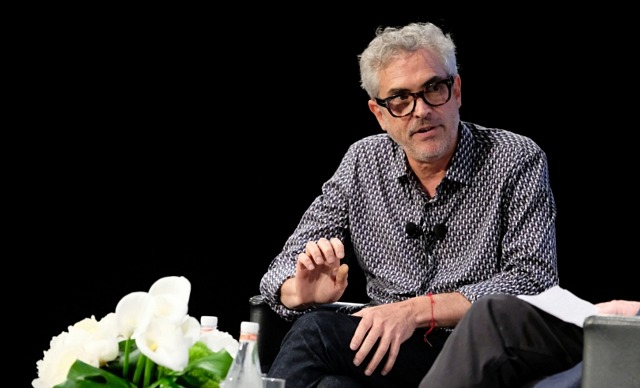
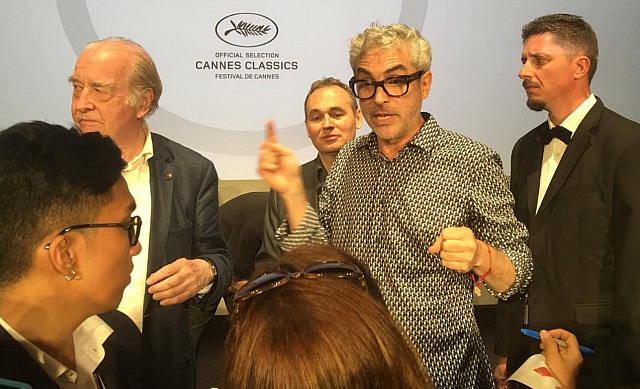
Late this afternoon I attended an Alfonso Cuaron Masterclass in the Salle Bunuel, which was basically the renowned director of Y Tu Mama Tambien, Children of Men and Gravity sitting for an 85-minute interview with French film critic and author Michel Ciment. [A full recording is at the bottom of this page.] They discussed Cuaron’s career — chapter by chapter, film by film — and showed clips. Fine.

And yet Cuaron’s upcoming Spanish-language Roma, which he shot last fall and is basically about a year in the life of a middle-class, Mexico City family in the early ’70s, wasn’t even mentioned. Which disappointed me. I attended this interview not to hear Alfonso talk about Y Tu Mama Tambien or that fucking Harry Potter film or Sandra Bullock or the blood splatter on the lens in Children of Men for the 47th time, but to hear Cuaron speak about Roma at least a little bit…c’mon! Would it have killed him to discuss what it is and what he’s going for, to allude to the story a bit and maybe discuss the tone, themes and whatnot?

I asked Alfonso if there’s any chance of Roma coming out by the end of ’17, and he said “noahh…I didn’t make it.” Maybe it’ll show up at next year’s Cannes Film Festival (an especially good place to launch any quality-propelled, non-English-speaking film), he allowed. Or maybe a year from next fall….who knows? But what a drag that he didn’t even allude to it.

Read more

Connery vs. Moore Reality Check

Yesterday N.Y. Times critic A.O. Scott posted a tribute piece about the recently departed Roger Moore, titled “Roger Moore Was the Best Bond Because He Was the Gen-X Bond.” The gist was that “the older 007 installments” — the Sean Connery films, he means — “could never match the sublime, ridiculous thrill of seeing The Spy Who Loved Me, Moonraker, For Your Eyes Only and Octopussy on the big screen.

“Those movies were heavenly trash, with plots you didn’t really need to follow and sexual innuendo that struck my young eyes and ears as deliciously risque.”

Moore “exerted himself heroically,” Scott recalls, “grappling with villains atop a moving train, chasing them down ski slopes or into outer space, his unflappable suavity accompanied by an occasional smirk or upward twitch of the eyebrow. He knew exactly how silly these endeavors were, but he was committed to them all the same. He was an ironist and a professional, and as such a pretty good role model for post-’60s preadolescents.”

A nostalgic Gen-X take on the 007 films is fine, but let’s rub the fog off our glasses for a second, okay? Man up and rub that shit off.

There are only two Bond films that ever mattered and ever will matter, and these would be Dr. No (’62) and From Russia With Love (’63). These were the only Bonds that played the game with at least a smidgen of conviction. Yes, they smirked and nudged but they also took the solitary macho-stud assassin thing half-seriously, and they explicitly didn’t embrace the exploitational jizz-whizz approach (i.e., Bond films are about fantasy and made for the Disneyland crowd…why pretend otherwise?”) and were made with relatively lean and mean budgets. These two are the holy grail of the Bond franchise, and still the source of its power and mystique.

The great Sean Connery starred in these two but also in four other Bonds of gradually declining quality — Goldfinger (’64), Thunderball (’65), You Only Live Twice (’67) and Diamonds are Forever (’71). Goldfinger was diverting at times but the other three have become borderline unwatchable. I tried to make it through Diamonds Are Forever a year ago, and I just couldn’t take it. They’re mostly full of shit, these three films. Yes, even Thunderball. They don’t care about anything except flash, self-regard, cheap tricks and wank-offs.

Read more

Cultivated Smoothie

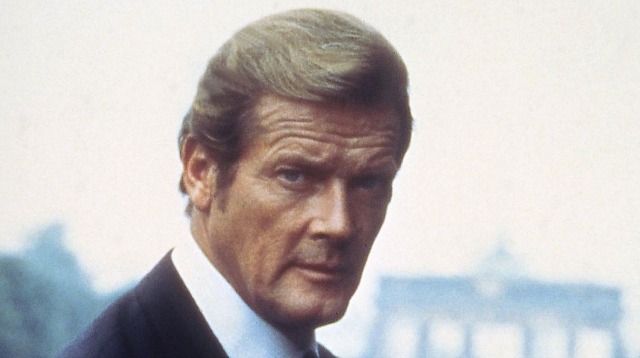
It must be gently said that the graceful and elegant and always gentlemanly Roger Moore, who died earlier today at age 89, never acted in a single grade-A film of serious quality. Not once. His commitment was to deftness and smoothitude, probably because he sensed early on that he wasn’t (and never would be) a Richard Burton, Tom Courtenay or Laurence Oliver-level actor. He knew who he was and what he wasn’t. That was part of his charm.

Moore’s career peaked with The Spy Who Loved Me (’77), which was arguably the most likable of his seven half-comedic Bond films (the others being Live and Let Die, The Man with the Golden Gun, Moonraker, For Your Eyes Only, Octopussy and A View to a Kill). It could be further argued that the Egyptian pyramids scene was the most gripping sequence in that ’77 film, and that Moore’s best on-screen partnership wasn’t with Tony Curtis in The Persuaders but with Richard Kiel‘s Jaws….we all remember that attitude, that humor.

Moore was almost too pretty when he was starting out in the ’50s. Dandified, insubstantial. He grew into peak handsomeness in the ’70s, when he was in his ’40s and early ’50s.

Moore once said that he “only had three expressions as Bond: right eyebrow raised, left eyebrow raised and eyebrows crossed when grabbed by Jaws.”

During a December 1980 visit to London I interviewed Moore during the filming of For Your Eyes Only, out at Pinewood Studios. He was never less than polite, gracious and considerate with me. He knew I was small fry, of course, but he treated me as if I was Roger Ebert or Richard Schickel. He made time for me between takes, and never did the old “I’ll see you later, I need time to prepare in my dressing room” routine that so many actors pull during set visits. It was if I was Moore’s personal guest, and he felt obliged to give me whatever I might want in terms of quotes and at least try to make me feel comforted on some level.

Read more

Leon’s Life

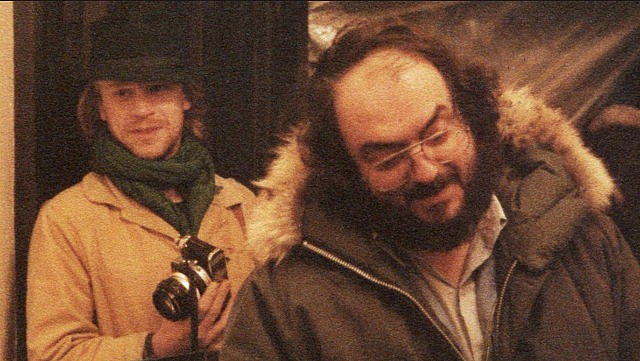
Tony Zierra‘s Filmworker, an 89-minute doc about the legendary Stanley Kubrick assistant and confidante Leon Vitali, is the juiciest and dishiest capturing of Stanley Kubrick‘s backstage life and career ever assembled. It’s about Vitali’s life, but by way of Kubrick’s.  (Or is it the other way around?)  21 or 22 years of deep focus, late hours, nose to the grindstone, passion, obsession, total commitment and almost no days off, ever.

Vitali began working for The Great Stanley K. in various capacities a year before The Shining began shooting, and then stayed with him to the end (i.e., 3.7.99). Researcher, gopher, go-between, driver, casting assistant, print cataloguer and (after Kubrick’s death) restoration consultant. The film is a completely satisfying record and assessment of that servitude, that era, that history, that ongoing task.


Leon Vitali — star of Filmworker, Stanley Kubrick confidante and right-hand-man for 21 or 22 years, former actor and controversial aspect-ratio debater — and Vera Vitali, the Stockholm-residing actress, at Cannes Grand hotel last weekend.

The photos and behind-the-scenes film clips alone are worth the price, I can tell you. Great stuff. On top of which I was reminded that Vitali played not one but two roles in Kubrick films — Lord Bullington in Barry Lyndon (’75) and “Red Cloak” in Eyes Wide Shut (’99).

Vitali said to himself early on that he’d like to work for Kubrick. What he didn’t expect was that once that work began Kubrick would want Vitali at all hours, all the time…focus and submission without end. If the early sentiment was “I’d give my right arm to work for Stanley Kubrick.” Kubrick’s reply would be “why are you lowballing me? I want both arms, both legs, your trunk, your lungs, your spleen, your ass and of course your head, which includes your brain.”

Yes, Virginia — Stanley Kubrick was no day at the beach. Then again what highly driven, genius-level artist is?

But he was also a sweetheart at times, to hear it from Vitali. It was just that Kubrick believed in trust and had no time for flakes, fractions or half-measures of any kind. His motto was that if you’re “in”, you should be in all the way. And Vitali was, obviously, and yet during those 21 years he worked on only three Kubrick films — The Shining, Full Metal Jacket and Eyes Wide Shut. But that was Kubrick, a brilliant control freak who wound up eating himself in a certain sense.

Read more

He Barks To Conquer

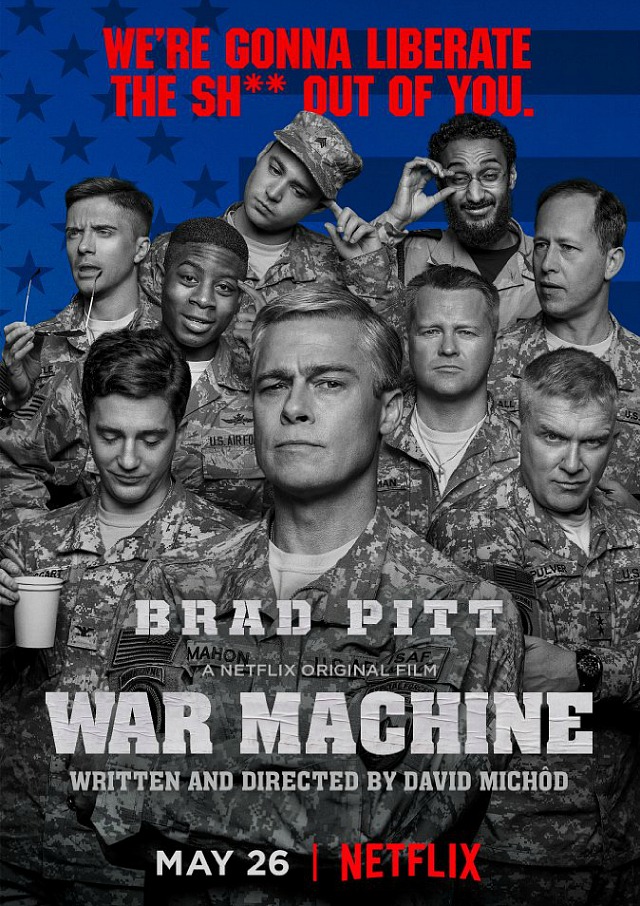
I caught David Michod and Brad Pitt‘s War Machine (Netflix, 5.26) a couple of weeks ago in Manhattan. I was expecting a problem given the effort I had to invest to attend an advance screening, but I was surprised to discover it’s not all that speed-bumpy. I found little to dislike and a lot to generally admire, and I was really taken by three or four scenes. It’s not a half-bad film.

As I noted on 5.10, Keith Stanfield gives a serious pop-through supporting performance. He’s the guy you’re talking about when it’s over.

For some Brad Pitt‘s oddly one-note, gruff-voiced performance — General Buck Turgidson transposed to Afghanistan — will feel like a stumbling block, but I accommodated myself. I understand those who say that Scott’s performance worked because Dr. Strangelove was a straight-faced absurdist farce while Pitt’s performance as General Glen McMahon (based on Gen. Stanley McChrystal, the former Afghanistan war commander) argues with the generally non-farcical, matter-of-fact tone of War Machine. Pitt was obviously trying to convey something about rigid thinking, about living in the prison of can-do military machismo.

The problem, as Washington Post critic Ann Hornaday has mentioned, is that the over-the-top mannerisms invite derision, and so whatever genuine respect or affection that McChrystal got from U.S. troops and colleagues is ignored or brushed aside.

War Machine is didactic, but it unfolds in a rational way. It’s smartly assembled. It’s not forced or turgid or hard to get. It’s a surface-y thing, yes, but it does have an element of sadness and regret in the third act. It’s a condemnation of myopic mentalities, and of American arrogance and bureaucratic cluelessness. It has a problem or two, okay, but is certainly no wipeout. Not in my eyes, at least.

Read more