Ehrenreich Won’t Cut Han Solo Mustard

It was my reaction to Alden Ehrenreich‘s performance in Alexandre MoorsThe Yellow Birds, which I saw at last January’s Sundance Film festival, that convinced me he won’t be a good Han Solo. He just doesn’t have that presence, that Harrison Ford cock-of-the-walk cool. There’s just something about Ehrenreich that feels guarded and clenched.


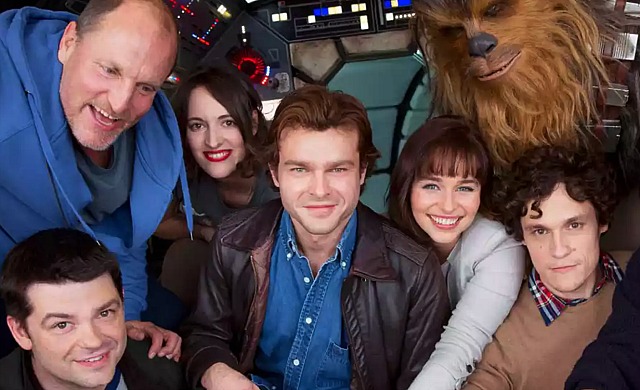
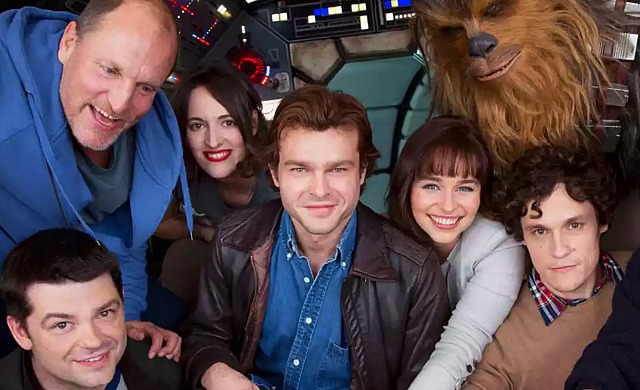
Alden Ehrenreich and Untitled Han Solo Film costars (including Woody Harrelson) in recently posted set photo.

Posted on 1.22.17: “Where In The Valley of Elah had the great Tommy Lee Jones and Charlize Theron butting heads while looking into the stateside death of Jones’ son, The Yellow Birds mostly just wades into the frosty expressions and general lethargy of Ehrenreich’s Bartie — a guy I had zero interest in and didn’t want to hang out with.

“The reason is Ehrenreich himself. He simply lacks that X-factor magnetism that popular lead actors all have. Charming as he was in Hail Caesar!, this beady-eyed fellow doesn’t have ‘it’ — he’s always wearing the same sullen, hiding-out, stone-faced expression, no matter what kind of situation or character he’s playing. He never lifted off the ground or stepped out of bounds in Rules Don’t Apply. I’ll be seriously surprised if he turns out to be a great Han Solo as that Harrison Ford sexy-rogue quality just isn’t in him.”

Read more

How Repellent Is Lanthimos’ Sacred Deer?

Yorgos Lanthimos‘s The Killing of a Sacred Deer was lightly booed when it finished screening in Cannes this morning, and with ample justification. It’s a cold, odious and deeply repellent film. It’s the kind of thing that only Lanthimos fans could like, and even then it wouldn’t be easy. I wouldn’t wish this slog of a film upon my worst enemy.

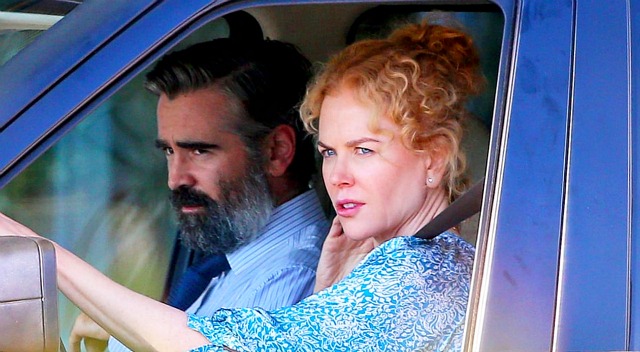
Deer begins with a certain robotic intrigue that slowly begins to simmer and darken. It’s basically about the lives of heart surgeon Steven Murphy (Colin Farrell) and wife Ana (Nicole Kidman) along with their two kids, Kim (Raffey Cassidy) and Bob (Sunny Suljic), being upended by Martin (Barry Keoghan), a teenager whose obsession with avenging his father’s death, which was caused by an operating-table error on Murphy’s part.

The more Martin gets his hooks into Murphy the darker and weirder things get, but it’s something you have to force yourself to stay with in the final lap. I stuck it out, but I wouldn’t see The Killing of a Sacred Deer a second time with a knife at my back.
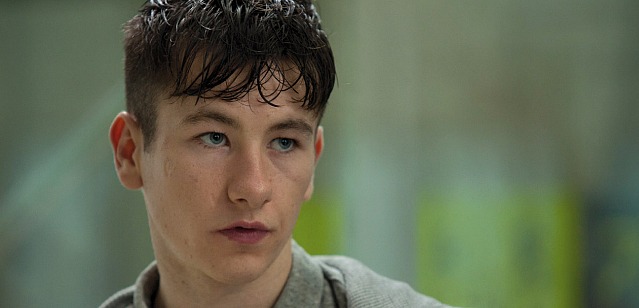
Irish-born Barry Koeghan as “Martin” in Yorgos Lanthimos’s The Killing of a Sacred Deer.


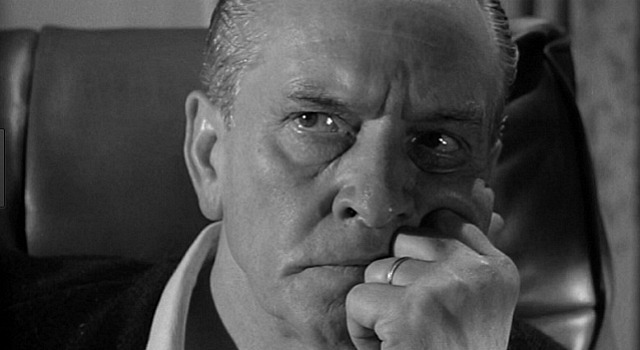
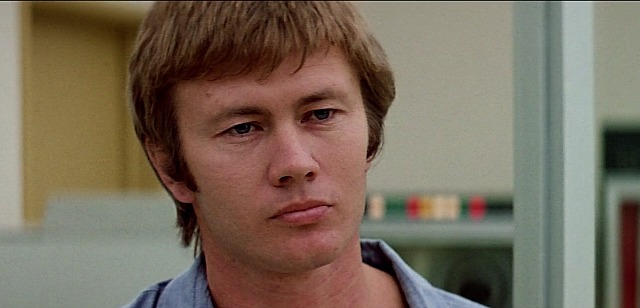
Don’t know the actor who played the psychopathic “Ernie” in The Parallax View, but he could be Keoghan’s smoother, better-looking dad. Hell, he’s almost good-looking in a conventional sense. And yet Alan Pakula cast him because his features conveyed, by mid ’70s standards, something scary and threatening.

To gauge the malevolence of this enterprise, look no further than the casting of the Irish-born Keoghan as Martin.

Visually speaking Keoghan is an unpleasant guy to hang with. I’m sorry but it’s true. He exudes creepy by just walking into a room. He has evil wolf-like eyes and one of those ridiculous bee-stung noses, bulbous and swollen like something drawn by R. Crumb, the kind of Beagle Boy dog nose that used to scream “low rent” before common, coarse features became a kind of hip thing among 21st Century casting directors.

If you doubt this, consider the guy who played “Ernie,” a non-verbal homicidal psychopath in Alan Pakula‘s The Parallax View (’74). I don’t know the actor’s name but Pakula obviously cast him because of his wolf eyes and creepy vibes. The resemblance between “Ernie” and Keoghan is obvious, but the latter is actually a better looking fellow than Keoghan, largely because his nose is innocuous. Be honest — which actor would seem less threatening if they were to stand side by side?

On top of which we’re asked to believe that Alicia Silverstone, who hit the big four-oh on 10.4.16, is Keoghan’s mom. I’m sorry but that wouldn’t be genetically possible. I know it’s tiresome to bring this up, but in the real world parents and children actually resemble each other to some extent. Silverstone is a drop-dead beautiful, milk-fed WASPy blonde who couldn’t have given birth to Keoghan if she had mated with Satan himself.

And that, no offense, is all I have to say about The Killing of a Sacred Deer.

Ice In His Veins

Is there anyone more efficient at throwing shade upon the human condition than Michael Haneke? The white-haired, 70something Austrian director is as brilliant as they come, but he’s one cold surgical fuck. Haneke is a humanist at heart, but there’s something almost Josef Mengele-like about the vibe in his films.

Happy End, his latest, focuses on a wealthy family based in the Calais area, and how their inability or disinterest in getting beyond their insularity and self-absorption has led to a barren environment defined by lies, deception, self-loathing, alcoholism, decrepitude and a persistent longing for death on the part of the 86 year-old George Laurent (Jean Louis Trintignant).


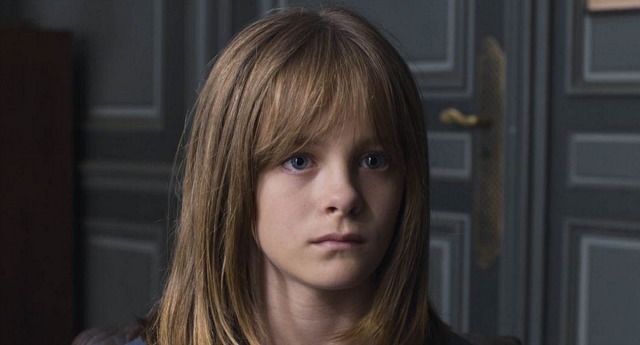
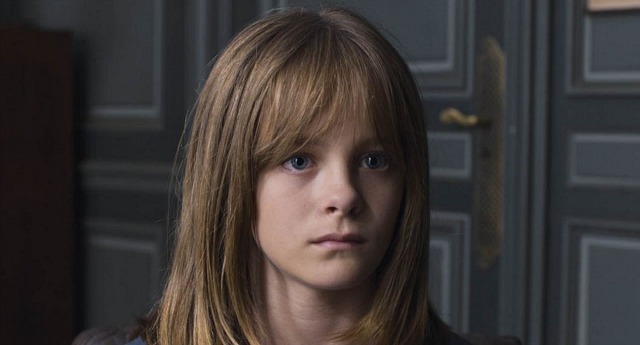
Happy End costar Fantine Harduin, who for my money has delivered the biggest breakout performance of the 2017 Cannes Film Festival.

The general reaction to Haneke’s Happy End, which I saw last night, is that the second half is better than the first. Make that the final third, or more precisely the last 20 or 25 minutes.

The other consensus view is that Happy End wouldn’t be much without two major performances, first and foremost Trintignant’s as the pater familias and financial kingpin who despises old age and longs for death, and secondly Fantine Harduin‘s as Eve Laurent, George’s attuned and quietly alarmed granddaughter.

Without these two characters Happy End would be too clinical and repellent to think about, much less recall. Let’s just bypass the parts that don’t focus on these two. Because the other characters, for me, felt like “who cares?” distractions, which is to say none at all.

But I’m telling you that Harduin has “it” — that mesmerizing, X-factor, can’t-take-your-eyes-off quality. She’s as much of a comer as Logan‘s Dafne Keen.

Read more

Among All-Time Greatest Opening Sequences

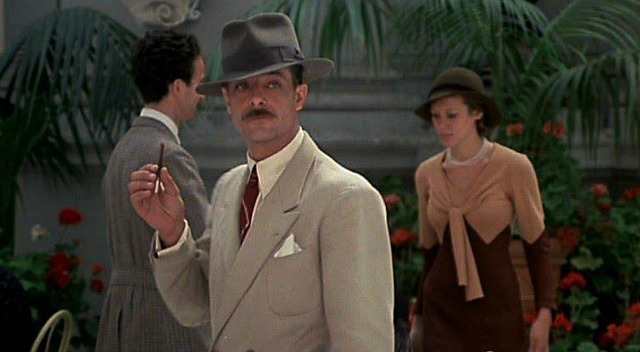
The opening of Lina Wertmuller‘s Seven Beauties (’76) is an “oh, yeah” classic, but many have forgotten that it’s not really a main-title sequence. The title is announced but otherwise it’s just a mission-statement thing, a declaration that the film won’t be playing it straight, that satire will be used, etc. What other films have begun with impressionistic tonal mood-setters (music, montage) that seem to be main-title sequences but aren’t?

Inarritu’s Carne y Arena: Barefoot, On Your Knees

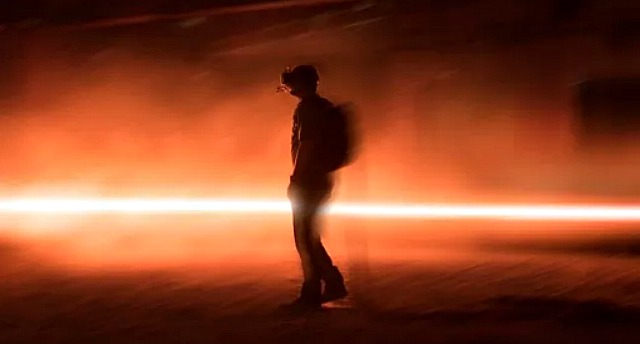
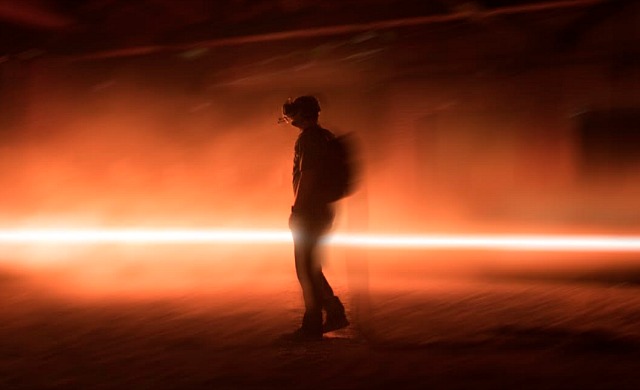
Late this afternoon I submitted to Alejandro G. Iñárritu’s Carne y Arena, a six-and-a-half-minute virtual reality trip that simulates with all-encompassing realism what Mexican immigrants often go through while attempting to cross the United States border in the Southwestern desert region. It was my first virtual-reality-plus experience (not just sight and sound but a realistic vibe and an atmosphere that I was walking around in barefoot), and I was so knocked out I’m returning next week for a second go-round.

I took off my shoes and socks, strolled into a red-lighted sound stage with a floor covered in sand, put on a virtual reality backpack and headset and…bing, there I was. Or there it all was. The headset screen was circular and not CinemaScope-like as I’d expected, but I was suddenly standing in the pre-dawn desert amid the sloping mounds and cactus and slightly damp morning air. Then a small group of immigrants, led by a “coyote”, approached in the semi-darkness.

A few seconds later an overhead chopper approached, and then a blinding light hit my eyes. Border guards pulled up in a pair of SUVs, shouting and aiming their weapons and telling me to get the fuck down on my knees. I put my hands up and dropped to the ground, looking around and behind and all over. Then I got back up and started roaming around in a crouched combat position, feeling like Charlie Sheen or Willem Dafoe in Platoon. Then I got yelled at again: “Down on your knees…hit the ground…now!”

In short, within seconds I had forgotten the tech aspects and fallen into the reality of it. It wasn’t a viewing experience — it was a being experience. You can do a 360 any time to see what’s happening here or there. There were dozens of things I could have done including (I assume) challenge the guards and tell them to back off or say “yo…my personal hotspot isn’t working…do you know where I can find a reasonably decent wifi signal?” Mostly I crouched and watched and just took it all in. I was half-expecting to get shot at any moment. Which would have actually been cool, especially if the VR assistant had punched me in the chest at the exact moment the muzzle flash appeared.

Carne y Arena is an all-CG creation but sourced from actual footage with real actors. It was easily the most immersive, head-turning viewing I’ve ever sampled, tasted, felt and touched. And yet it also delivered in emotional terms, prompting me to feel compassion for immigrants all over. So yes, I now know a little bit about what it’s like to go through something like this for real. I felt intimidated, fearful. But I have to say that I simply loved the primal juice of it. I especially liked walking around that big desert sandbox barefoot.

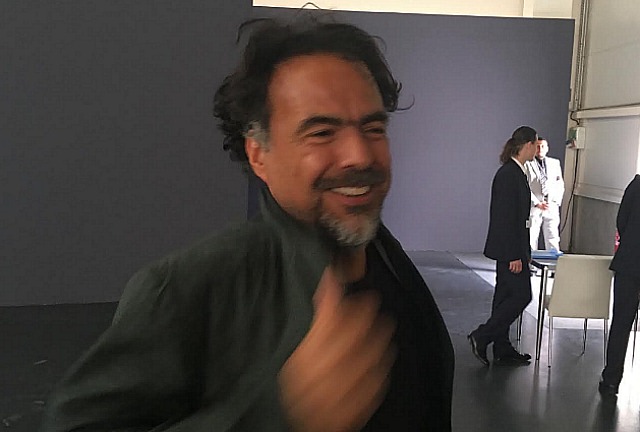
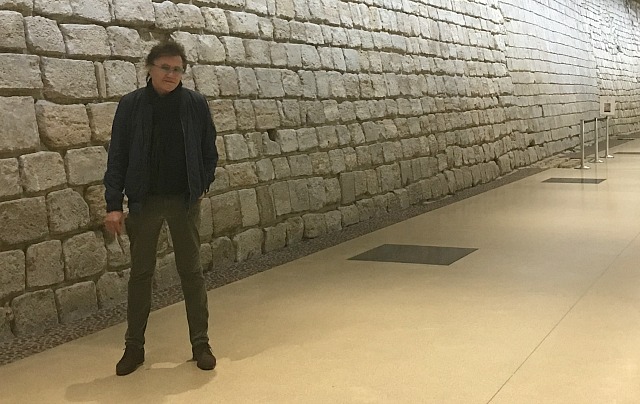
Carne y Arena director Alejandro G. Inarritu, inside viewing hangar at the Cannes Mandelieu Airport — Thursday, 5.19, 3:35 pm.

Read more

Greatness of Loveless

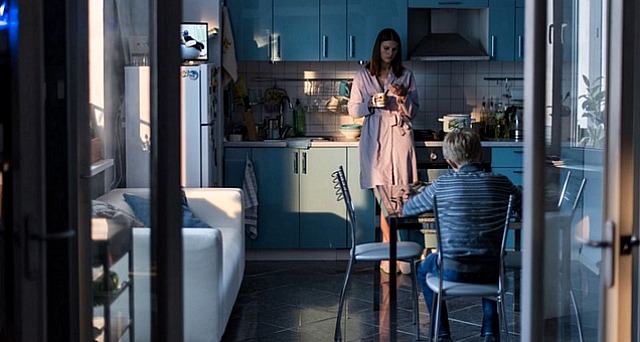
As I suspected it would be, Andrey Zvyagintsev‘s Loveless is a chilly, anguished and entirely brilliant film. Sad but so good. Every shot, every frame, every line is dead cold honest — it deals straight cards without a smidgen of bullshit. Plus it’s beautiful to look at and exquisitely performed. It’s a story about a marriage gone bad — a moribund mismatch, utterly ruined — and a 12 year-old boy, the emotionally aloof son of this mournful couple, gone missing. But like Leviathan, Loveless is about much more than just the tale.

It deals in specifics (certainly in terms of finely-drawn character and investigative logistics when it comes to searching for the boy) but it delivers a rich, reflective look at everything and everyone under the gray Russian skies. It’s about the whole undertow of Russian life right now, or more specifically five years ago as it takes place in 2012 — a capturing of things not right and depleted, of self-absorption and a lack of wholeness and fulfillment, a case of bitterness and uncertainty and a general sense of downswirl, the whole current of a culture no longer thriving with spirit and tradition and togetherness but starting to fray from a lack of these things.

If Leviathan was about Russian corruption from the top down and a populace drowning in hopelessness and vodka, Loveless is about spiritual attrition through vanity, selfishness, manipulation and too many ambivalent, disloyal people seething and shouting and staring at smartphone screens. Or into the abyss.

For me, Loveless is somber and dazzling at the same time. By no means a feel-good thing but definitely a movie that you’ll believe and trust in every way imaginable, and in that sense it’s the kind of immersive experience that you can’t help but feel nurtured by and delighted with. I was 100% engaged and enthralled. Hell, I was spellbound.

Zyagintsev is a major-league, genius-level hombre, no question, and this movie is another serving of that recipe, that stew, that vibe that makes you lean forward in your seat and just go “wow, I need to see this again as soon as possible.” Is that “entertainment”? For me it is. Will the megaplexers have the same reaction? Of course not. They’re too dull and stupid to get a movie like this, but if you have even a shred of longing for the rock-solid elements that Zvyagintsev’s Loveless, Leviathan and Elena provide, it’ll fill you up like a big juicy steak.

Read more

Carell’s Oscar Nomination In The Bag

Battle of The Sexes (Fox Searchlight, 9.22) will obviously be a hit. With Emma Stone having won a Best Actress Oscar for her La La Land performance three months ago, Steve Carell, who is totally on fire as Bobby Riggs, is going to get most of the award-season action. Cheers to co-directors Valerie Faris and Jonathan Dayton (who delivered Little Miss Sunshine) for lucking into good material plus the right people to work with. The story boils down to (a) obnoxious if indefatigable asshole gets his comeuppance and (b) a gay, closeted tennis player has to cope with a huge professional challenge while sorting out emotional matters with her lover (Andrea Riseborough) and male husband (Austin Stowell). Costarring Sarah Silverman, Bill Pullman, Alan Cumming and Elisabeth Shue.

Read more

Gun Goes Off Tomorrow

The excitement at the start of any Cannes Film Festival is always tingly, and this year is no exception. The La Pizza press gathering was full of that fizzy stuff. I’ll be dutifully attending Wednesday’s 10 am press screening of Arnaud Depleschin‘s Ismael’s Ghosts, the opening-night attraction. But the real hummer, at least in terms of expectations, is Andrey Zvyagintsev‘s Loveless, which screens for journos at 7:30 pm in the Salle Debussy.

The Depleschin flick, which costars Mathieu Amalric, Marion Cotillard, Charlotte Gainsbourg and Louis Garrel, is about a director (Amalric) whose life is complicated by the return of a former lover (Cotillard) just as he’s about to begin shooting a new film. Zyyagintsev’s film focuses on a bickering married couple, verging on divorce, whose son disappears after one of their fights. They try to put their differences aside as they search for him.

Here I am still filing at 2:30 am. I could’ve crashed hours ago, but I had to put stuff up.


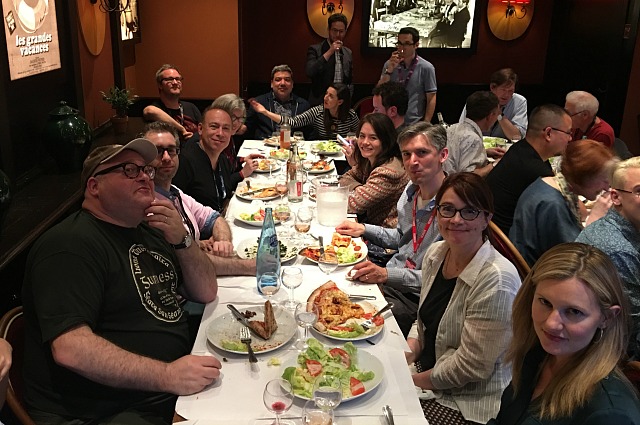
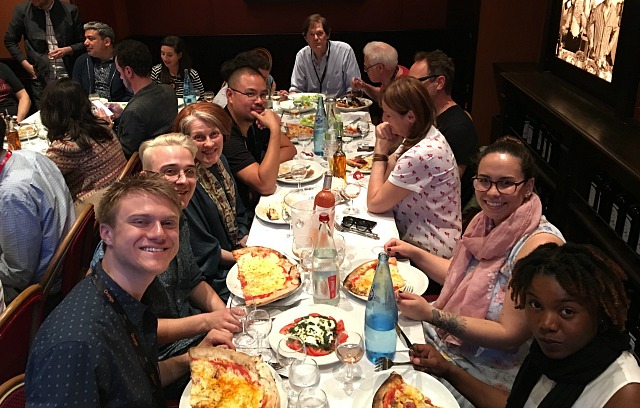
La Pizza table #1 (clockwise from left): Guardian/Vanity Fair critic & contributor Jordan Hoffman, Indiewire critic David Ehrlich, Variety critic Owen Gleiberman, Indiewire editor/columnist Anne Thompson (half-obscured), First Showing‘s Alex Billington, Film Society of Lincoln Center deputy director Eugene Hernandez, critic Tomris Laffly (Film Journal, Time Out New York, Vulture), [standing] TheWrap‘s Ben Croal, Indiewire‘s Eric Kohn, Vulture‘s Kyle Buchanan (left profile, half obscured), New York/Vulture‘s Jada Yuan, Screen Daily‘s Tim Grierson, Washington Post critic Ann Hornaday, Vanity Fair‘s Rebeca Keegan.
 

La Pizza table #2 (clockwise from left): Film School Rejects Matt Hoffman, WeLiveEntertainment’s Tanner Stechnij, Time critic Stephanie Zacharek, L.A. Times critic Justin Chang, Toronto Star critic Peter Howell, Maclean‘s Brian Johnson, David Scott Smith (obscured), Svetlana Cvetko (profile, staring at table), Alia Salazar, Michelle Foster of Loyola University.
 

Read more

Never Let The Audience Think About Budget

Two scenes dissipate John Frankenheimer‘s Seven Days in May (’64), an otherwise gripping thriller about an attempted military takeover of the U.S. One of them is fairly ludicrous in its action plotting, and both take your attention away from the story by suggesting that the film was made for a modest sum — something an audience should never be allowed to contemplate.


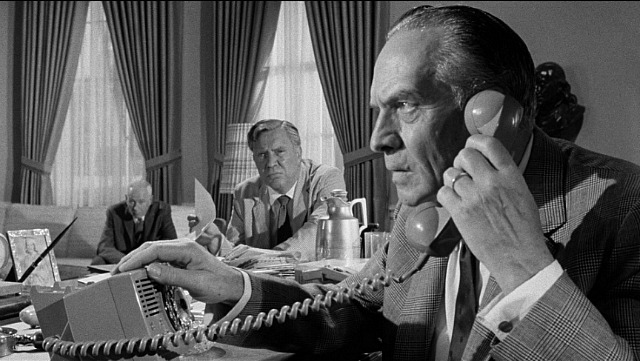
(l. to r.) George Macready, Edmond O’Brien and Fredric March in a second-act scene from John Frankenheimer’s Seven Days in May.

#1: President Jordan Lyman (Fredric March) and a team of anti-conspiracy allies are watching filmed footage of two Pentagon higher-ups (including John Larkin‘s Col. Broderick, a close confidante of Burt Lancaster‘s General James Mattoon Scott) spying on the President’s vacation home from a rowboat. Someone notes that the conspirators must be small in number or else why would Broderick, a Pentagon bigwig, be engaged in routine surveillance work? And it hits you that this whole menacing conspiracy is a small-scale affair. Just six or seven middle-aged men on either side, playing for opposing teams. The film needed a scene or two demonstrating the overwhelming military power that the bad guys had at the ready. Jets, tanks, warships, armed battalions.

#2: A nighttime scene at a secret New Mexico air base (“Site Y”) being used by the bad guys shows Colonel William Henderson (Andrew Duggan) escaping with Senator Ray Clark (Edmond O’Brien) in an open-top military tank. Henderson rifle-butts a soldier and guns the tank over a sand dune and into the night. And nobody chases after them? Site Y security chiefs presumably have all kinds of jeeps and helicopters at their disposal, and they can’t catch a tank driving through the desert at 35 or 40 mph? Broderick and O’Brien should’ve escaped in a chopper. That I would half-buy.

Read more

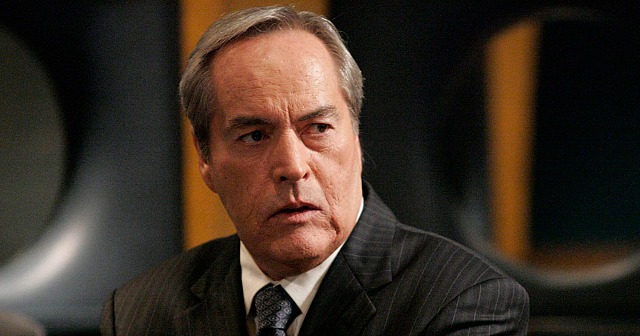
Passing of Powers Boothe

The ghost of Powers Boothe is reading Lawrence Yee’s Variety obit and quietly seething. For Yee’s opening sentence describes Boothe as “a character actor.” Not “the renowned, ruggedly handsome, Emmy Award-winning actor known for his gruff, steely machismo” but “a” character actor. What Yee means is that Boothe’s peak period in the early to mid ’80s doesn’t mean that much, at least to him. But it does, or did, to those who were around and alert during the early Reagan years.

When Tom Cruise dies do you think Variety will describe him as “an” actor? The indignity! For once upon a time Powers Boothe was a brand, a force and a presence that was valued by top-rank directors.

His performance as demonic cult leader Jim Jones in Guyana Tragedy: The Story of Jim Jones was easily the best thing Boothe ever did. Boothe won an Emmy for best lead actor in a limited series. The four-hour, two-part TV movie aired on CBS in April 1980. I haven’t rewatched it since but I would right now if it was streaming, but it’s only on DVD.

Boothe’s movie heyday boiled down to three films that followed Guyana TragedyWalter Hill‘s Southern Comfort (’81), John Milius‘s Red Dawn (’84) and John Boorman‘s The Emerald Forest (’85). For a while it seemed as if the Texas-born, conservative-leaning actor might become an Eastwood-like figure. Or at least a regular leading guy.

Read more

More Cannes Spitballing

Indiewire‘s Anne Thompson and Eric Kohn (who’s now in Paris, staying in some baroque Left Bank hotel that hangs animal portraits on the walls) discuss the 2017 Cannes Film Festival. Things start three days from now (i.e., Wednesday, 5.17). Almost every Paris-based journalist and layover will be on Tuesday’s 7:19 am train from Gare de Lyon. I’m terrified about sleeping through and missing it.

Thompson compares staying “with a bunch of guys” in Indiewire‘s Cannes crash pad to Snow White and the Seven Dwarfs. There’s a mention of Tuesday’s La Pizza gathering. They’re hot for Michael Haneke‘s Happy End and Todd HaynesWonderstruck, but who isn’t? They sound excited but, in my view, not excited enough about Andrey Zvyagintsev‘s Loveless. Thompson is hearing “good things” about Michel HazanaviciusThe Redoubtable, the ’60s-era Jean Luc Godard love story. They discuss the festival’s decision to turn a cold shoulder to Netflix movies starting next year. They mention the incessant partying, drinking and hobnobbing, but the only thing that matters during the Cannes Film Festival is the filing.

Things get interesting when Kohn trashes Naomi Kawase, noting that “the only time you ever hear about her” is during the festival, “which is a little peculiar.” And then Thompson, stepping out of her amiable safe zone, dismisses Taylor Sheridan‘s Wild River, which is playing under Un Certain Regard, in part because it’s “the only Weinstein film” and is “opening in August.”

Read more

Walk Like A Tourist

HE’s own Svetlana Cvetko and David Scott Smith invited me to join them early Saturday evening at the Louvre. A connected friend of Svet’s escorted us inside to a restricted-access tour of the Egyptian exhibit. I had never before wandered through this world-renowned museum as an invitation-only cool cat. No crowds or lines to cope with. The Egyptian statues, sarcophagi, relics and artifacts were nothing to sneeze at either. The highlight was the 4000 year-old chapel of the tomb (or “mastaba”) of Akhethotep, a bigwig in the Old Kingdom who was close to the king. (Egyptian rulers weren’t called pharaohs until the New Kingdom.)


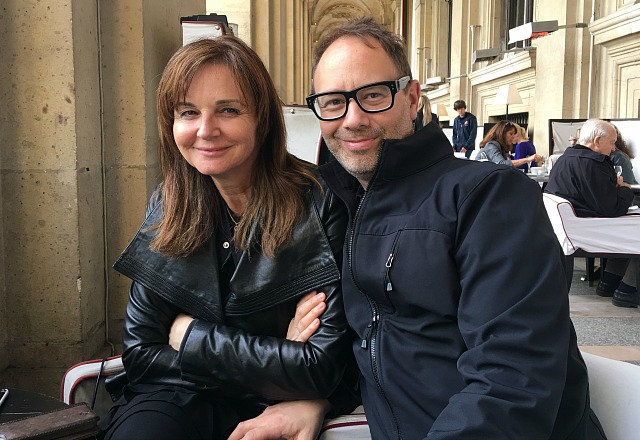
Svetlana Cvetko, David Scott Smith at Louvre cafe — Saturday, 5.13, 7:50 pm.

Read more