“Don’t Be A Grain Perv, Man”

Earlier today HE commenter Patrick Juvet wrote the following: “Robert Harris knows the difference between genuine film grain and video noise, which you don’t. All of your rants against ‘digital mosquitos’ were often aimed at Sony transfers done by Grover Crisp‘s people — transfers that allowed all of the natural film grain to shine through (more than it would have in a film print ) and were praised to the skies by Mr. Harris in his reviews.”

HE reply: “Did you just say the Sony transfers ‘allowed all of the natural film grain to shine through’ and even ‘more than it would have in a film print’? Did you just say that?

“FILM GRAIN HAS NEVER SHINED THROUGH…EVER. Film grain is a visual affliction that classic-era dps were forced to finesse as best they could. It was a pestilence. If Gregg Toland could have made grain disappear by clapping his hands three times, he would have clapped his hands three times…TRUST ME!

“There has never been anything the least bit glorious or edifying or transcendent about film grain. It’s cinematic fog. (Not that there’s anything wrong with fog if you’re Fritz Lang and you’re shooting Manhunt with Walter Pidgeon. The London scenes, I mean.)

“Film grain is built into the image so it’s wrong to try and erase the stuff, but anyone who advocates for more film grain to show up on a Bluray of a classic film than the amount that was naturally visible to theatrical audiences is a grain perv…they have something psychologically wrong with them, I mean.

“And theatrical audiences of the ’30s, 40s and ’50s, by the way, weren’t clobbered with the stuff. The idea of film grain ‘shining through’ on home video more than it did in theatres is repugnant. It’s sick. You and people like you are like FOOT FETISHISTS, only it’s grain that turns you on, not the shape of women’s toes and the shade of their nail polish.”

Langella Agonistes (Part 2)

The outcry triggered by the Frank Langella Fall of the House of Usher incident — i.e., getting whacked for mild crossing-the-line offenses — boils down to an issue of degree. How to deal with questionable on-set behavior that isn’t that bad within the greater scheme of things?

Nobody wants silence or indifference if an actress believes she’s been violated to some degree, even if the violation was a matter of small potatoes. If an actor does something that most of us would regard as vaguely uncool while performing a scene, appropriate measures should ensue. The vague offender should be taken aside and told in respectful but direct terms to stop being vaguely uncool or overly familiar or whatever the complaint is about. If an actor is any kind of pro they’ll listen and acknowledge and adapt.

But when is it appropriate for an actress with a legit complaint to “go nuclear” over a relatively minor transgression? That’s what Langella’s costar allegedly did — she “walked off the set” and didn’t return, according to Langella’s account.

This is also what Keke Palmer allegedly did when costar Bill Murray pulled her pigtail (or something in that general nyuk-nyuk, horsing-around realm) on the set of Being Mortal. Palmer was apparently inconsolable and is possibly still feeling that way. How else to interpret the fact that Being Mortal was shut down two weeks ago (on 4.20.22) and yet producers still haven’t announced that the film is resuming production? How many weeks of fretting does an actress need to recover from on-set joshing around when the josher has solemnly apologized?

Under these circumstances was “going nuclear” really necessary? Any professional actor will confirm that there’s a certain take-it-as-it-comes, turn-the-other-cheek, rough-and-tumble quality that comes with working with other thesps under the usual professional pressures. Something unexpected or unwelcome might occasionally happen, but sometimes it’s the better part of wisdom to just roll with that shit, as in water off a duck’s ass.

As we speak the presumption is that Langella may now be regarded as a risky hire (if not a cautionary tale by way of persona non grata) because of what “happened.”

But ask yourself this: If you were a producer would you want to hire an actress who has gone nuclear over her leg being touched or being hugged or having heard an off-color joke of some kind? Put another way, if you were a producer could you imagine saying to your casting colleagues, “You know that interesting actress whose complaint led to a temporary shutdown of a Netflix show and re-casting a major role and re-shooting weeks’ worth of material? I really want to hire her for my next film. She just has a certain quality that is perfect for a certain character. What do you guys think?”

And what about the idea of an actor submitting to the reality of a character and going with that, at least as far as a scene in question is concerned? The offended actress was playing the “young wife” of Langella’s Roderick Usher character, right? Let’s imagine what Langella and the actress in question were professionally obliged to imagine on that fateful day (3.25.22) — that Usher and his wife are real people involved in an actual marriage, and involved in some sort of physically intimate moment.

If you were Rodrick Usher’s wife would you freak out if your husband touched your leg or gave you a hug or said something a little bit rude or uncalled for? All marriages encounter rough patches and dicey situations, and a certain flexibility or tolerance is necessary to weather them.

Luscious Horror Satire

The new trailer for Olivia Wilde’s Don’t Worry Darling (Warner Bros., 9.23) suggests a sexy, high-style period creep-out about middle-class conformity and submission to Big Corporate Brother.

Seemingly set in the ‘50s or early ‘60s. A mood similar to that of Martin Ritt‘s No Down Payment (‘57), and clearly a metaphorical kin to Don Siegel’s Invasion of the Body Snatchers (‘56).

And right away they blow the mood by playing Brenton Wood’s “The Oogum Boogum Song,” which came out in ‘67 — an era in which fretting about cookie-cutter conformity had been left behind and people were into a whole ‘nother doobie-toke realm.

So right away you know that Wilde’s film is…uhm, playing by its own rules.

Texted To Death

Everyone presumably knows that Hulu’s The Girl From Plainville is an eight-part series about an infamous texting-suicide case that went to trial in 2017. The real-life Michelle Carter (Elle Fanning), an ice-cold sociopath, goaded her unstable teenage boyfriend, Conrad Roy (Colton Ryan), into committing suicide.

Based on Jesse Baron’s Esquire article of the same name, the series explores how and why the suicide happened and how Carter was eventually busted, prosecuted and convicted of manslaughter. She would up serving 11 months or something like that, but she’s the devil and presumably knows it. This will be on her back for the rest of her life, and that’s a good thing.

Fanning plays Carter as such a revolting drama queen and contemptible attention whore that you can’t wait to see her get popped and cuffed, but it takes too long. I made it through two episodes before quitting. Okay, I may watch a couple more but this is a three-hour movie expanded into eight hours. It’s very well acted and all (special shout-out to Chloe Sevigny‘s performance as Conrad’s mom) but sometimes a miniseries just feels too stretched out.

I’m more interested in sitting through Erin Lee Carter‘s 143-minute I Love You, Now Die, which is on HBO Max.

Wagmeister Actually Questions Endless IP Sequels

Two or three days ago The Take co-host Elizabeth Wagmeister stepped out of her usual rah-rah, chipmunk-voiced enthusiasm mode to express annoyance at the endless corporate stream of IP sequels, prequels, remakes and retreads.

HE readers presumably understand that Wagmeister and The Take co-host Clayton Davis are catty, upbeat, chuckling cheerleaders…everything Hollywood does gives them an ostrich-feather ass tickle at the very least and often jump-for-joy feelings…”oh wow oh wow oh wow!”

Every thinking industry person has been lamenting IP megaplex suffocation for at least a decade, of course. But when Wagmiester complained about it I damn near fell out of my chair. It happened during a discussion of recently seen Cinemacon trailers:

Wagmeister: “What’s interesting is, we’re just talking about all these films. There’s a Part 1, there’s a Part 2, there’s a Part 10. It just feels like this trend in movies in movie theatres is that we’re seeing sequel upon sequel and franchise upon franchise. I’m not saying that’s a bad thing. We do want to bring people back to theatres. But (exhales)…you know, it’s just like ‘really?'”

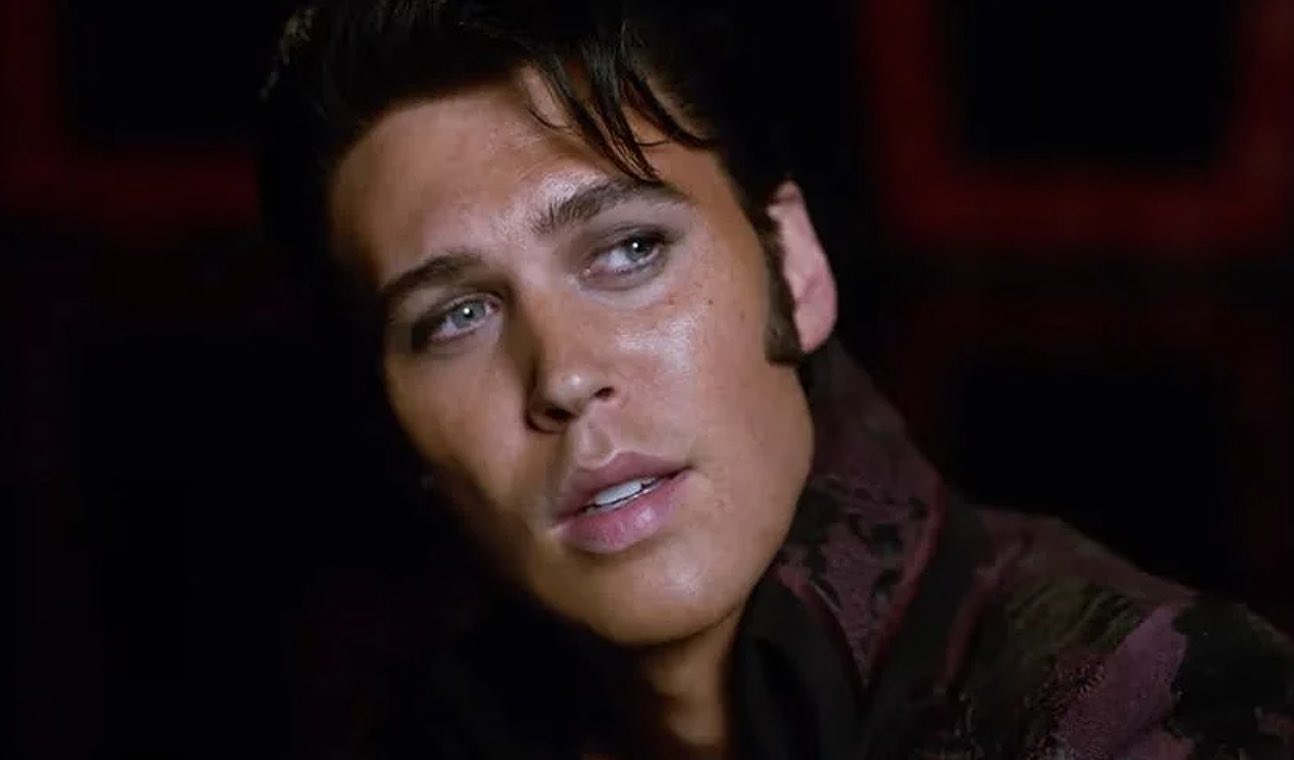
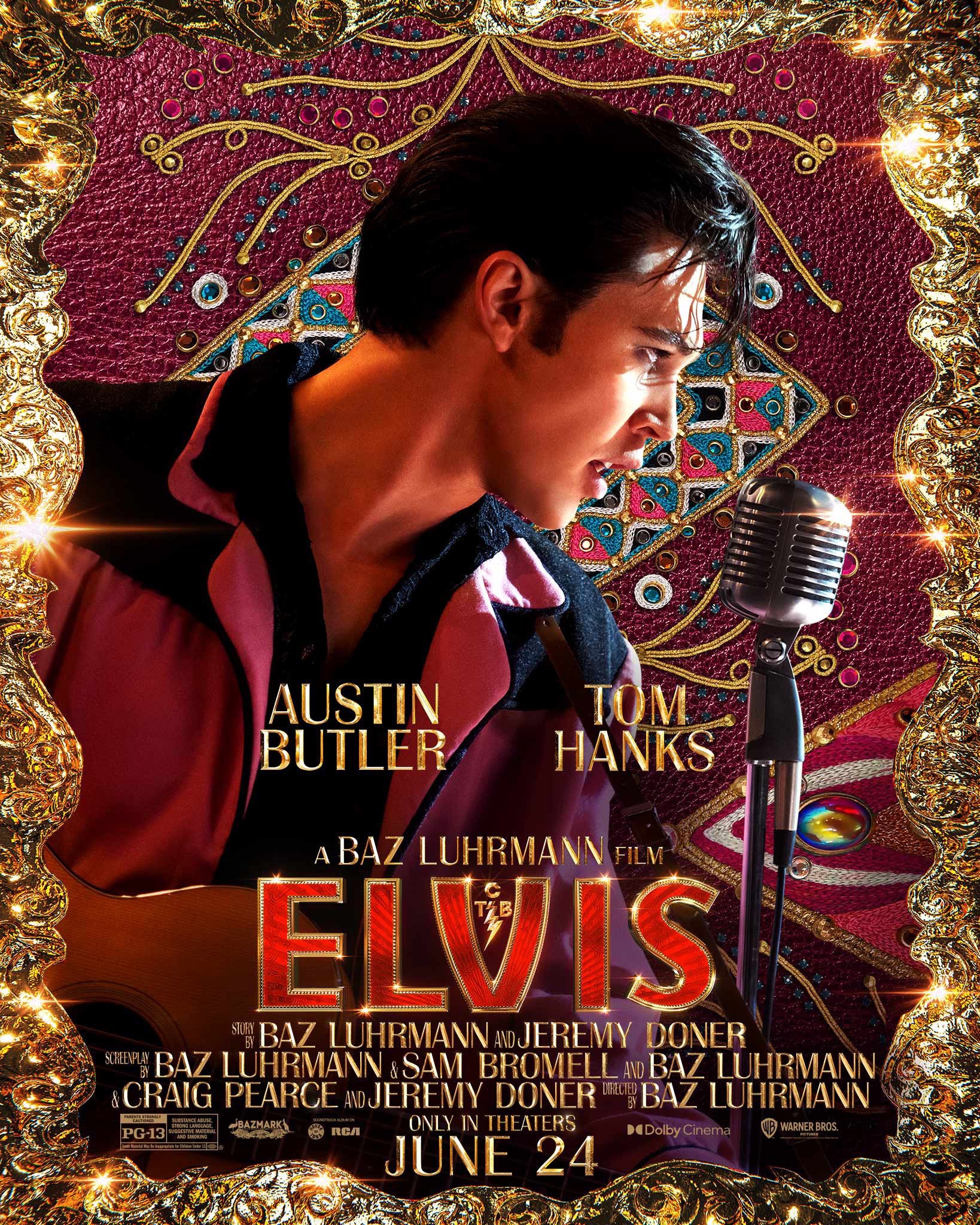
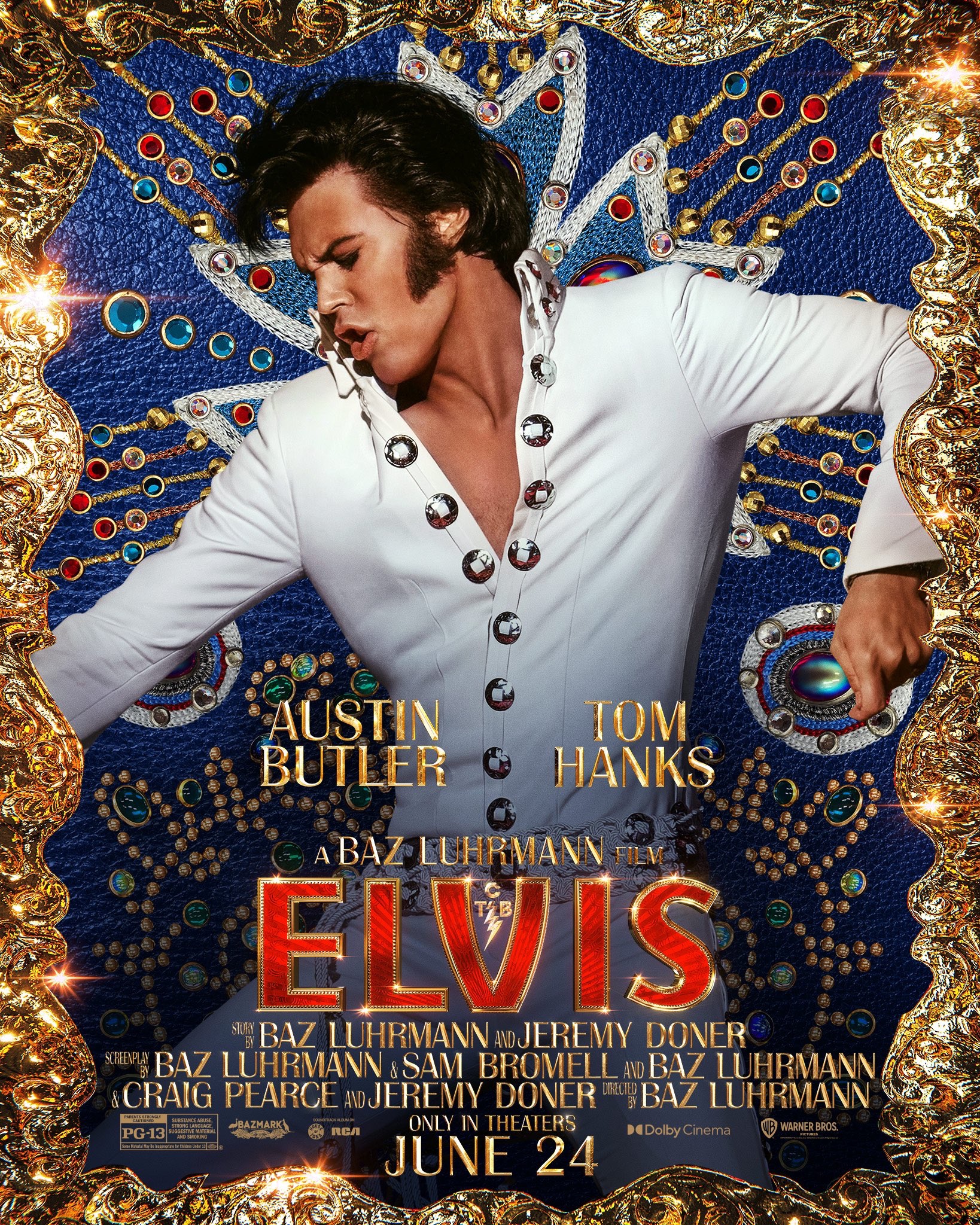
Davis: “It is stretching the dollar out but blah blah blah blah I love geek movies, I love franchises, I love IP superheroes, just keep it coming, I love it, I’m happy, this is what I live for…more more more plus in a couple of weeks I’m going to Europe and the Cannes Film Festival for the first time, and boy oh boy, am I going to plant a huge wet smooch on Elvis‘s ass!” [HE note: This is not an actual transcription of Davis’s response but a summary of what he meant and who he is, etc.]

Approaching Ten-Year Anniversary

From “Elemental Pleasures of Jack Reacher,” posted on 12.18.12:

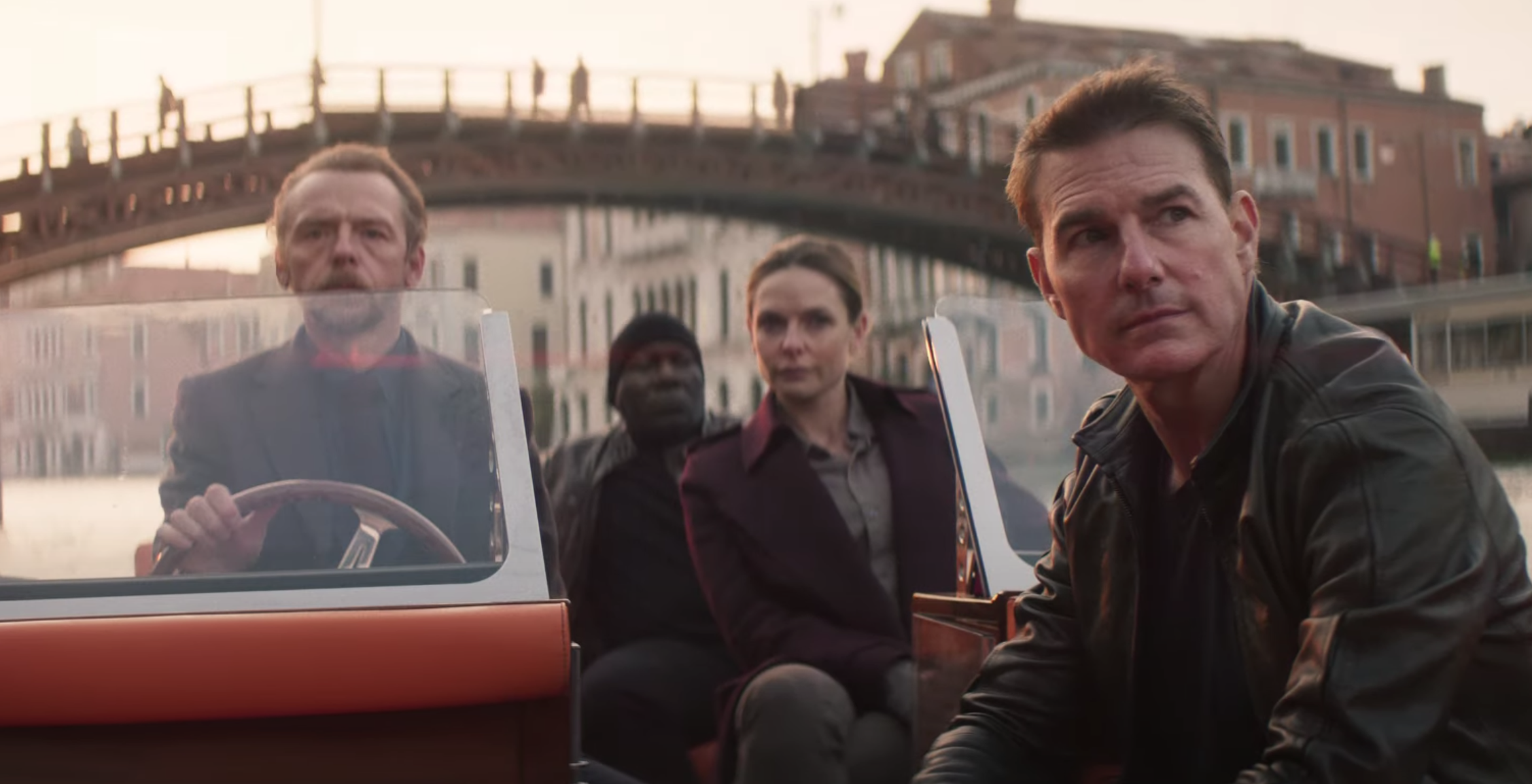
“Within the last week I read a comment about Chris McQuarrie‘s Jack Reacher (Paramount, 12.21) being “a ’90s urban actioner,” which the commenter intended, I gathered, as some kind of putdown. Well, take out the negative inference and he’s dead right — Reacher is a kind of old-fashioned actioner in a ’90s or ’80s or ’70s vein (can’t decide which) but in a highly refreshing, intelligent, follow-the-clues-and-watch-your-back fashion.

“It has no digital bullshit, no explosions, and none of that top-the-last-idiot-action-movie crap. Jack Reacher believes in the basics, and I for one was delighted even though it doesn’t exactly re-invent the wheel.

“Honestly? I was fairly satisfied but not that blown away by the final 25%, but the first 75% plays very tight and true and together, and Tom Cruise, as the titular character, has the confidence and presence and steady-as-she-goes vibe of a hero who doesn’t have to reach or scream or emphasize anything in order to exude that steely-stud authority that we all like.

Reacher is just a bang-around Pittsburgh dirty-cop movie with a kind of Samurai-styled outsider (Cruise) working with a sharp-eyed, straight-dope attorney (Rosamund Pike) trying to uncover who stinks and what’s wrong and who needs to be beaten or killed or whatever.

“It’s just an unpretentious, elegantly written programmer that’s nowhere near the class or depth of Witness, say, certainly not in the matter of departmental corruption and general venality, but it does move along with an agreeably lean, get-it-right attitude. I love that Cruise’s Reacher doesn’t drive a car or carry an ID or even a modest bag of clothing and toiletries. He washes his one T-shirt and one pair of socks every night in the sink.

I somehow got the idea that the Jack Reacher character, as written by Jack Grant/Lee Child, was some brawny badass who strode around and pulverized the bad guys like he was Paul Bunyan or something, largely because he was a mountain-sized 6′ 5″.

“I’ve never read a Reacher novel but the movie is not some brute kickass machismo thing but a largely cerebral whodunit that believes in dialogue and playing it slow and cool and holding back and pausing between lines and all that less-is-more stuff. It has a bit of a Sherlock Holmes thing going on between the beatings and threats and car chases.

Jack Reacher basically delivers what urban thrillers used to deliver before John Woo came along in the early ’90s and fucked everything up with flying ballet crap and two-gun, crossed-arm blam-blam. It has a little bit of a nostalgic Walter Hill atmosphere going on, particularly in the fashion of The Driver (’78). It also reminded me of the stripped-down style and natural, unhurried pacing of John Flynn‘s The Outfit (’73), which starred Robert Duvall (who plays a small but key supporting role in Jack Reacher).

“If you know The Outfit, you know what I’m talking about.”

Wiped Clean

Earlier today I came across an old DVD of Brian Koppelman and David Levien‘s Solitary Man (’10), a Michael Douglas drama about an immature, self-absorbed sexaholic who betrays and disappoints women he ostensibly cares for.

For nearly 25 years Douglas specialized in playing men who, in David Thomson‘s words, were “weak, culpable, morally indolent, compromised, and greedy for illicit sensation without losing that basic probity or potential for ethical character that we require of a hero.”

Douglas’s last role of this kind was Liberace in Steven Soderbergh‘s Behind The Candelabra (’13).

What threw me this afternoon was the fact that I couldn’t (and still can’t) recall a single damn thing about Solitary Man…nothing. Not a scene, not a line.

I’m fairly certain I caught it at the 2009 Toronto Film Festival in Toronto, and if not there then certainly at a Manhattan all-media screening a few months later. I can almost always recall something. I can’t figure it.

Please name any film released within the last 15 or 20 years that you’re dead certain you saw and yet your mind is a blank.

“You Are Hereby Served”

Last night in front of a huge Cinemacon crowd inside the Caesar’s Place Colisseum, Don’t Worry Darling director Olivia Wilde was legally served with custody papers. The papers were from Jason Suidekis, her ex-partner and father of their two kids. The actual process server, probably a local, was presumably hired by Suidekis’s law firm.

“Northing To Be Done”

A 4K Ultra HD Bluray of a newly restored version of George StevensGiant (’56) pops on 6.21. I wasn’t able to attend the screening of this version during last weekend’s TCM Classic Film Festival, but it’ll probably look better (I’m hoping) than the dreaded 2013 Bluray version, which looked awful.

The 4K Bluray release has been sourced “from a new 4K restoration completed by Warner Bros. with the cooperation of The Film Foundation.

“It was completed sourcing both the original camera negatives and protection RGB separation master positives for the best possible image, and color corrected in high dynamic range for the latest picture display technology. The audio was sourced primarily from a 1995 protection copy of the Original Magnetic Mono soundtrack. The picture and audio restoration was completed by Warner Bros. Post Production Creative Services: Motion Picture Imaging and Post Production Sound.”

I’m naturally looking forward to the new disc, but keep in mind what blue-chip restoration guru Robert Harris said about the original Giant elements on 10.27.13 on Home Theatre Forum:

Viking Fraternity

In his New Yorker review of The Northman, Anthony Lane notes that “the period detail is unstinting,” adding that “scholars of Old Norse who were unconvinced by Tony Curtis’s miniskirt, banded with chevrons, in The Vikings (1958), will be reassured by Eggers’s dedication.”

But for the rest of us, The Northman is not reassuring in terms of emotional involvement. You just don’t give a damn about anyone except for Anya Taylor Joy‘s “Olga”, except she’s kept on a short leash.

Hence this view of Eggers from a producer who’s seen The Northman: “In another era, Eggers would be a landscape painter, but never a portrait painter — unwilling or unable to capture the soul of his subject, and only the technical details of their environment. He might paint one of those massive battlefield canvases where hundreds of warriors gouge each other’s vital organs out, but end up as stick figures of glory against a barren emotional terrain.”

Though clunky and unsubtle, Richard Fleischer‘s The Vikings does not present a barren emotional terrain. Obviously inauthentic by today’s standards, it gives you emotional material to chew on.

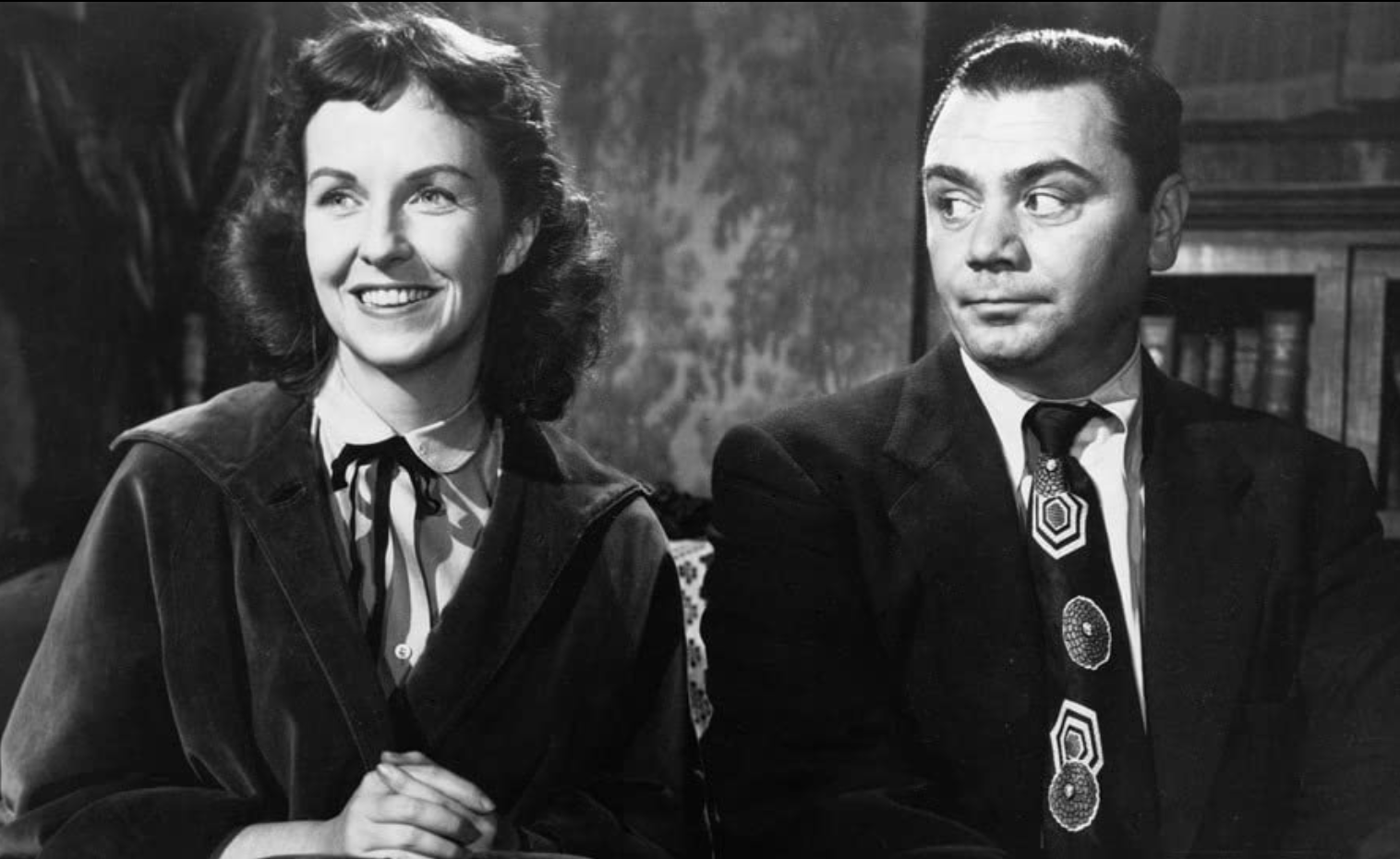
[Posted two or three times]: “One thing that still works in The Vikings‘ favor is the film’s refusal to dramatically amplify the fact that Kirk Douglas‘s Einar and Tony Curtis‘s Eric, mortal enemies throughout the film, are in fact brothers, having both been sired by Ernest Borgnine‘s Ragnar.

“Ten minutes from the conclusion Janet Leigh‘s Princess Morgana begs Douglas to consider this fraternity, and he angrily brushes her off. But when his sword is raised above a defenseless Curtis at the very end, Douglas hesitates. And then Curtis stabs Douglas in the stomach with a shard of a broken sword, and Douglas is finished.

“The way he leans back, screams ‘Odin!’ and then rolls over dead is pretty hammy, but that earlier moment of hesitation is spellbinding — one of the most touching pieces of acting Douglas ever delivered.

“I’m not trying to build The Vikings up beyond what it was — a primitive sex-and-swordfight film for Eisenhower-era Eloi. But it did invest in that submerged through-line of ‘brothers not realizing they’re brothers while despising each other’, and the subtlety does pay off.” — originally posted on 3.27.06, on the occasion of Richard Fleischer‘s passing.

Murray “Complaint” Plot Thickens

So who voiced the complaint against Bill Murray that resulted in the suspension of Aziz Ansari‘s Being Mortal? Nobody’s saying and nobody knows (myself included), but four days ago 28 year-old Being Mortal costar Keke Palmer (aka “Millennial Diva“) posted an Instagram riff about professional behavior, and how “it can lower your rate when people don’t like the experience of working with you.”

One could obviously interpret this post (initially flagged by Showbiz 411‘s Roger Friedman) as a commentary on the Murray brouhaha, whether Palmer was directly involved or not. You tell me….who knows?

Palmer: “It’s not always about how good you are at the actual job. It’s about how you show up to the job. Are you on time? Do you have a good attitude? Are you efficient? Are you flexible? Are you calm under fire? Do you represent yourself and the employer well? Are you a good communicator?

“These are the things people sometimes don’t think matters, especially those who work in fields that come natural to them. It can double your rate in any field if you create an enjoyable EXPERIENCE for the client. And it can lower your rate when people don’t like the experience of working with you, no matter the outcome of the actual task.

“I’m talented but I’m not arrogant enough to believe that there aren’t many talented people. However, not every talented person is a professional and people PAY for PROFESSIONALISM.”

Creative HE translation: “Being talented and charismatic is all well and good, but Millennials like myself value safe spaces and cheerful attitudes and being cool and professional on the set, especially in the matter of creative conflicts and whatnot. If you think you can ignore Millennial social behavior rules because you’re popular and world-famous, you’d better think again, pops.”

Radical idea #1: If there was personal conflict on the Being Mortal set (possibly between Murray and Palmer or somebody else…who knows?)…but if there was conflict on the set, why didn’t the producers and a Searchlight rep or two simply step in and ask everyone to be a professional, put a lid on the bad vibes, put on a happy face and finish the damn movie? Why suspend shooting on a film because someone got offended? Couldn’t they have simply have had a cast-and-crew sitdown to settle things?

Radical idea #2: Before the movie began filming, the complainer’s manager or agent takes him or her aside and says, “Beware of Bill Murray…he can be difficult but he doesn’t have to be. He’s moody at times so play it smart, give him a wide berth, try to turn the other cheek, pretend he’s an 800-pound gorilla who might hurt you and don’t start any fights. Whatever happens, just let it go. He’s been this way before and nothing is going to change. Just get through it, and hopefully this’ll turn into a good film.”

Radical idea #3: During pre-production Murray’s agent or manager or best friend takes him aside and says the following (which is half-copied from my 4.17.22 riff on Frank Langella): “You’ve been in this racket for over 40 years and you’re not gonna change, but listen to me, bruh…don’t fuck with Millennial safe-space fanatics. Especially Millennial women. You’re an older white guy, and you have to understand that you’re a deer, and that it’s deer hunting season out there right now. Because a decent percentage of urban progressive women (teens to mid 30s and perhaps beyond) are ready and willing to murder the careers of older white guys who say or do the wrong thing. So don’t be dumb — play it smart and careful. Because there are some Millennial women out there who will do what they can to kill you if you give them half a reason…they will turn your life in a raging social-media sea.”