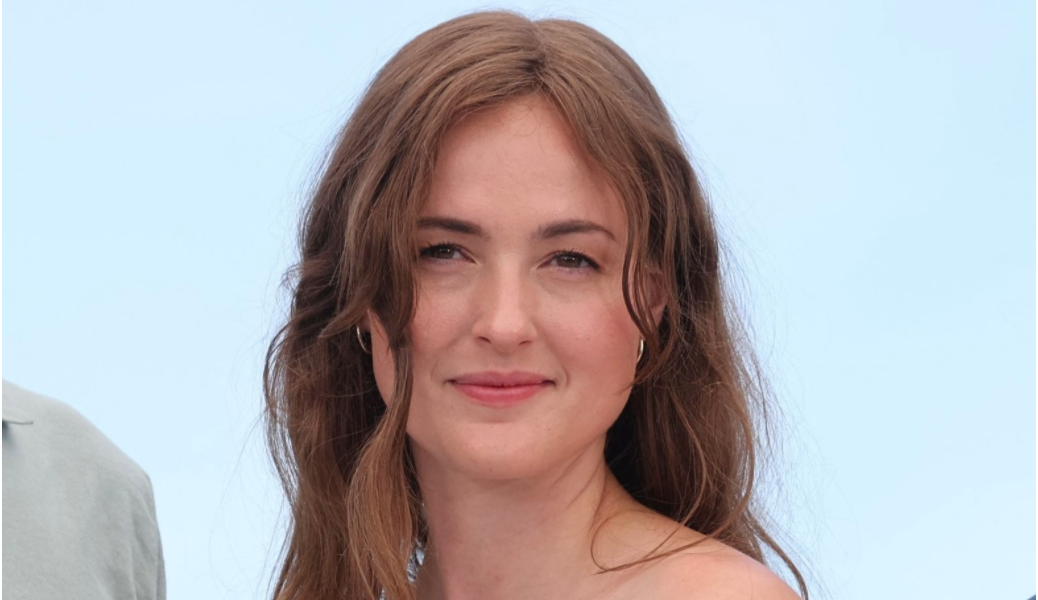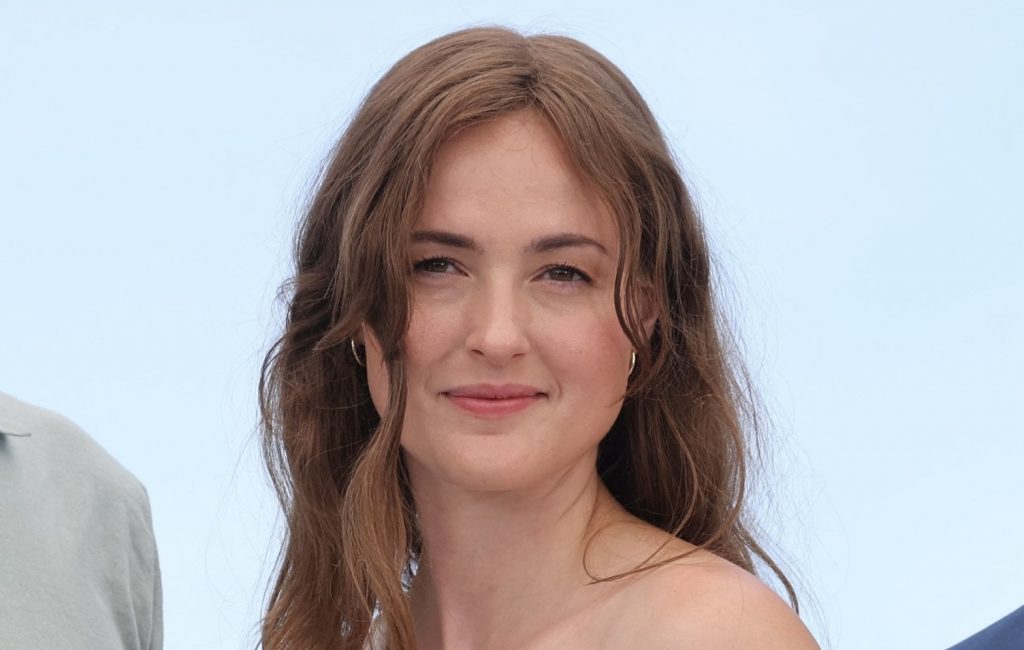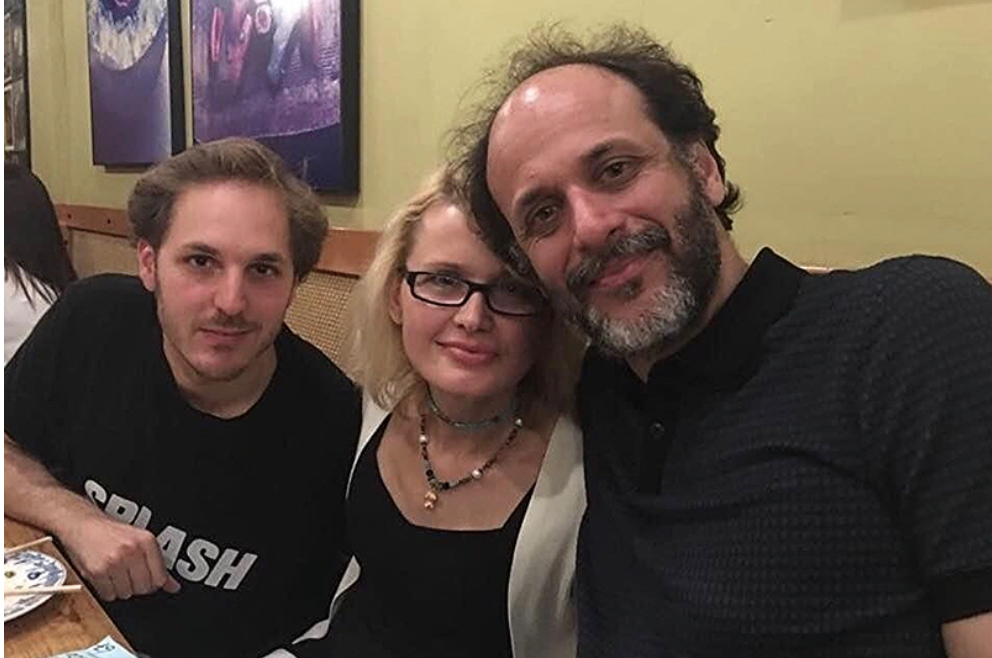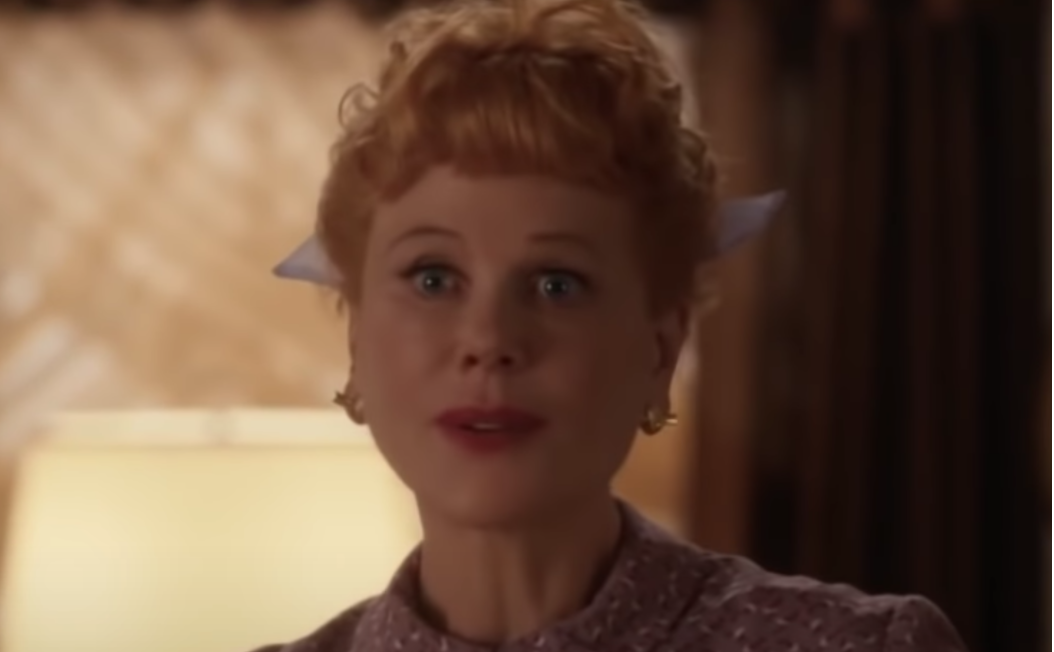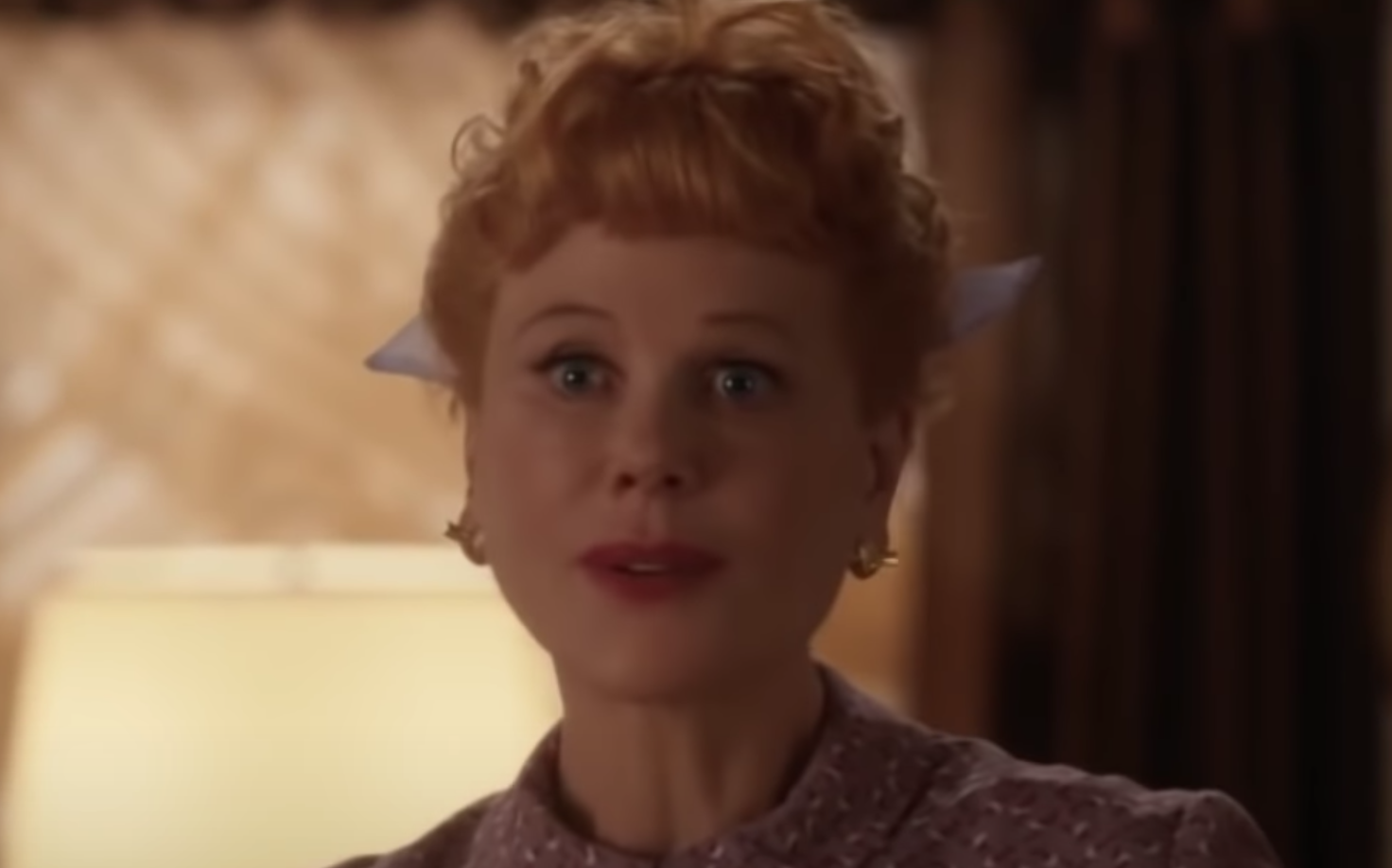
…as her impressive…er, upkeep or maintenance or whatever the proper term is. C’mon…the lady was born three months after the release of Alfred Hitchcock‘s Vertigo and look at her…she has a porcelain doll’s face. She must know my guy in Prague, or at least have heard of him. Gifted artists tend to congregate.
Madonna: It’s interesting because peace is subjective. The way people think about the pandemic, for instance, that the vaccination is the only answer or the polarization of thinking you’re either on this side or the other. There’s no debate, there’s no discussion. That’s something I want to disturb. I want to disturb the fact that we’re not encouraged to discuss it. I believe that our job is to disturb the status quo. The censoring that’s going on in the world right now, that’s pretty frightening. No one’s allowed to speak their mind right now. No one’s allowed to say what they really think about things for fear of being canceled, cancel culture. In cancel culture, disturbing the peace is probably an act of treason.”
…how the Supremes upholding a Mississippi abortion law that states an abortion has to happen with 15 weeks of conception…how exactly does that undermine a woman’s right to choose?
The Texas abortion law is ridiculous, and yes, the Mississippi law, passed in 2018, is restrictive and problematic for low-income women, especially in its refusal to make exceptions in cases of rape or incest. If it were my determination I would certainly uphold Roe v. Wade.
Under present Mississippi law, women who’ve made their decision simply have to terminate a given pregnancy within 105 days. Let’s say that an unwilling mom doesn’t learn that she’s pregnant until the six-week mark — that gives her nine weeks or 63 days to do something about it.
A woman’s right to choose is the central thing, of course, and no civilized person would disagree with this. A 15-week timeframe will obviously make it harder for low-income women, and I’m not oblivious to an element of cruelty in the Mississippi law. Which is why it’s better, I believe, all things considered, to stick with Roe.
If Terry McAuliffe hadn’t fucked himself by siding with Virginia’s wokester-agenda educators, he’d probably be okay in the race against Glenn Youngkin. Instead he hinted that parents who object to portraits of Anglo-Saxon culture as hopelessly poisoned are doing so for subliminal racist reasons…that was a huge error.
If McAuliffe had just played it moderately liberal and sensible (i.e., like me) and not sounded like an obedient servant of woke transformationalists, he’d probably be leading slightly. At least that.
I hope to God Youngkin doesn’t win and that the most recent Washington Post poll turns out to be accurate, but if Terry loses he’ll be obliged to look into his bathroom mirror on Wednesday morning and say “okay, I fucked up, this was my fault and I helped the monsters to win.”
A Youngkin victory will certainly register as a warning gong to Democratic Senators and Congresspersons across the country. Historically Virginia has often gone blue, but McAuliffe managed to change that dynamic and fuck everything up in the bargain.
What’s happened to Bernard McMahon’s Becoming Led Zeppelin? In early September the 137-minute doc screened at the Venice and Telluride film festivals, which almost always signals some kind of imminent fall release, or at least early the following year. But then it disappeared. Either nobody acquired it or it was withdrawn for further editing or something. All I know is that there’s no word about anything.
HE wild guess: There’s been a general sense of frustration with the critical response to the doc. Most reviewers found it overly obsequious and not even slightly inquisitive, and so (again, purely a guess) some re-editing and re-shaping is going on.
Led Zeppelin headliners Jimmy Page and Robert Plant, who had apparently turned down previous proposals for a definitive Led Zeppelin doc over the years, presumably because they didn’t want a warts-and-all portrait (i.e., infamous drug use and groupie debauchery on the road + the drug-related death of dummer John Bonham), are presumably hammering things out with McMahon as we speak. Or not. Who knows?
I saw and reviewedBecoming Led Zeppelin at Telluride ’21. Like most many reviewers I found it satisfactory if (and I say “if“) you’re willing to just go with it and put away your cranky hat. Providing, in other words, that you’re willing to ignore the doc’s kiss-ass attitude and general lack of curiosity about anything other than how the band came together and how the early songs were created, etc.
Forty-eight words: Becoming Led Zeppelin is highly enjoyable but a bit under-nourishing due to control-freak conditions imposed by Page and Plant. Overly sanitized, dishonest by way of omission, totally obsequious. But I still “liked” it — i.e., had a mildly good time except during the last 20 or 25 minutes.
Excerpt: “The first hour relates the individual paths of the three remaining Zeppers, and straight from the mouths — Jimmy Page, Robert Plant, John Paul Jones (all currently in their 70s and in good spirits) as well as the late John Bonham, who is heard speaking to a journalist about this and that.
“The second hour is about the launch of Led Zeppelin — the early play dates, the creation of the first two albums, the acclaim, the power and the glory. It’s basically about good times, and there’s certainly nothing ‘wrong’ with that.
“The problem is that it doesn’t dig in. It’s not even slightly inquisitive. It’s way too obliging, almost feeing like an infomercial at times. It offers, in short, a really restricted portrait, and around the 110-minute mark (and with 27 minutes to go) I started to mind this.
I’m not saying all high-school girls are fickle and flighty, but a lot of them are. Or they were, at least, when I was an awkward, insecure WASP schlemiel.
I’ve mentioned this once or twice before, but in my senior year I had it bad for a luminous Irish blonde named Sally Jo Quinn. Short, slender, magnificent blue eyes, straight blonde hair, smallish feet, slender hands with chewed nails. No dad at home; just her single mom who worked as an administrative something-or-other at the high school. I can’t recall if the parents had divorced or if the father had died or what.
Anyway Sally had several concurrent boyfriends. I was fourth in line, I gradually learned. (Or was I fifth?) The others included a football jock (since deceased), a wealthy man’s son from Ridgefield (dead from drug overdose) and a local cop in his mid to late 20s. I was strictly backup. Scraps, leftovers. For someone already beset with low self-esteem, this situation fit perfectly.
Flash forward to the mid ’80s, when I had a brief thing with an extremely dishy lady who was dealing with an unstable ex. So unstable, in fact, that when I visited her one night he called up and came over and rang the bell (she told me to ignore him) and then started pacing back and forth on the front lawn, calling out to her and talking to himself and generally creating a neighborhood spectacle.
Girls sometimes choose badly, some guys can’t handle rejection, and sometimes you have to put up your dukes.
It did occur to me as this psychodrama was unfolding, of course, that anyone with a looney-tunes ex might be a little screwy themselves, or might be a little dishonest or manipulative or flaky. You are who you go out with.
This ex-boyfriend episode wasn’t enough to put me off (she was beautiful and curvaceous and breathtaking in bed), but it did give me pause. I know that if she’d had two ex-boyfriends knocking on the door I would have said “wow, this is really weird” and “something isn’t right.” And if she’d had three guys pleading for forgiveness and restitution I would have said “okay, she obviously likes guys fighting for her affections” and taken a hike.
Director-writer pally: “What’s interesting is that despite the forehead-slapping quality of Last Night in Soho…what’s interesting is how the whole industry and especially every young exec…they’re all still lined up to work with Edgar Wright.”
HE to director-writer pally: “They don’t care how shitty his films are? Okay, the first two thirds of Baby Driver works, but have you seen Last Night in Soho? Once you get past the concept and the 1966 time-trip design, it’s really awful. Stupid, crude, ham-fisted, tedious, repetitive.”
Director-writer pally: “Edgar is a really nice, engaging, genteel person and every comedy executive, especially in TV and streaming, hold him in messianic esteem. He’s Teflon — even Scott Pilgrim tanking didn’t harm his rep, and is now viewed as some sort of classic. The mantra from his fans is ‘he’s one of us.’
HE to director-writer pally: “Yes, Wright is very likable and personable, very easy to chat with, a good bullshitter. I’ve listened to Edgar in interviews. He talks a good game.
“Unfortunately, his movies (the first two-thirds of Baby Driver aside) are awful to sit through. So things like taste, clever plotting, refinement, dialogue that makes sense, cinematic coherence, directorial finesse…none of that stuff matters to these guys, you’re saying? Because Scott Pilgrim vs. The World s one of the worst films I’ve ever seen IN MY LIFE.”
Attendees included Noyce, wife Vuyo Dyasi, daughter Ayanda, dp Svetlana Cvetko plus Jason Clarke, Joel Edgerton and Gillian Bird, Australian Ambassador to France. The Australian embassy is located at 4 Rue Jean Rey, 75015 Paris, France.
I understood why Saving Private Ryan began with a closeup of a billowing, wind-flapping, desaturated U.S. flag. But what do the stars and stripes have do with Tony and Maria‘s love story in Steven Spielberg‘s West Side Story? Seriously, what is this?
Has Spielberg shifted the locale to Brooklyn’s Fort Hamilton? Is Tony a U.S. Army recruiter? Do Tony and Maria initially bond over their patriotic love of our country? Will West Side Story begin with the singing of “The Star Spangled Banner”? Will there be a 21-gun salute on the night of the big premiere?
The last time I checked West Side Story was not about the U.S. of A. or any uniquely American issue or theme. It’s a story about tribalism, racism, prejudice, territoriality and the glorious madness of hormonal love.
Arthur Brooke‘s “The Tragical History of Romeus and Juliet“, set in Verona, was published in 1562. William Shakespeare‘s English-language version, also set in northern Italy, was written between 1591 and 1595. Until now no one has ever claimed that it’s a particularly American-type story.
Please explain why the red white and blue is mixed up in this…seriously, I’m lost.
The best I can come up with (and I’m just spitballing here) is that Spielberg and the Disney marketers are telling us that the above-mentioned bad stuff (racism, etc.) has a particular resonance with United States culture right now and that the citizenry needs to pay particular attention. We have to “woke” ourselves up to the problem and address it with progressive measures.
SPOILERS HEREIN: 18 hours ago I saw Edgar Wright‘s Last Night in Soho. I had suspected I would probably have a bad time with it, but my God, it’s dreadful. Mindless, gaudy throwaway trash. Not to mention dull by way of a mind-numbing repetition of a #MeToo mantra — older men with bulging wallets are toxic beasts.
Wright got hold of something cool and throttled in the first two-thirds of Baby Driver, but now it’s gone. The bottom line is that he’s a completely untethered geek fetishist — he’s all about design and visual intensity and comic-book-level characters, and at the same time completely disengaged from anything even vaguely resembling an adult sensibility or, perish the thought, an ability to absorb and re-process life as a semi-complex, multi-layered thing. In short, Wright is 47 going on 14.
In the mid ’60s context of Last Night in Soho, Wright isn’t interested in trying to (let’s get creative!) partially channel the spirit of Roman Polanski by way of recalling or reanimating the 1965 atmosphere of Repulsion…God, what a stone cold slasher masterpiece that film is, especially compared to the slovenly Soho. Repulsion and Last Night in Soho are one year apart, and at the same time based in entirely separate galaxies.
Last Night in Soho essentially says one thing over and over. Ready? Older London men who went to flashy nightclubs in the mid ‘60s were cruel sexist pigs (which many of them doubtless were) and they all wanted to sexually exploit and abuse young women who needed the money. Which made them Hammer horror monsters of the darkest and scuzziest order.
But that was mid ‘60s London for you! Forget the seminal beginnings of the rock revolution. Forget the Yardbirds. Forget the mid ’60s Soho club scene that had begun to be dominated by London’s rock virtuosos and their many followers. Forget the musical and spiritual explosions conveyed by Aftermath and Rubber Soul. Forget John Lennon and George Harrisonbeing dosed by a dentist in ’65 and experiencing their first-ever acid trip. Forget all that. Because in Wright’s view, 1966 London was crammed with creepy, sex-starved, Sexy Beast guys in their 40s and 50s who worshipped the Kray brothers.
Not to mention those four Heather bitches from fashion design school who do nothing but taunt and snicker at Thomasin McKenzie‘s innocent “Elly”.
But at least there’s one compassionate young dude (Michael Ajao‘s “John”) who genuinely cares for her, mainly because the Maoist woke mindset of 2021 has declared that all people of color are sainted figures. Which confirms that on top of his unrestrained geek indulgences Wright is just another obedient woke whore, singing the same hymn from the same “sing it or we might cancel you” hymn book…people of color are so good, so blessed, so pure of heart.
Mckenzie’s over-emoting drove me mad. In Wright’s view she’s Heidi..a country-girl waif who’s completely incapable of not being gobsmacked by everything and everyone she encounters, and incapable of restraining or modifying her emotional reactions.
I don’t know for a dead cold fact that Grant Williams, star of The Incredible Shrinking Man (’57), was gay, but he almost certainly was. And in this context Shrinking Man becomes more than just a sci-fi drama about a guy getting smaller and smaller. It’s a film about a repressed ’50s guy feeling smaller and smaller due to the anguish of the closet — fear of being outed or found out, career anxiety, a general sense of isolation, constantly having to hide and skulk around.
The cat who almost kills Willams’ character…hell, choose any metaphor. The Los Angeles vice squad, homophobic agents and producers, Williams’ father, the general atmosphere of disapproval.
A West Hollywood resident, Williams never married or had any kind of ongoing relationship with anyone of either gender. (Or at least none that was ever written about.) Written on the Wind, The Incredible Shrinking Man and Susan Slade aside, the poor guy made almost nothing but B-level crap. He died of peritonitis in July ’85, at age 53.
This was snapped sometime in ’01 or ’02…somewhere in there. I’ve been to Prague seven or eight times. My first visit was a honeymoon thing with my ex-wife Maggie in October ’87. (Prague was a total Commie town back then, celebrating the 70th anniversary of the ’17 Russian revolution, scent of soft coal everywhere.) My second visit was in ’92 — managed to shake Vaclav Havel‘s hand at a bookstore. This visit, I think, was my third.