Tweeted two days ago by @GrahamB47 (with grammar improved by HE): “Name a director whom you went all in for at first but whom you’ve since moved past, either because they dropped the ball or your relationship to their work changed. NOT for ‘being a creep/criminal’ reasons.”
HE answer: Terrence Malick, hands down. And if I may interject the opposite, there’s one director who not only didn’t let me down but delivered one of his greatest-ever films at age 85 or thereabouts — Roman Polanski.
Instead they should gracefully complement or enhance. Bill Maher‘s new glasses (dark, thickish frames) are too domineering. They don’t work with his features — the glasses say “look at us first, and then Bill’s face.” One look and you’re thinking “uptight, stuffed-shirt, resident zoologist glasses.” Like the ones Cary Grant wore in Bringing Up Baby.
If you want thickish, distinctive frames you should go with cool colors — solid blue or red. And maybe go with adjustable amber- or gray-tinted lenses. Black frames, trust me, are too “Gig Young in the late ’50s.” They make Maher look bookish, and they add five or ten years.
About a decade ago I was friendly with a Southern conservative woman who never went anywhere without her loaded Glock. Always in her handbag or the glove compartment of her car. She loved how it made her feel — safe, protected — but was she actually ready to kill someone who might try to rob her or worse?
Imagine waking up each morning and thinking “this might be the day when some bad guy will try something and I’ll have no choice but to shoot his lights out.” Imagine carrying that idea in your head all the time.
Leaving aside the idea of homeowners keeping a loaded weapon in their bedroom closet to protect their families from whatever (which I understand), I suspect that pistol-packing conservatives are more turned on by the idea of “carrying” than anything else. Packing heat makes them feel like a secret Dirty Harry, and this feeling somehow completes them on some emotional level. Guns, I believe, have become a totem — a symbol of potency or a willingness to stand their ground should push ever come to shove. A gun makes an owner feel like a member of some kind of steady-as-she-goes, right-thinking fraternity..
How many weaponized righties are actually ready and willing to shoot a bad guy? Very few, I’m guessing, and probably fewer than that. For most of them the notion that they might use it, that they could if their hand was forced with no way out, is what soothes or satisfies.
I’ve been shoved from time to time, but I haven’t been in an actual fist fight since my late teens, and the odds of getting into any kind of altercation these days are close to nonexistent. I don’t drink or even “go out”, for one thing, and I can’t recall the last time I visited a Patrick Swayze tough-guy bar. Plus you never know how hair-trigger crazy a would-be opponent is, especially in these crazy times. Plus I wouldn’t want to risk getting my fingers snapped or swollen, as this would hinder my daily writing. Plus I’m not in good enough shape these days to fight anyone more than 15 or 20 seconds.
But I like the idea (and I mean the “idea”) of carrying a sandbag cosh. The kind, you know, that Tim Roth carried around in Stephen Frears‘ The Hit. As a totem, mind — a weapon I’d almost certainly never use but could theoretically use if, say, some kind of brute threat were to manifest. So yes, I’ll admit it — I like the idea of carrying one of these guys around. And it’s a far less crazy notion that carrying a loaded pistol.
Will I go so far as to actually buy one of these things? I’m mulling this over as we speak.
I’ve had this feeling all along that Pablo Larrain‘s Jackie, which is just about five years old now, somehow underserved the mystique of the great JFK mourning weekend (11.22.63 to 11.25.63). I was seriously impressed by Noah Oppenheim’s 2010 screenplay, which was originally going to be directed by Darren Aronofsky with Rachel Weisz playing Jackie Kennedy. Oppenheim told the story of what happened that weekend and pretty much how it went down a beat-for-beat, conversation-by-conversation basis,
At the time it seemed brash and brilliant for director Pablo Larrain, who took over the project sometime in ’15, to forsake the historical and sidestep that mass memory and not deliver a rote recap of what Mrs. Kennedy, only 34 at the time, went through that weekend, but to make a kind of art film — to give her portrait a kind of anxious, fevered, interior feeling.
Which is why I wrote that Jackie really is “the only docudrama about the Kennedy tragedy that can be truly called an art film…it feels somewhat removed from the way that the events of that weekend looked and felt a half-century ago…intimate, half-dreamlike and cerebral, but at the same time a persuasive and fascinating portrait of what Jacqueline Bouvier Kennedy (Natalie Portman) went through between the lunch-hour murder of her husband in Dallas and his burial at Arlington National Cemetery three days later.
But after re-watching Jackie a couple of weeks ago I went back and re-read a draft of Oppenheim’s script, which is a whole different bird than Larrain’s film. Pablo cut out a lot of characters and a lot of interplay and a general sense of “this is how it happened” realism, and focused almost entirely on Jackie’s interior saga.
And honestly? I discovered that I liked Oppenheim’s version of the tale a little more than Pablo’s.
The script is more of a realistic ensemble piece whereas Larrain’s film is about what it was like to be in Jackie’s head. I respect Larrain’s approach, mind, but I felt closer to the realm of Oppenheim’s script. I believed in the dialogue more. The interview scenes between Theodore H. White (played by Billy Crudup in the film) and Jackie felt, yes, more familiar but at the same time more realistic, more filled-in. I just felt closer to it. I knew this realm, these people.
Am I expressing a plebian viewpoint? Yes, I am. I’m saying I slightly prefer apparent realism, familiarity and emotion to Larrain’s arthouse aesthetic.
Great achievement in almost any field is always about the forsaking of easy, casual pleasures, and is always the result of fire in the belly, serious devotion, relentless discipline, hardcore thinking, early to bed and early to rise, etc. And if you don’t have those rigors in your own mind and system, you damn well need someone who (a) cares, (b) believes in you and (c) will crack the whip.
King Richard (Warner Bros., 11.19) is the fact-based story of how Richard Williams pushed and shaped his daughters, Venus and Serena Williams, into becoming tennis superstars. The trailer for suggests straight, focused naturalism, which is what everyone wants anyway.
You know Smith will be Best Actor nominated — locked.
At age 88, Ellen Burstyn has been a combination class act and locomotive for over a half-century (and over 60 years if you count her TV work). She shifted into a big-time film career after her performance in Peter Bogdanovich‘s The Last Picture Show, which will celebrate its 50th anniversary on 10.22.21, and she’s managed to star or costar in mostly cool, tasteful, adult-angled dramas (Alice Doesn’t Live Here Anymore, Resurrection, Requiem for a Dream, W., Pieces of a Woman) over the succeeding decades.
Not because she’s even vaguely interested in revisiting the character of Chris MacNeil, the Hollywood actress whose daughter turned into a demon in William Friedkin‘s The Exorcist (’73), but because she can’t turn down the huge paycheck. She has to take this gig in the same way that Lionel Barrymore had to allow Edward G. Robinson and his gangster goons to stay in his Key Largo hotel — he couldn’t say no to the money.
“Universal is not remaking The Exorcist, which was directed by Friedkin from a screenplay that William Peter Blatty adapted from his own novel. But the studio will, for the first time, return the Oscar-winning Ms. Burstyn to the franchise. (Two forgettable Exorcist sequels and a prequel were made without her between 1977 and 2004.) Joining her will be Leslie Odom Jr., a Tony winner for Hamilton on Broadway and a double Oscar nominee for One Night in Miami. He will play the father of a possessed child. Desperate for help, he tracks down Ms. Burstyn’s character.”
Odom: “Excuse me…are you Chris MacNeil? My God, it’s you! How are you? Are you good? I’m asking because my daughter’s been possessed by Pazuzu and I’m wondering if you’re up for kicking that demon’s ass like you did back in the early ’70s.” MacNeil: “I’m fine, thanks, but I didn’t do anything. I persuaded a Jesuit priest named Damien Karras to exorcise the demon, and he asked an older priest, Father Merrin, to help him. I didn’t do a thing. All I did was scream and weep and plead for help.” Odom: “Yeah but you know all about demons and shit, right? You know how to deal with the moving beds and green vomit and all that. You’re experienced.” MacNeil: “I don’t know anything. I just went through a horrible ordeal a half-century ago, and now I’m almost 90. Find your own exorcist.” Odom: “But I need your help.” MacNeil: “What’s wrong with you? Look at me…what am I gonna do?”
Leos Carax‘s Annette, which premiered almost three weeks ago (7.6) at the Cannes Film Festival, will be given a limited theatrical release in the U.S. on 8.6.21, followed by a digital streaming debut on Amazon Prime Video on 8.20.21.
I watched Annette last night. It’s an arthouse doozy that leaves you stunned and astonished, lemme tell ya. There’s plenty of time to write a proper review, but I tapped out a short riff this morning and shared it with two or three friends.
“Only the most perverse, anti-populist critics will even flirt with being kind to, much less praising, Annette when it opens stateside,” I wrote. “Once you get past the strikingly surreal visual style and the fact that it was, like, made at all, there is only the self-loathing rage of Adam Driver’s Henry McHenry character, a stand-up comedian, and Carax’s seething disdain for easily led-along audiences.
“Annette is ‘brave’ and wildly out there, but this is arguably the most morally repellent musical ever made in motion picture history. Driver’s Henry, an envelope-pushing comedian who performs one-man shows that aren’t in the least bit amusing, is astounding — one of the most flagrantly revolting protagonists I’ve ever spent time with in my moviegoing life.
“Remember the rickety, old fashioned idea of a lead character having some sort of relatable qualities that an audience might bond with? Even Al Pacino‘s Michael Corleone had relatables in The Godfather, Part II, and he was an ice man. Driver is playing a kind of sociopathic Jack the Ripper figure. The movie is mostly about him and barely pays attention to Marion Cotillard‘s Ann, an opera singer who marries Henry (and vice versa), and gives birth to their daughter.”
“Annette is a misanthropic rock opera about rabid egotism, demonic personality disorder, black soul syndrome, rage, alcoholism, murder, self-loathing, self-destruction.”
Critic who strongly disagrees: “For daring, imagination, energy, it’s the film of the year so far. Fuck populism.”
It’s been obvious to anyone with eyes, ears and half a brain that Jaume Collet-Serra‘s Jungle Cruise (Disney, 7.30) is both an homage and an insult to the lore of John Huston‘s The African Queen (’51).
Jungle Cruise costars Dwayne Johnson and Emily Blunt have made no secret of the fact that their respective characters, “Skipper” Frank Wolff and Dr. Lily Houghton, are roughly modelled on Charlie Allnut and Rose Sayer, the Queen characters played 70-odd years ago by Humphrey Bogart and Katharine Hepburn. And of course the basic set-ups are similar.
Of course, Serra and Cruise cowriters Michael Green, Glenn Ficarra and John Requa never had the slightest intention in making the soon-to-open Disney release into any kind of African Queen companion piece. They intended, in fact, to lampoon (i.e., fool around with) the 1951 original, and thereby cheapen it to some extent.
Jungle Cruise is obviously adhering to a classic formula — a flawed male alpha figure in the front-and-center position with a spirited woman of refinement and sensitivity who steps in and gradually ups his game.
Jungle Cruise boilerplate: “Frank, a boat captain, takes his sister and her brother on a mission into a jungle to find a tree believed to possess healing powers. All the while, the trio must fight against dangerous wild animals and a competing German expedition.”
I’ve said this before, but the trailers have made it clear that Jungle Cruise is exactly the kind of ultra-synthetic, X-treme adventure, CG overload, Indiana Jones-aspiring, family-friendly megaplex film that, in my mind, is killing the idea of conveying real big-screen adventure. And no one gives a damn.
“I never really thought of it as a comedy,” Bogart tells Alter. “[My dad’s] relationship with Katie is funny, even if they don’t play it as funny.” Actually Hepburn and Bogart do play it for the amusement factor as far as that goes, and they do what they can to stoke the unusual romantic current that develops between them.
As you might expect, Alter gets into the p.c. factor — could The African Queen (which is set German East Africa in 1914) be remade today? By today’s standards, he notes, the most notable omission in Huston’s film “is the lack of any Black characters in significant roles.”
Alter declines to mention that Jungle Cruise, also set around the same time period (i.e., “early 20th Century”), has no major Black characters either — the costars are Jack Whitehall, Édgar Ramírez, Jesse Plemons and Paul Giamatti.
Val Kilmer — haggard and roughed up by cancer but spiritually persistent as far as it goes. He was Mr. Hot Shit in the Reagan, Poppy Bush and Clinton eras (Top Gun, Batman Forever, The Doors, Tombstone, Heat, The Saint), but now he’s the semi-tragic star and cinematographer of Val. I saw this absorbing, dig-down portrait of the 61 year-old actor and onetime superstar yesterday afternoon, and for a while I didn’t know what to think except “uhm, well…”
Be honest — it’s a melancholy sit.
Edited by Leo Scott and Ting Poo, Val is all catch-as-catch-can video footage — stuff that Kilmer shot over the last 40 years, ’80s and ’90s VHS and onward into digital and 1080p. Some of it is just faces and moments and time-grabs, and some of it is steady and gentle and poignant, and after a while it gets you…it’s a serious doc about a serious, intense guy…haunting, intimate and often (how could it not be?) quite sad at times.
“I think of myself as a sensitive, intelligent human being with the soul of a clown…”
You can sense that whomever and whatever Kilmer might have been when he was young and pugnacious and humming with hormones in the ’80s and ’90s, age and cancer have definitely taken him aside and whispered in his ear “time to turn that shit off, bruh…those chapters are over.”
Kilmer has not only modified what and who he is inside but age and disease have molded him into a different physical being — he now looks a bit like Will Sampson from One Flew Over the Cuckoo’s Nest only older and grayer. Imagine if Cary Grant had aged into William Hickey in Prizzi’s Honor or Oskar Homolka — it’s on that level.
And everyone had to wonder why Kilmer didn’t show up in Cannes a week or two ago for the Val premiere. It was easily the biggest moment of his life and career this century, and yet for some reason…
You know what Val tells you? I’ll tell you what Val tells you. It tells you that when you grow older, life does not fuck around. Especially when cancer comes along and says “hey man…are you ready for some serious shit in your life? Because I’m about to fuck you up but good.”
There were four…no, five standout moments for me. But before I mention them I should share an opinion, which is that Val would have been a better package if it had devoted, say, 35% or 40% of its running time to professional-grade video interviews with, say, eight or ten talking heads — friends, colleagues, agents, producers, journalists…people with a little perspective outside of KilmerDome.
For me the five most affecting moments are (a) Kilmer arguing with director John Frankenheimer on the set of Island of Dr. Moreau (“Will you turn the video camera off, please?”), (b) Kilmer sitting by a fireplace and cutting off hunks of his long hair with a knife (this was the one sequence that made me think of gettingupandleaving), (c) Kilmer and his son Jack dressed in mid ’60s Batman and Robin costumes, (d) a weary Kilmer telling an assistant that he needs to take a break from autograph-signing and fan-greeting, due to some physical ailment, and (e) Kilmer driving through his childhood neighborhood of Chatsworth and muttering “this place is hell…pure hell…I hate it.” (Or words to that effect.)
Paraphrasing a line from a 5.6.20 Taffy Brodesser Akner N.Y. Times piece about Kilmer: We still need to believe that all our efforts weren’t for nothing, that we could — we will — survive a dark moment in our history and that when that happens, we won’t be left without the things that made those moments decipherable and meaningful and therefore tolerable.”
Repeating: what Val finally tells you is that life doesn’t fuck around.
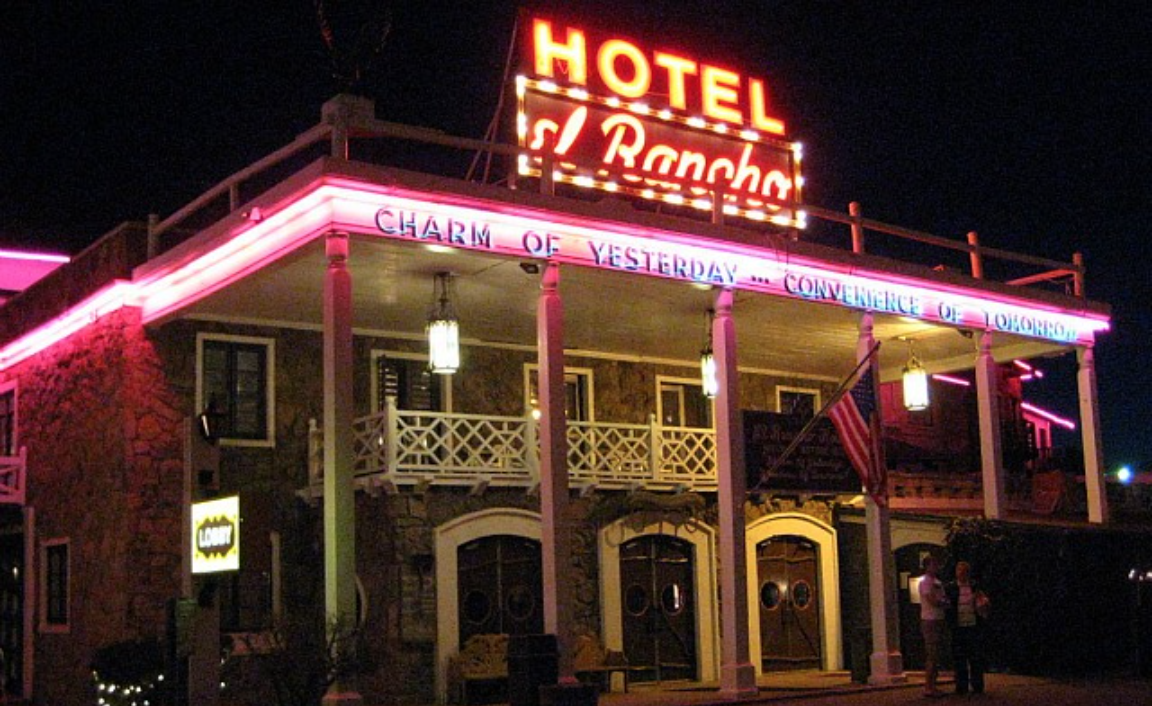
In mid July of 2019 Tatiana and I did five or six days in Prague, took a train trip to Munich and endured a briefly terrifying lost-wallet episode, and then took another train ride and had a couple of relaxing days in Zurich.
Munich nightmare: Soon after arriving in Munich I took an Uber to meet a journalist friend at a beer garden. The Uber driver was a 40ish Greek immigrant named Oscar. Friendly but maybe a wee bit slow on the pick-up. Anyway, I got out and Oscar took off. 10 seconds later I realized my wallet was missing.
Uber’s search engine didn’t give me Oscar’s phone, but it allowed me to write him and report the loss through their relay software. It also allowed me to write management and ask them to reach out to Oscar, etc. Agitated and scared, I sent three identical messages to Oscar and Uber management. Five minutes passed…nothing. Ten minutes. Then I got a message from Uber saying that they’d passed the news along to Oscar, blah blah. But no Oscar reply.
After 20 or 25 minutes I figured it was a lost cause, and so I called another Uber to take me back to the hotel. And of all the Uber drivers in Munich, Oscar answered and said he’d be there in three minutes. “Oscar!” I wrote back. “I left my wallet in your car less than half an hour ago!” Then he pulled up and I jumped in. “Do you have my wallet?” I asked. “No,” he said, and my heart sank. Then he said, “I gave it to the police.”
So we drove to the precinct in question, and sure enough the wallet was there. And the cops were really friendly. I thanked them, and one said, “You should thank this guy,” referring to Oscar. “But of course!” I said. Happy ending! A $40 tip for Oscar, which he wouldn’t accept at first. But I insisted. I should’ve made it $50 or a $100, I know.
Strangely, curiously, there are still those who don’t understand (or refuse to accept) that Tony Soprano was whacked while sitting in that family restaurant booth in the final episode of The Sopranos. I’ve come to understand that these very same people have also fought against the obvious interpretation of the aftermath of that tenement shootout scene in Taxi Driver (’75).
For the 17th or 18th time, here’s the damn explanation (and there’s really no arguing this):
At the end of the Taxi Driver shootout sequence and just after the bleeding and mortally wounded Travis Bickle, sitting on that blood-spattered couch, pretends to shoot himself in the head as he goes “bawshhhh!…bawshhhh!”, director Martin Scorsese switches to an overhead crane shot of Bickle on the couch and the two cops standing at the doorway with guns drawn. Looking downward, the camera slowly tracks along the ceiling, over the cops and down the hallway and into the street.
Most would say this is just a cool overhead tracking shot and let it go at that. But it’s just as legitimat to call it the path of Bickle’s spirit as he leaves his body and prepares to merge with the infinite finality…remember Jeannot Szwarc‘s similar spirit-rising-out-of-the-body shot at the end of Somewhere in Time? Same basic idea.
What half-reasonable person could ever buy the denouement of Taxi Driver? Everything in this sequence screams “this is bullshit!” In what world would Bickle, suspected by at least one Secret Service Treasury guy as a potential assassin (“Henry Krinkle”) who nearly killed Sen. Charles Palatine…in what world would Bickle be portrayed as a hero by the media for shooting a corrupt cop and two pimps in an East Side tenement building? The idea is insane.
And this shooting in some way helps the parents of Jodie Foster‘s Iris to find her and bring her back home to Indiana? (Iris will never be restored as a normal Indiana teenager…she’s been ruined and corrupted forever.)
And then Cybil Shepard gives Travis a come-hither look in the rear-view mirror when he gives her a ride in his cab?
It’s all Travis’s death fantasy…the stuff he imagines would happen in a perfect world as he sits on that tenement couch, bleeding profusely and eyeballing the cops and slowly drifting off the mortal coil, etc. The very last shot in TaxiDriver is of a seemingly startled Travis looking into his cab’s rearview mirror, and then whoosh…he’s gone. No reflection. Because Travis isn’t actually there.
Are there really people out there who think that the denoument is somehow real? Yes, there are.
There were slight concerns about Joel Coen’s The Tragedy of Macbeth having been turned down by at least one major festival, but now the sun is shining with the black-and-white, shot-on-a-sound-stage version of William Shakesperare‘s classic melodrama of bloody greed and ambition booked to open the 59th New York Film Festival on Friday, 9.24.
Denzel Washington and Frances McDormand will play long-of-tooth versions of the titular Scottish character and his scheming “out damned spot” wife. The only costar names I recognize are Brendan Gleeson and Stephen Root.
We all understand that films chosen to open a major film festival are usually audience-friendly, as in a wee bit soft or milquetoasty or at least not overly edgy. It would appear that The Tragedy of Macbeth may be an exception to this tradition, given the NYFF’s decision to apply the term “anguished” in their official description.
NYFF press release: “A work of stark chiaroscuro and incantatory rage, Joel Coen’s boldly inventive visualization of The Scottish play is an anguished film that stares, mouth agape, at a sorrowful world undone by blind greed and thoughtless ambition.”