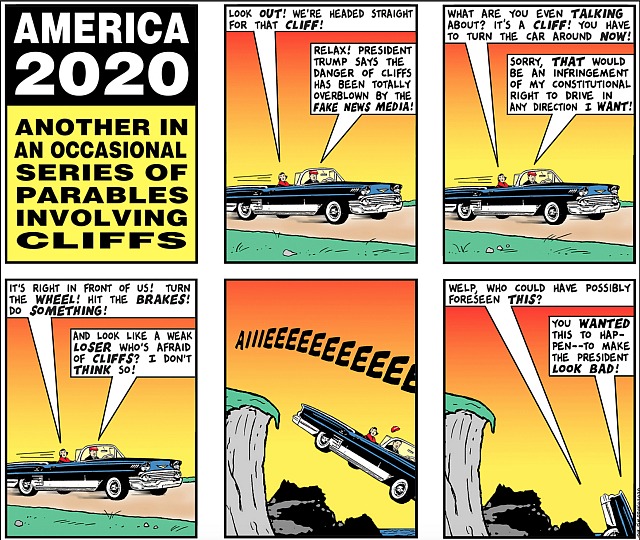
Will tomorrow night be the most morose New Year’s Eve in U.S. history? The NYE celebrations that followed the 1929 stock market crash were probably more fun because at least people were allowed to mingle and party without fear of endangering themselves. Be honest — Andy Cohen‘s smile is fundamentally dishonest. It says “yeah, noisemakers and champagne!…Trump will soon be gone and three Covid vaccines are making the rounds…everything’s gonna be fine!” World to Cohen: We have our doubts.
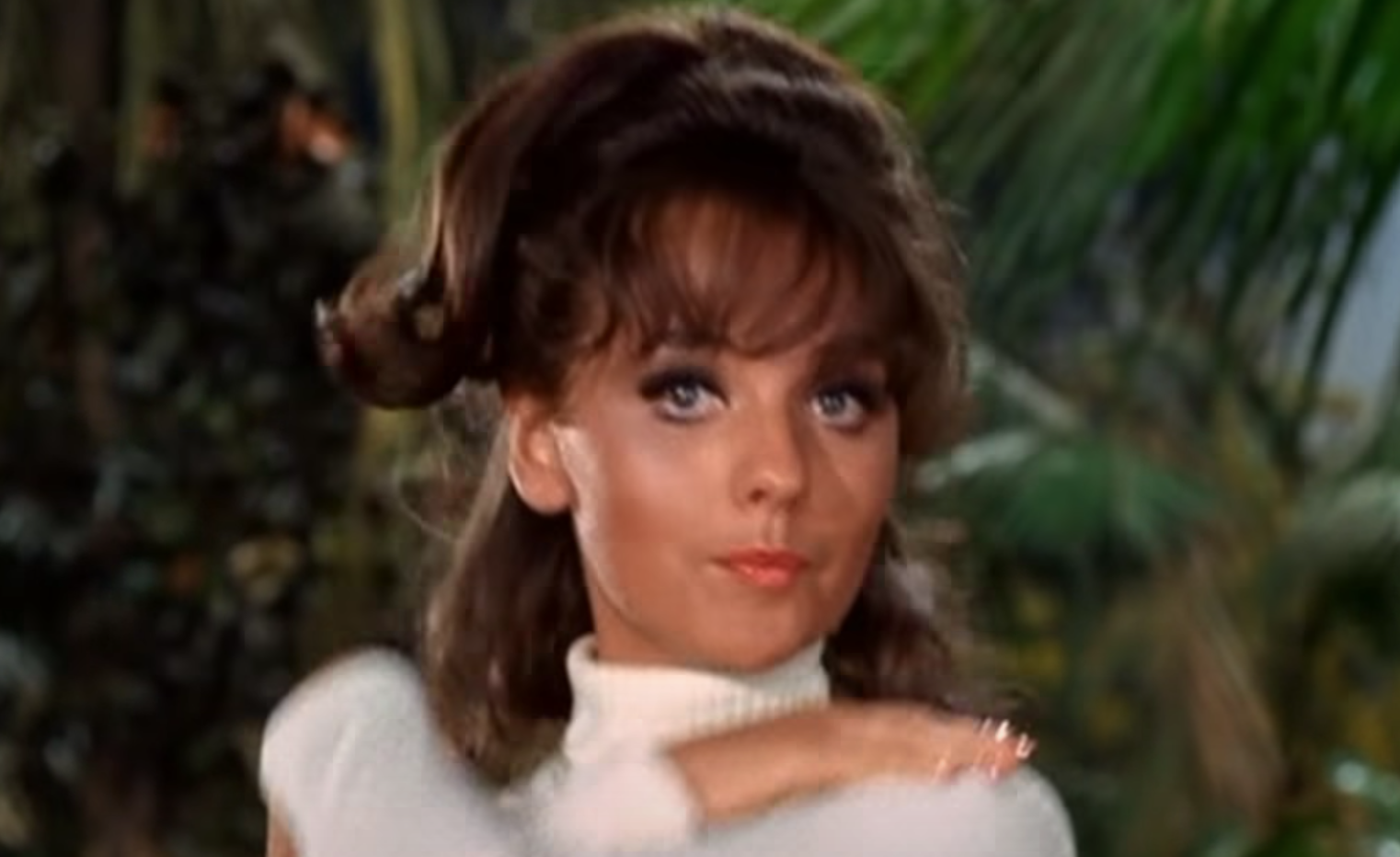
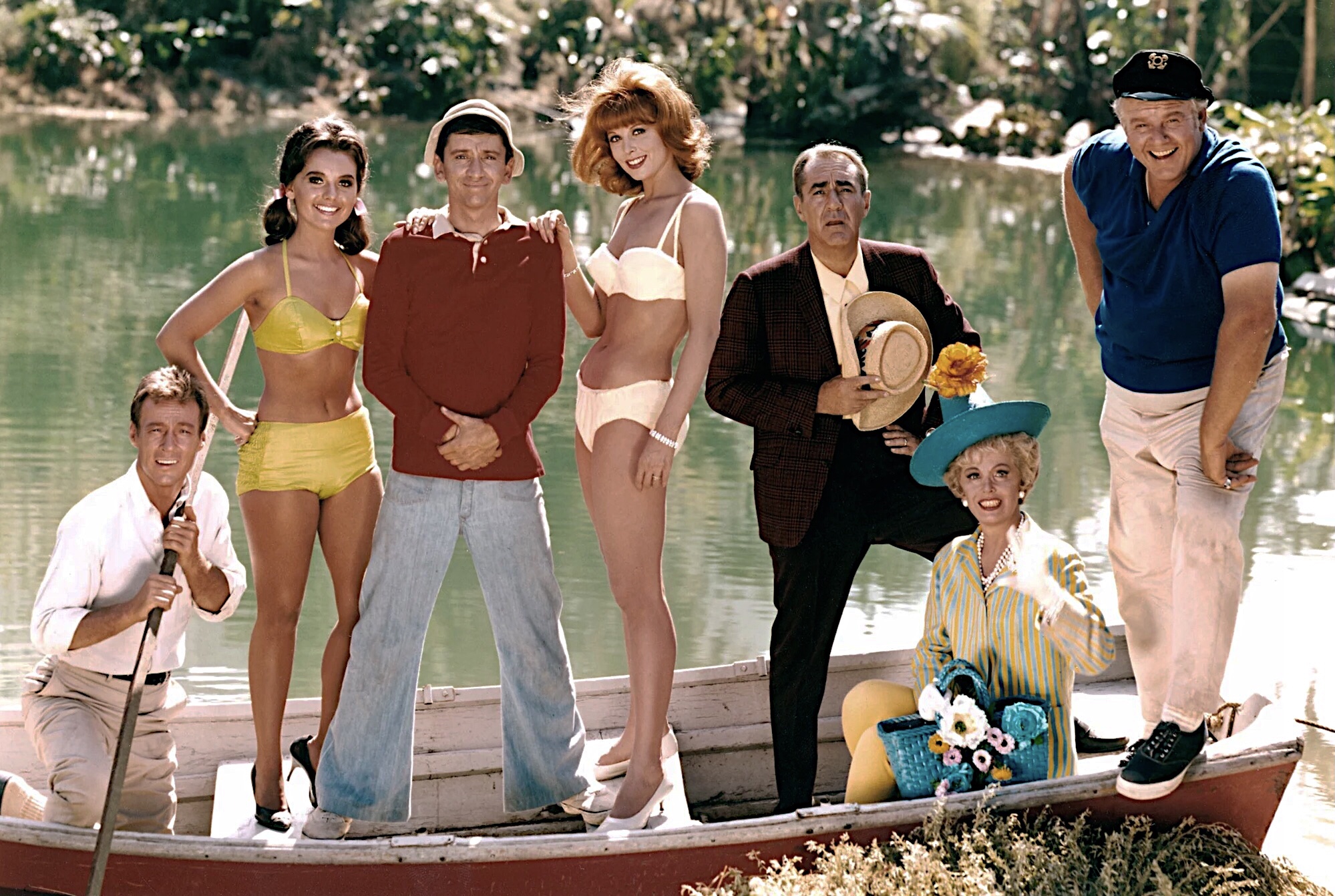
Poor Dawn Wells, aka “Maryann Summers” in Gilligan’s Island, has died from Covid at age 82. I’m very sorry — condolences for friends, family, fans and colleagues.
Wells was very fortunate, of course, in being cast in Sherwood Schwarz‘s oppressively stupid, inexplicably popular sitcom, which except for two or three episodes I’ve avoided all my life. Okay, I may have watched five or six.
Everyone loved Maryann — the perfect tropical island fox. (Will I get re-cancelled for using that insidious term? Would it help if it was meant ironically or historically, as a verbal comment on a remnant of a bygone age when “fox” was an acceptable term of flattery?)
Born and raised in Nevada, Wells was 25 or 26 when that Sherwood Schwartz series began in ’64 (the first season was shot in black-and-white), and 29 when the show breathed its last. 98 episodes in all.
The difference in the quality between the insipid Gilligan’s Island and Bob Denver‘s previous series, The Many Loves of Dobie Gillis, was night and day. Credit is due, I suppose, to Schwartz for inventing and selling the idiotic concept, but the writing on the Gillis series (’59 to ’63) was 20 times better than the plotting and patter on Gilligan. Cavalier wit, cooler personality.
Why didn’t Maryann and Russell Johnson‘s professor become a couple? They could’ve had kids. How did the Gilligan characters happen to bring along such huge wardrobes (or even a suitcase) when they were only enjoying a three-hour cruise off the coast of Oahu? Why didn’t the professor build a surfboard for Maryann?
Speaking of beaches, why weren’t there more scenes in which Maryann and Tina Louise‘s “Ginger Grant” would lounge around in brightly-colored floral print bikinis and soak up rays? (Now I’m really gonna be re-cancelled.) Why didn’t Gilligan learn to surf? Or the skipper for that matter? Did everyone have their own outhouse or did they share? How did they arrange for running water again? The show wasn’t even interested in any kind of hand-made Swiss Family Robinson ingenuity.
What was the basic metaphor of Gilligan’s Island? TV sitcoms become hits because they touch a chord of some kind. Gilligan‘s chord had something to do with capturing the insular mindset and complacency among the American middle-class in the mid ’60s. Nothing about living on a remote island (and one without toilets or hot running water, remember) altered how they thought and lived. The castaways might have just as well been residing in a condo community alongside a golfing fairway in Scottsdale.
Wells certainly had her moment in the sun. I was sorry to read that things were difficult for her a couple of years ago — her Wiki page says that a GoFundMe page was set up to help Wells cope with financial challenges.
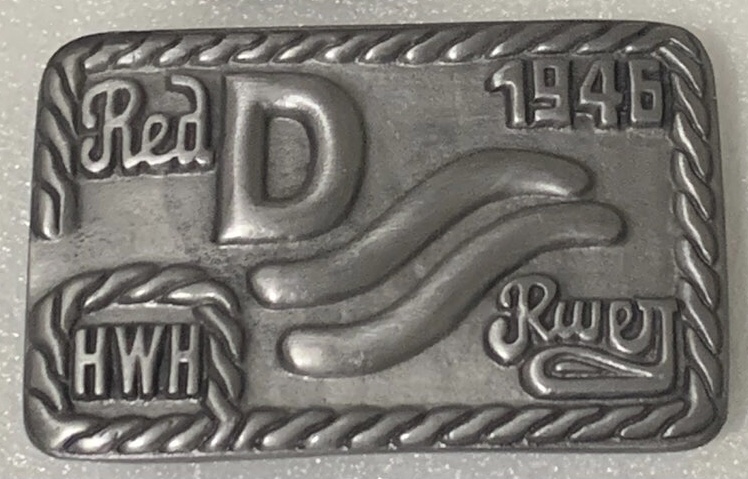
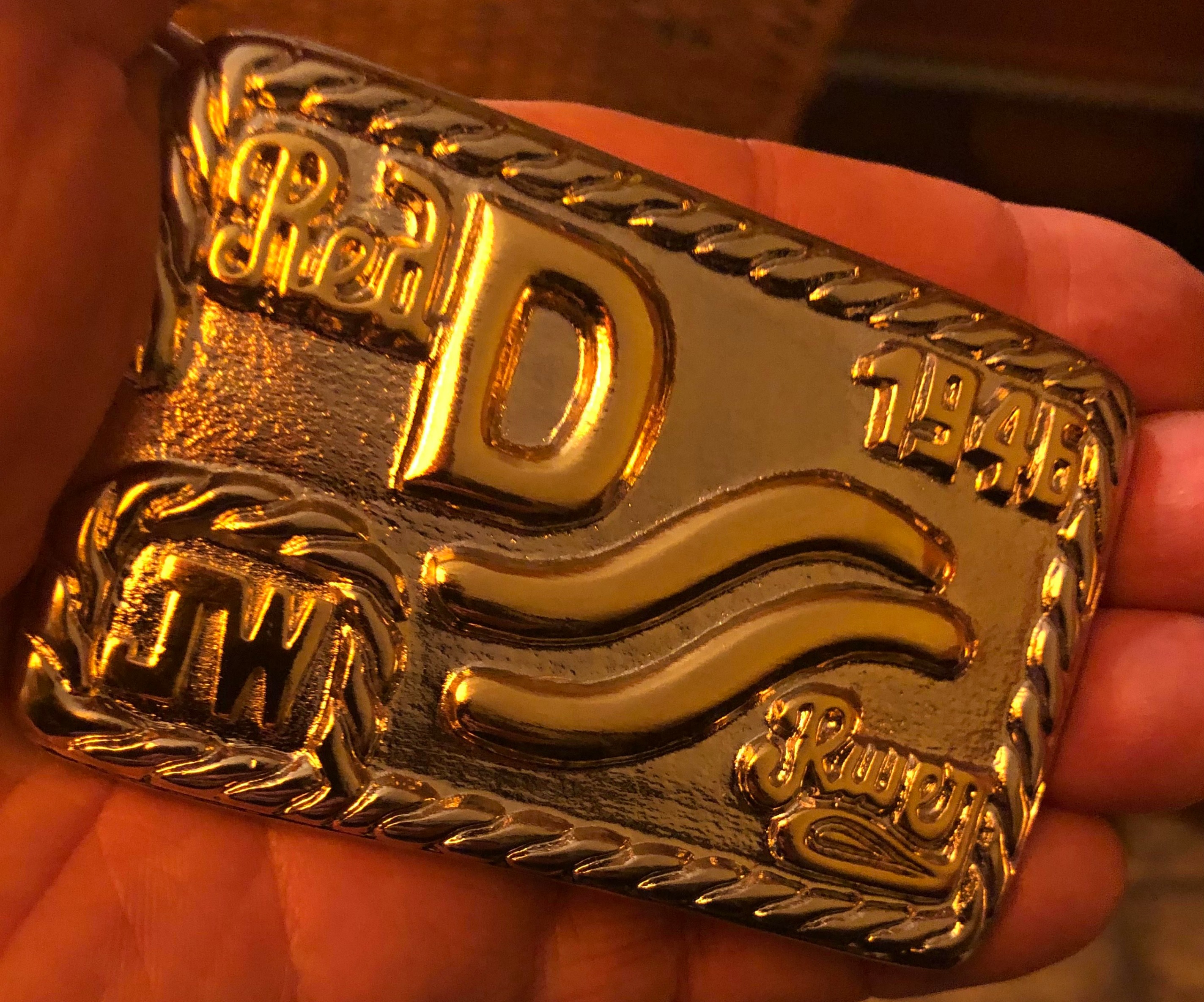
A few days ago I ordered a poor man’s Red River belt buckle. It arrived this afternoon. It’s made of a solid, heavy metal. Decent craftsmanship as far as a knockoff goes. I just need to figure some way of griming it up, making it look more beat-up and weathered. Plus it has my initials (and John Wayne’s) on the lower left corner. 7:40pm: It’s too cheap looking, too gold-dipped…I should’ve ordered the pewter.
Last night HE’s own Bob StraussdescribedPromising Young Woman as “soooo good! The kind of thing that wriggles out in all kinds of unexpected directions, upending both genre expectations and the woke doctrine so many on this site are afraid of, yet never betraying its fundamental righteousness in the process. Complex, crazy, often funny as hell and as startling as it gets.”
I’m an admirer also, but “funny”?
Posted this morning: “Promising Young Woman has a striking edgy quality and is loaded with a certain kind of acrid, on-target attitude, but Mr. Strauss has unfortunately joined the p.c. throng that insists on calling it ‘funny.’
“Different folks & strokes, but as God is my witness and may He, She or It strike me dead with Vito Corleone’s bolt of lightning, there is NOTHING that even flirts with ‘funny’ in this film. Funny can be laugh-inducing or titter-worthy or it can be an internal reaction (i.e., LQTM), but Promising Young Woman radiates an absolute and unequivocal absence of the mental, spiritual and emotional ingredients that constitute ‘funny’ or ‘dryly amusing’ or ‘guffaw-worthy’ or however you want to define it.
“Because PYW is, at heart, driven or informed by a brusque, occasionally quite chilly, unmistakably damning, hanging-judge quality.
“’Funny’ can be a line or a mood or an attitude that feels like the first hour of a mescaline trip. It delivers a certain something-or-other potion that flips a certain switch and makes you go ‘hah-hah’ or ‘tee-hee.’ If you’ve ever known any professional comedy writers you know they rarely laugh, but at the same time they’ll sometimes say ‘that’s funny’ or ‘that’s smart, clever stuff but it isn’t funny.’ PYW, trust me, is no comedy writer’s idea of “funny.” Because it has no interest in the afore-mentioned switch, much less in flipping it.”
Has anyone read Variety’s recently tacked-on apology for Dennis Harvey’s disparaging remarks about Carey Mulligan in a Promising Young Woman review that was written 11 months ago?
“I read the Variety review because I’m a weak person,” Mulligan told Buchanan. “And I took issue with it. It felt like it was basically saying that I wasn’t hot enough to pull off this kind of ruse.”
Harvey excerpt: “Mulligan, a fine actress, seems a bit of an odd choice as this admittedly many-layered apparent femme fatale. Margot Robbie is a producer [of Promising Young Woman], and one can (perhaps too easily) imagine the role might once have been intended for her. Whereas with this star, Cassie wears her pickup-bait gear like bad drag; even her long blonde hair seems a put-on.”
I don’t agree at all with Harvey’s opinion of Mulligan. I’ve always found her fetching, for one thing. And young male party animals looking to take advantage of a seemingly drunk woman is not a syndrome triggered by exceptional Margot Robbie-level attractiveness. It’s basically a heartless predatory thing, whether the woman is a 9.5 or a 7 or whatever.
On top of which Harvey’s remark slipped right through Variety‘s editors 11 months ago and nobody said boo.
And it was reasonable to suppose that Harvey’s remark, however insensitive, might find a certain resonance in the general culture when PYW opens. He was basically saying that as far as the popcorn crowd was concerned, Carey’s casting as a femme fatale might not have been the most arresting choice from a commercial perspective.
I strongly disagree — Mulligan is one of our greatest actresses not just because of her Streep-level chops (did anyone else see her in Skylight on Broadway?), but she has a sadness about her, a weight-of-the-world aura. She carries the ache of the world in her eyes, in the slightly downturned corners of her mouth, and most certainly upon her shoulders.
Read the wording of Variety’s apology — they’ve completely washed their hands of Harvey in this instance and have more or less thrown him under the bus.
If I were a senior Variety editor I’d offer Harvey a chance to explain his remark in greater depth, or to amend his gut reaction or expand upon it or whatever. I’d say that “while Variety editors and senior staff don’t share Harvey’s opinion and feel he missed what the film was saying and/or expressed himself somewhat insensitively, we’ve respected his skills and perceptions as a film critic for years, and we will continue to do so.”
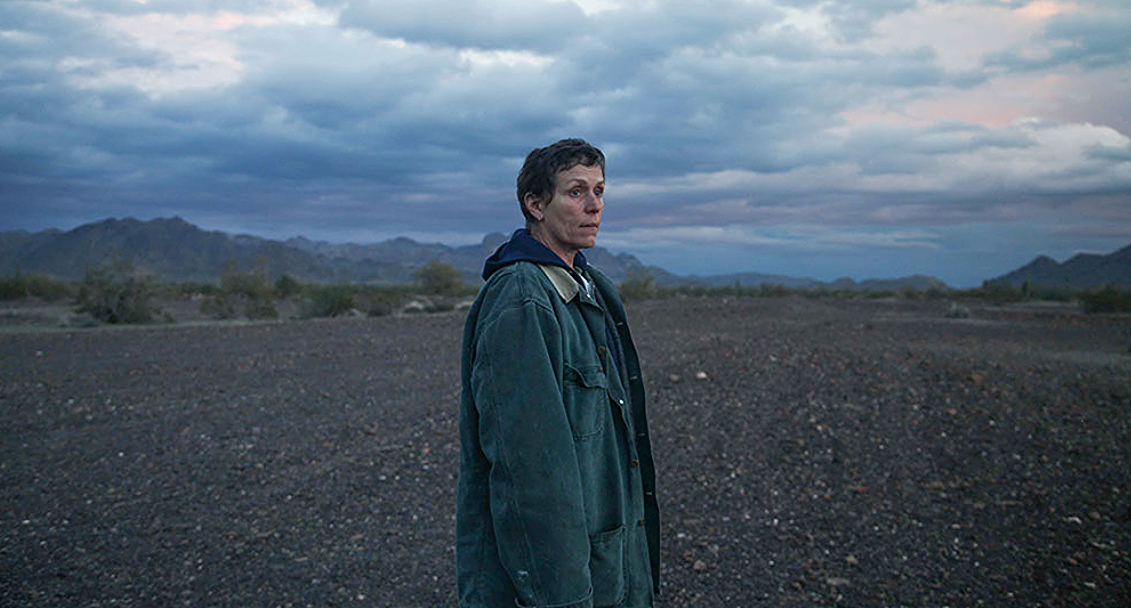
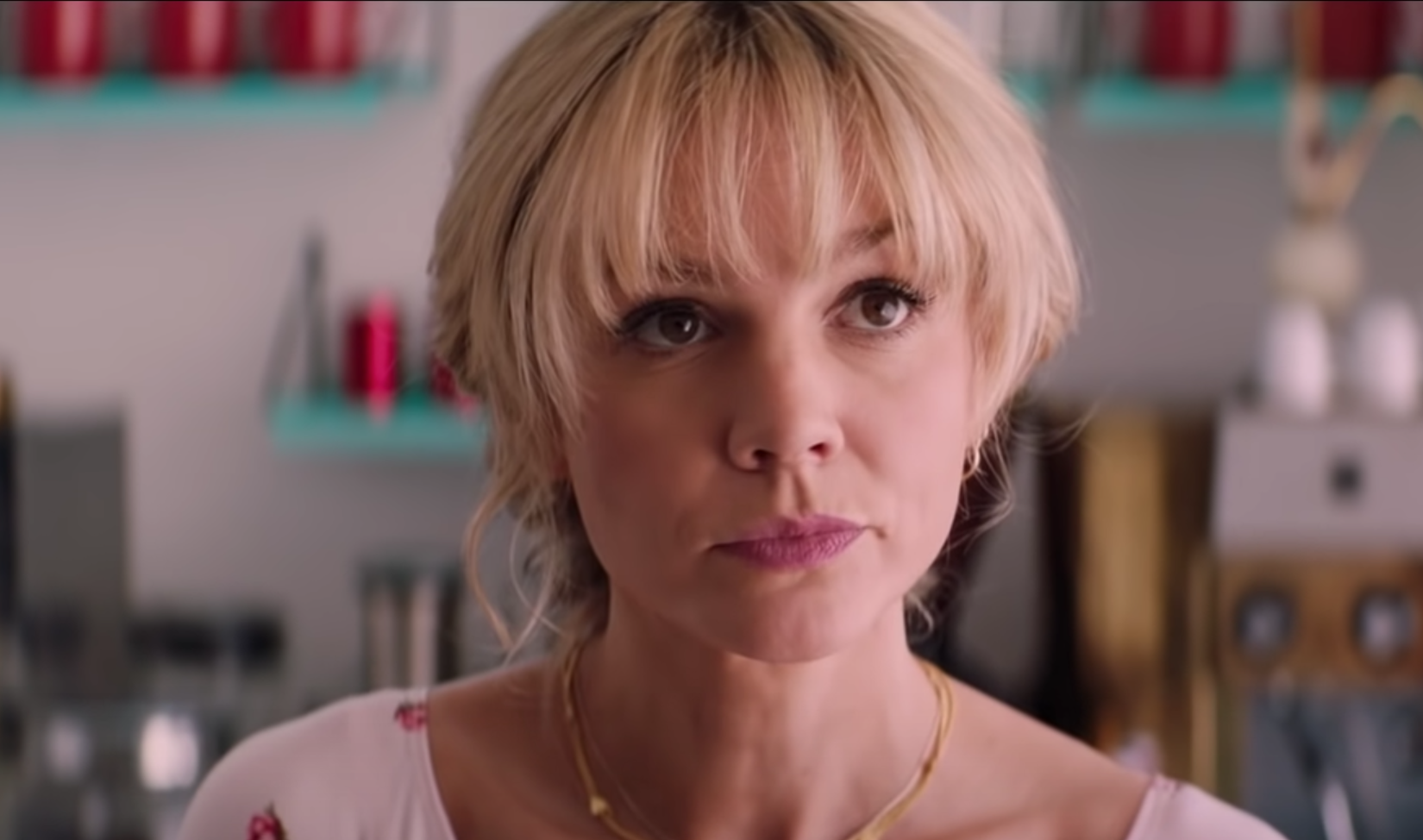
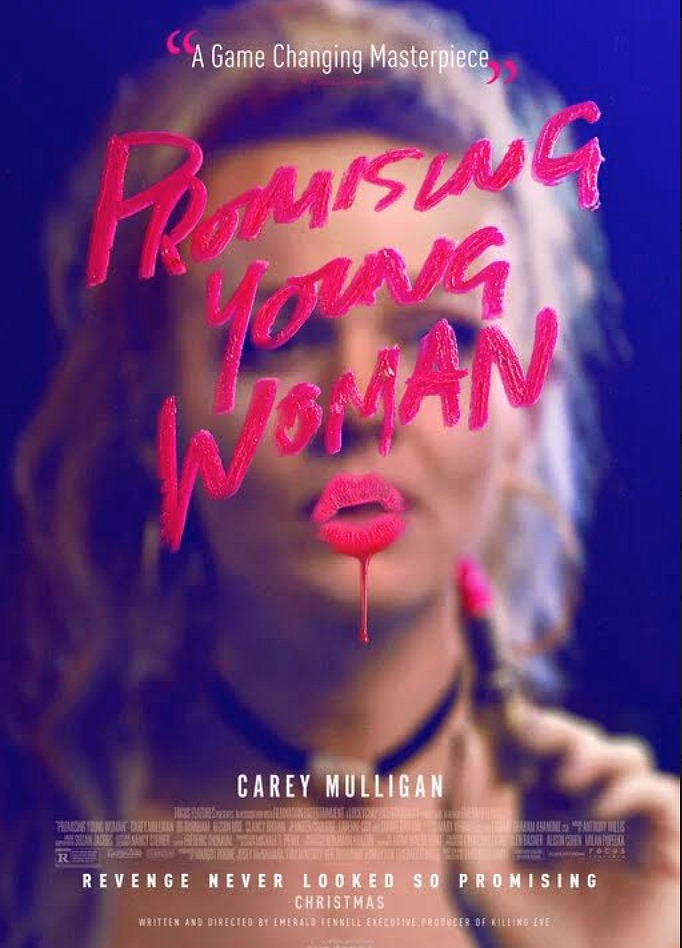
In Emerald Fennell‘s Promising Young Woman (Focus, 12.25), Carey Mulligan plays Cassie Thomas, a dryly calculating and determined woman on a mission of appropriate vengeance against insensitive male assholes.
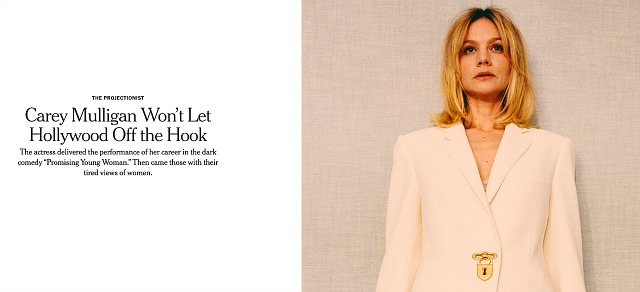
Is this “the performance of her career,” as N.Y Times profiler KyleBuchanan (aka “”The Projectionist”) insists? It’s certainly an attention-getting one, and Mulligan is almost sure to be Oscar-nominated for a Best Actress trophy, and who knows? Maybe she’ll win it.
I happen to feel that the richest and most rewarding screen performance of Mulligan’s career came when she played Maud, a married woman who becomes drawn into the women’s suffrage movement in 1912 London, in Sarah Gavron‘s Suffragette (Focus Features, 10.23.15).
“Sarah Gavron‘s Suffragette (Focus Features, 10.23) is the shit — a near-certain Best Picture contender and a cast-iron guarantee that Carey Mulligan will be Best Actress-nominated for her subdued but deeply emotional, fully riveting performance as Maud Watts, a married factory worker and mother of a young son who becomes a women’s suffrage movement convert in early 1900s London, just as the militant phase (led by the Women’s Social and Political Union, or WSPU) begins to kick in.
“This is one top-tier, richly textured, throughly propulsive saga, and a good four or five times better than I expected it to be.
“The Suffragette trailers were promising enough but the people at Focus Features had done a brilliant job of tamping down any expectations on a word-of-mouth basis. I’d come to suspect, based on a lack of any palpable advance excitement, that it might turn out to be a decent, good-enough film that could possibly provide a springboard for Mulligan…maybe. Well, it’s much more than that, such that I felt compelled explain to Gavron at the after-party that I was fairly gobsmacked.
“Mulligan, looking appropriately hangdog for the most part, handles every line and scene like a master violinist. She’s always been my idea of a great beauty, but when she chooses to go there she has one of the saddest faces in movies right now. The strain, stress and suppressed rage of Maud’s life are legible in every look, line and gesture. Mulligan is fairly young (she just turned 30 last May) but she’s a natural old-soul type who conveys not just what Maud (a fictitious everywoman) is dealing with but the trials of 100,000 women before her, and without anything that looks like overt ‘acting.’ All actors “sell it,” of course, but the gifted ones make the wheel-turns and gear-shifts seem all but invisible.
“I was saying last night that her Suffragette perf is on the same footing with Mulligan’s career-making turn in An Education, but now, at 8:15 in the morning after less than six hours of shut-eye (and with my heart breaking over the realization that I’ve blown my shot at catching the 9 am screening of Spotlight), I’m thinking Maud is her signature role.”
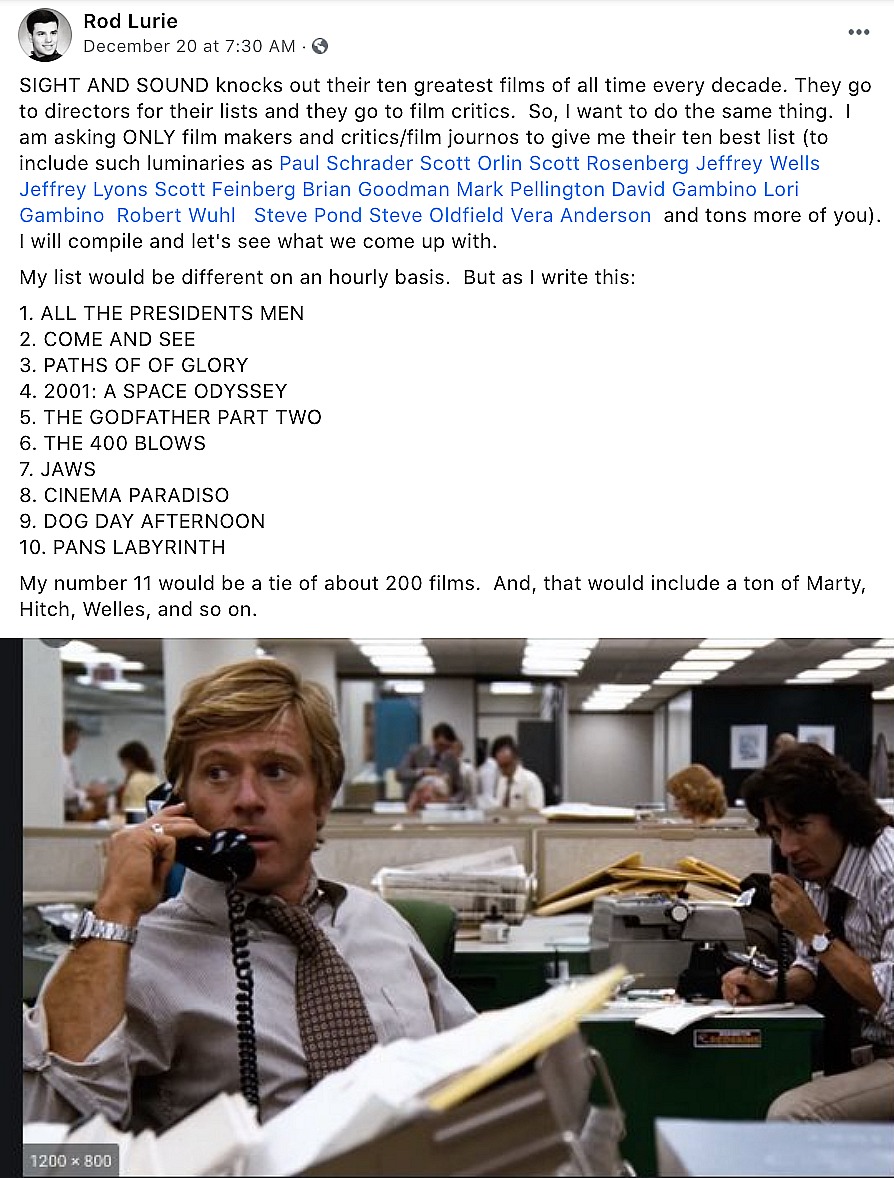
Let’s use a more specific standard for inclusion, to wit: which films on your greatest of all time list seem to echo some aspect of the way things are today or reveal or reflect something about human nature asmostofusareassessingitinlate2020? Certain great films like Mike Nichols‘ The Graduate, for example, seem to address life and/or the human condition as it was in the mid to late ’60s, and perhaps not as much today.
I’m told that many if not most of the lists that have come in so far have Jaws at the very top. I’m sorry but that’s pretty close to ridiculous. It’s just a popular, well-jiggered summer monster beach flick…come on!
HE’s Top Ten Greatest American Films (and this could all change five minutes from now): (1) A Serious Man, (2) Dr. Strangelove or: How I Learned To Stop Worrying and Love the Bomb, (3 & 4) The Godfather & The Godfather, Part II (5) 12 Angry Men, (6) Election, (7) Paths of Glory, (8) Rushmore, (9) Manchester By The Sea, (10) On The Waterfront.
HE’s Top 11 to 20 Films: (11) Lawrence of Arabia, (12) Moneyball, (13) Groundhog Day, (14) Goodfellas, (15) Out Of The Past, (16) Children of Men, (17) Zero Dark Thirty, (18) Heat, (19) The Best Years of Our Lives, (20) Shane.
Chris Nolan‘s Tenet has been streaming and on 4k Bluray for eight days now. I’ve watched it with subtitles one and a half times so far, and there’s no question it plays much more coherently (and certainly less problematically) this way. But you know what? It tickles and taunts more than it adds up. It still doesn’t make a whole lot of basic sense. I’m sorry but that’s a fact.
I loved the audacious, ahead-of-the-curve, first-time-ever freshness of Tenet when I saw it on a big screen in Flagstaff on Friday, 9.4, but maybe I was extra-enthused because I was so happy to watch a film in a theatre again.
I still love the inverted/backwards shit (especially during that dazzling 747 airport sequence) but the charm of that gimmick has fallen away pretty sharply, you bet.
I only know that subtitles doesn’t really solve the basic Tenet problem, which is the arrogant Nolan himself. I loved Dunkirk but now I’m back to thinking he’s an infuriating filmmaker — a guy whose films will always tax my patience (unless he makes another based-on-history film). It’s a tragedy to know deep down that Nolan will never make a film as engaging as Memento again.
I didn’t realize how badly Tenet was flunking across the board until I read a 12.18 Facebook review by Nick “Action Man” Clement, who is easily the kindest, most obliging, most turn-the-other-cheek reviewer of mainstream commercial films on the planet earth, and certainly since the 2.25.20 death of the big-hearted F.X. Feeney.
Clement’s basic deal is to bend over backwards in order to give a generous coo-coo tongue bath to almost any popcorn flick out there, past or present. It’s not that Clement has no taste, but that he’s unable to suppress the primal love he has for “guy” movies.
In this sense Clement is a dependable brand, just as Hollywood Elsewhere is a dependable place for cranky drillbit truth-telling.
So when Clement pannedTenet a few days ago, I went “holy shit….this means something! Nolan has overplayed his ‘too tricky for school’ routine and wound up shoving a cold banana up his ass….if he’s lost Nick Clement, he’s definitely done something wrong.”
1. Overall I thought this was okay – certainly entertaining in the moment but in the end, not up to my expectations. And it makes me sad to report this fact, as I’ve pretty much loved all of Christopher Nolan’s output up until this point. Merely “okay” is not what I expect from this filmmaker. The Prestige and Interstellar remain my two favorites, Dunkirk was exceptional, and massive The Dark Knight Rises and Inception POWER. But this felt miscalculated.
Quarters are still worth carrying around, but nickles and dimes are almost like pennies now. It was sometime in the mid ’70s or certainly the early ’80s when I resolved to never put another penny in my pocket. If a merchant gives me a dime or a nickel I’ll throw them into this pewter cup that my mother bequeathed. Five, tens, twenties, fifties and hundreds will probably hang in there another decade or two, but it won’t be long before $1 dollar notes will be retired.
My grandfather once showed me a $500 bill — let me hold it and everything. I like carrying Kennedy half dollars around. I always have eight or ten of them in my front pockets.
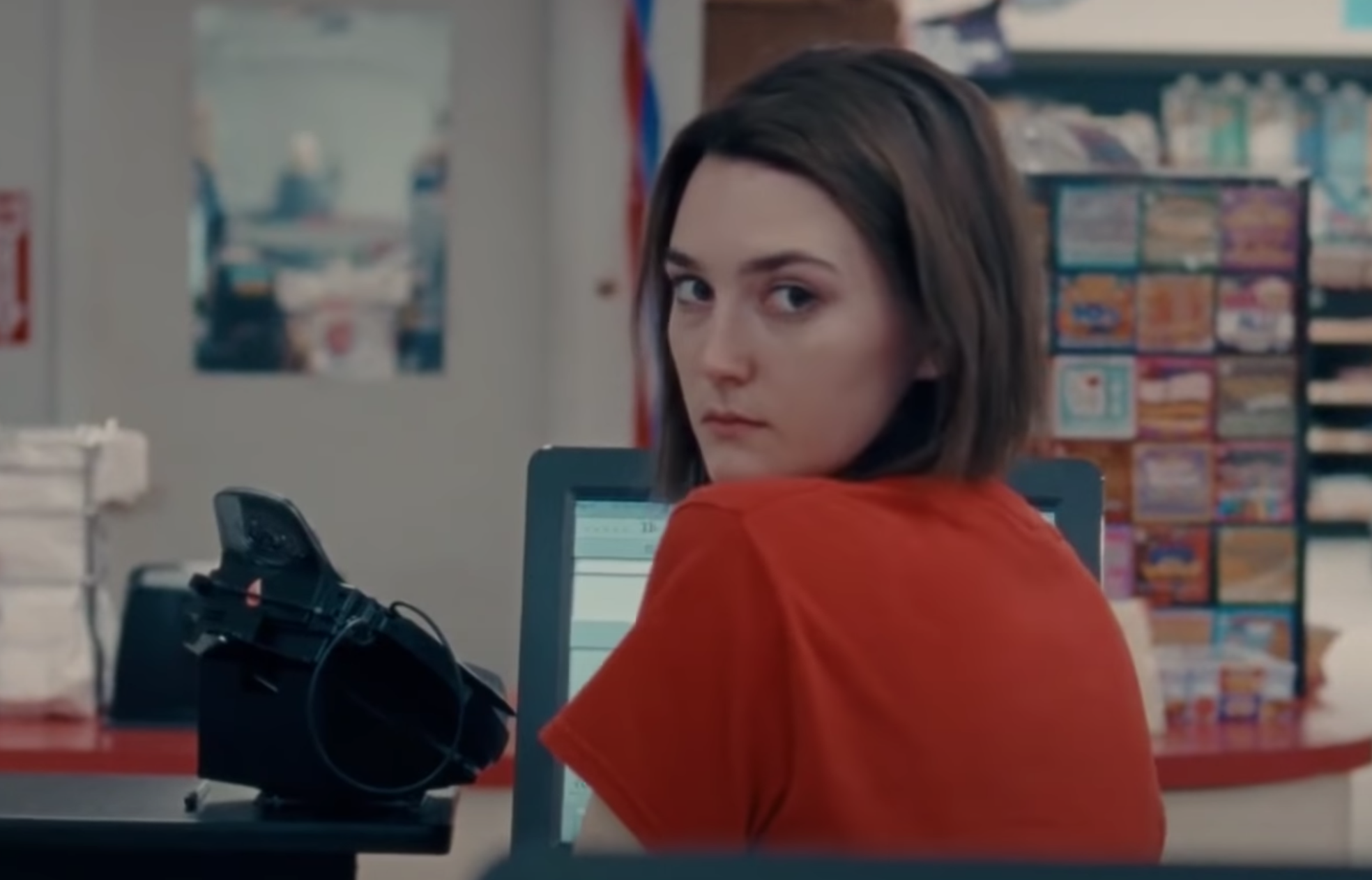
Yesterday a discussion arose about Eliza Hittman‘s Never Rarely Sometimes Always (Focus Features), and the New York Film Critics Circle having handed it awards for Best Actress (Sidney Flanigan) and Best Screenplay (Hittman).
I’m mentioning this because “friendo” offered an interesting thought: “It’s telling, to me, that no one in liberal media, including all the critics who championed Never Rarely, seemed to understand a fundamental aspect of the film, which is that the heroine is quite ambivalent about having an abortion.
“It’s not a ‘pro-life’ movie, but it does contain an element of that. But, of course, that dimension of it — the very thing that makes it complex — has to be denied by the very people who claim to love the film, because it doesn’t mesh with the the general pro-choice agenda.
“It’s not like I really like watching dead-serious art films about abortion. But I think once in a while they awaken your perceptions, and this one, with its bracing message that literally no one in the critical community got, did that for me more than 4 Months, 3 Weeks and 2 Days.
“That element in NeverRarely…Sidney Flanigan‘s profound ambivalence about what she’s about to go through, her deep desire not to do it, because there is in fact a live human in there…this element is literally the only drama in the film. That’s what’s so hilarious about the woke film-critic-industrial-annoyance-complex not getting it.
“What do they think the movie is about? If their left-wing boilerplate interpretation were accurate, it might as well be a movie about two teenagers hopping a bus to go to New York City to pay $500 in unpaid parking tickets.”
HE to friendo: “I honestly never considered any kind of vague pro-life undercurrent. I thought Flanigan’s character was just about buried trauma, fear of the chilly unknown, anxiety, uncertainty, wounded feelings. Why ever would she want to keep the child? I mean, she’s hiding her pregnancy from her parents, and Lord knows an expectant mother needs a serious job or a trust fund plus a serious partner with which to have a child. She has nothing.”
…of being an exceptionally gifted actor. Appealing, yes. Gifted, no. He knew how to react brilliantly — how to respond in his usual taciturn, straight-from-the-shoulder way to certain aggressive behaviors and situations, and at just the right speed and with just the right sense of timing. And he certainly knew how to seethe and sulk.
But in terms of owning a scene on his lonesome, relying solely on his own dialogue and delivery while others listen and watch, he rarely got there. But he did once.
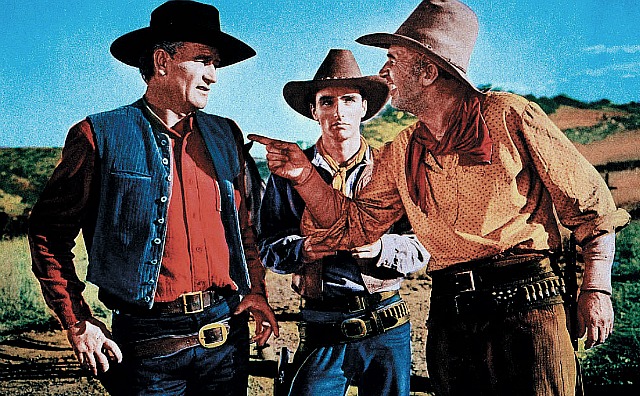
The below scene from Red River is probably the best acting moment in his entire life. It’s about resolve, painful rejection, parental disdain, nihilism. If Wayne had turned up the anger just a hair, it wouldn’t have landed as well. It would have also missed if he’d turned it down a notch.
Name me any other scene in which Wayne hit the mark as movingly and efficiently as he does here. Those famous bookend scenes in The Searchers (i.e., the door opening and closing upon Wayne’s Ethan Edwards) don’t count because all he was doing was just standing there — the emotional expressiveness was entirely John Ford‘s.
Ford to Howard Hawks after seeing Red River: “I never knew the big sonuvabtich could act.”