Unsurprisingly, McBride Trashes “Mank”

Final paragraph from welles.net essay by Orson Welles biographer Joseph McBride, posted on 11.28: “The critical acclaim Mank has been receiving (though hardly unanimous, since some reviewers and feature writers are aware of its dramatic fabrications) shows that our culture has not progressed much beyond Hollywood’s benighted 1939 view of the still-troubling wunderkind, Orson Welles.

“Perhaps most Americans prefer to cling to their anti-intellectual view of artists as sinister people who should be ostracized. We still view maverick artists not as valiant figures but as egomaniacal monsters who mistreat hapless underlings and demand credit they don’t deserve.

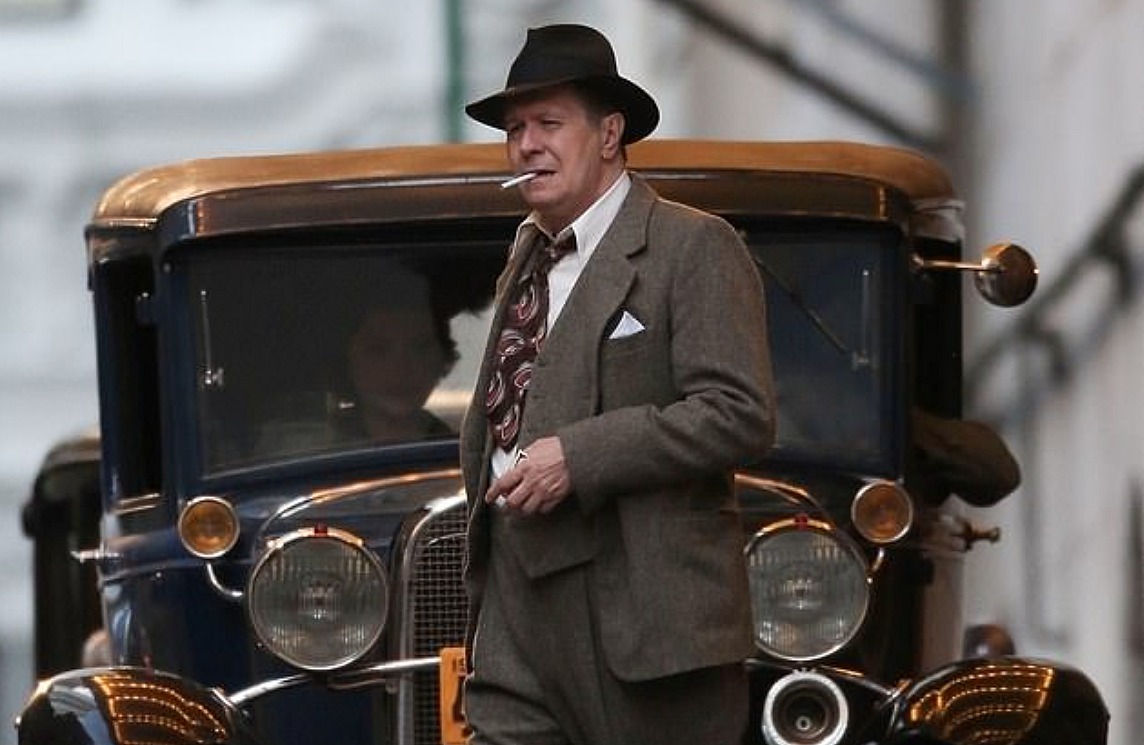
“When [Gary Oldman‘s] Herman J. Mankiewicz is shown at the end giving his Oscar speech for the Kane screenplay to a newsreel camera, he says it was written ‘in the absence of Orson Welles,’ and an unseen man’s voice is heard asking, ‘How come he shares credit?’ Mank says in the film’s last line, ‘Well, that, my friend, is the magic of the movies.’

“If [Mank director] David Fincher wants us to believe that kind of nonsense, he would need a better script. Mankiewicz himself would probably scoff at Mank. He was too smart and self-aware and generous at heart to do otherwise. But the mythology of Kael and Mank will likely endure, for it is a tale our belittling culture needs to cling to. As Welles prophetically told Peter Bogdanovich, ‘Cleaning up after Miss Kael is going to take a lot of scrubbing.'”


Author, film professor and Orson Welles biographer Joseph McBride posing with Welles sometime in the early to mid ’70s.

The Guess Who’s “These Eyes”

Gunga Din has been one of HE’s all-time comfort films for a few decades, or at least since the launch of easy access in the ’90s. To me, Eduardo Ciannelli‘s “kill! kill! kill!” rant provides as much as inner warmth as any family gathering or plate of steaming, gravy-coated white meat, stuffing and broccoli. Simultaneously a brilliant example of expertly conceived Hollywood villainy (special props to dp Joseph August and the key lighting of Cianelli’s eyes) and a prime example of racist Hollywood demonizing of a non-white “other”.

From “Among Filmdom’s Wisest and Most Elegant Villains“, posted on 2.22.15: “Ciannelli‘s fanatical leader of the Thug rebellion is called a ‘tormenting fiend’ by Douglas Fairbanks, Jr. and is made to seem demonic in that famously lighted shot by dp Joseph August. But he’s easily the most principled, eloquent and courageous man in the film. Not to mention the most highly educated.

“And yet there’s an unlikely scene inside the temple that hinges on Ciannelli’s guru being unable to read English, despite his Oxford don bearing and his vast knowledge of world history. Otis Ferguson‘s review of George Stevens‘ 1939 adventure flick ripped it for being a racist and arrogant celebration of British colonial rule. And yet I’ve been emotionally touched and roused by this film all my life. The last half-hour of Gunga Din is perfect, but it ends with Sam Jaffe‘s Indian ‘bhisti’ basking in post-mortem nirvana over having been accepted as a British soldier.

“Which raises a question: Which films have you admired or even loved despite knowing they stand for the wrong things and/or tell appalling lies about the way things are?”

Love Letter

All this time I thought that John F. Kennedy‘s nickname for Inga Arvad (“Inga Binga”) was some kind of snickering locker-room allusion. It always sounded to me like a somewhat derogatory term that suggested a certain impassioned aptitude in the sack. A couple of days ago I came upon this WWII-era letter (dated 11.10.43) that Arvad sent to JFK. Her signature seems to read “Inga Binga.” It seems, in other words, to have been a nickname that she accepted, at least when it came to communicating with JFK. At the time Arvad was living at 1156 Hacienda Place, a West Hollywood address just south of Fountain and north of Santa Monica Blvd.

Compassion

I can’t confirm but I’ve heard second-hand that the 2021 Sundance Film Festival Press Inclusion Initiative has circulated an amendment to a previous announcement. The following may or may not be taken from a legitimate Sundance release so please read with a grain of salt, pending confirmation:

“In addition to our ongoing program to support freelance journalists from under-represented communities, specifically BIPOC (black, indigenous and people of color), women, LGBTQ+ and/or people with disabilities, Sundance press reps are additionally reaching out to a group currently struggling with difficult or negative Twitter profiles and press descriptions — middle-aged and older cisgender white males, specifically those who’ve been covering Sundance since the ’80s, ’90s and early aughts.

“Sundance is committed to offering fair and equal treatment to this somewhat anguished and beleagured community, providing that said white males express a willingness to submit to 20 hours of sensitivity training, to be administered by festival-affiliated professionals and offered via Zoom sessions. Once these journalists have completed the training, Sundance is prepared to offer an additional 20 stipends of $1000 each (the same per-person amount being offered to 80 under-represented Sundance journalists, for a total of 100) to cover condo rentals, food expenses, toiletries and taxi rentals for the older white male cisgenders. Further details to follow.”

Gray Sea, Cloudy Skies

Last night I caught Steven Soderbergh‘s Let Them All Talk (HBO Max, 12.10). Deborah Eisenberg‘s script is about prominent author Alice Hughes (Meryl Streep) sharing a trans-Atlantic crossing with two old friends (Candice Bergen, Dianne Wiest), a 20something nephew (Lucas Hedges) and Streep’s 30something editor (Gemma Chan). No reactions until the embargo lifts on the morning of 12.3, but I can at least riff on the general ambiance aboard the Queen Mary 2, upon which 90% of the film unfolds.

Soderbergh shot Let Them All Talk aboard an actual QM2 voyage between New York and Southampton, and so he naturally captured the atmosphere and social climate that would immerse any passenger. And in this narrow sense it’s about luxury, reddish rosey colors, flush vibes, first-class cabins, restaurants, workout salons, cafes, cocktail lounges, waiters and bartenders.

And therefore, from a certain perspective, the film seems to be only incidentally about the fact that they’re travelling across the mighty Atlantic Ocean, and the possibility that there are all kinds of meditative or spiritual benefits to be gained from breathing in that sea air and maybe gazing at the whitecaps and waves, and maybe noticing some smaller vessels or whales or dolphins or (let’s use our imagination) an abandoned 20-foot sailboat with a torn sail, or maybe some kind of Robert Redford-like figure on a life raft, waving for help.

Maybe there’s a moment when they cross near the region where the Titanic hit the iceberg or where the Lusitania or Andrea Doria sank.

Alas, the vibe aboard the QM2 seems to be almost entirely about what people are eating, what they’re drinking, what they’re reading, what they’re wearing and who they envy. And the decor. What happens among the main characters is fascinating and well worth the passage, but from a certain distance the voyage is all about flush comforts and everyone wanting to savor a quasi-Kardashian lifestyle for seven or eight days, and almost nothing about…hello?…an astonishing atmospheric experience called the fucking Atlantic Ocean.

Yes, I realize this is how things are aboard large sea vessels these days. (And probably were in the old days.) If I were ever to cross the Atlantic I would do so Allie Fox-style, aboard some kind of spartan Merchant Marine vessel. And I would spend a lot of time on deck.

“Release The Kraken”

By the visual effects standards of 1980 and ’81 and certainly compared to the razzle-dazzle of The Empire Strikes Back, Desmond Davis, Ray Harryhausen and Charles H. Schneer‘s Clash of the Titans (’81) was fairly groan-worthy. And yet it wasn’t murdered by critics and it turned a pretty good profit. Made for $15 million, earned over $70 million worldwide.

But what about the facial reactions of Judi Bowker (as Princess Andromeda) as she contemplates the Kraken while chained to a seaside cliff like Fay Wray in King Kong? Overreacting can be just as bad if not worse than under-acting, but Bowker could be hailing a cab on 57th Street.

Costarring Harry Hamlin, Laurence Olivier, Maggie Smith, Burgess Meredith and Ursula Andress — paycheck whores, the lot of them.

“Promising” Surprise

HE to Friendo after seeing Promising Young Woman (Focus Features, 12.25): “This is a really well-made film…carefully honed, brittle attitude, super-dry dialogue, well shot…Carey Mulligan’s Cassie is shut down and seemingly ‘over’ from the get-go…burning rage, nihilism, chilly and icy but highly controlled. The film itself is that way…ice cubes, deliberate glacier-hood, calculating.

“It’s been described as a kind of #MeToo Death Wish thing, but it’s a much finer creation than Michael Winner’s 1974 film. And yet God, the ice water in its veins! So angry at chauvinist prick fuckheads that it can’t…well, it can see straight but it can’t cut anyone a break. The evil parties must pay and die, and the feeling of vengeance and wrath is such that it just HAS to splash over and soak Carey’s character…I’ll leave it at that.

“Director-writer Emerald Fennell’s decision to make Ryan, the ostensible nice guy pediatrician boyfriend (Bo Burnham, the director-writer of Eighth Grade)…the guy is suddenly presented as…uhm, flawed. And this character decision is REALLY ICE COLD. Bold and brave on Fennell’s part but colder than shit. For we’ve been led to believe that Ryan is the one nice guy — the totem that says ‘there are some decent guys out there…they’re not all pigs and fiends.’

“And yet one mark of exceptional artistic achievement is not being afraid to go all the way. PYW definitely goes for broke and then some. It doesn’t just despise the young male tribe of insensitive assholes out there — it wants them exterminated like insects.

“In a sense, PYW is lucky it’s coming out during the pandemic because it would die a VERY quick death in theatres.

“THAT SAID, it certainly has the unflinching courage of its convictions. It does not lose its nerve. And so it stays with you. But aside from #MeToo hardcores and critics with the ability or willingness to step back and respect it for refusing to back off, who is going to recommend or earnestly praise this thing?

“For me, the last film that had this much of an icy attitude was Neil Labute’s In The Company of Men. Another in this vein is Michel Franco’s New Order. A similar feeling of ruthless payback and punishment. PYW isn’t the least bit political while New Order is very much that, but they share a certain hard clarity or severity of mind.”

Read more

“Belushi” Time

I saw R.J. Cutler‘s Belushi doc last night, right after watching Emerald Fennell‘s Promising Young Woman. After that exacting but frigid experience I was looking for a little warmth and humanity, and Belushi shared what it had of that. It relaxed me to a certain extent. A feeling of security, comfort, bon ami, even joy. An easy sit. Right away I was muttering “this is good.”

So I’m glad for the 108 minutes that I spent with it. It turns out John was something of a romantic softie at heart, at least as far as letters to his longtime squeeze and eventual wife Judy (i.e., Judith Belushi-Pisano) were concerned. Deep down he was a modest, middle-class guy who was terrified that the world would eventually discover that he was only a rambunctious sketch comedian and that he didn’t have that much to bring to the table.

The doc has four chapters; the first three are worth the price.

Chapter 1 covers the childhood and high-school period in Wheaton, Illinois. (Belushi’s dad was Albanian, and was basically the inspiration for the “cheeseburger cheeseburger” diner sketch.) Chapter 2 and 3 explore the bound-for-glory period between the early to mid ’70s — from the time he joined Chicago’s Second City, and then National Lampoon’s Lemmings and then became a writer, director and actor for The National Lampoon Radio Hour. And then his first three and a half years with SNL (starting in ‘mid 75) and cresting with his breakout performance in National Lampoon’s Animal House.

And then the manic cocaine craziness takes over and it’s down, down, down…the disaster of 1941, the unfunny, slam-bang excess of The Blues Brothers, the brief resurgence of Continental Divide, the disappointment of Neighbors and then his Chateau Marmont speedball death in March ’82, at age 33.

I caught a very early screening of 1941 at Universal’s Manhattan screening room. It must have been in mid November ’79. When it was over I was saying to a friend who’d come with me, “It’s over…Belushi’s big ride is over….this is a major failure all around.” I read a year or two later that Michael O’Donoghue had created a white-type-on-black-background button that read “JOHN BELUSHI — born 1949 — died 1941.”

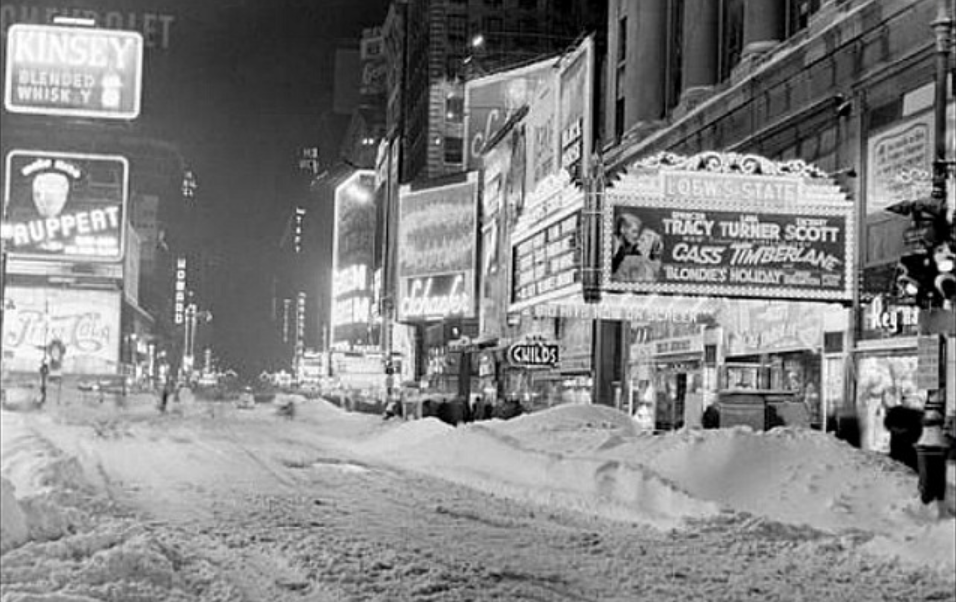
I saw Belushi live twice. Once at a Blues Brothers concert at Carnegie Hall (10.11.78), and then at an all-media screening of Raiders of the Lost Ark at Leows’ State, which happened sometime around 6.1.81. Belushi and Dan Aykroyd were there together, in fact — they were shooting Neighbors at the time, and Aykroyd’s hair had been dyed light blonde. I can’t recall if Belushi’s hair was partly gray, as it is in the John Avildsen film, but probably.

Belushi, who stood around 5’8″, was right in front of me as we slowly shuffled out of the theatre. He offered a one-word review of the film: “Yeaaahhh.”

It breaks my heart that you still can’t find a high-quality online capture of Belushi’s Joe Cocker impressions on Saturday Night Live. Or at least that one side-by-side performance (Cocker + Belushi] of “Feelin’ All Right” in ’76. There’s a cruddy tape of a Lemmings performance in which Belushi performs “A Little Help From My Friends” [after the jump].

Read more

Unsatisfying

Everyone remembers Adrien Lyne‘s Unfaithful…right? Another Manhattan infidelity drama, somewhat in the vein of Fatal Attraction and highlighted by Diane Lane‘s affecting performance as a married suburbanite having a hot affair.

The story, written by Alvin Sargent and William Broyles, Jr. and based on Claude Chabrol‘s La Femme Infidel, was about Lane cheating on mild-mannered husband Richard Gere. The hot boyfriend was played by Oliver Martinez, a young-Gere lookalike.

I happened upon a couple of YouTube clips, and the first thing that came to mind was the much-reported uncertainty and equivocating that Lyne went through over Unfaithful‘s ending. Gere kills Martinez in a fit of rage, you see, and Lyne (or the 20th Century Fox suits) wanted everything to be morally right and owned up to.

The ending implies that after much hemming and hawing Gere has decided to tell the cops that he killed the boyfriend. Which I found hugely unsatisfying.

I don’t think anyone wanted this ending. The audience, I sensed, wanted to give him a pass for bashing Martinez over the head. He could feel badly about it, of course, but the only thing people really wanted was for Gere to SKATE — to walk away and live with it. The principle was that a husband killing his wife’s boyfriend is not a good thing, obviously, but that it’s semi-forgivable. Or at least understandable.

All I know is that as the closing credits rolled I was muttering “that‘s how it ends?”

Affecting Instances of Nonverbal Acting

Earlier today some Facebook guy asked for examples of scenes with great nønverbal acting. The vast majority of respondents will point to scenes in which the protagonist is conveying strong levels of anxiety, stress or barely suppressed panic. Prime example: Al Pacino in the seconds before he whips out the gun and shoots Al Lettieri and Sterling Hayden in The Godfather. But of course, the increasingly louder sound of a subway train rolling underneath is a key ingredient.

I tend to prefer subtler examples.

Mark Harris‘s favorite is Lily Tomlin‘s simmering reaction to Keith Carradine‘s singing of “I’m Easy” in Nashville. I agree as far as Tomlin is concerned, but the scene falls apart because Carradine won’t stop pathologically staring at her. No cafe performer would ever do that as it makes him look obsessed if not insane. Women in the cafe are noticing his staring and looking around to see who the object might be…Jesus.

One of my nonverbal favorites is James Gandolfini collapsing inside at the end of the legendary “Long Term Parking” episode in season #5 of The Sopranos (i.e., the one in which Adriana gets whacked). That’s me — that’s how I feel 80% of the time when I let the combination of the pandemic and the Khmer Rouge get to me. And that’s how I always respond if anyone asks if I’m good.

Read more

Sadism As Social Norm

An hour ago I came across a photo of a guy I used to know in Westfield, New Jersey, a leafy and well-tended middle-class town that I struggled and suffered in for years before we moved to Wilton, Connecticut. And a couple of musty memories began to seep through.

The Westfield guys I hung with were into sociopathic group sadism as a kind of macho-pecking-order thing — a way of separating the wheat from the chaff. Somebody was always getting picked on. It was a kind of hazing ritual, the idea being to put someone’s feet to the fire and see how they’d hold up. Or something like that.

I never understood this damn game, but mockery, isolation and occasional de-pantsing (a gang of guys would literally hold a victim down and pull his pants off and leave him to walk home that way) were par for the course.

Anyway, five or six of us were all crashing in a beach house one weekend, sleeping on side-by-side mattresses in an upstairs rec room of some kind. And I recall waking up around 5 am because a couple of guys had slipped a tray or two of ice cubes inside the sleeping bag of another guy, and when he woke up he was so cold his voice was shuddering…he literally couldn’t speak clearly because he couldn’t stop shaking and trembling. He was standing near the foot of my mattress and berating the assholes who had ice-cubed him. Believe it or not but this kind of thing was par for the course.

After a while I went back to sleep. It was around 8 am when I was awakened with a hot foot — two or three large kitchen matches had been placed between my toes as I slept and then lit. I woke up with a shriek. (Or was it a howl?) I literally levitated off the mattress.

Posted on 2.19.18: The Westfield High School climate was hellish, no question. I suppose on some level it sharpened or toughened my game, but I think I suffered from a kind of PTSD for a couple of years after our family moved to Wilton, Connecticut.

In ’06 I passed along a story of drunken teenage vomiting during a long-ago weekend party at a New Jersey shore vacation home. It belonged to the parents of Barry, a nice-enough guy I knew and occasionally hung with during my mid-teen years when I lived in Westfield, New Jersey. A bunch of us had driven down there and partied without anyone’s parents knowing, especially Barry’s. No girls, no music to speak of — just a lot of beer and ale and vodka and everyone stumbling around.

During this weekend a big, dark-haired guy named Richard Harris had been chosen as the latest victim. He had thrown up on the floor of Barry’s beach home, and so he had to be punished. Much later that night (around 1 am) we found a dead mouse in a mouse trap, so we threw the corpse into a pot of boiling water and put it under the sheets of a bed Harris was sleeping in. He woke up five or ten seconds later and bellowed “get the fuck outta here!”

A half-hour later we went outside and shifted Harris’s Chevrolet into neutral and pushed the car down the neighborhood street about three or four blocks. We were all sitting around the next morning. Harris walked in through the pantry door, glaring like a gladiator and saying “where’s my fucking car?

Read more

“Ultimatum” Then & Now

Paul Greengrass and Matt Damon‘s The Bourne Ultimatum opened a little more than 13 years ago. What’s changed since? How are things different culturally, cinematically, politically? I’ll tell you what’s different. In the below clip (1:35) Julia Styles‘ Nicky Parsons character tackles a North African bad guy (Joey Ansah‘s “Desh Bouksani”) in a Tangier apartment, but is quickly slugged and thrown to the floor. End of resistance.

Why? Because Nicky is no match for the guy. She gives it hell but isn’t strong or aggressive enough, or sufficiently skilled.

That shit would not fly today. In The Bourne Ultimatum was being shot right now Styles’ character would get into a serious martial-arts slugfest with the Desh guy. Full-on Bruce Lee stuff. No way would the Khmer Rouge allow her to just get slugged and tossed. Women are just as physically formidable as guys these days. New era, new rules…right?

Original HE review, posted on 7.21.07:

I can’t decide which adjectives or catch phrases to use in this review of Paul Greengrass ‘s The Bourne Ultimatum (Universal, 8.3). I’m really kinda stuck. Pulse-pounding, edge-of-your-seat, bobsled, warp-speed, heart-in-your-throat…how many hundreds of times have I read those terms? It’s gotten so they don’t mean very much.

But this final Bourne flick does, I feel, “mean” something. That is, apart from the fact that all I could say for the first five or ten minutes after coming out of last night’s screening was “whoa” and “wow.”

The Bourne Ultimatum is, naturally, one steroid orgasm action blast after another, but that’s expected. What else could it be with those two super-Bourne‘s before it? So let’s try and quantify. I think it’s an action movie milestone in two ways. One, by pushing the velocity-junkie aesthetic to new super-pleasurable extremes. And two, by being so good at this go-fast game that you don’t care that those hallowed dramatic substances — character brushstrokes, echoes, deep-down emotion, dialogue that addresses something besides story points. — are all but absent. You just don’t care. You’re in adrenaline heaven.

The best analogy I can think of is William Friedkin‘s subway-chase sequence in The French Connection, which lasted…what?…12 or 13 minutes? The Bourne Ultimatum runs 111 minutes and it has, at the most, 12 or 13 minutes of down time. The basic action-movie manual says you’re supposed to let the audience catch a breath between “musical numbers.” Ultimatum has a few of these, short ones, but they’re all assessment scenes about what just happened or what may be coming ’round the bend. You never feel as if Greengrass is downshifting to any serious degree (i.e., no sensitive love scenes, no “I’m tired and I need to sleep,” no talking softly while cooking in the kitchen).

Read more