Submitting To A Long-Forgotten Realm

I never got around to watching Luca Guadagnino‘s We Are Who We Are until yesterday, which is when the debut episode began streaming on HBO. So that’s all I’ve seen of this eight-episode series — installment #1. (It’s embedded after the jump.)

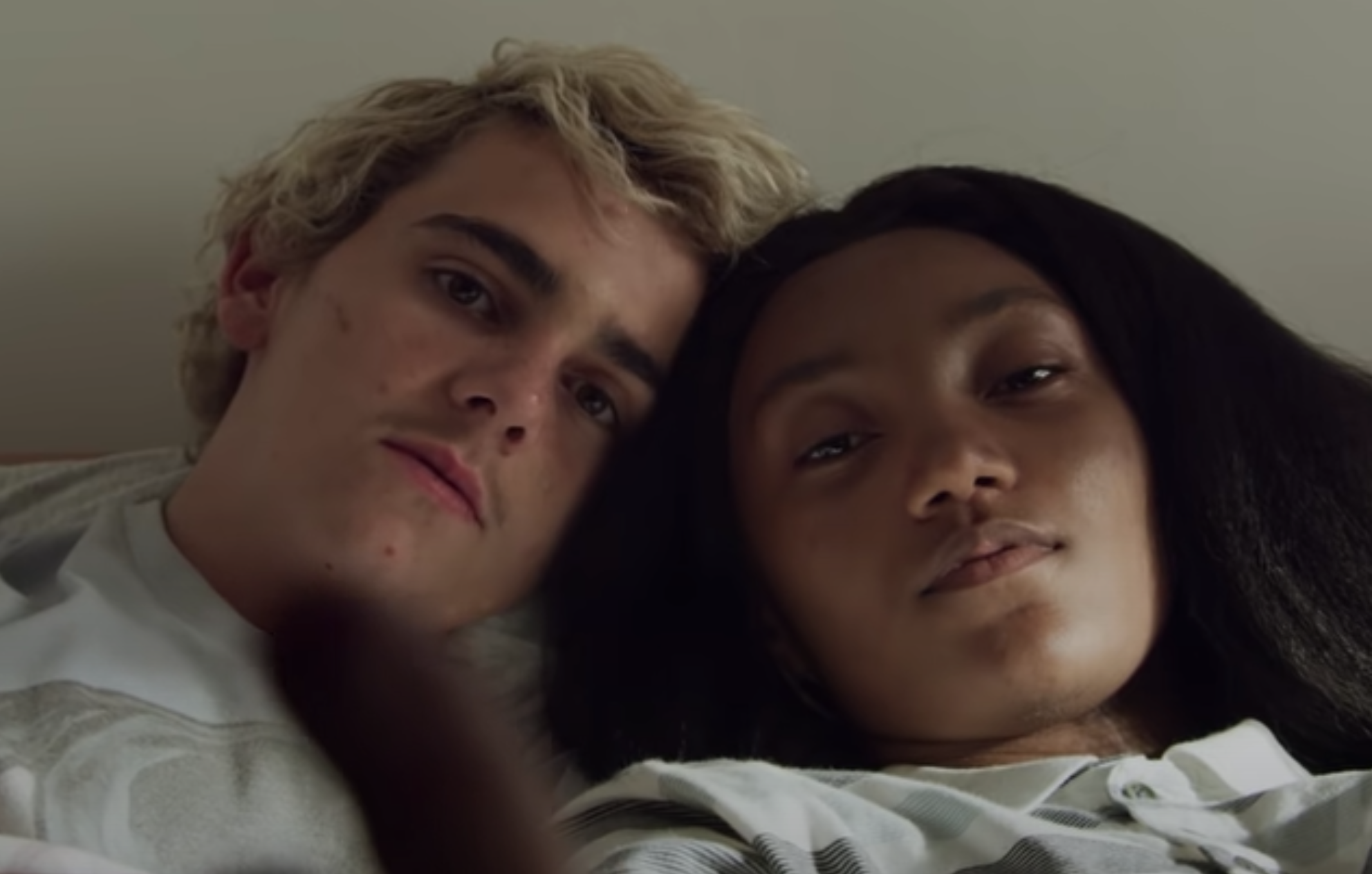
Set in 2016, it’s a dive into here-and-now teenage alienation — an awkward-adolescence, coming-of-age, trying-to-figure-it-out thing about a 14 year-old kid (Jack Dylan Grazer, who just turned 17 in real life) with the worst taste in clothing…I have to stop myself right here. I don’t want to make this piece about my own sartorial preferences past or present, but if I was 14 today I would rather stab myself with a steak knife than wear an unsubtle, over-sized T-shirt with the ugliest pair of baggy, leopard-skin shorts ever manufactured in human history. Not to mention a pair of unappealing red sneakers…okay, I’ll give that part of the ensemble a pass.

We Are Who We Are is set on a U.S. military base near Venice, Italy, and it concerns the initially agonizing struggle of Grazer’s character, Fraser Wilson, to acclimate after flying in from New York to live with his mom, an Army colonel named Sarah (Chloe Sevigny), and her wife, Maggie (Alice Braga), who also wears a uniform. Fraser is gay but not “out,” or so it appears. (There’s an eye-rolling moment when he happens to step into a barracks and catch sight of a few Army guys taking a shower, and he just stares.) All kinds of new relationships, assessments and misadventures await the poor guy, the most prominent being Jordan Kristine Seamon‘s Caitlin, a long-haired, African-American beauty who appears to be more or less straight but you never know.

I didn’t initially care all that much for Frazer or the general vibe, to be honest, but then it began to gradually pull me in. Guadagnino, whose A Bigger Splash and especially Call Me By Your Name established him as a maestro of sun-kissed Italian sensuality and a certain instinctual, improvisational, come-what-may attitude about life’s possibilities, really gets into Fraser’s impressions and moods and whatnot, and even though he’s another typically inarticulate kid who lives deep in his head and inside whatever tunes he happens to be listening to, there’s something about the nowness, aliveness, alone-ness and scattered whatever-ness in the atmosphere of this thing that turns a certain key.

We Are Who We Are is breathing fresh air, up to something else and, to me at least, offering a new kind of stimulant.

Fraser seems so dorky, so emotionally stunted and scowling. He’s 14 but behaves more like an angry eight year old with a taller, lankier frame. I guess I’ll eventually get used to him. Interesting eyes but so fucking clueless and closed off. Yes, of course — so was I at that age. The difference is that I kept most of my anxiety bottled up inside, at least in the presence of elders and to some extent with my peers. I half-confided in a couple of friends, I suppose, although I probably wasn’t articulate enough at the time to even share my truest thoughts with myself. But at least I didn’t commit any clothing crimes.

A filmmaker friend who knows the series top to bottom assures me that “you’ll end up loving Fraser — he’s an angel of vengeance against the current.”

I don’t know what else to say except that the first episode has convinced me to see the series through to the end.

Kyle Buchanan, the N.Y. Times‘ award-season columnist and inheritor of David Carr’s “carpetbagger” handle, has written an excellent piece about Guadagnino and the series.
Read more

Grappling With “Barton Fink”

As a Santa Monica College film student, Tatiana is taking a Coen Bros. appreciation course. She’s in the midst of watching a long list of their films for preparation, and I’ve watched two or three with her. Unfortunately this immersion has reminded me of some aspects of their films that I don’t like all that much any more. Certain strategies or indulgences that I found captivating or delightful 20 or 30-plus years ago have lost some of their intrigue.

For the most part Blood Simple (’84) has lost none of its deliciously manipulative, film-nerd brilliance. The dying M. Emmet Walsh (as the sleazy gumshoe) looking up at that tiny glob of sink water and waiting with a mixture of apprehension and panic for it to drop onto his face is one of my all-time favorite closing sequences. Brilliant! But I also found myself irritated by the none-too-bright behavior of John Getz‘s “Ray” and especially his unquestioned and unexplored assumption that Frances McDormand‘s “Abby” killed her husband (Dan Hedaya‘s “Marty”), and his decision to make sure Marty is dead and then bury his body. I’ll accept a certain amount of stupidity on the part of a central character, but when he/she crosses the line I’m out.

I found myself doubling down on my hate for Raising Arizona (’87). I wrote last March about a friend slipping me a draft of the script in early ’86, before they began filming. I loved the dark humor, the flirting with absurdity, the Preston Sturges-like tone. But I was envisioning a film that would work against all that with a tone of low-key naturalism.

When I saw the finished film I was horrified. It was pushed way too hard — too pedal-to-the-metal. And I hated, hated, HATED John Goodman‘s Gale and William Forsythe‘s Evelle.” Simon Pegg once described Raising Arizona as “a living, breathing Looney Tunes cartoon” — that’s precisely what I hated about it.”

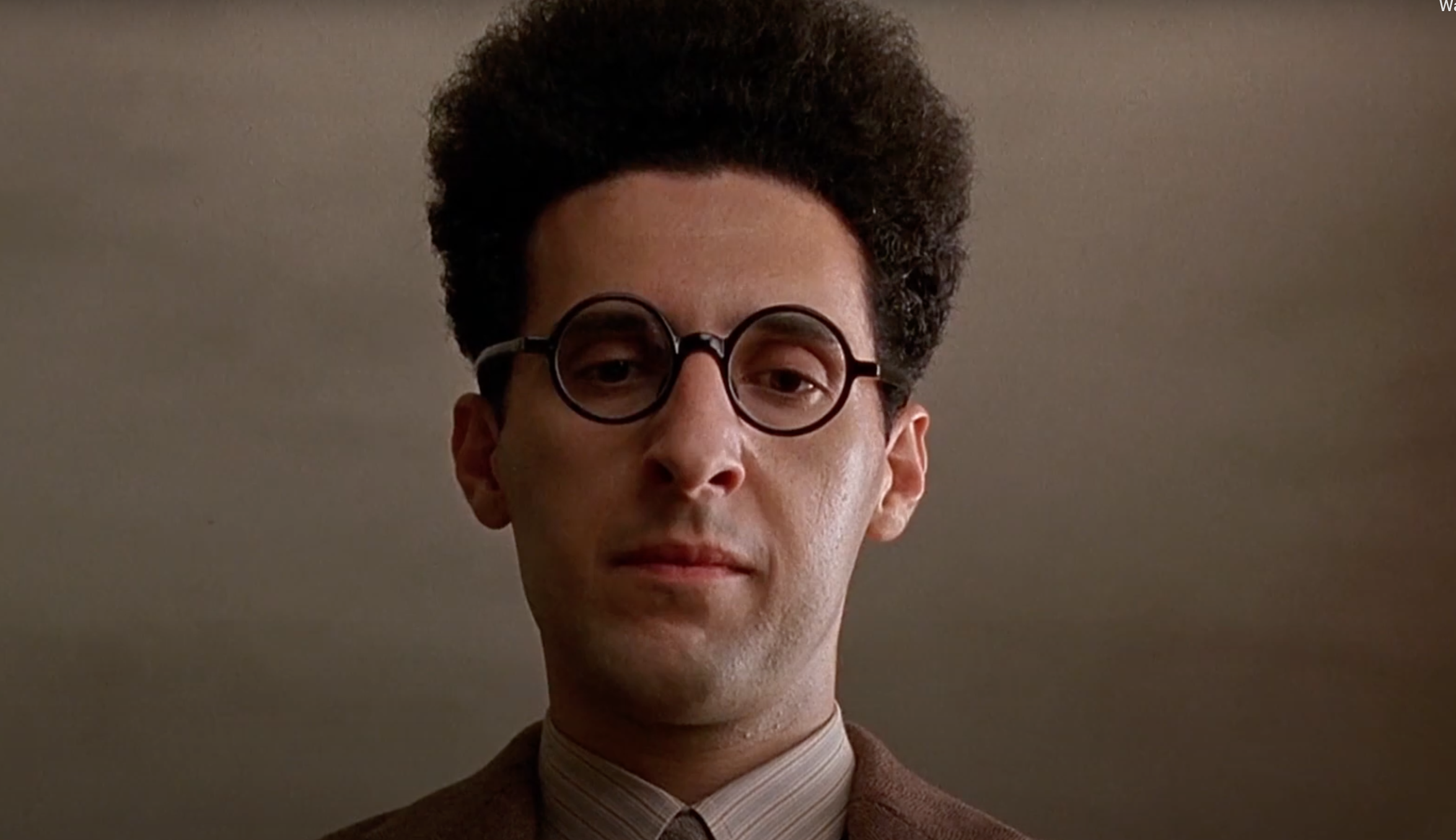
Then we watched Barton Fink (’91), which I hadn’t seen since…I forget but sometime in the mid to late ’90s. My first reaction was that the various horrors experienced by John Turturro‘s impossibly pretentious screenwriter (based, I’ve always assumed, on Clifford Odets) are a metaphor for a terrible case of writer’s block and the feeling of suppressed panic that takes over when you’re unable to make an idea or some kind of writing challenge “work” — to put it down on the page in a way that feels right and true and perhaps even profound. Hell, the inability to write anything along these lines and the self-doubt that creeps into your system the longer the blockage lasts.

This time I was filled with more and more irritation for Fink’s general arrogance and stupidity — his obstinate mindset, his inability (i.e., the Coen’s refusal) to share his thoughts, the refusal to watch a few Wallace Beery films or peruse some scripts for research, his inability to at least type out a few random ideas or at least write stuff on napkins. Once I succumbed to this negativity I started focusing on his ridiculous Eraserhead haircut, and the way his bare feet looked and the awful cut of his thick tweed suit and the fact that he travelled all the way from New York to California with some kind of overnight suitcase with room for maybe a shirt or two, a couple of boxer shorts and a couple pairs of socks but that’s all.

Read more

“I Don’t Think Science Knows Actually…”

Yesterday a smirking Donald Trump derided climate science (for the umpteenth time) while Joe Biden called him, with ample justification, a “climate arsonist”…which doesn’t mean a thing as far as 40% of this country is concerned.

“Across the United States over the next 30 years, some 162 million people — nearly one in two — will most likely experience a decline in the quality of their environment, namely more heat and less water. For 93 million of them, the changes could be particularly severe, and by 2070, our analysis suggests, if carbon emissions rise at extreme levels, at least four million Americans could find themselves living at the fringe, in places decidedly outside the ideal niche for human life.

“The cost of resisting the new climate reality is mounting. Florida officials have already acknowledged that defending some roadways against the sea will be unaffordable. And the nation’s federal flood-insurance program is for the first time requiring that some of its payouts be used to retreat from climate threats across the country. It will soon prove too expensive to maintain the status quo.” — from a N.Y. Times Magazine piece, “HOW CLIMATE MIGRATION WILL RESHAPE AMERICA,” by Abrahm Lustgarten.

Read more

Home-Grown Fascism

Where is the censorship, the brutality, the shunning, the repression, the severe scolding and sometimes even the ruining of people’s lives, the trashing and burning, the punishment for diverting from the party line, the gangs of roving goons yelling at diners in outdoor cafes?

When we think of classic fascism we think of the enforced uniformity of Hitler’s Germany and Mussolini’s Italy in the ’30s and early ’40s. When we think of political persecution we think of HUAC and its allies blacklisting lefty screenwriters in the ’50s. But right now fascism is entirely owned and administered by the American wokester left. Just ask Dave Chapelle. Hell, anyone who isn’t afraid to say what’s what.

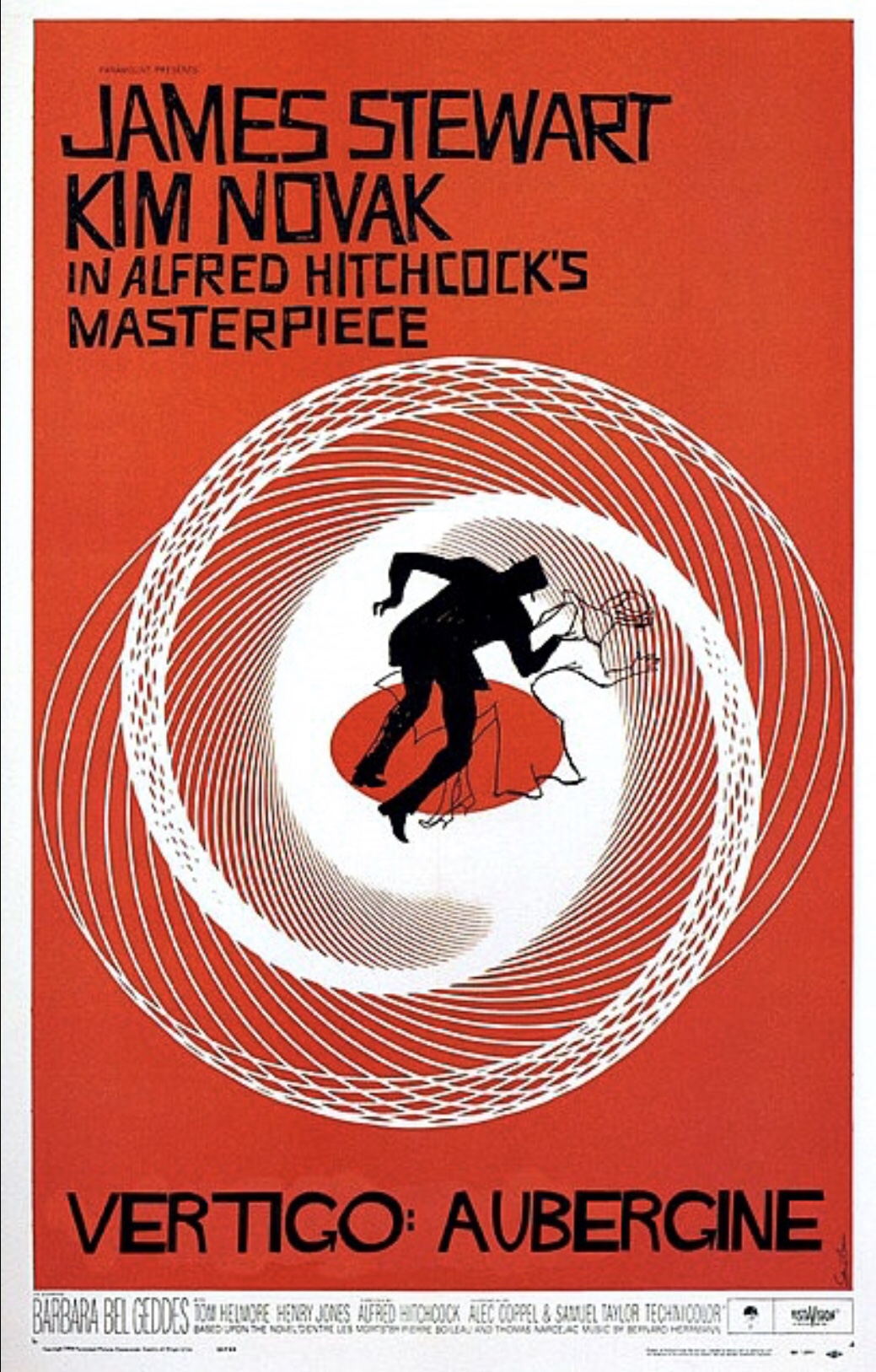
18th or 19th Viewing of “Vertigo”

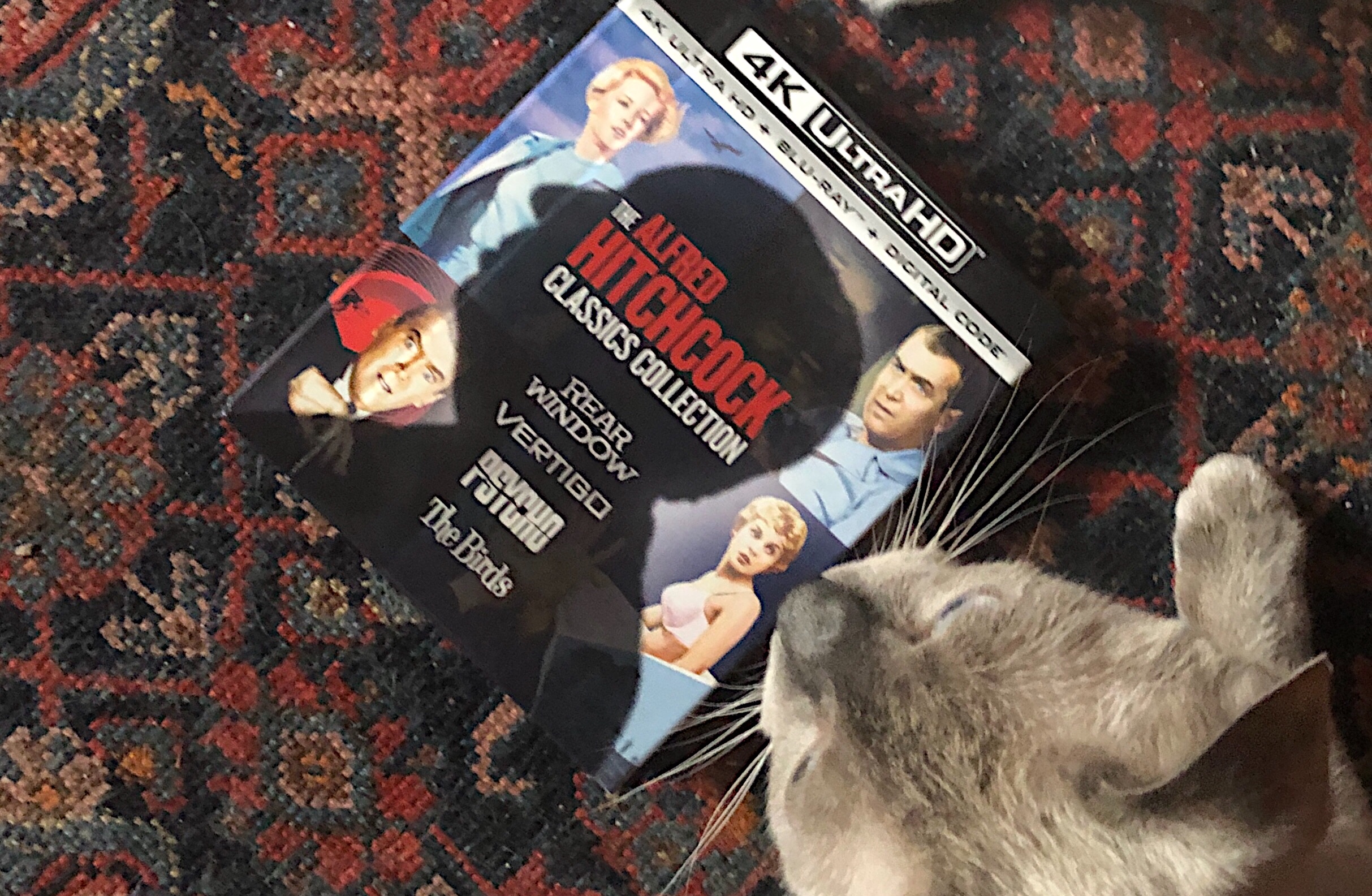
I’ve been on the Vertigo Home Video Upgrade Journey for God knows how many years. I’ve been watching it theatrically since forever. At least eight or ten times since the early ’70s. I remember my first viewing of Robert Harris and Jim Katz’s 1996 70mm restoration on the Universal lot. I remember looking at a DVD version on a high-def monitor at Tower Video about 20 years ago and thinking “wow, that really looks amazing.” Little did I know. And then came the Bluray improvements in 2012…wowed all over again.

Last night I watched the new 4K Vertigo, and I was thinking over and over “Jesus, this is soooo beautiful…so much more vibrant and alive than what audiences saw in 1958…hell, that even Hitchcock himself saw in the Paramount lot screening room.”

The details are to die for…the penetrating, half-glowing colors, the soothing greens, deep blues, reds (especially the walls inside Ernie’s) and creamy ambers in Midge’s apartment…the bizarre unreality of James Stewart‘s brownish-gray toupee, the eyeliner underneath his baby blues and that beyond-weird aubergine suit (I described it years ago as “a mood suit, solid brown in sunlight or shaded-sunlight scenes and aubergine-tinted when he’s indoors”), the astonishing granular details, the hair and wardrobe fibres, the textures in the adobe walls lining San Francisco’s Mission Dolores and especially Mission San Juan Batista…I could go on and on.

How will it look when I watch it in 8K on my 85-inch home screen, four or five years from now? Bigger, of course, but better than what I saw last night? Doubtful.

Is It Really All That Hard…?

…to write and perform a scene like this…a nice ‘n’ easy, no-sweat beginning-of-a-relationship scene between two whipsmart recognizables…no muss, no fuss, no bullshit…poking, prodding, teasing…figuring each other out. And then you throw in a little pre-dawn urban grandeur and just let the camera settle into it.

Elites Pay The Price

Last night I finally saw Michel Franco‘s New Order, a dystopian theatre-of-cruelty film that reminded me in some ways (certainly tonally) of Ridley Scott‘s The Counselor.

New Order premiered on 9.10 at the just-wrapped Venice Film Festival, and last weekend won the Silver Lion Grand Jury prize.

Set in Mexico City, it’s about a violent revolution against the wealthy elites by an army of ruthless, homicidal, working-class lefties. Director-writer Franco (After Luca, Chronic) is clearly tapping into all the insurrectionist anger out there (Black Lives Matter protests over the summer, the Hong Kong pro-democracy movement, last year’s French Yellow Vest demonstrations) and imagining the ante being raised a couple of notches.

Remember those rightwing thugs (“Los Halcones”) murdering leftists during that Mexico City demonstration in Roma? New Order is a roughly similar situation but with the lefties pulling the trigger, and with a lot more ferocity. Rage against the swells.

It struck me as a nightmare vision of what could conceivably happen if the ranks of our own wokester shitheads were to dramatically increase and anger levels were to surge even more.

New Order, trust me, is brutal, vicious and cold. But it’s so well made, and so unsparing in its cruelty. Franco is definitely the new Michael Haneke. He’s a very commanding and exacting director, but the film is ferocious and vicious, more so than even The Counselor (and that’s saying something).

I’ve sorry to admit I’ve been been derelict with Franco’s work before this. I’m going to try and catch up at the earliest opportunity.

I’m figuring that any serious fan of The Counselor would definitely be down with New Order. Especially given its Mexico City location, the fact that it deals with hostage-taking and exorbitant demands, and the fact that it has the same kind of cruel, compositional decisiveness and clarity of mind that Scott’s film had, only more so.

Franco is a very strong but, on the face of it, heartless director. Personally, I’m sure he’s personable and affable and humane and whatnot.

A filmmaker friend assures that Franco “is a nice fellow…he has a very surgical mind and his dramatic construction seems to veer towards the inexorable.”

Critic friendo: “I love those kinds of filmmakers! I feel their vision is actually quite compassionate — they’re just trying to be honest about a cruel world.”

Again?

What kind of publicist-protected, reality-defying bubble is Kate Winslet living in? Four days after sharing her “what the fuck was I doing working with Woody Allen and Roman Polanski?” remark with Vanity Fair‘s Julie Miller and generating a fair amount of head-shaking and accusations of award-season opportunism (at least on social media), she’s doubled-down on her discomfort and condemnation with Variety‘s Kate Aurthur.

On top of which Aurthur, a sturdy journalist who knows the score, decides to not even mention the fact that outside of #MeToo circles, Mia Farrow confidantes, the purview of Mark Harris and the ranks of Hachette employees, nobody on planet earth believes that Allen is guilty. No one informed, I mean.

Aurthur doesn’t even ask, “Uhm, sorry to interject but does the fact that an overwhelming body of evidence including the first-hand observations and convictions of Allen’s psychologist son Moses Farrow…does the fact that there’s absolutely no basis to believe in Allen’s guilt…does that, like, give you a moment of pause in this matter?”

Winslet: “We learn, we grow, we change. I think we should all be allowed to say, ‘Look, I shouldn’t have done that,’ you know? And I think this is a huge, seismic time for all of us, where we’re aware of how many planes we take, for example, or things we have done in the past, or would go back and wish to do differently. And I just want to lead with a bit of integrity, and to just be upfront and say, ‘You know what? I probably shouldn’t have done that.’ And so what I said in that Vanity Fair piece is really true, you know: I do regret it. I do regret it.”

“As soon as I was doing press for Wonder Wheel, it just made me crashingly aware that perhaps I shouldn’t have done this. But what was remarkable to me is that these are individuals who have been feted and praised and patted on the back for decades in this industry. And so by and large, it was presented to actors that these were people who it was okay to work with. But now, of course, I feel I can just say ‘I shouldn’t have done [this].’”

Distance and Perspective

Round number or multiples-of-five anniversaries always seem to matter more in the public mind, and so next year’s observance of the 9/11 massacre will be a heavier thing.

I was thinking this morning about Bill Maher’s remark about the perpetrators not being cowards. He said this in the wrong way and certainly way too soon after the disaster itself. But even at the time I was never able to conclude with absolute certainty that he was dead wrong.

Evil, monstrous, satanic, fanatical, dastardly, sickening…all of these terms certainly apply to the people who delivered the horror. But speaking as a relative coward in terms of my own physical safety, as someone who hasn’t been in a decent fistfight since I was 12 or 13, as someone who shudders at the idea of ending it all or facing the Big Sleep prematurely, I find it difficult to apply the term “cowards.” Because what they did, loathsome and fiendish and demonic as it was, required a certain amount of terrible sand.

Read more

Steady Situation

Yesterday I had a dispiriting conversation with a friend who believes that the Biden-Harris ticket hasn’t been forceful enough in condemning anarchic lefty street violence, particularly in the wake of yesterday’s shooting of two deputies in Compton, and that the apparent vote-tightening in southwestern battleground states may be a result of this. My response was basically “stop being such a pessimist.” (Our chat was a little bit like “Let’s Fret the Night Together,” that 9.14 Gail Collins and Bret Stephens chat in the Times.) But the dominant polling narrative is that Trump’s support among whites is definitely weaker than it was four years ago. I don’t think the election is “baked” for Biden, but as long as he doesn’t suffer any disasters or super-gaffes I think it looks reasonably good right now. No level-headed assessment is conveying any kind of horse race.

Read more

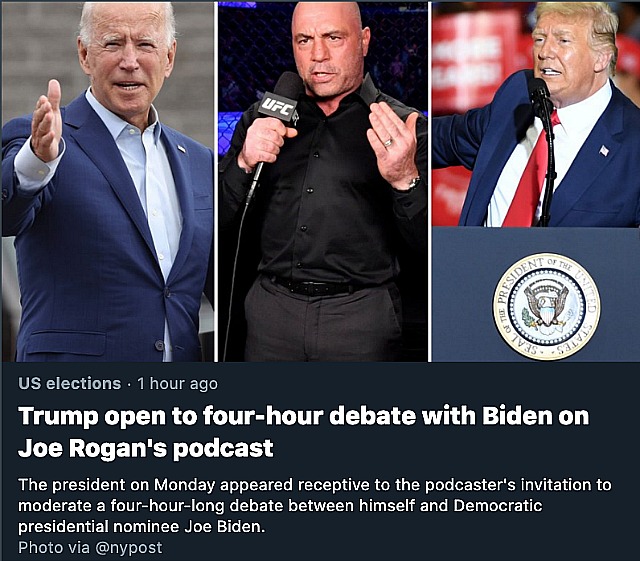
Should Biden Consider Four-Hour Trump Debate on Rogan’s Podcast?

HE to commentariat: If you were Joe Biden‘s most trusted advisor, would you urge him to accept a four-hour, audience-free debate with President Trump on the Joe Rogan Experience? Trump has suggested that he’s down with it, but I were counselling Biden I would insist that two conditions be met.

One, a two-hour debate, not four. Three at the most. Because Biden, I fear, might not be able to keep his energy up and cognitive discipline at peak levels during a four-hour period. He would almost certainly be a less effective communicator during the final hour, and perhaps during the last two. Trump is a lying, run-at-the-mouth moron and would certainly reveal himself as such, but he seems to have more coal in the engine than Biden. If Pete Buttigieg was the Democratic nominee, four hours would be fine.

And two, Rogan is in Trump’s corner (he apparently believes that Biden has cognitive decline issues) so there would have to be a neutral, whipsmart fact-checker participating with an equal voice in the discussion, just as regular debate moderators have been at liberty to point out factual errors during conventional presidential debates. This would obviously put Trump at a huge disadvantage, but he’s an incorrigible liar and nonstop bullshitter and would just blow smoke up everyone’s ass without a fact-checker calling foul when necessary.

I’m not entirely sure if the four-hour format is Rogan’s idea or it’s speculation on someone else’s part, but if Rogan is indeed suggesting this it shows you where he’s coming from. Biden would get through it, course, but he the 78-year-old Democratic nominee would probably have difficulty keeping his best game going for 240 minutes straight, particularly alongside the evil Trump locomotive.

Biden is seemingly healthier (trim, agile, eats well, works out) and Trump is probably a dying animal (obese, McDonald’s diet, may have suffered from a stroke last year) but in a sitdown debate Trump’s health issues would not be an apparent factor.

All that said, there’s something truly exciting about this idea, and I’d like to see it happen. But only under the right conditions.

Read more