Superfan Who Ruined Pacino Interview

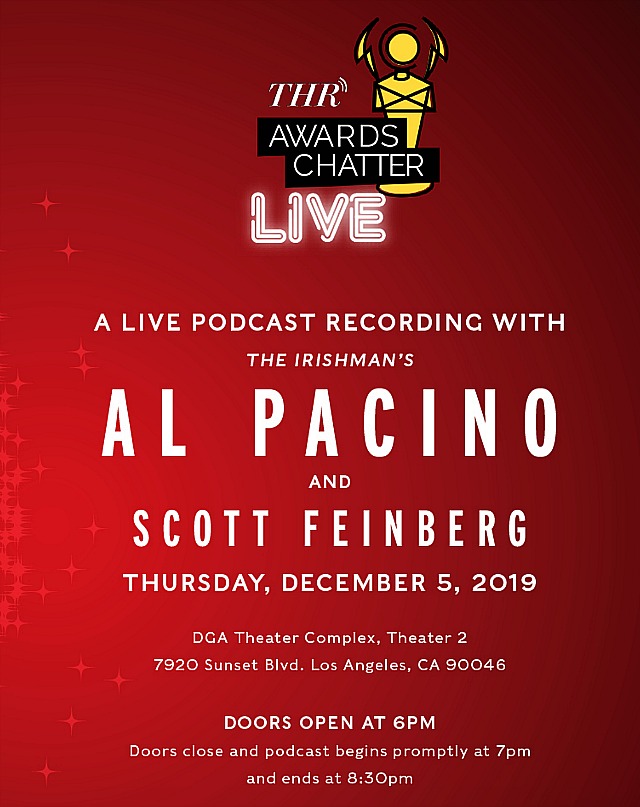
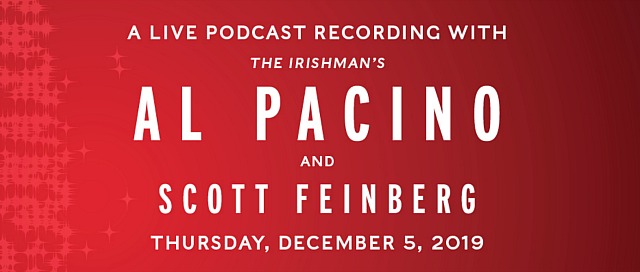
I attended last night’s THR “Awards Chat” interview with The Irishman‘s Al Pacino and the intrepid Scott Feinberg. It was fairly lively and amusing as Pacino interviews go. Al turns on the “personality” and the hoo-hah and makes everyone laugh as he re-performs his classic tales while dispensing an accasional fresh line. The show was supposed to begin at 7 pm but Al was late so it started around 7:20 pm and ended…oh, 85 or 90 minutes later.

Scott’s interviews are basically about biographical recap, so he started with Al’s early days and got heavily into the early to mid ’70s, and then Scarface and then the mid ’80s drop-out period, and then Al’s return to glory with Sea of Love (’89). But before you knew it there were maybe 15 minutes left and the last 30 years to cover, so suddenly Scott is racing through Al’s resume and summarizing like a gatling gun.

My favorite Al tale is the one about Diane Keaton vs. Pacino’s attorney (i.e., “He’s crazy!”). Pacino began to tell the great “Buddy Rich drum solo at Carnegie Hall” story, but seconds into it he remembered that he’d just performed this one three weeks ago at the Santa Barbara Film Festival Martin Scorsese dinner and that some may have seen it on YouTube, so he shortened it and told the story a different way.
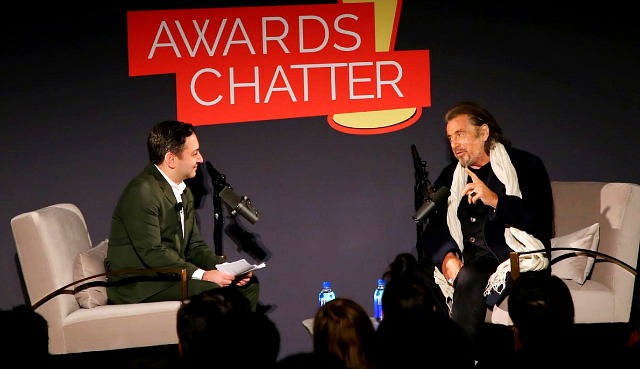

Scott Feinberg, Al Pacino during last night’s Awards Chat event.
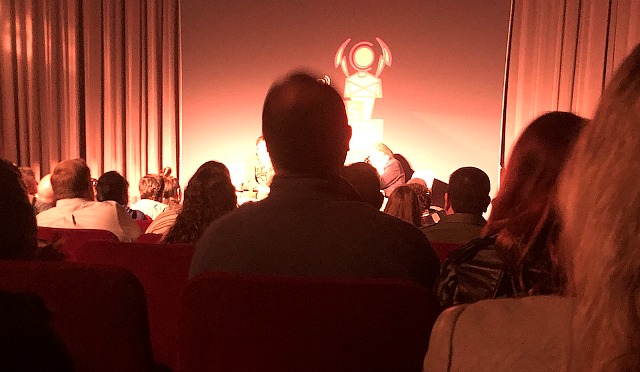
The loud, over-reacting fathead who was sitting two rows ahead of me at last night’s DGA interview.

Al has fast, cat-like reflexes — thinks on his feet like a Reno poker dealer.

Unfortunately I was sitting behind a loud superfan type. A guy who had to cheer and laugh too loudly and go “ahhh!” and “whoo-whoo!” every time Al shared a funny line or whenever a well-regarded Pacino classic was mentioned. This is what happens when you let non-professional riff-raff attend these events. Seriously — this guy was a real animal.

Once or twice this 40ish muttonhead (who was wearing a short beard, glasses and a green sweater, and had a kind of pudgebod physique) hopped up and down in his seat like an excited four-year-old. At one point this fool raised his fist in the air like he was cheering a prizefighter. His long-suffering wife or girlfriend, sitting to his right, was quiet as a churchmouse — I was sensing that she was embarassed for the guy and felt she had to be extra-restrained in order to compensate for his behavior.

The bottom line from my perspective is that I was watching a three-person encounter — Pacino, Feinberg and this excitable fanboy. This sack of potatoes was a lot louder than Pacino or Feinberg and certainly more energetic, and after a while I saying to myself “Oh, Jesus Christ, this is awful…this guy is ruining the whole thing.” It was because of this ayehole that I spent half of the time listening and half Twitter-surfing. I couldn’t entirely focus because that would have meant letting this idiot into my head.
Read more

Nichols Syrup

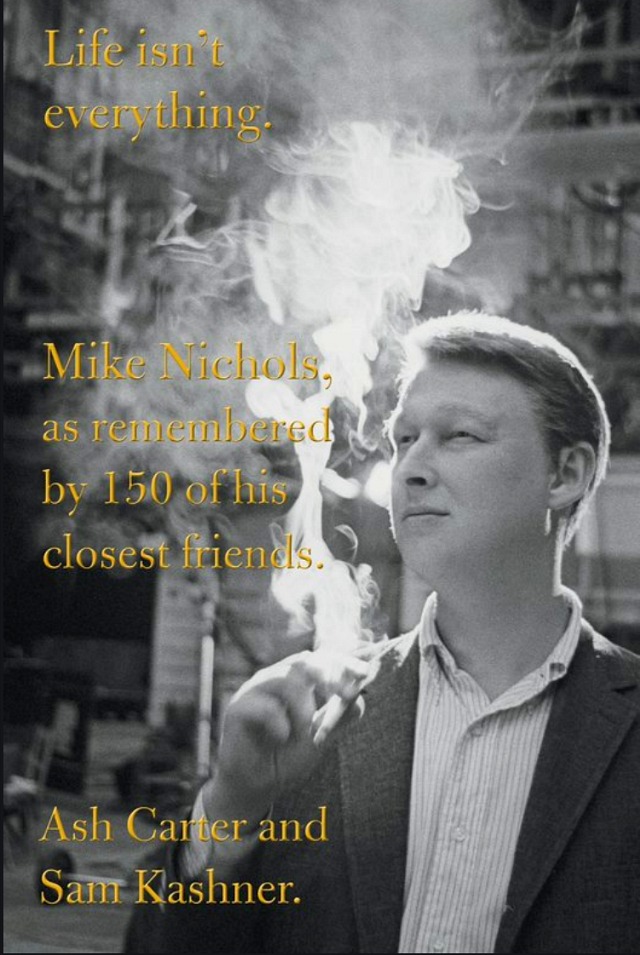
I’ve read three sample Kindle chapters of Ash Carter and Sam Kashner‘s “Life Isn’t Everything,” a strung-together oral history of Mike Nichols “by 150 of his closest friends.”

I’ll tell you right now that these portions — a prologue called “The Burton Stakes”, and the first two chapters, “Dybbuks and Golems” and “To Sell Another Drink” — feel too warm, too friendly, too alpha, too fond, too fraternal. There’s so much affection you can’t breathe.

Then again it includes a great snippet of a conversation between Nichols and Richard Burton, which happened sometime in the ’60s. Burton asked Nichols to look after Elizabeth Taylor in Rome. Nichols replied, “If it’ll help.” What Nichols meant, of course, is that nothing could ever help when it came to Ms. Sturm und drang. You had to weather it out or leave — there was no third option.

The basic drill is that no one disliked Nichols. No one found him irritating or frustrating or pompous. Some may have thought he was over-rated (I know one guy who insists Nichols’ only solid-gold films were Who’s Afraid of Virginia Woolf and The Graduate) but very few in the book share anything but astonishment and wonder at his miraculousness. They all feel blessed to have been in Nichols’ presence, however briefly. No one resented or felt sorry for him. No one wished he could’ve tried harder.

There’s no disputing Nichols’ charm, likability, sophistication, ease of manner — I sampled these things myself a couple of times. But the book (or at least the portions I’ve read) would have us believe that Nichols led something close to a charmed life. Failures, sure, but no major warts or crippling neuroses to speak of. Nichols had some tough times as a kid, but he managed to overcome or step around them, or shove them into a box.

It’s just a tiny bit boring to read over and over what a wise, fascinating, super-gifted guy Nichols was throughout the years and decades, even if he was all that.

Yes, he went into a downturn cycle in the ’70s. The Day of the Dolphin and The Fortune obviously speak for themselves. Nichols stopped making films and didn’t really get going again until 1983’s Silkwood, and when he re-emerged that static-long-take visual signature that he’d become known for (starting with The Graduate and ending with The Fortune) had disappeared, which struck some as unfortunate.

“Life Isn’t Everything” made me anticipate Mark Harris‘s forthcoming Nichols biography all the more, because at least his version (if I know Harris) won’t be entirely about how Nichols was always Mr. Wonderful.

For the third time, HE’s Nichols obit, initially posted after his death on 11.19.14 and then re-posted last year.

Jonathan Demme’s “Last Embrace”

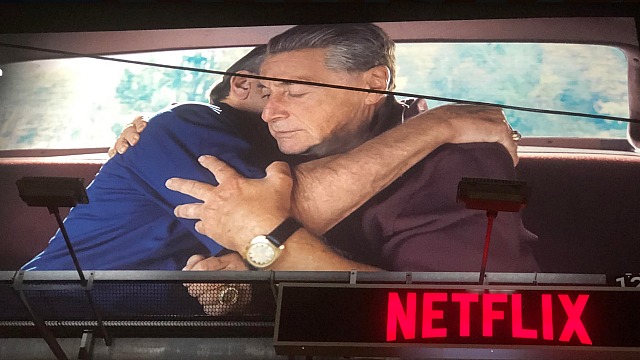
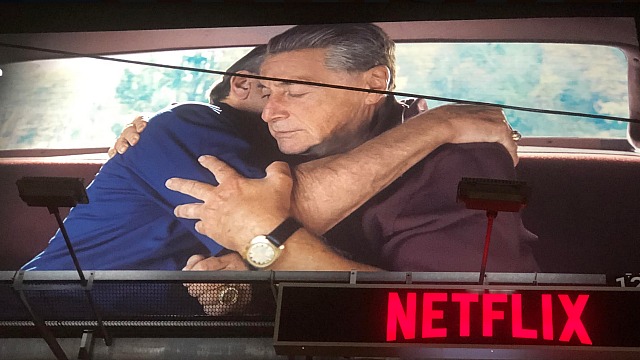
I first spotted this billboard last weekend. Ever since I’ve been telling myself to get up there and snap a photo. I finally did Thursday night, right after Scott Feinberg’s Al Pacino interview at the DGA, which I’ll write about sometime tomorrow. (It’s now 12:05 am.) Talk about a farewell hug. It’s sitting on the north side of the Sunset Strip, facing southwest and somewhere between Olive and La Cienega.

No More Droolin’ Joe

HE is duly impressed by (a) “You’re a damn liar, man”, (b) “Get your facts straight, Jack!” and (c) “let’s do push-ups together.” For the first time in a long time, Biden sounded sharp, strong and flinty. He challenged his questioner to a push-up contest, but that was because the guy is fat and Biden knew he’d win. But the mere mention of push-ups was impressive. It suddenly occured to me that Biden might be better at push-ups than me, and if he is, who the hell am I to call him “Droolin’ Joe”? Biden knows how to vent anger in the right way. That’s a good quality. Call this an HE attitude adjustment.

Who Exactly Was Joe Popcorn?

Once upon a time a certain kind of producer made modestly-budgeted films that weren’t aimed at lowest-common-denominator morons. These films were made for semi-cultivated, marginally educated, upmarket audiences who were…oh, 30 years of age and older, let’s say, and a certain kind of distributor would endeavor to distribute these films.

This was a few years before Amazon and Netflix and other streamers were routinely delivering films in 1080p and 4K to home theatres, and audiences, arcane as it may sound, would get into their cars, drive into garages and pay money to see these films in places called “theatres” or, if you will, “multiplexes,” where they would show films on large-sized screens with the aid of complex, SUV-sized devices called “projectors.”

This was more or less the way things were done in the mid teens and before. But even in this progressive-minded, sometimes adult-friendly age, audience viewing habits would sometimes disappoint certain erudite columnists. Enterprising fellows, for example, like Hollywood Elsewhere’s Jeffrey Wells. I’m mentioning this because earlier today a team of researchers came upon a portion of a column written by Wells many years ago, or way back in 2015. It’s only a portion of the column, apparently, but the tone indicates he was suffering from pique and irritation.

Here’s what it says: “The public, bless’ em, sometimes shows curious inclinations as far as which films they want to see. This is a roundabout way of saying that ticket-buyers only occasionally exhibit what used to be know as ‘taste‘ in choosing what they like, and that their moviegoing habits often indicate preferences of a lazy, ignorant and ineducable bent.

“On top of which narrative complexity (i.e., a deliberate, creative choice on the part of filmmakers to avoid black-and-white, dumbshit simplicity) seems to scare them to death.”

Possibly Adverse “Jewell” Pushback

Clint Eastwood‘s Richard Jewell (Warner Bros., 12.13) may or may not connect with Joe Popcorn. I’m not sensing any kind of populist interest among ticket-buyers, certainly not along the lines of ticket-buyer enthusiasm for Eastwood’s American Sniper (’14), which wound up earning nearly $350 million domestic. But who knows?

There seems to be growing respect for Kathy Bates‘ portrayal of Bobi Jewell, the mother of the wrongly accused and eventually exonerated Atlanta Olympics bombing suspect Richard Jewell (Paul Hauser).

Two days ago the National Board of Review announced that Bates had won their Best Supporting Actress award; they also gave a Best Breakthrough Performance trophy to Hauser. This may or may not translate into the Golden Globes and Oscar realm. It might.

But despite generally favorable reviews thus far, the film may run into opposition in certain journalistic quarters because of its negative depiction of the news media (particularly the early coverage of the Jewell case by the Atlanta Constitution).

James Vanderbilt‘s Truth (’15) and Jason Reitman‘s The Front Runner (’18), which presented similarly critical instances of rash or intemperate reporting about subjects of national political interest, suffered lower-than-average reviews and went bust at the domestic box-office.

Truth earned a lousy $5,568,765. The Front Runner fared even worse, taking in $2,000,105.

Two days ago a tough Daily Beast piece by Nick Schager suggested that at least some critics and journalists (and possibly some guild and Academy members) are going to give Richard Jewell another chilly reception. Because it walks and talks like a kind of Trump fantasy.

Excerpt: “Clint Eastwood’s Richard Jewell wants to be a gripping, outrage-inciting drama about an innocent victim persecuted by — and driven to fight back against — institutional power. Unfortunately, what it turns out to be is a MAGA screed calibrated to court favor with the red hat-wearing faithful by vilifying the president’s two favorite enemies: the FBI and the media.”

Excerpt from 11.20 HE piece (“Clint’s Big Night“) about first major Richard Jewell screening for Los Angeles critics:

“After the q & a ended I went to the edge of the stage and reached up to shake Clint’s hand.

“I said something along the lines of ‘I can think of a certain guy in Washington who’s going to see this film about sloppy reporters who spin lies and hound an innocent man, and about an equally sloppy and unreliable FBI that isn’t on the side of truth, and he’ll say to himself ‘this is my movie, my viewpoint…it shares my beliefs about journalists and certain FBI guys.”

“And in that gentle and reflective tone of voice that he’s so well known for, Clint said that ‘we’re living in crazy times’ and that some people are going to see crazy things in Jewell’s story, but perhaps they shouldn’t. Or words to that effect.”

By 2030 She’ll Be Kristen Stewart

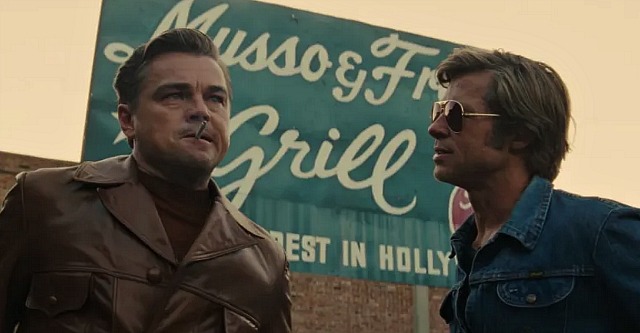
HE’s biggest movie-star moment during last Monday’s Once Upon A Time in Hollywood party at Musso & Frank party? Meeting costar Julia Butters. She has that magnetic spark, that vibe, that extra-ness, that charismatic mesmerizing whatever. Plus she seems to have a certain Zen calm thing at the same time. She’s not excitable like some kids get. She has this casual Brando ‘tude. The ten-year-old Butters (born on 4.15.09) was sitting at a small table with her parents, Darin and Lorelei Butters. Tatyana and I strolled up, introduced ourselves, shook hands, etc.


Julia Butters — Monday, 12.2, Musso & Frank.

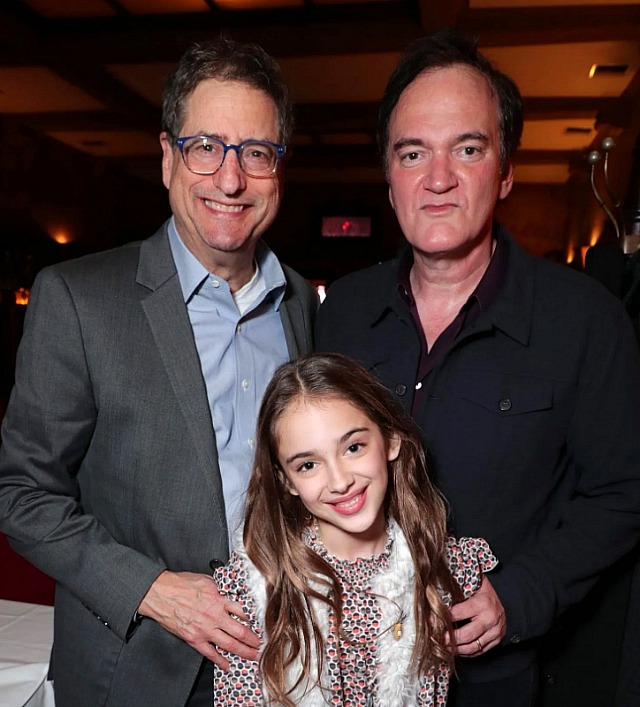
Sony honcho Tom Rothman, Quentin Tarantino, Julia Butters.

“Don’t cry in front of the Mexicans.”

I didn’t understand the recent back-and-forth between Leonardo DiCaprio and rightwing Brazilian president Jair Bolsonaro. The latter made false claims that Leo’s Earth Alliance donated $5 million to local environmental groups, which Bolsy claimed were responsible for starting Amazon forest fires. Leo’s response confused me. Why didn’t he just cut to the chase and call Bolsy as asshole? I was going to ask Leo about this but I got distracted by cheesecake and then he left.

Life Moves Along


Attending tomorrow night at the DGA.

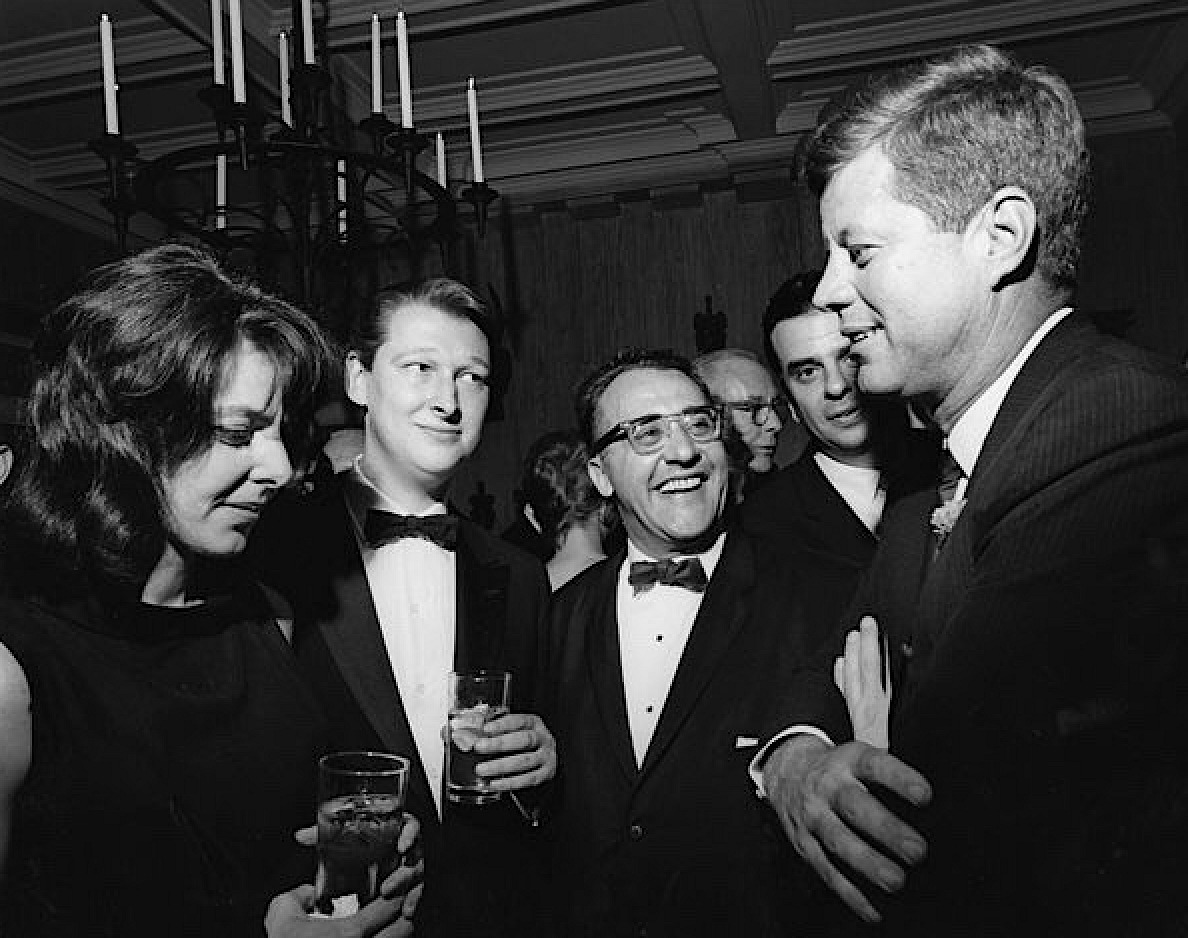
Elaine May, Mike Nichols, JFK and two guys I don’t recognize — snapped in May ’62.

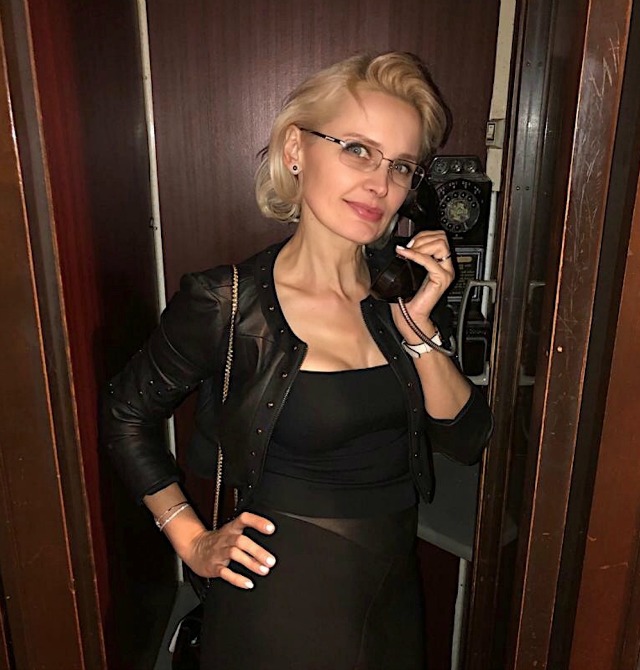
Tatyana in ancient Musso & Frank phone booth during Monday night’s Once Upon A Time in Hollywood party at the legendary Hollywood haunt, which dates back to 1919.

Read more

Nothingburger

Professor Pamela S. Karlan: “So while the president can name his son Barron, he can’t make him a baron.” What’s so terrible about that statement? She wasn’t addressing anything that Barron Trump has said, written or done. She was addressing what Donald Trump can and can’t legally do, and saying that he’s not a king — big deal.

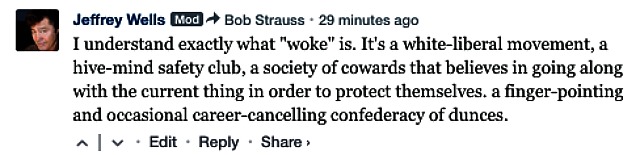
Woke-iest, Most Diverse Sundance Yet…Later

I’m told that 46% of the directors of the forthcoming 2020 Sundance Film Festival are women…cool. The highest percentage ever. And I’m sure the annual ten-day event (1.23 through 2.2) will be…I don’t what. Snowy? Wokey-wokey? Inspiring? A lot of whoo-whooing before each premiere screening? A sense of zeitgeist fatigue? A feeling of “here we go again”?

A Taylor Swift doc (Taylor Swift: Miss Americana). Julie Taymor‘s Gloria Steinem biopic, titled The Glorias. Dee ReesThe Last Thing He Wanted. Sean Durkin‘s The Nest. Viggo Mortensen‘s Falling. Rodrigo Garcia‘s Four Good Days. Nat Faxon and Jim Rash‘s Downhill. Brenda Chapman‘s Come Away.

But Spike Lee‘s Da 5 Bloods, the Last Flag Flying-ish Vietnam gold-hunt film, won’t be there.

You know why? Because Sundance is a secular woke-spiritual get-together that has kinda sorta stopped mattering, and Spike knows Cannes is a better deal. He knows and I know that Sundance of 2020 is about itself — movies for the woke devotional — whereas the Sundance festivals of 2015 or ’10, ’05, ’00 or ’95 were about movies looking to ignite and connect and bust out and generate currents of serious consequence, and perhaps even some award-season action down the road. No more. That era has past.

Now the filmmaker deal is “come to Sundance to introduce your film to the Sundance friendlies, and maybe they’ll tell their Instagram friends about it when it starts streaming four or six or ten months hence…whenever. But you’re almost certainly not breaking out. You and your film are members of Sundance Village, and you’ll never, ever step out of that realm. Unless you’re Kenneth Lonergan or someone in that fraternity.”

If you believe in Sundance Village movies and the values that they stand for and/or are endorsing and seeking to bring about, then Sundance Village is for you. Buy your ticket packages, lay out the dough for the condo, buy your snow gear and your Southwest Airlines discount tickets.

But I know some people who aren’t going this year. Because they know that the high-voltage Sundance necessity of years past is ebbing, and that it won’t be a total tragedy if they don’t attend. Because they’ll see the hotties (there are always four or five) in good time. Maybe some will be streamable while the festival is underway.

10 or 15 years ago the slogan was “Sundance spelled backwards spells depressing.” Now it’s “Sundance spelled backwards means ‘does anyone give that much of a shit?'”

My honest attitude after attending for 25 or 26 years? I think I’ve conveyed that.

Read more