Fair Play For Scruggs & Other Matters

This morning an interesting email arrived from Atlanta Journal Constitution Editor-in-Chief Kevin Riley. It shares concerns about accuracy in Clint Eastwood‘s Richard Jewell (Warner Bros., 12.13), which will have its local debut at AFI Fest on Wednesday, 11.20.

Eastwood’s film is about the unwarranted and sensationalist persecution of the late Richard Jewell on suspicion that he might have been the ’96 Atlanta Olympic Games bomber. Word on the street is that the film portrays the FBI and well as AJC editors and reporters (particularly the late AJC reporter Kathy Scruggs) as the principal bad guys.

“As we’ve continued to report on the film, we’ve uncovered some information that I feel compelled to share with you as one of the important journalists who cover the film industry,” Riley writes.
“Although I’ve yet to see this movie, a colleague of mine has seen a preview. Based on my colleague’s reporting I wanted to clarify the accuracy of several critical moments at that time versus the way they are inaccurately portrayed in the film.

“This is essential because the underlying theme of the movie is that the FBI and press are not to be trusted. Yet the way the press is portrayed often differs from reality. I am writing now because I am aware coverage of this film is likely to begin immediately following its premiere in Los Angeles on Nov. 20.”

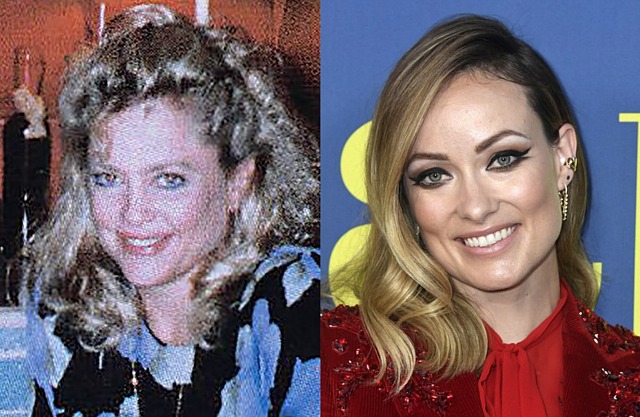
Riley’s lead-off item concerns the late reporter Kathy Scruggs, portrayed in the film by Olivia Wilde.

What we’ve been told, says Riley, is that “the film portrays our reporter, Kathy Scruggs, as trading sex with an FBI agent in exchange for a tip on the story.”

What really happened, he states, is that there is no evidence that this ever happened, and if the film portrays this, it’s offensive and deeply troubling in the #MeToo era. Kathy Scruggs was the AJC reporter who got the initial information that law enforcement was pursuing Jewell. Scruggs was known as an aggressive reporter and committed journalist who sought always to beat her competition. She has been described by one of her contemporaries as ‘irreverent and savvy.'”

Scruggs died in 2001, at age 42. A 11.12 AJC account has stated that Scruggs, who suffered from Crohn’s disease, grappled with chronic back pain, and that she took a lot of medication to deal with this. Things got tough for Scruggs after her reporting about Jewell was questioned as slapdash and sensationalist. A line from this account: “Unrelenting stress from litigation brought by Jewell’s legal team exacerbated her medical woes.“

A decade after Scruggs’ death (or in 2011), the Jewell suit against AJC was dismissed, when the Georgia Court of Appeals concluded “the articles in their entirety were substantially true at the time they were published.”
Read more

Wildfire

Journo pally to HE: “Have you seen the grosses for Parasite?’ It’s at $14.5 million, a very large sum for a foreign-language film. That makes it not only the year’s highest-grossing foreign-language earner, but it’s on track to hit the top 15 and maybe top 10 on the all-time foreign list. Plus, after six weeks in theaters, it actually upped its numbers this past weekend. Obviously a big word-of-mouth hit in the indie/foreign universe.”

Parasite‘s int’l box-office is $96,454,104 for a grand worldwide total (domestic included) of $110,947,467.

HE to Academy members, guilds: I understand and agree with the Parasite fervor. It’s Bong Joon-ho‘s best ever, and it addresses social inequities with smarts and pizazz. But it won’t win the Best Picture Oscar…no! Put that notion out of your head right now. I’ve already explained why.

Love Your Son, Weaken Your Career

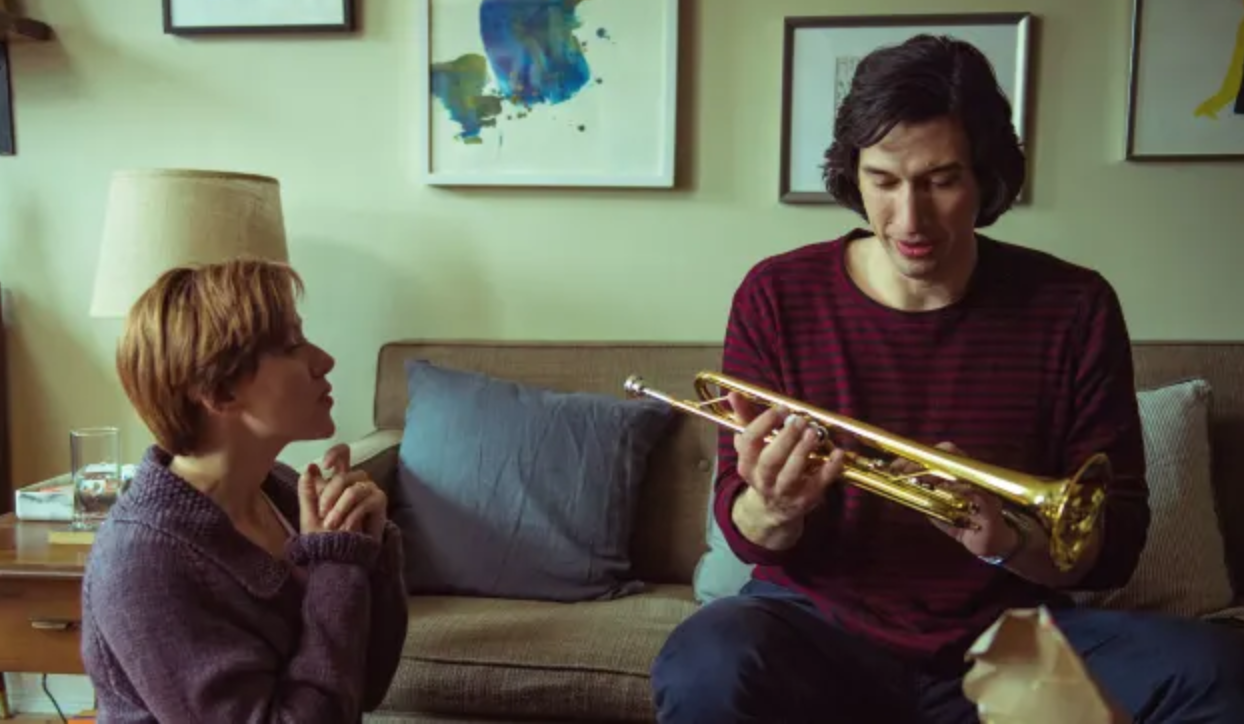
The divorce issue in Noah Baumbach‘s Marriage Story is mostly geographical. The separating couple is Adam Driver‘s Charlie, a hotshot New York theatre director, and Scarlet Johansson‘s Nicole, a frustrated actress who, feeling un-heard by Charlie, wants to re-charge her career with a starring role in a new Los Angeles-based TV series. The question is where will their young son Henry (Azhy Robertson) principally reside? In Charlie’s N.Y. apartment or Nicole’s Los Feliz (or wherever the hell it is) home?

But it’s also a matter of culture and spirit, at least as far as Charlie is concerned. If he decides to move to Los Angeles for Henry’s sake, and at the same time re-launch and re-purpose his theatre-directing career out of that sprawling burgh, he will be accepting a certain degree of cultural diminishment. For L.A. has always been and always will be a second-tier hive in the theatre realm. New York, London and Chicago are the top theatre towns — Los Angeles is strictly a satellite. Or, if you want to be harsh about it, a kind of balmy Siberia. At best a try-out town.

If Charlie was a movie director, like Baumbach, it wouldn’t matter as much (and it might even prove fruitful to move to L.A.). But that’s not the shot here. Charlie is a BAM or off-Broadway or Tin Pan Alley guy, steeped and swaddled in NYC theatre culture and mainlining the creative thrill of it all. He can move to West Hollywood and make a go of a West Coast theatre career, sure, but in the minds of many producers, actors and theatre-loving elitists he’d be doomed to fringe status for as long as his Los Angeles residence is maintained.

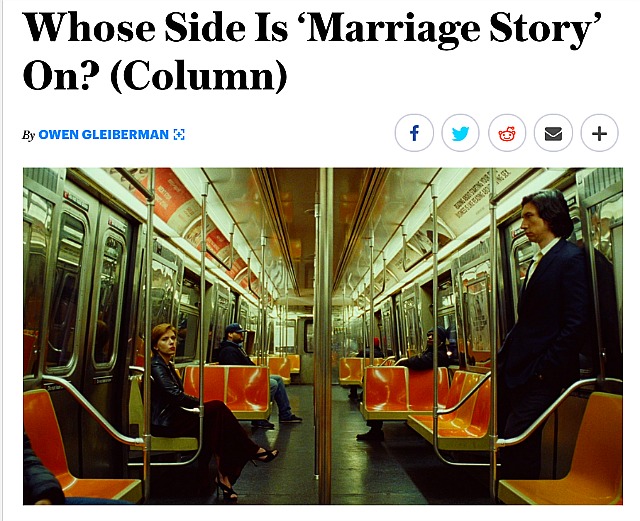
In an 11.17 piece titled “Whose Side Is Marriage Story On?,” Variety‘s Owen Glieberman passes along the conventional view that in the long arc of the story, Charlie is revealed as the bad guy who needs to grow and change and re-think his priorities.

“Almost any argument, within a marriage, can be about something larger than that argument,” OG writes. “Marriage Story makes the audience feel blindsided, too, as we can’t help, at first, but sympathize with Charlie. Yet the world that’s churning inside Nicole comes rushing into the drama during the scene where she first consults Laura Dern’s divorce lawyer to the stars. In a monologue that becomes an extraordinarily spontaneous and expressive piece of acting, Scarlett Johansson articulates the reasons — the stirrings of Nicole’s heart, the workings of her mind, the place they interlock — for why the East Coast-vs.-West Coast conflict in her marriage embodied something so much bigger.

“It wasn’t just a power struggle about where they were going to live. It was about the primal issue of whether Charlie, wrapped up in his cushy bohemian life, actually heard her. He didn’t. He wouldn’t. And that’s the wound, the sin, the problem. That’s why they’re getting divorced.”

And maybe, all things considered, that’s for the best. Let the custody battle go and get on with your life (as a father and a dynamic creative being) as best you can.

Read more

Late July of ’54

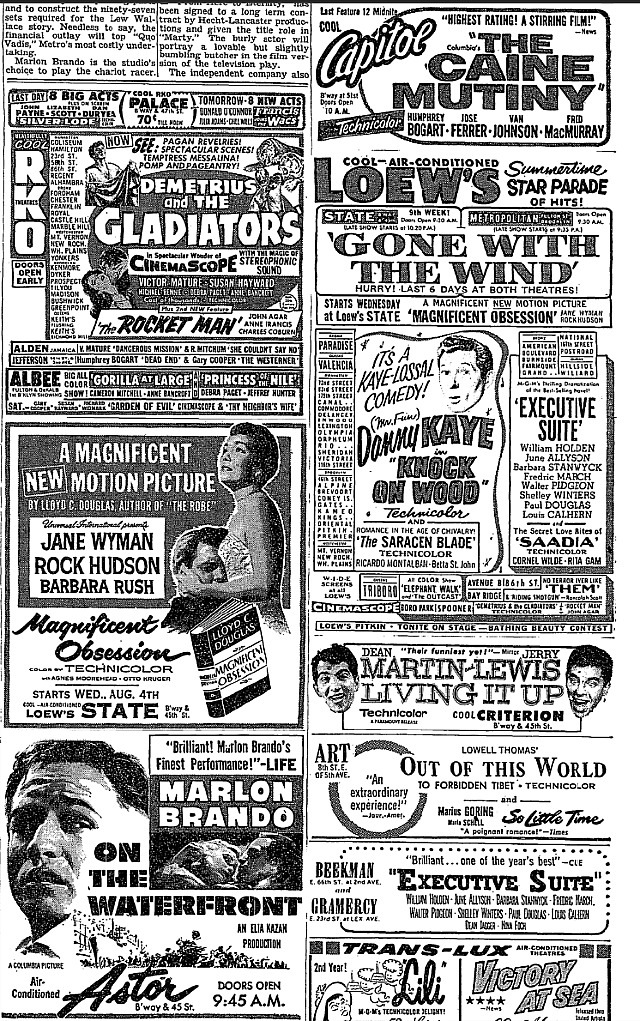
There was a whole world of negligible movies made in the early to mid ’50s that nobody’s ever seen or heard of. Silver Lode, The Rocket Man, The Westerner, She Couldn’t Say No, The Saracen Blade, The Secret Love Rites of Saadia…the list goes on. I’ve never seen Living It Up and probably never will.

To Wake Up With A Film

I’ll wager that 99% of those who consider themselves serious moviegoers have never seen a film before noon, much less in the early morning. There’s no need so why go there? I’m presuming that at least 85% to 90% of theatrical viewings happen in the early to mid evening, with the remainder covered by daytime showings for seniors and midnight shows for cultists.

But you haven’t lived until you’ve caught a theatrical screening at breakfast hour or before.

[Click through to full story on HE-plus]

Roar of Axle Grease, Smell of the Crowd

Hollywood Elsewhere caught James Mangold‘s Ford v. Ferrari during the Telluride Film Festival, and enjoyed it for the most part. Especially during the third act. No issues, no problems…approved.

Did I feel vaguely irritated by Christian Bale‘s twitchy performance as Ken Miles? Okay, a bit, and I hated Josh Lucas‘s’ one-note performance as the unctous Leo Beebe, senior exec vp of the Ford Motor Company who does nothing but make trouble for the innovative Miles and Carroll Shelby (Matt Damon). But I brushed these issues aside while deciding that for what it is, Ford v. Ferrari is smart, efficient and highly engaging.

Audiences and critics are on the same page, it seems. Domestically Ford vs. Ferrari made $31 million and change this weekend, and $52,537,000 worldwide. The Rotten Tomato and Metacritic ratings are 92% and 81% respectively, for an average of 86% of thereabouts.

So what’s the HE community verdict? The Rotten Tomatoes summary says it “delivers all the polished auto action audiences will expect — and balances it with enough gripping human drama to satisfy non-racing enthusiasts.” Is that true? And what kind of award action will it receive?

Beefy, Almost Fellini-Like Mob Faces

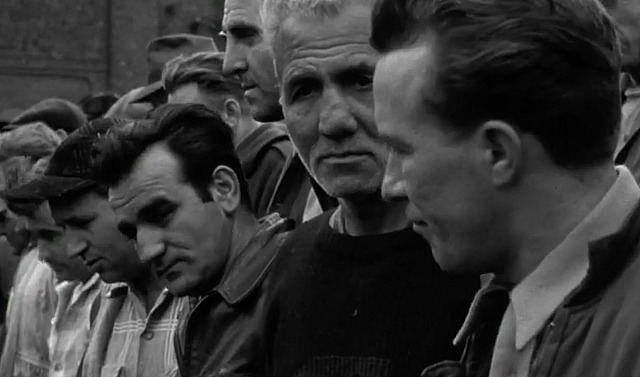
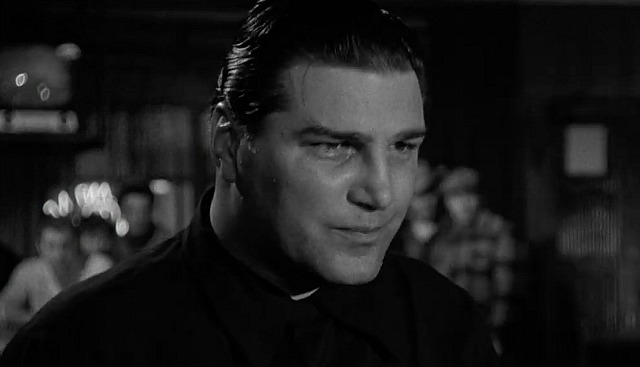
Last night a reader from Australia sent me a video file of Martin Scorsese and Kent JonesA Letter To Elia, which I wrote about yesterday. While talking about his initial reactions to On The Waterfront when he was 11 or 12, Scorsese mentions the beefy, weather-worn, working-class faces of the longshoremen in that film, and how he recognized this same coarseness from his own Little Italy neighborhood of the ’40s and ’50s.

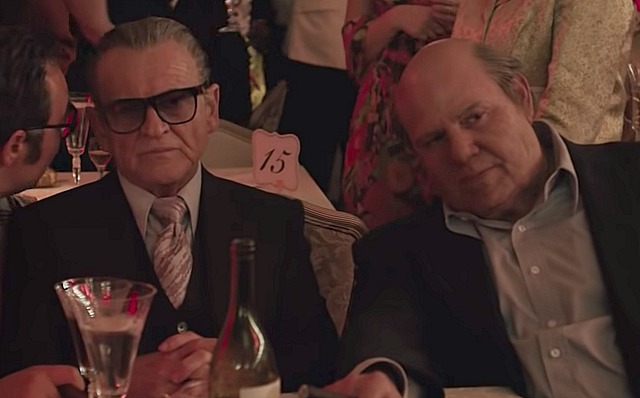
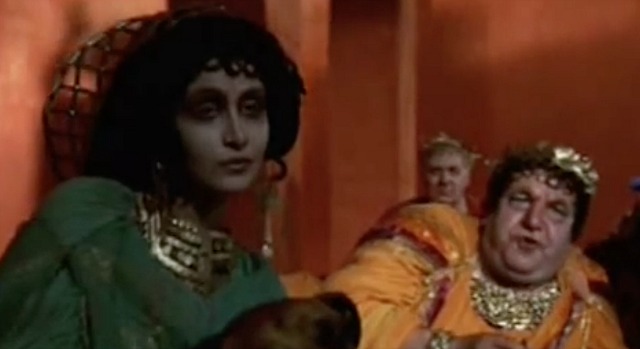
There are several shots of similar-type faces in The Irishmanfleshy, primitive-looking mugs with incurious, steer-like eyes and slicked-back hair…faces that never would’ve fit in among the sophisticated, well-dressed smart set of any time period. Vaguely brutalist features, a little on the grotesque side, even gargoyle-ish. Faces with the same distinctive characteristics — half-ugly, half-creepy — that Federico Fellini used for Fellini Satyricon (’69). Okay, Fellini was a bit more extreme in this regard, but he was operating out of the same general ballpark.

That’s more or less the idea I’m trying to convey here…a similar stevedore aesthetic…the same servings of the same kind of genetic tendencies in On The Waterfront, Fellini Satyrican, Goodfellas,The Irishmen, et. al.


Read more

Among Finest Supporting Performances…Easily

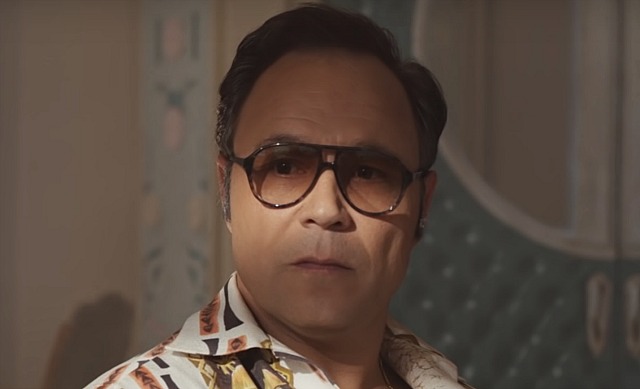
This may sound curious to some, but I’ve thought it over and honestly believe that Stephen Graham‘s intense performance as mobster Anthony Provenzano in The Irishman is more deserving of a Best Supporting Actor nomination than Tom Hanks for playing Fred Rogers in A Beautiful Day in the Neighborhood.

Yes, I know — how dare I bump the deeply loved Hanks? I love him as much as anyone else, and I’m not disrespecting his gentle kindly goodvibe. But his brand has been largely about this for years, and there’s nothing all that extra or surprising or head-turning involved here. His Rogers performance is perfect, agreed, but it’s exactly the kind of thing that Hanks could do in his sleep. Whereas Graham’s “Tony Pro” is a cherry bomb. Hard, defiant concentrated. Remember his Baby Face Nelson in Michael Mann‘s Public Enemies (’09)? He was a mad man in that role.

I can’t bump Al Pacino (The Irishman), Brad Pitt (Once Upon A Time in Hollywood), Sterling K. Brown (Waves) or Willem Dafoe (The Lighthouse) off my Gold Derby list, but I can bump Hanks. If there were six slots for Best Supporting Actor, I would naturally keep Hanks, but there’s only five. Sorry — not my rules.

Guess what? I just tried to put Graham on my Gold Derby list, and he’s not even listed as an option. HE to Tom O’Neil: Can you fix this?

Incidentally: When’s the last time I heard a British guy from a working-class background pronounce “book” in a way that rhymes with “mook” or “juke (box)”? I’m thinking of Ringo Starr in A Hard Day’s Night (’64).

Read more

Trump v. Buttigieg

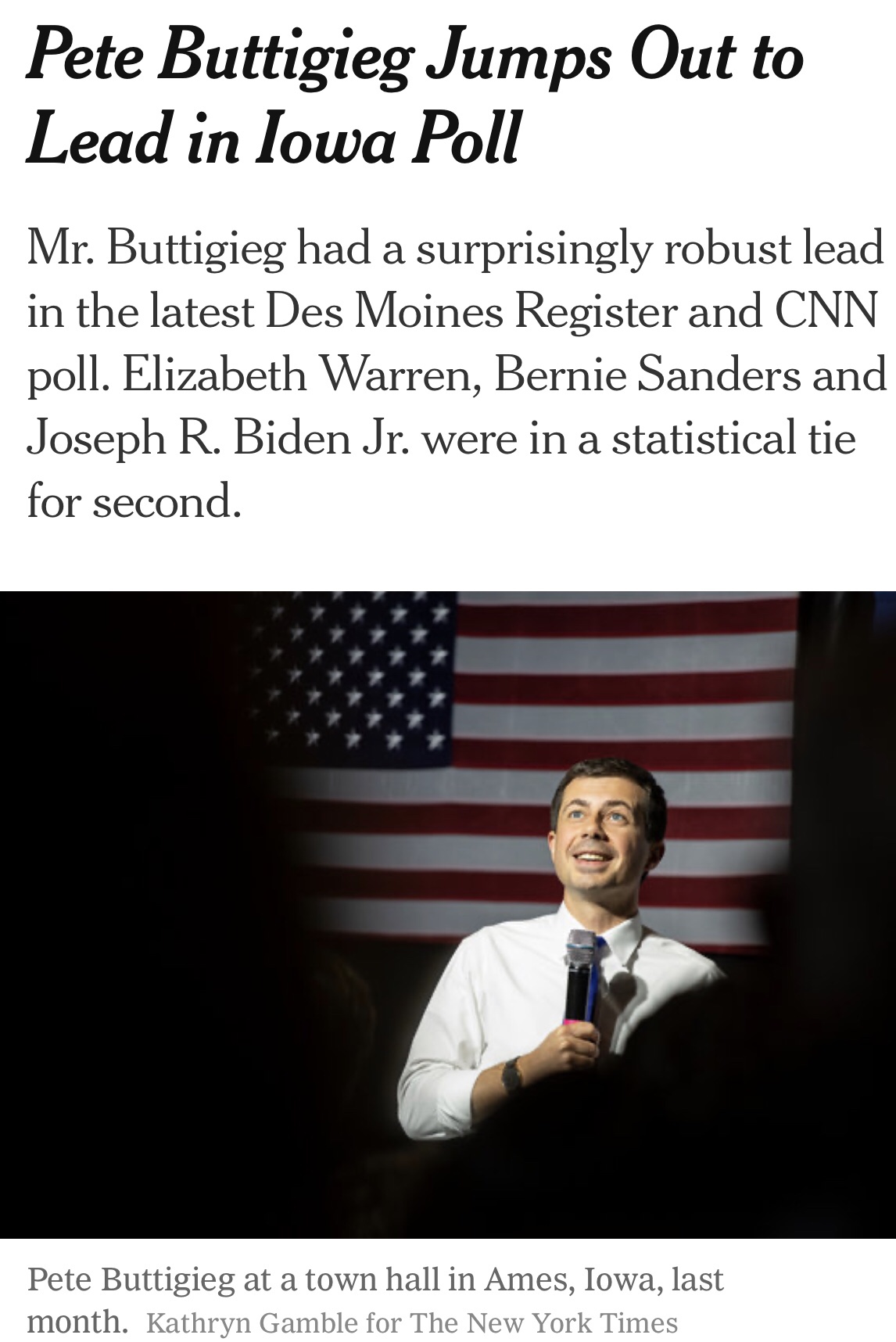
For the first time ever, there seems to be at least a semi-realistic chance that lefty-moderate Pete Buttigieg will stand alone against The Beast in the 2020 presidential election. And thank God almighty for this possibility. If he snags the Democratic nomination, will Buttigieg win by a narrower hypothetical margin than if things had tipped, say, in the favor of Typewriter Joe? Yes, most likely, but honor, sanity and stability will still win the day. That or this country is self-destructively doomed beyond all measure.

Fallen Angels

Charlie’s Angels was always an odious, flagrantly fake concept — watered-down ’70s feminism, hotbod sex appeal, laughably unrealistic action. The original mid-to-late ’70s ABC TV series was always bullshit — I could never understand why anyone watched that empty-ass show. And the McG theatrical reboots — Charlie’s Angels (’00 film) and Charlie’s Angels: Full Throttle (’03) were even stinkier, but they earned a combined box-office of over $500 million.

No such luck for Elizabeth Banks’ 2019 version, which is dead, dead, dead all over.

Deadline‘s Anthony D’Allessandro: “In the wake of Terminator: Dark Fate’s failure at the B.O., and Paramount’s recent decision to make Beverly Hills Cop 4 for Netflix, we have the further breakdown of cinema IP in Sony’s Charlie’s Angels reboot, which is tanking with a godawful $8.2M opening, 3 stars on Screen Engine-Comscore’s PostTrak, and a B+ Cinemascore.”

The Angels collapse will “further spur a WTF reaction and anxiety among film development executives in town in regards to what the hell exactly works in this have-and-have-not era of the theatrical marketplace. Many will make the hasty generalization that old, dusty IP doesn’t work, or is now deemed too risky when it’s not a superhero project. However, moviemaking is an art, not a science, and annoying as it might sound, good movies float to the top, and this Charlie’s Angels reboot didn’t have the goods going back to its script.”

Disappeared

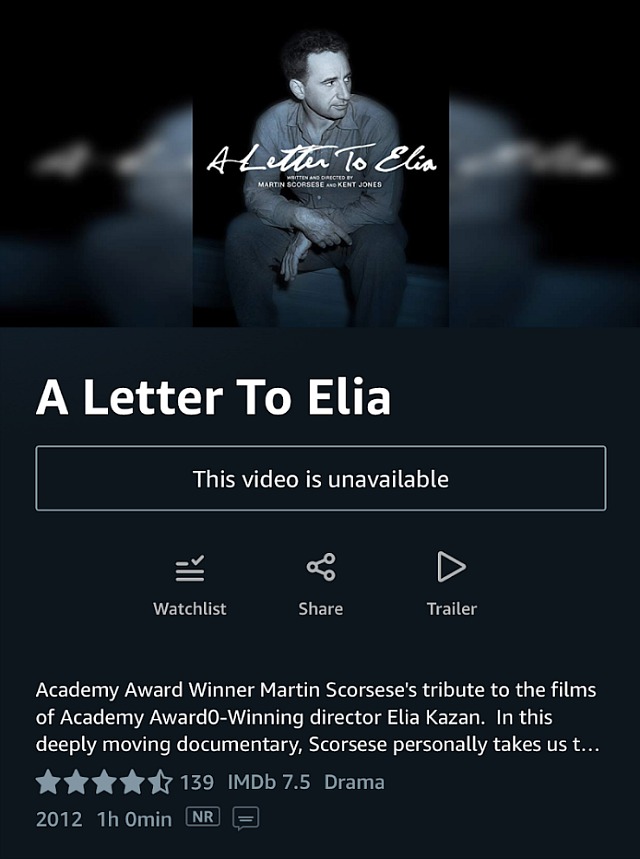
For years I’ve been trying to buy or stream Martin Scorsese and Kent JonesLetter to Elia, which I saw once at the 2010 New York Film Festival. It’s basically Scorsese talking about his worship of Elia Kazan over the decades, and “a delicate and beautiful little poem,” as I wrote nine years ago. It’s one of the most touching docs of this sort that I’ve ever seen.

But you can’t buy a stand-alone DVD or Bluray version, and you can’t stream it. It’s part of Fox Home Video’s Elia Kazan Collection, but I can’t find it anywhere. (In my home, I mean — I bought it in 2010.) Nine years ago it played on PBS‘s American Masters series, but right now there’s only a webpage.

The blockage presumably boils down to a rights issue. Two or three years ago I asked Jones why it’s unviewable (except for the box set), and he mumbled a non-response. I took that to mean that the absence of Letter to Elia is a conversational non-starter.

Posted on 11.24.10: “Letter to Elia is a personal tribute to a director who made four films — On The Waterfront, East of Eden, Wild River and America America — that went right into Scorsese’s young bloodstream and swirled around inside for decades after. Scorcese came to regard Kazan as a father figure, he says in the doc. And after watching you understand why.

“It’s a deeply touching film because it’s so close to the emotional bone. The sections that take you through the extra-affecting portions of Waterfront and Eden got me and held me like a great sermon. It’s like a church service, this film. It’s pure religion.

“More than a few Kazan-haters (i.e., those who couldn’t forgive the director for confirming names to HUAC in 1952) were scratching their heads when Scorsese decided to present Kazan’s special lifetime achievement Oscar in 1999. Letter to Elia full explains why, and what Scorsese has felt about the legendary Kazan for the last 55, going on 60 years.”

Read more