Robert Towne Christmas Cheer

Christmas was great when I was a New Jersey kid of seven, eight and nine. Almost everything felt magical or tingly or transporting on some level. Mostly the aromas — the pine needles, oven-fresh turkey, hot gravy over mashed potatoes, warm pumpkin pie — but also the tree decorations, the store lights at night, the wrapped gifts, the chilly air, listening to Dylan Thomas‘s recording of “A Child’s Christmas in Wales” and watching Alistair SimsA Christmas Carol, and those occasional visits to Manhattan with my mom (department stores, Rockefeller Center, Radio City Music Hall).

But the warmest flow-through Christmas vibes I’ve ever felt, topping even those of my impressionable years, happened at a post-Thanksgiving holiday party at Robert Towne‘s large Pacific Palisades home in late November of 1997. Yeah, I know — I mentioned this in a piece I ran after Curtis Hanson passed a couple of years ago. But what a night, what a fine English Tudor vibe on a grand holiday evening in which all the elements were in place.

The gathering was just the right size and full of people who mattered a great deal at that moment (Hanson, Jerry Bruckheimer, Phillip Noyce) and the aromas…my God! The place smelled like cinnamon and mistletoe and cigar smoke and turkey gravy and egg nog, and Towne and his wife Luisa had hired three professional singers to roam around and sing Christmas carols and I mean in perfect harmony, all dressed in top hats, shawls, bonnets, gloves and hoop skirts…classic Dickensian garb.

It was glorious. I remember coming down the big staircase and looking at this choice industry crowd having such a great time and saying to myself “everyone should experience this kind of perfect Christmas gathering at least once in their lifetimes.”

Because even the most poignant Christmas get-togethers with my own family weren’t this heartwarming, this extra-perfect. It was even better than a holiday feeling that filled my heart when I was in London in early December of ’80, when I was walking around and sensing how lucky I was to be in the Stockwell section at that particular moment. It was hardly a flush area of town but it felt exactly right as I settled into a quiet neighborhood pub and ordered a lager as I listened to “Don’t Stand So Close To Me” on the juke box.

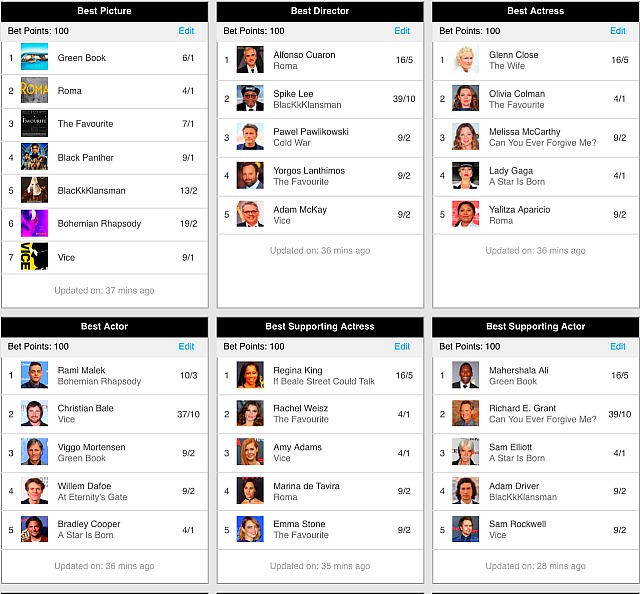
Oscar Host Prediction Derby

You have to give a two-part answer here. One, who is the Academy most likely to hire to replace the now-jettisoned Kevin Hart? And two, who would be the most engaging host, regardless of the likelihood of this or that person being hired?

Trevor Noah? Bill Hader?

Why exactly is Jimmy Kimmel a no-go? He could obviously just waltz in and do it again without breaking a sweat.

Why again doesn’t the Academy pay a decent fee to the host? Kimmel said he was paid a lousy $15K for hosting the 2017 Oscars.

I think that Michelle Wolf, who made history as the emcee at the last White House Correspondents Dinner, would be perfect. She’s brilliant, and you know she’d make mince meat out of the wokers.

I would have said Tiffany Haddish but she doesn’t seem to know movies all that well. Remember how she said she decides what to see by what her friends at the beauty salon tell her? She’s not a Movie Catholic, and the Oscar host has to believe, has to really care.

DSCU Check-In Time

A couple of days ago N.Y. Times critics Manohla Dargis and A.O. Scott posted their Best Movies of 2018 lists. They both like Roma, First Reformed and Happy as Lazzaro, as I do. They’re also on the same page as far as BlacKkKlansman admiration goes, which I don’t quite get.

I called it Lee’s strongest film since Inside Man (’06) and before that The 25th Hour (’01), and easily his most impassioned, hard-hitting film about the racial state of things in the U.S. of A. since Malcom X (’92). For me the bottom line is that BlacKkKlansman is basically a police undercover caper film, but plotted in an odd, head-scratchy way. Which I tried to briefly explain in a 7.19.18 piece.

I agree with Dargis’s admiration of Burning and First Reformed, and to a lesser extent Shoplifters. And I feel strongly bonded with Scott on his praise of Marielle Heller‘s Can You Ever Forgive Me? and Nadine Labaki‘s Capernaum.

But how Scott could completely ignore Pawel Pawlikowski‘s Cold War, my choice for the best film of the year, is mystifying. Dargis includes it in her list of runner-ups.

I guess it all basically comes down to whether or not you can accommodate yourself to the rules and regulations of the Dargis-Scott Critical Universe (DSCU). I understand and respect the DSCU for what it is, but I was really quite upset by a 5.2 DSCU article called “Dear Movie Industry, We Have Thoughts”, in which Scott declared that anyone offering a historical analogy about today’s near-tyrannical climate of politically correct admonishing is up to no good.

“Please read some history,” he implored. “About the Salem witch trials, the Spanish Inquisition, the martyrdom of early Christians, Joseph McCarthy, Joseph Stalin, the Gestapo, Pol Pot and any of the other historical monsters and catastrophes you like to invoke when talking about whatever is bothering you in contemporary culture. Also please refrain from hyperbolically throwing around words like ‘silencing,’ ‘thought police’ and ‘censorship’ in reference to criticism on social media or elsewhere. People who indulge in this kind of rhetorical inflation are like rats spreading bubonic plague.”

Either you understand what’s going on with the current climate of intimidating woke-lefty fascism and how a sizable percentage of the current community of leading film critics is simply terrified of stepping out of line or saying anything that might strike the wokeys or the virtue-signallers as the wrong thing to say. Either you can say to yourself “yup, this is definitely a characteristic of our social and critical discourse right now” or you can’t. Or you won’t. But to call people who are claiming there’s a strong element of fear and intimidation…to call these people “plague-spreading rats” is quite the declaration.

Again, HE’s picks for the top 32 films of 2018.

Circling Wolverines

I feel pretty good for a guy who had neck and shoulder surgery three days ago. I have an appetite, I walk around like Kharis, I’m strong enough to think and write and prepare my own tana leaf broth, etc. The only problem is the stabbing pain in my left shoulder. And so, like a baby getting a bottle feeding, I awake at 2 or 3 am for pain meds. And as long as I’m up I check the HE comments and twitter.

Lo and behold, this morning I read two heartening messages in the “Un-Sundanced by Wokers” thread — one from author, critic and SF State film professor Joseph McBride (aka “Bob Hightower”), and a second from a guy I don’t personally know or agree with at all — Breitbart columnist John Nolte. But their words of support felt good. Twitter shriekers will probably conclude I’m no longer a lefty iconoclast because I’m grateful for Nolte’s message. But in my head I’m separating what he’s saying about my situation and whom he’s aligned with politically. Nobody wants to live in a lefty fascist world but at the same time I can’t wait for Beto O’Rourke to run against Trump and for Tulsi Gabbard to come into her own.

McBride/Hightower: “Jeff — This is ridiculous and outrageous. You’re a working journalist and reviewer who covers the film industry diligently and should not be denied such access. Can your readers and fellow writers be of help in protesting? Please post names and email addresses of people to whom we should complain on your behalf. Also, those who are advising you about how to change your attitude or whatever to appease Sundance are offensive. That smacks of McCarthyism. Let’s all get behind supporting you in getting your pass to cover Sundance.”

Nolte: “I apologize for violating my ban. This is Wells’ site, and I have respected his decision by not commenting for a number of years now — and I will continue to respect his decision, but I wanted to chime in…

“I [visit] two or three times a day because Hollywood Elsewhere is the best film site online. Despite the frequent attacks on Trump and his supporters (i.e., me), I still read because Wells is INTERESTING, because he offers a unique point of view, because he is an open book (without being a narcissistic virtue signaler) and a solid wordsmith who brings a worldview (like it, agree with it, or not) and experience you cannot find anywhere else.

“Thanks to corporatization, thanks to the growing fear of de-platforming and social blacklisting, every other movie site I click on reads like every other movie site I click on — a tedious exercise in sterilized, homogenized, pro-social justice conformity. I’m not boycotting the sites I used to read. I don’t believe in boycotts. I just lost interest because…

“Everyone is either in a terrified defensive crouch as they energetically contribute to the Internet’s Woke Film Pravda, or worse, they are true believers in this shallow, censorious crap; or worse still, they contribute to the Internet’s Woke Film Pravda because they are simpering gerbils desperate to belong.

“Do you have any idea how dull it is to be a movie lover these days (thank GOD for DVD/Bluray)? Unless you are looking for ideological applause lines as opposed to insights and nuance and honesty, it is dry out there — and not just in film writing but in much of filmmaking (especially comedy).

“But it is not dry and sterile here, because Wells is what a writer is supposed to be — above all, he is honest about everything, and that makes him a raw nerve, and that means sometimes he’s going to piss you off, but it also means that you will sometimes discover a FIRST REFORMED you would not have otherwise. It also means you will never be bored. Given the choice between being offended or bored, is an easy choice.

Read more

In Passing

Thanks to the haters, uglies and tortured souls who’ve cheered my Sundance ’19 announcement. One thing I’ve never done and never will do is applaud a journalist’s political difficulty or misfortune, but there are some who revel in such distractions. And they all have their bathroom-mirror reflections to consider each night. Last January I covered Sundance like everyone else — reviews of Ethan Hawke‘s Blaze, David Wain‘s A Futile and Stupid Gesture and Paul Dano‘s Wildlife, a chat with Jonah Hill about Gus Van Sant‘s Don’t Worry, He Won’t Get Far On Foot, a riff about Marina Zenovich‘s Robin Williams: Come Inside My Mind, a pan of Blindspotting, a mostly positive review of Amy Scott’s Hal Ashby doc, etc. Sundance is a job, a task, a 10-day march…something you try to do as best you can. And then you move on.

Hart Walks Away

Kevin Hart: “I have made the choice to step down from hosting this year’s Oscars. I sincerely apologize to the LGBTQ community for my insensitive words from the past. I’m sorry that I hurt people.”

Earlier: Hart’s hours-old Instagram post (and corresponding video clip) is an attempt to persuade everyone to cut him some slack regarding the clearly homophobic tweets that he posted seven or eight years ago. He’s claiming that on the brink of his 40th birthday he’s “in love with the man that I am becoming” and that “you live and you LEARN & you GROW & YOU MATURE…I love EVERYBODY, once again EVERYBODY.” So please let it go, he’s basically saying, and accept that he’s no longer the homophobic guy he was in his early 30s.

Deadline‘s Mike Fleming has written that Hart “might get the benefit of the doubt but only if he stands up and takes responsibility for the hurtful things he has written. Or at least explains himself more fully.” But what could Hart say in a follow-up other than an expanded replay of this afternoon’s Instagram, which is that the hurtful tweets were then & “I love EVERYBODY” is now? Right now the conversation seems to be tilting against Hart but who knows? I know the news about Hart landing the Oscar host gig broke faster than anticipated, but you’d think that vetting his tweets and stand-up material would have been a top priority during the discussion phase. How is this likely to shake out?

Shakespeare Had Personal Issues

Kenneth Branagh as a weary and melancholy William Shakespeare, aged 49 in the year 1613 — three years before his death at age 52. Retired and unable to write, Shakespeare has returned to his home town of Stratford to reflect and complain and fret about his shortcomings. Judi Dench as Shakespeare’s wife, Anne Hathaway, and Ian McKellen as confidante Henry Wriothesley. Penned by Ben Elton (Blackadder, The Thin Blue Line), All Is True is receiving an award-qualifying one-week release on 12.21.

Un-Sundanced by Wokesters

Two years ago the Sundance Film Festival withdrew my beloved Express Pass, which I was honored to carry for five straight festivals (’12 thru ’16) and by which I had easy access to screenings and therefore some extra, extremely valuable writing time. I was initially devastated but I gradually adjusted to grunt status during the ’17 and ’18 festivals. But now the Sundancers have really lowered the boom. Two days ago they told me they’ll be “unable to accommodate your request for press credentials at [the 2019] festival.”

Seriously — they actually said that.

I’ve been “going out” with Sundance for 25 years, and suddenly we’re done? I’ve been attending Sundance festivals each and every year since ’93, and if memory serves I filed a New York Post story about Robert Redford‘s launching of the Sundance Institute way back in ’80. A quarter century’s worth of round-trip plane tickets and condo rentals and hobnobbing and working my tail off to see and review everything…two and a half decades of wearing that cowboy hat and working and wailing and watching the history of independent film unfold in the snowy Wasatch mountains.

Has any other longterm Sundance veteran been told to take a hike after 25 years of devotion? I doubt it. Can anyone imagine the Cannes Film Festival guys doing this? I think this is fairly historic on some level. It’s been nice, Jeff, but that’ll do…we don’t like you any more.

I’ve been advised by journalist friends to let this go and just attend next month’s festival without a pass, and basically mooch tickets from publicist pals. Which I may do. But this is an instructive moment that tells us a little something about the punitive mindset of the cabal that’s running Sundance these days.

For this is clearly a censorious and illiberal response to my having written critical riffs about the matters near and dear to wokeness. I’ve lamented the off-with-their-heads Robespierre mentality within the #MeToo movement. I’ve stood by Woody Allen and particularly Moses Farrow. There exists, I gather, a suspicion that I’m not sufficiently supportive of woman filmmakers, which I’m sure will come as a surprise to Kathy Bigelow, Marielle Heller, Jennifer Kent (nobody worshipped The Babadook more than myself), Andrea Arnold, Sarah Polley, Lynne Ramsay, Sofia Coppola (whose direction of Somewhere reminded me of classic-era Michelangelo Antonioni), Ava DuVernay (whose Middle of Nowhere I flipped over six years ago) and Olivia Colman (whose performance in Tyrannosaur I found so devastating that I raised money to pay for press screenings that Strand Releasing wouldn’t spring for).

And it’s possible, I suppose, that my having called last year’s festival a “socialist summer camp in the snow” rubbed them the wrong way.

In a 1.21.18 piece titled “Sundance ’18 Feels Sluggish, Listless, Agenda-Driven,” I wrote that “this festival seems to be largely about woke-ness and women’s agenda films — healings, buried pain, social ills, #MeToo awareness, identity politics, etc.”

I’m not going to offer any sweeping judgments about the recently announced 2019 Sundance Film Festival slate, except to suggest that with a competition slate that is 53% female (i.e., nine of the 17 directors eligible for the festival’s top prize are women) it would appear that 2019 Sundance is going to be just as progressive-minded as last year’s festival, if not more so.

But even with the currents of p.c. instruction every Sundance delivers at least four or five knockouts, and the 2019 crop seems like it might be a little better than normal.

I’ve naturally written an appeal to the Sundance press office, and have been told they may change their minds.

Read more

I May Have Avoided “Cabin Boy”

Or I may have watched a half-hour’s worth before discreetly slipping out of the screening room. Or I may have seen the whole thing and then discharged it from my memory. This morning I watched a couple of clips (I love the David Letterman scene). The fact that I can’t recall says something in itself. Ditto the fact that the cover of Kino Lorber Bluray describes Cabin Boy as “the contentious classic that angered a nation.”

I was, however, somewhat taken by Michael Tedder’s 12.5 Ringer piece, “The Beautiful, Inspirational Disaster of Cabin Boy, 25 Years Later.” Here’s the best portion:

“Though flawed, Cabin Boy is a cinematic experience like nothing else, and one that has been extremely important to the development of American comedy.

“It’s often said that Mick Jagger failed to become a soul singer, and in the process became one of the greatest voices of rock music. Adam Resnick and Chris Elliott failed to make a big-budget Hollywood comedy, and in the process made a surreal, anarchist experience.

“It looks and feels wrong in a great way, in a way that a more technically accomplished director could never hope to achieve, much as no conventionally ‘great’ singer could ever hope to match the raw emotion of Daniel Johnston’s ‘Some Things Last a Long Time.’

“The film holds a mesmerizing power, from the contrast to the surrealistically fake ocean and old-timey garb of Elliott’s shipmates, played by character actors like Brian Doyle-Murray, and anachronistic elements like a limo and a microwave that are never commented on. The special effects are so delightfully chintzy, especially whenever the cuckold giant shoe salesman shows up. The jokes always arrive at the wrong time and never do what you expect them to do, such as when a giant cupcake spits tobacco on Elliott, and then disappears without explanation.

“[And} Elliott gives a fully committed performance, nailing the stunted man-child archetype years before Will Ferrell would popularize it, and using his posture and awkward gait to fully sell Mayweather’s metamorphosis into a Cabin Man.

Read more

Default Soap Opera Effect

Posted on 9.12.18: “I’ve never watched a single film on my Sony 65″ HDR 4K TV with the ‘aid’ of motion-smoothing, which makes everything look overly fluid and video-tapey and generally removes the scrim-texture of film. But as appalling and repellent as motion-smoothing is, I’m strangely attracted to using it when watching old black-and-white films.

“There’s something hypnotic about watching, say, William Wellman‘s The Public Enemy, which I’ve seen several times since I was a kid, with the motion-smoothing effect. Shot 87 years ago, this rickety-feeling James Cagney gangster flick is a formally framed, somewhat squawky-sounding film for the most part, but with motion smoothing it feels (and I know I’m not supposed to say this) cleaner, fresher and less antiquated.”

Chris McQuarrie and Tom Cruise are fellows of equally strong spirit, or so it seems. But genes are often the final arbiters. McQuarrie is six years younger than Cruise.