Best 2018 Films At Two-Thirds Mark (Update)

Yesterday I posted HE’s latest best-of-the-year roster, which numbered 17 or 18. (I think.) I’ve since added a couple of overlooked titles (We The Animals, Equalizer 2) for a grand total of 21, and in this order:

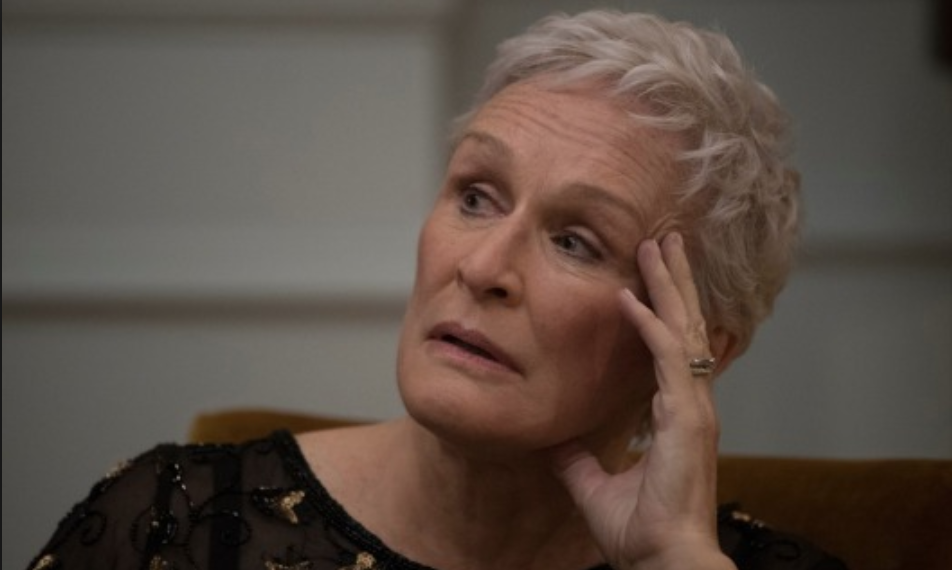
Tied for first place: Bjorn Runge‘s The Wife (Sony Pictures Classics, 8.17) and Paul Schrader‘s First Reformed; 3. Ari Aster‘s Hereditary; 4. Stefano Sollima‘s Sicario — Day of the Soldado; 5. Chris McQuarrie and Tom Cruise‘s Mission : Impossible — Fallout; 6. John Krasinski‘s A Quiet Place; 7. Eugene Jarecki‘s The King; 8. Lynne Ramsay‘s You Were Never Really Here, 9. Tony Zierra‘s Filmworker, 10. Andrej Zvyagintsev‘s Loveless, 11. Jeremiah Zagar‘s We The Animals, 12. Tony Gilroy‘s Beirut, 13. Wes Anderson‘s Isle of Dogs; 14. Bo Burnham‘s Eighth Grade; 15. Morgan Neville‘s Won’t You Be My Neighbor; 16. Ryan Coogler‘s Black Panther; 17. Matt Tyrnauer‘s Scotty and the Secret History of Hollywood; 18. Betsy West; Julie Cohen‘s RBG; 19. Spike Lee‘s BlackKKlansman; 20. Antoine Fuqua‘s The Equalizer 2; and 21. John Curran‘s Chappaquiddick.

Repeating: My three biggest misses so far are Sally Potter‘s The Party, Joel Francis Daley‘s Game Night and Cory Finley‘s Thoroughbreds.

Confederate Colors

“You can feel the fire and rage in Spike Lee’s veins in more than a few scenes, and especially during the last five minutes when Lee recalls the venality of last year’s ‘Unite the Right‘ really in Charlottesville, which ended with the death of protestor Heather Heyer, and reminds that Donald Trump showed who and what he is with his non-judgmental assessment of the KKK-minded demonstrators. Lee paints Trump with the racist brush that he completely deserves, and it makes for a seriously pumped-up finale.” — from my 5.14.18 review, “Lee’s Klansman Busts Trump Like A Bitch.”

“Trump, of course, knows the game he’s playing: The refusal to condemn, which he repeated at his recent press conference keyed to the anniversary of the Charlottesville riots, equals a wink of endorsement. It’s that simple. Anyone who now denies that we have David Duke in the White House is either lying, not seeing reality, or not minding it.” — from Owen Gleiberman‘s 8.12 Variety essay, “No Film Has Channeled the Hateful Pulse of Our Moment Like Spike Lee’s BlacKkKlansman.”

Doofusy Shark Flick Takes Off

Everyone knew The Meg was throwaway junk and they didn’t care. $96.8 million overseas, $44.5 million domestic = $141.3 million. In my review I said “I didn’t hate The Meg, but I didn’t believe a second of it.” I also called it a wank that’s structured like a kind of musical. That’s probably how everyone took it. Did anyone like it unironically?

Turn For The Better

Robert Duvall is good every time at bat. Open Range, Lonesome Dove, Frank Hackett, Boo Radley, the taxi driver in Bullitt, The Apostle…always right on the mark. When luck and the angels are with him, he’s great. But the marriage of Duvall and Mac Sledge was perfect. I despise country-style Christians for the most part, but I sure related to them here. Tender Mercies is probably the greatest getting-sober-and-turning-your-life-around movie of all time. And yet when it opened in ’83, audiences mostly blew it off. It cost over $4 million to make, and only made $8 million and change.

Wiki excerpt: “The post-screening feedback was, in the words of director Bruce Beresford, ‘absolutely disastrous.’ As a result, Universal executives lost faith in the film and made little effort to promote it. Screenwriter Horton Foote said of the studio, ‘I don’t know that they disliked the film. I just think they thought it was inconsequential. I guess they thought it would just get lost in the shuffle.’ Others in the film industry were equally dismissive; one Paramount Pictures representative described the picture as ‘like watching paint dry‘.”

Read more

Unspoken Taboo

Originally posted 16 years ago: “In ’02 I wrote a short piece about a touchy anatomical subject — i.e., why feet are almost never given close-ups in films.

“Has anyone ever wondered why? Because 90% if not 95% of human feet are strange and alienating, is why. But it goes farther than that. For me, bare feet are a contemporary pestilence that no culture since the sandal-wearing Greeks and Romans has had to deal with. Once upon a time sandled feet were a subject for light mockery, something that only eccentric beatniks went for. Exposed digits have been ubiquitous, of course, in warm weather months since the mid ’60s. I for one regret it.

“Nobody talks about it, but everyone understands. In real life all but the most unusually perfect feet are good for a glance at best, and should rarely be contemplated further. This goes double for the movies. Hands, kneecaps, ear lobes, fingers, noses, biceps, chest hair (or lack of) — these and others anatomical features are routinely displayed in films. But never feet.

“Well, almost never.

“There’s a close-up of Michael Keaton and Geena Davis‘ bare feet soaking in a fountain in Ron Underwood‘s relationship comedy Speechless (1994). An argument could be made that this insert shot was one of the reasons it didn’t perform all that strongly. I remember recoiling in my theater seat after glancing at those gleaming, well-pedicured nubs and deciding I would give Speechless a failing grade.”

Update: I don’t know how many times Quentin Tarantino has zeroed in on women’s feet, but the only instance I recall is Melanie Laurent‘s bare-footed running in Inglorious Basterds.

“The only tolerable close-up of male peds happens about a half hour into Nicholas Ray‘s King of Kings (1961). Jeffrey Hunter‘s Nazarene is looking for spiritual purification in the desert, and at one point the camera cuts to a shot of his bleeding feet stepping on sand and cactus thorns and sharp stones. Hunter’s feet (perhaps Ray used a foot double?) looked good — lean, tanned, athletic, perfect pedicure.

“Having bad feet can really mess with the aura that an attractive or extra-talented movie star has carefully built up. One definition of bad feet are those with extra-long European-styled toes. New York writer Pete Hamill once described the toes belonging to Nastassja Kinski‘s for an interview he did with her in the early ’80s as ‘bad toes.’ So I’m not the first one to bring this up.

Read more

Baroque Off-Center vs. Right Down The Middle Slambang

The other night I watched John Frankenheimer‘s The Manchurian Candidate with a friend, and all I saw were the mistakes and plot holes and dialogue that needed rewriting. I realized all the more that it wouldn’t work half as well without David Amram‘s string-quartet score. That music tells you from the get-go that something unusual and high-toned and even a bit curious is about to unfurl. Frankenheimer’s film delivers on these counts, of course. Amram’s main-title music tells you “this movie was made by adults with a thoughtfully baroque mindset…a mature thriller with a mind of its own.”

On the other hand the opening main-title bars of Don EllisFrench Connection score couldn’t be less complex. Bang bang, clang clang, wham bam. It tells you “this movie is going to be blunt and raw and hard-hitting…it’s a fairly sophisticated film in a sense, but it’s not going to deliver in any kind of roundabout way…what you’re hearing and feeling is what you’re going to get, trust us.”

Read more

Comfort of Strangeness

If there’s one thing film twitter wants you to abandon, it’s your comfort zone. Be brave, step over the fence and experience the exotic, uncertain, challenging realms that exist outside of your little piddly backyard. Of course! Hollywood Elsewhere agrees that people who refuse to step outside of their c.z. are missing so much and absorbing so little in the way of life-giving nutrients or eye-opening realizations. I’ve been in rooms with people who don’t want to see what they don’t want to see, and it’s not pretty. The wrong kind of vibe.

On the other hand I’ve always defined “comfort zone” in a different way.

To me a comfort movie is one that presents three basic things. One, semi-recognizable human behavior (i.e., bearing at least some resemblance to that which you’ve observed in your own life, including your own something-to-be-desired, occasionally less-than-noble reactions to this or that challenge). Two, some kind of half-believable story in which various behaviors are subjected to various forms of emotional or psychological stress and strain. (This should naturally include presentations of inner human psychology, of course, as most people tend to hide what they’re really thinking or scheming to attain.) And three, action that adheres to the universal laws of physics — i.e., rules that each and every life form has been forced to submit to since the beginning of time.

The physics thing basically means that I can enjoy or at least roll with superhero fantasy popcorn fare, but on the other hand these films have a way of delivering a form of profound irritation and even depression if you watch enough of them.

There are, in short, many ways of telling stories that (a) contain recognizable human behavior, (b) engaging stories and (c) adhere to basic laws of gravity, inertia and molecular density. I’m talking about tens of thousands of square miles of human territory, and movies that include Her, Solaris, Boyhood, Betrayal, Children of Men, Leviathan, Thelma and Louise, Superbad, Cold War, Across 110th Street, Shoot the Piano Player, Them!, A Separation, The Silence, Se7en, Holy Motors, Silver Linings Playbook, The Death of Mr. Lazarescu, Hold That Ghost, The Miracle Worker, The Wolf Man, Ikiru, Crossfire, Long Day’s Journey Into Night, Duck Soup, Moonlighting, What’s Up, Tiger Lily?, the better screwball comedies of the ’30s, The Blob, First Reformed, Ichi the Killer, The Equalizer 2, Adaptation, Four Months, Three Weeks and Two Days, Punch Drunk Love, Out Of the Past, Danton, Some Like It Hot, The Big Sky and God knows how many hundreds or thousands of others.

But if a movie presents human behavior that I regard as completely unrecognizable or nonsensical, that insists on ignoring the way things are out there (or “in” there), I tune out. And if you don’t like that, tough.

Read more

Tooth and Nail

Michael Avenatti lacks the resume of a typical Democratic presidential contender. He’s a bit out of his depth — more hat than cattle — and of course he’s an opportunist. What attorney isn’t? But he strikes me as a highly intelligent, relatively decent fellow. He’s tough, well-organized and and well-phrased, and has never stumbled in all the interviews I’ve seen him do. His domestic political views are basically compassionate and humanist. I don’t see a huge problem.

From Maggie Astor’s 8.10 N.Y. Times story: “[Yesterday] Avenatti used his first big speech as a prospective presidential candidate to call on the Democratic Party to reject Michelle Obama’s oft-quoted advice about President Trump and his allies: “When they go low, we go high.”

“The hard-charging lawyer who represents the pornographic film star Stephanie Clifford, known as Stormy Daniels, did not mention the former first lady in his keynote speech Friday night at the Democratic Wing Ding, a party fund-raiser in northern Iowa. But there was no mistaking his meaning.

“’We must be a party that fights fire with fire,’ Mr. Avenatti said to cheers from the audience, his voice rising. ‘When they go low, I say hit back harder.’

“He received a thunderous ovation at the end of his speech, notably louder than the applause for the night’s other speakers, including Representative Tim Ryan of Ohio as well as Representative John Delaney of Maryland, who is running for president.”

The Fix Was In (And Still Is)

The main reason I never cared for Francis Coppola‘s Tucker: The Man and His Dream (’88), the story of innovative auto designer Preston Tucker and his attempt to produce and market the 1948 Tucker Sedan, is that it says the same thing over and over. That thing is the fix was in, or the corporate auto industry refused to allow an innovative auto designer to prosper and thereby make them look bad, and so they had his business killed.

If Tucker had been funnier and crazier, maybe. But it’s so methodical and so determined to deliver the same observation over and over that it eventually smothers your soul.

When you think about it, movies that say “the fix is in and anyone who tries to change or expose this system is going to suffer or get killed or at least corrupted” is a genre in itself.

Alan Pakula‘s The Parallax View is a “fix is in” movie. Ditto Michael Ritchie‘s The Candidate. Luchino Visconti‘s The Damned and Pier Paolo Pasolini‘s Salo and the 120 Days of Sodom are two extreme examples. Serpico and Prince of the City are major “don’t try to un-fix things” films. All The President’s Men, obviously, is the opposite of a “fix” film.

What are some of the better ones? Dramas or comedies that merely say “everything stinks and corruption will always be with us” are not “fix is in” movies. You need a lead protagonist who wants to do things differently and tries to implement that, and is finally stripped, beaten down and gutted at the end.

A Bluray of Tucker: The Man and His Dream will pop on 8.28.

Read more

Two-Thirds Gone

A few days ago Esquire‘s Nick Schrager listed his best-of-the-year-so-far list. I agree with him here and there but some of his other choices…Jesus. The Rider doesn’t develop, doesn’t go anywhere. It’s a movie about waiting for death, about “the thing that you love you can’t do, and so you’re fucked.”

Here’s HE’s latest best-of-the-year roster — a grand total of 21, and in this order:

Tied for first place: Bjorn Runge‘s The Wife (Sony Pictures Classics, 8.17) and Paul Schrader‘s First Reformed; 3. Ari Aster‘s Hereditary; 4. Stefano Sollima‘s Sicario — Day of the Soldado; 5. Chris McQuarrie and Tom Cruise‘s Mission : Impossible — Fallout; 6. John Krasinski‘s A Quiet Place; 7. Eugene Jarecki‘s The King; 8. Lynne Ramsay‘s You Were Never Really Here, 9. Tony Zierra‘s Filmworker, 10. Andrej Zvyagintsev‘s Loveless, 11. Jeremiah Zagar‘s We Are The Animals, 12. Tony Gilroy‘s Beirut, 13. Wes Anderson‘s Isle of Dogs; 14. Bo Burnham‘s Eighth Grade; 15. Won’t You Be My Neighbor; 16. Ryan Coogler‘s Black Panther; 17. Matt Tyrnauer‘s Scotty and the Secret History of Hollywood; 18. Betsy West; Julie Cohen‘s RBG; 19. Spike Lee‘s BlackKKlansman; 20. Antoine Fuqua‘s The Equalizer 2; and 21. John Curran‘s Chappaquiddick.

Not bad, liked ’em well enough, half-liked ’em, mezzo-mezzos: Jason Reitman‘s Tully; Andrew Haigh‘s Lean on Pete; Chloe Zhao‘s The Rider; Steven Spielberg‘s Ready Player One; Armando Ianucci‘s The Death of Stalin; Greg Berlanti’s Love Simon; Clint Eastwood‘s The 15:17 to Paris; Samuel Maoz‘s Foxtrot (all from Sony Classics), Ziad Doueiri‘s The Insult (Cohen Media Group) and Alex Garland‘s Annihilation.

Still Haven’t Seen ’em: Sally Potter‘s The Party, Joel Francis Daley‘s Game Night, Cory Finley‘s Thoroughbreds and what else?