

The brilliant aspects of this justly praised scene from Luca Guadagnino‘s Call Me By Your Name, apart from the dialogue and Michael Stuhlbarg‘s exquisite delivery, are (a) the very slow zoom-in as Stuhlbarg begins speaking, (b) the subtle rumble of thunder at the :22 mark, (c) the gentle addition of Sufjan Stevens‘ piano at the 1:56 mark, and (d) the way Timothee Chalamet refrains from melting until the very end. Clip editor’s note: Things should’ve faded to black before Chalamet asks “does mom know?”
Now That You’ve Seen The Post…

Yesterday on Facebook Paul Schrader threw some left-handed shade upon Steven Spielberg‘s The Post, which opened yesterday in New York and Los Angeles. And then Bret Easton Ellis followed suit.
The Post, said Schrader, “feeds the myth that the system actually works. That the events of 1971 could be repeated today. I can hear Trump/Fox chuckling: yeah, let Hollywood and the media believe that myth if it keeps them pacified. We fixed that. It will never happen again.”
Ellis: The Hillary Clinton of prestige movies: lost in a bubble, smug, completely clueless, made by the establishment. [And conveying] a refusal to understand Trump’s appeal. This is the kind of lost and naive movie that unknowingly explains exactly why the mainstream media are where they are now — this story from 1971 has absolutely nothing to do with what is going on in 2017 (we are in a much more complicated moment) and yet it pushes a theory that is so flattering to journalists that despite the glaring weaknesses of the movie (and its thesis) they are going crazy over it. The Post is a myth only left-wing millionaires could buy.”
Village Voice critic Bilge Ebiri: “I disagree that The Post is all that convinced it can happen again. The hazy nostalgia with which it depicts bustling newsrooms is very pointed — it’s making a case that the kind of journalistic institutions that allowed for this kind of reporting are dinosaurs. It’s a very sad movie, in that sense.”
Excerpt from HE review, posted on 12.6: “A smartly written, well-performed tale of how and why Washington Post publisher Katharine Graham (Meryl Streep) decided to man up and a grow a pair in the thick of the Pentagon Papers episode of June 1971, The Post is far and away my favorite Spielberg film since Saving Private Ryan. Call it Spielberg’s best, certainly his least problematic, in two decades.
“The critical verdict hasn’t been unanimous but I fell for it, and I mean all the way through and not just during the manipulative third act, which, if you have any stored-up sentiment about the glory days of 20th century dead-tree journalism, will definitely melt you down. I knew I was being sold a Spielbergian bill of goods but I bought it anyway. I gushed out some thoughts the day after, and a New York friend replied, ‘Calm down, Tonto…it’s very good but not great.'”
Another critic friend: “It never made me tingle the way Spotlight or All the President’s Men did. Plus it has too many Spielberg-y touches: the little girl selling lemonade (Jesus!), that [redacted] ending. It all felt forced rather than organic, despite strong performances from Streep and Hanks.”
“It was also two hours of people going ‘We can’t do that!’ and others saying ‘We have to do that!’
Oswald Clan Thanksgiving
This Oswald family footage, taken on 11.22.62 or Thanksgiving Day, is indistinguishable from tens of thousands of home movies taken that very same afternoon. Family celebrations are pretty much all the same, and are always about facades. The insisted-upon emotions of these gatherings (happiness, contentment, alpha vibes) always mask the undercurrents. The likelihood on this pre-Christmas weekend is that everyone in your clan is doing reasonably well or at least trying to do better, and planning for the best. But you never know. “Happy families are all alike; every unhappy family is unhappy in its own way.” (Note: I’d never seen this 8mm footage before this morning.)
Won’t Kill You
Because I didn’t review Michael Gracey, Hugh Jackman and James Mangold‘s The Greatest Showman when everyone else did, I conveyed an impression that I haven’t seen it. Except I have. I caught it on the Fox lot on 12.13, and then…well, I kind of put it aside. It’s not that I hated the damn thing or even disliked it. It’s not so much painful to sit through as draining. It’s a big, fat, empty-headed, old-school musical with an exclamation point, and by that I mean a musical with nothing going on inside. All The Greatest Showman wants to do is shovel the exuberance as it over-produces and over-sells.
Using a simplistic pruning of the life of P.T. Barnum as a narrative thread, it’s basically a series of splashy music videos strung end to end. It’s not bad, I didn’t hate it, you could do worse, etc. Jackman and his costars — Zac Efron, Michelle Williams, Rebecca Ferguson, Zendaya, Keala Settle — perform well under the circumstances. It’s just that Gracey tries so hard and the film feels so synthetic.
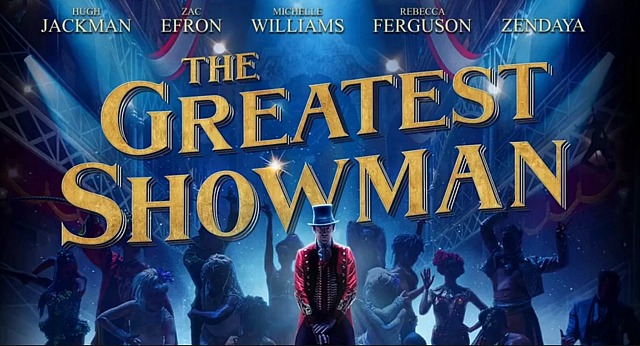
Last night I felt a bit nauseous after visiting a Michael Kors store in the Beverly Center. All that glitter garb, all those gold chains and sparkly shoe buckles and gaudy cluelessness, and with Michael Kors branding on just about every item. Kors seems to be selling uptown threads to people without much taste, to people who wouldn’t know stylistic understatement if it bit them in the ass. People of limited education who don’t get it, who feel they need to make some kind of vaguely vulgar, attention-getting statement in order to matter.
These are the people, I told myself, who will love The Greatest Showman. I’m not putting the movie down per se. It is what it is, and some will have a fairly good time with it. But Jesus, it feels so vapid, so lacking in edge and so consumed by a desire to entertain the most impressionable Vegas-visiting schmucks in the room.
Damon Is New Spacey? Really?
20,971 petitioners apparently want George Clooney and Steven Soderbergh to “do a Ridley Scott” with Matt Damon‘s cameo in Gary Ross‘s Ocean’s 8 (Warner Bros., 6.8.18), an all-female soft reboot of the Ocean’s trilogy. That or cut Damon’s cameo altogether. I knew that Damon has been under fire for, in the opinion of some, not condemning sexual misbehavior with sufficient severity, but I hadn’t realized until today that he’s almost regarded as a Kevin Spacey-type ogre. Almost.
Damon hasn’t been accused of sexual harassment or assault by anyone, but he is regarded as some kind of apologist or look-the-other-way type when it comes to the behavior of male abusers like Harvey Weinstein. Damon sounded relatively sane and reasonable to me when he spoke a week ago to Rolling Stone‘s Peter Travers about the current #MeToo climate, but the Robespierre contingent disagrees.
“Matt Damon should not be in this movie,” a Petitionsite essay declares. “[His] inclusion would trivialize the serious nature of the charges against sexual abusers like Weinstein and show massive disrespect for the brave women speaking out. It would also send a terrible message about the inevitability of — and lack of accountability for — sexual harassment in the workplace that four in ten American women experience. I’m calling on Oceans 8 producers George Clooney and Steven Soderbergh to toss Damon’s Oceans 8 cameo where it belongs: on the cutting room floor.”
Six Actresses Caught in Crossfire
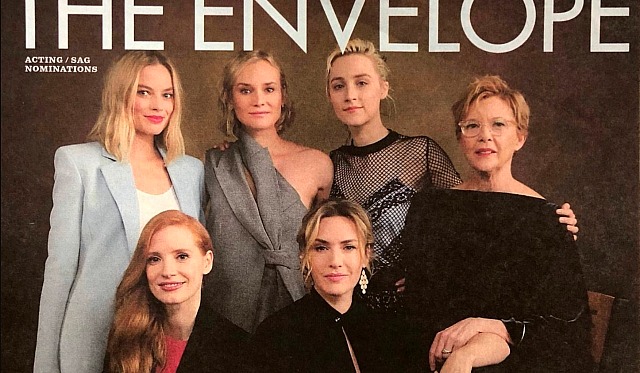
A couple of hours ago Glamour‘s Abby Gardner, speaking on behalf of the “woke” Twitter comintern, lambasted the editors of a just-published L.A. Times‘ Envelope issue (dated 12.21) for excluding actresses of color from the cover and the conversation.
The issue celebrates six top contenders for the Best Actress Oscar — Lady Bird‘s Saoirse Ronan, I, Tonya‘s Margot Robbie, In The Fade‘s Diane Kruger, Film Stars Don’t Die in Liverpool‘s Annette Bening, Wonder Wheel‘s Kate Winslet and Molly Game‘s Jessica Chastain. All of them fair-skinned with blonde or ginger-colored hair…shame!
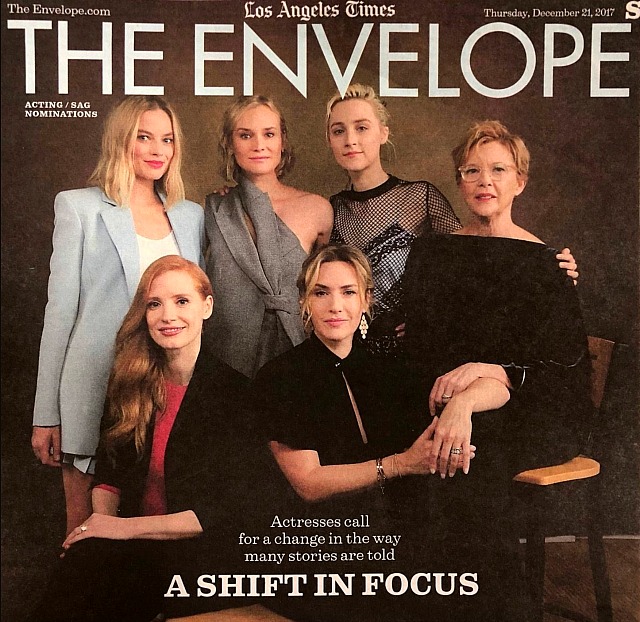
Gardner’s complaint is, of course, complete bullshit for two reasons: (a) the idea was apparently to highlight leading Best Actress contenders, and (b) this year there are, lamentably, no non-white actresses in serious contention for that trophy. (Best Supporting Actress is a different story — Mudbound‘s Mary J. Blige, Girls Trip‘s Tiffany Haddish, Downsizing‘s Hong Chau, Shape of Water‘s Octavia Spencer.)
The only woman of color who might have made it into the 2017 Best Actress circle is Natalie Paul, who was excellent in Matt Ruskin‘s Crown Heights but who never really campaigned or found traction of any kind.
If there’s a “problem” with the Envelope cover it’s because three leading contenders — The Post‘s Meryl Streep, The Shape of Water‘s Sally Hawkins and Three Billboards Outside Ebbing, Missouri‘s Frances McDormand are missing. And honestly? The only actresses on the current cover who really count and deserve the highest consideration for the Best Actress Oscar are Ronan and Kruger.
Okay, you could maybe add Robbie to the hottie list, but Bening, Chastain and Winslet aren’t happening.
Absence of Strategic Thinking
Nikki Haley‘s statement yesterday about a then-forthcoming U.N. vote about the Trump administration’s decision to support relocating the Israeli capital from Tel Aviv to Jerusalem, was, in the words of Morning Joe‘s Joe Scarborough, “somewhere between a schoolyard taunt and a mafia boss’s threat.” In the words of former CIA director John Brennan, “Trump administration’s threat to retaliate against nations [that] oppose U.S.position on Jerusalem is beyond outrageous…[it] shows that @realDonaldTrump expects blind loyalty and subservience from everyone — qualities usually found in narcissistic, vengeful autocrats.”
Either You Get It Or You Don’t
In one corner, Gary Oldman‘s hammy, blustery, broadly performed Winston Churchill, fortified with prosthetics and aimed at the cheap seats. In another corner, this.
Graduate Takedown Has Begun
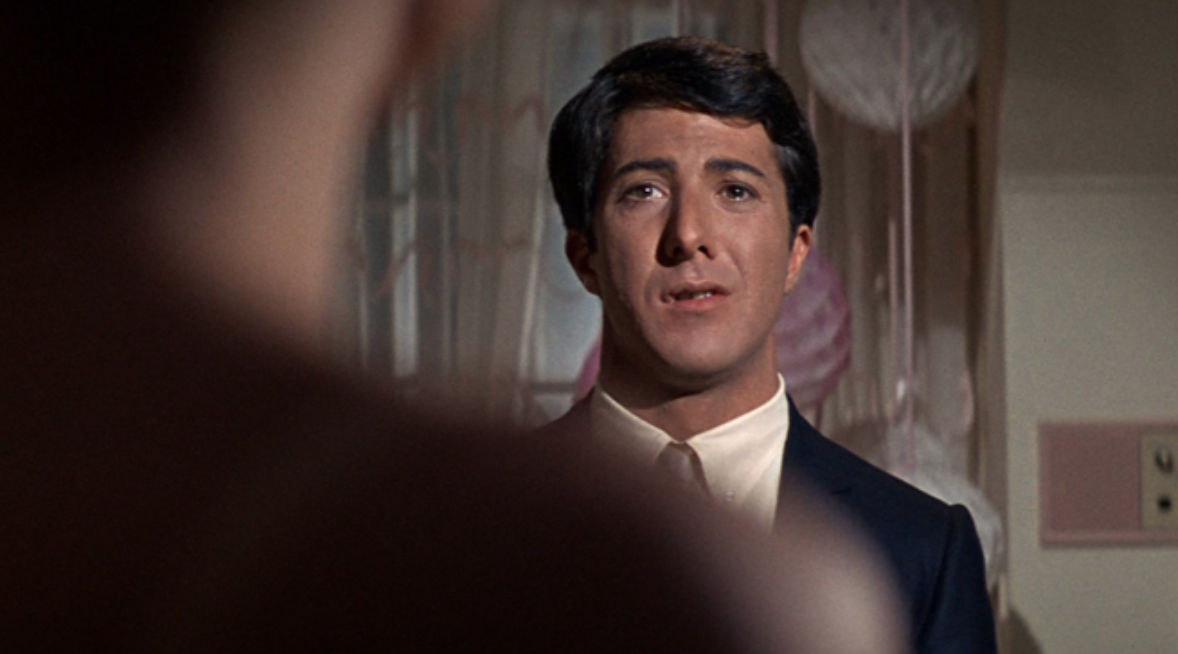
Mike Nichols and Buck Henry‘s The Graduate, perhaps the most culturally on-target, stylistically audacious and emotionally affecting relationship comedy in Hollywood history, opened exactly a half-century ago — on 12.22.67. But guess what? It’s time for a significant portion of that respect and glorification to go away, and for two reasons. I’m presuming that HE readers can guess the first without reading any further.
Just as former New York Post critic Lou Lumenick proclaimed a couple of years ago that Gone With The Wind has become a disreputable and even odious film because it reflects unfortunate racial attitudes of the late 1930s, Vox’s Alissa Wilkinson announced yesterday that it’s time to take The Graduate down a peg or two, partly because of recent allegations of sexual harassment and assault against Dustin Hoffman, and partly because Benjamin Braddock is a dullard — a far less interesting character than Anne Bancroft‘s Mrs. Robinson or even Katherine Ross‘s Elaine Robinson.
HE response #1: Deplorable as Hoffman’s behavior is alleged to have been during certain encounters in the ’80s, when The Graduate was shot he was a 29 year-old actor doing his damnedest to make the Braddock character sympathetic and engaging, and for the last half-century just about the entire civilized world has agreed that he achieved that goal. You can’t come along 50 years later and say “But Hoffman acted like a sexist asshole in the ’80s!” and so everything he did creatively before, during and after the Reagan era has to be darkly re-assessed.
HE response #2: On top of which Nichols and Henry, The Graduate‘s director and screenwriter, deliberately portrayed Braddock as confused, unfocused, de-politicized and largely inarticulate for the first 65 minutes. That was all a set-up for the big pivot point when Benjamin realizes he loves Elaine and is determined to end his affair with her mother. The first hour and change is about a bumbling guy in a passive-reactive state of mind, and the last 35 or 40 minutes is about this guy struggling to achieve a goal and attain a kind of emotional fulfillment.
HE response #3: Wilkinson doesn’t take credit for her “Mrs. Robinson is a more layered and intriguing character than Braddock” opinion, which I happen to agree with as far as the first 65 minutes is concerned. She acknowledges, in fact, that Roger Ebert offered this opinion at the time of the film’s 30th anniversary. She could have added that Sam Kashner said the same thing in a 2008 Vanity Fair piece about the making of The Graduate.
An Idea, Nothing More
My initial response to Phil Collins’ tweet earlier today was “yeah, cool…blast it out for the Times Square crowd, or the Eiffel Tower congregation in Paris” How many decades was “Auld Lang Syne” the official anthem? But read the comments. Hostility, derision, “nothing better to do but reminisce, Phil?”, etc. An ugly, seething mob.
Streep’s Mamma Mia 2 Character Is Six Feet Under
The first full-length trailer for Mamma Mia! Here We Go Again strongly suggests that Meryl Streep‘s character, Donna, is looking down at the joyful goings-on from a heavenly perch. The forthcoming musical is actually a prequel-sequel with Lily James playing Streep’s character, Donna Sheridan, in her youth.
No, it doesn’t matter that James doesn’t even begin to resemble the young Streep of the ’70s.
The Wikipedia plot summary reads as follows: “As another day dawns on sunny Kalokairi, Sophie (Amanda Seyfried) is now running the Greek villa. She greets Tanya (Christine Baranski) and Rosie (Julie Walters) at the pier and announces she’s pregnant. She admits, however, to doubts about whether she’ll be able to cope without her late mother there to help her.”
On top of which the trailer opens with Tanya and Rosie telling Sophie that “your mother is the bravest person we ever met.” Plus the footage of Streep appears to be from the original 2008 Mamma Mia.
The real corker is that Cher plays Ruby Sheridan, Seyfried’s grandmother and Streep’s mother. Born on 5.20.46, Cher is three years older than Streep.
Never Trust A Sundance Summary
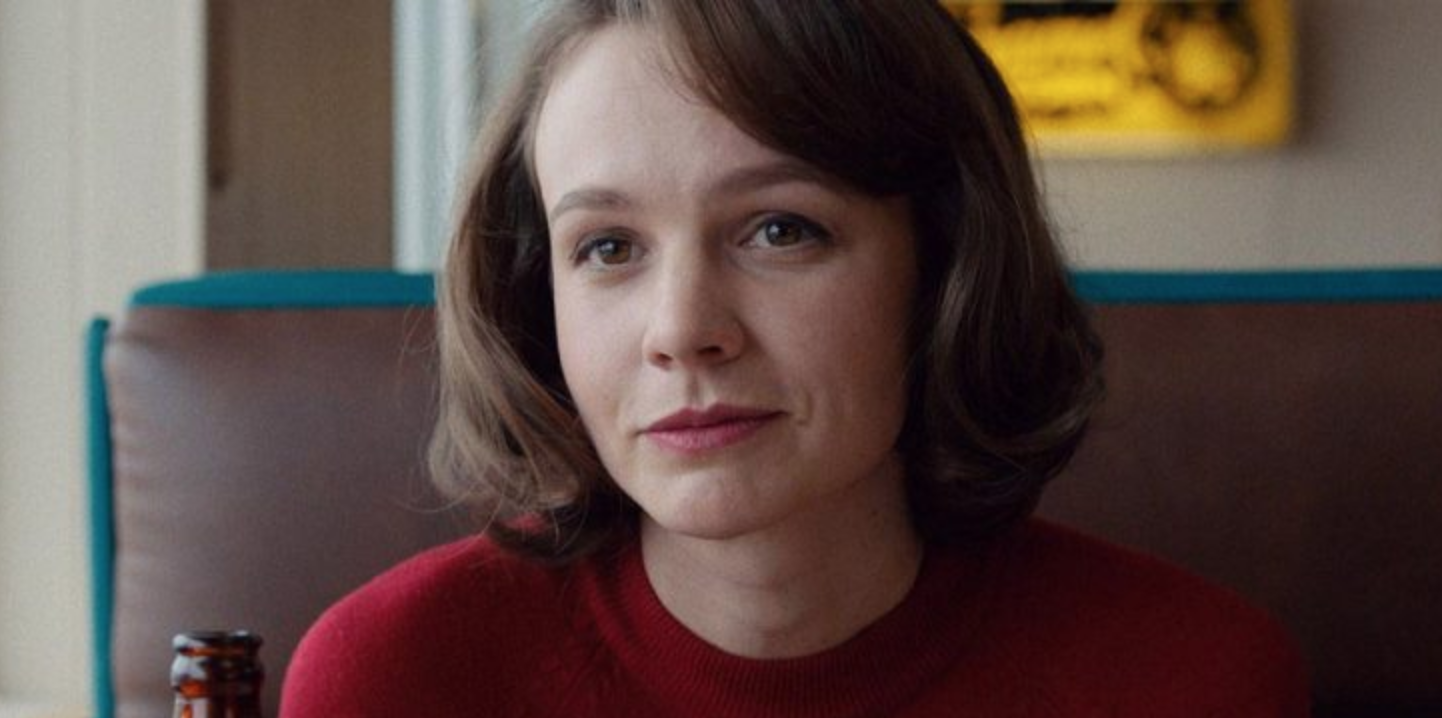
One of my most keenly anticipated Sundance ’18 films is Paul Dano‘s Wildlife, an adaptation of Richard Ford‘s same-titled novel, published in 1990 and set in 1960 Montana.
The main costars are Jake Gyllenhaal and Carey Mulligan as the married Jerry and Jeanette Brinson; the secondary performers are Ed Oxenbould as their son Joe, and Bill Camp as — here comes the rough part — an older, richer guy named Warren Miller whom Jeanette, believe it or not, has an affair with when Jerry, having lost his country-club job, leaves the homestead to become a firefighter.
Carey Mulligan and Bill Camp? The mind reels, convulses.
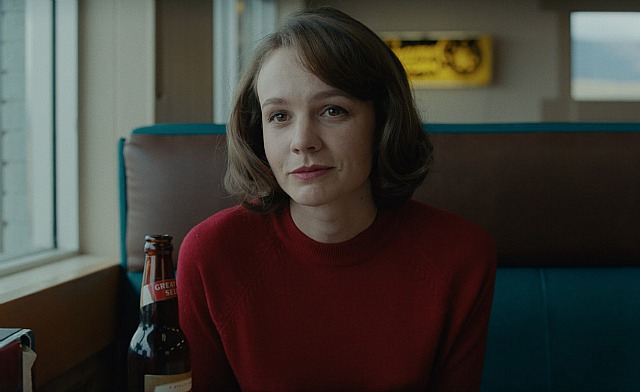
The official Sundance summary sidesteps the nitty-gritty. For a fuller understanding of where this film goes and what it delivers, consider a N.Y. Times review of Ford’s book by Christopher Lehman-Haupt:
“‘In the fall of 1960, when I was 16 and my father was for a time not working, my mother met a man named Warren Miller and fell in love with him.’ So begins Richard Ford‘s disturbing new novel, ‘Wildlife’. In it, Mr. Ford seems to have bitten off more than he can chew. Its action takes place in Great Falls, Montana. The theme, too, is a familiar one in Mr. Ford’s work, a love triangle involving a mother, a father and a son.
“The 16-year-old narrator is Joe Brinson. His father is a professional golfer who teaches at a country club in Great Falls. He is a natural athlete ‘with delicate hands and a short fluid swing that was wonderful to see but never strong enough to move him into the higher competition of the game.’ This is a perfect image for the searching innocence of Joe’s father, who has brought his family from Lewiston, Idaho, ‘in the belief that people — small people like him — were making money in Montana or soon would be, and wanted a piece of that good luck before all of it collapsed and was gone in the wind.’